Truth in Fiction

In my more optimistic moods, I like to think of myself as a literary sort. Not constrained by the narrow confines of academia’s hallowed — and often hollow — halls, I have spent much of my life reading literature. I can’t say what started me on this track; my parents were not readers and the small-town school I attended encouraged little beyond subscribing to MAD Magazine. When I stumbled onto the literary giants, I was hooked. There are still great writers I have yet to explore, but one that I only really discovered at the prompting of my wife is Mark Twain. I’d of course known who he was. In my youth I never read any of his books. Then on a fateful, if carefully planned out, trip to Hannibal, Missouri to dig geodes during my geologist phase, we were rained out. The geode farm was closed. Sullen beyond shattered rock-hound dreams, I was at my wit’s end (not a long trip) when my wife suggested we not waste the miles we’d traveled, since Hannibal was also the boyhood home of Mark Twain. While there we bought souvenir quality volumes of Tom Sawyer and Huckleberry Finn. Upon returning home, I read them non-stop.
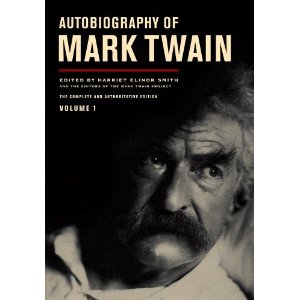
While on vacation last week my wife was discussing her literary pursuits with her family and it emerged that the full, uncensored, autobiography of Mark Twain will begin its public appearance in November of this year. One of the topics to receive his attention is religion. Twain was a Christian, insofar as any Presbyterian can make that claim, but he was critical of formal religion. A quote purporting to be from his autobiography runs: “There is one notable thing about our Christianity: bad, bloody, merciless, money-grabbing, and predatory. The invention of hell measured by our Christianity of today, bad as it is, hypocritical as it is, empty and hollow as it is, neither the deity nor his son is a Christian, nor qualified for that moderately high place. Ours is a terrible religion. The fleets of the world could swim in spacious comfort in the innocent blood it has spilled.” A bit caustic, but honest. When the books come out, I’ll be able to check it for veracity.

One of the things I value most about Mark Twain was his ability to hit his readers without giving away that they’d been hit. He accomplished this through a brutal honesty, often cloaked in fiction. When I explain myth to my students I tell them that it is an attempt to clarify the truth through story. Modern people tend to be fixated on historicity and sometimes miss the importance of a story because “it never happened.” If Huckleberry Finn never navigated a raft down the Mississippi, it would not affect the truth of the story or the insight of the author. It seems to me that with a writer so honest we would do well to consider what he had to say about his own religion before unsheathing our swords and rattling our sabers.


Sharks and Apostles

There are sharks in the water. For the third day in a week, some New Jersey beaches have restricted access to the ocean because of sharks. As a particularly hot July trundles along, this is not really welcome news. Also yesterday, the Vatican codified revisions to its clergy sexual abuse crisis. According to an Associated Press article in the New Jersey Star-Ledger, women’s ordination groups are angry because sexual abuse and the ordination of women are classed together as crimes against the church.

Venus of Willendorf

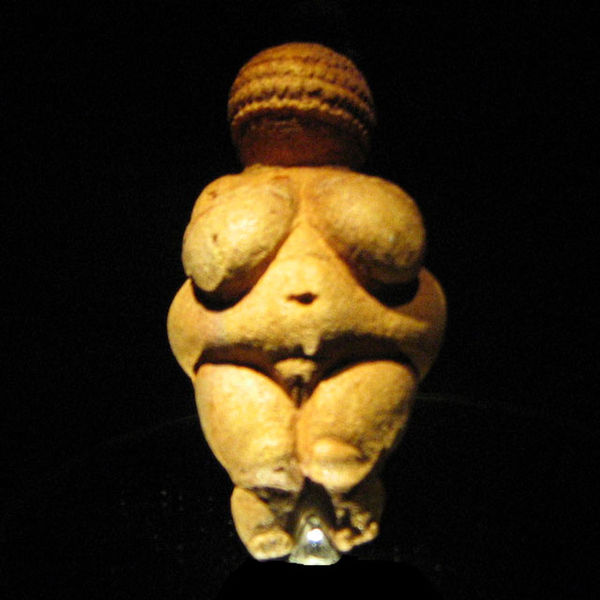
Even before civilization began, it seems, religion and sexual dimorphism were tied together. Beginning back 35,000 years ago Paleolithic humans carved female figurines. In a hunter-gatherer society where struggle for survival was the best paying job available, the execution of such objets d’art in a brutish, hostile environment reveals religious sensitivities. Stone Age humans knew something that organized Christianity forgot within its first century: sexuality is never far from religion. The Bible itself, particularly the Christian Scriptures, emphasize that celibacy is a putative gift, not something that can be learned or forced on someone. In typical Roman fashion, however, the church quickly mandated celibacy as the norm and ruled that women were the source of evil.

Nothing could be further from the indications of both Paleolithic remains and scientific thinking. Women, long the source of spirituality, were now cast aside in an arrogant aberration of earlier practice. Largely based on the angry writings of one man, the church decided that men alone should determine the eternal fates of others. Masculine men who knew self-control and who could turn off millennia of evolutionary pressures by a sheer act of will. Centuries later, and the Vatican with its own Pontifical Academy of Sciences, the church still can’t get beyond basic reproduction and sexuality issues. I would go to the beach to try to think this one out, but there are sharks in the water.


The Mist in the Pulpit

With the teaching schedule I have, vacations are not viable. One semester blends into another like some demonic tapestry with blurred edges between the somewhat discrete components. Breaks just aren’t part of the picture. While my family is on a well-deserved vacation, I’ve been home doing class prep and lecturing. On those nights when I have no classes, I sometimes watch a movie to hear the sound of human voices. This week one of my picks was The Mist.

My fascination with horror films stretches back to my college days, concurrent with my first degree in religious studies. Never a slasher fan, I’ve preferred the more thoughtful movie that has a (hopefully) profound message. I’d never read Stephen King’s novella on which this movie was based, so I didn’t know what to expect. All I knew was “there’s something in the mist.” The build-up was great until the creatures were shown – after that it became a standard monster flick. A human menace arises in the form of Mrs. Carmody, a religious zealot who is convinced the mist is the apocalypse. As the survivors try to form some plan of action, Carmody’s preaching becomes more and more strident and self-convinced as the “wicked” die and the “righteous” are spared. Not having read the book, I’m not sure if her over-the-top rhetoric originated with King or with Frank Darabont, the screenwriter/director.

I have often posted on the relationship of monsters and religion, but The Mist is almost too easy to cite. Perhaps released too late to make it into Douglas Cowan’s Sacred Terror, the connection between religion and fear is patent and bald. Mrs. Carmody’s religion, apart from being very generally Christian, is hard to identify. She insists on human sacrifice while constantly referencing the Bible. Although there are examples of human sacrifice in the Bible, that particular cultic activity is never advocated for monster invasions or the apocalypse. Carmody is a parody of religious over-reaction to the unfamiliar and dangerous. In her insistence that others take her point of view, the caricatured Carmody becomes a danger that threatens the community. It is left indeterminate whether her followers survive or not.

The religious agitator is a trite and tired character, but one that has instant recognition value. In The Mist, however, I came for the mystery and stayed for the monsters. Mrs. Carmody could have said much more by saying much less.


When Dinosaurs Will Rule

Just about all of us begin life as budding paleontologists. What kid doesn’t adore dinosaurs and their paradigmatic story of planetary rule followed by inexplicable decline? The mystery and drama only add to the fantastical nature of the beasts themselves – creatures towering over houses and trees, predators the size of school buses. When my daughter hit dinosaur age, my latent paleontologist experienced a profound resurrection. Sure that she’d become the next great dinosaur hunter, I relearned all the old species names and added dozen more from creatures discovered since my interest went underground. While my career was spiraling downward at Nashotah House, I contacted the paleontology program at the University of Wisconsin to see about retraining. I even started to teach myself calculus.

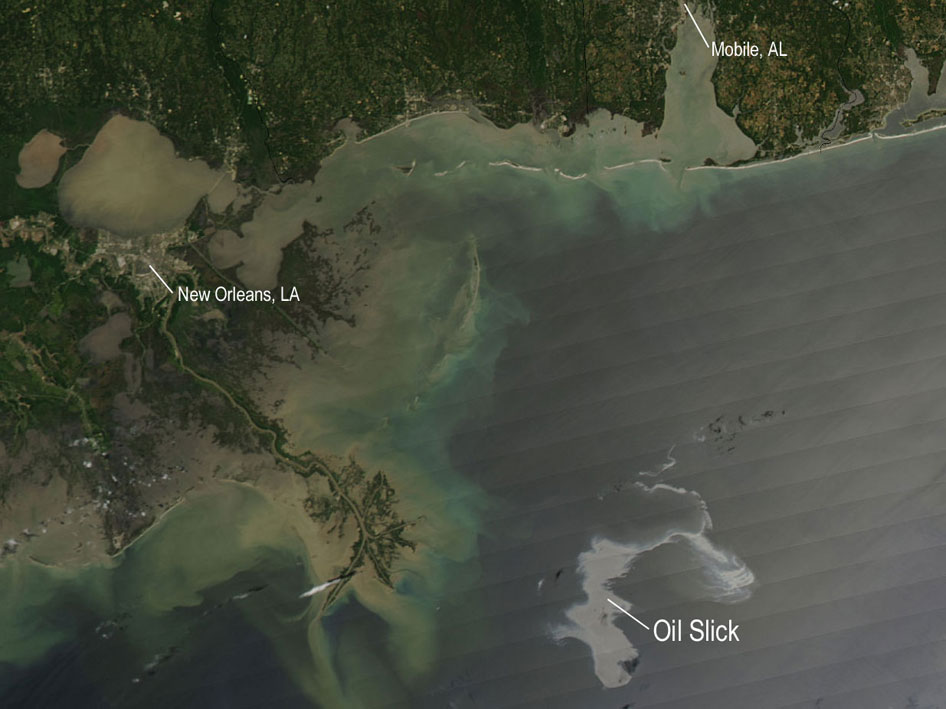
Life delights in playing funny tricks on people. Once again my career in religious studies spirals downward and the specter of the dinosaurs rises. Literally. A former student of mine pointed out an article on Helium.com that spells out some possible implications of the Deepwater Horizon fiasco. The first sentence reads: “Ominous reports are leaking past the BP Gulf salvage operation news blackout that the disaster unfolding in the Gulf of Mexico may be about to reach biblical proportions.” The Bible is our standard measure for disaster; no crisis can not be made worse by throwing in the adjective “biblical.” If Terrence Aym is correct, however, even the Bible won’t save us now.

Apocalypse now?

Basing his analysis on Gregory Ryskin’s thesis that immense methane bubbles from under the ocean led to several past mass extinctions on our planet, Aym suggests that all the signs are present that a true doomsday scenario is unfolding in the Gulf of Mexico. I have seldom been impacted by doomsday predictions, but Aym’s article is perhaps the scariest thing I’ve read in years. I’m not enough of a scientist to assess the danger, and the media blockade only makes the speculation worse. Could it be that the decay from all those dead dinosaurs, their cohorts and predecessors, their flora – the very source of fossil fuels – is rising to deal yet another mass extinction on our planet? The reader will need to decide. For me, I regret that I didn’t stay with the dinosaurs, for they still rule the planet.


Green Bible


One of the most heinous theologies to emerge from Christendom is the idea that exploitation of our planet is good for the soul. The idea, apart from having been foundational to Bush II’s administration, is based on the idea that if we mess up our world badly enough we will force the divine hand into sending Jesus back to clear up our detritus. The Second Coming apparently will be in a garbage heap rather than a garden. Christian businessmen rest secure knowing that their exploitation of our natural resources is all part of God’s master-plan. This “theology” is alive and well among many Neo-Cons and it insists that the fact of global warming is a myth and the myth of creationism is a fact.

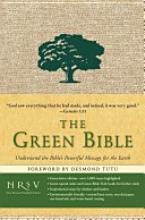
One of the unexpected perpetrators in the war on our planet has been the Bible. Accurate records of the number of Bibles actually printed were not kept in the early days of Gutenberg’s dream machine, but current estimates place the number of Bibles printed at over 8 billion. That’s more than enough for one per person. Some of us would have to confess to owning multiple copies, making us perhaps guiltier than the rest. It was in an effort to stem the dendrite slaughter of this industry that I shifted to the Green Bible for my classes last year.

Some people treat the Bible as an object of veneration, never laying it on the floor or putting other objects atop it. Some people object to making Bibles out of “inferior” products – the Green Bible is printed on recycled paper and is biodegradable – but to me this seems to be the most responsible way to produce a book with the enormous environmental impact that the Bible has. I could live without the “green letter” sections intended to prooftext the Bible’s environmental concerns, but care for our planet trumps good taste at times. If anyone from Oxford University Press is reading this, the eco-friendly aspects of this Bible are what reluctantly switched me from 15 years of requiring students to purchase the New Oxford Annotated Bible! It is time that the Bible owned up to its part in our planetary plight.


Probation in Hades

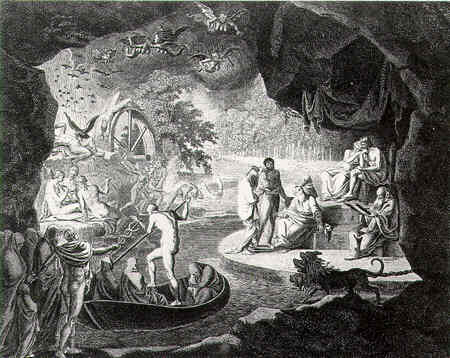
Yesterday I received an email in my Rutgers account with the title above. It was difficult to determine if the message was directed at me or was a piece of spam that had gracefully navigated around the powerful university filters. In either case, the sender had mapped out to an impressive degree the goings on in the afterlife. I am not qualified to comment on the correctness of the assertions, having never been to the Underworld myself, but I was hooked by the preference for the name Hades over Hell. This particularity took me back to revivalist sermons I heard as a youth when preachers, apparently fearing the swear-like quality to the word “Hell” – which the church gave us – deferred to the use of “Hades.”

As I have described in one of my podcasts, Hell is a Christian construct derived from Judaism’s confrontation with Zoroastrianism. The idea is distinctly Christian in its formulation: Hell is the afterlife for those who side with Satan and his angels and therefore are blocked from Heaven (also based on Zoroastrianism). Nobody wishes to go there, but those who choose the powers of darkness will be sentenced to an eternity of burning and torment for their choice. The idea is so odious that eventually its very name came to stand for a curse-word in many Christian contexts. In the pietism of the Evangelical tradition, the word itself is to be avoided. Thus I heard sermons warning of the somehow softer sounding Hades.

Hades is not Hell. I tell my mythology students that the classical Greek conception of the afterlife is not necessarily a punishment. It may be for some notorious sinners, but generally it is the fate of all the dead, like Sheol in the Bible. The choice of Hades as a stand-in for Hell is not in keeping with standard Christian teaching. Hell is Hell. Hades is somewhere else. Both lie underground, but they inhabit completely divergent conceptual worlds. I wish to thank my sender for this carefully crafted Underworldly roadmap, but in the interest of full disclosure, I must insist that a Hell be called a Hell. Hades is best left to Pluto and his retainers, so Satan needs a realm of his own.

Hades, slightly influenced by ideas of Hell


Blogging the Blob

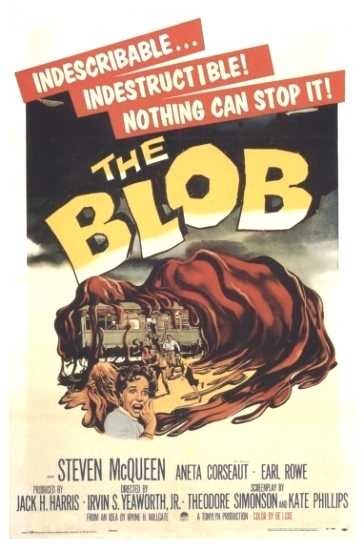
It has no shape. It has no brain. It oozes in where it is not wanted and wreaks havoc on the innocent people of the local community. It is in the hands of an apocalyptic clergyman. No, it isn’t the Republican Party, it is The Blob (1988). Having just watched the remake of the 1958 sci-fi film of the same name, a number of elements relevant to this blog (blob?) stood out in sharp relief. The most notable change from the original movie comes in the form of the role played by Reverend Meeker, the (apparently) Catholic priest turned tent-preaching revivalist. Of course, the whole government conspiracy plot is also new to the film, but that is best left to other blogs.

As noted in previous posts, religion and horror genres share much common ground. While it is hard to take a blob seriously – the role of Bob the blob in Monsters vs. Aliens is precisely comic relief – the idea of a crazed minister unleashing chaos is perhaps a little too believable. The real source of terror in the 1988 version of The Blob is not the monster but those who control it: the government and the church. When the government demonstrates that it cannot control the monster it has generated, it moves into the hands of Reverend Meeker. Here it rests until, after a sermon about the end of times, the reverend pulls out his jar of blob and indicates that as soon as he receives a sign from God, it will be released.

In a strange way this strange film proved prescient. The move of religion into politics was underway already in the Reagan years, but it was a threat few took seriously. It was not until W’s reign that the implications began to become clear. A religiously motivated electorate resembles a blob in significant ways. Once released it is difficult to contain, even by its creators. In aspect it is laughable, but in consequence it is deadly. It stops at nothing short of total domination. This film, which never made the impact that many horror films achieve, may turn out to be the scariest movie of its era after all.

Not your parents' blob


Oil’s Well that Ends

Greed has been on my mind quite a bit lately. I like to think it isn’t petty personal greed, but the insatiable corporate variety of greed. Friends send me links to sad commentaries on the Gulf Oil Spill, an event that severely amplifies the cruelty already inherent in nature, but an event that would have been preventable were it not for greed. My friend James from Idle Musings sent me a compelling story from the UK Guardian that poignantly demonstrates how a shift of worldviews has bestowed divine approval on the rape of our planet. The very religion that began as animism, the belief in the ubiquitous divine in nature, has evolved into a Neo-con Christianity that supports free markets as surely as it believes in resurrection. If a few million animals have to die, well, their invisible, loving God sees far more than our limited sight.

Nowhere is this more evident than in the video link my wife pointed out to me last night. Here an advocate for biblical “prophecy” points out that it can not be coincidence that the day after the United States withdrew unilateral support for Israel in the United Nations Security Council was the very day that Deepwater Horizon exploded. No, the pundit declares, do not be fooled. God is punishing the United States for withdrawing support from Israel. This idea, unfortunately, draws on a morass of sloppy theology that can be historically traced to an evangelical death-wish for the planet. Barbara Tuchman, one of the most respected historians of the last century, objectively traces the story in her classic Bible and Sword. Political support for Israel was perceived as a means of forcing God’s hand into releasing the second coming. So much for human sympathy.

Coincidences continually occur. April 19 is the day that Cardinal Ratzinger was elected Pope just five years ago. It is the day Grace Kelly married Prince Rainier of Monaco. It is the Feast of Saint Aelfheah of Canterbury. It is Patriot’s Day in New England. It is the day The Simpsons premiered. Whether to see God’s hand in any or all of this is a matter of perspective. As is the motivation behind supporting Israel, big oil, or the second coming. If there is any name other than greed for offering political support for a nation of sacrificial lambs and spilling oil in order to hasten the apocalypse, I simply do not know what it might be.

And this was only April


Casting the First Stone

I’m not overly nostalgic for a guy interested in ancient history. I tend to look at the more recent past as a via negativa for the young who might make a difference today. Very occasionally, however, aspects of society were handled better back in the 1960s and early 70s. One of the most obvious instances of a more sane society was the segregation of politics and religion. Prior to the rise of the “Religious Right” as a political machine the religious convictions, or lack thereof, of politicians played little role in their campaigns and American culture itself was much more open. A story from today’s MCT News Service illustrates this all too well.

In an article entitled “In S.C., religion colors gubernatorial race,” Gina Smith reports on the various religious slurs that now pass for political campaigning in that state. “Raghead” (for a former Sikh), Buddhist, Catholic, and “anti-Christian Jewish Democrats” are among the aspersions freely cast by those without the sin of a non-evangelical upbringing. As if only Fundamentalists are capable of making the right political decisions. As if Fundamentalists ever make the right political decisions. Fundamentalism is a blinding force on the human psyche, and those who are misled by religious leaders who claim unique access to the truth are to be seriously pitied. Conviction that those most like you are to be trusted most may be natural, but dogged belief that pristine morals accompany any religion is glaringly naïve.

The American capacity for belief in fantasy worlds is in the ascendant. No matter how many times Fundamentalists or Evangelical politicians are arrested or forced from office for the very sins they rant against, their overly forgiving constituencies come flocking back to them. Commit the sin of being born Sikh, Hindu, Buddhist, Muslim, Jewish, or Catholic and no quarter will ever be offered. No, I have no desire to go back to the 1960s, but I sure wish politics would.


The Power of Christ Beheads Thee

Yesterday’s news carried the story of Gary Brooks Faulkner, self-appointed Osama bin Laden hunter. Faulkner, on his third trip to Afghanistan, is described as “extremely religious” and “highly intelligent” by his sister. Equipped with night-vision goggles, a pistol, sword, and “Christian texts,” according to the New York Daily News, he plans to behead bin Laden by the power of his (Faulkner’s) faith. Faulkner is fighting kidney failure, a disability he apparently shares with bin Laden, and although he appears to be dying Faulkner said, “God is with me, and I am confident I will be successful in killing him.”

It is hard not to admire a person so driven by conviction. On the other hand, it is difficult to imagine Jesus instructing his followers to lop off somebody’s head. The incongruity between the insistence of forgiving and loving one’s enemies and the more direct approach of beheading is a wide gulf indeed. At what point does religion become revenge? Is doing unto others as they have done unto you the corollary of its better known anastrophic sibling? Beheading is one of the most degrading forms of execution – although all forms of capital punishment raise serious questions in classical Christianity. What happened to turning the other cheek (neck)?

The image of a lone-ranger mercenary wearing night-vision goggles while toting a 40-inch sword is painfully ironic if not downright reminiscent of Attack of the Killer Tomatoes. Flying planes into buildings out of hatred for theological differences is even more ridiculous. If people could keep their religious hands to themselves the world might become a much more humane place and the daily news might become just a tad less colorful.


Jesus at the Prom

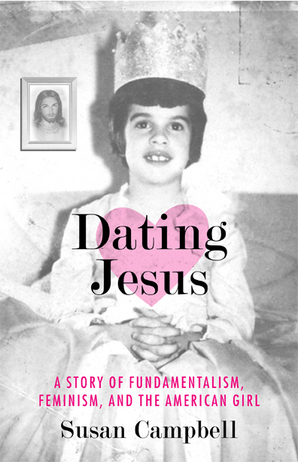
This week I read Susan Campbell’s Dating Jesus: A Story of Fundamentalism, Feminism, and the American Girl. Parts of her autobiographical narrative seemed so familiar that it was almost like we could have been siblings. Other parts demonstrated just how widely a religious upbringing in America may vary. Fundamentalism is a powerful force, and one that often feels impossible to outgrow. The added dimension of a constant, insistent criticism of gender made Campbell’s account truly wrenching at times. Having been raised in a similar environment, I had been taught that ministry is a male prerogative, an activity women were separated from just as surely as begetting babies. Having been raised mainly by my mother, however, I was more sympathetic to a woman’s plight than most of the outspoken advocates for male privilege. Campbell’s story hit close to home.

One of the most tenacious aspects of Fundamentalism is the brain patterning it impresses on young minds. Who doesn’t know that baby birds impress parenthood on the first creature they see after hatching? Young children, trusting well-meaning parents, are impressed with a religious branding iron before they can sort things out for themselves. We make our children in our own image. Few ever undertake the intense reflection later in life to challenge these impressions. Like Campbell, I attended seminary because I was curious. Many of my classmates had no questions in their heads – they knew already that they were to be ministers. Seminary was a hoop to be leapt through rather than a rung to be climbed for a different perspective. And their children will be taught their perspective. Denominations will continue to increase in numbers as acorns roll not far from the tree, but just far enough.

Campbell’s memoir is a gentle indictment of the male establishment. What once began as a biological division of labor has been given a religious imperative; male dominance is ordained by God, and women have no option but to comply. Even as the divine gets pushed into an unlit corner of everyday life, the deity may always be drawn back out for a session of gender oppression before being tucked safely away again. In these days of advanced technology and wide perspectives, women are still held down as some kind of inferior sub-species by men who believe that they are the default version of the image of God. It is time to be honest and admit that the only reason women are kept from the male preserve in any field is because of a jealous green-eyed god called privilege.


Voices from the Third Estate

Discussions over the past week in that great wasteland we call state government have included talk of actually having millionaires taxed to shoulder a little of the state’s fiscal burden. Naturally there has been a strong backlash in this nation of deeply embedded plutocracy. Those who have their millions certainly feel little social responsibility, since the prosperity Gospel (or its analogs) comforts them with whispers that wealth is a sign of blessing. One of the most evil ironies of all is that many such folk have the chutzpah to cite the Bible as their backer. God loves the beautiful people.

Such virulent misreading of religion shrugs off millions of gallons of crude oil gushing into the Gulf. Petroleum companies breed some of the wealthiest individuals around, and if we wipe out the marine life of the southern coast, well, that’s a small price to pay for individual privilege. Somewhere along the line an unholy matrimony between religion and greed produced the great plague that will lead to the fall of western civilization. This may be seen clearly among the apes.

Frans de Waal, an author whom I’ve quoted before, notes that in ape society when an individual (or individuals) takes advantage of the system, the group eventually brings an end to his (or rarely her) reign. Primate society can only tolerate abuses that damage a community for so long before a collapse is immanent. Consider Rome, “the eternal empire.” Every day politicians posture in the media about how they have the best interests of society at heart. As members of the privileged classes, they have lost sight of what it feels like to live in the constant umbra of the supercilious wealthy while millions have no jobs, no health care, no future. Millionaires owe nothing to the society that allowed them to become rich, for the Bible tells them so. Nature, however, begs to differ.


Religious Democracy

An op-ed piece in yesterday’s paper raised some important issues concerning religion and the unfortunate fall of Mark Souder. The article, by E. J. Dionne, pointed out that Souder once said, “To ask me to check my Christian beliefs at the public door is to ask me to expel the Holy Spirit from my life when I serve as a congressman, and that I will not do.” This pointed affirmation of faith is precisely the dilemma of a democratic system that allows for freedom of religion. All religions (those that are serious attempts to deal with the supernatural, in any case) are defined by the conviction that their practices, their beliefs, their ethics, are correct. When a religious individual is elected, or even converted after election, in a democratic system their religion is given power. With their faith they vote on issues that cut across religious boundaries, binding those who do not agree to their personal faith stance by law.

Europe in the Middle Ages is perhaps the most obvious example of what might happen when one religious body (in that case, the Roman Catholic Church) gains excessive political power. Problem is, these days folks don’t agree on which is the right religion. America was not founded as a Christian nation, let alone an evangelical Neo-Con one. It has become, perhaps because of this fact, one of the most actively religious nations in the developed world. As befits a consumer mentality, religions are offered in a marketplace. Within Christianity alone there are aisles and aisles of churches from which to choose. When a public servant is elected and her or his religion dictates their votes, have we not just lost freedom of religion?

Teaching for many years in a seminary is a sure way of becoming aware of the limited training that religious leaders generally receive (if any). The short time they spend being educated does not equip them to think through all the implications of their convictions. They attain the pulpit and the congressional leaders who happen to be in their congregations receive an inchoate theology confused by their three years earning a “Master of Divinity” degree. Not all are equal to the task. Those religious leaders with promise, often because of internal church politics, end up in smaller venues, their voices effectively silenced. Those with the most strident voices reach larger congregations, often without the humility of admitting that the more you learn about theology they less you know. Their congregants, armed with faulty perceptions of their own religion, burst into their congressional chambers full of conviction based on problematic conceptions. It is a very serious dilemma.

Perhaps what is needed is an oath of office for politicians rather like the Hippocratic Oath for physicians. Perhaps they should swear to put their own religious outlooks in check while considering social issues on which their constituents vary widely. Perhaps their integrity in truly representing the population they govern would lessen the impact of their inevitable personal foibles. And naturally, this oath would not be superstitiously sworn with a hand on the Bible.


Strawberry Fields Forever

For beings dwelling on the surface of our planet, we tend to live far from the earth. I was reminded of this yesterday when my family went on our annual strawberry-picking venture. Each year we drive out to a remote farm that has pick-your-own strawberries and fill too many baskets because we just can’t stop ourselves when nature offers such obvious bounty. On the years when I can visit the northwest with my in-laws, one of my favorite pastimes is huckleberry picking. The two berry experiences differ vastly; one is a cultivated, planned layout of particular strains of red berries, the other is a forage-and-hunt search for wild purple berries that haven’t been stripped by the grizzlies. Both, however, put me intimately in touch with the earth. Trousers muddy from direct contact with the ground, fingers stained from the delicate fruit juices newly plucked from the plant – it is an earthy enterprise.

At such times it is evident how religions began. I don’t pretend to comprehend the whole complex phenomenon of the psychology of religion, but in those rare moments I share in the ancient art of survival. Finding your own food, body pressing directly on the earth with no cushion or blanket or furniture between. These moments must reflect our earliest ancestors’ daily life. When times of hardship came and food could not be found, they could only watch as members of their group died an agonizing death from hunger. Would they not call out to the powers beyond themselves, the unseen providers who alone could assure a steady supply of food?

In is no surprise that the first instances we find of religion in any developed form are strongly agricultural. Gods of rain and “fertility” abound. The ancient voices can distinctly be heard: we truly are helpless to create our own food. It is an echo that fades with each passing triumph of human control over our environment. When we can force nature to do our bidding – irrigating huge tracts of waterless land, feeding pesticides and growth enhancers into the very soil, even starting to create life itself in the laboratory – where are the gods? They have stiff competition indeed. So when I hold that strawberry in my hand, organically connected to the very planet that gave birth to us all, I feel that I have tapped into the roots of religion itself.


Wicker or Wicked?

While I continued officially unemployed I keep to a strict regimen of not watching television except on the weekends. Since we don’t have cable or even a digital conversion box, my viewing is limited to grainy VHS tapes or DVDs. Many of them I’ve watched over and over. Last night I picked out one of perennial favorites, The Wicker Man (1973, of course!) for late-night viewing. Although classified as a horror film, the only terror comes at the very end in a scene that I always find difficult to watch. What keeps me coming back to this film is its unrelenting criticism of religious hypocrisy. (That and the longing evoked by the footage of a Scotland I left many years ago.)

Briefly told, a Highland police sergeant, Neil Howie, is lured to a fictional Summerisle in a mouse-and-cat game where he ends up the victim of a neo-pagan cult. The stunned Christian constable cannot believe the superstition evident on the island could still exist in modern Britannia, leading to one of the highlights of the film. Questioning Lord Summerisle, played by a striking Christopher Lee, Howie accuses him of paganism. “A heathen, conceivably,” Summerisle concedes in a tight shot, “but not, I hope, an unenlightened one.” Howie is shown growing increasingly rude and unsympathetic, forging a makeshift cross to lay over a Druidic burial. He threatens Lord Summerisle with being investigated by the authorities of the Christian nation under whose aegis he falls. The tensions between religions grow until the final scene.

The constant interplay between control and conviction raises again and again what the true nature of religion is. Summerisle reveals that the neo-paganism began as an expedient way to encourage the locals in growing new strains of crops. The images of palm trees in the Hebrides may seem unwarranted, but having strolled among them on the Isle of Arran nature itself belies the orthodoxies of convention. Does religion rule by force of law, depth of conviction, or pure expediency? The makers of the film were wise enough to leave that to the viewer to decide. No wonder that on many a bleary-eyed weekend night, ousted from my once stable career by the overtly religious, I choose to watch, yet again, The Wicker Man.