What’s in a Name?

Two of my readers sent me an article yesterday about Lord Jesus Christ, the Massachusetts man who was hit by a car. Lord Jesus survived the brush with death this time. Clearly the angle on this story is the human interest aspect instead of the courtroom precedent or the political scope of its ramifications. In our minds, if we’re honest, we’ll admit that we’ve already come up with a profile for a man named “Lord Jesus Christ.” We’ve already judged him and determined his motives in legally taking such a name. This is a book to be judged by its cover.

From a purely semantic point of view, the victim’s name would probably have more impact with the definite article: The Lord Jesus Christ. As it is, the name differs only in degree from the thousands of Chrises out there, of either gender, or the many Hispanic men named Jesus, or those Anglos with the surname Lord. Not to mention all those Joshuas. Our names are the labels that others immediately use to prejudge us, although mostly our names come from our parents, or sometimes spouses. We are known through life by tags branded on us by parents who have no idea who we will become. As the non-adopted step-son of a second father I changed my name and I know the baggage that goes with such a change. The burden became so great that I reverted to my birth-name after college. I felt like I had been living a lie for much of my youth. What’s in a name?

Our injured man with the newsworthy name has not yet become the savior of the world. Some religious folk are offended by his appellation, yet most of us would be flattered by someone naming their child after us. Why not aim high when it comes to names? If we are to be judged by our verbal moniker, why not select one that states our point of view? With religiously motivated terrorism on the ascendant, however, it gives me pause to think about Lord Jesus Christ being run down. A man was injured here, while crossing the street. It could have been anyone. If it hadn’t been for his epithet, the story would not be national news. More than anything else, this may reveal the significance of the name.

A message from on high?



Holy Amos, Holy Micah, Pray for Us

The semesters when I teach the prophets invariably find me filled with a holy rage toward injustice of all stripes. Unfortunately there is plenty of cause for basic human indignation caused by greed, cupidity, and elitism. I see New Jersey, my current home, as a microcosm. In this little version of the universe, a highly diverse population with over-crowded highways and endless financial woes, I see reflected some of the great challenges facing the human race. When such a delicate balance is guided by a self-serving government the human cost will always be high.

Our current governor, Chris “Slash” Christie, has made himself a national reputation by cutting the basic services required to buoy up a state where the underprivileged seek an opportunity to get ahead. The governor’s favorite target, naturally, is public education. Public school and university funds have been chopped with a zeal to impress Vlad the Impaler (the governor’s children attend private school, thank you). The Associated Press today, however, reports that the number of the governor’s staff who “earn” more than six figures has nearly doubled since our last governor’s term ended. We the taxpayers are being asked to fork over an extra two million dollars to the state budget to support those who live in comfort while our children are being systematically targeted as luxuries the state simply can’t afford. When will people say “enough is enough”?

The Republican Party, since it has shamelessly crawled into bed with religious conservatism, has flouted the message of the Bible in the name of the Bible. Only by ignoring the biblical characters known as prophets, and one guy from Nazareth who went by the name of Joshua, is it possible to see any right in feathering the nest of public “servants” while stealing from the children of their constituencies. I am glad Amos and Micah are dead. If they were alive and in New Jersey they would be suffering torment beyond words.


Thoughts Off de Waal

Although Frans de Waal’s Our Inner Ape was published half a decade ago, the monograph remains terribly relevant. I gave some primary impressions of the book last week, but one section has remained firmly in my head and has mingled with all the harsh rhetoric in the news about health care reform in the United States. Asking the question of whether Homo sapiens are still evolving biologically, de Waal withholds his final opinion on the matter, but he points out that statistics indicate Americans are falling behind much of the rest of the developed world in terms of general health. This he ascribes to the competition inherent in a free market economy that favors the best health care only to the wealthy while the average citizen is offered substandard options. The numbers bear him out on this – he notes that on the standards utilized to measure general health, the United States is not even in the top 25 industrial nations.

With the conviction of a true prophet, de Waal notes that privatization of health care has led to a precarious imbalance in medical care in the United States, where the top 1 percent of citizens has more income to spend than the bottom 40 percent combined. This, he believes, is because we have lost sight of the altruism inherent in apedom. Although the great apes are endangered (ironically, by their overly greedy genetic cousins) their societies show no such disparity. An ape family will assist a weakened or feeble member and give it extra care to ensure that it is offered a life as comfortable as possible. They do not discard the fragile and “expendable” members. Republicans, however, wave placards trying to shout down basic health coverage for the poor.

Does biological evolution continue among the human species? Have we stopped natural selection’s eternally ticking clock? Only time will tell. It does seem, however, that the very Bible pounded by the Religious Right (health care reform’s greatest opponent) would argue that the apes got it right. We should care for the poor, disadvantaged, and underrepresented. While the Tea Party belles are busy trying to rewrite history with America founded as a Christian nation they daintily wipe their mouths on the pages of the very book they treasure so deeply and claim as their authentic heritage.


The Cross in my Pocket

A local woman, whom I can only assume carries a prosperity cross, has won a 211 million dollar New Jersey lottery jackpot. As I had written some months back, when I received my prosperity cross, I tried my hand at the lottery with no rewards. Having had a dream of riches a few weeks back, I again attempted the lotto, with the added ethical motivation of assisting our state’s beleaguered educational system. Still no prosperity. It seems that the divine attention was focused a few miles north and a few days late. The happy winner has gone on record (in the New Jersey Star-Ledger) as saying, “I give God all the glory for this blessing that he has given me… He has seen and knows the highs and lows of my life, and knows the good I have done, and the good I can accomplish in his name.”

This innocent statement, no doubt whipped to a froth by prosperity gospelers, reveals all the difficulty of the weekend warrior prayers for good weather. Tweaking the world in one corner, as chaos theory demonstrates, leads to disaster in another. Not that our thankful lottery winner will unleash untold evil on the world, but it is time that people of all religions stop to consider the implications of the divine bursting in upon the mundane. In my experience, when such people are asked why God chose them and not someone else, they wax mysterious and intimate that only God knows. It is part of a great cosmic secret, only cryptically hinted at in the Holy Bible.

Call it sour grapes, or the grapes of wrath, or any other viticultural metaphor, but God does not direct the lottery. Too many truly good people suffer far too much for such easy answers. Those who promote the prosperity gospel are not among the paragons of human achievement or selfless nobility. Rather they are the idols of the self-important and acquisitive entrepreneurs. I wish our New Jersey lotto winner well – I hope she will steer clear of the prosperity gospel and actually put her money to good use.


Hate, in the Name of Love

I knew I was in trouble when I looked up the concept “codependency” on Wikipedia this morning and read, “This article has multiple issues.”

I was reminded of an article my wife pointed out to me on MSNBC earlier this week concerning Fred Phelps and his Westboro Baptist Church. My thoughts about religious freedom clash with my outrage over what may be legally classified as a religion. I’ve mentioned Phelps before, but the deeper issue here is whether freedom of religion can truly be free. Westboro is being sued (rightfully, imho) in a case that is going to the Supreme Court. His codependent hatred is causing excessive grief to the father of a soldier killed in Iraq. Phelps claims it is God’s will that he spread his Gospel of Hate.

Reading Frans de Waal’s Our Inner Ape, it quickly becomes apparent that empathy is what makes human society possible. Without our ability to feel for another, nature would lead us on a selfish rampage that would not be satiated until everyone but the alpha male was ruthlessly butchered. This seems to be Phelps’ idea of Heaven. It should be a stark warning sign when apes have better bred manners than a pastor.

Hatred and religion may form a codependent bond. Each feeds off the fear and distrust of the other, striking blindly at anything that is different, challenging, or unclear. Religion does have its noble children – those who in the name of their faith try to make life better for others. If the world were run according to Phelps’ religion, however, I would opt for life on the planet of the apes.


Not My Cup of Tea

The cutesy and puckish title of “Tea Party” is intended to sound whimsical among a group of political activists who lack imagination and creativity. They wear biblical-sized blinders that block out all enlightenment, trying to appear trendy and radical when what they really want is a return to the Dark Ages. Trying to make turning the clock back on progress chic and sexy, they stand for old-fashioned selfishness and the preservation of privilege for those who deserve preferential treatment – others just like them.

They grab headlines and limelight. So diametrically opposed to the progress that the real Tea Party (in Boston, 1773) strove for – progress against the privileged and mighty holding down those at disadvantage, the Tea Party movement seems to have convinced the media that it is worthy of their absconded moniker. Once again the Bible finds itself slave to an outlook. Ironically, Christians who look to the Bible as an unchanging anchor in modern society have no desire to return to the dietary restrictions and apparel requirements of yesteryear. They do not comprehend the vast gulf in morality outlooks that separate flat-earthers from space-age technocrats. A disconnect that would short-circuit the most robust processor drives their fantasy-world desire for a yesterday than never really existed.

What can a concerned biblical scholar do? Is it possible to force a conscientiously willful party that disregards facts and history to face reality? Perhaps the response should be that of the eighteenth-century Bostonians: board their ships of privilege and jettison their valued cargo utilized to create and uphold a system of abuse. Should that happen, we would soon see front-page pictures of Boston Harbor bobbing with saturated Bibles.

Mutiny on the Bountiful?


Sects in the City

Newsweek ran a story a few days back asking an obvious question: with all the scandal surrounding an exclusively male Catholic priesthood, why not invite women into the leadership mix? The story, by Lisa Miller, makes the point that sexual scandals have continued to deepen and widen only to be treated lightly by a hierarchy that insists sex is only for procreation. Sex between men and women, that is. If an exchange is made between males, particularly if one is under-aged, well, no souls are going to be derived from that! Although Miller’s plea easily wins on the basis of reason, when power is so deeply entrenched reason is likely to be tied to the stake and set ablaze. No, the church has made up its mind, and well, darn the torpedoes!

The church seldom embraces scientific advance without an approval period. The sexual scandal is no different. Everything that has been learned about sexuality over the last couple of centuries suggests that it’s not just for reproduction any more. Nor has it ever been. At least not in primates (both religious and mammalian). Religious organizations often test their strength by seeing just how far into the lives of subscribers they can reach. What they can control they will. The problem with sex is that it is very hard to control. It can be hidden, castigated, descried, and shamed, but it will not go away. Sexuality is hardwired into all creatures that reproduce that way. No, this is actually about power and privilege. Unchecked power and privilege inexorably lead to abuse. We expect that for the corporate world, excuse it even. Yet we hold the church to a higher standard.

Thine is the power and the glory

It is difficult for an institution raised from infancy with the assurance that God loves it best to outgrow this fantasy. Most people never examine their religion too closely — the edifice is built upon the premise that the leaders know more than the laity. Simply believe what you are told to believe. Yet no religion can lay claim to authenticity without subjecting itself to critical examination. This is the nightmare the Catholic Church now faces: two millennia of posturing and assuring believers that everything is fine are coming unraveled. And ironically the instigator is sex; that common denominator for any species with a backbone, and even some without.


Alaska’s Temblors

There are rumblings under Alaska. Some people are just a bit nervous after last week’s earthquakes in Mexico – could it be our turn next? Mount Redoubt, remote from human population zones, has been sputtering and steaming and making itself look large. It is preparing for something big.

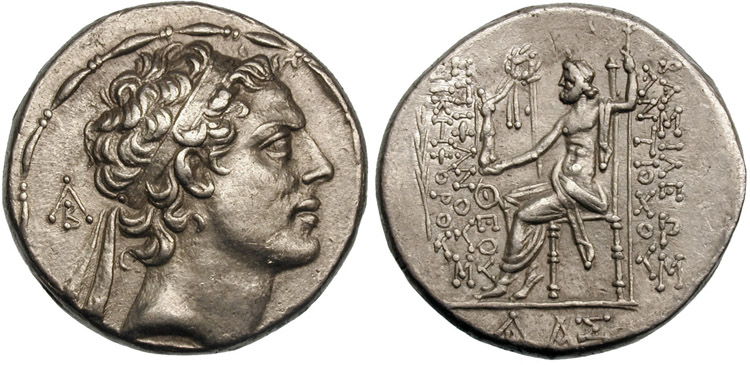
In apocalyptic literature we see a similar image: the small horn that boasts and makes itself out to be the greatest of the ten that speckle the head of the great beast from the sea. The little horn called Antiochus, so enamored of his own abilities that he surnamed himself Epiphanes, “the manifestation.” And uncritical people, taken in by his bravado, followed him until he started torturing and killing those who didn’t agree with his religion. Those who would not bow to his own personal Zeus would be martyred in nasty ways.

Now an active volcano is sputtering in Alaska. Could it be the sign of the end times? I doubt it. The end does not come ushered in by mere movements in the earth’s crust. According to Revelation there has to be a harlot on the back of a hideous beast. And that’s only if you believe Revelation is predicting something that hasn’t already happened. No, I believe Mount Redoubt is just doing what volcanoes always do – threatening, making noise, and occasionally erupting. They may blanket their surroundings with ash and magma, but these are often only temporary postures on the part of nature. Those who have ears to hear, let them hear.

More than just a redoubtable mountain?


Bible vs. Bible

Back in December I wrote a post about a mother (Estelle Walker) who was put on trial for starving her children (who survived). The reason the poverty-stricken mother did this was that, as she read the Bible, God would provide for her. She prayed mightily, but the children still went without food. She was found guilty of child endangerment, and at her sentencing this week the judge, interestingly enough, cited the Bible. Noting that the Bible presents a nurturing image of mothers, the judge, Peter Conforti, said, “The court has read the Bible too. Mothers are told to love their children.” Walker’s attorney cited a “‘delusional disorder’ that caused her to have an overreliance on God,” according to Joe Moszczynski, of the New Jersey Star-Ledger. An overreliance on God, or on the Bible?

This entire sad scenario highlights the danger of viewing the Bible as a magical book of answers. In a scene that is reminiscent of the Scopes Trial, both sides of the case cite the Bible for their actions. Which is correct? Is it not both? Does this not show the problems that arise when considering a lengthy book written over a period of at least a millennium by perhaps a hundred different authors as a uniform source of legal code or ethical conduct? Yet, when swearing to tell the truth, people lay their hand on the self-same Bible while thinking it means something highly idiosyncratic.

As a teacher of Bible I have a great admiration and respect for this problematic book. One of my recurrent concerns is that a storehouse of human experience and wisdom is treated as if it were a font of magic. As if finding a statement in the Bible somehow assures us that our viewpoint is correct. The Bible is used to justify crimes and noble actions. If clergy could have a more enlightened view on just what the Bible is, perhaps believers would not be led to destructive behavior because of simple misunderstandings. Perhaps children would be fed and judges could spend their time judging cases where the Bible simply doesn’t apply.


The Call of the Apocalypse

In discussing various polemics against religion, such as those by Christopher Hitchens and Bill Maher, I have frequently stated that they have a point, but they have ignored the good that religion hath wrought. It is like an Anti-Julius Caesar – the good is oft interred with the bones. Then the news goes and validates their polemic. The arrests yesterday of the leadership of the Christian militia calling themselves the Hutaree (I’m sorry, but it sounds like a happy Boy Scout gathering) highlights once more the danger that religion poses to an already unstable society. I’d not heard of the Hutaree before, and chances are I would never have heard of them had they not plotted an apocalyptic war against the United States’ government that landed them on the front page.

Few people are willing to admit just how dangerous apocalyptic thought is, or how deeply rooted it is in American politics. Tracing the roots of this form of belief is not difficult – apocalyptic first appears in the Bible when revelation through prophecy met and mated with Zoroastrianism’s dualism. The offspring of this union was the belief that a new, and better (!), age was about to dawn. God would usher in an era of peace, but it had to be precipitated by an era of war. Presidents drawn from the Religious Right have held this belief. Some have even eagerly begun wars in hopes that this ancient Afghanistanian religion would lead to the Christian apocalypse. At least the Hutaree were up-front about it: they believed that armed conflict with the government would flush out the Antichrist and usher in the end.

Last night in my Prophets class student questions indicated just how much interest there is in apocalyptic. We live in an era when information is all-too-easy to find, and yet many otherwise intelligent people believe that a hidden knowledge about the future is available in the Bible. It is not. For those who have ears to hear, Daniel was written about Antiochus IV Epiphanes. Revelation was written about a Roman emperor (perhaps Nero or Domitian) who threatened nascent Christianity. The apocalyptic battle was already underway. The future they longed for was peace. Modern apocalypticists see all of this as future prediction and believe that they must start the war. All of this makes me feel strangely vindicated. The FBI and other government officials are starting to demonstrate an awareness that to prevent religious extremism you must understand it. Now if only universities would catch on and realize that the study of religion is vital to national security I might end up with a full-time teaching post after all.

The original Antichrist


Lying Literalists

“I hate, I despise your festivals, and I do not delight in your solemn assemblies!” The words of some godless communist? A disaffected liberal? An angry atheist? No. These stark words come from Amos, the prophet. Each year when I teach my course on the Hebrew Prophets I am struck by how strident their words are. For Fundamentalists and others who take the Bible literally the words belong to none other than the Big Guy. The Primal Y. G-d. God hates the worship conducted in a land where injustice reigns.

Although the basic principles sound correct, it is clear that America cannot really be considered a just society. There are a few too many families without enough to eat, a few too many homeless on the street-corners of our cities, a few too many unemployed. And a few too few filthy rich. There is plenty to go around, and one might naively think prosperity might trickle down. It doesn’t. I’ve always been amazed to see the girth of many prosperity gospelers who inveigh against the unrighteous. A sturdy measuring tape might tell us all we really need to know about righteousness.

Bible believers do not believe in the Bible. They accept the message they wish to hear, that God loves those who are rewarded with wealth, but the message of Amos they have little time for. They miss the part where the prophet calls them cows of Bashan that are fat for sacrifice. Yet when they flip out their iconic Bibles the theologically illiterate follow them to the polls. The more they pound their Bibles the more they are beating innocent victims. Be careful before becoming a Bible believer – it is not always a comfortable place to be!


Two Mites for the Truth

“Abuse scandal puts heat on Vatican for more transparency,” runs a headline on the front page of today’s New Jersey Star-Ledger. The reference, of course, is to the recent divulging of alleged abuse that implicates the brother of the Pope. The wording of this particular headline, however, contains the kernel of a very important religious preserve. Like the X-Files, religious structures thrive on secrecy. If the mystery were removed from religion, what would be the motivation to believe? Science provides facts and theories that do not require as much belief as they do acquiescence. Religion, on the other hand, deals with intangibles shrouded in murky darkness.

Religions cannot be transparent. “Naked business” models simply do not work when the wealth of the ages is at stake. Few religious believers ever question how or why the leaders of their traditions hoard wealth and valuable objects and real estate. The great medieval European cathedrals, as magnificent as they are, represent loss, pain, and toil on the part of a great many faithful. Those with severe consciences will always drop an offering in the plate, basket, or tray when divine pressure is laid upon them. Even if they really cannot afford it. Two mites for the salvation of an eternal soul is a real bargain!

No one can truly claim to have comprehended the whole of a religion. After all, many religions have centuries of accumulated lore and tradition that must be passed along in ways opaque to the general issue believer. If glass walls were erected around every seminary and religious training institution, those who have not had the experience of being involved in clergy instruction would find the sight blinding. No, religion will never be transparent. Nor will it ever be extinct. It is simply far too easy to believe what one is told.

Two mites, and then some


Evil Echinoderms

Ever since I can remember, I have longed for the ocean. Not a good swimmer, and not one to eat the myriad creatures that fill its immense waters, I find myself nonetheless drawn to its endless pounding surf and salt spray. Even before I’d read Rachel Carson’s The Sea Around Us, discovered the eternal fascination of Herman Melville’s Moby Dick, or had even heard of H. P. Lovecraft, I knew that I belonged to the ocean. It need not compete for my affection. It had already won. With family visiting this weekend and with an unseasonably warm March weather-system, we went down to the Jersey Shore yesterday to visit my old friend. Sandy Hook is a peninsula that juts up from New Jersey toward New York City, a sandbar of undeveloped free ocean access administered by the National Park Service. During the summer it can be intensely lined with fishermen and sun-worshipers, but in March it was a reasonable place to be. Sea creatures are abundant when left alone, and we saw our first harbor seal of the season, along with a galaxy of sea stars. These echinoderms had eluded me thus far; we’ve been to the shore several times during our Jersey days and had never discovered any. One large sea star had been stranded in an evaporated tide pool. Compassion overcame me and I carried it down to the surf to offer it a chance for continued survival.

Miserable sinner?

Recently I reread Jonathan Edwards’ horrific yet classic sermonic masterpiece, “Sinners in the Hands of an Angry God.” Vividly depicting a furious deity barely capable of restraining his repressed wrath directed toward wicked human beings, but for an uncommon dose of misplaced compassion, Edwards suggests we all deserve ghastly destruction. Edwards underscores one of my recurrent observations about religion – it is a means of control. The great Puritan divinity only accepts penitent Puritans, all others go directly to Hell, not passing Go, not collecting their two-hundred dollars.

As I held that helpless sea star, destined for the cruel, drying rays of an unclouded sun, I did not think of its multiple transgressions. Murderous predators, sea stars consume other sea creatures, including their own kind, in the constant struggle for survival. This one had obviously had a successful run and had grown to an impressive size. I felt no rage, no desire to destroy this killer. Instead, I saw a radiant example of a being evolved to live in an environment that I can not even comprehend, just doing what it needs to get along in its undersea world. And I recognized the wrath of God for what it really is – one man’s unfulfilled plan to decide the destiny of his fellow creatures.


Politicians and Blood-Suckers

The old icons and heroes are gone. It is best just to deal with it. No one is above reproach since we are all in this human morass together. Nevertheless, I’ve always held a soft spot in my cynical heart for Abraham Lincoln. I know he wasn’t perfect, but he stood for an issue that has been a driving force for my life: fairness. Now I see that he was a vampire hunter. After having read Seth Grahame-Smith’s Pride and Prejudice and Zombies last year, I’ve decided to give a try to his Abraham Lincoln: Vampire Hunter. My fascination with monsters and religion has not been disappointed in this fanciful story.

Our quasi-fictional honest Abe begins his vampire-slaying ways when he learns that, yes, a vampire killed his mother. As a boy of only twelve, he finds the knowledge stressful to the point of burning the family Bible that he used to read to his departed mother. Why? In Abraham’s own (fictitious) words: “How could I worship a God who would permit [vampires] to exist? A God that had allowed my mother to fall prey to their evil?” I admit that I was secretly pleased to see the classic issue of theodicy being raised in a story concerned with the undead. It is the dilemma of all who want to see a good God behind all the suffering in the world. It is a dilemma that stems from the same deep wells as our inhuman monsters. We can imagine a better world, but we can’t have it.

Politicians with axes

As I see New Jersey’s governor Christie (for whom I decidedly did not vote!) slashing away again and again like Freddie Kruger at the state’s educational system, I see the twin peaks of vampirism and theodicy peering distantly over the horizon. I am deeply disturbed by the facile disregard this “visionary” Republican has for the future of his own state, for the future of our children. And I am forcefully reminded once again that vampires are symbolic of all those who prey upon the unwary. When staring into the fireplace on a cold night, I imagine myself standing beside Grahame-Smith’s fictional Abraham Lincoln, wondering what god it is that vampires worship.


Sex and Violence in Ancient Peru

MSNBC ran a fascinating article yesterday that strangely validated this blog. The Quai Branly museum in Paris is opening a display of Mochica artifacts from ancient Peru. Although I am no expert on ancient Peruvian religion, I do recognize the obvious connection that I have introduced here a time or two: the connection between sexuality and religion. The article states that (but does not show) artifacts of an explicitly sexual nature are among those recovered from the Mochica civilization. Bringing violence (in the form of human sacrifice) and sexuality together, the ancient Moche were just as religious as medieval (and later) monotheistic faiths that assert their right to control sexuality and dole out violence.

The MSNBC article makes clear that the sexual, sometimes violent, images are not representations of everyday life, but religious rituals associated with the death of dignitaries. Emma Vandore, the author of the article, notes that the images demonstrate the social control Mochica religion had on its people. She is clearly right. Religions, while often in the position of providing “theological” rationales for their decisions, are actually forms of social control. Individual salvation aside, your clergy want control over your life.

Tame Mochica pottery from Wikipedia Commons

Because religion is so large and so mysterious, the populace often simply complies. The Mochica artifacts, some of which are reported to be disturbing, justify this interpretation. Even an image search on the web will reveal how graphically cruel religious representations of Hell are; much more compelling in scariness than are feeble attempts in alluring one into an idyllic representation of Heaven. (Heaven is often shown as a garden, and as a sufferer of hay fever, I imagine myself sneezing through paradise.) It is no coincidence that organized religion appears on the historical scene on the coat-tails of civilization itself. The Moche were straightforward about what modern civilization would prefer to hide: religion is more about control than it is about belief.