Love Slap

Over the past few days news stories have emerged raising concerns about implicating very high authorities in the Roman Catholic hierarchy of at least being aware of problems in the church. These problems are by now familiar to all who follow religious news: allegations of abuse, physical and/or sexual, known, perpetrated, and hidden by clergy. The recent spate of cases has come from Germany, home territory to some high-ranking officials.

The church has never done well at steering free of controversy. After all, in Niebuhrian terms, this is “Christ against Culture.” Nevertheless, our human sensitivities have continued to grow, and it is recognized that children, swept into religious institutions because of the belief structures of their parents, often end up victims. Unless something radical happens, those children, imprinted from youth with the stamp of their family religion, spend their lives bearing its marks. What religious leaders command must be obeyed. They, after all, hold the keys to the kingdom.

Slapping choirboys (and worse) has underscored the weakness of human clergy. Any religion that is mediated by human agents will be susceptible to abuse. It should not be accepted, excused, or tolerated. Temptation to give in, however, marks an indulgent modernity. Although largely mythical, the torments of ancient saints drew the moral lesson that mere humans could withstand the urge to give in to temporal vices. Perhaps clergy ought to stare long into the patient face of St. Anthony and ponder the implications. (Notice who does the abusing.)

The last temptation of Tony?

War and Peace

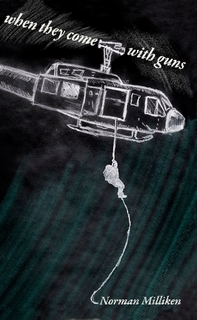
A few weeks back a friend pointed me to a Facebook-style website someone in my high school graduating class had put together. In high school I was awkward, shy, and a little too obvious about my religious beliefs, so I was a bit timid to join. Nostalgia eventually got me in a headlock, just like in gym class, so I signed up. One of my classmates helped me to find one of the people who had a profound impact on my life. Although I never had him for a class, Mr. Milliken was my Creative Writing Club advisor, and a person I utterly respect and admire. I’m not normally a hero worshiper, but Mr. Milliken had been through more suffering than many men his age and had come out of it a sincere, caring, and thoughtful individual. When I found out that he had published a brief collection of his poetry about his time in Vietnam, I immediately ordered it.

Available from Lulu.com

War has always haunted me. Perhaps it was partially because of the tales Mr. Milliken sometimes told, or because of my macabre reading about the terrors of twentieth-century conflicts, but whatever the cause for my fear, it was real. War has been with humanity for as long as its more docile cousin, civilization. Being rational creatures, there seems to be no reason that we should not be able to reason ourselves out of armed conflict, but we don’t. Knowing that one of my most respected high school influences had nearly died in Vietnam chilled me. Reading his poetry, I shiver once again.

While justifying it on theological grounds, the Hebrew Bible takes a fatalistic view of war. Killing of enemies who stand in the way of god’s plan is sanctioned, commanded even. The victims, however, are humans just like the victors.

When I get caught up in the complex web of difficulties my own life has woven into, I find it easy to complain. Reading when they come with guns, however, reminds me that many have had it much worse and have come out as superior human beings. For those who are victims of war, we can only hope that forgiveness will somehow descend on those of us who have not yet put an end to it.


Burning Crosses and Aftershocks

In a small blurb I would have missed had my wife not pointed it out, today’s paper carried a brief follow-up on the religious implications of the Haiti earthquake. The story (caption) ran: “A Christian mob circles a burning stack of items to be used for a Haitian voodoo ceremony for earthquake victims while singing church hymns in the Ti Ayiti neighborhood in Cité Soleil. The voodooists were run out of the central pavilion under a hail of rocks, and all the ceremonial items they left behind were destroyed and burned.”

My mind, at seeing burning religious symbols in the picture, turned to the infamous burning crosses used by equally intolerant “believers” in the last century in this country. Perhaps the motivation for burning the symbols is different, but the message is the same – a very narrow band of the wide continuum that is Christianity has decided that another variety of human being must be brought under control or destroyed. I don’t seem to recall reading in the Gospels, or even Paul for that matter, that throwing stones at believers in other faiths was a recommended activity. The voodou service, according to the blurb, was intended to help earthquake victims. Instead, the Christian faction forcibly drove them out and violated their religious symbols. Could they not have been spending helping victims instead?

I am not the sort to throw the first stone, knowing my own faults all too well, but the rampant supersessionism of an entitlement generation Christianity is showing its ugly side in such an instance as this. If religions are not here to improve the lives of others, then what is their purpose? To placate mythical gods to ensure one’s own blessed future, no matter who has to be hurt along the way? It seems to me that less time burning religious symbols and more time helping the needy is a platform worthy of any honest religion.


Everything’s Better at Harvard (Except Religion)

My wife pointed me to an important article in Newsweek on the plight of religious studies at Harvard. Now, I have to admit to a couple of bunches of sour grapes right up front. I was accepted at Harvard but elected not to go. Only after I had completed my doctorate at Edinburgh University after a lifetime of the study of religion and found that no jobs were available did I realize my mistake. I met colleagues who had jobs while attending academic conferences. All of those well settled in respectable positions had graduated from Harvard. A similar phenomenon exists in Great Britain. Those who actually find satisfactory positions hold doctorates from Oxford. Problem is, neither Harvard nor Oxford corner the market on good education (oh, the heresy!). People, however, are simplistically impressed by lineage.

In any case, this article by Lisa Miller points out the high drama of academic discord at the Shangri-La of American institutions. The famous linguist, Steven Pinker, who personally believes religion to be a severely faulty means of seeking enlightenment, has worked to prevent a required course in religion at the famed secular university on the grounds that faith and reason do not share the same status. Miller goes on to express how small colleges and state universities are picking up on the slack. My limited experience at Rutgers bears out her observations. In this large, rambling, decidedly secular school, my classes in the religion department are always full and I have to turn students away. Yet the university refuses to allow for a full-time hire. Secular America is deep in a state of denial. Because many academics reject religion personally, they simply can’t see how vital it is to understand it. I personally believe no one should be allowed to hold public office without having completed a course in Bible and its political abuse.

Meanwhile, Harvard still holds back. Its reticence will not prevent misinformed people from using their religion as a means of power and destruction. Pretending that since religion is not personally important it is not important at all has deadly consequences. To me it seems obvious that it is not the school you attend that is important, but what you learn while you are there.


On Monsters

Long-term readers of this blog (both of you – you know who you are!) are aware of my interest in monsters. Constant companions of my childhood, I spent lazy days and sleepless nights both curious and fearful of these imaginary creatures. Like the concept of the holy, they both repel and attract simultaneously. Back in October, when I first heard of Stephen Asma’s book, On Monsters, I knew I would have to read it. I have commented occasionally during the progress of my time spent on the book, but having finished it I stand in a better position to consider the whole.

Not a monsterologist, I have nevertheless been fascinated by the juncture of monsters and religion, a point that Asma repeatedly emphasizes. His book is a masterful treatment of the subject from many angles, working through a roughly chronological treatment of the changing faces of the monstrous. Although monsters first appear with the earliest civilizations, they have persisted even in the strong light of scientific thinking and rationalism. As we comprehend our world, the monsters appear in deeper and darker corners, in the very folds of our throbbing gray matter, in the microbial world that floats invisibly around us, and in the smiling beneficence of technology. At many points in his historical presentation Asma is difficult to read; human brutality and emotional distancing have made for the most horrific of real-life monsters he cites.

Particularly useful in Asma’s treatment of the subject is his contention that monsters still have a place in our society. The word itself retains its usefulness in describing human, all-too-inhuman treatment of others. Unfortunately, the motivation for such treatment can often be traced to bad religious education. We may not be so fearful of the werewolf or the (supernatural) vampire, but we still fear those who treat others without empathy or human concern. Anyone with the parallel interests in religion and its aberrations owe it to her/himself to take a careful look at On Monsters and consider its implications.

A classic monster


Book of Eli

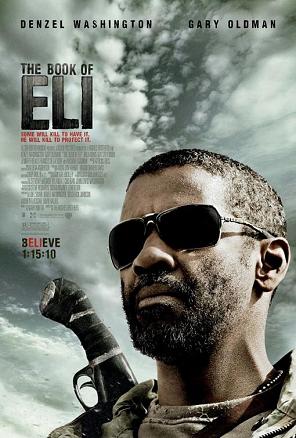
Feeling that it is incumbent on a teacher of Bible to stay current with media presentations of my subject, I went to see Book of Eli yesterday. Not really a fan of violent movies, I was a bit concerned about being subjected to gratuitous carnage, but beyond the expected post-apocalyptic context and its attendant, constant menace, there was not too much to worry about on this score. For several years I have been researching the presentation of the Bible in movies. It is my hope to write this research up into a book one day if I ever land a job that allows such a luxury. Book of Eli will deserve a chapter of its own.

Apart from fundie self-praise fests, few movies present the Bible in such a heroic role as it plays in Book of Eli. Eli, like Jake and Elwood, is on a mission from God: to deliver a Bible to the last repository of education in the United States, namely a famous correctional institution. Along the way Road Warrior-style bandits harass him and Carnegie (a kind of deranged librarian with lofty political aspirations) covets Eli’s Bible, the last in existence. Carnegie wants the Bible because, “it is a weapon” of social control. (All quotes are approximate since I couldn’t take effective notes in the dark.) Eli must keep it because of his mission. Along the way Eli explains why the Bible is important to Solara, a young woman who is drawn to his sense of mission and devotion to the book. Explaining that since the last war, all Bibles have been routinely destroyed and that, “some say it [the Bible] is what caused the war,” Eli lovingly wraps the book in a cloth before secreting it in his ubiquitous backpack next to his machete. At this point I could feel the social commentary pressing hard upon me. The Religious Right would love nothing more than to force Armageddon on the planet so that they might go to their wonderful fantasy-land in the sky. Their misreading of the Bible has caused wars in the past and will likely cause them in the future.

As Eli loses the Bible to Carnegie and continues his mission empty-handed he explains to Solara, “I’ve been protecting it [the Bible] so long that I forgot to do what it says.” Again the social commentary was evident as news headlines continue to push hot-button conservative political issues where the heart has been cancerously eaten from the Religious Right and the Bible as idol becomes more important than what it actually says. When Eli brings his mission to its conclusion, however, the viewer is presented with an entirely positive view of the Bible. It is the symbol of civilization in a world of anarchy and Solara marches off as its acolyte into a hostile world as the sun sets in the west.

What is truly remarkable about this film is that it presents the Bible in a way that would make its study cool again (if it ever was). For those of us who’ve spent a lifetime shying away from telling others that we have spent our lives learning about the Bible, we might now walk into the glaring sunshine and have others step back in reverence for our selfless efforts to benefit the human race. Well, at least once the apocalypse is over.


Proselytizing Phylacteries

Two related stories appeared in today’s newspaper, both of which concern the Bible in public life. A commercial airliner was forced to undertake an emergency landing in Philadelphia while en route from New York to Louisville, Kentucky yesterday because of terrorist concerns. The cause for alarm? A Jewish teenager’s use of his tefillin in public. Often translated as “phylacteries,” tefillin are prayer boxes worn on the arm or forehead during prayer in some sects of Judaism. This idea is not really obscure if someone has basic religious training. People on the US Air flight, afraid that the scripture-bearing artifact might be a bomb, had their lives disrupted while the boy calmly explained what he was doing. After landing, TSA officials came aboard, just to make sure. That’s a comfort! TSA officials seem unable to spot a real bomb but take a more than academic interest in a boy saying his prayers. Perhaps reading a Chaim Potok novel should be required training for TSA service? As my wife observed: what if someone took out a rosary or a crucifix? Would the flight be diverted to van Helsing’s residence? The level of this religious ignorance belies the grumbling in my post yesterday. Religious study is vitally important in an increasingly global society.

Is this phylactery da bomb or what?

The second story, again courtesy of my wife, was first run on MSNBC earlier this week and reprised in the paper today. Trijicon, a major defense contractor for the U.S. military, has for years been stamping Bible verse references on its rifle scopes. Concerned citizens, perhaps after watching sniper Private Jackson quoting the Bible in Saving Private Ryan, have raised concerns that Bible verses on rifle scopes constitute proselytizing. In Muslim countries, after all, those who have been shredded by a bullet before they ever saw their assaultant might be tempted to convert if they ever glimpsed the rifle scope and saw the Bible emblazoned on it.

Today’s story indicates that Trijicon has agreed to provide “Bible verse removal kits” to the military so that the verse references might be easily erased. What is so sad about this situation is that no one seems concerned that the maker of lethal weapons adds Bible citations to their products. The purpose of these devices is the killing of other people. The Bible seems an odd choice of supporting literature for this cause. Well, maybe not. The Bible knows how to call down the wrath of the Almighty on enemies as well. And the Bible gives instructions on how to pray with a phylactery. These stories demonstrate as clearly as possible how selective reading of the Bible leads to hypocritically varying results in an overly religious, but religiously uninformed, society.


Rushing in Where Angels Fear to Tread

As my daughter’s public school undertakes its humble efforts to raise funds for the devastated nation of Haiti, contributing the little that unemployed children can raise, Rush Limbaugh unapologetically proclaims that Americans shouldn’t contribute to the earthquake relief. The New Jersey Star-Ledger notes that on Wednesday Limbaugh declared that Americans already support Haiti through their tax dollars and shouldn’t feel the need to contribute anything beyond that to the poorest nation in our hemisphere. This is true Christianity, according to the Neo-Con gospel.

Rush Limbaugh basks in the limelight as the outspoken representative of the “Gott und Ich” school of religious politics. With an estimated annual salary around the $400 million mark, Limbaugh comfortably sits back and watches the world burn around him. Together with James Dobson, Pat Robertson, and others who support the new, compassionless version of Christianity (Christianity 2.0), they inveigh directly into the ears of high-ranking politicians with coarse voices declaring that God wills for them to be the sole arbiters of what is right. I only hope that Americans are really listening. Really listening.

Religion has always been a form of social control. From earliest times, those who claim to know the will of the gods tell others what they need to do to placate the angry deities that hover all around. Earthquakes are the work of such angry gods. What do they demand? Listen to your local priest. America has been beset with a plague of Religious Right voices that are well-funded and so parsimonious that seldom can the gentle voice of reason be heard. While Limbaugh enjoys his enormous wealth kids who have never known anything like basic comfort are dying in the thousands in a nation right next door. And the people say, “Amen.”


Theodicy Versus Idiocy

Among the leading reasons generally given for atheism in developed countries is the problem of theodicy. Theodicy is the act of justifying God, as implied by the roots of the word itself. In a world where many innocent suffer, as well as many guilty, the question of how a loving God and divine fairness fit into such a warped and corrupted system presents questions often left unanswerable. My class tonight will be reviewing Job, a book steeped in the issue of misfortune. The best that the narrator can offer is that Yahweh made a bet with the Satan and Job came out on the losing end. Not much hope for justice there.

This week’s horrific earthquake in Haiti has elicited high levels of sympathy and support as this poorest of western hemisphere nations struggles to find some kind of balance in a reeling world. The question of where God is amid all this tragedy, perhaps 100,000 dead, pensively teeters in minds sensitive to the human condition. Other minds, however, blare idiotic platitudes that only drive mourning theists closer to the other side. Pat Robertson, a major political player who has been a card-holding member of the Religious Right from its unholy inception, has declared that Haitians are paying the price for an ancient deal they made with the devil. In a theology that makes a mockery of even the Charlie Daniels band, Robertson stated, according to MCT News, that Haiti had made “a pact with the devil.” He said, “Something happened a long time ago in Haiti, and people might not want to talk about it… They were under the heel of the French… and they got together and swore a pact to the devil. They said, ‘We will serve you if you’ll get us free from the French.’ True story.”

This drivel, based on hearsay history and implicit racism, does not justify a loving, or even neutral, God. Instead, the Conservative deity is shown in his true colors: racist, supersessionist, arrogant, and uncaring. This is the deity behind the Religious Right. Some people castigate Pat Robertson for being outspoken and perhaps senile. I applaud him. He shows clearly what intellectual rubbish the Religious Right promotes. He simply has fewer inhibitions to admitting it.

In Job, there was a deal made with the Satan. The perpetrator of that deal was Yahweh. No answer is given as to why the innocent suffer. Job is a most profound book, wrapped in a childlike story of two supernatural beings trying to show each other up. If we look hard enough we can find the Religious Right in the book as well. Their voices are those of the “friends” that Yahweh ultimately condemns when he finally speaks from the whirlwind.


Nag Hammadi

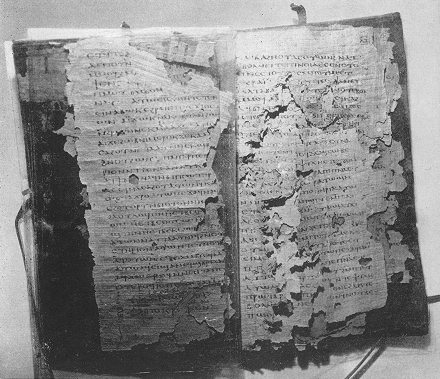
Want to create some excitement in the middle of a gaggle of scholars of ancient history? Just throw some newly discovered ancient text in their midst and sit back to watch the fun. This scenario has been (metaphorically) repeated many times in the last century and a half. New texts come to light and revolutionize what we know of ancient religions. The Nag Hammadi library represents one such flair up of excitement and intrigue. Discovered in 1945, this cache of mostly Gnostic texts has forced a new paradigm upon early Christianity. It has become clear that several flavors of early Christianity existed side-by-side until one group, claiming divine support, became the “true Christianity” (orthodox) while the others were just plain wrong. The Gnostic field of study received a shot in the arm with the publicity fair surrounding the Gospel of Judas, a Gnostic text not found at Nag Hammadi, early in the new millennium.

Good News, Gnostic Style

Discovery can be a dangerous luxury. When new evidence surfaces it can’t be ignored. When the religions of the ancient world reached their imperial stages it had already become too late to admit that mistakes may have had been made way back in ancient times. You can’t conquer a country and then just take it back. We now know that it is far more appropriate to refer to Early Christianities and Early Judaisms than to utilize their singular (if more prevalent) forms.

Nag Hammadi, a mid-size town in Egypt, has been back in the news since Coptic Christmas (just a couple of days ago) saw the death of six Copts when a Muslim extremist gunned them down on their way out of church. In turn, the Coptic community has been running riot in the town, destroying ambulances and shattering shop windows and driving Muslims off the streets. Those who hold their religions to be unchanging have the most to lose when new discoveries surface. It seems unlikely that exploration will cease; more ancient interpretations will emerge. When they do it also seems unlikely that they will find parent religions mature enough to accept their long-lost children. We could still use a little bit of secret knowledge, it seems, even today.


Money Driven Life

An Associated Press story this weekend fetes Saddleback Church’s Rick Warren’s ability to raise 2.4 million dollars at his megachurch in an economy where many are suffering because of our national plague of greed. I find the story distressing not because people are willing to put out money for what they believe in — that is human nature — but because what they believe in is so shallow. Oral Roberts is not yet a month in the ground, and megachurches are again begging for money. Worse, they are getting money.

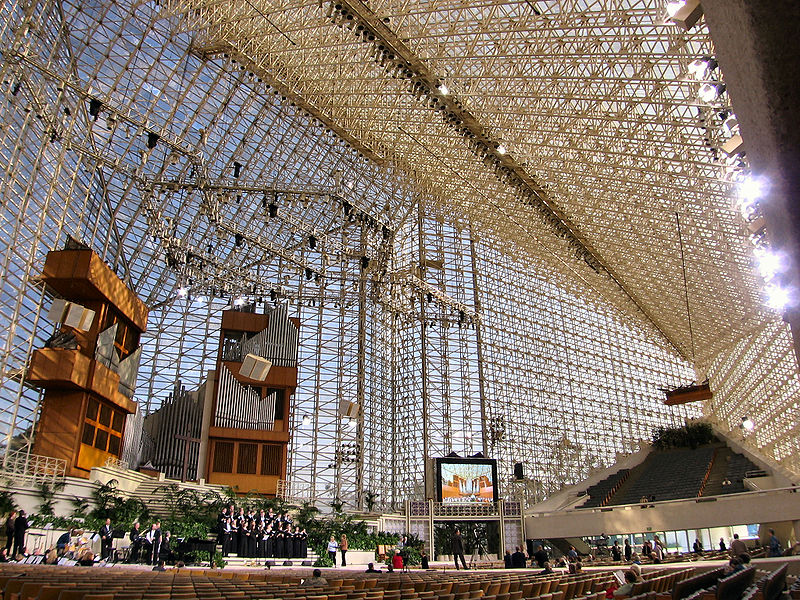
The greatest stumbling block to the humble message of the teachings of Jesus has always been the greed and concupiscence of the church. Whether it be the Vatican or some evangelical Crystal Cathedral, churches that stockpile wealth, although they may indeed distribute some to worthy causes, ultimately become a major part of the problems that create an unjust society. The concentration of wealth into the hands of any religious body will corrupt it. I have known clergy to purchase vestments costing hundreds of dollars per piece while their children were fed with food stamps. I have seen televangelists wearing suits that cost more than a month’s salary for many of their parishioners. I have heard them giving God the praise for their personal glorification.

Glory to God at what cost?

Once the glitz is removed, whether it be priceless Renaissance art or the supreme comfort of a Rocky Mountain resort or southern California ranch, the real purpose behind such driven lives becomes clear. No amount of prevaricating will make the working-class founder of the religion touted by wealthy clergy a friend of the rich as long as the poor continue to suffer.


The Blessing/Curse of Janus

Janus wonders about January

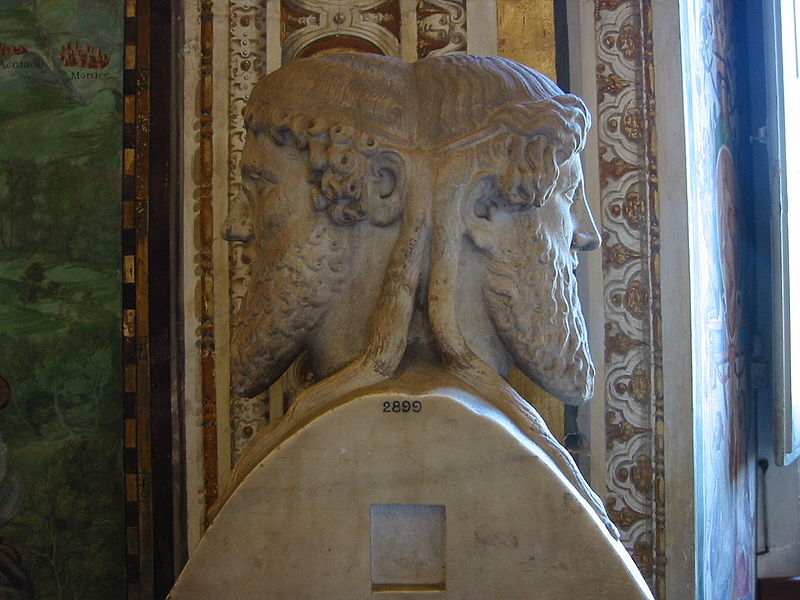
As the world stumbles into another new year, my thoughts turn to Janus. The namesake deity of January (since the Romans gave us a winter New Year’s day), Janus is a poorly understood ancient deity. Since he is overseer of beginnings and endings of all sorts, he is often portrayed with two faces or heads — one facing forward and the other facing back. There are no attendant mythological stories to this god, although he appears to have been very important in early Roman religion. He comes to mind as I prepare to teach a course on mythology that I haven’t prepped for since Oshkosh; my brief holiday break has been spent reading classical mythology.

Not only to we face a new year, but the beginning (or ending, it matters not which to Janus) of a new decade. Looking back over the muck-up made of the first decade of the twenty-first century, often because of religious extremists, I wonder what Janus sees down the road. There are many who feel optimistic about our firm bridle on technology and its ability to make our lives easier. Some of us believe that society has lost its appreciation for the classical study of the humanities and that we have lost our way because simplistic religion has seized the reigns from sensible mythology. In an age of information clutter, there is no one able to synthesize reason out of any of it. Perhaps it is the human condition.

Janus likely originated in the Ancient Near East. Once he reached Rome he continued to evolve into a major deity until eclipsed by the Olympians (many of whom first appear in the Ancient Near East as well). Not ironically, religious tolerance and religious intolerance both seem to have derived from the Near East also: Cyrus the Great’s declaration of religious freedom emerged in the midst of theocidal demands on the part of jealous gods. Now as we stand on the brink of a new decade, Janus only knows which way the unfeeling pendulum will swing.


Oral Octopus

Veined Octopus

Juxtapositions fascinate me. As a former editor I notice the layout of stories on a page knowing that word counts, subject matter, photo sizes, and general interest all play into the placement of material. I recently posted an entry on Sacraments and Sea Cucumbers that had been suggested by such an editorial flourish. Yesterday’s paper wafted another such epiphany.

By now everyone knows that televangelist Oral Roberts died on Tuesday. Although he pioneered much of what is now recognized as televangelism, his true motives were clear when the money began piling up. I’m not the judge of his religious sincerity, but his ministry was a multi-million dollar enterprise, and he even founded a “university” named after himself. Meanwhile, housebound octogenarians on limited incomes gladly sent him their money to continue his good work. There is a very substantial profit to be made in preaching to the choir. All televangelists know that.

Immediately beneath the Oral Roberts story in the New Jersey Star-Ledger was a much more fascinating story about the veined octopus. Biologists have long known that octopi use large shells and other natural detritus for shelter. Octopi had been known to use coconut halves for that purpose as well. What is new in this story is that veined octopi have been observed collecting coconut halves (often discarded by human gatherers), emptying them out, and moving them to a place where two halves can be made into a neat shelter, thereby demonstrating a more advanced brain structure than most televangelists. In short, these invertebrates are utilizing tools. It is only a short step on the way to octopus televangelists, but if they know how to gather their valuables, this development can’t be far behind.


Happy Whatever

Over the past couple months I had been interviewing for a position at the Tanenbaum Center for Interreligious Understanding in Manhattan. Although I did not get the position, I still recommend the center for those who are dealing with religious conflict. One of Tanenbaum’s concerns is the “December dilemma.” The month of December is dominated by the celebration of Christmas, and many people are barely hanging onto sanity awaiting those few days off near the end of the year to catch their breath before jumping back into all of it again. Yet, with the continual mixing of cultures and traditions that makes America such an interesting place, other traditions have difficulty competing with Christmas. Well, it is hard to compete with such a capitalistic holiday, one that is based around getting stuff.

There has been a movement afoot in recent years to mash the December holidays together. One such movement is the celebration of Chrismukkah, albeit somewhat tongue-in-cheek. Hanukkah naturally falls around the usual time of Christmas, and Kwanzaa was created to add yet more texture to the month. Despite all this, Christmas is still predominant. As I tell my students, the mindset of America as a whole (not demographic or even factual, but perceptual) continues to be Protestant Christian. Apart from Kennedy all of our presidents bear this out. And Protestants, although they don’t care much for the “mas”part, are big Christmas fans.

A Dickensian Christmas

A few years back I wrote a book for tweens that examined the roots and traditions of the major American holidays. (So far publishers haven’t been impressed.) One of the facts I learned about Christmas is that its celebration as a major holiday is a recent phenomenon. Before the nineteenth century Christmas was barely noted in America at all. In the wake of Charles Dickens and his influential stories, Christmas became an institution that celebrated family and home and goodwill. Eventually it grew into a major commercial holiday and everyone wanted to get in on the fun. Now we have a largely secular Christmas and other religions are eager to join in the non-confessional part of the holiday. Everyone would like to have Christmas day off work (except the clergy), and those who don’t have it feel lonely, I’m sure. I don’t see the reason for the big fuss about whose holiday it is. Christmas is symbolic of peace and togetherness, and no matter what it is called or who claims ownership, this is by far the superior path over religious fear and hatred.


Hadad in Copenhagen

Let us talk plainly about the weather. Global warming is a reality, and yet the issue is clouded by religious conservatism. To be precise, it is difficult to determine whether it is really greed or the religious right that stands so firmly behind free-market capitalism that is driving this chariot of the sun. The strange and unholy alliance between religious and political conservatism, however, has become a force daily striving against reality and its proponents want to be on the top of the pile when the whole thing collapses.

I can not speak to the political end of this continuum; I am not a political scientist or economist. As a “religionist,” however, I recognize a deeply disturbing trend that I have followed since my youth. Fundamentalists have consistently taught their young that the “Second Coming” is only minutes, possibly seconds, away. Undaunted by the two-millennium delay in wish-fulfillment, they suppose the words supposedly uttered by Jesus indicate a kind of divine “I’ll be right back” just before pushing off from the Mount of Olives. The signs of the times given in the Bible describe the then current condition, yet modern-day Fundamentalists wish to force the almighty hand, call the bluff of the Texas Hold-‘em expert above. If the general in the sky said wars would come, well, we’ll make wars. If the only way to get his attention is by destroying the planet around us, so be it. Deny global warming for the sake of the religious right, since their world is about to end.

Baal in Copenhagen?

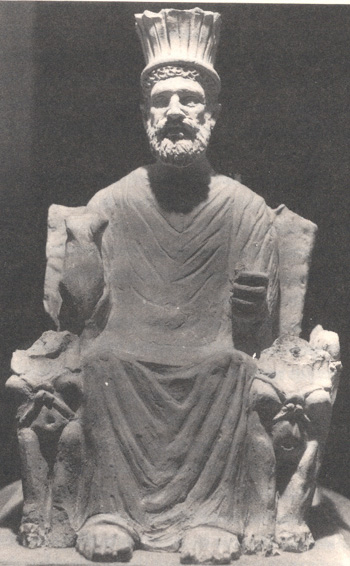
The rest of us might want to stick around for a while. Ancient meteorologists believed that particular gods controlled the weather. At Ugarit Baal, or Hadad, took responsibility for drought and plenty. If there was a problem, they knew just to whom to offer a sacrifice. In our monotheistic western world, we’ve pared the gods down to a single man. Not everyone agrees on his mood or character, but some are convinced that he has his bead trained right on this planet and they want to help from here below. Others believe — o the heresy! — that natural processes control the weather and that we can do something to make our situation better. We might be in a better place if those who believe the gods control the weather were relegated to theology classes rather than political offices.