Losing My Religion (Excuse)

I’ve always appreciated New Jersey inventiveness. This is a state where lottery winners register with the social security numbers of dead people to avoid taxes. Politicians and honest folk both seem to resort to inventive means of getting around the system. A recent article in the New Jersey Star-Ledger brought this home. An uproar has developed, it seems, over a more stringent regulation concerning religious exemptions for vaccines. If the bill passes, parents and guardians opting out of vaccines for their children will have to state their religion and the cause for the objection. Many have been suggesting this is government of the worst kind, because, well, it wasn’t really a religious reason that they used the religion waiver. Have you met my dead relative? He recently won the lottery.

A timeless problem that arises from a situation such as this is the issue of defining religion. We’re not really sure what it is, other than a reason for not preventing disease. Experts disagree about the essential components of religion. Since the concept of God is up for grabs, doing what pleases said deity (or not, depending on whether a religion has a deity) would seem to be part of it. Most religions, whatever they are, suggest honesty is a virtue. And honestly, most religions have no trouble with vaccines. The paper even had a helpful chart of religions, even indicating that Christian Scientists and Jehovah’s Witnesses have no issues, really, with vaccines. Clearly some churches do. One suspects other may have had such regulations, but they eventually died off.

Since we can’t bother to define religion, it becomes a most convenient excuse for just about any kind of deviant behavior. Many religions exist; more than most people even suspect. Sects of Christianity alone number around 40,000, and that’s leaving aside all other religious traditions and their many splinter groups. Truly held religion, as the media often underscores, can lead to extreme behaviors. The only way to come to grips with this is to try to understand what religion actually is. The most logical locus for such study would be universities. Many of them are run by states. States that are afraid of breeching that wall of separation. Even in the cause of public health. In my opinion, funding the study of religion could be a real shot in the arm. But then, so could winning the lottery.

800px-Typhoid_inoculation2


Getting Exorcise

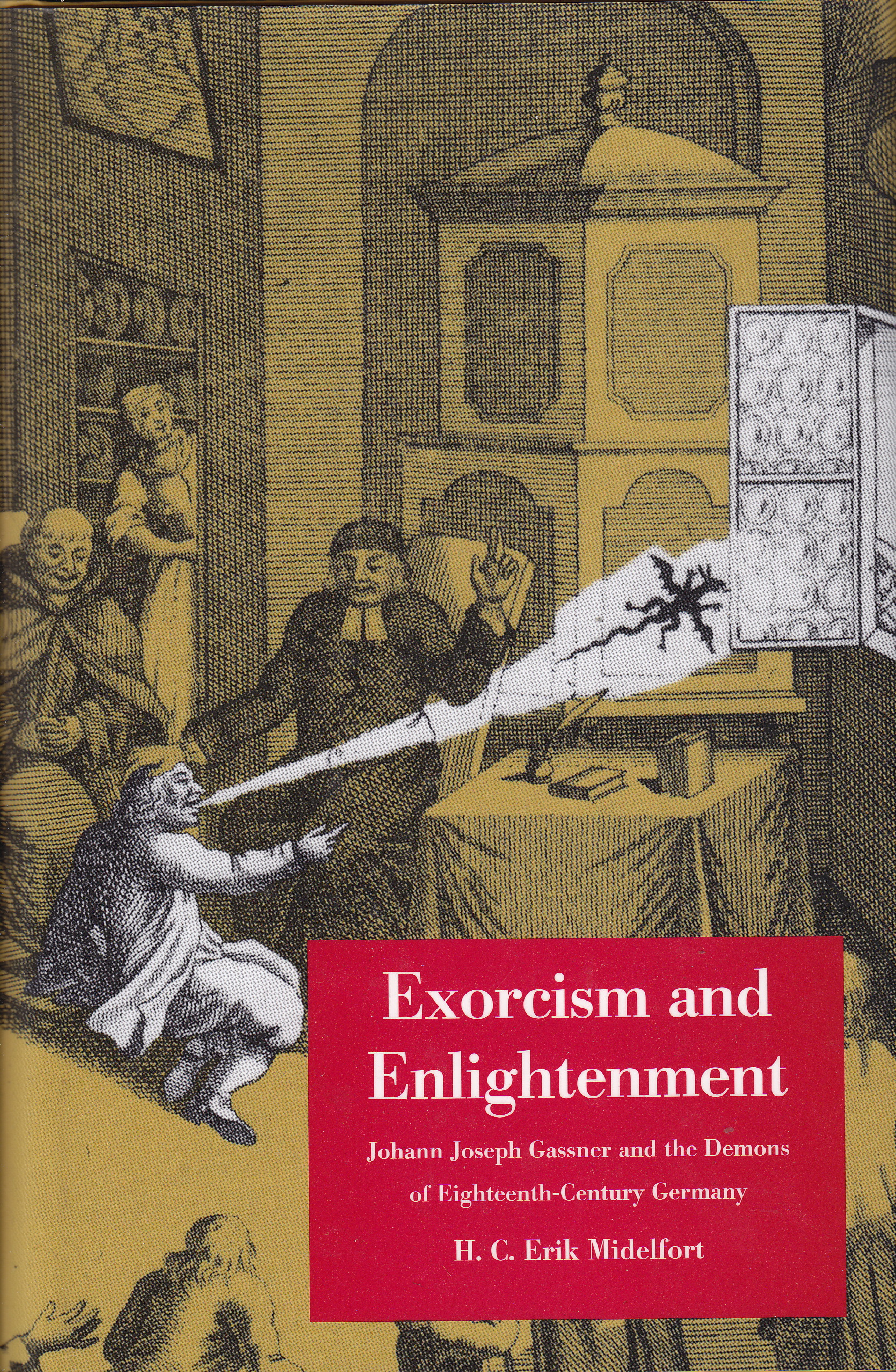
ExorcismTo be honest, I can’t recall having heard of Johann Joseph Gassner before. Given his role in the European witch-hunting culture, however, I must have read his name a time or two. As with most names out of context, it was quickly forgotten. H. C. Erik Midelfort, therefore, is to be congratulated with bringing out not only Gassner’s name, but his remarkable career. Exorcism and Enlightenment: Johann Joseph Gassner and the Demons of Eighteenth-Century Germany, like so many other books, came to my attention in a bookstore. Books on demons have a strange kind of draw to someone interested in both religion and monsters, and since it was on an overstock shelf, I found it impossible to let it lie. This proved to be a wise decision.

Midelfort proves himself one of the rare academics who doesn’t talk down to his readership, yet makes what could be a complex topic understandable. Complex is about the only word to describe what would become Germany in the Eighteenth Century. The remnants of the Holy Roman Empire left a divided region with prince-bishops—clerics with political control outside their own dioceses—vying for all kinds of authority. Although the Enlightenment was well underway, the region was embroiled in the controversy of a priest by the name of Gassner. Gassner was a healer, but also an exorcist. Believing that many torments suffered by the populace were demon-spawned, he used highly public and, to some, incredible exorcisms before healing those in need. His success was unquestioned, but the church, struggling between Catholicism and Lutheranism, as well as struggling to find a place in the Enlightenment world, found Gassner a bit of an embarrassment. What do you do with demons in a world where science says they don’t exist?

One of the most notable takeaways from Midelfort’s book, for me, is that the Enlightenment did not suddenly change the world. Even fully aware of empirical experimentation and the use of reason, the scholarly world did not utterly acquiesce to a subdued materialism. It still hasn’t. As the case of Gassner demonstrates, our comfortable, physically predictable world holds some surprises for us yet. At least for Gassner, believing demons don’t exist doesn’t stop them from tormenting people. As he cured his thousands, skeptics gathered (including his contemporary Franz Mesmer) to explain away what was happening. Even today, as Midelfort points out, we can’t explain the placebo effect. There’s no question, however, that it works. As does, if the media is to be believed, the occasional exorcism in the twenty-first century.


Scientific Belief

AtlanticThe human brain is a marvelous thing. Neuroscientists find all kinds of surprises as they probe the gray matter in our heads. One of those findings is that we don’t always believe what we say we do. Some time ago I read Matthew Hutson’s Seven Laws of Magical Thinking. Scientists didn’t like the book too much since it caught them with their empirical pants down. Really, there’s no shame in that. We are at the mercy of our own minds. In this month’s Atlantic magazine, Hutson has a brief piece entitled “The Science of Superstition.” In the space of just over two columns he runs down the evidence that even those who claim materialism is the answer to all life’s mysteries, even those scientists can’t escape superstition. Friday the thirteenth, a couple of weeks back, I walked under a ladder on my way to work. What happened? I had to go to work. Is that bad luck? I suspect it’s a matter of opinion. I’m the first to admit, however, that I did have fleeting reservations.

Study after study, as cited by Hutson, shows that physiological measures indicate anxiety when those who don’t believe in God say bad things about him/her. We all attribute cause to natural events, even those steeped in the hard sciences. Thinking about death reveals subconscious beliefs about God. It’s the way we’re hardwired. Hutson himself, if I recall correctly, doesn’t really attribute much credence to the supernatural. This is all a matter of what our material brains believe. Interestingly, we are evolved to be open to religious ideas. Many choose to believe, despite our brains, that we are evolutionarily deceived. Screwed by natural selection, as it were.

Far more interesting, in my deluded opinion, is that we don’t really choose what to believe. At least not at first blush. Our brains tell us to believe in the invisible causation that just doesn’t fit in a material world. To get beyond that takes some effort. It does give one pause, however, to consider that blind evolution has puckishly kept all this in the mix. Does evolution have a sense of humor? Perhaps we are all taking all of this far too seriously. Or maybe, just maybe, our brains are smarter than we think.


Parallelism?

An article in Mother Nature Network that a friend sent me suggests that “Parallel worlds exist and interact with our world, say physicists.” The article, by Bryan Nelson, discusses quantum mechanics and the many-worlds interpretation that suggest that these worlds interact. Perhaps they explain the anomalous happenings so often reported in this world. I find the “many interacting worlds” idea compelling. We all know, whether or not we’ll admit it, that strange things sometimes happen. It may be that interacting multiverses can explain some (although I somehow doubt, all) of this. Everything I read about quantum physics suggests that it is weird and we just can’t understand how it’s possible. That’s the kind of universe I’m glad to live in. Still, I wonder.

The many interacting worlds hypothesis suggests that at every juncture, every decision, in some universe we went a different way. Should I go right or left? And as I made that left turn, some me somewhere else went right. The problem is perhaps the sheer number of variables. The many decisions I’ve made, and I’m just one person, have multiple possibilities. Each of these possibilities links and intertwines with even more possibilities. It’s not hard to believe that this universe revolves around me and my petty problems. Add to this the variables of the billions of others who share the planet and soon I start to grow dizzy. Does each and every one of these take place somewhere, somewhen? And who are we to think that we even know what two possibilities might be? What if I type an e instead of an i? What will my post say in an alternate universe? At what level of insignificance do I finally admit utter ennui and say that life in this universe I know is just too full to admit of any others? Of course, anyone looking at my bank account knows I have no experience with large numbers.

Parallel worlds have always fascinated me. I suspect that deep down I know this can’t be all that there is. In some universe my Ph.D. led to a real teaching post. I wrote all those books that are rattling around inside my head. I attained tenure and showed the world that a kid from a blue-collar family with no connections can actually make something of himself. In another world I’m the one laying in the cold on the streets of Manhattan begging quarters from the other me, looking worried as he races to and from work every day. Or maybe this whole thing is just a dream I’m solopsistically having. Of course, if you’re reading this you’re welcome to my dream. Or any other universe that you might choose. I only ask that if you allow me into yours, may I please have tenure? I’d really like that universe best of all.

IMG_1577


Material to Ponder

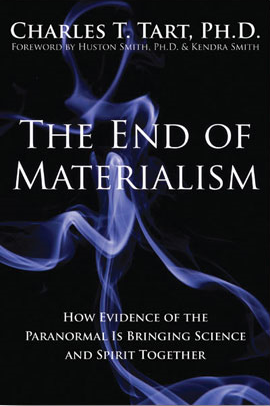
EndOfMaterialismFrom my youngest days I remember wanting to be a scientist. This desire was tempered with a real fear of Hell and wish to please. In my career, it seems, the latter won out. Well, mostly. I never planned on being an editor, but it was clear that I missed the hard-core science courses and would always lack scientific credibility. You see, I believed what scientists said, and that included science teachers in high school. To this day I still believe in the back of my mind that you can’t really see atoms with a microscope. One of my teachers had said it was impossible, and although electron microscopes were still a long way off, it was clear that atoms were just too small. The force of materialism first hit me in ninth grade physics. If what I was hearing was true, then if you had enough information, you could figure out the whole universe. But what of Hell?

I read Charles T. Tart’s The End of Materialism because of my need for reassurance. Materialism leaves me cold. To find a scientist who feels the same way is a bonus. Not all authorities agree that we’re just excited atoms that can be seen. Tart is willing to consider the spiritual as part of what the evidence reveals. He explores it in the context of psi rather than in the doomed attempt to test religions empirically, but he does make a case for more to this universe than Horatio’s philosophy ever dared dream. And some of that more is decidedly not physical. It’s what we know from our experience of the world. We don’t only reason, we also feel. I have to wonder if reason is really the friend of materialism after all.

You can’t walk across Manhattan without seeing an ambulance most days. Often they’re called out to collect some unfortunate homeless person who collapses from our collective neglect. If we are only matter, then why do we bother to assist those in distress? It’s just a little electricity and some chemicals in a biological organ, right? Consciousness is only an illusion, after all. Unless, of course, the person suffering is a prominent scientist. Then we should all make way for the ambulance lest we lose an asset of great value. Materialism is insidious in its take-no-captives mentality. Feel what you will, there’s nothing more to life than physical stuff. You can make a good living believing that. Why is it that I’m suddenly thinking of Hell again?


Seeing I

One of my few Twitter followers (stawiggins) suggested that I watch Dr. Ken Hayworth on YouTube. Specifically, Part 3: If we can build a brain, what is the future of I?, hosted by Galactic Public Archives. It is well worth 9 minutes of your time. Trying to figure out consciousness has been a major preoccupation of mine for some years. I don’t have the tools of neuroscience, but I do have over half a century of coming to know this “I” that constantly seems to wake up in this same body and experience all its woes and occasional joys. Hayworth suggests that the self is a model projected by our brains to help us make decisions and to plan for the future. In a fascinating thought experiment, he notes that if a duplicate self were made, we (or I) should not object to being executed since there is an exact copy now. Hayworth notes, however, that any individual will object because we are “designed” to think this way about ourselves. Designed, I wonder, by whom? I suspect Hayworth means evolution designed us that way, but evolution is non-teleological, and, I suspect, not really reificatory. Evolution is merely a process.

Perhaps the horns here are only those of a semantic dilemma, but I feel not. Hayworth goes on to discuss how instinct works to continue this illusion of self. I’ve never found instinct a very believable concept. We use it when we want to deny consciousness to animals and very young children. Since they can’t have a concept of “I” they have to have “instinct” to preserve themselves. Logically, to me, this seems to be fudging. What is instinct? Is it really any different than admitting at some micro-level, animals have consciousness? To me it seems that consciousness is one of those “turtles all the way down” kinds of propositions. To be alive is to be conscious at some level. Be careful how far down you dig here.

DSCN2021

Hayworth then goes on to what sounds like an almost biblical conclusion. Ethics insists that humans are part of a whole. (A very diseased whole, as the imbalance in society forces us to conclude, but a whole nevertheless.) To kill one is to violate the consciousness of the whole. This concept seems sound, and I would suggest that it might benefit from expansion. Why stop at the human level? We are animals. Animals are conscious. Here we are back at the turtles again. Perhaps we have expended too much energy trying to parse self from soul from mind from consciousness. Perhaps we are all part of a large collective consciousness. If so, we got some very sick units near the top. Any organic being that insists only one percent needs to be kept in perpetual plutocratic indigence while billions of others wonder how long they will survive at this payscale in this economy, or, more realistically, act as slaves to that one percent, is a sick beast indeed. If consciousness is collective, we could all use a massive shrink.


Soulful Phantoms

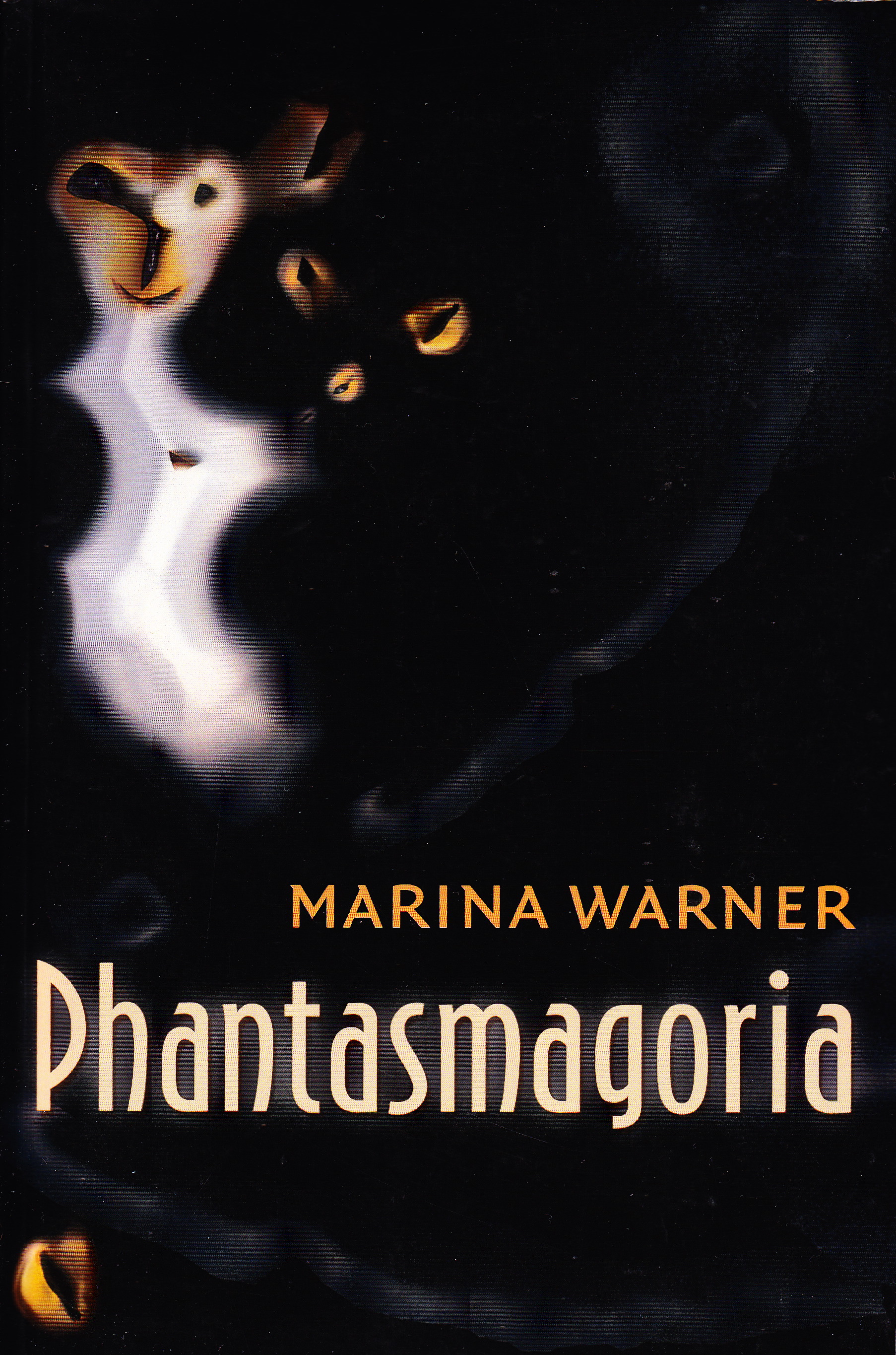
PhantasmagoriaPhantasmagoria is a most appropriate title for the book by Marina Warner that bears that single-word name. The back cover bears none of those helpful tags that give the reader a handle by which to categorize the book. The subtitle helps somewhat: Spirit Visions, Metaphors, and Media into the Twenty-first Century. The book is about ensoulment. The popular rage among many academics is the exploration of embodiment—the times and trials and wisdom of having a physical body. (We all know it, but it is the scholar’s job to think about it.) Warner asks what soul stuff is and pursues this through many media: wax, air, clouds, light, shadow, mirror, ghost, ether, ectoplasm, and film. She’s not suggesting that souls are made of these things, but rather that people have used these media to explore what a soul might be. Apart from being a fine historical resource on these different avenues of exploration, individual chapters in the book focus on various artists, psychologists, parapsychologists, writers, and Scriptures. This makes for a fascinating, if challenging, exploration to undergo.

One of the topics that emerges in the discussion is how soul distinguishes itself from other unquantifiable aspects of being human: what is mind, for example. We can’t really define soul, but it is frequently differentiated from mind or personality, neither of which is particularly well understood. In an era when we’ve not so much ceased to ask these questions as sublimated them into various fictional realms, a book like Phantasmagoria is especially important. The reaction against materialistic reductionism is strong, if not empirically provable. We still flock to theaters to watch zombies on the screen, precisely because we too have become soulless. Romanticism had a place for Gothic sensibilities as well.

Along the way Warner makes a particularly apt observation that politics and entertainment have become difficult to distinguish. Thinking over the number of entertainers who’ve become policy makers, this is a particularly disturbing thought. We trust the media and it gives us entertainment. Most college professors make so little money as to be jokes when it comes to running a political campaign. Where your treasure is, as the saying goes. Media, in all the forms explored, has failed to capture the soul. The chapter on Revelation (the book) is truly spectacular, coming, as it does, in the section on film. It is the embracing of the chimera of the end of the world pieced together from various myths and nightmares that our political leaders find, in many cases, far too compelling. Someone like Warner might be a much better leader to trust, even if she is a scholar.


Creating Diversity

Informed opinion is a chimera. I write that as someone who has time to read only the news stories my wife or my friends pass on to me. Once in a while one of those stories makes me feel less bad about being uninformed. A recent piece by Slate author William Saletan looks at polls regarding Creationism. The piece, picked up in the New Jersey Star-Ledger on a recent Sunday, demonstrates that although the United States is a nation of Creationists, we don’t agree about what that means. What becomes clear to me when I read such stories is that people who believe in the Bible seldom read it. Or at least understand it. Creationism “is not a thing” in the Bible. Many accounts about how the world began are represented, and the main point seems to be that it’s important that it was the God of Israel who did it rather than the competition. The first couple of creation accounts are compelling with their insistence that people are special, and that we are in charge while the owner is away. In fact, however, creation is a minor point in the story. It just has to start somewhere.

Those who set out to read the Bible, I suspect, begin to stumble in parts of Exodus and generally give up once they reach Leviticus. Although the main point of the books of Moses is the rules, the modern Christian finds the story more engaging. And the creation accounts of early Genesis are among the stories people actually read. They do make for a great, if contradictory, tale. They have, however, little impact on what people are supposed to do. Ironically, those accounts have become failsafe political devices. We vote according to how old we think the earth might be. We are special, after all.

Saletan’s point in the article is that the finer we parse the questions, the more divergent opinion becomes. The Bible doesn’t say how old the earth is—it’s really not a point of any significance to the story—but if you’re going to take it literally, you can do the math. Few literalists truly take the Bible literally. Logic very quickly breaks down as Genesis 2 follows Genesis 1. Americans are told that the Bible is literally true, but such a view literally makes no sense. We are committed to it, however, as we somehow equate believing in stories to be more important than understanding what those tales are trying to say. The polls, according to the article, make the point abundantly clear. When it comes to understanding the Bible Americans are very committed, if very confused.

Just one Creationist museum.  Photo credit: Creashin, Wikimedia Commons

Just one Creationist museum. Photo credit: Creashin, Wikimedia Commons


Bodily Futures

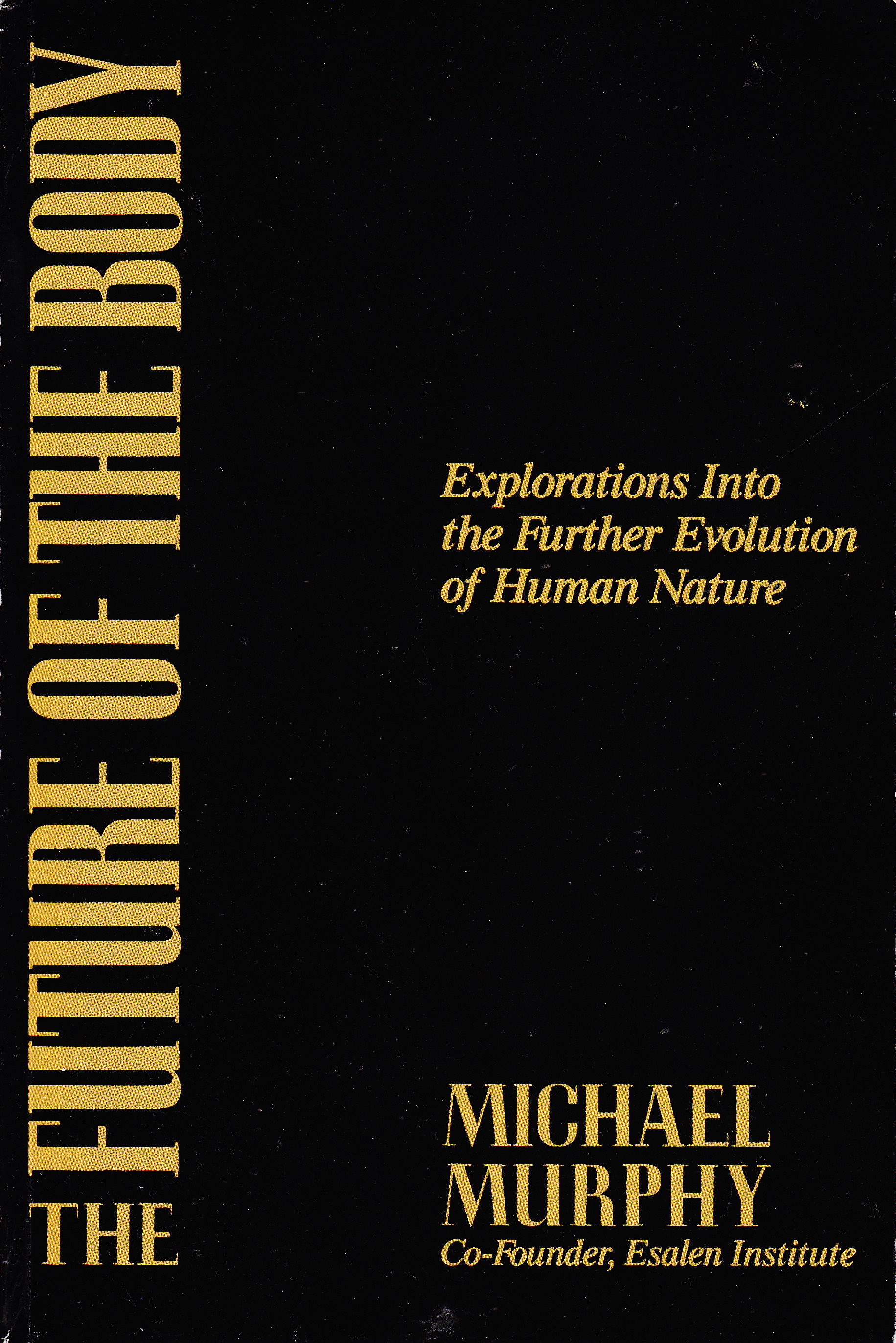
FutureOfTheBodyJust about everyone I know has their own method of curing the hiccups (or, in their more evocative spelling, hiccoughs). Most of these involve holding one’s breath or elaborate ways of drinking a glass of water. Since hiccups are involuntary spasms that can be quite annoying, they can’t be predicted or easily foreseen. Some years ago I realized that the methods I’d been using to rid myself of this unpleasantness were really just ways of getting my attention off of the hiccups—in other words, it was a matter of concentration. I started to respond by thinking the hiccups away whenever they struk me. Cut out the middleman, as it were. And it works. All of this is preamble to the remarkable material to be found in Michael Murphy’s The Future of the Body: Explorations Into the Further Evolution of Human Nature. Murphy is one of the co-founders of the Esalen Institute, about which I’ve posted before. Promoting exploration of human transformative potential, Esalen was a landmark in 1960s culture that I was a little too young to appreciate. Besides, I lived far from California and in a strictly religious mindset. Those who founded Esalen knew, however, that people are capable of more than we appear to be.

Human transformative potential involves matters with which materialistic science is often uncomfortable. Religious practices such as meditation, sports, and martial arts training, all, however, can produce results that shouldn’t be on the books. Whether it is the basketball player who can stay in the air a little too long, or a religious adept who can survive being buried alive for protracted periods of time only to be revived later, or even the remote viewer hired as a spy by the government, people are capable of more than we’re told we are. Murphy suggests that perhaps it is because we are socialized to think this way. Our young minds are open to a realm of possibilities that adult minds have been conditioned to discount. If it’s impossible, it’s impossible. Or is it?

The Future of the Body will take some readers where they do not wish to go. The fact is, however, that faith healers and stigmatics exist without fraud. Just because some frauds imitate reality, it doesn’t follow that the genuine article can’t exist. The usual reductionistic answer is that such things can’t possibly be real—let’s teach our children this fact—we are only robots made of meat. But this view still hasn’t accounted for consciousness, and consciousness is, at least for most of us, inescapably real. We know that because these bodies with whom we are associated do all kinds of things that bring it to mind. We get sick, we experience pain and emotion. We get up and go to work when we don’t feel like it. Most of the time we’re conscious of where we are, and what he have to do. Or do we? It very well may be that matters much larger than the hiccups might just be negotiable.


Grin and Bear It

The dentist’s chair is about the last place I’d like to spend my Saturdays, but given my work schedule there are few alternatives. So there I was yesterday, yellow light glaring in my eyes, drill whirring ebulliently away, and finally gagging embarrassingly into the tiny sink at my right. Those back teeth come in handy for grinding, but they are poorly designed for brushing. I find the dentist’s office a good place for philosophical thought. In that chair where I’d rather not be, feeling sensations I’d rather not feel, I wonder in what sense my body is my own. Lately I’ve been contemplating this quite a bit. Consciousness seems attracted to a single body at a time, but the biological organism I call me doesn’t always have a say in where it is slated to go, or what it is free to do. Each job I have taken has come as an “only offer”—I’m not one of those over whom bidding wars are likely to erupt. That crown that popped off my tooth wasn’t really my doing, nor was the memorable root canal that led to it being there in the first place. Still, here I am.

Photo credit: Richard from Canton, Wikipedia Commons

Photo credit: Richard from Canton, Wikipedia Commons

Religions regularly teach that overcoming physical limitations is one of the perks of paying attention to your soul. I suspect parsing soul, consciousness, mind, and psyche is to slice this entity I call “me” a bit too thin. Whatever all or any of this is, having x-rays shot through it while the assistant hides behind the wall, it is hopefully made of sterner stuff than the teeth nature has given it. One hopes that this can’t be all to expect out of our existence. Life, if only our physical years, is too short to spend much of it in the dentist’s chair.

I’m not sure I like dentists knowing more about this body than me. Is it mine at all? I recall the exasperated call for a tongue blocker in a Wisconsin dentist office and the tooth-meister proclaimed, as if I weren’t in the room, “he has a curious tongue.” I don’t intend for my tongue to be curious, but it always seems to wonder about what finds its way into my mouth. Is it me? Is it mine? The consciousness always seems to come back to this body that does things I can’t control. These thoughts come on a sleepy Saturday morning when I should, by all rights, still be in bed. That is, if I’m indeed the one who wakes up in this body yet again today. And whichever body it may be, if it is mine, I know I brushed its teeth before going to sleep, as I have for as long as I can remember. And yet the drill whirs on.


Pope for the Planet

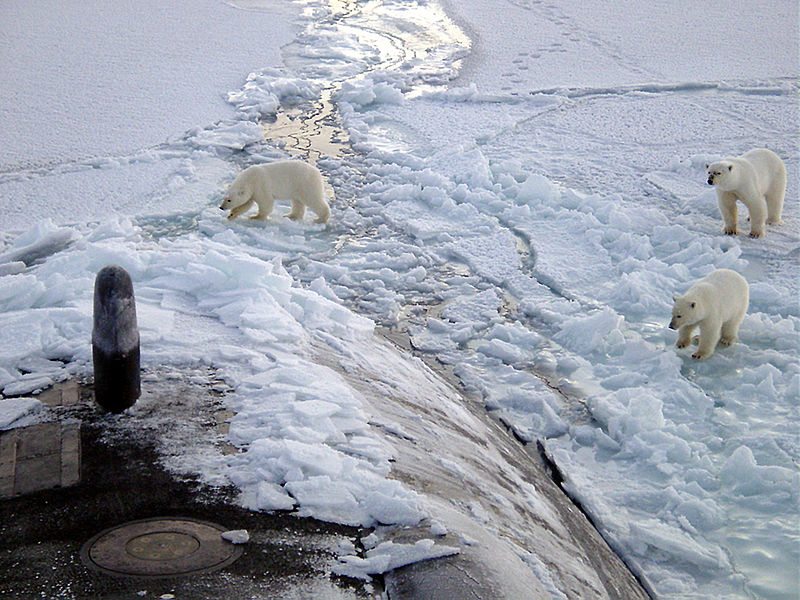
According to The Guardian, Pope Francis is about to weigh in on the faux question of global warming. Faux because there really is no question—we know it is happening. Some high ranking Catholic politicians, no doubt, will not be amused. Apart from the fact that Francis has proven himself a true saint from the moment he got out of the gate—distancing himself from European pontiffs far more interested in church politics than what really matters—he has brought a sensibility borne of knowing how people really live and what is really important. Global warming is real, and the science behind the assertions is unquestioned. Interested parties (such as big oil) have hired their spin doctors to confuse the voting public, casting doubt on one of the few certainties we have. Politicians, whose funding comes from business interests, of course choose what to believe. How anyone can be so shortsighted, or selfish, as to saw off the very branch on which they stand I can’t comprehend. Past popes were too busy trying to keep ladies out of the exclusive gentlemen’s club to worry about those who feel the brunt of global warming.

Photo credit: Chief Yeoman Alphonso Braggs, US-Nav, Wikipedia Commons

Photo credit: Chief Yeoman Alphonso Braggs, US-Navy, Wikipedia Commons

Of course, it will catch up with all of us eventually. I’m not much of a swimmer, and I’m worried. Hurricane Sandy (a superstorm only in the sense that it hit the affluent) showed us just how near sea level Manhattan is. One gets the sense that the fastest growing cities being in Texas is no coincidence. As long as it doesn’t impact me personally, what’s the worry? Some entire island nations stand at threat, but perhaps they should’ve considered that before they moved to an island. Here’s the news flash—all land is island. We need each other, and the lowlands are as important as the highlands.

Organized religions of all kinds have been under fire for years. As science began to explain more and more, religions had to explain their own existence. Many turned internal—not in the spiritual sense, but in the aspect of clarifying the precise points of what makes them right (i.e., different from everyone else). In the United States the small town without five or six different steeples was the exception rather than the rule. Meanwhile, the emissions continued. And continue. At least we know we’re right. At last there is a pontiff who is a realist. A priest who understands that church is all about caring for people—those in the lowlands as well as those in the highlands. Of course, politicians know how to turn off the religion when it gets inconvenient. As long as I get mine, all is right with the world.


Angels We Have Seen on High

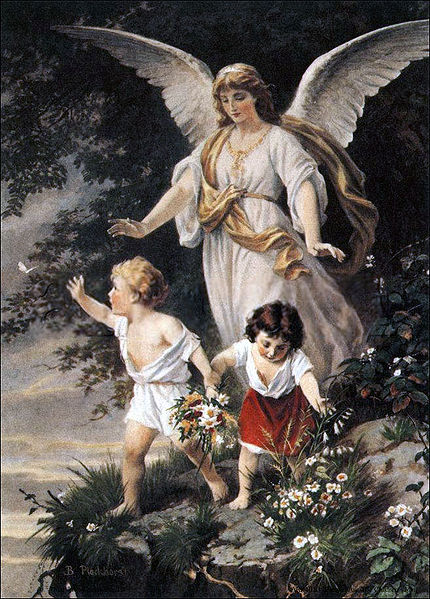
Humans have always ascribed significance to what they see in the sky. Evolution, I suspect, has a great deal to do with it, but so does religion. As I suggest in Weathering the Psalms, the sky is the barometer where we seek the temperament of the divine. The weather is an indication of what God might be feeling, in the pious mind. Of course, as a child I used to lay back and look at the clouds to see what messages I might find there. Pareidolia makes the process good fun, and lots of random “noise” can be interpreted as “signal.” It’s all done in a light spirit. Still, if the internet is to be believed, many people take images in the clouds much more seriously. Apropos of the holiday season, a story in The Telegraph tells of a woman from Lincolnshire who, on her way to a Christmas gathering, saw an angel in the clouds. Or more properly, an angel of clouds. Being the anniversary of her father’s death, she saw this as a sign from above that left her in tears. Others would call it matrixing.

The photo the woman’s daughter took as they were driving is impressive (click the link above to take a look; I’ll wait). I understand how it could be interpreted as an angel. Or even a bird. The feathering on the left wing, along with the wing structure itself, is stunning. And of course, given the time of year, angels are much on the minds of many. What would any manger scene be without them? Although pareidolia is not a religious phenomenon by nature, it nevertheless is frequently interpreted that way. We certainly don’t take much personal comfort in a mechanistic universe. When a loved one is gone, we would rather consider the more human (and perhaps supernatural) aspects.

430px-Bernhard_Plockhorst_-_Schutzengel

Interpretation of information is a constant activity of sentient beings. We don’t want to miss anything that will be of survival value. In the case of the angel in the clouds, the survival is beyond that of every day. We are constantly reminded that death is the final word, and yet we can’t quite bring ourselves to believe it. Whether it is shepherds on a Palestinian hill in the first century or a woman motoring along A17, the sight of an angel is something that stops the viewer and inspires an openness that we otherwise have been taught to deny. It may be that all she saw was a pattern of water vapor in a December sky. But even water vapor can mean much more than two hydrogen atoms binding to one of oxygen. It can be part of the breath of life itself.


Weather for the Birds

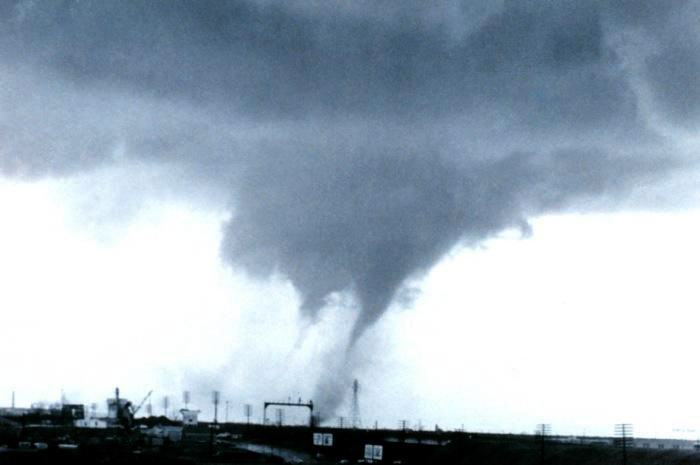
As Christmas nears so does a warm front, dashing hopes of a white Christmas in New Jersey. Well, at least there are no tornadoes coming. The weather, as my readers know, has long been perceived as a divine barometer. In a time when patience is wearing thin with religion, and weary headlines ask if it will ever finally disappear, our animal cousins seem, as usual, to pick up on clues more readily than we. An article on the BBC science page describes how a set of tagged golden-winged warblers vacated their nest a day before a tornado struck. Scientists suspect that the birds—and likely other species of birds as well—picked up the infrasound of the tornadoes that is well below human hearing range. Sensing the danger, they flew nearly a thousand miles, stopping just south of the storm’s track.

1957_Dallas_multi-vortex_1_edited

Of course, tornadoes don’t last an entire day. If the birds fled that long in advance, they couldn’t, I suspect, have heard a tornado that hadn’t formed yet. Since I’m no scientist, I’m not really qualified to offer an explanation, but I do wonder if such behavior isn’t related to consciousness. Several books that I’ve read recently have explored the concept of animal consciousness, and although we are reluctant to admit them to the realm of the self-aware, I wonder how long we can deny it. No doubt, if the birds fled (and returned after the danger had passed) there was an intentionality to their actions. Jealous of our intelligence, we must find a way to explain that animals can predict natural disasters of many kinds long before humans detect their more obvious traits. Our technology gives us seconds, or minutes, of warning. Dogs, cats, and birds know well in advance. But we are the superior beings here.

One of the problems with consciousness is that we can never get outside our own. Other people act in ways similar to us, and describe similar mental states, so we assign them the same kind of consciousness we have. Animals, not using human language, also act in similar ways to us. We call it “instinct” and continue on to the truly important stuff. I have no idea if birds can detect infrasound; I wouldn’t be at all surprised if they could. Without the ability to place it in the context of danger, however, I doubt they would take a thousand mile vacation just after their annual migration. We could learn a lot from our fellow creatures, if only we’d admit them to the conscious club and not the food club. And perhaps they might be able to explain to us why, despite all we know, religion never seems to go away.


When Darkness Reigns

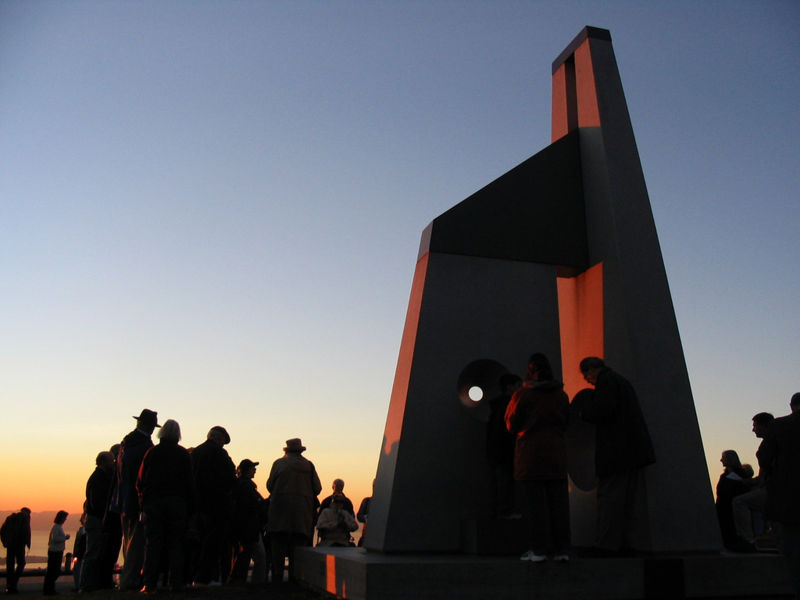
I recently read an article about the Druids. The fact is, historically speaking, we know little of them. They are mysterious and silent and irrevocably linked in the imagination with the solstices. Cultures throughout the northern climes of the northern hemisphere have always treated the winter solstice with an extreme reverence. It is the day of the year when it seems like light just can’t come in any shorter supply. In the depths of that desperation, offerings are made to ensure that tomorrow, if only by the merest moments, the day will be longer. And so we begin the lengthy climb through frigid days to the point six months from now when light will reign supreme. We don’t know, historically, if the Druids gave the great significance to equinoxes and cross-quarter days that the Celts eventually incorporated into their religion, but we do know that much of the monumental architecture of the United Kingdom and Ireland is oriented toward the sun’s feeblest rays at the winter solstice. Stonehenge, New Grange, Maes Howe, and the list could go on and on. We are waiting for light.

Lawrence Hall of Science; photo credit: Tim Ereneta (Wikipedia Commons)

Lawrence Hall of Science; photo credit: Tim Ereneta (Wikipedia Commons)

The solstice seems to creep up on me these days. I work in a cubicle with no outdoor light visible. I leave for work in the dark and arrive home in the dark. I’m inclined to offer up prayers to Odin while I while away the hours before an unresponsive computer monitor. Business has already shut down in all but the greediest minds by this time of year. It is time to hibernate and await a brighter tomorrow. Even in the darkness there can be light. This weekend I attended a Hanukkah celebration, and looking at the menorah I was struck once again how fervently we seek light this time of year. Of course, Hanukkah is connected with the rededication of the temple after the desecration of the Seleucids, but is it coincidence that the candles are lit near the solstice? Perhaps I’m getting too old to believe in coincidences.

In the ancient apocalyptic mind, light and darkness were bitter enemies. Of course, today we recognize that people generally use eyesight as a primary way of interacting with the world—of keeping us from danger. With our diminished senses of hearing and smell, we feel vulnerable when we can’t see our potential predators. Light is the key to our successful preservation. Today technology has taken the place of ritual. We have artificial lights to help lengthen our working hours. We eschew the limitations of being associated with the earth’s rhythms. We are the masters of our own domain, and we can keep the forty-hour work-week going on all but the most insistent of holidays. Perhaps the wisdom of the Druids needs to be rediscovered. Perhaps only then will natural light really return.


M Is for Mary

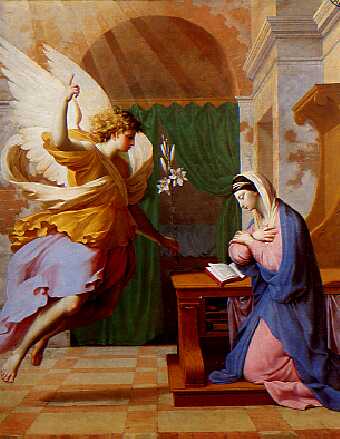
While pre-celebrating Christmas with some friends recently, the topic of cats came up. This really isn’t surprising since two of the families present had been members of the local 4-H cats club. For a while cats were ubiquitous on the internet, but since I have so little time to browse the web anymore, I’m not sure if that’s still the case. Nevertheless, being near Christmas, someone narrated a story I’d never heard before. Tabby cats (like many jungle cats) have a distinctive marking in the form of an “M” on their foreheads. The legend suggests that on the first Christmas a tabby cat was in the manger. Seeing a mouse trying to crawl into the trough were baby Jesus lay, the cat killed the mouse, earning the thanks of Mary, who kissed it on the forehead, bestowing her characteristic M. It is a nice story (apart from the point of view of the mouse, I suppose)—an etiology to explain an evolutionary development in fur patterns.

Blessed is M...

Blessed is M…

Shortly after that my wife sent me a story on the BBC about the oldest inscribed human artifact. Zigzag marking found on a fossilized clam shell from Indonesia suggest that Homo erectus was an abstract thinker, I’m told. The markings, which must at least be 430,000 years old, predate the earliest known human markings by 300,000 years. If accepted by anthropologists this evidence could rewrite all of human history. We had no idea that Homo erectus had time to doodle on shells. Looking at the photos accompanying the BBC article, I couldn’t help but notice they’re in the shape of an M. Perhaps Mary kissed these shells too? So etiologies begin.

If you’ll pardon me for attempting to brush off my training in ancient languages, Mary of Nazareth was likely born into an Aramaic-speaking family. Her name, Mariam, would have been spelled with mem, which, although representing water is some scripts, took roughly this form: מ (assuming the Imperial Aramaic alphabet). If Mary were both historical and literate (the latter, at least, is doubtful) she would not have recognized the tabby’s distinctive mark as part of her name. It would have been an abstract symbol. Of course, God, being a natural lover of cats, may have had the Greek alphabet in mind, where the letter mu gives us our classical capital M. Mary, however, would probably still not have known what to make of it. We love to attribute significances to perceived patterns. The tabby’s distinctive M, as well as Homo erectus’s early exercises in penmanship present us with opportunities to continue making myths. And we should keep the myths in Christmas.