Creation of Horror

I recently read the article “The Christian Worldview of Annabelle: Creation” by Neil Gravino on Horror Homeroom.  I’m pleased to see that the complex world of religion and horror is being addressed by other scholars.  (I know that many actually work in this area, but if you don’t have access to an academic library finding their articles can be impossible.  Also, did I ever think I would miss Religion Index One and Two so much?)  Since I have a piece that is scheduled to appear on Horror Homeroom concerning the 1976 movie Burnt Offerings, I’m glad for the company.  As in my article, Gravino makes the case that the relationship between horror and religion (the Christianity of Annabelle: Creation and its need to be a horror film) is fraught.  This is something I describe in some detail in Nightmares with the Bible.

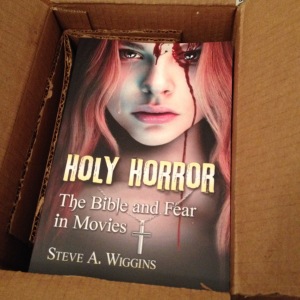
Back when I was writing Holy Horror I realized that putting individual horror films into a series creates continuity issues.  Annabelle: Creation is part of the wildly successful Conjuring franchise, the latest installment of which has been delayed by the pandemic.  Depending on how you count it, there are already seven films in that particular universe and the shifting of the story is the focus of an entire chapter in Nightmares.  The reason it requires such sustained attention is that, apart from being the most successful horror franchise after Godzilla, these movies are squarely based on Christianity.  Lacking the unrelenting gravitas of The Exorcist, they feature (in the main branch of the diegesis) the Catholics Ed and Lorraine Warren.  In an almost Dantesque view of Heaven and Hell, the characters struggle with monsters that hover between ghosts and demons.  They’re closer to the latter.

Many horror films—but by no means all—are based on fears associated with religion.  That religion isn’t always Christianity, as both The Wicker Man and Midsommar show, but the warnings against extremism apply equally to belief systems across the board.  Another thing I miss, being outside the academy, is the funding to do some in-depth research on this.  It’s good to know that others are seeing what I’m seeing as well, as is appropriate when you encounter something unexpected.  Our religion haunts us.  The reasons we believe are often tied to the self-same fear that the religions themselves generate.  And like religions, horror movies hold the possibility of earning quite a lot of money.  The parallels should not, I believe, be overlooked.


Holy Smoke

I’m not inclined to read news about drug use, and, to be honest, I barely have time to read about the culture of ancient Israel any more.  I very occasionally hear from people who find out that my book on Asherah is free on Academia.edu (it is) that tell me how they plan to use the information.  It’s gratifying, but as with anything put out there for public consumption, you never know which direction it’s going to go.  Thus I found myself on Lucid News’ website.  With the tagline “Psychedelics, Consciousness Technologies, and the Future of Wellness,” ideas begin to form in the mind.  But a citation is a citation, and so I read the opinion piece “Drugs, the Israelites and the Emergence of Patriarchy,” by Danny Nemu.

The story follows on the announcement from some time ago that chemical analysis of an interior altar of an ancient temple at Arad (from ancient Israelite times) revealed that it had been used to burn cannabis.  The biblical story—now questioned by archaeology—is that there was only one official temple and that was the one in Jerusalem.  It was destroyed by the Babylonians in the sixth century BCE and then again by the Romans in the first century CE.  We have no access to the altars that stood in the temple, but we do know that incense, particularly frankincense, was valued for its pleasant smell.  According to the article in Lucid, a second altar in Arad showed residue of frankincense.  Both altars were in a small, enclosed room—the bong of the Lord, as it were—and that together the two forms of smoke would’ve created an intense religious experience for a priest in there for any length of time.  Although the article doesn’t suggest this, it could also explain why animal sacrifices were going on in the courtyard, I guess.

You might be wondering about Asherah.  While the jury’s out on her actual worship and what it entailed, the academic establishment has decided that she was Yahweh’s spouse and was worshipped together with him in the ceremonies that have been forgotten to time.  With all that heavy substance burning I guess it’s not surprising that some things might’ve been forgotten.  I don’t really advocate the use of drugs, but the science behind archaeology shows us that religions have used them for centuries and centuries to reach other levels of consciousness.  I was in chapel services at Nashotah House where the incense was so thick you could barely breathe.  Did such circumstances play a role in the religion that now identifies itself as white-shirted evangelicals?  It boggles the mind.


Enough

Stories of the wealthy never interest me unless they have a mysterious, ageless cousin who’s really a vampire.  Unfortunately fantasy can’t save us from the reality of a once great nation that’s now crumbling.  As I wrote earlier on this particular book, we already know, at some level, what it says.  Mary L. Trump, who alone has courage among her family, exposes quite a lot in Too Much and Never Enough: How My Family Created the World’s Most Dangerous Man.  There’s no point in ascribing blame for deeds done.  I also fear there’s no hope that justice will ever be served in this case.  Dysfunctional families are all too real and all too common.  Some of the traits (but none of the money) from Fred Trump’s cruelty were as familiar to me as my own childhood.  A powerful, overbearing stepfather riddled with a sense of his own inadequacy, taking it out in his own empire within the walls of his house.  The damaged children it leaves behind, each struggling to cope in their own way.

The family Fred Trump raised was bound to become damaged goods.  It is to the everlasting shame of the Republican Party that it could come up with no other viable candidate for the highest office in the land.  Not so long ago I would’ve written “world,” by that day’s gone past us.  Not only did “the party” accept his nomination, it has enabled him, as Mary Trump shows, every step of the way.  Knowing that something is deeply wrong—that more people will have to die in this country of Covid-19 than anywhere else, just to stoke one man’s ego—and refusing to act should be a sin in anybody’s book.  Who still emerges as his defender?  The Evangelical.  This mess is so convoluted that it will take historians (presuming anyone survives it) decades to try to unravel it.  That’s because nobody in the GOP has any empathy for those already born.  Strange form of “Christianity,” that.

This book is a depressing read.  Still, I’m glad I did it.  Not that it will change much.  Those who are psychologically like Trump, incapable of distinguishing truth from fiction, will say it’s all lies.  You can always play that card.  There are facts, however, and they are recorded.  Those who are able to weigh evidence know (and already knew) that a dangerous man had been coddled by a dangerous party that puts self-interest over nation.  You know, I think there may be a vampire in this story after all, but I just don’t have the heart to look any further.


No So Innocent

Mark Twain’s best-selling book in his own lifetime was his first commercially produced one: The Innocents Abroad.  Originally a set of letters sent during an excursion to parts of the Mediterranean basin with stops in Europe and the Levant, it’s difficult to read today.  Although satirical with much of it clearly for fun, Twain’s humor about those other than Americans embodies an attitude that would fit into Trump’s America a little too comfortably.  Other religions are strange and therefore wrong, for example.  People in the regions visited did not bathe frequently enough and were often singled out for their looks.  There’s something rascally about the behavior of the American visitors, chipping away at monuments so that they might take a piece of history home with them, yet never failing to feel superior.

I had to remind myself constantly that this is a period piece.  It contains much of the gritty humor for which Twain became justly famous.  Travel broadened him also.  A southern abolitionist, Twain nevertheless never overcame some of the racism into which he was born.  My wife and I were reading the book because of its early description of western visits to Palestine (there was no Israel at the time).  Keeping in mind that travel to much of that part of the world was expensive (his trip was sponsored by the newspaper for which he worked) and difficult, his account is actually one of the early modern travelogues on what would eventually become a fairly common pilgrimage.  Twain, like all of us, was a product of his time.

Twain’s diary famously reveals what he came to believe about religion.  There are inklings of it here.  Although he refers to the manner of dress of the ship’s passengers as “Christian,” and although he casts aspersions on Islam frequently, he reserves his most biting humor for his own brand.  During their visit to Smyrna (one of the seven cities of the book of Revelation), for example,  he writes, “Thick-headed commentators upon the Bible, and stupid preachers and teachers, work more damage to religion than sensible, cool-brained clergymen can fight away again, toil as they may” (page 327 from the 2018 SeaWolf Press edition).  Still, the assumption of the rightness of Christianity is something that he would eventually come to question.  His humor does often fall flat in an era of government support of racist, sexist tropes.  And the impressions made on those they met was summed up in his contractually-obligated note to the paper: “Many and many a simple community in the Eastern hemisphere will remember for years the incursion of that strange horde in the year of our Lord 1867, that called themselves Americans, and seemed to imagine in some unaccountable way that they had a right to be proud of it” (page 526).  Some things, it seems, haven’t changed despite the time elapsed.


Too Close?

Some time back I did a Google search on something like “best novels about possession,” like one does.  I was in the midst of writing Nightmares with the Bible at the time.  One of the titles that came up was Sara Gran’s Come Closer.  I hadn’t heard of it before, but I started to look out for it.  I finally found and read a copy.  It is a page-turner.  A first-person narrative, it is a story about how a woman became possessed and how her life changed because of it.  Creepy and moody, it isn’t your typical Exorcist-type story.  What it highlighted for me (I don’t want to give too many spoilers) is the dilemma of those who a) live in an era when such things are routinely dismissed, and b) who have no religious background on which to fall.

While there are some quasi-religious characters in the story, there are no priests.  There’s no Catholic Church with its reassuring, if disturbing ritual.  Nobody seems to know how to handle a powerful demon.  One of the features that fuels exorcism movies (and presumably many novels on the subject) is the uncertainty of success.  Will there be deliverance or not?  I’m not going to tell you the answer here for Gran’s novel, in keeping with the spirit of the genre, but the dilemma of where to turn is believably laid out.  Amanda, a well-employed professional, lives without religion.  She acknowledges that strange things happen, but when she gets an inkling that a demon is after her, she doesn’t know where to turn.  As the story builds the loss of personal control is convincingly portrayed.  What do you do without the church?

I often ponder the particular power of The Exorcist narrative.  The threat to a young woman (as I discuss in Nightmares) is part of the key.  Another is the knowledge that the Catholic Church has packed away a powerful ritual that is only brought out in what are clearly extreme circumstances.  Like Amanda, the MacNeils aren’t church-going individuals.  The difference is that they live near Georgetown University where help may be found.  Unveiling this ancient rite was perhaps the greatest brilliance behind the story.  We live in a different age, however.  Simultaneously both more religious and more secular.  With the old certainties now under question, people wonder what they are to do when the impossible happens.  That is the driving pathos behind Come Closer.  It is a scary story on many levels.


Layers of Brick

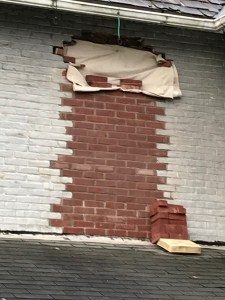
If, like me, you can’t see a neighbor’s brickwork without thinking of “A Cask of Amontillado,” then I need not explain why I watch horror films.  I know that as of late some literary scholars have challenged the idea that Edgar Allan Poe wrote horror.  There is now, and always has been, a bias against the genre.  In fact, many would point out that Rod Serling’s Twilight Zone wasn’t really horror, no matter how creepy some of the episodes were.  Some would cast Ray Bradbury into that lot as well, and others would not.  I spend a lot of time pondering this because those of us who enjoy some of what’s called horror are often cast as misfits.  And misfits have a lot in common with monsters.

The connection with religion is a palpable, yet intangible one.  It does seem that religion has its origins in fear and as it branched out it came to have different emphases.  Jesus, for example, apparently stressed love, at least according to the gospel of John.  That religion of love came, eventually, back around to fear.  Calvinism, especially, is suffused with it.  There’s a reason that it is the religion expressed in particularly effective horror.  Apparently they meet similar needs, but psychology is not an exact science, and our tastes in it differ.  Even our interpretations do so.  As the bricklayer puts down row after row of masonry, the thoughts get walled up in days where work prevents serious consideration of the deeper questions.

It’s been years since I’ve read “A Cask of Amontillado.”  The story has stayed with me, however, whether it’s horror or not.  Stories about imprisonment are like that.  The other day a police car stopped outside our house.  We live in a working-class, but descent neighborhood.  From the bits and pieces glimpses out the window revealed, there was a problem with a car that had been parked on the street for quite a while, and that didn’t belong to any of the local residents.  The natural response to seeing that car just outside was fear.  We fear criminals and we fear the police.  We fear what Covid-19 is doing to us, even to those of us who’ve managed not to contract it.  Traditional religion would tell us punishment comes from the Almighty.  These things are all related.  And across the way the bricklayer keeps up his work, row after row.


Aching Backs

The other day someone mentioned to me (virtually, of course, since real conversation is limited to immediate family) that she was going to the chiropractor.  This simple spinal adjustment comment made me curious since my mother has used a chiropractor to manage back pain for as long as I can remember.  I also had heard many disparaging comments about chiropractors over the years and decided to look up some information.  Medical science, if we can hypostatize it that way, considers chiropractic a pseudoscience.  Part of the reason is that the medical training required to be a chiropractor doesn’t come up to the level of a MD degree.  The main reason, however, as far as I can determine, is that chiropractic was founded on the basis of receiving information from “the other world.”

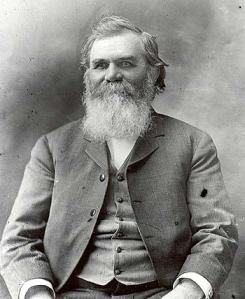
Creator unknown, via Wikimedia Commons

Daniel David Palmer founded chiropractic in the 1890s.  His knowledge of how to do it came from a doctor dead for half a century.  Some of the tenets of chiropractic are spiritual rather than physical.  Not being based on empirical studies going back to such traditional medical ancestors like Galen, the new way of understanding medicine was labeled as a kind of religion—an alternative medicine.  Now, I’m not a medical person.  In fact I’m rather squeamish.  I try not to look too deeply into biology, but this is fascinating.  There are more than 70,000 chiropractors in the United States alone.  If what they are doing doesn’t really help people then why do they keep going back?  Is it a matter of believing that you’ve been helped relieving pain?

Often cost effectiveness is given as the reason people use chiropractors.  In these days of Covid-19 we know that medical practitioners have been on the front lines for many months.  We also know that in the United States many people can’t afford standard medical treatment.  Our government has staunchly refused to nationalize health care, as every other government in developed nations has done, preferring to keep it a free market.  The end result is many people simply can’t afford to go to the doctor.  I don’t know if chiropractic is a pseudoscience or not, but if it provides at least short-term relief for people who can’t afford standard treatment is this a bad thing?  I don’t know much about the topic, but the whole thing seems worthy of further exploration.  Any time the mind in brought in to help heal the body, I suspect, we are knocking on the door of religious thinking.


Just the Beginning

It occurs to me that my post on Sunday may have been a touch cryptic.  (I can be naughty at times.)  Horror Homeroom was good enough to publish a piece I’d written about the movie Midsommar, a film that got its hooks into me earlier this year.  Here’s the link in case you’d like to read it (it’s free): http://www.horrorhomeroom.com/midsommar-and-cross-quarter-day-horror/.  It’s not an article using the Bible and horror as in yesterday’s post, but rather it is an exploration of the broader relationship between horror and religion.  The origin of religion has long been a fascination, and the more I look into the connection with what makes us afraid, the more I find in common.  But why midsummer when summer’s only just beginning?

Ancient peoples in temperate zones, according to the records they left behind, carefully observed the change of seasons.  Without a tilted, spinning globe as a model the science of the time (which was likely their religion) suggested that the heavenly bodies were migratory.  If you use raw observation that’s what seems to be the case.  Now that I sit in the same office every day with a south and a west window, it becomes very clear how the sun shifts over the course of the year.  In the winter it seems to be on a journey far to the south.  Religions of such science would want to know, of course, when it would start coming back.  The years were divided into segments—we still recognize four of them in our seasons although, in truth, they are merely gradual changes that take place in the weather as the earth’s tilt moves our hemisphere toward or away from the sun.

Midsummer was a northern European festival to celebrate the longest day.  Whether this is the start of summer or the middle of summer is merely a matter of interpretation.  The film Midsommar plays on the disorienting long span of daylight in northern Sweden.  Without the dark to guide us, sleep and the regular rhythms of daily life can become difficult.  When the people believe the old religion, well, let your imagination run wild.  Horror films often lurk in these transitional times of the year.  We tend to associate them with Halloween, but there’s enough to be afraid of right now.  Not all horror has religious components, of course.  Nevertheless it has been there from the beginning, from when van Helsing pulled out a crucifix to frighten off Dracula.  And it continues, in perhaps more sophisticated ways, even in the broad daylight.


Weather Gods

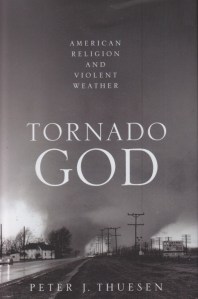
It’s funny how old fascinations have the power to reemerge with the slightest provocation.  I guess writing a book will do that to you.  I just finished Peter J. Thuesen’s Tornado God: American Religion and Violent Weather.  There’s a certain kinship among those of us enamored of this relationship.  Thuesen finds himself in Indiana, and I was in Wisconsin during my research and writing of Weathering the Psalms.  I still haven’t reconciled myself with tornadoes, which were far too likely during my years in the Midwest.  As Thuesen explains, there’s just something about them.  Neither scientist nor theologian can fully explain them and the feeling of awe spans both disciplines.  The book covers a wide range that includes early Protestant settlers and their ideas of providence as well as modern understandings of atmospheric dynamics.  Still, the tornadoes…

Randomness also lies behind both tornadoes and science.  The eerie function of quantum mechanics makes it seem if there’s a kind of willfulness to even particle physics.  Too quick to join in are those among the evangelical camp that want to raise the flag of intelligent design.  Thuesen interrogates their theology as he asks questions about both theodicy and global warming.  Tornadoes are notorious for killing one person and leaving another right next door completely unscathed.  Literally tearing families apart.  Some of those we meet in these pages have turned to black-and-white religion for answers.  Others tend to see things more in shades of gray.  Does God send storms or merely allow them?  Are victims singled out or simply unfortunate to be in the wrong place at the right time?  America’s armchair theologians have their ready answers, but the weather remains unpredictable.

Readers will find interesting connections throughout.  The celestial orientation of religion is pretty obvious as well.  Even though modern believers don’t accept a heaven directly overhead, the orientation is still there.  Their maddening obtuseness when it comes to global warming is more than just a little naive.  Either that or they’re secretly gunning for armageddon.  Whichever it is, Thuesen treats all comers with respect.  Storms are awe-inspiring events.  I recall standing on the edge of a farm field in Illinois and staring up at a lightning display in clouds towering thousands of feet above me.  Looking out the south window one night as a cloud continuously lit by lightning made its slow way from west to east just south of where I stood.  It was a religious experience.  How could it not be?  If any of this resonates with you, this is a book you ought to read.


Temple Mysteries

Maybe you’ve noticed it too.  If you read the Bible, rather than just pose with it, you’ll wonder what went on in the temple when you’re done.  Yes, it’s obvious there would be the bleeting of sheep followed by an eerie silence, and that “that Burger King smell” would be pervasive, but what of the interior of the temple itself?  The Good Book says next to nothing about what happened inside.  We do know that going to temple wasn’t the same as going to synagogue or church.  The laity, for one thing, weren’t allowed inside.  Although the temple in Jerusalem can’t be excavated, many ancient temples have been found and archaeologists have the ability to analyze residues found on altars and that tells us something at least.  A story on Artnet News publicizes an archaeological report that rests behind a paywall, so I’ll use Artnet’s headline: “Did Ancient Hebrews Get High During Temple? A New Archaeological Discovery Suggests They Did.”

The story explains that chemical analysis of the famous Arad temple from ancient Judah shows that one of the altars was used to burn cannabis.  I guess that could help explain all the animal sacrifices.  Like most religions, that of ancient Israel kept much in the dark (literally).  Read the biblical account again.  The temple had no windows.  The holy place was illuminated by the menorah, so there was light.  The holy of holies was completely dark.  Other than the rituals of the Day of Atonement, we’re not given much information on what the priests and levites did for the rest of the year.  They may or may not have burnt cannabis.  It might be that what happened in Arad stayed in Arad.  What hath Arad to do with Jerusalem?  We simply don’t know.

Another altar in Arad, according to the story by Sarah Cascone, burned frankincense.  That sounds much more biblical.  I’ve never been a smoker and I’ve never smoked anything in my life.  I did, however, attend many services at Nashotah House where the small space of St. Mary’s Chapel was filled with so much incense that I wondered about its health affects.  I’m not sure if others felt they were getting lightheaded from all the fumes or not.  Incense, to be used effectively should be handled sparingly.  Its purpose was, theologically, to cloud the air in case God decided to show up.  You weren’t allowed to see him.  If he did show up, though, maybe it was party time.  And there’s bread and wine just out in the vestibule.  Some mysteries will never be fully explained.


Learning To Shift

Beliefs have a way of shifting with time and learning.  A regular part of my job is to spend time on college, university, and seminary websites.  Indeed, an editor in my field has to know quite a bit about institutional affiliations.  No matter how much secularists dislike it, our institutions of higher education tended, historically, to be founded by religious organizations.  That’s not unexpected since the very idea of higher education grew organically from the concept of monasteries as the places that preserved learning.  Many, if not most, universities have grown away from their founders’ faiths.  Harvard University, for example, was founded largely for the supply of Congregational and Unitarian clergy.  Not officially affiliated, it nevertheless owed its founding vision to religious needs in the colony.  The fact of moving away from religious traditions is understandable in the cases of universities because learning is essentially a secular enterprise now.

Seminaries are a little different.  When searching for my first (and, to date only) full-time teaching job, I was acquired by Nashotah House because I was Episcopalian.  All the faculty were.  I’ve been turned down for a good many jobs over the years by seminaries silently stating that I wasn’t Catholic, Presbyterian, Methodist or ________ (fill in the blank).  Ironically, as I’ve come to know many seminary faculty members through work, most of them are not of the same denomination as their institution.  Quite often they are Bible faculty, which, when you think about it, is pretty surprising.  Denominations, especially Protestant ones, draw their lines in the sand over their interpretation of Scripture.  

All of this leaves me wondering what it really means to belong to a religious body.  After Nashotah House sympathetic Episcopalians were difficult to locate.  Even those in the academy seemed to accept my sudden disappearance with a studied lack of curiosity.  I’ve sat on the sidelines for a decade and a half now, watching others play the game.  Some win.  Many do not.  Some have denominations that open up for them.  Others do not.  Looking back at the origins of higher education, those of us who studied the original academic field are now considered non-essential even among the non-essentials.  And yet society feels like it’s reeling because of its lack of understanding regarding what religion is.  There are few places to go to learn what your particular brand teaches.  But then again, beliefs do have a way of shifting over time.


Biblical Museum

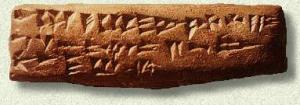
The Museum of the Bible has never successfully steered itself away from controversy.  Just a couple weeks back a story on NPR reported that federal authorities have determined that one of the MOB’s tablets of the Epic of Gilgamesh is a stolen artifact and it must go back to Iraq.  While I don’t question the decision, I was a bit surprised that the Feds knew or cared anything about cuneiform documents.  My academic specialization was Ugaritic, which is a language that was written in cuneiform.  I quickly learned after my doctorate that no jobs exist for Ugaritologists, so you have to style yourself as a biblical scholar.  The Museum of the Bible seems quite aware of the connection, but don’t go there looking for tablets.  They belong elsewhere.

There is a public fascination with cuneiform, it seems.  That doesn’t translate into jobs for those who know how to read wedge-writing since universities have become places of business.  Their product—what they sell—is called “education” but in reality it is accreditation.  Anyone who’s really driven can get a fairly decent bit of knowledge from the internet, if it’s used wisely.  The most reputable sources are behind pay walls of course.  What kind of civilization would give away knowledge for free?  Anything can be commodified, even the knack for reading dead languages.  One of the perks you pick up by studying this stuff officially is that artifacts really belong where they were found.  Unprovenanced pieces are now routinely ignored by specialists because they’re so easily faked.  That doesn’t stop those who can afford to from buying them.  Right, Mr. Green?  You’ve got to beware of the seller, though.

A few years back many of us watched with horror as extremists destroyed ancient artifacts kept in Syria’s museums.  These were objects we’d spent years of our lives studying, and which cannot be replaced.  They were “at home” where they belonged, but where some, at least, clearly didn’t appreciate them.  Those of us who’ve studied ancient history recognized such behavior, I’m afraid.  We’d read about it in documents as ancient as the artifacts being sledgehammered right there on the internet.  Or you can buy such documents illegally sold and put them in a museum dedicated to a book that says somewhere that “thou shalt not bear false witness.”  Such are the ironies of history.  But then, as its provenance shows, that sentiment is apparently a museum piece as well.

Photo credit: Chaos, via Wikimedia Commons


Wandering

Sarah Perry seems to be a writer who refuses to be pinned down.  Some of us are careful in our fiction to make sure things progress logically, almost factually.  With Perry you’re never quite sure.  Was there a sea monster in The Essex Serpent?  I’m not sure how this played into my decision to read Melmoth.  I knew the title had to have drawn its inspiration from the gothic classic Melmoth the Wanderer, a book I’ve never read.  (The internet has, in some ways, taken the sport out of wandering used book stores, where the possibility of finding such things was once a part of their charm.)  In any case, I saw Melmoth on the front table of Buffalo Street Books in Ithaca, and you learn which bookstore front tables to trust.  It was back when bookstores were open and autumn was in the air.

The concept of the wandering Jew (which I address in Holy Horror) is one that has the power to offend.  By emphasizing the atrocity of the Holocaust, Perry parries that here while maintaining the concept.  The wandering Jew committed some ancient crime and is sentenced to roam the earth until, well, usually the end times.  Perry makes Melmoth one of the women at the empty tomb of Jesus who, when asked to confirm the truth of the event, denies what she saw.  Condemned to walk the world on bleeding feet, she finds sinners and invites them to join her.  Not only finds, but watches—she is the one who sees all your transgressions—and insists that you come to her.

Melmoth is, like the original story, a set of nesting dolls.  The frame story contains other documents that shed more and more light on this dark wanderer.  Characters must own up to their shortcomings.  Indeed, confession is a large part of the story.  Although set in modern times, the book is quite biblical, both in sensibility and in some of the plot elements.  It even has several quoted snippets from the Good Book.  This caught my attention partially because a recent article I wrote (there will be notice here when it appears) suggests that the horror genre goes back to the Bible itself.  Those uncomfortable with the darkness may not realize just how much the two have in common.  Not all the strings are tied up neatly by the end, but this novel will perhaps inspire the reader to do a bit of wandering their own. 


George Floyd

Perhaps for the first time in four years, 45 is beginning to see people are unhappy.  Very unhappy.  The pontiff—excuse me—president wanted a photo-op with the Good Book at a nearby Episcopal Church and had crowds of protesters tear-gassed so the he could make himself look righteous.  My wife pointed out that this was an example of the Bible as a Ding, and she was right.  (If you don’t get the reference, it’s explained in Holy Horror.)  Moreover, it is a clear abuse of power.  Not only have thousands of Americans been needlessly dying from COVID-19, the violence against African Americans is caught time and again on police body-cams.  People are rightfully protesting and the racist-in-chief doesn’t like it.

It doesn’t work unless you open it.

With echoes of Tiananmen Square he’s now threatening to send the military against protestors.  It’s far easier to strike out at people while holding a Bible in your hand than it is to learn empathy.  We’ve been isolating and masking ourselves for over two months now and not one word of sympathy has come from the White House incumbent.  Instead of trying to calm racial unrest, he tweets to conquer, not realizing that divide and conquer is meant to be used against enemies of your nation, not your own people.  Never had we had a president who has so openly played favorites and made not even a pretense of being a leader for the entire country.  He is a figurehead of his base only, which is, it seems to me, a violation of the oath he swore on that selfsame Bible not even four years ago.

Pandering to such a Ding is an abuse of Holy Writ.  After unrest over George Floyd’s murder had entered its third night the response from 1600 Pennsylvania Avenue was silence.  How far is it from here to Tiananmen Square?  Is it not possible to admit error and realize that the economy is going like the Titanic’s maiden voyage and just about everyone knows someone who’s died because of the virus or who’s been racially profiled by one of the “good people on both sides”?  No, grab the Bible and clear the rabble who won’t shout “Hosannah” when he rides his ass outside a church whose door he’s seldom darkened to show his base he really is a Bible-reading man.  Was this some bizarre parody of Jesus clearing the temple or just a mockery of the man who said “By their fruits you will know them”?  There’s only one answer to that.  How different the world would be if Bible-believers actually read the book they love to thump.  


Still Evolving

Evolution, the 2001 movie, I mean, is good escapism.  Thinking back on 2001, instead of a space oddessy, another piece of news—another national crisis, in fact, dominated.  The film kind of slumbered in the background until we could sort out what it meant to live in, ironically, an unsafe world.  That’s precisely what the movie was about.  I wasn’t thinking that when I recently pulled it off the shelf.  I was simply wanting some fantasy to relieve the daily pressure of living in stress mode.  Besides, it has some of the best alien monsters you could hope for in a comedic setting.  Soon, however, the parallels began to appear.  A source of contamination from outside.  A growing threat.  A government that doesn’t know what to do and that can’t admit its mistakes.  It all seemed eerily familiar.  Dr. Allison Reed is even from the CDC.

Life isn’t constant crisis.  Funnily enough, when Democrats are in office there seem to be far fewer of these large-scale troubles.  “There will be signs,” I guess, “in the sun, moon, and stars.”  The thing about signs is that we’ve left the reading of them up to Fundamentalists.  And Fundamentalists don’t believe in evolution.  Or science.  Or modernity.  Idealizing medieval thinking does come with a price tag.  So I reach for the remote.  While the government has lots of money that it spends on its own volition, the crisis grows.  The alien menace is set to spread across the country.  Although beginning in a different geographical location, all that red on the map sure looked familiar to me.  How little has changed in the last two decades.  Evolution came out before smartphones even evolved.

Meanwhile, practically unnoticed, the U.S. Navy has been saying UFOs are real.  The story, muted and subdued—we’ve got more immediate concerns, such as getting reelected—has been on major reputable media.  When they land on the White House lawn we’ll ask the aliens if they have respirators and masks aboard.  Preferably the kind with face-shields.  In the movie the monsters are aliens.  They’re like an infection, and even hazmat suits can’t keep you safe.  The solution, of course, isn’t fire-power, but a good shampooing.  Now I know you still can’t go to the salon in lots of places, but washing up at home seems to be pretty good advice.  We put the movie on for simple escapism, but there’s no escaping the fact that we now live in an alien environment.