Binaries

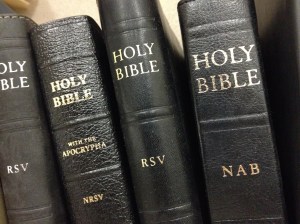
Inside, outside, upside-down.  The more life moves toward binary code—what isn’t computerized these days?—the more scholars are moving away from simple binaries.  Just when I thought I was getting used to this sacred/profane divide, academics are scrapping it for more nuanced paradigms not based on any assumptions of presumed deities and their projected wishes.  Nothing as simple as “either/or” could justify all these salaries for stuff you can just look up on the internet, after all.  Still, binaries are a very human way of looking at the world.  Light and dark doesn’t mean there aren’t all the shades in between.  And the very basic difference between inside and outside may be far more helpful than it might appear.

Being inside a religious tradition—really being inside—creates a pattern of thinking that frames all of one’s experience of life.  While reading about the Book of Mormon recently this became clear to me.  Looking at it from the outside is something those on the inside have great trouble doing.  The same is true of various Eastern Orthodox Christian traditions, or Evangelicalism.  Those living on the inside of tightly constrained ways of thinking—believing—can’t see what it looks like from the outside.  I suspect that not all religions traditions fall into such ways of thinking; there are shades here.  “Mainstream” Christianities, for example, tend to blend at the edges and those inside might have an idea of how those on the outside view them.  Lutherans know the jokes about their outlooks and can even tell them.  Methodists and Presbyterians too.  They tend to conform a bit to expectations and  tend not to be extremist about things.  Being mainstream will do that to you.

It is unusual for a person to change religious traditions.  Those who do can see their former tradition from the outside—whether mainstream of not—with a kind of objectivity that frightens true believers.  Most religions have some tenets that look a bit unbelievable when viewed from outside.  Once seen from that perspective, however, there’s no unseeing it.  I grew up Fundamentalist.  After some time in the mainstream Methodist tradition I could see Fundamentalism from the outside.  When I eventually joined the Episcopal Church I had been viewing it from the outside my entire life up to that point.  Looking at faith traditions inside out offers perspectives otherwise not to be had.  Nobody wants to believe the wrong religion.  Perhaps that’s why it’s so difficult to look at your own from the outside.  You have to be willing to accept shades of gray, even if looking at it in a binary way.

Look Both Ways

One of the things I miss the most about my teaching career is learning from the young.  While some professors in my experience believed the learning only went one way, I always found a kind of reciprocity in it.  I passed on what I learned from taking classes and having my face in a book all the time, and they taught me about popular culture.  Academics don’t get out much, you see.  It’s a basic issue of time—we all have a limited amount of it and research, if done right, takes an incredible chunk.  In fact, when hot on the trail of an idea, it’s difficult to think of anything else.  Pop culture, on the other hand, is what the majority of people share.  Now it’s largely mediated by the internet, a place that some academics get bored.

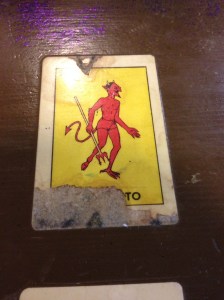
Speaking to a young person recently, I was initially surprised when he said that his generation was more interested in the Devil than in God.  Parents have always been concerned that their children not go astray, but this was, it seemed to me, more of an intellectual curiosity than any kind of devotion.  God, he averred, was thought of as aloof, pious, self-righteous; in a word, Evangelical.  The internet can be downright ecclesiastical in its affirmation that our inclinations can be what used to be called “sinful.”  Not that these things are always bad, but they are the kinds of things we’re taught to feel guilty about.  The divine response?  Anger.  Displeasure.  Shaming.  Young people, my interlocutor thought, found the Devil more understanding.

Perhaps this is the ultimate result of Evangelical thinking.  We’re watching in real time as the party of Jesus is becoming the party of intolerance for anyone different than ourselves.  Rather than turning the other cheek, it’s fire when ready.  Eager to retain the “brand” of “Christianity,” they slap the secular label on any outlook different than their own, although their own faith is without form and void.  It used to be that this was the realm of the Devil.  This sheds a different perspective on what my young colleague was saying.  Instead of bringing people to God, the Evangelical movement is driving them away.  Traditionally, the Devil was after the destruction of human souls.  That seems to be one of the new values of the right wing of the church.  There’s quite a bit to think about in this observation by this young one.  I’m glad to know that traffic still moves both directions on this street.


Museum Haven

At various points of my career I’ve applied for museum curator positions.  Since those who actually land those jobs have degrees in museum studies, I’ve never gotten as far as an interview.  Still, I like to think I’d be good at it.  I spend time in museums and I’ve been told I have an okay eye for design.  And I recently read that museums are educational institutions.  That makes sense since people tend to be visual learners.  (This is something I took into account in my classes as well, illustrating lectures to make a point.  The traditional academic feels that pictures are somehow “soft” learning as opposed to the harsh realities of text and word-based instruction, but I beg to differ.)  We see things and they stick with us.

On a visit to the New York Historical Society museum I once looked at their somewhat abbreviated sculpture collection.  This isn’t the Met, after all.  One of the tricks I’ve learned about museum displays is that some curators place subtle humor in their framing of objects.  For example, my gaze was drawn to a figure of a pilgrim.  A stern-looking fellow, he’s captured in full stride, massive Bible tucked under his arm, determined frown on his face.  This is a man trying to create Heaven on earth, dour though it may be.  Taking a step back, my camera found a smile in this image.  On either side of this angry Christian were two naked women: one was apparently Artemis with her bow, the other perhaps a Muse.  The lines of the display draw attention to this juxtaposition.  There’s some humor here, intentional or not.

This also takes me back to yesterday’s post about Heaven.  Perceptions of what it is differ.  There’s a mindset like the pilgrim that sees a life of suffering being rewarded in the hereafter with endless bliss.  I do have to wonder whether too much hardship down here might not make one forget how to enjoy oneself.   It’s difficult to picture a Puritan in rapture.  It’s as if the journey—the hard road—is the real source of enjoyment here.  Each of us, I suppose, has her or his own view of Heaven.  Mine’s kind of like a library with all the time in the world without end to read.  Others, I suspect, would find paradise as a garden.  Yet others would see Heaven as a kind of museum, but it would be one where laughing out loud was okay, for the Curator definitely has a sense of humor.


Patriarchal Faith

One of the dynamics we see in present-day America is the worship of belief itself.  This is nothing new since faith is the “substance of things hoped for, the evidence of things not seen.”  It’s hard to trust in what you can’t see.  Trusting in trust may be tautological, but it’s also a natural development for something that evades proof.  If it goes too far, however, such religion becomes an idol.  Its teachings become secondary to its very existence.  Its rules, no matter how contradictory, must all be followed.  And those who believe are encouraged not to think too deeply about it since, if they did, this inherent inconsistency would be obvious.  The knee-jerk reaction of “the Bible says” is one such defensive measure.  I saw this all the time while teaching in seminary.

The other day I heard the melody of “Faith of Our Fathers” playing on the local church bells.  Interestingly, this is a Catholic hymn adopted by Protestants.  It’s kind of an anthem to this idea of worshipping the faith rather than the deity to which it points.  Consider the chorus: “Faith of our fathers, holy faith!/We will be true to thee til death.”  Originally a celebration of martyrs—those who found the courage to die in their steadfast belief—the hymn survives into an era when the perils besetting what used to be Christianity are less political and more scientific.  We live in a universe compellingly explained by science while politics has appropriated religion and counts on it to keep worshipping faith as an entity, regardless of distorted beliefs.  The hymn plays on.

Many public intellectuals are wondering about how evangelical Christianity could so easily divest itself of Jesus’ teachings and accept Trumpism.  Some have already begun to suggest that Trumpism is a “cult.”  (Religionists would say the proper term is “New Religious Movement,” since we no longer judge religions, no matter what forms of mind control they might prefer.)  The problem with experts on religion is that anyone can claim that sobriquet, bona fides or no.  Some of us have documented decades of official study of the phenomenon—those who paid attention in seminary and continued to pay for many years for a doctorate in this elusive field—but we’re are easily outshouted by those who take the words of this hymn literally, as they were meant to be taken.  Martyrdom comes in many varieties.  As I listen to the bells, I consider the implications.


Quaker States

Religions have always fascinated me.  Having grown up in one that was self-assured that it alone was right, I didn’t have much opportunity, as a child, to look closely at others.  I had to assume that other religions took their beliefs just as seriously as we did, but that they were dead wrong.  Majoring in religion requires a bit more broadmindedness.  We looked, as objectively as possible, at other traditions.  Still, Grove City College is unapologetically evangelical, so some professors weren’t shy about stating this or that belief was just plain wrong.  Things improved from then on, academically speaking.  By the time of my doctorate, and as an Episcopalian, I learned to distance myself a bit; dispassionate was the only way to be in the face of sometimes conflicting accounts.

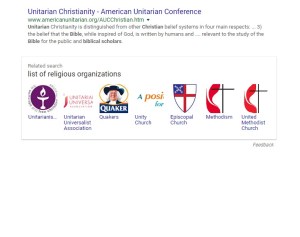
The other day, following my natural curiosity, I was researching Unitarian Universalists.  Having a strong biblical background, I was curious about this denomination that represents Scriptures quite differently.  The Google metrics brought up a page with logos of various traditions: the Unitarian one I recognized, as I did the Episcopal and United Methodist Churches, having been a member of both.  Then I noticed the symbol used for the Quakers: the Quaker oats man.  I was inclined to laugh and be horrified simultaneously.  The “Quaker” Oats symbol is a commercial mock-up, and had Google read Wikipedia it would’ve known that the company has nothing to do with the faith.  Capitalizing (literally) on the reputation of Quakers for purity, the company used William Penn as a model for a guy who wouldn’t cheat you.

Now that I live in the Quaker State (again), I’ve grown curious about the Society of Friends.  This is particularly so since they are one of the few Christian groups to have been expropriated by the commercial world.  Who’s ever heard of Presbyterian laundry detergent?  Well, with the exception of hospitals and caregiving institutions, which are happy to take the name of a denomination, religion is hardly a trusted commodity these days in these parts.  The Quakers do have a symbol—two superimposed, four-pointed stars.  Metrics, however, are based on search frequencies, I suspect.  As far as religious denominations go, the Society of Friends isn’t massive.  Far more people search for Quaker Oats than the actual religion whose name the company borrowed.  Such is life in these United States—the ultimate corporate venture.  Now a wholly owned subsidiary of The Trump Organization.


Galilean Blues

Call me nostalgic, but growing up Fundie, “Capernaum” tripped easily off my lips.  In fact, it was a word I heard very frequently at church, always pronounced “kap-er-NEE-um” (please pardon my amateur phonetics).  Even though no one I knew had ever been to Israel, we all knew it was in Galilee and that it figured large in the early life of Jesus of Nazareth (although we assumed he was surnamed “Christ”).  When I attended seminary I was surprised to hear the geonym pronounced “ka-per-NUM.”  It sounded so sophisticated—aristocratic, even.  Still, everyone at Boston University School of Theology knew what, and roughly where, it was.  It was a household name, no matter how you pronounced it.

Spellcheck disagrees.  It doesn’t recognize one of the most famous places in the New Testament.  Now, I’m aware that my view of things is idiosyncratic.  This blog should be proof of that.  Those who grow up from Fundamentalism often know this experience—something that everyone knew when you were young and informed is arcane knowledge to the rest of the world where Kardashians and Sedarises are household names.  The Bible, irrelevant at best, is a foreign country.  Then the religious right comes to power and everyone’s confused.  They don’t speak the same language as the rest of the world.  They say kap-er-NEE-um.  Others scratch their heads and glance at their knee caps.

When I visited ancient Capernaum it required some imagination to reconstruct what it had been, back in the day.  Since the ruins were relatively recent—only a millennium or two—some of the buildings were still above ground, including the famous synagogue.  Even among the unchurched archaeologists, everyone knew the connection of the city to Jesus of Nazareth.  That doesn’t mean, however, that the programmers responsible for spellcheck recognize the name.  Kardashian doesn’t get a red underline on my word processor.  Even in the first century, however, Galilee was a backwater (with real water!).  Important people came from big cities and had family connections.

Some things don’t change much over the millennia.  The famous often find their spotlight because of connections.  If the deity decided to incarnate today, s/he’d know to get a website put together first.  And it would help to have some product endorsements.  Even salvation at a click isn’t enough to draw most people in.  Of course, the matter of name—excuse me, “brand”—is important.  More than anything, you want something people can pronounce.  And just to be safe, anchor it to either New York or the city named The Angels.


Stand-in Line

Pop culture borrows from religion without knowing it.  Or maybe it’s just that religion has become so irrelevant that people no longer care.  Whichever may be the case, those who contribute to pop culture have a rich treasury from which to take withdrawals.  This occurred to me while waiting for a bus into New York.  Many people don’t want to stand in line (who does, really?).  In the Park-n-Ride subculture, you may leave an avatar in your place.  It’s probably not called an avatar, but since there’s nobody here to ask, I’m going to use the pop culture name.  You put your bag on the pavement, marking your place and then go sit in your car.  Since I’m going to be sitting in a big car for the next two hours, I prefer to stand outside.

The idea of an avatar is mediated to most people through either computer language or the movie.  I first encountered the term in the former sense in Neal Stephenson’s Snow Crash.  I was an internet neophyte and had trouble conceiving a virtual world in those days.  Some time later came the latter.  James Cameron’s film embodied the idea—linked through software, the tired hardware of physical bodies could be given new life.  In some senses it was an even better life.  Now everyone knows what an avatar is.  Perhaps except that the idea is native to Hinduism.

Hinduism was never an organized, intentional religion such as Christianity.  It is rather a wide array of traditional beliefs that, in the light of missionary activity, had to be given a name.  There are many gods in Hinduism, and when a deity descends to earth s/he appears in a form recognizable to humans—an avatar.  Not being an Indologist, my understanding of the concept is very basic, but it’s enough to know that this religious idea found a role in pop culture first through computer representations of human beings.  We had flattered ourselves with being gods, since we had created a virtual world.  A world we couldn’t physically enter.  Avatars were, therefore, how we wanted others to experience us.  Snow Crash is peopled with all kinds of representations.  The internet today, nearly 30 years on, has many more.  After all, there are many gods.

I glance at my watch.  The bus should be here any minute now.  When it enters the lot I’ll see the deities behind these canvas and leather avatars.  They’ll be less impressive than I’ve imagined them, I’m sure.  And although we’ve created virtual reality, I still have to get on a physical bus to go to virtual work.


A Star in the East

The times they are a, well, you know—nobody wants to violate copyright.  In any case, nothing stays the same for long.  New York, for example, is a city in a constant state of transformation.  Fully grown buildings now stand where there were literally holes in the ground when I began working there.  One building near Times Square recently had a facelift that revealed the steel girders beneath.  On the I-beam were the words “Bethlehem Steel.”  And it’s not just New York.  Our cultural transformation has been taking place over the last few centuries as populations have moved to urban areas, abandoning farming to the few who remember how.  Being from western Pennsylvania, I pretty much thought the eastern part of the state was Philadelphia.  I’d heard of other urban regions, of course, such as Scranton and Allentown, but they were well outside my experience.  We didn’t get out much.

Now that I’m here in the eastern part of the state, I’m begun to explore the ever-changing micropolitan area of Allentown-Bethlehem-Easton.  The three cities blend at the edges, and this region is the third largest population zone in the state, after Philly and Pittsburgh.  It’s also the fastest growing region in the commonwealth.  I suppose we might’ve helped with that statistic.  The other day I had to run an errand in Bethlehem.  I pulled over to marvel at the hulk of what had once been Bethlehem Steel.  Now, I grew up in a town with an active steel mill, and Pittsburgh grew to fame for the same metal, but this was a behemoth of a plant.  Subdivided and open to development, it now houses a casino, in part, and an arts center.  And still there’s more space.

Bethlehem was founded on Christmas Eve by the Moravians.  Perhaps appropriate for a town trying to resurrect itself, Bethlehem calls itself the Christmas City.  Star imagery abounds, and many businesses name themselves with this Christian symbol.  The image is quite different from that of a steel city with hard-working men on the shift.  The grime and din of industry.  Bethlehem, like many places in the state, was named for its biblical forebear.  On my visit to the original Bethlehem many years ago I was, like many tourists, disappointed that it isn’t “O little town of” anymore.  There were people everywhere and it was difficult to imagine a quiet stable inside a noisy stone church thronging with the faithful.  Clearly things don’t remain unchanged for long, even in towns famous for their remoteness.  Although far from New York, they share a common heritage of people everywhere, and that heritage could bring us peace if only we would allow it.  The answer, it seems, is blowin’ in the, well, you know.


Truth under Fire

As Evangelicals continue their unflinching support for Trump, Rudy Giuliani has at last said something that rings true with these “Christians.”  According to a Washington Post story 45’s lawyer declared, “Truth isn’t truth.”  This was regarding the Russia probe, something that would’ve led to the ouster of any real president by now.  We’re all used to Trump’s constant state of obfuscation after all these long months, and the former mayor of New York has just come clean—truth is what we want it to be, no more, no less.  It is a meaningless word, a chimera.  If the son of god in the White House has broken the law (and he has) then the truth is there’s no law to be broken.  Democracy is just a made-up word in the hands of the Republican Party.

Now, I don’t have much truck with politicians.  Leopards, according to a certain book, can’t change their spots.  Nevertheless, Evangelicals should object to Giuliani’s direct assault on their sacred text.  The Good Book, you see, is all about “the truth.”  But the truth isn’t the truth.  When it claims that Jesus died to atone for your sins, that can’t be the truth because the truth isn’t.  The only truth is what Trump personally wants.  And the GOP won’t lift a finger to stop him.  Long ago it was clear that the party of Lincoln had abandoned the will of the people they’re elected to lead, but if there were truth we’d see the deep, stinking muck of corruption everywhere within its doors.  At least you’d expect the neat and clean Christians to object.

A certain man about two millennia ago said, according to the Book, “I am the way, the truth, and the life.”  But Rudy says “Truth isn’t truth.”  The Beatles said they were more popular than Jesus and the public revolted.  Rudy says Trump has more authority than Jesus and the Evangelicals cheer.  The capacity for untruth has always been part of politics.  Most politicians know to lie discreetly, when fact-checking will reveal some ambiguity.  Now the gospel-truth is whatever comes from the unholy mouth of Trump.  There is no truth.  There are alternative facts.  There’s fake news.  Surely the Prince of Peace wouldn’t have cancelled a military parade.  Meanwhile someone once said “the truth will set you free.”  The great Giuliani has informed us, however, that there is no truth.  And if truth isn’t truth, there’s no hope of freedom.  At least according to a guy named Jesus, whoever he may be.  


Pretty as a Prayerbook

Stolidity.  Canons all across this deck are known for it.  Visions of unchanging texts, however, tend to be false perceptions.  Even the canon of the Bible differs, depending on who you talk to.  So it is to be applauded, I suspect, that the Episcopal Church is planning to revise the Book of Common Prayer.  The last revision was 1979, and before that, 1928.  This schedule should be telling you something—the BCP, or simply “Prayerbook” as it’s commonly called, was never a changeless canon.  We mere mortals rely on experts to change the words by which the Almighty is approached, and although Episcopalians are thin on the ground in this country, world-wide they’re a formidable sect.  They’re united mainly by their commitment to the BCP.  And with good reason.

The days of the British Empire are long gone, but when it ruled the waves (and even before) this island state contributed a number of religious elements to the world.  The Prayerbook was born out of struggles with Rome for secular power disguised as sacred.  We try to live with a fiction of separation, but churches and states have always had mutual influence—just consider the way secular Trump has changed Christianity and you’ll see.  The BCP was to define English Christianity and in doing so became a Scripture in its own right (or rite).  Phrases from the Book of Common Prayer pepper the English language so as to rival the Good Book itself.  When church attendance was an expectation, you couldn’t help but internalize it.

A certain seminary, nameless here forevermore, will not be pleased with such change.  When I taught there many still clung to the 1928, claiming the church had erred (a strange position for someone in a voluntary organization and who vows to support its decisions) by adding “inclusive language” in the ’79.  This, they averred, was a man’s religion.  And they meant biological males.  Stolid.  Or perhaps stale.  Like the fiction of unchanging canons, the myth of the rational male hierarchy exists only to be exploded.  The two longest reigning British monarchs have been queens, after all.  World wars tend to be the legacy of male rulers.  So, although a tiny seminary in the woods of Wisconsin will likely rage, the BCP could use a bit of a makeover.  The world has changed substantially since the 1970s.  Mainline churches have been steadily shrinking and redefinition with a declining financial base makes good sense.  “This is another day, O Lord. I know not what it will bring forth, but make me ready, Lord, for whatever it may be.”  Even if it be changing canons.


Special Delivery

Apotropaic is a word that can be translated as “turning away evil.”  For all that, it’s a perfectly good English word, although seldom used outside realms such as religious studies and anthropology.  Although the word itself may be unfamiliar, the concept is one that everyone recognizes—the charm that wards off evil is the most common example.  The rabbit’s foot means good luck (except for the rabbit) because it’s an apotropaic device.  In perhaps one of the oddest twists in Christianity’s somewhat lengthy history is the fact that the Bible itself has become an apotropaic device.  You’ll see this quite a lot in horror films, and if you read Holy Horror when it comes out you’ll see it quite a bit, although I don’t use the technical term for it.  Apotropaic outlooks also pervade society as a whole.  A recent article on Mysterious Universe proves the point.

Pennsylvania is a weird state.  Having grown up here, I know that to be the case.  In Wilkes-Barre (which itself is a strange name) a ghost-hunter was arrested for breaking into a haunted house bearing a sword, shotgun, and Bible.  That should cover your bases.  Of course, I couldn’t help but notice the odd equivalence of these three weapons.  One is intended for close combat (the sword), one for a reasonable distance (the shotgun), and one for an enemy so close that they might get inside (the Bible).  Make no mistake about it; the Bible is indeed a weapon.  Probably intended as an apotropaic device in this context, it was nevertheless an object to defend the ghost hunter from evil.  The sword and shotgun, however, seem to betray a lack of trust in Holy Writ.

The Bible has been used for offensive purposes ever since people figured out that it can be used to control others.  Coercion, in whatever form, is a kind of violence.  Interestingly, reading the Good Book would seem to indicate that such usage of holy things is inappropriate.  Then again, the Bible doesn’t refer to the Bible.  The idea of Scripture as a powerful object developed only after the Good Book had become an iconic object.  The final authority.  Who can argue with what is claimed to be the word of God?  That idea has become more important than what the Bible actually says, as any “Bible-believing” Trump follower will prove.  Against ghosts, however, it might serve as an apotropaic device, but it won’t prevent you from being arrested, it seems.  A lesson worth pondering.


Shepherding Lies

They’re going to look pretty ridiculous when this is all over.  Like sheep without a shepherd.  Evangelicals, I mean.  The fact is they’ve jettisoned everything they stood for to support a pseudo-president constitutionally incapable of telling the truth and now they must be wondering about what they’ve lost along the way.  Stories in “liberal” sources such as The Washington Post, The New York Times, and The Atlantic have raised the question repeatedly—why don’t Evangelicals hold Trump to the same standard they hold all other people?  His backing and filling have been obvious to anyone capable of thought, and yet the bestselling books in America for the past two weeks have been tomes about how the liberals are lying.  What’s an Evangelical to do when truth has lost its meaning?

While I was still an Evangelical, in college, we debated endlessly how to get at Truth with a capital “T.”  No matter how you sliced it, diced it, or even julienned it, Truth had to come from the Bible somehow.  Two things the Good Book was against unequivocally were lying and adultery.  Who’d have thought Southern Baptists would be standing in line to change divine law, by their own definition?  And for what purpose?  To support a man who clearly doesn’t share their values, and shows it daily.  These former Communist-haters now cozy up to Russia with a familiarity that suggests Trump isn’t the only one sleeping around.  As a former Evangelical, I have to wonder whatever happened to the concept of the double standard.  This was never considered right or fair or biblical.  Now it’s all three.

Just this past week the Washington Post ran a story about an Evangelical pastor preaching a series of sermons on the Ten Commandments.  Somehow they’ve made their way from courthouse lawns into churches, it seems.  The week he reached adultery, he didn’t know what to say to his Trump-supporting flock.  He himself supports a leader whose told an average of hundreds of lies per day since January of last year.  Among them allegations that he didn’t commit adultery.  Or pay to have it covered up.  Or know that his lawyer had paid to cover it up.  But when said lawyer realizes that the shepherd doesn’t care about sheep—can’t even find one in a paddock—he suddenly remembers that there is Truth with a capital “T.”  But Evangelicals don’t have to listen to anyone named Cohen.  After all, they have wool in their ears.  Just don’t read what the Good Book says about hearing what you want to hear.  What’ve they lost?  Not just their shepherd, but their very souls.


Religion in the City

It’s 5 a.m., so what are all these people doing here?  On the highway.  It’s still dark and I’m on my way to the choice of public transit that will take me to New York City.  You see, telecommuting is never 100% city-free.  Somehow I’d been thinking that once we’d gotten away from New York things would be quieter.  Then I remembered that in two decades, if current trends and models continue, nearly half of the US population will live in just eight states.  New York and Pennsylvania are two of them.  Those of us who’ve moved here to get out of the rat race have made our own little mouse race, I guess.

Being in the city after an absence of almost three weeks was a shock to the system.  The first things I noticed were how loud and crowded it was.  In the summer Manhattan has, I was forcefully reminded, lots more tourists than the winter months when it feels like, as one comrade says, Leningrad.  As always when I’m in the masses on the streets, I think about how religious New York City is.  And how secular.  It is, I suspect, a cross-section of American (and international) beliefs.  People come here looking for something transcendent.  Otherwise, why leave home?  Tourism can be a sacred industry.  It brings people from different places together and, in the best of circumstances, forces them to get along with one another.

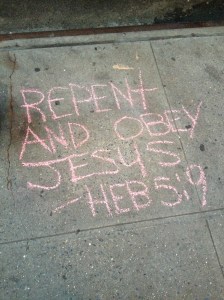
There are plenty who seek to convert those who are different.  On my way to Penn Station last night, as the light was beginning to fade in Herald Square, I woman had set up a portable mic and speakers.  She was preaching, ignored, to the evening crowds.  Among the strangers are those who believe differently.  Those who are ripe for conversion.  It’s all part of New York’s background hymn.  Then on the sidewalk I spied, scrawled in chalk, “Repent and obey Jesus — Heb 5:9;” the writing on the walk.  “And being made perfect, he became the author of eternal salvation unto all them that obey him” the selected verse reads.  We can overlook that it says nothing about repenting.  This is, after all, the melting pot where religions encounter, mingle, and blend.  Even the Fundamentalists must feel it from time to time.  The traffic home at 10:30 p.m. is quieter.  The day, I will learn, is not over yet.  Such is religion in the city.


Starting Something

Starting your own religion, I’m told, just takes patience.  You may have to die before it gets off the ground,  but if it’s a religion you’re starting you get to make the rules.  Well, until somebody else starts interpreting what you wrote.  I grew up thinking a religion had to be ancient to be real.  There’s a certain comfort in untestablity—you can’t verify the facts, so you accept them.  It took many years before it dawned on me that new religions rely on the same premises as old: someone has received the truth (at last!) and is willing to share it with the world.  Followers emerge—true believers.  And then they begin to change things.  “The founder meant this,” they argue, and really they’re starting their own sub-branch of the religion.

Not everyone is convinced by this ancient religion paradigm.  Zarathustra, for example, set out to create his own religion, according to tradition.  Jesus, it seems, was trying to reform Judaism.  The process never stops.  A couple of weeks ago in New York City I saw an adherent of a New Religious Movement.  This one had started in the 1930s.  The man appeared a little older than me, so his life may well have overlapped with that of the founder, or they might’ve missed each other by a decade or two.  Already, however, the religion had grown into its own entity, and it doesn’t seem to worry adherents that the truth was being revealed, for the first time, maybe in their lifetime.  You have to start somewhere.

So, if I were to start a new religion, what would it be?  For a variety of reasons I think I’d call it Moby.  The connection with Melville is palpable, but that wouldn’t be the reason for the name.  (Religions must have a sense of mystery, otherwise they can be analyzed until they look illogical.)  Like Unitarian Universalists, I think the religion would be more about what you value than what you believe.  Belief can be shifting sands.  New information can lead to new results—this is one of the weaknesses of religions developed when the earth was still the center of the universe.  Heaven is now outer space and Hell is earth’s iron core.  Moby would avoid such a doctrinal morass by not having doctrine.  It would need rituals and ceremonies, of course—no matter what Mr. Spock wannabes say, we need emotional engagement and ritual has the goods.  All of this requires patience, because who has the time to develop a new religion when there are only two days in a weekend?


Not Final Words

When death’s not the final word, it’s hard to argue.  This is such a basic level of disagreement between religions and culture that it may be impossible to avoid conflict.  Not that I condone it, but a couple in Oregon, members of the Followers of Christ Church, let their newborn die rather than seek medical attention, according to a Washington Post article.  I have to admit that the Followers of Christ is a sect of which I’d never heard—there are thousands of such groups—but I’m guessing that at the base of their refusal to seek help was a deeply held belief in the afterlife.  Almost impossible to comprehend unless you’ve accepted it profoundly yourself, this single teaching is a game changer.  The child who dies, although tragic from our perspective, has not, in the eyes of a religion transcending death, lost anything.

It’s sometimes difficult for us to to realize just how radical a teaching Christianity was in its early days.  The myth of the martyrs may well have been overblown, but the fact is here was a sect that didn’t fear death like the vast majority of people do.  Resurrection is a powerful concept.  Those who truly believe in it have nothing to fear.  Modern-day sects that take this seriously may respond quite differently to crises than “normal” religions.  In a situation Niebuhr would’ve recognized, this “Christ against culture” outlook is never easily resolved.  True believers will accept punishment on the part of secular authorities as a form of martyrdom.  The fear of death on the part of the vast majority of people outweighs, I suspect, professed belief in the afterlife.

Place the current political climate into the mix and the colors will become even more vivid.  Extremism is the flavor of the day.  Mainstream Christianity, for all of its problems, has sought a balance between accepting the benefits of medical science—the social acknowledgment that taking an infant’s life is inherently unfair and unjust—and an official belief in an afterlife.  It allows for a fairly comfortable existence of accepting belief without becoming the radical threat to a materialistic society that more extreme sects represent.  In a nation where no controls exist because of the power of office favors those who believe in nothing so much as themselves, and even the rhetoric of right to life becomes meaningless.  Sects and violence, to go back to my roots, sleep peacefully side by side.  And when awakened, the right to be conceived can’t be extended to life beyond the womb for those who believe death’s not the final word.