Just Sagan

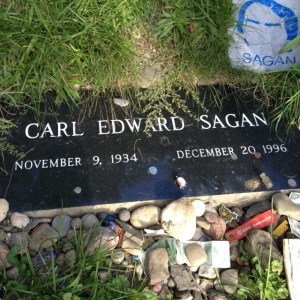
Perhaps the most famous resident of Ithaca, New York, during his career at Cornell was Carl Sagan.  The astrophysicist had had a noteworthy career, becoming a household name with his popularizing television programs and books.  When he died prematurely, there was a real sense of loss among many of us who appreciate those who dumb down science so the rest of us can understand.  Over the weekend in Ithaca, which still bears his physical legacy in a scale model of the solar system, we went to find his final resting place in Lakeview Cemetery.  There is something oddly peaceful about passing time among the dead.  It was late afternoon and we were the only ones in the graveyard.  We also had no idea where his plot might be, so we surveyed a good bit of the grounds, finding the Cornell family mausoleum along the way.

When my wife found his plot, with a simple tombstone laid into the ground, it was impossible not to notice the grave goods.  The leaving of mementos at the burial places of the famous is nothing new.  Douglas Adams’ grave in Highgate Cemetery in London had a profusion of pens pressed into the ground.  H. P. Lovecraft’s final resting place in Providence likewise had remembrances scattered about.  Among the items at Sagan’s grave were various bits of money, a teddy bear, and a somewhat lengthy letter written to the late scientist, expressing how much he had influenced the life of the writer.  After paying our respects, it struck me how even in a cemetery where death, the great leveler, has visited all, we still seek out the famous.

I couldn’t help pondering the implications of leaving behind something for the dead.  Money is of no use where goods and services can’t be traded.  Approaching the cemetery from the upper entrance, we first encountered a Jewish burial area where many of the tombs had rocks characteristically laid on top.  Sagan’s grave is on the border where stones on tombs begin to give way to crosses.  The custom of placing rocks on gravestones is ancient, but the reasons it’s done are disputed.  One of my favorite explanations is that flowers die but rocks do not.  There’s a simple elegance to it.  Many Christian graves appear neglected by comparison.  We don’t live in Ithaca, and it’s difficult to guess how often this somewhat hard-to-find cemetery is visited.  When it is, however, it is in the spirit of remembering a life that was ever focused outward, to an infinite yet expanding universe.


Virgin-Haunted World

One of the most frequent accusations of “idolatry” I heard as a child was leveled at Roman Catholic devotion to the virgin Mary.  Lessons learned during childhood are difficult to displace, especially when they concern your eternal destination.  I overcame this particular objection, a bit, during my sojourn among the Episcopalians, but I have to confess I never felt right praying to Mary.  In my Protestant-steeped mind, there were two classes of entities involved: gods (of which, properly, there was only one) and human beings.  Only the former received prayers.  The rest of us simply had to contend with non-supernatural powers and do the best we could.  Still, I met many believers devoted to Mary, and honestly, some accounts of Marian apparitions are pretty impressive.

A local source for inexpensive advertising in our area is essentially a weekly set of want ads.  For a small fee you can advertise just about anything you want to buy or have to sell.  Spiritual or physical.  A few weeks ago, someone ran a magnanimous piece on a prayer to the virgin never known to fail.  The words of the prayer were printed, along with the instructions, for nothing is quite as simple as “ask and you shall receive.”  The prayer must be recited thrice, and thanksgiving publicly proclaimed.  A number of questions occurred to me, regarding not only this, but all prayers for divine action.  One is the rather simple query of how you can know if a prayer has never failed.  I suspect this is known by faith alone.

There are any number of things most of us would like to change about our lives, and the larger issue of prayer is the daisy-chaining of causality.  One change causes another, causes another, and often that for which we pray will impact another person in a negative way.  This is the classic “contradictory prayer” conundrum—one person prays for sunny skies while another prays for rain.  Neither is evil, both have their reasons, perhaps equally important.  (The weekday is a workday for many, and that’s non-negotiable in a capitalist society, so I suspect prayers for sunny skies tend to be weekend prayers, but still…)  The prayer never known to fail is either a rock or a hard place.  It’s that certitude that does it.  I don’t begrudge anyone a prayer that works.  Faith alone can test the results.  And although we could use a little less rain around here, we could all benefit from a little more faith, I suspect.  And for that there’s no fee.


Forgotten Bible Verses

Bible believers are basking in the headlines these days.  What with Mr. “Meet My Genitals” gunning for the Supreme Court and displacing them for a few days, they must be getting anxious for more sonburn in the limelight.  If only they didn’t have the Good Book standing in the way.  As I was reading my Bible the other day, I was reminded of this little gem, “the love of money is the root of all evil.”  Now, liberals like myself know that Paul of Tarsus didn’t write 1 Timothy, but Bible-believers know he did.  So much the worse for them.  They elected a president who stands for nothing so much as the love of money, and the swamp has become quite a root of evil.  Senate Republicans, after hearing a second credible sexual assault allegation against their boy for the black bench responded by trying to rush through a vote before the news got out.  And this reminded me of the forgotten prophets.

“What doth the Lord require of thee, but to do justly, and to love mercy, and to walk humbly with thy God?”  Well, you see, Mr. Micah, we know we’re heading to defeat in the midterms, so we’ve got to railroad through as many of our personal agendas as we can.  Don’t you know, o Lord, that this is a lifetime appointment?  And really, what does justice have to do with it?  Sure, he gropes and demeans women, but you’re a dude, right?  I bet you did the same when you were in high school and college.  And the money thing?  We’re only trying to help the economy because, well, wealth trickles down.  Who said anything like it’s the root of all evil?  “Hate the evil, and love the good, and establish judgment in the gate.”  Now, don’t go quoting Mr. Amos to me.  Next thing I know you’ll be telling me to let justice to run down like waters, and righteousness like a mighty stream.

Forgotten Bible verses, in the new Evangelicalism, seem to be cropping up on the black market.  You might think we should turn back to the start of the Good Book and read from the beginning.  There the GOP will find its solace until they come to the 27th verse, “So God created man in his own image, in the image of God created he him; male and female created he them.”  That semicolon says a lot; they will claim.  Man is the image of God, and he had a son.  Just don’t listen too closely to what that son says, particularly when he makes remarks like “whosoever looketh on a woman to lust after her hath committed adultery with her already in his heart.”  Young men like to drink and grope.  When they grow old they then like to be Supreme Court justices.  What’s that?  One more short verse?  “Jesus wept.”


Southern Turn

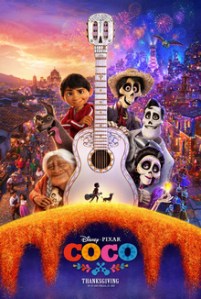
In America’s ever roving commercial eye, Día de Muertos has become an extension of Halloween.  Retailers have realized that people will spend a lot on their fear, and the autumnal holidays delve into that primal territory.  Since the Day of the Dead, being a mix of indigenous Mexican religions and the Catholic celebration of All Souls’ Day, comes two days after Halloween why not blur them together with greenbacks?  So capitalist thinking goes.  While certainly not free of monied interests, the Disney/Pixar movie Coco has the virtue of addressing Día de Muertos as the separate holiday that it is.  A form of ancestor worship—a religion extremely common around the world—the thought-world of the film shares in common with Tim Burton’s Corpse Bride this idea that the afterlife is colorful, if not joyous.

I realize I’m jumping the gun here, but I just saw Coco for the first time over the weekend.  Not just a culturally sensitive treatment of an indigenous holiday, it is also a celebration of music.  In a very real sense, music is life in the film, and even the dead continue to thrive in its presence.  Again, the connection with Corpse Bride suggests itself.  The key difference, from a religionist’s point of view, is that Coco is based on, to an extent, actual religious traditions.  An irony of this is that, together with the worship of Santa Muerte, the focus on death sometimes makes the Catholic Church nervous.  Focus should be on resurrection, not death.  But what if death isn’t seen as evil?  Where is thy sting?  This can be a real challenge when your organization is offering escape from death.

The fear of death is natural enough.  It’s the ultimate unknown.  It fuels both religion and horror.  In that sense films like Coco that show a joyful aspect of the hereafter do an end-run around traditions that base their wares on ways to avoid the consequences of death.  Hell becomes a threat to be avoided—the forgotten dead in Coco face annihilation, a fate that Héctor notes comes to everyone eventually.  Eternal torment isn’t in the picture.  I have to wonder if this view doesn’t present a form of salvation that is unwelcome among rival religions.  Although Catholics don’t have the hostility toward Halloween that many Evangelicals display, there is a challenge of rival faiths here.  Stores have already begun offering this year’s Halloween wares, and increasingly among them are Day of the Dead decorations.  The holidays are quite distinct, although related, and movies like Coco suggest what we fear may be more a matter of perspective than of the decree of an angry deity.


Binaries

Inside, outside, upside-down.  The more life moves toward binary code—what isn’t computerized these days?—the more scholars are moving away from simple binaries.  Just when I thought I was getting used to this sacred/profane divide, academics are scrapping it for more nuanced paradigms not based on any assumptions of presumed deities and their projected wishes.  Nothing as simple as “either/or” could justify all these salaries for stuff you can just look up on the internet, after all.  Still, binaries are a very human way of looking at the world.  Light and dark doesn’t mean there aren’t all the shades in between.  And the very basic difference between inside and outside may be far more helpful than it might appear.

Being inside a religious tradition—really being inside—creates a pattern of thinking that frames all of one’s experience of life.  While reading about the Book of Mormon recently this became clear to me.  Looking at it from the outside is something those on the inside have great trouble doing.  The same is true of various Eastern Orthodox Christian traditions, or Evangelicalism.  Those living on the inside of tightly constrained ways of thinking—believing—can’t see what it looks like from the outside.  I suspect that not all religions traditions fall into such ways of thinking; there are shades here.  “Mainstream” Christianities, for example, tend to blend at the edges and those inside might have an idea of how those on the outside view them.  Lutherans know the jokes about their outlooks and can even tell them.  Methodists and Presbyterians too.  They tend to conform a bit to expectations and  tend not to be extremist about things.  Being mainstream will do that to you.

It is unusual for a person to change religious traditions.  Those who do can see their former tradition from the outside—whether mainstream of not—with a kind of objectivity that frightens true believers.  Most religions have some tenets that look a bit unbelievable when viewed from outside.  Once seen from that perspective, however, there’s no unseeing it.  I grew up Fundamentalist.  After some time in the mainstream Methodist tradition I could see Fundamentalism from the outside.  When I eventually joined the Episcopal Church I had been viewing it from the outside my entire life up to that point.  Looking at faith traditions inside out offers perspectives otherwise not to be had.  Nobody wants to believe the wrong religion.  Perhaps that’s why it’s so difficult to look at your own from the outside.  You have to be willing to accept shades of gray, even if looking at it in a binary way.


Look Both Ways

One of the things I miss the most about my teaching career is learning from the young.  While some professors in my experience believed the learning only went one way, I always found a kind of reciprocity in it.  I passed on what I learned from taking classes and having my face in a book all the time, and they taught me about popular culture.  Academics don’t get out much, you see.  It’s a basic issue of time—we all have a limited amount of it and research, if done right, takes an incredible chunk.  In fact, when hot on the trail of an idea, it’s difficult to think of anything else.  Pop culture, on the other hand, is what the majority of people share.  Now it’s largely mediated by the internet, a place that some academics get bored.

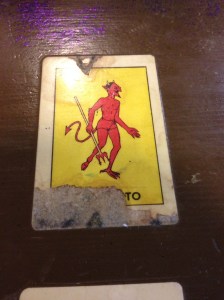
Speaking to a young person recently, I was initially surprised when he said that his generation was more interested in the Devil than in God.  Parents have always been concerned that their children not go astray, but this was, it seemed to me, more of an intellectual curiosity than any kind of devotion.  God, he averred, was thought of as aloof, pious, self-righteous; in a word, Evangelical.  The internet can be downright ecclesiastical in its affirmation that our inclinations can be what used to be called “sinful.”  Not that these things are always bad, but they are the kinds of things we’re taught to feel guilty about.  The divine response?  Anger.  Displeasure.  Shaming.  Young people, my interlocutor thought, found the Devil more understanding.

Perhaps this is the ultimate result of Evangelical thinking.  We’re watching in real time as the party of Jesus is becoming the party of intolerance for anyone different than ourselves.  Rather than turning the other cheek, it’s fire when ready.  Eager to retain the “brand” of “Christianity,” they slap the secular label on any outlook different than their own, although their own faith is without form and void.  It used to be that this was the realm of the Devil.  This sheds a different perspective on what my young colleague was saying.  Instead of bringing people to God, the Evangelical movement is driving them away.  Traditionally, the Devil was after the destruction of human souls.  That seems to be one of the new values of the right wing of the church.  There’s quite a bit to think about in this observation by this young one.  I’m glad to know that traffic still moves both directions on this street.


Museum Haven

At various points of my career I’ve applied for museum curator positions.  Since those who actually land those jobs have degrees in museum studies, I’ve never gotten as far as an interview.  Still, I like to think I’d be good at it.  I spend time in museums and I’ve been told I have an okay eye for design.  And I recently read that museums are educational institutions.  That makes sense since people tend to be visual learners.  (This is something I took into account in my classes as well, illustrating lectures to make a point.  The traditional academic feels that pictures are somehow “soft” learning as opposed to the harsh realities of text and word-based instruction, but I beg to differ.)  We see things and they stick with us.

On a visit to the New York Historical Society museum I once looked at their somewhat abbreviated sculpture collection.  This isn’t the Met, after all.  One of the tricks I’ve learned about museum displays is that some curators place subtle humor in their framing of objects.  For example, my gaze was drawn to a figure of a pilgrim.  A stern-looking fellow, he’s captured in full stride, massive Bible tucked under his arm, determined frown on his face.  This is a man trying to create Heaven on earth, dour though it may be.  Taking a step back, my camera found a smile in this image.  On either side of this angry Christian were two naked women: one was apparently Artemis with her bow, the other perhaps a Muse.  The lines of the display draw attention to this juxtaposition.  There’s some humor here, intentional or not.

This also takes me back to yesterday’s post about Heaven.  Perceptions of what it is differ.  There’s a mindset like the pilgrim that sees a life of suffering being rewarded in the hereafter with endless bliss.  I do have to wonder whether too much hardship down here might not make one forget how to enjoy oneself.   It’s difficult to picture a Puritan in rapture.  It’s as if the journey—the hard road—is the real source of enjoyment here.  Each of us, I suppose, has her or his own view of Heaven.  Mine’s kind of like a library with all the time in the world without end to read.  Others, I suspect, would find paradise as a garden.  Yet others would see Heaven as a kind of museum, but it would be one where laughing out loud was okay, for the Curator definitely has a sense of humor.


Patriarchal Faith

One of the dynamics we see in present-day America is the worship of belief itself.  This is nothing new since faith is the “substance of things hoped for, the evidence of things not seen.”  It’s hard to trust in what you can’t see.  Trusting in trust may be tautological, but it’s also a natural development for something that evades proof.  If it goes too far, however, such religion becomes an idol.  Its teachings become secondary to its very existence.  Its rules, no matter how contradictory, must all be followed.  And those who believe are encouraged not to think too deeply about it since, if they did, this inherent inconsistency would be obvious.  The knee-jerk reaction of “the Bible says” is one such defensive measure.  I saw this all the time while teaching in seminary.

The other day I heard the melody of “Faith of Our Fathers” playing on the local church bells.  Interestingly, this is a Catholic hymn adopted by Protestants.  It’s kind of an anthem to this idea of worshipping the faith rather than the deity to which it points.  Consider the chorus: “Faith of our fathers, holy faith!/We will be true to thee til death.”  Originally a celebration of martyrs—those who found the courage to die in their steadfast belief—the hymn survives into an era when the perils besetting what used to be Christianity are less political and more scientific.  We live in a universe compellingly explained by science while politics has appropriated religion and counts on it to keep worshipping faith as an entity, regardless of distorted beliefs.  The hymn plays on.

Many public intellectuals are wondering about how evangelical Christianity could so easily divest itself of Jesus’ teachings and accept Trumpism.  Some have already begun to suggest that Trumpism is a “cult.”  (Religionists would say the proper term is “New Religious Movement,” since we no longer judge religions, no matter what forms of mind control they might prefer.)  The problem with experts on religion is that anyone can claim that sobriquet, bona fides or no.  Some of us have documented decades of official study of the phenomenon—those who paid attention in seminary and continued to pay for many years for a doctorate in this elusive field—but we’re are easily outshouted by those who take the words of this hymn literally, as they were meant to be taken.  Martyrdom comes in many varieties.  As I listen to the bells, I consider the implications.


Quaker States

Religions have always fascinated me.  Having grown up in one that was self-assured that it alone was right, I didn’t have much opportunity, as a child, to look closely at others.  I had to assume that other religions took their beliefs just as seriously as we did, but that they were dead wrong.  Majoring in religion requires a bit more broadmindedness.  We looked, as objectively as possible, at other traditions.  Still, Grove City College is unapologetically evangelical, so some professors weren’t shy about stating this or that belief was just plain wrong.  Things improved from then on, academically speaking.  By the time of my doctorate, and as an Episcopalian, I learned to distance myself a bit; dispassionate was the only way to be in the face of sometimes conflicting accounts.

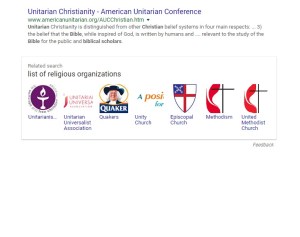
The other day, following my natural curiosity, I was researching Unitarian Universalists.  Having a strong biblical background, I was curious about this denomination that represents Scriptures quite differently.  The Google metrics brought up a page with logos of various traditions: the Unitarian one I recognized, as I did the Episcopal and United Methodist Churches, having been a member of both.  Then I noticed the symbol used for the Quakers: the Quaker oats man.  I was inclined to laugh and be horrified simultaneously.  The “Quaker” Oats symbol is a commercial mock-up, and had Google read Wikipedia it would’ve known that the company has nothing to do with the faith.  Capitalizing (literally) on the reputation of Quakers for purity, the company used William Penn as a model for a guy who wouldn’t cheat you.

Now that I live in the Quaker State (again), I’ve grown curious about the Society of Friends.  This is particularly so since they are one of the few Christian groups to have been expropriated by the commercial world.  Who’s ever heard of Presbyterian laundry detergent?  Well, with the exception of hospitals and caregiving institutions, which are happy to take the name of a denomination, religion is hardly a trusted commodity these days in these parts.  The Quakers do have a symbol—two superimposed, four-pointed stars.  Metrics, however, are based on search frequencies, I suspect.  As far as religious denominations go, the Society of Friends isn’t massive.  Far more people search for Quaker Oats than the actual religion whose name the company borrowed.  Such is life in these United States—the ultimate corporate venture.  Now a wholly owned subsidiary of The Trump Organization.


Galilean Blues

Call me nostalgic, but growing up Fundie, “Capernaum” tripped easily off my lips.  In fact, it was a word I heard very frequently at church, always pronounced “kap-er-NEE-um” (please pardon my amateur phonetics).  Even though no one I knew had ever been to Israel, we all knew it was in Galilee and that it figured large in the early life of Jesus of Nazareth (although we assumed he was surnamed “Christ”).  When I attended seminary I was surprised to hear the geonym pronounced “ka-per-NUM.”  It sounded so sophisticated—aristocratic, even.  Still, everyone at Boston University School of Theology knew what, and roughly where, it was.  It was a household name, no matter how you pronounced it.

Spellcheck disagrees.  It doesn’t recognize one of the most famous places in the New Testament.  Now, I’m aware that my view of things is idiosyncratic.  This blog should be proof of that.  Those who grow up from Fundamentalism often know this experience—something that everyone knew when you were young and informed is arcane knowledge to the rest of the world where Kardashians and Sedarises are household names.  The Bible, irrelevant at best, is a foreign country.  Then the religious right comes to power and everyone’s confused.  They don’t speak the same language as the rest of the world.  They say kap-er-NEE-um.  Others scratch their heads and glance at their knee caps.

When I visited ancient Capernaum it required some imagination to reconstruct what it had been, back in the day.  Since the ruins were relatively recent—only a millennium or two—some of the buildings were still above ground, including the famous synagogue.  Even among the unchurched archaeologists, everyone knew the connection of the city to Jesus of Nazareth.  That doesn’t mean, however, that the programmers responsible for spellcheck recognize the name.  Kardashian doesn’t get a red underline on my word processor.  Even in the first century, however, Galilee was a backwater (with real water!).  Important people came from big cities and had family connections.

Some things don’t change much over the millennia.  The famous often find their spotlight because of connections.  If the deity decided to incarnate today, s/he’d know to get a website put together first.  And it would help to have some product endorsements.  Even salvation at a click isn’t enough to draw most people in.  Of course, the matter of name—excuse me, “brand”—is important.  More than anything, you want something people can pronounce.  And just to be safe, anchor it to either New York or the city named The Angels.


Stand-in Line

Pop culture borrows from religion without knowing it.  Or maybe it’s just that religion has become so irrelevant that people no longer care.  Whichever may be the case, those who contribute to pop culture have a rich treasury from which to take withdrawals.  This occurred to me while waiting for a bus into New York.  Many people don’t want to stand in line (who does, really?).  In the Park-n-Ride subculture, you may leave an avatar in your place.  It’s probably not called an avatar, but since there’s nobody here to ask, I’m going to use the pop culture name.  You put your bag on the pavement, marking your place and then go sit in your car.  Since I’m going to be sitting in a big car for the next two hours, I prefer to stand outside.

The idea of an avatar is mediated to most people through either computer language or the movie.  I first encountered the term in the former sense in Neal Stephenson’s Snow Crash.  I was an internet neophyte and had trouble conceiving a virtual world in those days.  Some time later came the latter.  James Cameron’s film embodied the idea—linked through software, the tired hardware of physical bodies could be given new life.  In some senses it was an even better life.  Now everyone knows what an avatar is.  Perhaps except that the idea is native to Hinduism.

Hinduism was never an organized, intentional religion such as Christianity.  It is rather a wide array of traditional beliefs that, in the light of missionary activity, had to be given a name.  There are many gods in Hinduism, and when a deity descends to earth s/he appears in a form recognizable to humans—an avatar.  Not being an Indologist, my understanding of the concept is very basic, but it’s enough to know that this religious idea found a role in pop culture first through computer representations of human beings.  We had flattered ourselves with being gods, since we had created a virtual world.  A world we couldn’t physically enter.  Avatars were, therefore, how we wanted others to experience us.  Snow Crash is peopled with all kinds of representations.  The internet today, nearly 30 years on, has many more.  After all, there are many gods.

I glance at my watch.  The bus should be here any minute now.  When it enters the lot I’ll see the deities behind these canvas and leather avatars.  They’ll be less impressive than I’ve imagined them, I’m sure.  And although we’ve created virtual reality, I still have to get on a physical bus to go to virtual work.


A Star in the East

The times they are a, well, you know—nobody wants to violate copyright.  In any case, nothing stays the same for long.  New York, for example, is a city in a constant state of transformation.  Fully grown buildings now stand where there were literally holes in the ground when I began working there.  One building near Times Square recently had a facelift that revealed the steel girders beneath.  On the I-beam were the words “Bethlehem Steel.”  And it’s not just New York.  Our cultural transformation has been taking place over the last few centuries as populations have moved to urban areas, abandoning farming to the few who remember how.  Being from western Pennsylvania, I pretty much thought the eastern part of the state was Philadelphia.  I’d heard of other urban regions, of course, such as Scranton and Allentown, but they were well outside my experience.  We didn’t get out much.

Now that I’m here in the eastern part of the state, I’m begun to explore the ever-changing micropolitan area of Allentown-Bethlehem-Easton.  The three cities blend at the edges, and this region is the third largest population zone in the state, after Philly and Pittsburgh.  It’s also the fastest growing region in the commonwealth.  I suppose we might’ve helped with that statistic.  The other day I had to run an errand in Bethlehem.  I pulled over to marvel at the hulk of what had once been Bethlehem Steel.  Now, I grew up in a town with an active steel mill, and Pittsburgh grew to fame for the same metal, but this was a behemoth of a plant.  Subdivided and open to development, it now houses a casino, in part, and an arts center.  And still there’s more space.

Bethlehem was founded on Christmas Eve by the Moravians.  Perhaps appropriate for a town trying to resurrect itself, Bethlehem calls itself the Christmas City.  Star imagery abounds, and many businesses name themselves with this Christian symbol.  The image is quite different from that of a steel city with hard-working men on the shift.  The grime and din of industry.  Bethlehem, like many places in the state, was named for its biblical forebear.  On my visit to the original Bethlehem many years ago I was, like many tourists, disappointed that it isn’t “O little town of” anymore.  There were people everywhere and it was difficult to imagine a quiet stable inside a noisy stone church thronging with the faithful.  Clearly things don’t remain unchanged for long, even in towns famous for their remoteness.  Although far from New York, they share a common heritage of people everywhere, and that heritage could bring us peace if only we would allow it.  The answer, it seems, is blowin’ in the, well, you know.


Truth under Fire

As Evangelicals continue their unflinching support for Trump, Rudy Giuliani has at last said something that rings true with these “Christians.”  According to a Washington Post story 45’s lawyer declared, “Truth isn’t truth.”  This was regarding the Russia probe, something that would’ve led to the ouster of any real president by now.  We’re all used to Trump’s constant state of obfuscation after all these long months, and the former mayor of New York has just come clean—truth is what we want it to be, no more, no less.  It is a meaningless word, a chimera.  If the son of god in the White House has broken the law (and he has) then the truth is there’s no law to be broken.  Democracy is just a made-up word in the hands of the Republican Party.

Now, I don’t have much truck with politicians.  Leopards, according to a certain book, can’t change their spots.  Nevertheless, Evangelicals should object to Giuliani’s direct assault on their sacred text.  The Good Book, you see, is all about “the truth.”  But the truth isn’t the truth.  When it claims that Jesus died to atone for your sins, that can’t be the truth because the truth isn’t.  The only truth is what Trump personally wants.  And the GOP won’t lift a finger to stop him.  Long ago it was clear that the party of Lincoln had abandoned the will of the people they’re elected to lead, but if there were truth we’d see the deep, stinking muck of corruption everywhere within its doors.  At least you’d expect the neat and clean Christians to object.

A certain man about two millennia ago said, according to the Book, “I am the way, the truth, and the life.”  But Rudy says “Truth isn’t truth.”  The Beatles said they were more popular than Jesus and the public revolted.  Rudy says Trump has more authority than Jesus and the Evangelicals cheer.  The capacity for untruth has always been part of politics.  Most politicians know to lie discreetly, when fact-checking will reveal some ambiguity.  Now the gospel-truth is whatever comes from the unholy mouth of Trump.  There is no truth.  There are alternative facts.  There’s fake news.  Surely the Prince of Peace wouldn’t have cancelled a military parade.  Meanwhile someone once said “the truth will set you free.”  The great Giuliani has informed us, however, that there is no truth.  And if truth isn’t truth, there’s no hope of freedom.  At least according to a guy named Jesus, whoever he may be.  


Pretty as a Prayerbook

Stolidity.  Canons all across this deck are known for it.  Visions of unchanging texts, however, tend to be false perceptions.  Even the canon of the Bible differs, depending on who you talk to.  So it is to be applauded, I suspect, that the Episcopal Church is planning to revise the Book of Common Prayer.  The last revision was 1979, and before that, 1928.  This schedule should be telling you something—the BCP, or simply “Prayerbook” as it’s commonly called, was never a changeless canon.  We mere mortals rely on experts to change the words by which the Almighty is approached, and although Episcopalians are thin on the ground in this country, world-wide they’re a formidable sect.  They’re united mainly by their commitment to the BCP.  And with good reason.

The days of the British Empire are long gone, but when it ruled the waves (and even before) this island state contributed a number of religious elements to the world.  The Prayerbook was born out of struggles with Rome for secular power disguised as sacred.  We try to live with a fiction of separation, but churches and states have always had mutual influence—just consider the way secular Trump has changed Christianity and you’ll see.  The BCP was to define English Christianity and in doing so became a Scripture in its own right (or rite).  Phrases from the Book of Common Prayer pepper the English language so as to rival the Good Book itself.  When church attendance was an expectation, you couldn’t help but internalize it.

A certain seminary, nameless here forevermore, will not be pleased with such change.  When I taught there many still clung to the 1928, claiming the church had erred (a strange position for someone in a voluntary organization and who vows to support its decisions) by adding “inclusive language” in the ’79.  This, they averred, was a man’s religion.  And they meant biological males.  Stolid.  Or perhaps stale.  Like the fiction of unchanging canons, the myth of the rational male hierarchy exists only to be exploded.  The two longest reigning British monarchs have been queens, after all.  World wars tend to be the legacy of male rulers.  So, although a tiny seminary in the woods of Wisconsin will likely rage, the BCP could use a bit of a makeover.  The world has changed substantially since the 1970s.  Mainline churches have been steadily shrinking and redefinition with a declining financial base makes good sense.  “This is another day, O Lord. I know not what it will bring forth, but make me ready, Lord, for whatever it may be.”  Even if it be changing canons.


Special Delivery

Apotropaic is a word that can be translated as “turning away evil.”  For all that, it’s a perfectly good English word, although seldom used outside realms such as religious studies and anthropology.  Although the word itself may be unfamiliar, the concept is one that everyone recognizes—the charm that wards off evil is the most common example.  The rabbit’s foot means good luck (except for the rabbit) because it’s an apotropaic device.  In perhaps one of the oddest twists in Christianity’s somewhat lengthy history is the fact that the Bible itself has become an apotropaic device.  You’ll see this quite a lot in horror films, and if you read Holy Horror when it comes out you’ll see it quite a bit, although I don’t use the technical term for it.  Apotropaic outlooks also pervade society as a whole.  A recent article on Mysterious Universe proves the point.

Pennsylvania is a weird state.  Having grown up here, I know that to be the case.  In Wilkes-Barre (which itself is a strange name) a ghost-hunter was arrested for breaking into a haunted house bearing a sword, shotgun, and Bible.  That should cover your bases.  Of course, I couldn’t help but notice the odd equivalence of these three weapons.  One is intended for close combat (the sword), one for a reasonable distance (the shotgun), and one for an enemy so close that they might get inside (the Bible).  Make no mistake about it; the Bible is indeed a weapon.  Probably intended as an apotropaic device in this context, it was nevertheless an object to defend the ghost hunter from evil.  The sword and shotgun, however, seem to betray a lack of trust in Holy Writ.

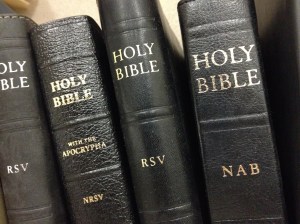
The Bible has been used for offensive purposes ever since people figured out that it can be used to control others.  Coercion, in whatever form, is a kind of violence.  Interestingly, reading the Good Book would seem to indicate that such usage of holy things is inappropriate.  Then again, the Bible doesn’t refer to the Bible.  The idea of Scripture as a powerful object developed only after the Good Book had become an iconic object.  The final authority.  Who can argue with what is claimed to be the word of God?  That idea has become more important than what the Bible actually says, as any “Bible-believing” Trump follower will prove.  Against ghosts, however, it might serve as an apotropaic device, but it won’t prevent you from being arrested, it seems.  A lesson worth pondering.