Pagan Religion

TriumphMoonFraming. Much of what we call “religion” has to do with framing. At one time it was standard practice to assume “pagan” was distasteful, if not downright evil. “Witch” was a pejorative term intended to humiliate and excoriate. Ronald Hutton is one of the few scholars who has taken the time to consider Wicca and related religions seriously. The Triumph of the Moon: a History of Modern Pagan Witchcraft has been on my reading list for quite some time. It is a big book, but this is a complex subject that can’t be dealt with briefly. Taking the time to get to know witches, with a historian’s patience, Hutton has given the world a valuable, balanced resource. Without prejudice, he traces how paganism, Wicca, and witchcraft are religions difficult to define or even categorize. There is little to frame them.

Rumor and hearsay make poor substitutes for understanding a religion. Most of what I grew up learning about witches was, in short, completely wrong. I wonder how much more pleasant the world might be if people assumed religions all to be similar in many ways. They are varied attempts to find ways of being moral in a world that gives little clear instruction on the matter. Witches and pagans are only evil in the uninformed opinions of more powerfully established religions. Religions of empire, whether real or only imagined. Those that had political backing and brute force to anathematize those who were different. Theirs is still a stigma that persists.

The Triumph of the Moon recounts the development, since the early part of the last century, of a somewhat organized experiment of religion as it grows organically. Without a leading figure or spokesperson, radically egalitarian, these groups, while sometimes in conflict, coalesce around the practice of finding something magical in the world. Theirs is an educated, literate world that does not judge other religions. It isn’t perfect, but then what religion is? The belief structure isn’t so different than many established religions except in the matter of degree. It is private and secretive in a way that we could only wish in many religions, if they could be counted on to behave themselves. I’m not likely to do a sky-clad spiral dance any time soon, but I would say that if we took religions at their word for being what they say they are, we might have a lot more resembling that of the noble pagan.


Dakota Territory

A few weeks back I found myself on the upper west side of Manhattan. This is a fashionable district in which to live, but back when the Dakota was built, as pictures from that era demonstrate, this was an undeveloped area. The building stands alone against the sky, not surrounded, as it is today, by neighbors. I’ve noticed this in other parts of Manhattan as well. New buildings can grow in seemingly impossibly slim spaces between other structures. Sometimes I wonder how construction workers can get their hands back there to lay the bricks. The city is so overbuilt that it is difficult to get into the Halloween mood of October. Yes, stores, restaurants, and bars do decorate windows, but the enormity of the surroundings makes them seem miniscule. Although New York is a gothic city, it seems to swallow up holidays. Perhaps because of its greater commercial potential, Christmas is much more evident around town. Halloween, however, is a holiday best appreciated outdoors.

IMG_2524

While in the neighborhood, we stopped by to look at the Dakota. It was under scaffolding the prevented seeing the entirety of the building, but the famous entryway was unobstructed. I know that it was near here that John Lennon was murdered, and I know other famous people used to live here: Judy Garland, for example, and Leonard Bernstein. To me, however, the visual aspect of that entry always suggests Rosemary’s Baby. Even the doormen still wear the uniforms that they wore in the movie, only today they have to shoo away those who try to wander inside the gates to snap a selfie where the other half live. For me it was once again being in the presence of a place I’d felt I’d been before.

Rosemary’s Baby still stands out among the classic horror films as being particularly effective. The Satanism scare of the late sixties and early seventies has moderated, and we know now that witches are not people to be feared. Nevertheless, the eerie pacing of the film, and the sense of threat forever mark this location as one of caution. Seeing Terry Gionoffrio lying in a pool of blood where John Lennon would, in reality be twelve years later, is prophetic in the worse possible way. Still, the tourists stopped to have their pictures snapped at this infamous location. New York can be like a giant movie set at times. I quite often walk through staging areas for films on my way to work. It is a city where fantasy can be difficult to parse from reality from time to time. Even being in the upper west side, for someone like me, is, I know, pure fantasy.


Fundamental Fear

Something truly scary landed on my desk. Working for an organization that has many different departments, there’s no way to know everyone. So when something bible-ish arrives in the mail, it gets directed to me. Now, I don’t follow the afterlife of creepy religious people through prison, so it took a few minutes to remember who Warren Jeffs is. I knew I’d read about him but I couldn’t remember where. Then I remembered the Fundamentalist Church of Jesus Christ of Latter-Day Saints. Jeffs was once the head of this church before being put into prison for child sexual assault crimes. So why had he sent a copy of Jesus Christ Message to All Nations to my publishing house? It is already published, and it is rather modeled on the Bible, at least at a surface level. No letter, no instructions. Just a book that I felt I needed to wash my hands after touching.

IMG_2571

I’d not heard of this book before. The author is boldly listed as Jesus Christ. “President Warren S. Jeffs, Mouthpiece of God” it says, given credit for, I suppose, putting pen to paper. What’s to prevent me, I wondered, from claiming God wrote what I framed into words? It is far too easy a claim to make and the credulous follow where the bold lead. That’s the way human authority, unfortunately, often works. Someone with a surfeit of testosterone declares that he speaks with absolute authority—I think of angry atheists as well as televangelists here. Such sense of irrational conviction must feel god-like. I can only guess from the sidelines. And I wonder about those who wrote what are recognized as scriptures in other religions.

Did those who wrote the books of the Bible, for instance, ever feel that they were writing unquestioned truth? Might they not have been a bit more circumspect? Maybe they were writing in the heat of inspiration, but not with the confidence of claiming divinity. Somehow I doubt even that. Writing is a human activity. The creator of an entire universe shouldn’t need to use it. Still, religions are often built around written texts. Parts of the New Testament claim to come from Jesus of Nazareth, although he’s not the actual writer. I guess he must have been working on later works of which I’ve never heard. And I do wonder how the doctrine of the faulty vessel applies in cases like this. I know better than to ask a Fundamentalist of any stripe, because I already know the answer they would give.


Latter-Day Battlestars

Science fiction, when I was a child, constituted my fantasy life. I read such science fiction books as were available to a kid in a small town with no actual bookstore, and I watched what I could on a television with three or four channels. Star Trek and Twilight Zone were staples. As I got to high school there were more offerings, and one that I remember particularly liking was Battlestar Galactica. I was disappointed when the show ran only a few months. Something about looking for a home, being a scrappy, rag-tag fleet fighting against the odds appealed to me. Although I grew away from sci-fi as I went to college and studied more “serious” subjects, I never completely abandoned it. So the other day when I had reason to use the word “cylon” in something I was writing, I decided to do a little reading about the original series. I never did watch the reboot, as I was far too busy for television by then.

Battlestar_Galactica_1978_-_intro

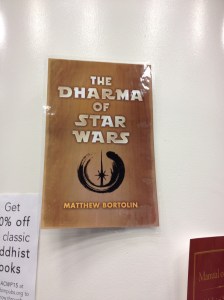
I was surprised to learn that the original 1978 series was an exploration of Mormon theology. The show’s creator, Glen A. Larson, was a member of the Church of Jesus Christ of Latter-Day Saints and, not surprisingly, used his fiction to promote his religious ideals. After all, Orson Scott Card, of Ender’s Game fame, is also a Mormon and elements of its theology come through in his work. As a child I didn’t watch television for religion, but rather as form of escape. I wouldn’t have guessed, however, that I was escaping to Mormon theology. The Church of Jesus Christ of Latter-Day Saints is a bit more shy about telling outsiders its theology than many Christian bodies are. Mainstream Christianity, after all, is one of the main ingredients in our cultural soup. Any Methodist will be happy to tell you Wesley’s theology, if they happen to know it.

I haven’t watched television for over two decades. Very select shows we’ll watch on DVD, being the old-fashioned sort, but I missed the reincarnation of Battlestar Galactica in 2004. I’ve always had a soft spot for the originals when it comes to sci fi. The original Star Trek, the original Star Wars, and even that sleepy and terribly dated Space 1999. I suppose as a working-class child looking for an escape these shows had a kind of religious message. Although my religion taught a conventional Heaven and Hell, I wondered what was out there beyond even that, since the tri-partite universe was basically earth-bound. And science fiction offered to lead me to other worlds where things might be better. On the Enterprise we might whizz past the Galactica and wave, even if it was piloted by Mormons in space. And L. Ron Hubbard was known to me only as a writer of science fiction rather than the creator of a new religion.


Nature of Religion

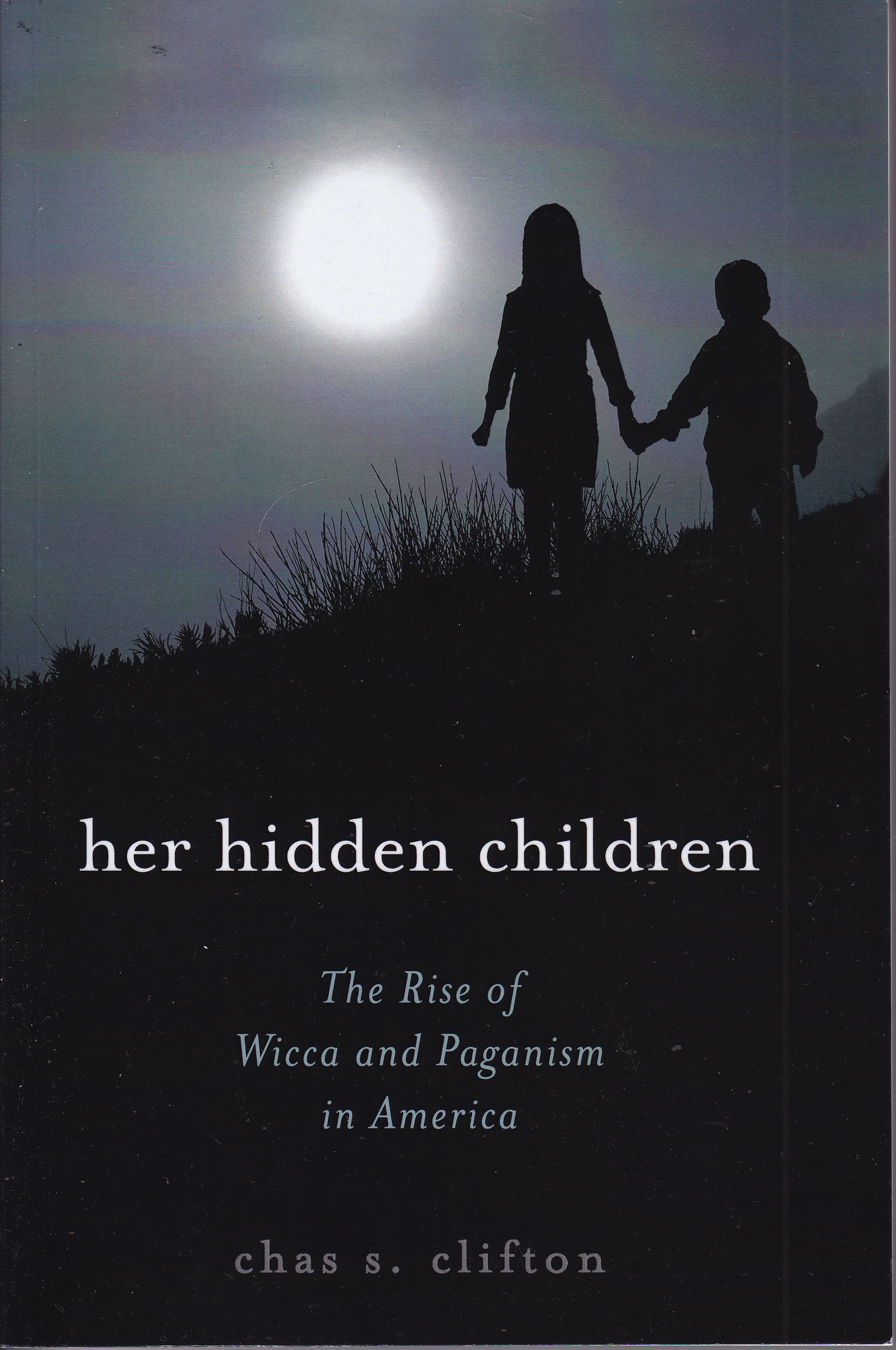
HerHiddenChAutumn is a moody time of year. Dolorous gray skies hang low one day, and the next a sky of such incredible blue stretches unbroken out into space itself. Nights are definitely longer now; I climb onto the bus in the dark in the morning and get off in the dark in the evening. And thinking about nature’s cycles leads me to thinking about nature religions. Wicca has often been presented as a nature religion, but it is somewhat more complex than that. Her Hidden Children: The Rise of Wicca and Paganism in America, by Chas S. Clifton provides a rare academic look at various pagan religions from the inside. Analysts of New Religious Movements have long classified religious witchcraft as a modern religion. Although Gerald Gardener made claims of being initiated into an ancient British coven when he began what was to become Wicca, it is recognized that this claim was unsubstantiated and that Gardener, in true prophetic form, was inventing a new religion.

I’ve read quite a bit about witches over the years, but I’ve always found contemporary paganism somewhat confusing. As Clifton points out, there are many branches of this relatively small religion, and there is no single leader or head of the movement. In fact, various groups, just like Christian groups, seem to splinter fairly easily. Many revival religions exist, also claiming the name pagan. You can join those who worship Egyptian gods or Norse deities. Or those who find nature itself divine. Pantheism, panetheism, or just plain paganism. Religions come in endless varieties. In a world committed to allowing individuals to follow their own religious conscience, there are bound to be varieties of religious experiences.

Clifton offers a brief history of these fairly recent groups. Paganism began to reassert itself only last century. There had been a social stigma with lying outside the territory claimed by church, synagogue or mosque. Many Americans only learned that religions such as Hinduism and Buddhism existed at the very end of the nineteenth century. What most people don’t realize even today is that a large, and increasingly expanding, variety of religious options exist for the seeker. Not all Wiccans see themselves as believers in a nature religion. Not all pagans call themselves Wiccans. Although Clifton makes no claims to an exhaustive tome, which would have to be far larger, he is a helpful guide through many of the groups that have existed over the past decades and some of which continue to this day. By learning about them we learn some basic truths about the very human urge to connect with something larger than ourselves.


Camping Out

Garsh-darn-it, I’ve missed the end of the world again! I’ve been so busy lately that I hadn’t bothered to pay attention to that which really matters. So here I find myself in the post-apocalyptic world and still waiting for a bus. Was that all there really was to life? I mean, I just found out that the world was ending on the day of. Couldn’t I get at least 24 hours’ notice? (I wish we’d all been ready?) A group called eBible Fellowship, followers of the late Harold Camping, figured out that his prediction of the end for May 21, 2011 was only the shutting of Heaven’s doors. I’d been wondering where that draft was coming from. According to the Radnor Patch, the actual end of the world, according to eBible’s calculations based on Camping’s spiritual algebra, was yesterday. That could explain a lot.

Apocalyptic groups have often had a problem getting the exact day right. No surprise there, however, since the Bible says even Jesus doesn’t know. Historically, there have been a number of options available to the budding apocalyptist. You can simply go very quiet and hope nobody notices. You can commit mass suicide (not recommended). And others would seem to suggest that you can claim it did happen, but that we just haven’t noticed yet. That was the response of some of Charles Taze Russell’s followers when 1914 saw the continuation of the world, despite a war that has scarred it ever since. Maybe the world has ended many times before. Still, the rest of us still find ourselves too busy to notice.

Here it comes.

Hyakutake, 1996. My first comet.

Apocalypticism is most prominent among those groups that hold to a biblical dating of the world. If it has only been here about 6000 years, then its imminent end seems entirely plausible. Those who take a longer view, more on the order of billions of years, seem a little less worried. That’s not to say that the world couldn’t end. A reasonably sized asteroid could finish it for our species. We wouldn’t need a supernova to do us in. Still, we can learn something from the chiliasts. We can learn that introspection is not a bad thing. We don’t need to hoard weapons, canned goods, and water, but we can stop once in a while and ask if all this insane running around we all do is really worth the effort. Since the world has ended, I’m thinking I might slow down a bit. I’ve got a lot that I still want to accomplish, but given that it’s all over, what’s the rush? I just wonder if they’ll buy this kind of reasoning at work.


What’s a Bible?

LegaspiWhat is the Bible? This might seem a strange question coming from someone who holds a doctorate in what has sometimes been characterized as biblical studies. Still, it is a valid question. The fact is, very different things are referenced by the word “Bible.” This is made abundantly clear in Michael C. Legaspi’s The Death of Scripture and the Rise of Biblical Studies. Legaspi points out that the Bible hasn’t always been the central force of Christian identification that it seems to have become. Martin Luther was largely (but not solely) responsible for the view that the Bible alone is sufficient for eternal well-being. Historically it had been much more complicated than that. The church had traditions and sacraments, Judaism had Talmud and rabbinic interpretation. The idea that the Bible alone was necessary was more radical than it might seem in today’s secular world. The problem was, the Bible isn’t an easy book to understand.

It has long been recognized that the Enlightenment and the Reformation went more or less together. The mysticism and mystery of “superstition” were bound to fade in the brilliance of pure reason. The Bible, however, still held a revered place, and it had to be studied. The sea change of the scriptural Bible to the academic Bible took place largely in Germany. No surprises there. What Legaspi demonstrates is that this study was closely bound with the university as an organ of the state. Germany didn’t boast the oldest universities in the eighteenth century, but it could claim the most intellectually rigorous. Among its biblical scholars, indeed, perhaps the one who led to the creation of the academic Bible, was Johann David Michaelis. The book is mostly about Michaelis and his influence and background in biblical studies. Clearly, applying university treatment to an ancient text was not going to be Sunday School.

By the time people like me began advanced study of the Bible, the “academic Bible” was about all there was. Many of us with serious training in the field watch in wonder as some (many) theologians take the Bible literally. They use ideas and concepts that biblical scholars have long recognized as artifacts of antique understanding. The problem is once you’ve gone down this path, there’s no going back. You can’t unlearn the academic Bible. So, what is the Bible? Obviously, it’s going to depend on who you ask, but it is clear that no one answer will satisfy all takers, even if they all claim to share a single faith. And should you venture to those hallowed halls of higher education, you’ll find the Bible is studied here, as are dinosaurs and an earth that is a few billion years old.


Secular Family Values

Fear of social disruption runs deep. Things may not be perfect, but people would rather keep things the way they’re used to them being rather than to face radical change. This is natural enough. During the dark days of the Cold War, when nuclear annihilation constantly hung over our heads, atheism was a mark of the Soviet threat. “Godless communism.” Intellectually, however, a kind of atheism was already part of American society as well, although few people talked of it. With our national history of encouraging Bible reading and prayer in public schools, our self-presentation was of the faithful. Those who hold to “old time religion.” In fact, many had moved on, but those of us growing up in small towns or rural settings had no way of knowing that. Life before the internet was primitive in that way.

A recent Op-Ed in the Los Angeles Times asks “How secular family values stack up.” In this age of Nones many are worried that the social fabric has already begun to unweave and that our ethical clothes have become threadbare and see-through. The statistics, however, don’t really bear that up. Written by Phil Zuckerman, it is no surprise that the piece takes a positive view of a faith-free value system. The fact is, the social disruption that has been widely hyped, especially by Neo-Con pundits, has simply not occurred because of secularism. As Zuckerman points out, the largely secular European society has handled ethical situations admirably well. Even in the United States, non-believers in jail populations are an astonishingly small demographic, and divorce rates run lower than those who report being more religious. Those who don’t believe tend to be more empathetic and to have closer family ties than many religious families do.

Tolerance of those with different outlooks is important. In a nation that was at one time considered a melting pot, such difference of opinion is only to be expected. In practical terms, people in the United States knew nothing of Buddhism or Hinduism until late in the nineteenth century. Other religions were simply outside of the experience of most. And those who lived in different religious traditions were also moral. Biologists who study the development of moral sentiments find that apes, certainly not religious by any standard, are often inclined toward positive social values (although clearly not always so—there are dangers in extremism). It is time that we overcame our distrust of those who, for whatever reason, cannot believe. Being human is sufficiently religious to make us concerned about our fellow person. It is only the drive and insatiable hunger, ironically, of godly capitalism that leads to unfeeling disregard of human need.

FullSizeRender-2


Apostolic Succession

I try, normally, to limit blog posts to one per movie (per viewing), but I’m still thinking about The Apostle, so I thought I’d share a bit more. I can’t get that scene of “tag team” preaching out of my head. The extras on the DVD reveal that the preachers, other than Robert Duvall, were actual ministers. When Duvall comes on the stage, acting, these other men “catch on fire,” preaching to the small congregation gathered under the tent. They’re not acting. This juxtaposition of someone acting as a preacher sharing an actual revival with those who are actually preaching makes me wonder if there was any dissonance felt. Did anyone feel any compunction about really preaching after getting riled up by someone who was only pretending? Where is the line between fiction and fact here? Film and reality blend.

Apostleposter

The same kind of question occurred to me after watching The Witness. I’m not a Hollywood expert, but the rumors that circulated then (and I was in college at the time) were that some of the actors were actually Amish. They too, lived their actual faith while in the presence of actors, cameras, and a director. These films that use non-actors certainly score points for verisimilitude. Rev. Charles Johnson, for example, is really “in the spirit.” The scene of him, “coming down from the spirit,” Duvall reveals in the Making of segment, is real. This man, at least, had a spiritual experience in a fictional piece. The same, Duvall suggests, may apply to Sam in the final altar call. This was, he avers, real emotion, not acting. Does being saved in fiction count in real life?

Movies sometimes leave me wondering what is real. I suppose that’s part of the draw. Religious experience, like sex, is generally faked on film. Things that are sacred are felt to be off limits to the eyes of strangers with only voyeuristic interests. I’ve lived long enough to see photographs go from proof positive to Photoshop fantasy. We can’t believe what we see any more. How are we to comprehend films that portray religious experience? Did Robert Duvall actually save any sinners from Hell? Does it make a difference if an ersatz minister is the one who leads you there? What of a real minister who fails to convert the viewing audience? Films are not simple escapism, I know. And as I continue to wonder about saints and apostles, I’m going to have to try to understand what can be caught on celluloid and what can’t.


Pontificating

I’ve been in a few New York crowds, but this one seemed on its best behavior. I was in the city later than usual since I’m giving a talk today at a friend’s church in the Upper West Side. My wife came to meet me and, knowing the Pope was going to be saying mass at Madison Square Garden shortly after her train arrived at Penn Station (for out-of-towners, Madison Square Garden sits atop Penn Station) we decided to meet at Herald Square and avoid the other kinds of masses. I walked to the square from work and realized my mistake—34th Street was barricaded and there were crowds already beginning to form. The Pope had a procession through Central Park, but I neglected to check on the remainder of his route. My wife arrived and, taken in by the rush of the moment, decided to stay and see what we could see. We were literally one person back from the road. The police kept saying that they couldn’t confirm he was going to come this way, but the helicopters hovering overhead seemed to tell a different story.

The crowd was so well behaved. No pushing or shoving, and even loud talking was mostly absent. It was, believe it or not, kind of reverent. Sure there were people with placards suggesting that one should get right with Jesus, and the occasional pedestrian saying, and I quote, “Why is there so much people here? The Pope? You’ve got to be kidding—can’t we cross the street?” By and large, however, there was good will. One of my coworkers had emailed during the day saying she’d gone by Saint Patrick’s the night before, but couldn’t see him. The crowd, she commented, was kind spirited. Perhaps that’s what having a kind-spirited Pope will do. After we’d stood for nearly an hour, I was beginning to wonder if the motorcade had taken another route—7th Avenue was closed as well. Then the cheering began.

Pope Francis rode by, the window down, waving at the crowd. My glimpse was only a fragment of a second, but it was clearly him. I’d met an Archbishop of Canterbury or two in my time, but here I was, no more than thirty feet from the Pontiff, if only for a second to two. And it was all pretty much by accident. Life surprises us that way sometimes. Reading his words about climate change to the leaders of the world, I can’t help but think we’ve needed a leader like this man for a long time. He’s as human as the rest of us, and he knows that we have only one world and in that one world are millions of people in need. And global warming will hit them first and hardest. And the God of the evangelicals who say the planet is ours to destroy is not the God he recognizes. He’s just one man, but he is able to bring the largest city in the country to a halt, even if just for a second or two. This could be saying something important for those who have ears.

IMG_2488


Apostle

Apostleposter

I was teaching in a seminary when Robert Duvall’s The Apostle came out. Seeing the favorable reviews, I put it on my wish-list and somehow it never managed to rise to the top. Perhaps it was because I worked at a religious institution 24/7. Seeing a movie about church felt almost superfluous. Many years on now, my wife bought me the DVD (yes, we’re old-fashioned) and we finally sat down to watch it. I realized, as the preaching started, that I didn’t know what to expect. I assumed that Sonny would be a typical Elmer Gantry-type character, cynical and self-centered, but as I kept waiting for the sneering commentary to come, it never did. The movie didn’t valorize Sonny either—he is a flawed preacher who commits murder out of jealousy and flees the state to start a life elsewhere. Landing in rural Louisiana, he begins building a life doing what he does best—preaching. The local people benefit from his presence, so I was waiting for the cracks to appear, but they never did. The movie is amazingly respectful of Holiness, or Pentecostal religion. It left me quite thoughtful.

Having grown up in a non-denominational setting, the scene of the altar call was one that was familiar to me. Fiery sermons were also something I’d seen before. Theological education, of course, causes one to question much of this, which is why many Fundamentalist churches do not hire seminary graduates to be their clergy. Study tends to refine that ability to let go and have emotion become the substance of the service. Recalling my own childhood, steeped in the Bible and fervent fear of Hell, church was primarily an emotional catharsis for me, not an intellectual enterprise. The problem for me was that I couldn’t stop thinking about it. That’s where it often starts to crumble for those who want to understand emotion-driven religion. It doesn’t mix well with rationality.

The Apostle is made all the more powerful for its use of actual Holiness preachers in the movie. When they’re preaching, they’re not acting. They’re preaching on film. Part of the draw, I suppose, for many viewers is that this is a foreign world. Mainstream church services are often subdued, perhaps even dour, by comparison. They are, however, more rationally driven. The substance of any mainstream liturgy derives in some form from Catholicism. Pentecostalism dismisses all of that, retaining the music and the sermon and the Bible. Otherwise, they are practically different species. The storyline of the movie isn’t anything grand. Preacher commits crime, repents, gets caught. Still, there’s an authenticity to it that makes it compelling. No Jim Jones here. No David Koresh. Just a man, in many ways typical, trying to make his way in the world in the only way he knows how. And that can be inspirational.


Pope-ulation

My brother, who art near Philadelphia, recently told me that the City of Brotherly Love began towing cars from the no park zone a week before the Pope’s anticipated arrival. There are those apocalyptic concerns for the commute into New York City this week as well. Papal visits are always big news, but Pope Francis has captured the hearts of many, Catholic, Protestant, and non-Christian alike, because of his obvious and sincere care for people. Mercy, kindness, sympathy, and empathy have long been overlooked in many organized religions, and to have the head of the largest Christian body in the world emphasizing just those things has been a breath of well, spirit. As our world has turned increasingly towards materialism fueled by a rationalism that says this physical world is all there is, a hunger has been growing. People need to be assured that there is some meaning in being people.

Photo credit: Tomaz Silva/ABr

Photo credit: Tomaz Silva/ABr

Theological purity is all fine and good, but it is only, literally academic. We send our clergy to seminaries to teach them to understand the rational part of faith. Many laity may not realize that a Master of Divinity is a three-year degree because it has to allow time for spiritual development. I was unlike most seminarians, having majored in religious studies. Coming into ministry from all areas of life—science, medicine, politics, business—many seminarians aren’t accustomed to taking school time to get in touch with their souls. It is a foreign concept in a world where we’re daily told we have no souls. Pope Francis is a pontiff with a soul. And the world has noticed.

We need those to whom we can look up. We need heroes not only of the action movie variety, but those of more human dimensions as well. Two of the most populous cities in the country are preparing for a kind of epiphany. America has long been a country of laissez faire ethics. Leave it alone and it will all take care of itself. We can all see through that. The northeast coast is bracing for a different kind of hurricane this season. It will mean traffic headaches, for sure, and no doubt many will be chagrined at all the fuss. Still, I have a difficult time seeing this as anything other than a hopeful sign. Perhaps we have a need for religious heroes still, after all.


Anabaptist Higher Education

There’s strength in numbers. This is a biblical concept as well as a folk saying (although it is worded differently in the Good Book). The power of conviction grows in a group, and that’s a reason that governments fear mobs, particularly angry ones. As biblical fundamentalism began to develop at the turn of the last century, those who opposed modernity found like-minded believers and gathered themselves together to stand on the same side of multiple causes. Not only fundamentalists, but all different religious outlooks—evangelical groups especially. The more “mainstream” and liberal groups, lacking the conviction of feeling like they’ve been left behind as society moves ahead, have felt less need to organize together. This is something the Democratic Party has felt ever since the Religious Right wed the Republican Party. It is an interesting dynamic. Banding together makes you feel like you’re not alone. So it was that the Council for Christian Colleges and Universities was founded. Higher education, which began in the church, had gone directions that made evangelical groups uncomfortable, so their institutions formed a coalition.

A story in the current Christian Century two Anabaptist member schools have caused waves of protest because they have decided that it is permissible to hire same-sex married faculty. Eastern Mennonite University and Goshen College, sponsored by groups known for their primitivism, have surprised the CCCU with their surprisingly open stance. When is the last time the Mennonites made the news? In response, according to the Century, Union University, an evangelical school in Tennessee, has threatened to withdraw from the Council if this infringement is permitted. This is a perfect example of the dilemma faced by those who support higher education, but hold it to evangelical standards.

Homosexuality, over the past few decades, has become recognized as a basic form of human sexuality. As the stigma has begun to evaporate in the light of scientific, psychological, and sociological studies, the consensus has begun to shift in the wider world. With the Supreme Court decision in June (the first decision autosuggested as one Googles “supreme court”) rightfully following the evidence, any government barriers to same-sex marriages was pulled out from under the evangelical camp, and thus the CCCU. Eastern Mennonite University and Goshen College have decided this presents no problem to their educational mission. Some members of the CCCU, it seems, disagree. The Century blurb asks if this is the beginning of the end of the Council. Probably not. Prejudice finds any hidden corner or recess that it can in which to hide and grow, like any fungus. Groups that identify by what they hate are loath to change, no matter how bright the sunshine. Rain encourages the mushrooms into the open, but the sunlight afterwards creates rainbows.

IMG_2363


School Bible

BibleSchoolConstittnAs a very young scholarlet, I recall the horror expressed when some form of prayer was expelled from public schools. It had to have been in the late ’60’s. Maybe early ’70’s. The nation, it seemed, was headed for Hades in a hurry. Little did I know that this was part of a long, drawn-out—tired, even—battle. Steven K. Green’s The Bible, the School, and the Constitution: The Clash that Shaped Modern Church-State Doctrine gives pretty close to the full story. Bible reading in public schools was foundational, in the beginning. In the early days of public education, the Bible was ubiquitous. It was considered non-sectarian since practically everyone was a Protestant. When the religious mix of the country began to diversify in the mid-1800’s, a new dynamic emerged. People got upset. There were riots. People were killed. Legislation was proposed that would explicitly add God—Jesus even—to the Constitution. Who knew?

Green’s study takes a close look at the various cases that arose around the time of the Civil War regarding the Bible in school. Protestants, it seems, didn’t appreciate that Bible reading, in the King James Version, without comment, violated Roman Catholic policy. The first to challenge Bible reading in public schools were Christians. Secularists only joined the fray later. I’m oversimplifying, of course. Some Catholics wanted equal time, the reading of the Douay Bible instead of King James. Others wanted Catholic schools to receive state funding. Nobody was really aware of other religions such as Hinduism or Buddhism. It was a country of limited religious imagination. Various groups tried in various ways to get God—their God only—into schools as the default deity. And so the fun continued.

For me, it was eye-opening to realize that all of this isn’t new. The legislation, since long before my grandparents were born, has been heading in the direction that led to the aggrieved tears in my youth. Green points out, however, that the conflict has never been completely resolved. School vouchers and a long spate of evangelical presidents have had their impact on our children. The Hades that we feared has only come with the weaponizing of our culture, largely by those who want Bible reading back in the schools. The thing we fear finds us through the thing we love. Ironically the issue never seems to be education. God or guns—it’s the power that we want. The early debates revolved around morality. How could kids be moral without Bible reading? How the definition of morality has changed. We, as a nation, still can’t figure out religious freedom or how to let kids be kids.


Rainbow Disconnection

The scene can be quite dramatic. A zoom out from a dead or dying Christian martyr as the moving music swells. There’s a sense of poignant heaven in the air as a human being breathes his or her last, lapsing into the hands of an unseen, waiting father. That’s a kind of typical ending to the particular genre of a martyr movie. We’re left feeling sad but somewhat inspired that someone cared so much that they would give up their very life for their belief. I can see the scenes already building as Kim Davis goes to jail for contempt of court. Davis is the Rowan County clerk in Kentucky who refuses to issue marriage licenses to homosexual couples. Although her action violates federal law, she has her conscience for a pillow at night. All she has to do is spend a day in jail before she will become a martyr/cause célèbre for the religious right. I’m sure it’s already started.

Jean-Léon_Gérôme_-_The_Christian_Martyrs'_Last_Prayer_-_Walters_37113

I don’t believe anyone should be made to go against their conscience. I also believe that if you’re an elected official being paid a tax-payer’s salary of $80,000 a year, that you should do your job. I’m sure the case isn’t so simple as all that, but as someone who’s never made anywhere near that much money, I could see myself easily stepping down if asked to do something that I just could not, in good faith, do. Most of us spend our lives compromising a bit here and there when our employment pushes us in directions we feel uncomfortable going. Nobody would consider us spineless for trying to hold onto tenuous jobs in an economy that seems to be endlessly faltering as the wealthy suck up more and more of the free cash. We do what we have to do. Go to confession at the end of the day and live to die another day. The evangelical, however, has a soft spot for martyrs.

Historians tell us that early Christians were probably not killed off as radically as the early records suggest. It seems the numbers might have been exaggerated to make a point. No doubt, many did die, and some in very gruesome ways, but they faced an unspeakable compromise—to deny the creator of the universe and burn in Hell forever. Issuing a license to a couple whose right to marry you question doesn’t seem to fall into the same category. Standing before the great golden throne your defense would easily be, “it was my job. I couldn’t quit because I needed all that money.” If there’s another viable source of income, the argument becomes spurious. I’m sure there are those in Rowan County who feel they’ve got a hero in their jail. The rest of us just get dressed and go to do the job we’re paid to do.