Eating Your Prophets

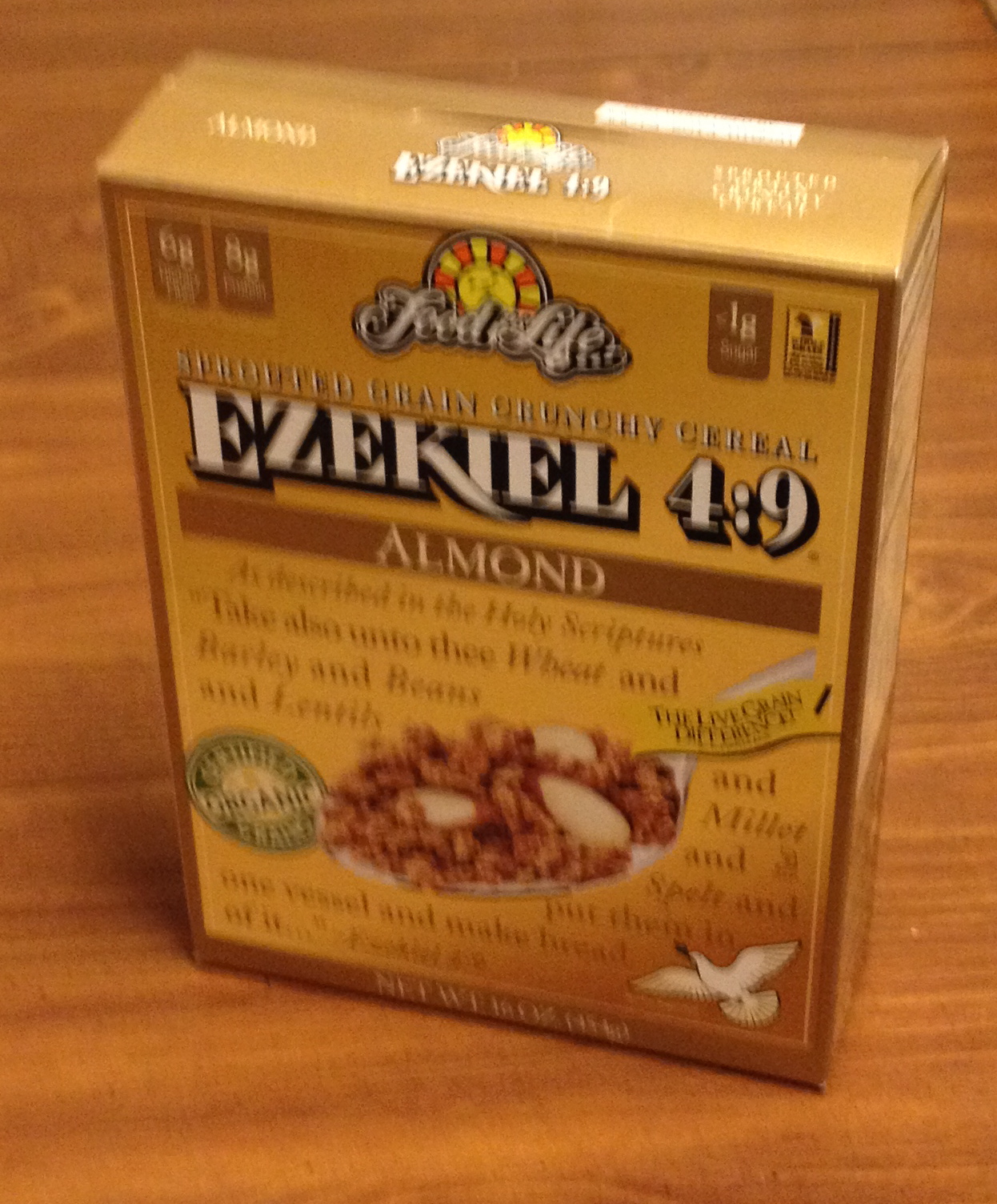
Ezekiel was an odd character, even for a prophet. He’s become a kind of patron saint to ancient astronaut theorists, and his name in fiction often denotes someone slightly off balance. In his defense, he believed that God was demanding his many strange actions. A priest in a period of exile from the “one true temple,” Ezekiel lived an existence as a captive in a foreign land and came to some radical conclusions about the nature of Israel’s god. His visions and actions were considered the original weird, even by his contemporaries. Since Ezekiel believed Babylon would conquer Jerusalem, the people there would have to go on starvation rations. In chapter 4 of his book, Yahweh tells the prophet to try to make a bread out of wheat, barley, beans, lentils, millet, and spelt. This odd mixture is to be eaten in very meager portions to symbolize the coming privation for 390 days (during which time he is to lie on his left side). His bread is to be cooked on dung.

IMG_1156

I eat breakfast around 4 a.m. My bus to the City comes before 6:00 and there are no restrooms on NJ Transit buses. Many New Yorkers eat breakfast in the office, but I’m just too Episcopalian in sensitivity for that to really be an option. I don’t like really sweet cereals, but granolas are often quite sugary unless you want to pay top dollar (and most of my dollars are bottom dollars) for some organic, European blend. Then I spied Ezekiel 4:9. Knowing full well the context of the reference should’ve given me pause, but it was two dollars less a box than some of its competition—downright exilic prices—and my curiosity was roused. What would Ezekiel eat?, I asked myself.

Most people don’t realize that so many of us eat breakfast cereals due to the efforts of our Seventh-Day Adventist friends. Adventists, in addition to being literalistically inclined, advocate healthy living. Will Keith Kellogg, a faithful Adventist, believed that eating cereal for breakfast was healthy and widely promoted the idea through the company he founded to produce cereals. Kelloggs does not produce Ezekiel 4:9. Food for Life, an organic bakery, are the purveyors of this organic breakfast. Their religious convictions, if any, aren’t evident from their website. Just about the time I’m climbing aboard the bus, I know that even as Ezekiel saw the wheel, I’m in for a moving experience. Isaiah-os or Jeremiah Flakes may be difficult to imagine, but with Ezekiel nothing really surprises. Today’s Bible lesson may be as close as the larder shelf. I just skip the cooking on dung part.


Sweet Something

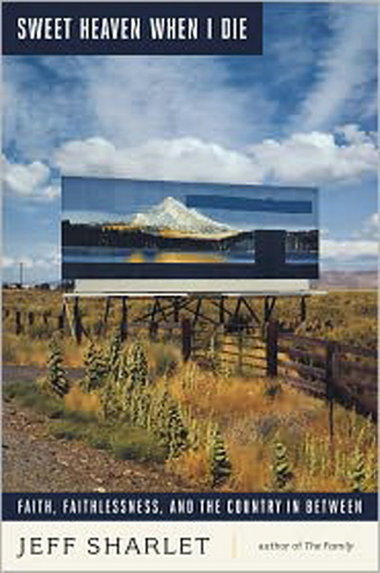
SweetHeavenWhenIDieAs an observer of religion who always struggles to get published, I found a companion soul in Jeff Sharlet’s Sweet Heaven When I Die: Faith, Faithlessness, and the Country In Between. Although the book is a collection of very disparate essays, it shows the subtle faces that religion frequently takes. We’re used to hearing religion described in bombastic terms, but Sharlet is more attuned to its soft rhythms than that. Yes, an essay or two may have a strident believer, but most of the faith found here is so deeply woven into the lives he examines that you might not even notice it was there had Sharlet not already warned you. Here is a man of no particular religious conviction showing us how it is—not judging, not ridiculing, not pandering. Religion, despite the gleeful proclamations of its detractors, is not likely to die out. It is more likely just to go unnoticed.

A number of the essays here gave me pause. In the first Sharlet notes of a friend, “She was fascinated by the thought that God was entitled to kill you at any time.” This friend is, of course, of Christian persuasion. I had never thought of the biblical paradox in that way before—divine entitlement. It is so like Job; the Lord giveth and the Lord taketh away. Christianity, historically, comes with a whole cartload of guilt: not only is God entitled, but we deserve to be killed. The Christianity in which I grew up was explicit about this—we live on borrowed time. As a child I heard more than one evangelist thunder this good news. We really deserve to die. Once we are good and vulnerable, the preacher offers us a way out. Pass around the collection plate. God is entitled; I shall not soon forget that.

Toward the end of the book another of Sharlet’s interviewees declares that doubt is a calling. Again, the professional religionist is stunned. Many religions eschew doubt as somehow evil—wickedly questioning the divine. Doubters, however, seldom cause religious trouble. Those whose convictions lie deep and untested will burst open like a spring-loaded trap at various provocations. Those who survive are left to weep and wonder. The doubter, the friend of Thomas, does not seek to harm, but can’t live without discovering the truth. This is true religion.

There are any number of stories here of persons of various levels of faith conviction. You’ll find few clergy or specialists among them, but you’ll find a book whose honesty cannot be doubted. At points I struggled to find an implicit religious, or faith-based theme. It is there. You just have to listen. And trust that Jeff Sharlet will not lead you astray.


Word of God in Bulk

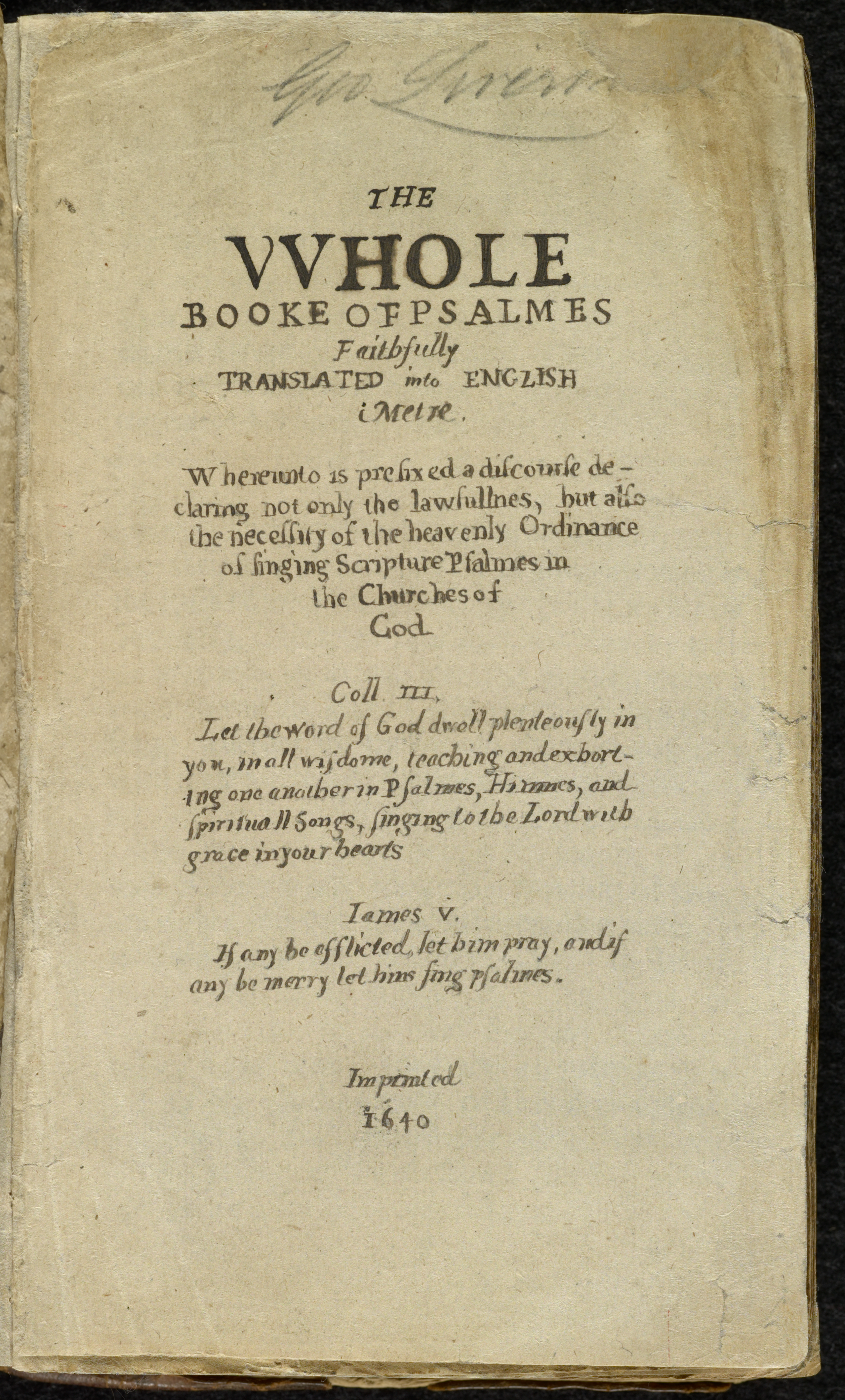
Bay_Psalm_Book_LoCThe Salem witch trials were still half a century in the future. The Puritans, hoping for religious freedom, had come to Massachusetts. Despite prevailing attitudes toward the religious, the Puritans were keen on learning and began printing books. The first book printed in English in North America was the Bay Psalm Book. You see, the Psalms have a particularly important place in Christian (and Jewish) worship. In fact, much of what would later develop into the daily offices in the Church of England, adapted from the breviaries of the Roman Catholic Church, were services that started essentially as vehicles for reciting the Psalms. It is fair to say that Christian worship might have never taken on the elaborate forms that it has without the underlying recitation of the Psalter. The Bay Psalm Book, printed in 1640, is now the most expensive book ever sold at auction. According to the New York Times, one of the eleven known Bay Psalm Books has just sold for over 14 million dollars. The Bible has a way of continuing to surprise us.

As someone who has more Bibles than your average layperson, I find it isn’t difficult to think that Bibles are fairly common. They are. I actually switched to The Green Bible in my classes out of the ecological concern that there have been over six billion Bibles printed. The Gideons give them away, and even the Christian heavy metal band Stryper used to throw handfuls of Bibles into the crowds. Chances are, in the United States, you are not physically far from a Bible at any given moment. So why would someone pay 14 million dollars for one? The answer goes deeper than the suggestion that the Psalms contain timeless truths—you can get those free on the internet anytime—but that it is part of our heritage. We are who we are, in part, because of the “Bible believing” founders of our culture. Survival was not taken for granted in the mid-seventeenth century. The Bible was a pillar of certainty in dangerous times.

Yes, interpretations of the Bible have led to horrendous results. There is no point in denying the guilt. Hermeneutics, however, is a human activity. The Bible gives as well as takes away. Some of us may never have a million dollars to spend. Many people don’t have enough to eat. Specialists tell us that some 45 million Bibles are printed each year. Bibles are big business. In the words of Big Dan from O Brother, Where Art Thou? “Sales, Mr. McGill, sales! And what do I sell? The Truth! Ever’ blessed word of it, from Genesee on down to Revelations! That’s right, the word of God, which let me add there is damn good money in during these days of woe and want! Folks’re lookin’ for answers and Big Dan Teague sells the only book that’s got ‘em!” David M. Rubenstein, the buyer of the book, intends to send it around to libraries to display. Although I’ve spent over forty years studying the Bible, it takes the skills of a man from an investment firm to earn enough money to buy one. And I wonder if that’s Big Dan I hear laughing, or perhaps it’s just the sound of Puritans singing in the wilderness.


Unusual Thanksgiving

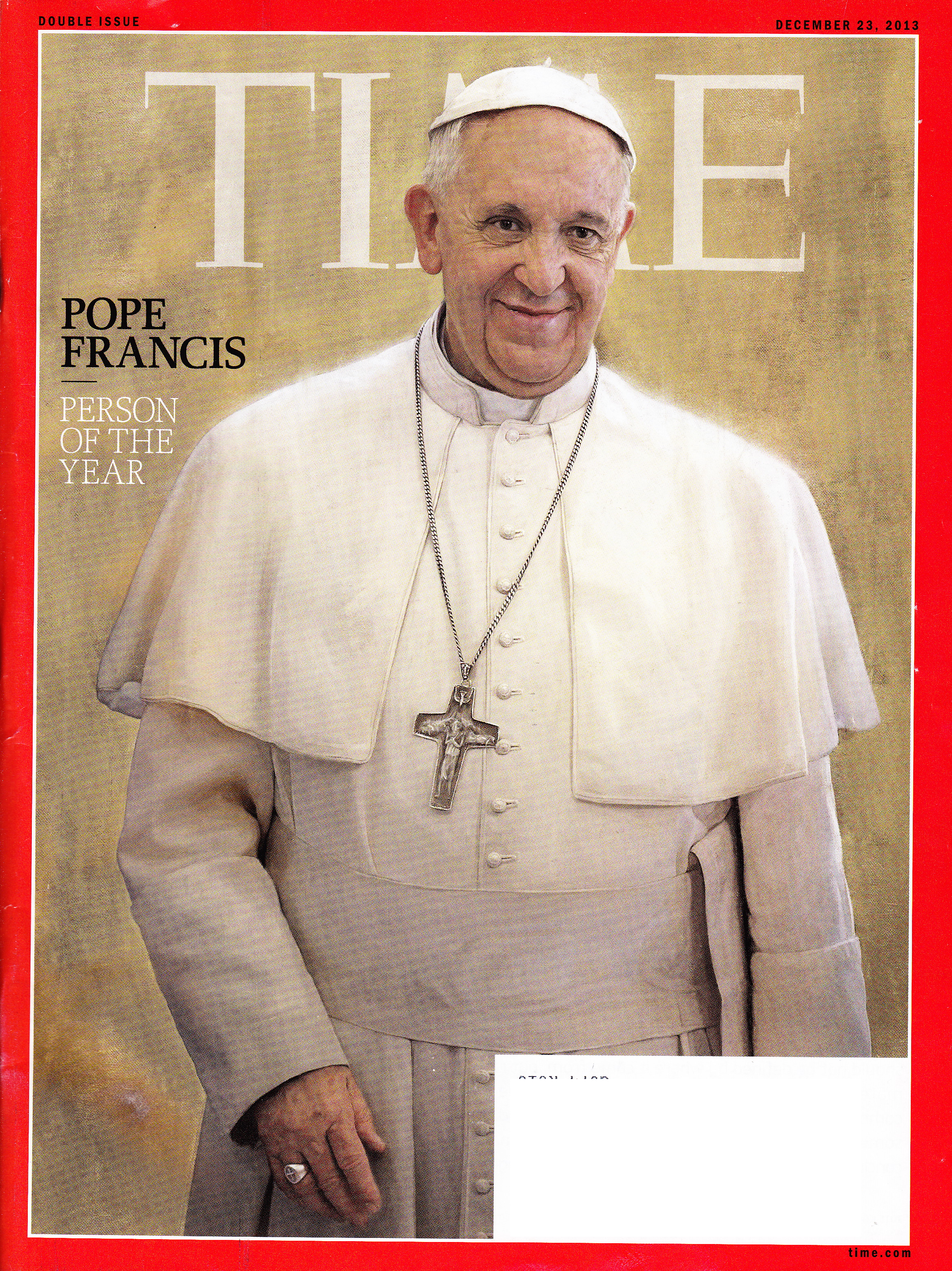
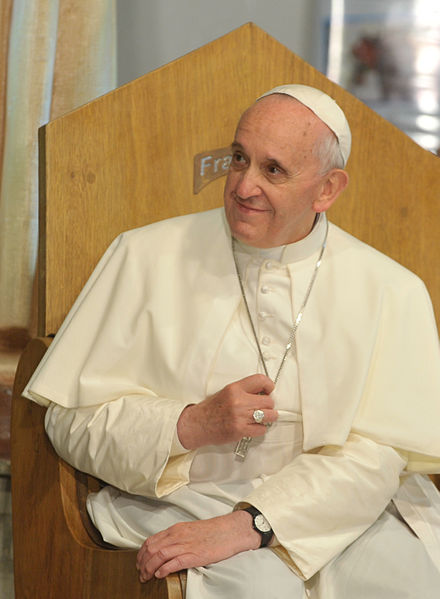
Believe it or not, preaching was once part of my job description. At Nashotah House all faculty were called to the pulpit, ordained or not. Falling into the latter camp, my obligations were generally held down to once a semester. My first homily, focused on the lectionary readings for the day, was about the problems of social inequality. Afterward the senior faculty member came to me in the vestry and said, “It has been a long time since I’ve heard the social gospel preached from that pulpit.” This little incident came to mind as I was reading a CNN Belief Blog story my wife pointed out to me. The article highlights some of the provocative comments by Pope Francis in his recent document Evangelii Gaudium. Francis, in a startlingly refreshing vein, suggests that the church must get back to basics. Human basics. I agree with those who say the church has not gone far enough on gender equality, but the idea that the cut of your surplice demands more divine attention than the homeless and starving has got to go.

At Nashotah House many students who wanted to be Catholic priests but also wanted to be married (the flesh is willing, but the spirit is weak) had Pope cards, rather like baseball cards, in their chapel stalls. This was in the era of the great conservative John Paul II, affectionally known as J2P2 in the theological ‘hood, when men ruled and a congregation might split over the use of a maniple. The gnat-strainers were clogged in those years. Camels fled for their lives. I wonder what these priests now make of the very head of their favorite chauvinistic church stating that even the papacy itself must change. I keep wondering when Pope Francis will have his accident, or unexpected heart attack or stroke. As the Belief Blog makes clear, not all appreciate the challenge to the status quo. There is too much power at stake.

This Thanksgiving, this old Protestant finds himself unaccountably thankful for a Pope that is willing to start turning things in the right direction. It will take decades, if not centuries, before the church can possibly catch up with the realities faced by the vast majority of the powerless, disenfranchised, and the needy. These are uncomfortable realities. When I saw a picture of Pope Francis laying his hands on a badly deformed man during a service in Rome a few weeks back, I could almost believe that someone was taking the message of Jesus to heart. That message was, and is, a radical one. We only have all-male disciples because we can only count to twelve. And we tend to forget that just about all of those guys were working-class slobs. Maybe if we could really be thankful for the gift of people all of this might just come to mean something significant after all.

Photo credit: Tomaz Silva/ABr

Photo credit: Tomaz Silva/ABr


Imagine Images

“Thou shalt not make unto thee any graven image, or any likeness of any thing that is in heaven above, or that is in the earth beneath, or that is in the water under the earth.” Thus spake the Lord one day long ago. So the Bible says. The problem is that humans are visually oriented. We teach our young to read by enticing them with books with pretty pictures—images that captivate. We make things that are pleasant to see, some of them are even graven. I used to ask my students what the difference was between a god and an idol. The answer is, of course, perception. “Idol” is a word that implies falsehood. The item represented is somehow divine, but is not actually divine. There are ways around the rules, of course.

IMG_1138

I spent many years in the United Methodist Church. Many people I knew claimed that the local Catholics were idol worshippers, and when I entered a Catholic church for the first time I was struck by the graven images that seemed to stand in blatant contradiction to the second commandment. How could this not be a direct violation of divine orders? After all, this wasn’t some minor infraction—it was one of the very commandments! Back in my Methodist context, I began to wonder, however. We had crosses, some of them in the round, right up there on the altar. True, there was no corpus on our crucifix, but that seemed to be a handy bit of casuistry. Human beings naturally convert images to idols. We all knew, Protestants though we were, that you should never take a sacred object out to the streets and treat it profanely. An image in a sacred venue could be an idol.

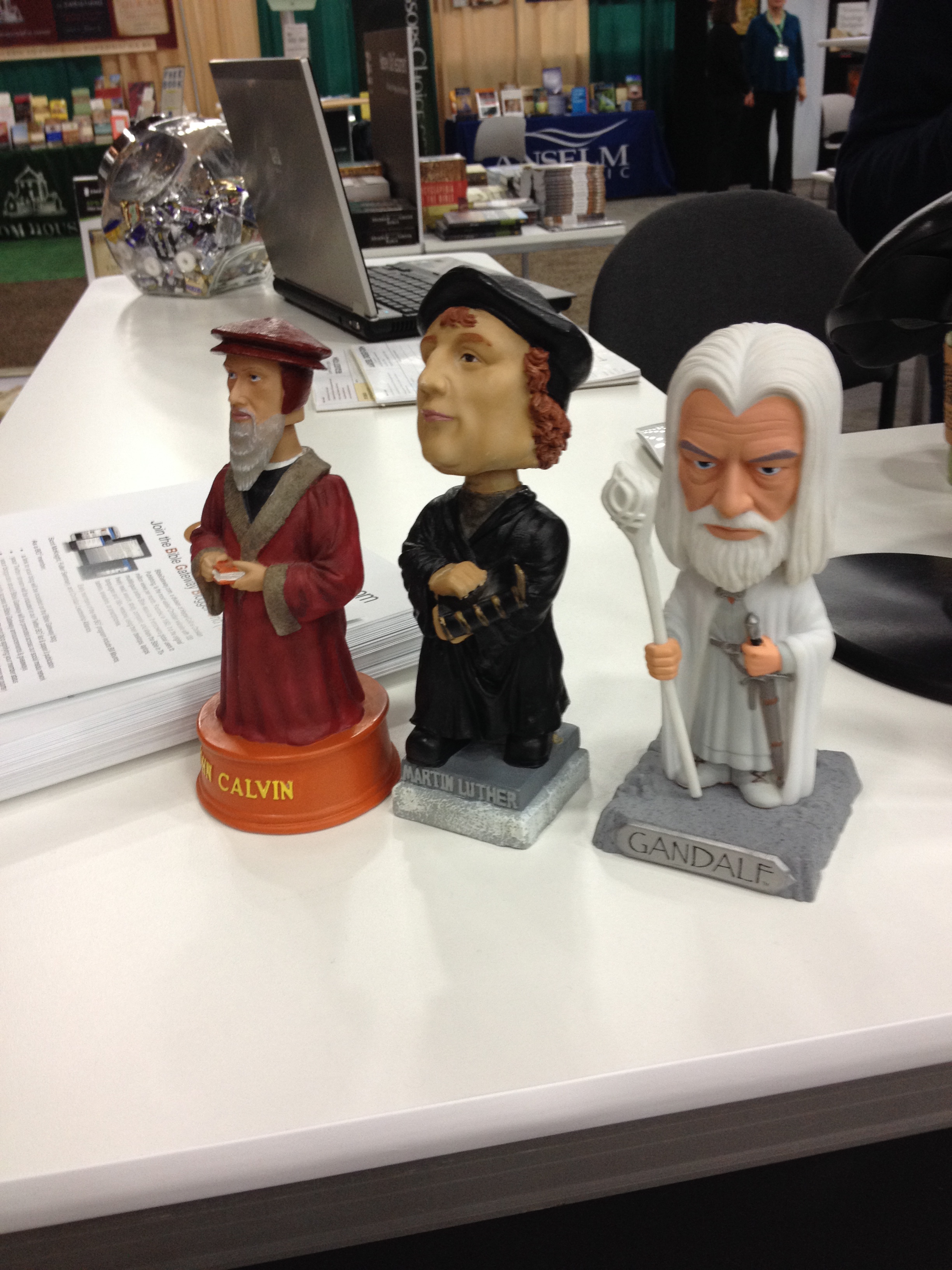
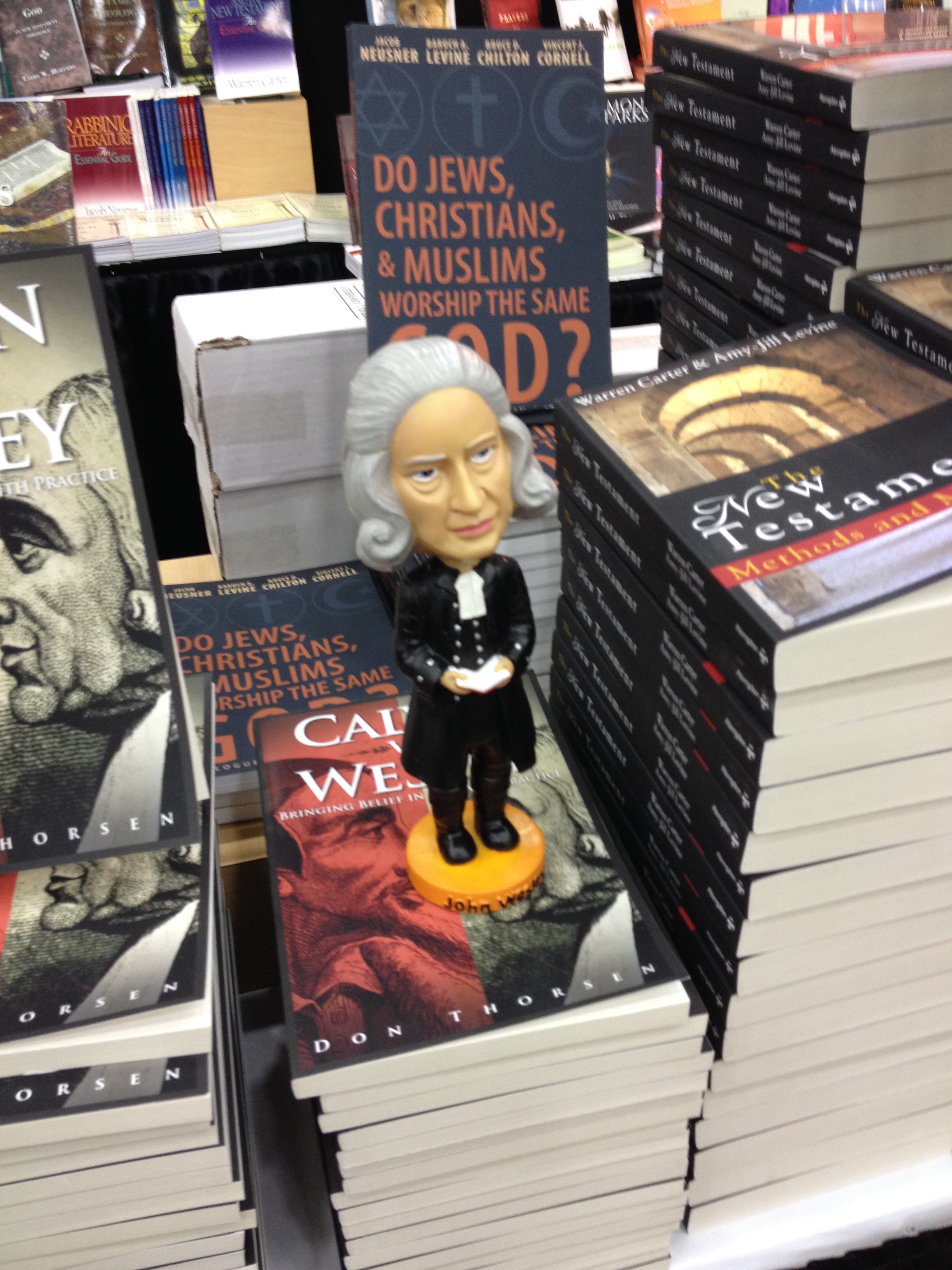
Over the years it seems that the strictures of the ten commandments might have been relaxed just a little. Collectively as a culture, the real has become more and more virtual. We buy our movies, music and books in electronic format. We play our games on computers. In such a context a physical image may seem somehow less real. Our idols have been digitized. It doesn’t seem like the Bible was looking that far ahead when attempting to create an exhaustive list of what might anger the divine. After all, electricity wouldn’t be discovered for millennia. Reality was dry, dusty, and deadly. The prohibition was against physical images. It is no longer an issue for many in the Judeo-Christian tradition that a statue or an icon might be a sign of piety rather than profanity. Things seem to have come full circle when I find a statue of John Wesley, nearly of bobble-head proportions, looking at me with eyes seeking prevenient grace. I guess the powers that be might just be willing to overlook even Methodists gone native.

IMG_1136


Meaningless Words

IMG_1086

I’m glad to be back in New York City. It’s a funny place. A walk down the street can be an education. When I saw this shirt the other day, I had a thought—what happens when words lose their meaning? I’ve been fascinated by the concept of “bad words” since I was a kid. Although I never uttered them, I wondered why they were considered bad. That thought gets stretched out a big longer in this instance, to wondering whether overuse destroys the power of the swear. Although most religions claim taboo words are made that way by god(s), some psychologists have suggested that the function of swearing lies precisely in its ability to shock. If so, what happens when the shock wears off? We may need to come up with new words for copulation to take the place of the f-bomb. And it’s not just naughty words that are at risk.

I saw a report a while back that made reference to “Libertarian fundamentalist Jimmy Wales.” Wales is at least the co-, if not sole, founder of Wikipedia. The libertarian label didn’t surprise me, but the fundamentalist part did. Wales is no conservative religious believer. Of all people fundamentalists are the least likely to support a wiki concept where the final version is never nailed down. It would be like reading a Bible where the words keep floating around the pages, shifting combinations, changing meanings. Of course, the concept of words even having meanings is a matter of debate. A colleague of mine used to remind me, “words don’t have meanings, they have usages.” He was technically correct. Even the f-bomb, when uttered in other languages, as sophomorically portrayed in many a movie, has an entirely different usage.

Dictionaries are filled with archaic words. I don’t recall the last time I saw eftsoons in print, or iwis, or maugre. Have they lost their meanings, or just their usages? In any case they live on in written language history. Overuse of a word leads to calls for restraint among literary types, as when the word “awesome” got out of control a few years back. The case for the f-word is somewhat different. When I walk through the streets of the city it is obvious that it is one word that is in no danger of dying out. The gerund, or more properly, adjectival form ending in -ing, is freely interspersed in blasé sentences with complete abandon. For some people it appears to fill the mental pause generally reserved for “uh” or “um.” When it ceases to shock us, it will become just another Howard Stern of the lexical world. And some tee-shirts, I expect, will be available quite cheaply then.


History Bites

historian-elizabeth-kostovaAfter reading a post I’d written about Dracula last year, a friend recommended that I look at Elizabeth Kostova’s The Historian. This novel is very easy for a vampire fan to lose oneself in, taking a sweeping scope of the Balkans and western Turkey, and adding enticing bits of northern Europe as well. Although it is a novel, it is also a history lesson in international relations and in the costs that accompany clashing religious empires. Christendom and Ottoman powers frequently exchanged hostilities long before the Bush presidency, and it was in this milieu that Vlad Tepes, the Dracula of history, emerged. Interestingly, although vampires had been part of religious folklore since the earliest civilizations, it took Bram Stoker to make Dracula into one. It is difficult to believe that, with the household name-recognition of Vlad III’s epithet, Dracula would’ve likely remained one of history’s more gruesome footnotes without Stoker’s undead imagination. Vampires would’ve survived, I’m sure, but Dracula might not have come back to life.

Kostova does an excellent job of blending fact and fiction in an epic vampire hunt. She also takes the somewhat unusual step of making the historical Vlad her actual vampire. A defender of the Christian faith against the Turks and their Muslim ways, Dracula did earn a reputation for cruelty (and unusual punishments) during his lifetime. Kostova keeps him alive through a kind of scavenger-hunt through history as his decapitated body must be brought back together with his head, and then through the wilds of Transylvania, Wallachia, Bulgaria, and even into the cosmopolitan streets of Constantinople. This is an intellectual’s vampire story if ever there was one.

Although Dracula’s association with the vampire mythos began with Bram Stoker, his role as a symbol of religious conflict boasts much older roots. Indeed, conflict over what is the “one true faith” has been a bloody avocation of humanity since universal claims of salvation began to be made. The conflict continues, in a somewhat more civil guise, as science flexes its considerable muscles over the less empirical realm of religious belief. No matter which strand of religion one believes, if any, faith has a strange ability to set people seeking one another’s blood. The symbol of the vampire does not seem to be departing any time soon, for vampirism is part of human nature. We may never shed the physical blood of another, but we continue to participate in cultures where the strong impose their wills on the weak. And that is a scene darker than even the scariest tomb painted in The Historian.


The Problem with Apocalypses

Over on The Daily Beast, Joe McLean points out “How the Tea Party’s Apocalyptic Politics Are Destroying the Republican Party.” I say good riddance. Let me explain. It’s not that I have a problem with apocalypses. (Zombie apocalypses are especially fun.) My problem is that the mythology of one religion endangers us all. This is not some leftist-leaning rant, or at least not a leftist-leaning rant that’s uninformed. I grew up in a very conservative, apocalyptic Christianity. I was looking for the end of the world before I considered a college major. Even my (limited) choice of classes in high school were determined by a kind of eschatological laissez faire: the world’s going to end any day now, so why plan for a career? I was a true believer. In my Christian college I majored in religion. If the end is near, it pays to be ready for it. I know this doctrine inside-out. If Christ is returning any day now (can’t you hear the hoof-beats?) then we should pillage this poor old earth for all its worth. That’s what it’s here for. Do we want him coming back and saying we’re poor stewards? Besides, if we can ramp up the crisis in the Middle East far enough, Jesus will have to return. Won’t he? And these are “rational” adults thinking this way.

There was likely a naive cynicism on the part of the Republican Party when it realized that aligning itself with what was considered the religious fringe would boost their numbers. After all, the fringe surrounds the whole of the cloth. Apocalyptic Christianity is very popular because it appeals directly to the emotions. Although our society believes the study of religion is pointless, those of us who’ve persisted have noticed a few things. The religions that are really taking off are the ones that appeal to the emotions. Many Spock-like scientists intone their message of materialism only in the face of massive crowds of true believers. Who do you think is likely to win out? We have had presidents in the Oval Office who believed that triggering the apocalypse was a presidential prerogative. When society finally shook off its goofy grin and slowly pressed the electoral brakes, the Tea Party took off. Guess what? Apocalypses are all about destruction. If you invite apocalypticists to your party, the results are pretty predictable.

In the article McLean uses the word “zealot.” Rationalists might find the use of their dictionaries helpful here. Zealots do not respond to logic. Zealots are driven by emotion. Have you ever tried to argue with one? I have had years of experience teaching religion in a variety of classroom settings. Long ago I learned to lay down the sword when a zealot spoke up. Logic is not spoken here. The media, the scientific, the academic, they scratch their heads. How can any rational person believe this? The answer doesn’t require much effort to find. It might mean consulting someone who understands a bit about religion, though. Otherwise, the smart money is on stocking up on canned goods, gas masks, and a good supply of water. This could take a while.

Mary in the sky with circles, or the apocalypse?

Mary in the sky with circles, or the apocalypse?


Beliefism

A question never adequately resolved revolves around the status of atheism. What exactly is it? Well, I suppose it is many things, actually. One thing that seems indisputable is that religion has been part of human culture from the beginning. It would seem likely that not all believers carried the same level of conviction, and there may have been “atheists” shortly after theism evolved. The difficulty is that both belief in god/s, and/or the lack thereof, are matters of personal conviction. That somewhat blurred line has been crossed, according to some, by the recent growth of “atheist churches.” In several web stories my friends have pointed out to me, a growing movement of atheist “mega-churches” has been noticed. These are groups of atheists who meet for many of the same reasons religious folk do, sans salvation. It is a social occasion, and a chance to fellowship with like-minded non-believers, and to support their lack of faith. Some atheists bristle at this (as do some religious), claiming that it cheapens the atheistic enterprise (or that religions somehow hold a copyright on belief-based gatherings).

Herein lies the rub. Atheists are no more cut from the same cloth (or lack of cloth) as religious believers are. There are varieties of unbelief. Some obviously see that the weekly gathering has benefits. There’s no question that atheists can be every bit as humanitarian as religious believers are. Besides, who doesn’t like to meet with people who think like them? “Minister” might not be the leader’s title of choice, although it has a long pedigree in politics as a secular title (as, for example, in the Ministry of Defense). The slow decline in mainstream Christian services, however, might suggest that atheist services would be inclined to grow. Weekends were originally created for religious reasons and still generally remain the religious meeting days of choice. Some religious groups do not insist on doctrine to be members—Unitarians are a prime example of this—but the value of meeting together is human, all too human.

Clearly the purpose of an atheist gathering is not primarily worship. I should imagine, however, that wonder is still part of the non-religious vocabulary. God is not necessary for feelings of awe and joy. And sometimes it is fun to get together for some structured activity that isn’t work (for those who have jobs). An Associated Press story, however, points out the irony of the gathering of “people bound by their belief in non-belief.” There is, however, believing going on here. There can be no escaping it. Despite all the problems associated with omnipotence, the idea of a deity where the buck indeed stopped was an ebenezer for grounding belief. Even the most outspoken of atheists share this with the literalist and the moderate—they all believe. And as long as people believe, they will seek groups of those who share similar views. Why not? Even the truth requires belief.

What does it  mean?

What does it mean?


Heilige Geist

Poltergeist is one of those movies that evokes mixed emotions. Sure, it was one of the really scary ones when it just came out, and the rumors of a curse after the tragic early death of Heather O’Rourke probably added to the mystique. I actually didn’t see the movie until over a decade had passed since its release. It came out when I was in college, and I didn’t often splurge to see a movie in those days. VCRs were still expensive and your only real option was to rent a movie. In any case, a few years back I bought a cheap DVD and, after having seen many horror movies, it felt a little tame. And the ending was over-the-top. I have a theory that being unemployed makes you vulnerable to suggestion. Over the weekend I was looking for a movie I could watch for free on Amazon Prime, when Poltergeist II showed up. I hadn’t even realized that there had been a sequel, and after watching it, I think I understand why the movie was buried.

Poltergeist-2-the-other-side

Poltergeist II: The Other Side picks up where the original left off. An added character, Taylor, a Native American shaman, brings good spirits to the Freeling family as the original poltergeists start to haunt Diane’s mother’s house, where they are staying. Interestingly, the ghosts are revealed to be those of a traveling, apocalyptic preacher and his followers. The preacher, Henry Kane, led his group to the desert where they awaited the end of the world and then died after it did not come. They were apparently the ghosts haunting the original Freeling house, and not those of the “Indian burial ground” that the first movie touted. Taylor brings the healing, Native American spirits into the conflict and they win out over the Christian sect ghosts. All of this was becoming more unbelievably campy until Carol Anne was rescued by her now deceased grandmother, in the form of an angel. This mythological cocktail left me feeling a bit dizzy.

Some interesting subtexts floated through this film. Native Americans were now good, rather than the haunting spirits of the first movie. Kane’s sect, which had to be a veiled reference to the Latter Day Saints, showed Christian millennialists as the truly dangerous otherworldly residents. Kane is a preacher (and Mezcal worm) that doesn’t really want to pass over into the light. Why he travels all the way to Phoenix to try to pick up a nine-year-old girl isn’t really clearly explained. Horror movies, of course, frequently make use of religion as a vehicle for what truly frightens. Often it is religion misunderstood. Kane was not a believable character, in this case, without the abject cynicism of an unholy ghost who traveled to the desert southwest to set up a new religion. Once Mormonism breaks into the mainstream, perhaps I’ll have the stomach to watch Poltergeist III and see where the evil shifts the next time.


Final Frontier?

Stay away from the dark side. That’s generally good advice. Ironically, new religious movements (NRMs, in the biz) have come up in my conversations quite a bit lately. Some of my friends have suggested that I start a new religion—job security would no longer be an issue. I’ve been studying religions my whole life, and at times I’m sorely, sorely tempted. Meanwhile a friend pointed me to a story on Details.com about Jediism. Yes, there is a religion based on Star Wars—actually, I shouldn’t be too hasty here. There is at least one religion based on Star Wars; likely there are many. The question that is indubitably raised is okay, so do these people actually believe this stuff? Don’t they know Star Wars was written by George Lucas? How can it be a religion? I can only respond with: Have you ever heard of Scientology? Religions do not have to be believable to be believed in. History has shown that time and again.

StarWars

Jediism is based on the teachings of saints like Yoda and Obi Wan Kenobi. What they are teaching is straight Joseph Campbell. Served neat. Good versus evil. A sense that a cosmic force surrounds us. The hero’s journey. The same thing can be found in the Bible. Wrap it up in a Jedi cloak or in a Galilean robe and the end result isn’t much different. I’ve seen bumper stickers suggesting that Obi Wan died for my sins. Just as long as good wins out in the end, who’s to complain? Does it really matter if it happened a long time ago in a galaxy far, far away or just away in a manger?

The problem with religion is that we lack a proper definition. Christianity clearly uses the word to describe itself. When looking at those who thought differently (adherents of Judaism, Roman paganism, the great goddess of Syria) early Christians had to call them something. If Christianity is a religion, so must they all be. Some religions, however, are not based on belief, but practice. To be is to do. Some religions are based on historical people, some on fictional people. Some are very serious while others are difficult to tell. Some religions are ancient, but looking at the state of the world it’s hard to say that they’ve been terribly successful. So when a bunch of sci-fi fans think they’ve discovered the truth in the mind of George Lucas, who’s to argue? And I really do mean that about keeping away from the dark side.


Conscientious Ghosts

It’s finally Halloween. In keeping with the spirit of the season, NPR recently ran a story on ghosts. I’ve posted on the topic of ghosts several times since they are inherently a religious phenomenon, whether they actually exist or not. Empirical method only takes us as far as that terminal border, but not beyond. Since we all face death, the question of ghosts is intriguing to many people. In some parts of the world, according to the NPR story, up to about 90 percent of the population believes in ghosts. They have been part of the religious thought of humanity since writing began. Ghosts have haunted us from earliest memory.

What makes the NPR story so interesting is that there is a kind of moral consciousness that runs through the story. An interview with Tok Thompson, an anthropologist at the University of Southern California, makes up part of the story. Thompson notes that ghost stories often concern unresolved justice issues. He cites the overused “Indian burial ground” motif as an example—where there is a collective guilt, ghosts tend to gather. Slavery is another such social injustice, and again, ghosts and slaves are no strangers. Christianity tended to push justice off into the afterlife. The fact is many people do not receive fair treatment in their lives. Some of them are very good folk who just never get a fair chance. That troubled early Christian thinkers into making Heaven into a place where the reward came. It also, unsuccessfully, tried to suppress the idea of ghosts. Ghosts problematize such easy theology. What are they still doing here when Heaven, Hell, or Purgatory should suffice?

Hammersmith_Ghost

The NPR story even addresses the idea of possessed dolls. Tok Thompson notes that the word “doll” derives from the word “idol.” This sheds a whole new light on Barbie, I suppose. An idol is an image representing a deity. In the Judeo-Christian tradition religious statuary was problematic at first. Again, Christianity bucked the trend by allowing images because people naturally want to see what it is they believe. Stories of haunted dolls and statues and other inanimate devices are difficult to accept. They are, however, deeply religious. That’s because ghosts represent what we really believe. Death is the most parsimonious of thresholds. We can’t look over at the other side, but, if ghosts exist, they may give us a glimpse beyond human sight. And that seems like an awful decent thing to do.


Presumption Be Thy Name

I once dashed an email off to a colleague in a hurry. The email concerned, in some way, the Judeo-Christian deity, known in the Hebrew Bible by the tetragrammaton YHWH. Quite unintentionally, my harried fingers tapped out YWHW—an honest, if impious, mistake. My colleague, who happens to be Jewish, immediately pointed out my unintentional blasphemy—one more casualty of the computer age. Naturally, I apologized and life went on. (I try not to spin out the larger implications.) The point is, based on the third (some would say “second”) commandment, Judaism has strongly preserved the taboo on using the divine name at all. God’s name is spelled without vowels to prevent anyone from trying to say it, and when written with the vowels of the word “lord” (adonai) gives us the false form Jehovah. Casual use of the divine name is considered offensive, and some would say it’s swearing.

HebraicRootsBibleWhile on Amazon.com the other day—it is the site to which I go for solace; so many books! So many books!—I came across the Hebraic Roots Bible. Subtitled “A Literal Translation,” it was clear that this was yet another well-intentioned, but ill-fated attempt to make the definitive English translation of the Hebrew Bible. True, literal translation is a chimera. Languages are thought-systems and can only be approximated in other languages. Those who wish to read the Bible literally must become proficient in Hebrew and Greek, with a smattering of Aramaic. In any case, none of that caught my attention. Without a hint of irony, the author of this book was listed as Yahweh. In case you’ve been wondering why some prayers are going unanswered, you may have your answer here—the Almighty has been busy writing a book!

My first reaction was a coy smile. That is kind of a cute selling point. But then I realized there was likely no humor to it. This was probably understood to be read literally: Yahweh wrote this book. I wonder who he got to write the Foreword. My error to my Jewish colleague was, literally, unintentional. This was literally scary. Who would be bold enough to claim that their own interpretation was the word of I Am himself? Why did he wait until 2012 to publish it? Blasphemy comes in a variety of forms. While still at Routledge, one of my Jewish authors insisted that I strike the blasphemy clause (standard for many publishing contracts) from his agreement. “Who can write anything that isn’t considered blasphemy by somebody?” he reasonably asked. The thought comes back to me, looking at the Hebraic Roots Bible. The author’s name, after all, didn’t even make it onto the cover of the book.


Thanksgivukkah

A moveable feast is hard to hit. Or something like that. Religious festivals are frequently tied to celestial events—the ancient Jewish holidays are based on a lunar calendar which, we all know, is out of synch with the solar one. This is the reason that for Christians Easter migrates around the spring calendar, even if different branches of Christianity peg the resurrection on various dates. Curiously, no one has suggested going back to c. 33 C.E., fixing the date of Passover that year, and giving a calendrical date for Easter. It sure would make planning a lot easier. In any case, a week or so ago there was a flurry of lighthearted commentary on “Thanksgivukkah,” the fact that Hanukkah and Thanksgiving occur at the same time this year. Both are moving feasts, and they just happened to bump into each other this year.

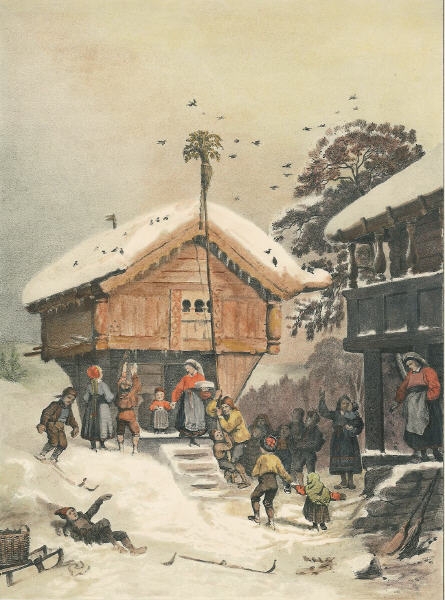
Thanksgiving is a modern holiday, emerging with the Protestant penchant for giving thanks for surviving in a harsh, new world. The United States government (which was not shut down at the time) finally regularized the date of the holiday to the fourth Thursday in November, giving the commercial world it’s only regular 4-day weekend. Christmas, not a moveable feast, cycles around the days of the week, giving employers a great sense of glee when it falls on a weekend so that employees may be given only a token Friday or Monday off. The day after Thanksgiving, however, is thankspending, as American a holiday as one can conceive. Hanukkah is also a roving feast. Celebrating the cleansing of the temple in Jerusalem after being defiled by the Seleucids, it has taken on many of the trappings of Christmas over the years, but it can come as early as late November, as Thanksgivukkah demonstrates.

800px-Thanksgiving-Brownscombe

Holidays, in this secular world, have come to represent something for which the Sabbath originally stood. The idea was that people needed a break from work. Despite all the studies that show more breaks make people more productive, our culture glorifies the over-worker. The reason, clearly, is not productivity, but control. I recall a lawyer once drawing a large circle on a newsprint pad and telling me, “this represents what your employer can do to you.” He drew a tiny circle in the middle of the large one and said, “and this is what your employer can do to you that is considered illegal.” Yes, we are a society that has never really gotten over the idea of indentured servitude. Little things like holidays overlapping keep us amused, while still at our desks. Hanukkah lasts for eight days. Christmas for twelve. But don’t try to take all that off—you might like coming back to work refreshed a little too much. Instead, why don’t you try making those bricks by finding your own straw? Everyone will benefit from this pyramid scheme.


Making Saints

Some places are inaccessible in the academic world. Or perhaps invisible. I couldn’t help but have Santa Muerte on my mind as I visited the Phoenix/Tempe area of Arizona. I knew from reading Andrew Chestnut’s Devoted to Death that the skeleton saint has a large following in that area. Having been raised in a working class religion in a blue-collar household, I also knew that such trappings might not be entirely visible around a university setting. Arizona State is a huge school and my minimal free time on the trip only permitted a wander-radius of a couple blocks from around the campus. Many universities are, because of their property-value-lowering non-profit status, on the edge of sketchy neighborhoods where work-a-day people live. It didn’t seem that way in Tempe. The areas I reached all seemed to have that adobe-solid middle-class feel to them. Not that I go looking for seedy neighborhoods when I’m traveling by myself, but I do like to see stores that aren’t part of a chain, and to get a sense of local culture. For most academics, the pedestrian devotion to Santa Muerte is below the radar.

The concept has haunted me ever since reading Chestnut’s study—why would people find appealing to death attractive? Santa Muerte has the trappings of a Catholic saint, but she is, plainly put, death personified. She is a favorite among drug lords and criminals, and that is somewhat understandable. Her Hispanic devotees, I realize, often live lives of desperate poverty. The well-heeled saints of conventional religion might not be able to see things from their perspective. Although the Catholic Church continues to make saints, many of the traditional saints predate capitalism. Capitalism creates its own insidious disenfranchisement. I realized this already as a child growing up in a setting where just about everybody I knew had it better than my family did. For some to prosper, others must suffer in such a system. I knew which end I belonged on.

As in my visits to Santa Barbara (a much more conventional saint, by the way), Austin and Houston, in Tempe the Hispanic population was evident mostly in the menial labor sector. The person who makes your hotel bed or brings the hot plate of food to you in the restaurant. The person who mops up your spills or picks up your trash. And they are the ones who’ve made it into the earning bracket of the minimum wage. Why not worship personified death? Does not Santa Muerte remind them that we all face the same rictus grin at the end of our days? Isn’t it best to be on good terms before we reach that inevitable place? It was clear that on my visit I wasn’t going to be able to get far enough from prosperity to see the skeleton saint myself. At Phoenix Sky Harbor airport, waiting for my 11:30 p.m. flight back to cloudy skies, all the shops were closed. I passed by a boutique with local art, and there I possibly glimpsed her. A small statuette, possibly just the grim reaper, among other Day of the Dead motifs. Was it inspired by Santa Muerte? I would never know, I pondered, as the Hispanic airport attendants, still at work around me, were busy emptying the garbage.

IMG_1080