Theomockracy

“From Santorum to Graham, the ferociously religious are doing religion no favors at the moment, and it’s beginning to feel as though we may need to save faith from the extreme pronouncements of the faithful,” so writes Jon Meacham in this week’s issue of Time. Theocracy is a scary word. It didn’t work in ancient Israel, and it is difficult to believe that our society is morally more advanced than things were back then. I mean, they had Moses looking over their shoulders, and Amos, Isaiah, Micah, and Jeremiah to point out each misstep. We have Santorum, Bachmann, Palin, and Gingrich. This playing field would be an abattoir, and I have no doubts that the true prophets would be the only ones left standing should it come to blows. The odd thing is, the ancient Israelites, evolving into the Jewish faith, came to recognize that maybe they misunderstood some of what their stellar, if mythic, founders were saying. Rule by God is great in theory, but in practice it leaves a nation hungry.

It is difficult to assess the sincerity of modern day theocrats. We know that politicians are seldom literate or coherent enough to write their own speeches, and we know that they tell their would-be constituents what they want to hear. It shouldn’t surprise us that they belch forth juvenile pietism and call it God’s will, for we have taught them that elections are won that way. My real fear is that one of them might mean what they say. Could our nation actually survive even half a term with a true theocrat at the helm? W may have played that role, but there was a Cheney pulling the strings behind the curtain. Some guys like the God-talk, others prefer to shoot their friends in the faces. Either way it’s politics.

I take Meacham’s point. In all this posturing and pretending, the would-be theocrats are making a mockery of what the honestly religious take very seriously. If they want to get right with God there are conventional channels to do so. The White House is not one of them. They swear to uphold the ideals of the Constitution that, with considerable foresight, protects us from theocracy. The history they prefer, however, is revisionist and their constitution begins with “In the beginning God created the heavens and the earth.” Their use of the Bible offends those who take the document seriously. Theocracies have never worked in the entire history of the world. Those who ascribe to mythology as the basis for sound government should add Thor, Quetalcoatl, and Baal to their cabinet and pray for a miracle.

The implacable face of politics


Genesis Too

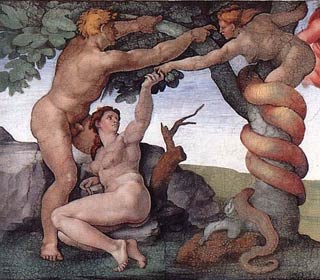
My Twitter Bible verse yesterday landed on a passage that has been routinely ignored by the church in favor of a different mythic construct in Genesis 2. Assuming the Bible to have been written by a human-like god, the natural expectation is that the manuscript would have been checked for inconsistencies before being sent to the publishers. Any close reading of the Bible, however, reveals a number of contradictions that have crept into holy writ through what seems to be poor editing. The verse to which I’m referring is Genesis 1.27, “So God created man in his own image, in the image of God created he him; male and female created he them.” Readers and commentators have endlessly remarked upon the tripartite structure equating deity-male-female in this passage. This single verse, however, is soon forgot once the need to harmonize with Genesis 2 sets in. There man is given utter primacy and woman comes almost as an afterthought, even after the animals. That is the version fundamentalists consider inspired.

Readings of scripture are done only with the pre-decided outlook of the believer. We do this all the time, unconsciously, when we read. We approach texts with expectations, outlooks, and assumptions firmly in place. When dissonant notes sound, we try to harmonize. We’ve got a whole chapter stating that man was god’s first thought, and woman only comes later. We have only a single verse stating their equality. Before Paul and company distorted the story of Eden into a “fall” narrative—note the words “fall” and “sin” occur nowhere in the account of Eve and Adam—some ancient readers toyed with the idea that maybe the first human was actually intersexed (or hermaphroditic) and the word translated “rib” meant “side.” Genesis 2, in this reading, understood women and men to be equal and of the same creative moment of God.

Some in the early church, however, valued doctrine over equality. Afraid that heterodox teaching might win out—we know there were many early Christianities, not a uniform body only latterly split apart—what came to be orthodoxy rallied around Paul and his fallen humanity with man first and woman second. And thus it has stayed in the sand castles of power for two millennia. Setting aside the unreliable narrator, our present sensibilities for reading are generally to take the first information as correct and later changes to be embellishments. In the case of Genesis, this tendency is overlooked. Too many men have too much invested in male priority to suggest that the Bible actually says what it does. Such is the problem with sacred texts—they are far too serious to be read for its plain sense, which is, after all, its common sense.

We're all in this together


Love, Factually

Whet has Jerusalem to do with Trenton? As marriage equality is debated in New Jersey—with a governor as compassionate and reasoning as Captain Ahab determined to stop it—three local religious leaders have the courage to lay their cards on the table. When Bishop Beckwith (Episcopal, Newark), Bishop Riley (ELCA, New Jersey), and Rabbi Gewirtz (Millburn) penned a piece entitled “Religion shouldn’t sway Trenton in this debate” in the New Jersey Star-Ledger, it almost restored my faith in religion being capable of some good. The three leaders, from different theological perspectives, agree that the Bible can’t be used for a one-to-one correspondence to modern society on this issue. They correctly point out that theologians disagree and that the remit of the government is not to uphold the view of any one of those traditions. When church leaders start making sense, I begin to tremble.

Politicians are never among the most astute of theological thinkers—and I would include those clergy elected to public office in that number. The rare public official who is qualified to think about such things intelligently frequently has trouble swaying his (almost always his) colleagues who have visions of pork barrels dancing in their heads. Marriage is about commitment, not sexuality. Studies have indicated many sexless marriages exist, yet we applaud them for their consistency. For those with a different orientation, we outlaw formal recognition and call them sinners. In the name of a government sworn not to uphold any one religion. It is time our legislators awake from their snoozes and realize that many mainstream religions have gotten over homophobia, and their religion is discriminated against by such petty power plays.

I applaud the efforts of religious leaders to point this out to a governor who has gone on record saying he’s not one “who changes positions with the grace of a ballerina” (propriety forbids me from finishing that thought). If that chunky ballerina, however, has ended his twirl facing the wrong direction, doesn’t the audience expect him to hike up his tutu and correct his error? I note that our Roman Catholic compatriots did not sign the letter. If ever a church showed the signs of centuries of sexual neuroses, would we trust it to make informed decisions on who might sleep with whom? Is that what marriage has been reduced to in the minds of the celibate clergy? It’s all about sex? Maybe if politicians and unenlightened theologians could pry their minds out of other people’s bedrooms and learn to treat them as complex, descent human beings we might actually see New Jersey leading the world in the right direction for once.

What's love got to do with it?


Divorced from Doctrine

Spirituality and religion have never been so far apart while being so close together. While many people describe themselves as non-spiritual in any sense, whether it be for materialist, humanist, or atheist sensibilities—a great number of people still feel the compulsion to believe in something more than the everyday world we all know. In Sunday’s New Jersey Star-Ledger columnist John Farmer laments the disparity that continues to persist between women’s opportunities to benefit from religious dictates while religious leadership continues to remain a male preserve. As Farmer notes, it is a thinly disguised case of men determining what options are open to women. He notes the recent government about-face exempting religious organizations from the new health plan as a case in point. Does the mewling. special pleading of Catholics oh so concerned about the rights of unborn males outweigh the right of women to unfettered healthcare? You betcha!

Election-year politics are among the most ripe for those who wish to keep women “in their place.” Appear too progressive and you’ll lose the Catholic vote for sure. Of course, despite officially teaching that evangelicals are not real Christians, Catholics will be glad to glom onto their votes, taking advantage of their Hell-bound compatriots in order to keep women from ever truly enjoying freedom. The theology behind their reasoning is late and based on such convoluted logic that a layman can’t hope to follow it. Isn’t it just easier to accept that Rome declares it so? One gets the sense that longing for the old Roman Empire isn’t as rare as good-old human compassion.

Does it not seem ironic that anytime a bill comes forward to promote true equality among humankind the first to stand it line to bring it down are the religious? Christianity likes to trace itself back to Jesus who never intimated that women were inferior and who never spoke a word about homosexuality. He did, however, advocate free health care. Church leaders long since discovered that the first stone is easy to throw, and after that the others come with even more celerity. The cost to spirituality, however, has never been calculated. The same church that consistently declares sexuality is only for reproduction has never made a public outcry against Viagra. After all, we must leave some room for miracles.

These keys were made for lockin'


A Long Way to Go

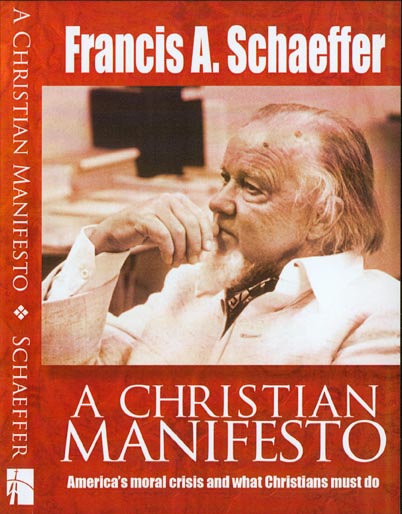
“One of the greatest injustices we do to young people is ask them to be conservative.” The words are those of Francis Schaeffer. The Francis Schaeffer. Among evangelical circuits, Schaeffer has a status right up there with James Dobson, Ronald Reagan, and Saint Paul. At Grove City College he was viewed with such veneration that hagiography would be an understatement. Few realize that Schaeffer was a mover and shaker in the hippie movement until Roe v. Wade caused what might have been akin to a breakdown. Schaeffer transformed into what he once despised, the ultra-conservative trying to protect the unborn. While Catholic groups had been unsuccessful at capturing Jerry Falwell’s sympathy for fetuses, Schaeffer would win. His book, A Christian Manifesto, published the year I started college, was required reading for religion majors. Abortion had now been taken on as an “evangelical” issue.

Fast forward a few decades. Karen Handel, erstwhile Georgia gubernatorial hopeful, becomes senior vice-president for Susan G. Komen’s The Cure. Handel ran for governor on a pro-life platform. The Cure (temporarily) withdraws funding from Planned Parenthood—the idea that every child should be loved and esteemed is less important than every child should be born. With those little tiny feet. And as it turns out, hopefully with little tiny penises as well. Divide and conquer. Women against women. The Margaret Thatcher syndrome. Call it what you will, but abortion as a religio-political issue revolves around women’s rights. Anti-female legislation has had a long and sordid affair with Christian theology, reaching back to medieval witch-hunts and Catholic sacerdotal declarations. What is sometimes excused as ignorance in less developed societies where women are routinely brutalized is given a Gospel air brush job and called “anti-abortion” in the United States. The real issue, the literal elephant in the room, is women’s rights.

The evidence on this is incontrovertible for anyone who is willing to open their eyes. In order for our culture—men hurling themselves at each other during the Superbowl while women are preparing food in the kitchen—to survive, outmoded gender expectations must be kept firmly in place. Even if you want to cure breast cancer—largely a plague against females—you do it so they can live to produce more males. Being raised with an absentee father, I learned very early that women had every right to equal treatment with men, but I also learned that it did not happen. The trick has been to get women on board to vote against their own best interests. Raise them up to think their religion, their God, demands them to be subservient. And if a man wants sex, it is a woman’s duty to comply. And abortion undoes all a man’s hard work in the bedroom, or backseat, or dark alleyway. Yes, these issues are complex and myriad aspects play into them. I say we call a quorum on the debate until one-half of the human race is truly given a chance to find its voice.

What does he have that half the human race doesn't?


Revealing the End

I knew the end of the world was near when I saw the phrase “butt crack” in the Chronicle of Higher Education. As I turn over the February page in my 2012 Apocalypse Survival Guide calendar, I find that the Romans predicted an end of the world to arrive at 634. B.C.E. I’d say the Romans are still waiting, but they are long gone, the only residue remaining of their empire being the Vatican and its spiritual, rather than political, power. So why did the Romans think the end was near? It had, according to my calendar, to do with a dozen eagles being seen at once. In the spirit of Hal Lindsey we can parse that vision a bit. 634 was just 32 years after the infamous 666 B.C.E. Of course, no one knew it was 666, or even B.C.E. for that matter. Nevertheless, when God picks his super-three he stays with it. Thirty-two turns out to be nearly the traditional age ascribed to Jesus, but minus one year. Keep that in mind.

Eagles make occasional appearances in the Bible, but since God is a forward-thinking deity, the reference is surely to the United States! And how many colonies were there originally? Was it not 13? Again, the significant number is off by one. In some cases we might count this up as poor arithmetic, but with the subtle destroyer of the universe we know it is not only intentional, it is also significant. So, Rome saw the 12 eagles—the United States—in 634. What they really meant was the Maya, obviously. That would account for the missing one, since central America is less than the greatness that is the United States. And besides, there were twelve apostles, but when Judas was replaced by Matthias there were 13. What more proof do we need? These dozen eagles were indeed a divine sign. Only the world did not quite end in 634.

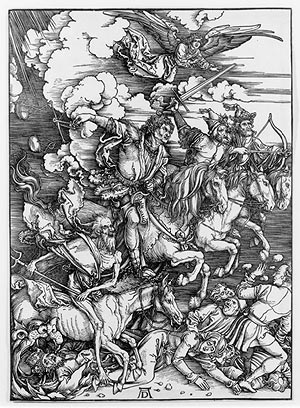
Maybe the problem was with the Julian calendar, or maybe the eagles were just confused. As my calendar says, “Antichrists been and gone” and yet we are still here. The transient nature of apocalypses never dampens the truly hateful spirit. We can’t comprehend this cobbled-together doomsday without at least trying to understand the evangelical despising of the world. This view is based on a quasi-biblical determinism that emphasizes God’s ultimate plan to destroy the universe that is only revealed in piecemeal fashion throughout select books of the Bible. But God is like a mystery writer who sadistically leaves out the last chapter of the book. The tension is unbearable. How much more before we begin to crack? But isn’t that what started this whole apocalypse in the first place?

The horsemen close in


Best Prayer in the Air

With my current job I travel quite a bit. With all the attendant time hanging around airports, I have time to think back to pre-deregulation days when flying meant some kind of care in the air. It has been in the news the last few days that Alaska Airlines is removing the prayer cards from its trays during meals. When I saw that, the real surprise to me was—airlines serving meals? When did they start doing that? A couple years back I flew coast to coast on Alaska Airlines with nothing more than a sack of peanuts. I would have been happy to have had a prayer card to eat. I agree with those who pointed out to the airline, when it served these alleged meals, that paying customers shouldn’t be proselytized. You can get enough of that by watching GOP debates. And I certainly hope the message wasn’t that the plane only flew on a miracle.

I’m sure that some people will say there’s no harm in a little non-invasive sermonizing. Therefore I must make my own confession; I was a teenage evangelical. Although I never actually did tracts myself, I hung out with kids who did. Once, on the way home from a youth meeting, a carload of us stopped to get a bite to eat in a diner. Now, we were high school kids, not flush with money, but even I knew it was right to tip—waitresses have to put up with a lot for little pay. One of my friends told us that if we really wanted to help the young lady out, we should leave a tract as a tip. What reward could be better than salvation? Surely that would help to feed her family or buy her kids a new pair of shoes. Indoctrinated as I was (and I hadn’t even been to college yet, Mr. Santorum), it seemed like a good idea. Still, I felt bad when we left.

These two situations are not dissimilar. In both cases someone would rather print cheap words on cheap paper with free sentiments rather than giving a person sustenance. It’s been a few years since I’ve darkened a pulpit, but I do seem to recall Jesus insisting that the hungry be fed. I don’t recall what he said about tracts and prayer cards.

Religions have a way of focusing on the forgettable minutiae while overlooking the real need right in front of them. In November I flew from New York to San Francisco, subsisting on a tiny bag of peanuts and some airline orange juice. If old Deutero-Isaiah were sitting next to me he might have said, “why spend money on what is not bread?” But I was thinking that maybe the karma of that tipless waitress was simply coming back full circle.


Cookie Time

All right, who wants to be the big meanie now? The fact that politics manage to besmirch just about any human enterprise, no matter how noble, is a lesson many of us learn on our slow trek to adulthood. I sadly came to realize that the church is incredibly political, and that universities could rival congress for the backstabbing and posturing that goes on. In the midst of all this politicking, one of the truly good NGOs left in the world is Girl Scouts. Sure, there will always be some councils with personality issues, and some troops will have a difficult scout or parent with which to cope, but the organization is based on the principle of giving girls the confidence and assurance they need to be successful in life. What could be wrong with that?

My wife pointed out a story on Salon.com that reveals some anti-abortion groups are now claiming that Girl Scouts supports Planned Parenthood. This is patently not true. Even if it was, it would hardly be a crime to teach girls reproductive options (after all, when is the last time a Pope or President carried a pregnancy to term?), but since people don’t think with precision, it seems best to keep girls in the dark. Some right-wing groups are boycotting Girl Scout cookies as if the devil himself were the baker. Not to be outdone in perceived self-righteousness, some Catholic Churches are kicking out Girl Scout troops for supporting abortion! All of this based on a lie. The road to the unconscionable position of the Catholic Church toward reproduction has been long and mentally torturous. Anyone who has taken the trouble to trace the church’s strange love affair with the fetus may be surprised to learn how recent the concern became an issue and how very androcentric it is. The church’s claims here rely on nothing more than good old testosterone-generating glands and the love thereof. To punish the Girl Scouts for a fictitious association with an unapproved organization shows just how mature the largest church in the world truly is.

The male bias in the majority of the world’s societies is bad enough. The United States likes to hold itself up as an icon of fairness and equality. It is the spirit upon which this nation was founded. Except when it comes to females. We don’t want our girls to have reproductive autonomy because that might make men look somehow less masculine. As for those wimpy guys who like to read, the Bible backs them up completely on this issue. God is a guy, and made guys to be in charge. No matter how much education you offer, you won’t be able to change that one-book-fits-all outlook. What will we have lost if we seriously and honestly treat both genders equally (and even those intersexed individuals)? Only the apparently fragile male sense of superiority. I say, in the spirit of America vote for equality! Buy Girl Scout cookies!

Deliver us from evil.


Jesus for President

From my economical hotel to Duke University was maybe a twenty-minute drive. As a stranger in town I prefered to stay off the heavily traveled corridors during busy morning commute times, never being sure when exactly my exit was coming up. So I took the backroads. Along the way I started to see churches with denominational names I’ve never even heard before. I quickly lost count of just how many houses of worship I passed. With all this rich fare, perhaps it is time to tighten the old Bible belt a bit. The short drive reminded me of my one and only fact-gathering trip sponsored by Nashotah House. I was sent to Asbury Seminary in Wilmore, Kentucky for a technology conference. Accompanied by an Episcopal priest and a Lutheran pastor, I was not the only one of us to feel a bit besieged by the in-your-face evangelicalism of Kentucky. My Lutheran colleague wistfully commented, “but the ELCA is ‘Evangelical.’” A different species of evangelical entirely.

The chapel at Duke University easily dominates the west campus. The divinity school is one of the flagship seminaries of the United Methodist Church. Founded by the tobacco money of James Buchanan Duke (who also owned the estate in New Jersey where our ill-fated garden was planted this summer) and the fledgling Trinity College, Duke is an interesting mix of the sacred and profane; Eliade in quadrangles and limestone. The campus sports identity is the Blue Devils, and this diabolical emblem can be seen leering from tote bags and campus buses connecting east and west. Money and religion, devils and saints. Life offers many choices, and Duke, as an exclusive institution, serves the blended family of academics in Bible land.

One of my daughter’s favorite movies as a child was Disney’s Lilo and Stitch. In case you missed it, Stitch is an alien (you’ve got to love it already!), and Lilo is a little girl who loves Elvis, a true southern prodigy. The movie features Elvis singing Giant, Baum and Kaye’s “Devil in Disguise.” Although a song about love in crisis, “Devil in Disguise” seems a decidedly useful trope. Human institutions often disguise themselves as divine. After all, no suite trumps the God card. Religion is so prevalent in the Bible Belt that Christianity is less a religion and more a culture. That culture is at barbed odds with itself, for its deepest, darkest desires are out of line with the utter selflessness that Jesus seems to imply is at the heart of Christianity. Travel is one of the greatest teaching tools we have. Sometimes your own country can feel like foreign soil.


Poisonous Beliefs

When it comes to staying alone in hotels, I use the time to catch up on my reading. I suppose I did my time with television as a child, and there are so many books awaiting my attention that I just can’t see letting the time get away. Last night, however, I’d heard that Rick Perry was accusing God of changing His mind, and so I switched on the news. After that grew tiresome, I landed on Animal Planet where a woman was being chased out of her house by a snake. Being in North Carolina, the first thing that came to mind was snake-handlers, and within minutes my suspicions were confirmed. I’d stumbled on “Snake Man of Appalachia.” I was transfixed. Although I caught the show already in progress, it quickly became clear that the wife was terrified of snakes and her underemployed husband spent his ample spare time collecting rattlers and copperheads for church. The setting was rural Kentucky. Very rural.

This was a marriage between an unbeliever (she, Reva) and a true believer (he, Verlin). Reva’s love for Verlin was quite obvious, even as she told the camera she didn’t believe in snake-handling. “I worry every time he goes to church,” she lamented in the diametrically opposite words of the stereotypical housewife complaint. Meanwhile, some various relatives, apparently closely related, were out on their ATVs huntin’ snakes. They would praise Jesus when they found one, after stuffing it into the safety bag. If Mark 16.18 were truly to be taken literally, why would you need to use those snake-handling hooks and bags to carry the poor things in? It was a good day for snagging serpents, and when Sunday rolled around Reva was very worried as Verlin headed off to church with a Bible in the hand and a several snake carriers in the back of the 4-by-4. There were not many people in church—less than 10. I wondered what their death records read like.

Animal Planet has sunken to the lowest common denominator, adding shows about rusticated foils for sophisticated urbanites to laugh at. How else can you explain “Hillbilly Handfishin’”? What was sad to me was that Verlin and his family live in very humble circumstances. Very humble. He has trouble finding work and even his wife prays that the Lord might use his snake-gathering talent to earn a little money. They couldn’t even afford birthday presents for their kids, and we call it entertainment. Among the multitude of religious conflicts slithering through my brain as I watched, there was an even more troubling image: bread and circuses. When the Roman Empire had lost the unthinking adoration of the citizens, the ploy of making a spectacle of the suffering of others became common. Our society has clearly made the declaration that the wealthy are where they deserve to be and the rest of us should bask in their beneficence. You think you got it bad, watch those poor believers handling snakes while they live in shacks. After all, doesn’t that same Bible say, “blessed are the poor”?

Where is your faith?


Political Insantorum

Some weeks it is Thursday before I get a look at Tuesday’s newspaper. It has been one of those weeks. On the op-ed page of the New Jersey Star-Ledger is a piece by Harvard professor Noah Feldman on the somewhat surprising rise of Rick Santorum in the melee otherwise known as the GOP nomination process. The intolerant Catholic (Santorum, not Feldman) has surprised many with his appeal to the Evangelical Protestant camp, the traditional enemies of anything popish. As Feldman points out, if you add up Santorum, Bachmann and Perry, you get the equivalent of a 2008 Iowa Huckabee with Romney staying about where he was back then. This calculus of political doublespeak points to a very basic, fundamental lie at the heart of it all: none of the candidates is a theologian, but they act one on TV. Santorum’s Catholicism is blurring with Huckabee’s Baptist sensibilities in a way that should make even the most profane Reformer shudder. Baptists supporting a Catholic? This marriage can’t end happily.

I am no politician. I’m not even a political science student. As someone who has kept a weather eye on religion for over forty years, however, it is clear that “Christianity” in America is a house built on shifting sands. For a nation founded on the notion of religious freedom, an awfully large number of citizens sure want to limit the options. Freedom of religion is the choice whether to sit on the right hand side of the aisle, or the left (with the former being strongly urged). Freedom of religion can be frightening because no one has all the answers. And politicians, who regularly distance themselves from the rest of us, send their children to private schools to underscore the fact. Is it not so, Mr. Santorum?

Those who want to take their dogma to the White House should make sure it’s at least paper-trained first. Feldman notes that Roe v Wade gave the initial push of Evangelical toward Catholic. I am reminded of the excellent book Republican Gomorrah by Max Blumenthal—those who are interested in the real roots of the overly emotional secret lives of blastoplasts should read this book. Suffice it to say that some very interested parties really didn’t care much until a particular quasi-celebrity decided to make a cause célèbre of the issue. Now the way to the seat of power is paved with unwanted pregnancies. It is high time politicians got their hands out of their pockets and off their Bibles and started using them to help the average person again. In fact, it might not hurt if they had to be an average person before running to represent them. But then, they wouldn’t be able to afford private school for their kids, would they? Mixing with hoi polloi takes more fortitude than a congress full of representatives can muster after all their pampered rearings.


Doubting Peter

As a student at that university across the river from Harvard, it was clearly a matter of institutional pride that Boston University could claim Peter Berger. He was one that Harvard didn’t manage to get. Of course, I never took any courses with Professor Berger, but his work on sociology of religion is still considered the standard in the field. When his recent book, In Praise of Doubt, appeared a couple of years back, I knew that I had to read it. Originally published by an academic press, it was unnecessarily expensive (well, as the minion of an academic publisher I now realize the rationale for the prices, but I still get spasms in my wallet every time). When it appeared in paperback I finally located a copy that I could justify buying. I was not disappointed.

This little book begins innocuously enough, but by the end you find yourself realizing that you’ve just downed a potent draught. We are all familiar with doubt, but what many of us do not stop to consider is its role in different religious perspectives. Moving us through absolutism and relativism, In Praise of Doubt demonstrates how either position may lead to a “fundamentalism” of sorts, and for the same basic reason: neither position professes enough doubt. Having been raised in a fundamentalist environment, I knew that doubt was the great enemy. Certainty was the only true sign of faithfulness. The problem, for me, is that I’ve always harbored doubts. The more I learned, the less certain I became. Doubt had acquired the stench of sin, and I tried to avoid the very element that constituted my personality. Berger has finally given doubt its due.

In a world of extremists—extreme religionists and extreme atheists—the still, small voice of doubt is frequently drowned out. Doubt, however, has a noble pedigree and even more remarkable progeny: tolerance. Those who are certain tend to have little tolerance for those who differ, or worse, those who challenge their views. The doubter, as Berger (and co-author Anton Zijderveld) asserts, is less spineless than s/he appears, being open to the fact that no one has all the answers. No matter how eloquently Hitchens, Harris, or Dawkins may grow, they do not have all the answers any more than (god help us) Pat Robertson, Rick Warren or Tim Tebow. Probability and logic tend to suggest the former are closer (much closer) to the evidence than the latter, but who knows? It might even be possible that the Evangelical camp may one day learn the virtue of a little uncertainty by reading this book. But frankly, I doubt it.


Chronicle Illness

In a completely innocent blog post on the Chronicle of Higher Education, Geoffrey Pullum wrote about the use of singular “they.” I won’t try to summarize his work here—it is quite fine the way he writes it. What I would like to note, however, is what was likely an unintentional grammatical association that is quite profound. In two consecutive paragraphs, Pullum requires a synonym for someone who is unwilling to listen because they’ve already made up their mind. His choices are those who believe in “unquestioned dogma” and those who hold a “resolutely and hermetically theological view.” Both phrases indicate those who unswervingly accept religious belief. The article is lightheartedly written, and quite witty, but there is something serious here. Religion has built itself into the great bastion of intolerance.

The more I contemplated this correlation, the more it became clear—when we need to express someone’s complete devotion to unquestioned propositions, even when reason dictates conclusively that they are wrong, we are in the realm of religion. Religions may accept one another, but as long as truth is at stake, and as long as truth is one, there will always abide that smug satisfaction of knowing that my religion is at least a smidgeon closer to that truth than yours. Such thoughts, when matured and fully-grown, are bound to cast the seeds of intolerance abroad. Religions don’t take prisoners. Having spent a lifetime studying religions I’m not so crass as to put them all in the same cage together (that would be cruel), but history has demonstrated that when properly provoked any religion will turn intolerant. The provocation is mostly just daily life.

Literary folks have thousands of tomes full of words and ideas from which to draw. One of the joys of reading is finding so many ways of expressing that which we experience in fresh and insightful ways. With all these words and concepts from which to choose, the most immediately recognized to express unwillingness to listen belong to religion. Listening to Pat Robertson or Pope Benedict XVI, it is not hard to see why. Religions give the world much more than reasons to fear, distrust, and hate others. But they do include these components as well. The only way to change this image is replacing the arrogance of dogma with the willingness to listen with humility. If religions would do this, there would be room for everyone in this conversation; they’d like that, wouldn’t they?


Send in the Robots

The FIRST Robotics kickoff is an event that is difficult to describe for those who’ve never attended. First, it must be noted that FIRST Robotics is sometimes described as “the varsity sport for the brain.” While engineering students with a penchant for athletics are not unheard of, the majority of robotics team students are not cut from the same cloth as the athlete. The FIRST kickoff, the first Saturday in January, is the opportunity for these kids to be told it is cool to be smart and that application of brain power is not the liability that many of the electorate seem to think it is. At this event the competition for the year is unveiled, and the kids (with some adult help) have six weeks to design and build and program a robot to do some very complex tasks. It is a season of sleep deprivation, programmed Saturdays, and the celebration of learning. Before NASA shows the game animation—the competition for the year—celebrities and other people in the public eye endorse the program. It is a time for praising the benefits of science.

Yesterday’s kickoff, however, was marred by the appearance of one of the guest celebrities. When George W. Bush was announced as a supporter of the program, a sense of disbelief fell over the room. This man who advocated for creationism in the classroom, who fought to stop research in cutting edge disease control, who began a war as a personal vendetta, was showing his dully beneficent face on the big screen telling the kids what a great program it was. A chance, as he said, to use your “God-given talents.” He ended his brief—and obviously scripted—sound-byte with his characteristic “God bless you.” I could not stomach the hypocrisy. I’ve blogged about religion and the science of robotics before, but to have a president who did nothing to strengthen the cause of higher education and fought science with eight years at his idle hands was just too much. If I was Dean Kamen, I would have insisted that that clip be left on the cutting room floor.

The former W represented religion in its guise as the enemy of science. It should be clear to my readers that I do not believe science has all the answers, but I also believe it is wrong for religion to stand in the way of knowledge. Science is something that we shouldn’t give lip-service without backing it up with programs and funding. That one minute of disingenuous, religion-riddled speech trumped all the other endorsements, including the sensible one by Bill Clinton who emphasized the need to work together even with those who are your opponents. This was a point W obviously missed. There comes a time when some public figures, like overused cattle, should be put out to pasture. There are some cowboys that should just stay on the ranch. I understand that presidential endorsements are important to FIRST, but in this case integrity should not be compromised. Especially when most of the teenagers watching the kickoff possess far greater potential than a mere politician elected on religious sentiment and dubious counting.

Does this face inspire science?


Loaded Symbolism

Perhaps it’s all the politics in the news, or perhaps it’s the very long nights of January, but death comes to mind during the winter. One of the enduring preoccupations of religion is the issue of death. Christianities teach of wonderful rewards or horrendous punishments after the sloughing off of this mortal coil. Many eastern religions suggest the even scarier idea of reincarnation—we are doomed to repeat this sideshow over and over until we get it right. Since the universe has billions of years to go, that’s plenty of time for errors. When we finally depart, however, we leave our loved ones with the dilemma of how to handle our remains. Burial goes back to the Paleolithic Era—simple, effective, little fuss. Nature reclaims what we have borrowed for a century or less. This is the preferred Christian end, for, believing in the resurrection of the body, a body must remain. In some form. Other religions, noting the cleansing power of fire, prefer cremation. Those original Zoroastrians still prefer exposure of the dead to carnivores. It is, however, generally our religion that dictates our final disposal.

Enter the entrepreneur. The corpse becomes a commodity. You’ve got a problem and you’ll pay well for a satisfying solution. Some years back I saw ads for a company with the scientific, yet romantic concept that, as carbon, our corpses could be pressurized into diamonds. It is a costly procedure, but you could wear your beloved around your neck or on your finger as a chunk of the hardest substance on earth. A few weeks ago I found a more affordable solution on the website of Holy Smoke. Once you have made the decision to go with cremation, what do you want to do with that urn of ashes? Holy Smoke offers a solution: you can have your loved one’s remains loaded into ammunition shells. Taking care to handle the ash with profound respect, Holy Smoke will place the remains into either rifle or shotgun shells (one pound of human ash fills about 250 shotgun shells). You can then be shot toward eternity by loving relatives at their convenience. Gunpowder-propelled toward Heaven itself. Holy Smoke is located in Alabama.

Welcome to eternity

The problem of human remains is perhaps the most religious one of all. Our faiths give us the hermeneutic we need to face that great portal. As we consider the number of useless deaths brought on by Bush’s personal war in the Middle East, a kind of macabre closure can be seen through the smoke. After all, the NRA endorses the Republican Party. So does the Religious Right (unless, of course, they nominate a Mormon). Perhaps if we loaded our guns with our dead instead of live ammunition, the symbolism might finally hit its target. Holy Smoke could be offering a valuable service here to be shared between religious enemies. Instead of the kiss of peace, well, use your imagination. Perhaps it’s the very long nights of January, or perhaps it’s all the politics in the news.