Book Culturing

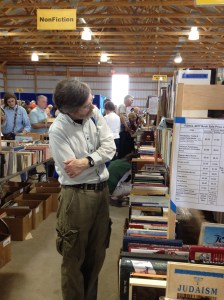
The other day I met one of the organizers of the Easton Book Festival.  Coming in October, this festival is something new.  It took the efforts of a couple with vision—the owners of a small, independent bookstore—to get other people on board, but now it’s going to happen.  A weekend dedicated to books.  I found out about the Festival as I was looking up area bookstores that might let me do a presentation on Holy Horror.  For whatever reason, my last book missed its projected autumnal publication date, and fall is when people are really thinking about horror movies.  Approaching its birthday in late December, it never really had a proper launch.  Priced the way it is, I don’t expect a sales boost, but I would like people to know about it.  When you spend years writing a book you’d like it not to be completely obscure.

In any case, when looking up one of the Easton shops—hey, book lovers, the Lehigh Valley has lots of bookstores!—I noticed that the Festival was still seeking participants.  Since it falls just before Halloween, the timing felt perfect.  I signed up.  Now this is one of the many new tricks for this old dog.  I tell authors all the time that self-promotion is key to book sales, even when a press is fairly widely known.  In fact, the store owner himself writes books and has to pay for his own tours to promote them.  Book culture is worth promoting.

On a personal level, it does me good to see that there are others who appreciate books.  They are a form of collective mind.  A communion.  When I’m feeling down, or uninspired, a trip to a bookstore—or even a library—often helps.  Reading books leads to a sense of accomplishment.  Every year I set a goal on Goodreads.  I don’t set the goal to make me read—I’d do that anyway—but to share with others both what I’ve been reading and what I think about it.  The Easton Book Festival will be a way of doing something similar, hopefully with those many others who feel the draw of books.  Writing, for me, is a labor of love.  I don’t know too many people personally, so meeting them through books is one of my own goals.  Just the other day I met an academic who wanted to read Weathering the Psalms.  Such things happen only in that wonderful land built of books.


Hidden Monsters

I don’t think much about having been born male.  I’m starting to realize that that’s because I don’t have to.  The same is true of being caucasian, although I’ve always objected to the labels of “white” and “black” as being polarizing and wildly inaccurate.  Although I grew up in poverty, my “social markers” put me in a place of privilege, even if others sharing my demographic have locked me out of the club.  These thoughts were raised by Mallory O’Meara’s excellent The Lady from the Black Lagoon: Hollywood Monsters and the Lost Legacy of Milicent Patrick.  As soon as I saw the book announced, I knew I had to read it.  As O’Meara would doubtlessly not find surprising, I had never heard of Milicent Patrick before.  I’m not surprised that a woman designed the Creature from the Black Lagoon, however, because woman create memorable monsters (can I get a “Frankenstein”?!).

The reason I don’t think about being male is because the crumbling society built by males assumes that it’s the default.  Men have always been shortsighted, I guess.  Having been raised by a “single mother” (she was technically not divorced because a male-made religion said it was sinful), I always believed women to be protectors, capable heads of families, and far more empathetic than the men I met.  I didn’t realize at the time that we lived so close to the brink because men devalue women.  Milicent Patrick grew up in a family where this was much more obvious.  A talented artist, she incurred her family’s lasting wrath by going to Hollywood and doing what was then movie makeup work.  That she designed the beloved Gill Man makes sense to me.

O’Meara’s book is sure to make thoughtful readers angry.  Not at the author, but at the behavior of men.  Perhaps due to my unbalanced upbringing, it has taken many years to see what others probably notice much more readily: women have to struggle for that which someone like myself can simply claim.  Bud Westmore, Patrick’s boss at Universal, claimed her creation as his own work.  There are monsters in this book, and I’ll give you one guess as to their gender.  Still, I’m glad to have read it for I know I’ve found another monster fan.  O’Meara’s clearly aware of how those of us who admit this odd passion are marginalized in a world that prefers super heroes and those good with finance over those who see monsters everywhere.  This is an important book; read it and you’ll see them too.


Summertime Boos

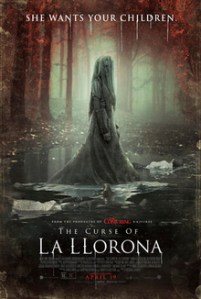
There are so many of them that it’s difficult to keep up.  Movies, I mean.  And they can be an expensive habit.  As some readers may know, I’ve followed The Conjuring franchise pretty much from the beginning.  That particular film was long anticipated (at least in certain circles), but still I waited until it was available for home viewing to see it.  I always feel kind of selfish going to the movies on my own since they are a kind of event—a form of social outing.  For me, however, horror movies are research, but that hasn’t taken away the thrill of seeing one on the big screen once in a while.  The Conjuring branched off into the Annabelle movies, and I caught the latest offering in the latter series in a theater.  I hadn’t realized that The Curse of La Llorona had been released a couple months earlier, and that it was being considered part of the diegesis.  It was back to the small screen to catch up.

La Llorona is based on a Mexican folktale and is tied to the other films in its universe by a character who recurs from Annabelle, Fr. Perez.  He’s not the protagonist, but he does introduce one way in which horror responds to the present insanity we call the US government—the character who defeats the fiend is hispanic.  In fact, most of the characters in the film are from hispanic families in Los Angeles.  They take down the ghost without the assistance of border guards or any kind of wall.  They don’t need the simpering help of the GOP.  Like most of the movies in this franchise, however, they do make use of religion.

When Fr. Perez can’t offer immediate help to the family beset by La Llorona (“the weeping woman”), he points them to a local shaman.  In this otherwise Catholic world, the truly amazing outcome is that the faith healer does possess the knowledge and ability to stop the evil.  While the backstory of the ghost is well known, the nature of the entity is a bit unclear.  Most Conjuring films feature a demonic presence, so it’s kind of a relief to have a garden variety ghost for a change.  You see, when Ed and Lorraine Warren challenge entities in these movies they do so with religious accoutrements which tend not to fail.  Ghosts, however, traditionally don’t require a religious banishment.  We’re entering new territory here, of course.  And I hadn’t even known about this film until after I’d seen its predecessor.  How can you hope to keep up with spirits?  It’s a full-time job. 


Begetting Fear

Out on the nearby rail trail I use for jogging I often hear it.  Gun fire.  There’s a shooting range—out of sight, and hopefully, out of reach—not far from the path.  The loudness of the discharges, even from this distance, is enough to make you jump, even in mid-stride.  Often as I’m getting my exercise I reflect that fear begets fear.  Many people purchase guns because they are afraid.  Statistics support—although mass shootings must be catching up—that the vast majority of those shot receive their wounds from a family member because there’s a gun in the house.  And that only makes people more afraid.  Fear begets fear.  And a cycle of madness begins.  American exceptionalism convinces us that just because no other developed nation in the world experiences this level of gun violence the solution is to buy more guns and that military assault weapons should be available to the mentally unstable.

As life in Trump’s America erupts into the summer of hate, at least 31 people are dead from mass shootings, and the GOP stands firmly with the perps.  In the United States alone among “developed” nations this level of gun violence is prevalent.  In this country alone do the levels of poverty near the 50% mark while the top 1% give us guns with which to play.  If you elect a hate-filled man, society will become hateful.  Gun violence existed before Trump, of course.  Mass killings have been a problem as long as the Republican Party has been owned by the NRA.  Add racial hatred and people will die.  The GOP wouldn’t recognize an elephant gun if it saw one.

Fear can be treated.  While I’m no specialist, my own form of exposure therapy involves watching horror movies.  What more horror can there be to a society bent on mass murders and an oligarchy that turns a deaf ear?  To some madnesses there may be a method.  The movies I watch are, ironically, coping mechanisms.  In the midst of all this violence, one wonders at the utter lack of moral rectitude on the part of Republicans who loudly bray that gun ownership will make us safe.  Perhaps they hope we’ll become numb, at least on our way to the voting booth.  If we learn to deal with fear it can be subdued.  So I’m out jogging, listening to the rapid fire of guns somewhere out of sight.  And I’m pondering how fear often has the last laugh while the rest of us weep.


Internet Epistemology

Where do we find reliable information?  I’m asking this question on an internet-based medium, which itself is ironic.  While spending time with some younger people, it’s become clear that the web is their source of truth.  You find purveyors of information that you trust, and you accept their YouTube channels as representing correct data.  This can be a disorienting experience for an old doubter like me.  One of the reasons for studying for a Ph.D., apart from the vain hope of finding a career in higher education, is to hone critical thinking skills.  When I went through the process, that involved reading lots and lots of print material, assessing it, and weighing it against alternative views, also in print format.  You learn who really makes sense and you judge which publishers have good information more frequently.  As you navigate, you do so critically, questioning where they get their information.

Now, I’m not one of those people who think the younger generation is wrong (in fact, there are YouTube educational videos about just that).  The situation does, however, leave me wondering about how to fact-check when you don’t know the publisher.  It may be an older person’s problem, but it’s essentially the same dilemma behind self-publishing—the reason you trust a self-published book depends on the author alone.  Is s/he persuasive?  Did s/he document the sources of her/his information?  Are those sources good ones?  The young people I know seem quite adept at filtering out obviously biased information.  Many YouTube personalities footnote their presentations with links to sources (many of them online), and after an hour of watching I’m left questioning what’s really real at all.

You see, many of these internet personalities have sponsors.  Sponsors bring money, and money biases anyone’s angle toward the truth.  In fact, many of these YouTube sources call out the lobbying groups that influence public opinion for political ends.  Only someone completely naive—no matter their generation—would not acknowledge that government runs on money provided by corporations with interests to be protected.  There have been reliable sources, even from the days of print, that prove beyond any reasonable doubt just how corrupt governments tend to be.  But who has time to fact-check the government when the rest of the information we receive is suspect?  Those of us with training in advanced critical thinking aren’t immune from biased information.  It’s just that there’s so much data on the web that my head’s spinning.  I think I need to go read a book.


Witch Way from Here?

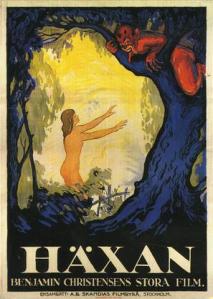
Häxan is often considered a horror film.  Produced by Benjamin Christensen, it was released in 1922, the same year as Nosferatu, eine Symphonie des Grauens.  Both are silent films and the term “horror movie” didn’t exist that early.  Framed as a documentary of sorts, Häxan deals with witches, or more precisely, with ideas about witches.  Taking a remarkably modern view, it presents how the church led to the persecution of women during the witch hunts.  It had been on my “to see” list for many years before I realized it is now in the public domain and is rather easily found on YouTube for free.  It presents reenactments that are still difficult to watch, although silent films have a difficult time scaring viewers used to CGI verging on virtual reality.

Banned in the United States upon its initial release, the movie dares address that sacred ruminant, the foibles of the church.  Christensen was largely correct in placing the blame for harm inflicted on thousands of innocent people—mostly women—on the zeal of a masculine church.  The prolonged dramatization of the destruction of an entire family based on forced confession and trickery, often by well-fed monks, makes the point clearly.  While modern explanations have recourse to the psychological motivations, often unknown to those whose worldview was ecclesiastical, we still haven’t relinquished the misogyny of the Middle Ages.  Considering that Häxan is nearly a century old itself, there’s cause for embarrassment in a world largely run by technology.  We still tend to ban that which causes us ridicule.  

When tragedies occur, it’s only too natural to blame someone or something for it.  Why the burden of that blame was laid on women by a male hierarchy is sadly only too easy to guess.  Häxan is one of those examples of the way horror can cross over between fact and fiction.  Today it can’t be taken as a documentary with any kind of seriousness, but it maintains an atmosphere of dread that finds it classified as horror before the genre itself began.  Movies about witches continue in the genre up to the present, and most are quite aware of the male culpability behind this particular variety of “monster.”  To test if witch trials continue all we need to do is watch how men in power continue to behave toward women.  It’s almost enough to make us believe hexes are real.


Alien Ideas

One of the iconic moments in all of cinema, known well beyond the confines of sci-fi and horror fans, is the alien bursting out of Executive Officer Kane’s chest.  The movie, of course, is Alien.  The screenwriter, Dan O’Bannon, was also known for contributing to Star Wars, Total Recall, and Return of the Living Dead.  Alien is one of those horror films I was too afraid to watch when it came out in 1979.  I was sixteen at the time, and had been primed by commercials that still haunt me.  I would eventually, in seminary, see Aliens and prompted by curiosity, eventually went back to watch the original.  It has since become one of my favorites, and analysts of genre fiction and religion quite often point to the iconic role of Ridley as worthy of theological mention.  Her self-sacrifice in the third installment has been heralded as one of the many cinematic messianic moments.

Science fiction and horror are closely related genres.  They can be teased apart in Alien only with extreme finesse.  Consider the most famous scene again.  Kane, while on the derelict alien vessel on LV-426, has the unfortunate experience of an alien larva sealing itself to his face.  The crew of the Nostromo can’t get the creature off—whenever they provoke it, it wraps its tail more tightly around Kane’s throat or leaks acid.  Then it falls off and dies.  Everyone, not least Kane, is relieved.  He joins the rest of the crew for a meal, but then shows signs of distress.  Something is eating him from inside.  The alien rips out and the line from sci-fi to horror is irrevocably crossed.  That unforgettable scene immediately became a classic of the genre.

Dan O’Bannon, the screenwriter, suffered from Crohn’s Disease.  He attributed the alien-bursting scene to his own experience with the condition, which eventually took his life.  Someone in my family was recently diagnosed with Ulcerative Colitis, a disease similar to Crohn’s.  In response I did something I’d never done before; I started a fundraiser on Facebook.  The Crohn’s and Colitis Foundation is a non-profit organization funding research into these debilitating illnesses.  It offers support to those who suffer with the diseases, the incidence of which is on the rise.  I once told my family member about O’Bannon’s use of his own suffering as the inspiration for that cinematic moment.  It brought a rare smile in the midst of a flare, a smile with a little too much understanding for a young person.  If only Ripley were here to take control of a menace far too human.


Bible Misunderstood

Okay, so I wrote a post a couple days ago about evangelicals challenging Trump’s China tariffs because it will raise the price of Bibles.  Little did I know that Miriam Adelson wants a “Book of Trump” added to that very Bible.  Now, heroes are a personal business; to each their own.  Adding someone to the Bible, however, especially when that person has no idea of what Jesus said, is problematic.  Biblical and ecclesiastical scholars know that even if most Christians agreed books simply can’t be added to Scripture.  Many think the Gospel of Thomas should qualify—it may actually be closer to the words of Jesus than some of the canonical gospels and was putatively written by a disciple.  Thomas, however, will never make the cut.  Early bishops and elders in the church set pretty firm limits to the New Testament.  

Some religious traditions, such as Mormonism, have gotten around this impasse by writing entirely new sacred texts.  Loyal Trump followers might indeed fit the description of what used to be called a cult.  Thing is, George W., and George H. W., and even Ronald Reagan were more religious than the incumbent and nobody suggested adding them to the Good Book.  Our world has somehow flipped upside down in the last three years.  All I know is that in the photos of Trump with the most Jesus-like Pope in modern memory the Holy Father wasn’t smiling.  Then again, the Pontiff would likely not autograph Bibles if asked to do so.  Has anyone suggested a book of George Washington?  There’s such a thing as getting carried away.  

The Bible, apart from being the sole recognized authoritative text of the world’s largest organized religion, is an iconic text.  This means that the Bible is recognized as an important book—perhaps even a stand-in for God—without considering what it actually says.  This was a major point behind Holy Horror and it’s essential to understanding American political behavior.  Manipulating Scripture for political ends is generally the most cynical of approaches to the Good Book.  In America you can drive down highways and see the Bible advertised on billboards.  Large segments of an increasingly secular society are still motivated by it.  There was a time when it was believed that such cavalier suggestions as that of Ms. Adelson would constitute blasphemy, or would at least profane the founding book of Christianity.  In the minds of some Trump has clearly become a god.  So it was in Rome before the fall.


Good Ground

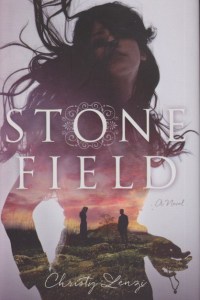
Young adult literature gives me hope.  The quality, speaking for a guy who grew up in a small town with limited choices, has improved astronomically over the past several years.  One of my favorite (adult) novels is Wuthering Heights, and so it’s no surprise that I found Christy Lenzi’s debut novel Stone Field quite engaging.  Set in a different time and place, and with a younger readership in mind, it retells the story of forbidden love based on xenophobia.  The message has never been more relevant.  Although it avoids explicit language, it does include adult situations and features a strong female protagonist in an age of explicit gender inequality.  During the chaos leading up to the Civil War, star-crossed lovers are set against one another because prejudice is a most effective poison.

While not a religious story, the iconic Bible plays a large role in it.  One of the main characters is a preacher, but even without him Catrina Dickinson’s family and friends are ready to quote the Good Book as unquestioningly as a Republican (with my apologies to fiscally conservative friends untainted by this aberration).  This is beyond a realistic portrayal of American life of the 1860s, it reflects the way that many people continue to think of Scripture.  Nevertheless, in one crucial episode of the story set in the church at Roubidoux, Missouri, the iconic role of the Bible becomes clear.  It is deftly woven throughout the story in a way that might serve as a lesson for modern writers seeking verisimilitude.  Many authors fear to address religion, but the Good Book is alive and well in these post-frontier days.

Often the desire to avoid religious motivations leads to stories that lack a key element of the social fabric.  In my own attempts at fiction religion is seldom absent.  It is the way average people live.  Lenzi presents Cat as being aware of but unwilling to be cowed by the Bible.  Indeed, as the story unfolds with several tragic events (remember, Wuthering Heights) she demonstrates that Catrina knows but doesn’t accept the strictures of Scripture.  The issue of theodicy hangs heavily in the atmosphere of the novel.  To me, this makes stories appear more life-like than tales that simply suppose religion doesn’t impact people.  When tragedy strikes, many people question what God, or their stand-in for the divine, is doing.  Anyone who’s asked “why me?” has directed that question into the world of theodicy, whether intentionally or not.  Reading this story while going through a family illness may have drawn this to the surface, but it underscores just how effective it may be for a realism that is otherwise lacking, whether in fact or young adult fiction.


Trumping the Bible

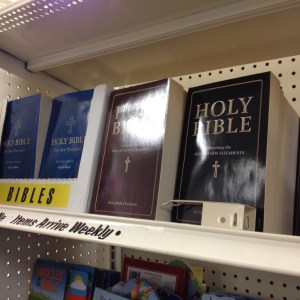
The media is chattering about one of the very many contradictions of evangelicals who support Trump.  Since I have a foot in the world of the Bible business, I read with interest how Trump’s tariffs on China will put Bible publishers in a bind.  You see, the Good Book is generally sent offshore since printing costs (and technologies) are too expensive to replicate in God’s new chosen nation itself.  This lack of divine foresight should be a bit disturbing.  The entire evangelical enterprise is based on their reading of Scripture, and the belief that the divine choice of America is behind such momentous events as 45’s election.  Maybe we should check our pipes for lead.  In any case, Bibles, which are printed cheaply in high volume overseas, are set to become too expensive to give away because of the great pretender’s tariffs.

A few media outlets have picked up this story, including one that noted Trump’s favorite Bible verse is “an eye for an eye, and a tooth for a tooth.”  The famous lex talionis statement was famously, well, trumped by Jesus who said that the ideal was to turn the other cheek.  In a rather Philistine way, evangelicals have sided with a man who says Jesus was wrong.  If you want to check up on me in your Bible you’d better get your wallet out.  Ironically from a Republican point of view, tariffs are themselves the breaking of the commandment of free trade.  Still the party that claims to believe that does nothing to prevent the sale of their souls, cash on the barrelhead.

Many evangelicals may find the idea of Bibles as a business distasteful.  It is, however, extremely profitable for those on the supply end of the deal.  Bibles are printed at a volume that would make most authors green, and due to its size the Good Book requires specialized paper most of the time.  This is so much the case that Bibles not printed on “Bible paper” just don’t feel like sacred writ.  Since costs of living in the United States are quite high, and since this kind of specialized printing would be too expensive in this situation, publishers outsource God’s word.  Some publishers have been pleading with the government to exclude books from Trump’s tariff so the Good News can continue to spread.  The fact is that only one deity, called Mammon in the Bible, runs this enterprise.  And to continue to buy Bibles at the evangelical rate will soon be requiring an act of sacrifice.  I guess the lex talionis still applies.


The Job of Theodicy

Most people, I suspect, don’t think about diseases until someone they know is afflicted.  It’s natural enough to try to avoid thinking of the negative, and I know that I’ve always felt overwhelmed when it came to worthy causes seeking donations.  I surprised myself, therefore, but putting up a Facebook fundraiser for the Crohn’s and Colitis Foundation.  Someone close to me was diagnosed with the disease, and seeing suffering first-hand has a way of changing your perspective.  You want to do whatever you can to help.  Instead of feeling completely at the mercy of chance, I put my fundraiser online and I’m hoping for the best.  A doctor I know informed me that foundations for diseases are among the most helpful websites for those with the condition.

In my mind, as in that of many others, disease is intricately tied in with theodicy—the problem of innocent suffering in the presence of a God supposed to be good.  Theodicy is frequently the first stop on the road to non-belief, as a careful reading of many of the “new atheists” reveals.  No theologian has devised a satisfying theodicy.  The question always comes down to the fact that a universe without debilitating diseases can be imagined by those of us with feeble human abilities, so why not by an almighty being with no limitations?  Human evil can be attributed to free will.  Natural evil, such as diseases not keyed to behaviors that lead to them, is a different matter.  Often we’re left to our own human devices against conditions we don’t fully understand.

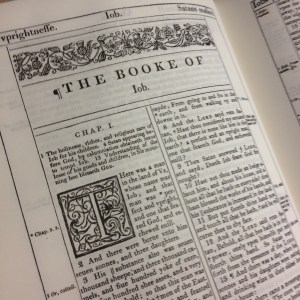
Facebook may not be the best place to post a fundraiser, however, it has a reach far greater than this simple blog, and the Crohn’s and Colitis Foundation page helps to get such fundraisers set up.  For all of its problems, Facebook does provide a way to bring people together for common causes.  Seeing someone we know suffering is never easy.  And there are so many worthy causes out there.  The situation naturally reminds me of the book of Job.  People who turn to it looking for an answer to why innocent people suffer (Job is presented as perfect in the prologue to the story) come away disappointed.  No reason is given and the question of theodicy is left unanswered beyond the claim that human understanding is limited.  God may ask how Job has the boldness to question divine action, but there’s no suggestion that he shouldn’t try to find relief with his broken potshard.  My Facebook fundraiser is my potshard, I guess, although the larger questions still remain.


Freedom’s Price Tag

Independence Day makes me feel conflicted.  Jingoism seems to be an international problem, and although patriotism is deemed next to saintliness, I have my doubts.  No nation is perfect *gasp!* and we would all do well to learn from others.  America is a nation in love with money and that affair has serious consequences.  One is our medical care system.  We’re one of the very few (if not only) “advanced” nations without universal medical coverage.  In fact, people routinely suffer because they lack insurance or their coverage doesn’t provide for what their physicians think is best.  This came home to me while staying with a family member who was hospitalized recently.  On the television the GOP was sponsoring ads against universal health care.  The irony was thick enough to be sickening.

Highly touted as the most affluent nation in the world, we refuse to take care of our own.  How am I supposed to get into the mood for Independence Day?  In Britain (as in most other places) they have universal health care.  I lived there for three years and knew that I could get treatment without emptying out the bank.  Here, in my native country, we have less care.  Someone might make a few dollars less, and that, we’re told, is unacceptable.  Anyone who’s experienced the illness of a family member knows the old one-two.  The treatment itself and the bills that come after.  Lately I’ve just been throwing up my hands and opening up my wallet.  It’s Independence Day.

Not that I’d expected much to change, but my first inkling of being a writer was winning a state-wide essay contest right here in Pennsylvania.  I wrote an essay on “Americanism” back in 1980.  It noted the false sense of righteousness that accompanied the notion.  I was an evangelical Christian then, but that didn’t mean I wasn’t cynical.  In my small town I’d seen John Cougar Mellencamp-level suffering.  I saw unemployment, drug use, and desperation.  I saw politicians saying everything was great and would be even better if we had more guns.  I saw trickle-down economics stemmed at the source.  I knew we were being lied to.  I did hope that things would get better, but now with the GOP fully behind 45 the true ugliness of jingoism has become clear.  It’s Independence Day and I feel sick.  I look across the ocean and see the nation from which we declared said independence suffering from a similar backlash.  But at least they can afford to go to the doctor.


Truth or Dare

I once knew a man who was what can only be called a pathological liar.  I never knew when he was telling the truth.  It was a disorienting experience relating to him because, as a literalist I wanted to believe what others told me.  In this case you simply had no solid ground on which to stand.  Recently someone else who knew him (he died some time ago) asked me for some information about him.  I was at a loss to come up with anything.  Since he seemed routinely to mix fiction liberally with fact, I didn’t know where to start.  In this post-truth world we now inhabit, I fear this may become much more common.  Everyone lies from time to time, but when it is a way of life, well, even Jesus had a name for the “father of lies.”

It’s with a bipartisan sense of sadness that I lament how the Republican Party has completely backed up a man that they know is like this.  Intentionally or not, political leaders set the character of nations—just consider how often we think of Russia as Putin or North Korea as Kim Jong-un.  America has become the nation of lies.  Don’t believe me?  Maybe I’m lying.  See what I mean?  Often I tried to figure out what this man I knew was up to.  What was his endgame?  I couldn’t be sure I’d ever know, even if he told me.  Especially if he told me.  You see, I was quite young at the time, and the young often don’t have the experience to get to the truth.  And when the truth is bartered for power, well, the father of lies is lurking nearby.

Recently I finished reading M. Scott Peck’s People of the Lie.  This person I knew was in my mind quite a bit as I tried to sort out all the psychology being presented.  If I’m honest I know that even as a child I said this man was evil.  It was clear to me that he wanted to survive on his terms or no terms.  To do so, he believed his own lies.  Now I don’t know if he lied at work.  He had a job where many people depended upon him to carry out his tasks.  He seemed to do so conscientiously.  When not at work, however, he was back in the land where he felt the most comfortable, the land of untruth.  Recently someone again asked me about him.  I tried to recollect as much as I could, and like much of the world these days I answered, “I just don’t know.”


Evolving Tales

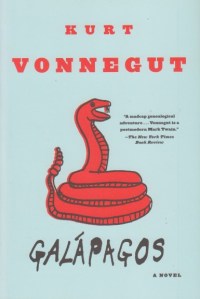
There’s nothing like a six-and-a-half hour flight to get some reading done.  I’d made good progress on Kurt Vonnegut’s Galápagos before leaving for England, but the plane ride gave me time to finish it.  While nobody, I think, can really claim to understand Vonnegut, there are clearly some trends in this novel that demonstrate his struggle with religion.  There may be some spoilers here, so if you’ve been saving this book for later you might want to wait before reading the rest of this.

As the title suggests, it’s a story about evolution.  Charles Darwin had his first divine epiphanies about evolution while visiting the Galapagos during his voyage on the Beagle.  Land creatures isolated from others of their species adapted to the environment in which they found themselves, and over eons passed on useful traits to their progeny.  If humans only had as much foresight!

With his trademark cast of quirky characters about to set out on a cruise from Equador to the Galapagos, Vonnegut has war break out.  Riots and pillaging take place.  Vonnegut takes broad aims at capitalism and business-oriented thinking, and how these represent the devolution of our species.  Of course, being Vonnegut, he does it with wit and verve.  Vonnegut was a writer not afraid to use the Bible in many ways, including what experts would call misuse.  As the surviving passengers make their way onto the stripped, but functional ship, he notes that they are like a new Noah’s ark.  They end up populating Galapagos with humans that evolve a million years into the future.

A thought that caught me along the way was a line where he wrote that in the long history of David and Goliath conflicts, Goliaths never win.  This kind of sentiment could do the world some real good right now.  In fact, although the book was written decades ago, one of the characters, Andrew MacIntosh, reads very much like a foreshadowing of 2016, down to the descriptions of how he regularly mistreats others.  In Galápagos MacIntosh gets killed during a rebellion, showing that grime doesn’t pay.  The cruise goes on without him.  Galápagos is a book that points out the evils that our system encourages, or even necessitates.  There can be another way.  The survivors land on the barren islands and set about adapting because they have no other choice.  A more egalitarian scenario evolves largely because females are in mostly charge.  While not intended as an actual solution to social ills, Galápagos is nevertheless not a bad guide, especially when shipwreck seems inevitable.


From Above

You can see a lot from 35,000 feet.  Alan Parsons Project’s “Eye in the Sky” comes back to me, although I’d never make so bold as to associate myself with Horus.  As I’m preparing for my return flight, I wonder what I might see.  Not much, I expect, since all the window seats were taken and I’ll be sitting in the middle section.  I like to see where I’m going.  On the way over, for example, about three hours into the flight, we were over the Grand Banks.  I’d just finished Brian Fagan’s Fishing, and the Grand Banks were on my mind.  The last land I saw was Cape Cod, although from the monitor I knew we’d passed near Nova Scotia and Newfoundland.   In other words, there was nothing but the north Atlantic beneath us.  We were hundreds of miles from land.  Then I saw it.

Was that an oil platform all the way out here?  I didn’t have enough time to wake my napping phone for a picture, but there was clearly a large platform and a nearby tanker.  Later I checked and, sure enough, Hibernia, the world’s largest oil platform is smack-dab in the middle of the Grand Banks.  A number of thoughts occurred.  We’d been flying for hours, and a platform this far out would make a great setting for a horror story.  (Okay, so my thoughts move in predictable directions sometimes.)  Another thought was this: why are we so dependent on petroleum that we’re all the way out here drilling for a polluting, non-renewable resource?  Is it not for profit margin alone?  This was an epiphany for me.

I still carry a little cautious hope around in a hidden pocket that there might be some places left for humanity to explore, but not exploit.  Fagan mentioned in his book that we’d trawled much of the ocean floor.  Although I admiring the engineering that could plant a platform in the stormy Atlantic, I still can’t help but feel a little bit let down that we’ve driven yet another stake into the unexplored world.  We really know so little about the oceans (apart from the fact that many creatures that live there can be eaten and otherwise exploited).  Our lack of scientific knowledge is addressed by great wells drilled down to draw out pollutants to grease the wheels of capitalism.  Yes, I was using fossil fuel in flying.  I’d be happy with solar-powered planes, if they existed (they’re above the clouds much of the time, so it would seem worth dreaming about).  In the meantime, however, the earth just keeps getting smaller and smaller.  Even from 35,000 feet.