You’ve Never Seen

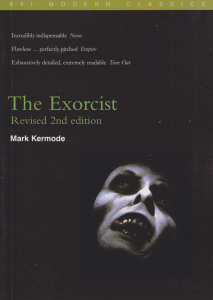
In spite of accusations of puerile voyeurism, horror is a genre containing many deep films. I have no training as a film critic, but it’s evident that among the more weighty of horror heavyweights is The Exorcist. Mark Kermode is, on the other hand, a film critic, and his book named after the movie demonstrates just how much a viewer can see. I’ve watched The Exorcist quite a few times and there were things I’ve consistently missed. I also realize that I’ve only ever seen The Version You’ve Never Seen (the 2000 theatrical re-release). Having been too young and far too skittish to have seen its debut, I’ve been happy—if that’s the right word to use with such a production—with the version I’ve seen. That’s the human condition, I guess. Kermode made me wonder what it would’ve been like to have experienced it before the spoilers became universally known.

Yes, there are striking special effects—especially for the early 1970s—but the message is what really holds the depth. The story is the classic struggle of good and evil. Demons are, after all, a form of evil personified. The fact that a young girl is the victim may be a little too true to life, but it also gives the drama considerable emotional resonance. In the end, according to the view of the writer and director, good wins. The struggle, as they portray it, is real and costly. It’s always informative to find out what those who made a film thought it was about. Even with the motive of making money, many involved in the industry still have the hearts of artists. Maybe even priests.

Having learned at the feet of post-modernists, we know that no interpretation—even that of the creators—is privileged. Just as there’s no such thing as “only reading,” no one “only watches” cinema. The acts of reading and watching inherently involve interpretation. Kermode draws that out nicely in this little book. His interpretation, as insightful as it is, is but one way of looking at it. Was The Exorcist the version originally released in 1973? Bill Blatty and Bill Friedkin disagreed to the end about what the definitive version was. The many sequels and spin-offs have reinterpreted the story in their own ways. So it is with the struggle against evil. There’s no one single way to go about it. Some make horror movies to demonstrate that point precisely. At least in my view they do.


Losing Ahab’s Head

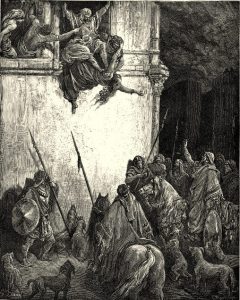
Call me Ishmael. There was a time when I heard about archaeological discoveries impacting the Bible soon after they were made. Now I have to wait until they appear in the paper, just like everybody else. When I saw a story asking if a recently found statue head might be that of Jezebel’s husband a number of things occurred to me. First of all, how cool is it that a king is referred to as the husband of a more famous wife? Well, I suppose Jezebel is infamous, but as the Washington Post article I read indicated, some biblical scholars are inclined to view her more sympathetically as a strong woman in a patriarchal morass. Seems like something we should be able to understand these days.

Another issue is that underlying bugbear of wanting to prove the Bible true. There is little doubt that Jezebel’s husband, a king by the name of Ahab, existed. Quite apart from the Bible he is historically attested—one of the earliest biblical characters to have received outside verification. If he actually struggled with a prophet named Elijah or not, we can’t know. In any case, the non-talking head of the statue looks like just any other pre-Roman guy with a crown. The article wistfully wishes the rest of the statue could be found, but one thing that we know from ancient iconography is that ancient figures, be they gods or heroes, are seldom inscribed. As I long ago argued about Asherah, without definitive iconic symbols to identify them, ancient images must remain ambiguous.

What would iconically identify good old Ahab? Certainly not a white whale—it’s far too early for that. He was represented in the book of Kings as the worst monarch Israel ever had. Politically, however, he seems to have been somewhat successful. Would he have been represented with the grapes of Naboth’s vineyard? Or, like a saint, holding the arrow that eventually slew him in his chariot? Ahab is a mystery to us. Unlike Melville’s version, he’s a man eclipsed by those in his life, notably the prophet Elijah and his wife Jezebel. Although the latter’s been baptized into the acceptable form Isabel, her name is synonymous with being a woman who knows what she wants. In the biblical world her main crime was being born into a family who worshipped Baal. The difference between her day and ours is that if a Republican president declared himself a Baal worshipper, evangelicals would cheer and joyfully follow along. Rachel, after all, cannot stop mourning her lost children.

The Republican National Convention?


Credulity

So I went to see The Incredibles 2. Like the first movie, it deals with the complexities of family life amid the feelings of inadequacy when people are kept from their full potential. The idea of humans being enslaved by their screens seemed real enough. If you’ve ever tried to walk through Manhattan in a hurry you know that one of the clearest dangers is the pedestrian staring at his or her phone. People used to come to New York to see the scenery. Now you can get the full experience all online. There’s little doubt that we do need to be saved from our screens. Meet virtual reality. After only one encounter you can drop the “virtual.” Ironically, we were all sitting in a theater looking at a great big screen.

What was even more interesting was the fact that the film began with an apology for taking so long to make a sequel. An actual apology. As if no movie ever could, or should stand on its own. It’s common knowledge that sequels seldom live up to the originals. Interestingly, the villain in the movie states that people will always choose convenience over quality. That much is certain, and in an ironic way it applies to the film in which it’s uttered. I don’t believe in the crisis for creativity. It’s still out there. Original ideas are endemic to human nature. Ideas that bring in lots of money are more rare, and so we rely on the sequel. Sure things.

Publishers play this same game. Books that are completely new ideas frequently find their way from editors’ slush piles to their rejection piles. Publishers want something similar to what they’ve done before. Even better, something similar to something that sold well last time. The odds, in a capitalistic society, are stacked against creativity. It’s money that’s important, not originality. Yes, there have been books written extolling the wonders—virtues even—of originality. Such books are more easily published if they’re written by somebody already famous. So here was the dilemma in the theater: enjoy the movie or accept the message of the movie? The rare days I’m away from the screen, I’m old enough to admit, I don’t really crave it. When I come back in the door, however, the first thing I do is login to see if I’ve missed anything. Screens can lead to a strange uniformity. As long as we’re willing to pay for it, nobody will complain.


Let the Sunshine in

The earliest sunrise does not occur on the longest day. At least not at this latitude—I can’t speak for the entire world, but sunrise lags behind the latest sunset by a few days. In Germany the longest day was January 30, 1933. It seems that the Nazi Party did not win the majority, but Hitler was made chancellor anyway. All he wanted to do was to make Germany great again, right? No matter who it hurt. When Americans, who sacrificed thousands of souls, found the concentration camps they swore it would never happen again. That was, however, before Donald Trump was born. Indeed, those seeking the transmigration of souls might wonder where he’d been wondering for the previous thirteen months. There’s some cryptic stuff happening here.

How can it be that sunrise isn’t earliest on the longest day? Back in the days when science mattered, it was simply explained: the number of minutes the sun is in the sky maxes out on the summer solstice. Sunrise can keep getting earlier for a few more days, but so will sunset. The longest day, in the biblical world, was when Joshua was fighting at Makkedah. The slaughter was going so well that the big white guy upstairs (oh no, he’s not Jewish, you see) reached out and held the sun in place for another 24 hours so it could continue. That, you see, is the longest day. Not exactly sand chairs and sunscreen, although the latter might’ve been awfully useful.

Although in modern times the solstice is known as the first day of summer, in olden times it was considered midsummer. The solstices and equinoxes were the midpoints, not the start of something. Such a perspective can make a world of difference. June, it is said, is named for Juno, the pagan wife of Jupiter. The constantly cuckolded goddess of marriage. Only we call her long-suffering, since stormy weather should be over by June, shouldn’t it? With enough lawyers even sin can be made to sound righteous, for longest day brings everything out into the light otherwise. The longest day, you see, can be fake news. Around here the sun will rise still earlier tomorrow. Experts—those we no longer believe—tell us that the solstice was yesterday. And yet, what is that orange thing arising in the east so early in the morning? Don’t be fooled; the longest day is over.


Ezekiel’s Nightmare

I’m still thinking about Ruby Ridge. It’s not unusual for me to be a bit late catching up on yesteryear’s news, but being alive during Trumpocalypse has made me think of the 1990s as the good old days. Jess Walter’s book on the topic, on which I posted a few days ago (just scroll down), ends with a kind of optimism that seemed possible even when George W. Bush was president—the number of white supremacist groups was shrinking radically. Americans didn’t put up with that kind of backward thinking any more. The future was ahead. Now, just about a decade-and-a-half after the book was reissued, we’ve got not only a racist commandant-in-chief, but a Republican congress who goes along with everything he says. Strangely enough, I just read a newspaper article with a Jewish Republican saying “diversity is crap” (his words). No question we’re going backwards.

It’s easy enough to dismiss extremists unless you know some. I attended a conservative Christian college in the early 1980s. There were survivalists on the faculty. These are evangelical Christians who hoard guns and supplies, generally because they believe the end of the world is coming. Ironically, their belief in the rapture doesn’t seem to assure them that they’ll be “taken up” before the trouble starts. Or maybe they just want to hang around for a piece of the action—shooting infidels must earn points with the big white guy upstairs. Most of my classmates were as appalled as I was. We agreed that if these were the kind of people who were going to be around after the smoke cleared, we didn’t want to be.

The most disturbing development since November 2016 is the move of the GOP to follow a blind leader. History will bear me out on this. It doesn’t take a prophet to see it. 45 had no plan for winning the race. Once he did, however, he knew that sheep will follow any shepherd, no matter how incompetent. All you need to do is spout racist rhetoric and the fringe will become the center. But the GOP? They are among the most sheepish of all ungulates. A “leader of the free world” who has nothing but praise for dictators and autocrats around the world? The Republican has proven to be the perfect unquestioning follower. The wool is in their heads rather than on their backs. Less than two decades ago Timothy McVeigh was executed. Today there’s no doubt he’d be under consideration for a cabinet post. I think my watch just stopped.


Cult of Paris

The cult of celebrity is dangerous. The results of both biological and psychological sciences inform us that mammals, especially primates, hold “alpha” individuals in awe. We don’t know what quality makes them irresistible to some, but in the case of humans before you know it everyone is talking about this Kardashian or that Trump. Valorizing the power of media as we do, those who appear ubiquitously on screen gain in magnitude merely by the attention paid to them. Others have vetted the details, and those who are deemed important enough for constant, widespread television exposure are worthy of our worship. Most of the time it seems banal, harmless. But when those without scruples are willing to exploit it, it is dangerous.

Paris rejecting the cult of celebrity

For example, the other day my wife and I rewatched An American in Paris. I know my wife likes the movie, but when it was over I couldn’t help noting that Jerry Mulligan chauvinistically claims his right to a woman he’s just met, and who is, moreover, engaged to a friend of his who had just lent him money. The fact that he doesn’t know about the engagement is no excuse. Lise tells him “No,” and when she gives him a false telephone number he doesn’t take the hint that she doesn’t want him to call her. He stalks her in a selfish and predatory way. Only because she laughs at his antics with some perfume bottles does she agree to meet with him later. He takes advantage of another woman who clearly has feelings for him and who sponsors him, using her money but not reciprocating her feelings. He’s aggressive and eavesdrops to get Lise’s name. He lies to her and about her (saying he knows her so her friends don’t object) and refuses to take no for an answer. Laying out my grievances, my wife politely listened and then said, “But it’s Gene Kelly.”

Like many people, I was jilted a time or two when I was younger. Losing out to a rival lover leaves a lasting scar. How can we hope that on New Year’s Eve Lise will leave Henri for the interloper Jerry? But it’s Gene Kelly. The cult of celebrity allows those on various pedestals to get away with many things. Trump was likely correct in saying he could stand in the middle of a crowded street and shoot someone and his base would not object. The cult of celebrity ’sn’twonderful, ‘sdangerous.


For It Is Written

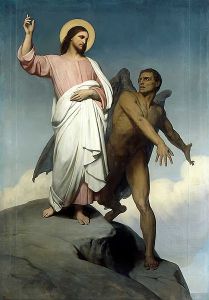
“The devil can cite Scripture for his purpose,” William Shakespeare wrote in his controversial Merchant of Venice. He was, in fact, using the Bible as the basis for this line. The story of Jesus’ temptation in the wilderness famously has Satan quoting the Good Book at him. It comes as no surprise, then, that Sarah Huckabee Sanders, following Jeff Sessions, uses the Bible to justify cruel and unusual practices of the Trump administration, according to a story in multiple media outlets. Trump himself doesn’t know the Bible well enough to quote it, but his minions feel that it can be summarized in one principle—obey the government. Oh, hi, Mr. Orwell, please take a seat over there; I’ll be with you in a minute.

Back in the days before leopards could change their spots, evangelical Christians tended to say that Jesus came to free them from the law. It seems that what they really meant was that Jesus came to allow them to cherry-pick the parts of the law that make the best cudgels against those they don’t like. Those who actually read the Bible know that it can generally be used to support either side of most arguments. Ironically, matters such as adultery *ahem, ah, Ms. Daniels, we weren’t expecting you here; please wait next to Mr. Orwell* are non-negotiable. Even Jesus said so. But let’s not talk about that—we’re too busy trying to pry children from their mother’s arms. Doesn’t the Bible say Rachel can’t be consoled because she’s lost her children?

That which is most holy is most horrible when it’s profaned. The Bible can hardly be called “holy” when found in the mouth of habitual liars. If Jesus were a gentile I’m sure he’d agree that whites have the right to do whatever they want in his name, right? Separating families because it’s the law is robbing Peter to pay Paul, then blaming Thomas. Sanders, Sessions, and their ilk pander to the biblically illiterate who like the sound of the phrase, “the Bible says.” Prooftexting, as anyone who takes the Bible seriously learns the first day of class, is cheating. Ah, Rev. Luther—I didn’t see you come in. What’s that you say? “Sin boldly”? Now there’s a message our government can live with. Especially if you let the Devil into the room. Yes, he’s welcome at the White House these days. And yes, he knows the Bible very well.


Mountain Tops

Idaho can be a peaceful place. I’ve spent parts of many summers there. I grew aware, over time, that the northern panhandle had an association with white supremacists, but if you stick to the touristed areas you don’t run into them. During the Ruby Ridge standoff I was busy trying to establish my teaching career in Wisconsin while living in Illinois—I guess my commuting life began all the way back then. I didn’t have much time for the news, and I don’t recall hearing much about the tragedy. It was shortly eclipsed by Waco. Jess Walter’s Ruby Ridge: The Truth and Tragedy of the Randy Weaver Family presents perhaps more than you need to know about this story with no winners and much strange theology. In case you missed it too, here are the basics:

Randy and Vicki Weaver were an Iowa couple who were drawn into the Christian Identity movement. This was a white separatist, apocalyptic survivalist faith. Convinced the world was going to end, they moved to a remote part of northern Idaho and built a cabin on a rocky ridge and stockpiled guns. Being a white supremacist was actually considered bad in the 1990s (now it’s mainstream Republican ideology) and federal marshals and the FBI got involved. The Weavers had four children and that complicated things. Predictably, the government attempt to shoot an extremist family out of their religion ended tragically. The Weavers’ only son Samuel was the first killed, and then Vicki. The locals, including many skinheads, gathered at the base of the mountain in support of the Weavers as the feds led a military operation into a nearly two-week standoff.

Apart from being too long, Walter’s book is an important reminder of many things at this time. Even though America had a Republican president in 1992, white supremacy was considered dangerous and was characterized as domestic terrorism. The standoff at Ruby Ridge quickly became a cause célèbre for religious freedom, no matter how strange beliefs might be. Ironically, even as the trial was going on the Branch Davidian compound in Waco was being stormed. Now we have a “president” who makes it plausible that a “k” has somehow dropped out of Waco, or at least has been tripled. The national narrative is America is for whites only. It’s as if Martin Luther King Jr., Woody Guthrie, and Abraham Lincoln never existed. I would say “How the mighty are fallen,” but that might sound a little too religious for some. Even the Religious Right has, since that time, left the Bible out of the equation.


Dawn’s Early

Early to bed, early to rise, and people’ll think you’re weird. At least in my experience. Making an island into the place where hundreds of thousands have to commute to get to work may not’ve involved a great deal of foresight. My bus leaves early, and I don’t argue. On the days when I work from home I still rise early—I’m old enough that constantly shifting schedules is more effort than it’s worth, so I like to greet the sun with coffee in hand and say to it, “what took you so long?” This time of year I like to jog at first light when I don’t have to commute. As I do so, I notice where the lights are on. You get an idea who sleeps in and who doesn’t.

With all the political nonsense about lazy immigrants, I wonder what time congressional leaders get out of bed. I sometimes go jogging before 5 a.m. The lights I see on at that time of day are often those of the apartment complexes where immigrants tend to live. The affluent houses of the white are generally dark. If you have the luxury of driving to work in one of your cars, you can afford a little sleep, a little slumber, a little folding of the hands to rest. Immigrants often take the bus. In fact, the majority of early morning commuters, it seems, are not the privileged classes. It may have been Benjamin Franklin who said “Early to work, early to rise,” but it was the foreigners who saw the wisdom of his words.

It’s a sad nation that denigrates its hard workers. I realize I’m looking in the mirror as I write this, but sitting at a desk all day is not hard work. My first job, starting at 14, was physical labor. Most of the time it was light enough—such things as painting curbs, bus shelters, or fences. At other times it involved sledge hammers under the hot sun. The kinds of jobs few people enjoy, but which are necessary. Jobs that don’t pay well, but will keep you alive. Now I sit behind a desk and have to jog just to stay healthy. I see the monied in Midtown walking slowly to their expensive health clubs where they can sweat and let other people see. And I know that there are many out there—immigrants mostly—who are sweating from doing the jobs that likely pay less than the membership fee for this swank gym. And I wonder which is healthy and wise. The wealthy part is fairly obvious, even this early in the morning.


Evangelical Angst

Unless you know what it’s like to face life with no real prospects beyond making it to Heaven when you die, you can’t understand evangelical angst. That last phrase might seem odd to you. Aren’t evangelicals uber-smiley, happy people angry over the way society’s going? Yes and no. Many of them were raised (or converted into) a faith that holds out no hope for this world and that constantly reinforces the idea that what we like is bad. Having grown up in that world, I knew what it was like to be hoodwinked by an evangelist. I can’t remember the guy’s name, but he was famous. He came to my small town and packed a local Methodist Church. During his rambling, long sermon, he had us afraid for Hell burning under our feet. Grateful that we’d just managed to avoid it, he announced there would be three collections that night: the first was your normal tithe. The second time the plates came around you were to empty your pockets and purses of all change. The third time, you were to contribute to his private jet. If you gave over a thousand dollars your name would be inscribed on a plaque inside.

Almost as if nothing has changed in the decades since then, a Washington Post story expresses amazement that evangelist Jesse Duplantis is asking his followers for a fourth private jet. Uncomprehending, the world doesn’t show much curiosity as to why otherwise intelligent people would give to what is so obviously a scam. Or why such people would vote for Trump. The academic world doesn’t understand evangelical angst. As I sat in that audience that night, a poor kid from a poverty-level family, I fervently wished I had more money to give. Until he asked for his plane. My young doubts crept in, for I had more angst than most other evangelicals I knew. Was this really the Gospel?

Later I saw him on television. His personal mansion had literal streets of gold. Jesus, he said, wanted us to get ready for Heaven right here on earth. Did this turn his followers against him? Decidedly not. In fact, he may have believed it himself. You see, neuroscientists have learned that our brains have the evolved capacity to hold and dismiss reason simultaneously, for strong emotional stimuli. Sex, for example, or music. Or religion. These can motivate people beyond the realm of logic, and they often do. Evangelical angst says you’re not buying a scam artist a jet to spread the Gospel, it says your trying to avoid Hell. Rational or not. And that, it seems to me, is more than adequate ground for evangelical angst.


Doubting Normal

The problem with being mainstream is that you have a hard time impressing anybody. “Mainstream church does something normal” is hardly an eye-catching headline. So when mainstream Christianity’s in the media it must be abnormal. According to a recent Washington Post story, mainstream leaders are protesting Christianity leaving Jesus behind. To be fair, that’s an Evangelical speciality, but still. Without naming the elephant named Trump in the room, these mainstream leaders are doing what every Christian in the nation should be doing, which is objecting to the abuse of their brand. The Religious Right has been driving this car and from all indications RR is drunk. Dietrich Bonhoeffer, once the darling of Evangelicals, once wrote that it is a Christian’s duty to wrench the wheel from the hands of fascists. Now they call shotgun and select the tunes.

I could be getting this wrong. As the child of an alcoholic, I don’t know what’s normal. My wife must tire of hearing the question from me, “Is this normal?” I just don’t know. One thing I do know is that being unable to know what to expect has prepared me well for Trump’s destruction of America. I can’t tell if it’s normal or not, so good thing we have the two-faced Evangelicals to tell us it is. Those who watch religion might say it’s odd to have mainstream Christians on the moral high ground over their more self-righteous kin, but these seem to be strange times. Religion, like anything that can be used, can also be abused.

Even our Orthodox siblings know the score. The Orthodox Church basically went underground in Russia, which is, after all, a Christian nation. Stalin, at least, was honest. He couldn’t stand that mamby-pamby opiate of the masses. He had the fortitude to call himself an atheist. 45, on the other hand, calls himself whatever it takes to make himself look good. What? Christians are fashionable this season? Okay, I’m one of those. Even people who should know better (just because your daddy was an Evangelist doesn’t make you holy—too many Evangelists were caught with prostitutes to make that claim) have delighted to invite a lion into the sheepfold. I don’t know about you, but I’d be edging toward the fence just about now. Something doesn’t smell right in here. But then again, don’t take my word for it. The situation looks normal to me.


Rains and Bows

It’s raining and I’m here for an outdoor event. Here, in this case, is Ithaca, New York. The event is the parade that’s an integral part of the Ithaca Festival. As people have been laying out their chairs and blankets along the route since morning, it’s a fair guess that if we don’t stake out our few feet of available public space we’ll miss the parade. And yes, it will rain on my parade. The problem is waiting in the rain. With one hand holding an umbrella and water getting in anyway like a leaky roof, there’s only so much you can do. Reading a book—my default activity—is out of the question. I know very few people here and since I’m acting as a placeholder, there’s nobody to talk to. Tom Petty was right after all.

The parade itself turned out to be a celebration of diversity. Ithaca is what America could be. The various liberal organizations, eager to educate, marched by to cheers and bonhomie. There’s nobody judging here. This became clear in a particularly striking juxtaposition (for which I have no photos, because it was raining) in the parade lineup. A group of Mad Max-themed metal rockers went by in a gnarly truck decorated with torches protruding from fake human skulls. Dressed in future period costumes from the movie diegesis, they produced the guttural, primal roar that is an accusation against current society. Then, like Mel Gibson shifting to The Passion of the Christ, the group immediately behind was a Bible Baptist Church. Add water and mix.

For this I’d sat in the rain for a couple of hours. Forced to relax, I watched the water on the fabric over my head as beads crawled together, joined one another, and scurried, animal-like, from the umbrella to the ground. The drops may look uniform from a distance, but they’re diverse. They come in different sizes, and perhaps because of the distorting character of the nylon, they took different shapes. Placed together in one location, it was natural, it seemed, for them to come together for a common goal, which was the ground. There was a parable playing out here right over my head. While it didn’t seem to be the case at the time, it clearly was a lesson to be shared. Had it been sunny, I would’ve been reading a book. Sometimes it takes sitting in the rain to learn something that should be obvious no matter what the weather.


Redefinition

The striking thing about Evangelicalism is its protean nature. The earliest forms of this conversion-based “Christianity” began with the Reformation among Pietist Protestants. They sincerely believed in two things: the Bible and Jesus. Today Evangelicals deny both. They believe in Donald Trump. Racism and subordination of women are their two main foci. And yet, they wish to keep the brand. Daily we see the standards of traditional “Christianity” tumble: turn the other cheek, love your neighbor as thyself, if a man asks your cloak give him your coat also. All of this jettisoned like so much non-capitalist clap-trap. Thing is, it’s in the Bible. Thing is, it was said by Jesus. And also anyone who even looks at a woman with lust in his heart is guilty of adultery, let alone those who pay them off so they can grab another on the way out the door. All of that’s now “Christianity.”

The funny thing is that those who object to such behavior are what Evangelicals scornfully call “liberals.” So much for the group that just three short years ago advocated the reinstitution of biblical law. Now that 45 would have committed a capital crime according to such laws, they have changed the Good Book rather than rebuke the pastor in chief. Ironically, some of the children of famous evangelists have drunk deeply from that Kool-Aid. It’s fine to sleep around as long as you lie the right way at the right time. Bear false witness? What does that even mean? You’d think liberals were suggesting that those God loves are chasteneth by him, for goodness sake!

Many of us feel as though we woke up to an alternate reality in November of 2016. We supposed the Republican Party would show some backbone, but when they didn’t we weren’t all that surprised. What shocked us most is that the leopard has changed its spots. Those of us brought up with the Bible were led to believe this impossible. After all, who can change a hair from black to white (although some of us would rather have it go the opposite direction)? We thought that Holy Writ would guide the Evangelical heart. We thought they would remember who Jesus was. All of this is negotiable now. The only solid rock on which they build their church—those to whom they give the keys to the kingdom—are those that fall into goose-step behind a “leader” for whom the truth changes daily. Opportunist be thy name. Were Jesus alive to see all this, surely he’d weep.


Breaking News

Herostratus, it is said, tried to destroy the Temple of Artemis so that he might become famous. His name is now associated with gaining fame at any cost. In case any of my readers suppose I might be like Herostratus, I would be glad to confirm that I’m not the Steve Wiggins in the headline below. While I do have a beard, I’ve only been to Tennessee once that I know of. When a friend contacted me to ask why I’d shot the deputy (but I did not shoot the sheriff) it reminded me of a post on this blog from many years ago about sharing the name of the gospel singer Steve Wiggins. He’s always at the top for any Google search, which is why I always tell people to use my middle initial when seeking even more than you can find on this blog: “Steve A. Wiggins” usually brings me up. I’m not as desperate as Herostratus yet.

Names can be tricky that way. I’ve written a number of books in my life, and three of them are either published or in production. Holy Horror, which is now available on McFarland’s website (the book itself will be out in August) is listed on Amazon. It isn’t paired with my other two books yet, perhaps because it is so different. My Amazon author page brings up A Reassessment of Asherah and Weathering the Psalms, but it’s a little coy about Holy Horror. This blog isn’t quite like trying to destroy Artemis’ temple, but then, it isn’t exactly a Twitter-follower magnet either.

I have a friend who has a fictional Twitter account. He has more than twice the number of followers I do, and his Twitter persona is made up. I follow people who don’t follow me back. I do hope this isn’t how Herostratus got started. It is tragic that a deputy was shot and killed by an armed Wiggins in the south. I’m no friend of the NRA, and like most of the world I believe we’d be better off with far fewer guns, and Herostratus is pretty much forgotten today. In fact, every time I want to mention him I have to do a Google search to find his name. Destroying property of the gods, apparently, doesn’t always give you lasting fame. Looking at what’s happening in DC these days I see confirmation of that all the time. But then don’t take my word for it—I’m only a blogger with a tiny Twitter following. Just don’t accuse me of having a gun or trying to sing in public.


What Lies Ahead

Things change. You’d think the fact that we all now carry the internet around in our pockets would’ve demonstrated that. What did President Nixon ever tweet? Conservatives, however, want it both ways. They want to pretend nothing has changed, but they still want to keep and reap the benefits of that change. This was shown most clearly by the ouster of Paige Patterson from his presidency of Southwestern Baptist Theological Seminary. Seminaries don’t make national news without a good scandal. (And some good scandals are never discovered.) This one involves demeaning statements made about women in Patterson’s long storm track through the Southern Baptist Convention, of which he was past president.

Journalists seem to only now be catching on to the fact that “conservative” is a codeword for misogyny. Thus it has always been. The fact that it would take nearly two millennia before women could take leadership roles in Christianity (and in some very large sects they still can’t) should’ve been a hint. It’s the old frog in the slowly heating kettle thing. Nobody notices until it’s too late. Since conservative Christianity has always downplayed the worth of women, it didn’t come to public notice until the #MeToo moment. Enough women had to speak up before society took notice of the obvious. Many men feel theologically entitled. Entitled to run things, and they live by the lie that things haven’t changed since Jesus strolled out of that garden tomb a couple thousand years ago. Well, apart from the fact that men no longer wear dresses and keep their hair short, in Roman style. But let’s not call it that, let’s say Evangelical style.

You see, the way you say things matters. Said a certain way, a misrepresentation of the truth is called a lie. It’s considered one of the greatest sins possible in the conservative lexicon. In another way, however, the same statement becomes doctrine, and that’s a whole different way of looking at things. Make it the fault of the Big Guy up there and the other big guys down here are off the hook. After all, the Almighty’s a bachelor. Such a theology has no possibility of treating women equally. Theologians say God is sexless. What’s that like? We have trouble imagining it. English has no neuter gender so we use the masculine pronoun and once we do thoughts go back to sexual features. It’s deeply ingrained. That doesn’t mean it’s the truth, however. After all, Mr. Patterson will still be kept on as theologian in residence. The more things change, the more they stay the same.