Idol Thoughts

The Enlightenment led, in some respects, to a condescending view of the past.  Historians know, for example, that the basics of science and engineering predate the Middle Ages.  Just consider the pyramids.  The people of antiquity were anything but naive.  We tend to think in Whiggish ways, despite our awareness of past achievement.  Perhaps it’s because we misunderstand past religious thought.  After all, the Enlightenment is generally understood as freeing the human race from “superstition” and leading to empiricism.  Empirical thinking had been there all along, of course, only it hadn’t been the sole way of making sense of the world.  Consider, for example, the “idol.”  In the biblical world food was left for statues of the gods, but it seems to me that people were smart enough to figure out that images didn’t actually eat it.

Elaborate rituals, of course, attended the making of gods.  These symbolic actions were said to make this object more than just a piece of wood, stone, or metal.  Assuming it required food, however, strains credulity.  The symbolic nature of the offering, however, was accepted.  The same is likely true of the offering of food to the deceased.  Even in ancient Israel the time-honored practice of leaving sustenance for the dead was carried out.  Was this symbolic rather than naive?  I tend to think so.  Reason told the ancients that the dead ceased to move, and therefore to eat and drink.  It was nevertheless a sign of respect to leave food, which, in a world of frequent malnutrition, could have been put to better use.  It was a symbolic sacrifice.

Surely they didn’t understand the fine interactions of nature that require microscopes and telescopes to see, but their knowledge relied on the divine world to address what remained mysterious.  We still, for example, have difficulty predicting weather.  We understand that the atmosphere is subject to fluid dynamics and countless minuscule factors that contribute to it.  We’re also aware that global warming is a reality.  Like the ancients we can choose to ignore, or pretend that the obvious doesn’t exist.  Like them, we do so for a reason.  Our political leaders are unwilling to stand in the way of the wealthy.  Reelection and all its perquisites—including personal enrichment—are simply too enticing.  Empirical evidence is worth ignoring for such emoluments.  When we feel tempted to assert our superiority over those of past ages, we might pause to consider that we still offer food to idols.  And get just as much in return.


Bradbury’s Dream

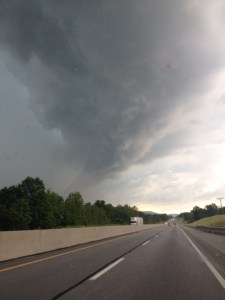
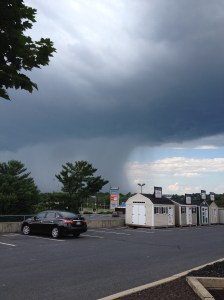
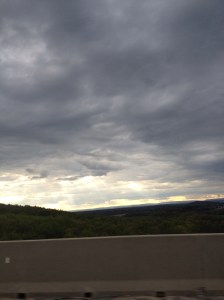
There’s a Ray Bradbury story—I can’t recall the title, but with the Internet that’s just a lame excuse—where explorers on Venus are being driven insane by the constant tapping of rain on their helmets.  They try to concentrate on discovery, but the distraction becomes too much for them.  Living in Pennsylvania has been a bit like that.  I grew up in the state and I knew it rained a lot.  Here in the eastern end we’ve hardly since the sun since March.  And when you’ve got a leak in your roof that only compounds the problem.  If I were weathering the Psalms, mine would be a lament, I’m afraid.  You see, the ground’s squishy around here.  Mud all over the place.  Rivers have been running so high that they’re thinking about changing their courses.  And still it rains.

There’s a lesson to be taken away from all this.  The fact that we use water for our own ends sometimes masks the fact that it’s extremely powerful.  Not tame.  The persistence of water to reach the lowest point contributes to erosion of mountains and valleys.  Its ease of transport which defines fluidity means that slowly, over time, all obstacles can be erased.  It’s a lesson in which we could stand to be schooled from time to time.  Rain is an artist, even if it’s making its way through the poorly done roofing job previous occupants put into place.  Would we want to live in a world without valleys and pleasant streams?  And even raging rivers?

There’s no denying that some of us are impacted by too much cloudiness.  When denied the sun it becomes easy to understand why so many ancient people worshipped it.  Around here the temperatures have plummeted with this current nor-easter and the heat kicked back on.  Still, it’s good to be reminded that mother nature’s in control.  Our high officials have decided global warming’s just alright with them, and we’re warned that things will grow much more erratic than this.  As I hear the rain tapping on my roof all day long, for days at a time, I think of Bradbury’s Venus.  Okay, so the story’s appropriately called “The Long Rain” (I looked it up).  Meanwhile tectonic forces beneath our feet are creating new mountains to add to the scene.  Nature is indeed an artist, whether or not our species is here to appreciate it.  If it is, it might help to bring an umbrella this time around.


Suddenly Spring

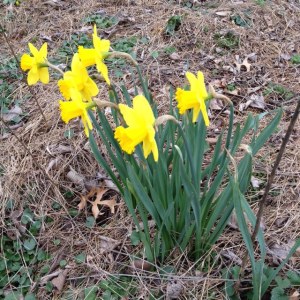
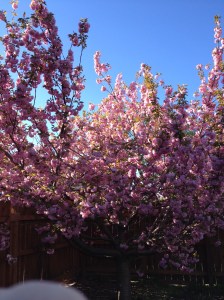
Maybe it’s just a sign of passing years, but spring seems much more sudden to me now.  One day I’m wearing multiple layers and shivering in the mornings and the next day I need to take a machete to the lawn for its first mowing.  Those weeds along the fence, which weren’t there a day ago—I swear!—are now two feet tall and aching for an appointment with the weed whacker.  I mean, the snow shovel’s still on the porch.  When did this happen?  How did we go from brown grass to sprouting trees of heaven just overnight?  I haven’t had time to build up my calluses yet for pushing the lawn mower (we have the environmentally friendly kind, powered by naught but human effort).  Morpheus was right, I guess.

This past week was so unexpectedly busy that I haven’t had time to stop and muse over some important happenings.  My current project, Nightmares with the Bible, involves trying to sort out The Conjuring universe, and I wanted to reflect on the passing of Lorraine Warren.  Her obituary in the New York Times  by Neil Genzlinger was surprisingly respectful.  Whether or not she was really onto something, people in general seem to believe she and Ed were sincere in their convictions.  There are those who claim they were charlatans, but those who perpetrate hoaxes tend to leave telltale signs.  Those who claim they couldn’t have experienced the paranormal because there’s no supernatural to experience are entitled to their opinions, of course.  Being tolerant of those who see differently, however, has never been more important.

The natural cycles of the earth never fail to surprise me.  Supernatural or not, the explosion of life following one warm, wet week is nothing shy of astounding.  I walked around to the seldom visited north side of the house to find a veritable jungle that wasn’t there just the week before.  Staring at the flowers and weeds, I can’t help but think of the hackneyed phrase “pushing up daisies.”  Much happened this past week.  The mower was oiled up and played the grim reaper to the grasses and other plants of my neglected yard.  Life, as Jurassic Park (which my lawn resembles) teaches, is persistent.  I never met or in any way corresponded with the Warrens, but I feel that in some sense I have gotten to know them.  And just yesterday it still felt like winter.


Different Kind of Salvation

It’s encouraging and disheartening all at the same time.  And seldom has the evil of money been so obvious.  Last night I attended an environmental panel discussion at a local church.  It was encouraging to see so many people out on a rainy, chilly night in Bethlehem, a city famous for its might steel mill.  Everyone there knew the problem and agreed that something had to be done.  As the speakers gave their presentations it became clear just how corrupt politicians are.  Corruption is bipartisan, of course.  In the name of “economic growth” we allow the fracking rape of our state despite the known and proven environmental hazards.  Despite the fact that Pennsylvania has a green amendment in its state constitution.  Money, as Cyndi reminds us, changes everything.

Shortly after even Mitch McConnell admitted climate change is real, at the state level climate deniers are running things.  It brought to mind the frightening and omnipresent teachings of my Fundamentalist youth: the sooner we can destroy this planet the sooner we’ll make Jesus come again.  Convinced of the absolute certainty of that second coming, there is almost a mandate to ruin, pillage, and plunder natural resources because the Good Book ensures us that, upon a white horse the savior will come in the nick of time.  Politicians, elected officials believe this.  They also believe in mammon.  If you’re gonna go down, you might as well do it in style.  Like John Jacob Astor on the Titanic.  It’s the way of the aristocrat.  Rising seas drown rich and poor alike.

It was a miserable night to be out.  The weather has been freakishly off for some time now, and all the science—real science, that is—predicts it’s only going to get worse.  How the government became the enemy of the planet that gave it birth would be a fascinating story if only it were fiction.  The truth is we’ve elected people that can be bought.  And bought easily.  Laws are passed that violate the constitution of this commonwealth and meetings are held behind closed doors.  Local activists are very active while most of us struggle to keep ourselves employed, heads, as it were, above water.  We need to pause now and again to consider what a wonder this planet is.  We must learn that the only power money has is that which we freely give it.  Rain was pouring down.  Brontide was actual thunder as the state legislature drew up chairs for the last supper.


Thunderers

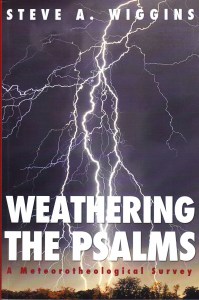
“Storms are the embodiment of Mother Nature’s flair for the dramatic, and the words that we use to write about them are infused with that drama,”—the words aren’t mine, but they express something I often acknowledge.  The quote comes from a Verbomania post about the word “brontide”—a noun for things that sound like distant thunder.  Weather-related words are indeed part of the religious vocabulary as well.  I wasn’t quite daring enough to suggest it in Weathering the Psalms, but it seems that thunder may be behind most basic religious beliefs.  Well, that and bad luck.  Think about it—most cultures have a very powerful storm-deity.  That power is expressed in thunder.  Even in the twenty-first century a sudden clap can made the sophisticated duck and cover.  

We don’t know as much about ancient Mesopotamian culture as we’d like to, but it’s pretty clear that storm deities commanded major of respect.  Eventually in the city-state of Ugarit, in what is now northern Syria, a god named Hadad (aka “thunderer”) became the patron of the city and was known mainly by his title “lord” (Baal).  There may have been more than one lord, but the one in charge of day-to-day affairs was the one who controlled storms.  We’ve entered another rainy season around here (something you tend to notice when the roof leaks), and my thoughts often turn to how very much the weather controls us.  Interestingly, thunder hasn’t been much in the picture.  We’ve lived in our house coming up on a year and I have been awoken by thunder (something that still scares me as much as when I was a kid) only once.  Thunder is the approach of gods.

There’s drama about the weather.  In fact, fiction writers have long known that one of the most effective ways to suggest the mood of a story is the meteorological method.  Weather sets the scene.  The sound of distant thunder has a naturally ominous, almost predatory quality.  The growling, low and loud bursts from the sky sound so like human expressions of rage that it is only natural that they should be interpreted this way.  Since the sky is (or used to be) out of the reach of humans, the sounds from above were from the realm of the divine.  When gods approach the mood is threatening.  We dare not meet them.  That mythology has long informed our perceptions of meteorological phenomenon, acknowledged or not.  Brontide is an underused word that brings the drama of both nature and the divine together.  It could be a psalm word.


Croce’s Lament

So how much time is there?  I mean all together.  I suppose there’s no way to know that because we have no idea what came before the Big Bang.  Those who invent technology, however, seem not to have received the memo.  New tech requires more time and most of us don’t have enough seconds as it is.  Perhaps in the height of folly (for if you read me you know I admit to that possibility) I’ve begun uploading material to my YouTube channel  (I hope I got that link right!). These are cut-rate productions; when you’re a single-person operation you can’t fire the help.  I figured if those who don’t like reading prefer watching perhaps I could generate a little interest in Holy Horror visually.  (I like my other books too, but I know they’re not likely to sell.)

The question, as always, is where to find the time for this.  My nights are generally less than eight hours, but work is generally more.  What else is necessary in life, since there are still, averaged out, eight more left?  Writing has its reserved slot daily.  And reading.  Then there are the things you must do: pay taxes, get physical exercise, perhaps prepare a meal or two.  Soon, mow the lawn.  It may be foolishness to enter into yet another form of social media when I can’t keep up with those I already have.  What you have to do to drive interest in books these days!  I think of it as taking one for the tribe.  Readers trying to get the attention of watchers.

There’s an old academic trick I tried a time or two: double-dipping.  It works like this: you write an article, and another one, and another one.  Then you make them into a book.  I did pre-publish one chapter of a book once, but getting permission to republish convinced me that all my work should be original.  That applies to reviews on Goodreads—they’re never the same as my reviews on this blog—as well as to my YouTube videos.  There’ll be some overlap, sure.  But the content is new each time around.  So you can see why I’m wondering about time.  Who has some to spare?  Brother, can you spare some time?  I’ve been shooting footage (which really involves only electrons instead of actual linear imperial measures) for some time now.  I’ve got three pieces posted and more are planned to follow.  If only I can find the time.


The Rules of Waiting

Tom Petty must’ve been a commuter.  On a winter’s morning after switching to Daylight Saving Time, waiting is the indeed the hardest part.  For a bus, that is.  In the dark.  The saving grace is that humans are rule-makers.  Before I even began commuting into New York I’d been instructed in the etiquette.  Those who get there first leave some kind of avatar—a briefcase, an umbrella, a lunch box—in their place in line and then sit in their cars.  Being the paranoid sort, and also thinking myself tough, I’ve always just stood at my place as the chill wind finds its way down my collar and then buffets me almost off of my feet.  With the time-change, however, I decided to do like the commuters do.  I walked out to the line of objects to find one widely separated from the others.  Being a law-abider, I put my lunch down after the errant water bottle.

“Hey,” a stranger called me on my way back to my car.  “Somebody just left that water bottle—you should move your bag up next to the backpack.”  Thanking him, I did so.  Not only was this person I didn’t know watching me in the dark, but he was also keeping the rules.  Indeed, when the bus crested the hill and commuters lined up next to their possessions, the water bottle remained unclaimed.  It was still there fourteen hours later when I got off the returning bus.  Now, I’m not a big fan of anarchy, but this incident demonstrates just how inclined we are toward civil behavior.  There’s no bus stop police force to ensure nobody jumps line.  Even at the Port Authority waiting in the queue at the end of the day the rules are mostly self-governing.  Those who don’t obey are scolded by their peers and generally comply.

There’s a natural sort of ethic among those who catch the bus before 5 a.m.  We’ve all been awake earlier than nature would seem to dictate.  We’re in a dark, isolated location outside town.  We look out for one another, realizing that any one of us might easily lose our place in line should the rules break down.  I was struck by the kindness of this caliginous stranger.  Or perhaps it was just his love of order.  Had my representation been out of place, other commuters might’ve grown confused.  The system might’ve broken down.  The last thing anyone wants is chaos before cock-crow.  I decided to interpret it as kindness, however, as I made my way back to my car to put on Tom Petty to face the hardest part.


Symbolic Delays

Weather affects more than the Psalms, of course.  With all the hype of the latest winter storm things were closed or delayed before any accumulation even started.  Now I’ll admit up front that I’m a fan of snow days; we dutifully trudge to our desk jobs as if we’re doing something vital when many of us are really just trying to make money for the man.  A snow day’s a little unplanned levity in our lives when staying off the roads seems like a good idea.  It’s one of life’s guilty pleasures.  Of course, the dreaded delayed opening brings its own set of issues.  You can’t sleep in unless it’s announced the night before, and once you’re up your mind heads to work anyway.  Working remotely, alas, means you have no excuse, no matter what the weather.

Snow is a great symbol.  I don’t mean its whiteness and purity—there are plenty of white things that aren’t pure.  No, I mean it’s a great symbol in its ability to control people.  We don’t like rain, although we understand its necessity.  Snow, however, fills us with a childlike wonder.  Anticipation.  Unlike a winter rain, it can be fun to play in.  It covers everything.  The suggestion of a blanket ironically makes us feel warm, even as the temperature dips below freezing.  But for me the most potent symbol is light.  I awake early, even on snow days.  As I make my way downstairs in the dark, it’s immediately evident when snow covers everything because the sky is lighter than it should be this time of day.  Whatever light’s trapped below the clouds reflects off the snow creating a luminosity that’s almost otherworldly in its calm.  It doesn’t last too long for the sun is rising earlier, at least it is until our pointless time change, but for a few hours we’re in the midst of an unnatural light.

Darkness is far too prevalent.  We know that someday even our mighty sun will use up all its fuel.  We crave the light for it’s limited.  Days are noticeably longer now than they were at the start of December.  Those few moments of serenity before the sun comes up, when the snow produces what seems like its own light, are among the most tranquil of life.  Before the plows begin scraping metal against asphalt, hoping for a snow day while wrapped in a fleece throw, face clouding the chilly window before it.  Yes, it’s a powerful symbol.  Even if the internet means work awaits just as usual.  


Tempestuous Wind

There was quite a windstorm that blew through here yesterday.  It reminded me rather forcefully of Weathering the Psalms.  Firstly, it blew loudly enough to wake me up a few times in the night.  When I finally climbed out of bed, listening to the blustery concussions beating the house, I remembered that the first chapter of Weathering was about the willful wind.  That’s not just a poetic phrase—according to the Psalter, the wind does the will of God.  Like much of the weather, it’s weaponized by the Bible.  Seeing what the wind can do, the reasons for this should be obvious.  Hurricanes are tremendous windstorms (although unknown in the land of the Bible), but they are also known for their tremendous rain.  Tornadoes, however, are pure wind and are among the most destructive forces on the planet.  (Before people came along, anyway.)  Wind commands respect.  We’re a very long way from taming it.

When thinking of meteorology, it’s easy to forget wind.  Rain and snow are pretty obvious.  Even desert heat is impossible to ignore.  The wind, invisible and powerful, is perhaps the most godlike of weather’s many features.  To the ancient way of thought, it was also inexplicable.  We understand the earth’s rotation and temperature differentials between water and land and the uneven heating between the surface of the ground and air aloft.  The ancients understood it more to be a pure act of God.  The wind certainly can seem spiteful.  It’s not difficult to attribute agency to it.  Such things go through my mind when the howling is loud enough to wake me.

Invisibility suggests power.  It wasn’t so much the “monotheism” of Israel that made it distinctive as it was the inability to see its deity.  That lack of visual confirmation not only necessitates a kind of faith, but it also veils a threat.  We humans tend to be visually focused.  We fear the dark.  Foggy, misty settings can give a story an atmosphere of foreboding.  Placing the divine out of site only enhances supernatural powers.  So it is with the wind.  As is to be expected, the windstorm has mostly blown itself out by now—moving on to another location until the temperature differentials even out and its howl becomes more of a whimper.  It will have done its work, however, for even as it passed through it brought to mind the proper respect for that which cannot be seen.  


Goliath and Company

First UltraViolet.  Then Google +.  Well, actually neither of these was first—tech initiatives cease to exist all the time.  Giants aren’t immune to extinction, it seems.  I’ve got to be careful with my confessions toward Luddite sympathies since, as it turns out, tech is king.  Emperor, in fact.  But since tech only works as long as society holds together, I still want paper knowledge in my library.  I don’t own a Kindle and despite what visitors say, I don’t want to “save room” by getting rid of books.  I like books.  I wink at them from across the room.  Sidle up to them when in private.  Get to know them intimately.  Books are a way of life.  If the grid breaks down, I’ll have books to read and candles to do it by.  For a while there I even made my own candles, although most of those were used up in the aftermath of Hurricane Sandy.

Just sayin’

You see, my hairs bristle when I hear tech experts complain that “authors should be taught to write in XML.”  Said techies have apparently never written a book.  Ideas, you see, flow.  When you’re in the zone, there’s no stopping to mark-up your text.  In fact, the best, purest kind comes in scribbles on paper with misspelled words and all.  You can hold it in your hands and remember the Muse who had you at the time.  For me the hours of inspiration are before dawn.  I mostly use a computer now, but I can still find myself typing too slow to keep up with manic inspiration, desperate to record my ideas before paid work starts.  Work is the Medea of creativity—both mother and slayer.  Once I login I check out.  I need to wait for another day to dawn.

We’ve invested heavily in technology.  The internet is largely responsible for the globalization against which the world has recently rebelled.  No matter how many times people like me say we love books somebody will say, “Have you considered a Kindle?”  Why?  I bought a house as a place to keep my books.  These little bricks are bits of my mind.  Pieces of my soul!  What we read makes us who we are.  The last person who said the remark about authors learning XML literally sighed with disgust as he said it.  How could, you could feel him thinking, anyone be so backward as to think this is a problem?  I recall Hurricane Sandy.  Sitting in an apartment lit by candles we’d made ourselves, we read old-fashioned books and were eerily content.


Nature’s Bible

When you’re writing a book, many strands in your mind are weaving their way into what you hope will be whole cloth.  Well, at least if you write books the way that I do.  In writing Weathering the Psalms, for instance, one of the threads was the question of science and religion.  I was teaching at Nashotah House at the time, and I read a lot of science.  As I told colleagues at the time, if science is how we know things, shouldn’t what we know of the natural world apply to the Bible?  I don’t claim to be the first to ask that question—back in the days of exploration there were many people (mostly the genus “white men” of the “clergy” species) who went to what is now and had used to be Israel, to find out what the world of the Bible was actually like.  Their books still make interesting reading.

Quite unexpectedly a colleague, Dalit Rom-Shiloni of Tel Aviv University, told me she’d just ordered my book.  She’s leading up a project called the Dictionary of Nature Imagery of the Bible (DNI).  Over a decade after my teaching career ended, someone had deemed my work relevant.  Dr. Rom-Shiloni recently sent me the link to the project website where there is a video of her interviewing three Israeli scientists about the possibility of lions, leopards, and bears living in Israel.  They’re all mentioned in the Bible and no longer exist in the area.  The video is on this link and won’t take half an hour of your time.  It’s quite interesting.

One of the surprising facts to emerge is that leopards, in small numbers, may still exist in Israel.  This assertion is based on lay observation.  I contrasted this with the United States where, no matter how often a cougar (aka mountain lion, puma) is spotted in a state where it’s “known” to be extinct, it is claimed to be mistaken observation.  A departed friend and mentor of mine once saw a mountain lion in West Virginia.  I’d grown up in neighboring Pennsylvania where they are officially extinct, so I wondered if said beasts knew to observe the Mason-Dixon line.  The fact is, despite all our best efforts to destroy our environment, animals often find a way to survive.  Growing up, one of my cousins in Pennsylvania (now also unfortunately deceased) showed me a puma print in the snow behind his rural house.  Now Pennsylvania is a long way from Israel, and this topic is a long way from the DNI, but remember what I just said about how my books are written.  Tapestries only make sense from a distance.


The Late Vortex

So there was this polar vortex recently, here in the States, that led to a meteorological frenzy.  It was worse than the apocalypse itself since it was so bone-chillingly cold outside.  I had contacts from around the world asking if we were okay.  It used to be called “winter.”  Now, I’m not big on human suffering.  I hate to see anyone cold, hungry, or lonely.  These are things for which theodicy itself will some day have to stand trial.  But it does seem that we’ve caved in to media hype about the weather.  Yes, the cold is not to be trifled with.  It can kill.  Winter, however, comes around every year in the temperate zones, and using our evolved brains can help us survive things like winter’s chill.  Heck, our species has survived ice ages before.  They just had no internet to tell them that.

One morning at Nashotah House we were scheduled to attend a lenten mediation in Milwaukee.  A real winter storm was upon us—whether it was a polar vortex or not I do not know—and the temperature plummeted.  The Dean at the time was undeterred.  He’d hired a van to take us to Milwaukee.  I awoke to the news that the air temperature, not the wind chill, was 42 below zero.  For those of you who read centigrade, it crosses paths with Fahrenheit at 40 below.  The weather forecasters warned that mere minutes outside could be fatal.  Our Dean was no respecter of weather.  We piled into a rented van whose windows frosted over as soon as they were cleared and we made our way to experience lent.

My point is, winter can get cold.  A polar vortex by any other name would be so chilly.  What makes the difference between a cold day and an apocalypse?  The media.  Now that we’re constantly online we know when the chill settles in.  The hype makes it more marketable.  Advertisers pay, but they want hits.  By the end of the winter we’ve survived many apocalypses.  I always did find it ironic when some celibate priest would snort, hitch his pants, and say he was a real man (it actually happens!), but living through winter is something we ought to be used to by now.  On the way home from Milwaukee, we said evening prayer in the van so that we wouldn’t have to go outside to trudge to chapel in the midst of what may have been a polar vortex.  Even real men feel the cold, I guess.


January 2019

When January starts grinding you down you have to find something to hang onto.  See, I even ended a sentence with a preposition.  January.  If I’m not careful I can find myself getting quite depressed, so a bit of self-induced music therapy helps.  Although I hate to admit it, I am a bit of a fussy person when it comes to my likes.  My music tastes are quite personal and I mourn when a performer I like retires or dies.  There’s not a ton of stuff that I enjoy and I don’t listen to music as often as I should.  I work from home most days so I could have music on, but I find it hard to read (which is much of my job) with music playing.  Like I said, fussy.

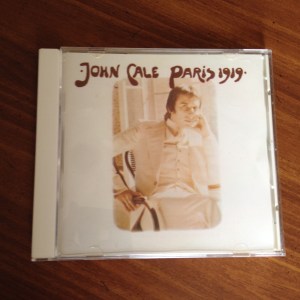
The other day—a weekend—I pulled out John Cale’s Paris 1919.  John Cale is an underrated member of the Velvet Underground.  Okay, with Lou Reed in the lead it’s gonna be tough to stand out.  Cale, who suffers from competing with J. J. Cale (who was actually John Cale too; I empathize!), is a very thoughtful lyricist.  Despite having been abused by a priest in his youth, he sprinkles his songs with religious references.  “Andalucia” is a haunting single with the words “castles and Christians” hanging there for anyone to interpret.  And “Hanky Panky Nohow” has an intriguing line about nothing being more frightening than religion at one’s door.  There’s something profound here.

I grew up listening to The Velvet Underground & Nico when my older brother played it and the curtain door between our rooms didn’t block any sound.  The only performer I could name was Reed.  Years later, when the music of my young, virginal ears started in with a longing I couldn’t explain, I bought the album and learned of John Cale.  I have to confess that I first encountered his name as the performer of Leonard Cohen’s “Hallelujah” in Shrek.  It drove me nuts when ill-informed students used to say it was Rufus Wainwright; yes, he performed it on the CD, but not in the movie.  John Cale is one of those somewhat offbeat singers, who, like Nick Cave, salts his songs with images of a Christian upbringing that show a grown man clinging to something to which he somehow can’t fully commit.  It makes us who we are and then leaves us wondering.  It must be January.


Mastering the Elements

First time home ownership is best left to younger people.  And perhaps younger houses.  The constant onslaught of things falling apart, or falling off (it has been an extreme weather year) has soured me on the idea.  You get set in your ways, you see.  The move from apartment to house didn’t come with a raise that would cover all the repairs invisible to a home inspector’s eye.  Although our house has stood for over 120 years, the last owners let lots of things go with a lick and a promise and we, the naive middle-aged first-time buyers in a seller’s market, bit.  I thought there would be repairs to make, but not all at once.  The royalties from books like Holy Horror don’t make even a small dent in the contractor’s fees.  We should maybe have bought a house in Jericho instead.  One right on the city wall.

The shake-down voyage of a ship reveals the problems, so the theory goes.  It stands to reason that people have to go through a shake-down year as well.  I’ve got the roofer on speed-dial, and I keep a wary eye on a garage that has more love than actual care poured into it.  All I want to do is read and write (which I could do just fine as a renter, thank you) in a place dry and not too cold.  The weather, however, has been unforgiving.  Rain and more rain.  There’s something primal about all this—an element of having to struggle against nature in order to survive.  In the modern world we’ve taken for granted our ability to keep the beasts and weather at bay.  Storm systems like the one that has just blown through serve to remind our species that there are things that will forever remain beyond our control.

The lament is the most numerous genre of psalm

Something like this was going through my mind as I wrote Weathering the Psalms.  (We didn’t own our house at Nashotah House, though.  Whose house?  Nashotah’s house.)  Living in the Midwest gave me a new appreciation for the weather.  Some of the storms we witnessed were nothing short of theophanic.  Global warming has a way of bringing the weather front and center.  Elements of this element, however, are within our control.  We understand at least the human-driven elements of global warming.  We deny they exist to scrape together a few more pennies at the end of the day.  Meanwhile those who buy houses need to do their homework.  If need a roofer too, I’ve got one on speed-dial.


Poe et Tree

When winter gets a little dreary with its constant chill and perpetually gray skies, I often think of Edgar Allan Poe.  There’s been so much going on lately, however, that I overlooked that today is his birthday until my friend over at Verbomania reminded me of the fact.  I’ve posted on Poe many times, but this morning I had an email concerning my work on Nightmares with the Bible stating that my use of Poe in that book was a nice touch.  Sometimes I need to be hit over the head with things, though, to make them sink in.  It seems impossible that it was 210 years ago that Poe was born.  Our Januaries have become remarkably crueler since those times, what with inaugurations and all.

I have often mused that we’ve lived beyond the era where one person can have the widespread impact (for good, that is) that influences an era.  In the area of my doctorate, for example, like him or not William Foxwell Albright rearranged the field of Bible and Ancient Near Eastern Studies.  Nobody has been able to do it since because, well, Albright already did it.  Poe gave us many things—the struggling writer determined to make a living by his pen, the scary short story, detective fiction, the Raven.  Those of us who dabble in fiction do so in his shadow.  (I know Poe wasn’t the only writer of his era, but it’s his birthday, so let’s celebrate him!)  Other writers like H. P. Lovecraft, now a hot commodity, would draw their inspiration from Poe.  And from Poe and Lovecraft came the early work of Stephen King.

A winter storm advisory is in effect.  Outside it looks bleak and the clouds appear as if they wish to weep.  A nation founded by immigrants (my apologies, first nations) has come to believe that it was here first in a world full of need and suffering.  Building a silly, expensive, and utterly pointless wall is a telltale sign that the heart has ceased to beat.  Two centuries and a decade ago a writer was born.  He had penetrating insight into what makes people behave wickedly toward their fellows.  Just when things seemed to be making progress we find ourselves prematurely buried under masonry and rubble.  How could I have forgotten Poe’s birthday?  Too much has been crowding my January, I’m afraid.  I don’t take the time I should to gaze out at the winter and wonder.