Tempestuous Wind

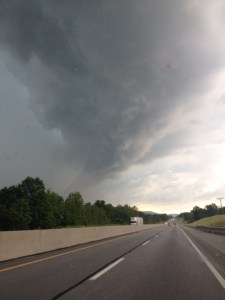
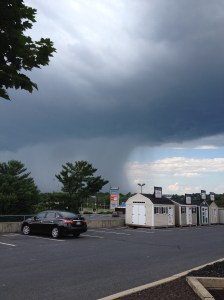
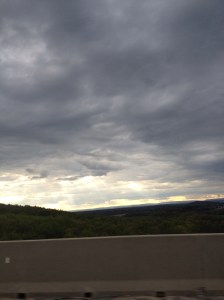
There was quite a windstorm that blew through here yesterday.  It reminded me rather forcefully of Weathering the Psalms.  Firstly, it blew loudly enough to wake me up a few times in the night.  When I finally climbed out of bed, listening to the blustery concussions beating the house, I remembered that the first chapter of Weathering was about the willful wind.  That’s not just a poetic phrase—according to the Psalter, the wind does the will of God.  Like much of the weather, it’s weaponized by the Bible.  Seeing what the wind can do, the reasons for this should be obvious.  Hurricanes are tremendous windstorms (although unknown in the land of the Bible), but they are also known for their tremendous rain.  Tornadoes, however, are pure wind and are among the most destructive forces on the planet.  (Before people came along, anyway.)  Wind commands respect.  We’re a very long way from taming it.

When thinking of meteorology, it’s easy to forget wind.  Rain and snow are pretty obvious.  Even desert heat is impossible to ignore.  The wind, invisible and powerful, is perhaps the most godlike of weather’s many features.  To the ancient way of thought, it was also inexplicable.  We understand the earth’s rotation and temperature differentials between water and land and the uneven heating between the surface of the ground and air aloft.  The ancients understood it more to be a pure act of God.  The wind certainly can seem spiteful.  It’s not difficult to attribute agency to it.  Such things go through my mind when the howling is loud enough to wake me.

Invisibility suggests power.  It wasn’t so much the “monotheism” of Israel that made it distinctive as it was the inability to see its deity.  That lack of visual confirmation not only necessitates a kind of faith, but it also veils a threat.  We humans tend to be visually focused.  We fear the dark.  Foggy, misty settings can give a story an atmosphere of foreboding.  Placing the divine out of site only enhances supernatural powers.  So it is with the wind.  As is to be expected, the windstorm has mostly blown itself out by now—moving on to another location until the temperature differentials even out and its howl becomes more of a whimper.  It will have done its work, however, for even as it passed through it brought to mind the proper respect for that which cannot be seen.  


Goliath and Company

First UltraViolet.  Then Google +.  Well, actually neither of these was first—tech initiatives cease to exist all the time.  Giants aren’t immune to extinction, it seems.  I’ve got to be careful with my confessions toward Luddite sympathies since, as it turns out, tech is king.  Emperor, in fact.  But since tech only works as long as society holds together, I still want paper knowledge in my library.  I don’t own a Kindle and despite what visitors say, I don’t want to “save room” by getting rid of books.  I like books.  I wink at them from across the room.  Sidle up to them when in private.  Get to know them intimately.  Books are a way of life.  If the grid breaks down, I’ll have books to read and candles to do it by.  For a while there I even made my own candles, although most of those were used up in the aftermath of Hurricane Sandy.

Just sayin’

You see, my hairs bristle when I hear tech experts complain that “authors should be taught to write in XML.”  Said techies have apparently never written a book.  Ideas, you see, flow.  When you’re in the zone, there’s no stopping to mark-up your text.  In fact, the best, purest kind comes in scribbles on paper with misspelled words and all.  You can hold it in your hands and remember the Muse who had you at the time.  For me the hours of inspiration are before dawn.  I mostly use a computer now, but I can still find myself typing too slow to keep up with manic inspiration, desperate to record my ideas before paid work starts.  Work is the Medea of creativity—both mother and slayer.  Once I login I check out.  I need to wait for another day to dawn.

We’ve invested heavily in technology.  The internet is largely responsible for the globalization against which the world has recently rebelled.  No matter how many times people like me say we love books somebody will say, “Have you considered a Kindle?”  Why?  I bought a house as a place to keep my books.  These little bricks are bits of my mind.  Pieces of my soul!  What we read makes us who we are.  The last person who said the remark about authors learning XML literally sighed with disgust as he said it.  How could, you could feel him thinking, anyone be so backward as to think this is a problem?  I recall Hurricane Sandy.  Sitting in an apartment lit by candles we’d made ourselves, we read old-fashioned books and were eerily content.


Nature’s Bible

When you’re writing a book, many strands in your mind are weaving their way into what you hope will be whole cloth.  Well, at least if you write books the way that I do.  In writing Weathering the Psalms, for instance, one of the threads was the question of science and religion.  I was teaching at Nashotah House at the time, and I read a lot of science.  As I told colleagues at the time, if science is how we know things, shouldn’t what we know of the natural world apply to the Bible?  I don’t claim to be the first to ask that question—back in the days of exploration there were many people (mostly the genus “white men” of the “clergy” species) who went to what is now and had used to be Israel, to find out what the world of the Bible was actually like.  Their books still make interesting reading.

Quite unexpectedly a colleague, Dalit Rom-Shiloni of Tel Aviv University, told me she’d just ordered my book.  She’s leading up a project called the Dictionary of Nature Imagery of the Bible (DNI).  Over a decade after my teaching career ended, someone had deemed my work relevant.  Dr. Rom-Shiloni recently sent me the link to the project website where there is a video of her interviewing three Israeli scientists about the possibility of lions, leopards, and bears living in Israel.  They’re all mentioned in the Bible and no longer exist in the area.  The video is on this link and won’t take half an hour of your time.  It’s quite interesting.

One of the surprising facts to emerge is that leopards, in small numbers, may still exist in Israel.  This assertion is based on lay observation.  I contrasted this with the United States where, no matter how often a cougar (aka mountain lion, puma) is spotted in a state where it’s “known” to be extinct, it is claimed to be mistaken observation.  A departed friend and mentor of mine once saw a mountain lion in West Virginia.  I’d grown up in neighboring Pennsylvania where they are officially extinct, so I wondered if said beasts knew to observe the Mason-Dixon line.  The fact is, despite all our best efforts to destroy our environment, animals often find a way to survive.  Growing up, one of my cousins in Pennsylvania (now also unfortunately deceased) showed me a puma print in the snow behind his rural house.  Now Pennsylvania is a long way from Israel, and this topic is a long way from the DNI, but remember what I just said about how my books are written.  Tapestries only make sense from a distance.


The Late Vortex

So there was this polar vortex recently, here in the States, that led to a meteorological frenzy.  It was worse than the apocalypse itself since it was so bone-chillingly cold outside.  I had contacts from around the world asking if we were okay.  It used to be called “winter.”  Now, I’m not big on human suffering.  I hate to see anyone cold, hungry, or lonely.  These are things for which theodicy itself will some day have to stand trial.  But it does seem that we’ve caved in to media hype about the weather.  Yes, the cold is not to be trifled with.  It can kill.  Winter, however, comes around every year in the temperate zones, and using our evolved brains can help us survive things like winter’s chill.  Heck, our species has survived ice ages before.  They just had no internet to tell them that.

One morning at Nashotah House we were scheduled to attend a lenten mediation in Milwaukee.  A real winter storm was upon us—whether it was a polar vortex or not I do not know—and the temperature plummeted.  The Dean at the time was undeterred.  He’d hired a van to take us to Milwaukee.  I awoke to the news that the air temperature, not the wind chill, was 42 below zero.  For those of you who read centigrade, it crosses paths with Fahrenheit at 40 below.  The weather forecasters warned that mere minutes outside could be fatal.  Our Dean was no respecter of weather.  We piled into a rented van whose windows frosted over as soon as they were cleared and we made our way to experience lent.

My point is, winter can get cold.  A polar vortex by any other name would be so chilly.  What makes the difference between a cold day and an apocalypse?  The media.  Now that we’re constantly online we know when the chill settles in.  The hype makes it more marketable.  Advertisers pay, but they want hits.  By the end of the winter we’ve survived many apocalypses.  I always did find it ironic when some celibate priest would snort, hitch his pants, and say he was a real man (it actually happens!), but living through winter is something we ought to be used to by now.  On the way home from Milwaukee, we said evening prayer in the van so that we wouldn’t have to go outside to trudge to chapel in the midst of what may have been a polar vortex.  Even real men feel the cold, I guess.


January 2019

When January starts grinding you down you have to find something to hang onto.  See, I even ended a sentence with a preposition.  January.  If I’m not careful I can find myself getting quite depressed, so a bit of self-induced music therapy helps.  Although I hate to admit it, I am a bit of a fussy person when it comes to my likes.  My music tastes are quite personal and I mourn when a performer I like retires or dies.  There’s not a ton of stuff that I enjoy and I don’t listen to music as often as I should.  I work from home most days so I could have music on, but I find it hard to read (which is much of my job) with music playing.  Like I said, fussy.

The other day—a weekend—I pulled out John Cale’s Paris 1919.  John Cale is an underrated member of the Velvet Underground.  Okay, with Lou Reed in the lead it’s gonna be tough to stand out.  Cale, who suffers from competing with J. J. Cale (who was actually John Cale too; I empathize!), is a very thoughtful lyricist.  Despite having been abused by a priest in his youth, he sprinkles his songs with religious references.  “Andalucia” is a haunting single with the words “castles and Christians” hanging there for anyone to interpret.  And “Hanky Panky Nohow” has an intriguing line about nothing being more frightening than religion at one’s door.  There’s something profound here.

I grew up listening to The Velvet Underground & Nico when my older brother played it and the curtain door between our rooms didn’t block any sound.  The only performer I could name was Reed.  Years later, when the music of my young, virginal ears started in with a longing I couldn’t explain, I bought the album and learned of John Cale.  I have to confess that I first encountered his name as the performer of Leonard Cohen’s “Hallelujah” in Shrek.  It drove me nuts when ill-informed students used to say it was Rufus Wainwright; yes, he performed it on the CD, but not in the movie.  John Cale is one of those somewhat offbeat singers, who, like Nick Cave, salts his songs with images of a Christian upbringing that show a grown man clinging to something to which he somehow can’t fully commit.  It makes us who we are and then leaves us wondering.  It must be January.


Mastering the Elements

First time home ownership is best left to younger people.  And perhaps younger houses.  The constant onslaught of things falling apart, or falling off (it has been an extreme weather year) has soured me on the idea.  You get set in your ways, you see.  The move from apartment to house didn’t come with a raise that would cover all the repairs invisible to a home inspector’s eye.  Although our house has stood for over 120 years, the last owners let lots of things go with a lick and a promise and we, the naive middle-aged first-time buyers in a seller’s market, bit.  I thought there would be repairs to make, but not all at once.  The royalties from books like Holy Horror don’t make even a small dent in the contractor’s fees.  We should maybe have bought a house in Jericho instead.  One right on the city wall.

The shake-down voyage of a ship reveals the problems, so the theory goes.  It stands to reason that people have to go through a shake-down year as well.  I’ve got the roofer on speed-dial, and I keep a wary eye on a garage that has more love than actual care poured into it.  All I want to do is read and write (which I could do just fine as a renter, thank you) in a place dry and not too cold.  The weather, however, has been unforgiving.  Rain and more rain.  There’s something primal about all this—an element of having to struggle against nature in order to survive.  In the modern world we’ve taken for granted our ability to keep the beasts and weather at bay.  Storm systems like the one that has just blown through serve to remind our species that there are things that will forever remain beyond our control.

The lament is the most numerous genre of psalm

Something like this was going through my mind as I wrote Weathering the Psalms.  (We didn’t own our house at Nashotah House, though.  Whose house?  Nashotah’s house.)  Living in the Midwest gave me a new appreciation for the weather.  Some of the storms we witnessed were nothing short of theophanic.  Global warming has a way of bringing the weather front and center.  Elements of this element, however, are within our control.  We understand at least the human-driven elements of global warming.  We deny they exist to scrape together a few more pennies at the end of the day.  Meanwhile those who buy houses need to do their homework.  If need a roofer too, I’ve got one on speed-dial.


Poe et Tree

When winter gets a little dreary with its constant chill and perpetually gray skies, I often think of Edgar Allan Poe.  There’s been so much going on lately, however, that I overlooked that today is his birthday until my friend over at Verbomania reminded me of the fact.  I’ve posted on Poe many times, but this morning I had an email concerning my work on Nightmares with the Bible stating that my use of Poe in that book was a nice touch.  Sometimes I need to be hit over the head with things, though, to make them sink in.  It seems impossible that it was 210 years ago that Poe was born.  Our Januaries have become remarkably crueler since those times, what with inaugurations and all.

I have often mused that we’ve lived beyond the era where one person can have the widespread impact (for good, that is) that influences an era.  In the area of my doctorate, for example, like him or not William Foxwell Albright rearranged the field of Bible and Ancient Near Eastern Studies.  Nobody has been able to do it since because, well, Albright already did it.  Poe gave us many things—the struggling writer determined to make a living by his pen, the scary short story, detective fiction, the Raven.  Those of us who dabble in fiction do so in his shadow.  (I know Poe wasn’t the only writer of his era, but it’s his birthday, so let’s celebrate him!)  Other writers like H. P. Lovecraft, now a hot commodity, would draw their inspiration from Poe.  And from Poe and Lovecraft came the early work of Stephen King.

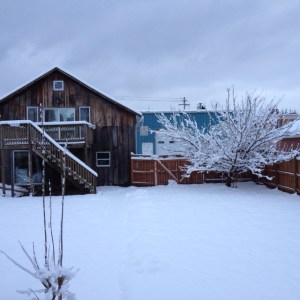
A winter storm advisory is in effect.  Outside it looks bleak and the clouds appear as if they wish to weep.  A nation founded by immigrants (my apologies, first nations) has come to believe that it was here first in a world full of need and suffering.  Building a silly, expensive, and utterly pointless wall is a telltale sign that the heart has ceased to beat.  Two centuries and a decade ago a writer was born.  He had penetrating insight into what makes people behave wickedly toward their fellows.  Just when things seemed to be making progress we find ourselves prematurely buried under masonry and rubble.  How could I have forgotten Poe’s birthday?  Too much has been crowding my January, I’m afraid.  I don’t take the time I should to gaze out at the winter and wonder.


Shut up or Shut down?

So the government’s shut down over a presidential temper tantrum.  Like most people, I suspect, I haven’t really noticed.  Except for two things.  When I drove up to Ithaca over the holidays, some of the highway rest stops were closed.  It seems our government wants to share the misery of not being able to relieve itself.  Secondly, the NOAA weather forecasts are no longer updated as frequently as they should be.  I’m no expert on the weather—I did write a book on meteorotheology, which took quite a bit of research on weather in ancient times, but I know that doesn’t qualify.  Still, I rely on weather forecasts to get daily business done.  In particular, we were expecting a winter storm around here that had been predicted, by NOAA, to arrive around 11 p.m.

Okay, I thought, people will be off the roads by then, and crews will be out to treat the icy conditions by morning.  Seven hours early, around 4 p.m., I noticed a rain, sleet, snow mix falling.  The ice particles looked quite a lot like salt crystals, but I was pretty sure that the government doesn’t have that kind of pull.  In any case, when weather catches me unawares, I turn to NOAA since our government is apparently God’s own chosen one, figuring that the Almighty might know a thing or two about what goes on upstairs.  The current conditions, NOAA said, were “unknown precipitation.”  Apparently the government isn’t even allowed to look out the window during a shut-down.  Maybe it was salt after all.

So, among those of the “God of the gaps” crowd, the weather is perhaps the last refuge of a dying theology.  Their cheery refrain of “science can’t explain” has grown somewhat foreshortened these last few decades, but when unknown precipitation is falling outside all bets are off.  Come to think of it, Weathering the Psalms could’ve been titled Unknown Precipitation, but it’s a little late for that now.  A creature long of habit, I awoke just after 3 a.m.  Hastily dressing against the chill of the nighttime thermostat setting, I wandered to the window, wondering whether there would be a snow day.  It’s dark this time of night, as I well know, but in the streetlights’ glow it seemed as if no weather event had happened at all.  It’s just like our shut-down government to get such basic things wrong.  As long as I’m up, I might as well get to work on my current book on horror.  It’s only fitting.


Reflecting on Light

Now that we’re approaching the winter solstice, light is pretty much on the minds of those of us in the northern hemisphere.  Or lights.  The use of Christmas lights and Hanukkah lights may have symbolic value to the religions that promote them, but both also reflect the pagan use of sympathetic magic to bring back the light.  Human beings tend to be visually oriented, and many of us feel the increasing darkness deeply.  Days are brief enough to be awake for the entirety of daylight’s duration, and then you still have to get home after work.  After dark.  All our enlightened hours are spent for the benefit of the company.  It takes its toll.  And so we string holiday lights, bringing cheer into the preternaturally long hours starved for illumination.

Although the snow hasn’t stayed around here, I did notice an interesting reflection of light outdoors the other day.  The windows of a house were casting a light-shadow on a fence that had the look of a cross.   It took some convincing to assure me that this was pareidolia—the assigning of intentionality to random “signal.”  We see faces where they don’t really exist, and when we see crosses in this evangelical haven of America we have to assume they’re intentional.  Sometimes, however, they’re simply a trick of the light.  The sun has a low angle this time of year, and the light that is otherwise scattered back into what is wonderfully termed airglow—the natural illumination caused by sunlight as its luminosity brightens the daytime sky—is focused lower.  Light takes shape and sometimes it seems religious.


In New York City, where repeated patterns are pervasive, such reflections often appear on neighboring buildings as “X-Files” symbols of Xs in circles, giving the city a mysterious look.  Out here, however, they appear as crosses.  You see what you want to see.  Or, sometimes you can’t help seeing what appears utterly obvious to credulous eyes.  I’ve had people insist that crosses like this are intentional.  In reality, they’re a natural result of rectangles reflecting the morning light when the sun follows its low profile ecliptic during the waning of the year.  That doesn’t mean that it can’t be read for something else, of course,  Religion is all about interpretation.  Light forms patterns and seems strong enough to banish darkness.  And given how many hours it’s dark these days, I’m willing to take what help I can get.  The solstice will soon be here.


Flight Home

Although I was not looking forward to the long, late flight home scheduled for tonight, I can’t help but think there was something almost prophetic in the weather that prevented my trip.  I awoke in Newark only to confirm with many other stranded passengers that this was not a lot of snow.  I’ve had to commute into New York when much higher amounts were in the forecast.  Many of us, meteorologists included, were asking why this storm was so devastating to travel.  Part of the answer comes down to belief.  Nobody believed we could have this kind of nor’easter in November.  Even now nobody seems to want to discuss the elephant in the igloo.  Global warming, we’ve known for decades, will make erratic weather patterns.  We need to think about weather differently than we have before.

One of the motivations behind writing Weathering the Psalms was that for all of our technology, we still don’t understand, or appreciate, the weather.  Driven by dollars in great collectives, businesses are reluctant to allow employees a “day off,” even when many of them have work laptops at home.  We believe in money, supposing the weather to be only a minor nuisance.  Having bought a house, though, has revealed something to me.  Home and hearth are all about staying safe from the weather.  (Well, and in keeping out wild animals too, but we’ll just drive them extinct.)  A house is a place to keep the water and wind out.  We want to keep dry and to prevent the wind from chasing away our body heat.  Homes are our places to keep the weather outside because we instinctively fear it.  Reverence it.  Weather may well be the origins of at least some religious thought.

Ancient peoples and modern religious fundamentalists believe(d) in gods literally in the sky.  They looked up when wanting to understand matters beyond their control.  Yes, predators attacked, but you could fight back.  Against the sky there’s no recourse.   Weather can kill, and can do so in many ways.  Building shelter helps, but we’ve all seen enough hurricane footage to know that even our structures are subject to the wind.  Computer models were suggesting that this storm might have been pulling back for a real roundhouse punch but our conservative views on the weather (such things don’t happen in November, right, Edmund Fitzgerald?) prevail.  The official stance of our current government is this is all a myth anyway.  It’s only when myths interfere with money that we start to pay attention.


Righteous City

I’m a stomach sleeper, if that’s not TMI.  This began many years ago when I realized that upon awaking from nightmares I was always on my back.  I started doing what I knew was dangerous to infants, safe since I haven’t been part of that demographic for decades.  Terrazzo isn’t one of my favorite sleeping surfaces, however, and on my back on the floor of Newark’s Liberty Airport I realized I couldn’t roll over, for many reasons.  My glasses, for one thing, were in the internal pocket of my Harris Tweed.  For another, on one’s stomach one’s wallet is exposed in a way that’s maybe too inviting.  Before suggesting I could’ve placed my wallet and glasses elsewhere, let me write in my own defense that rationality isn’t my strong suit after midnight.

The night before

I found a spot next to a set of escalators where the constant thrumming alternately kept me awake and soothed me to nod.  I heard many languages spoken as I drifted in and out of consciousness for the few hours I had to wait for dawn.  And nobody disturbed me.  This is rather remarkable—a person asleep is a vulnerable being.  Doing it out in public with no private walls was a new experience for me.  I don’t sleep on planes, buses, or trains.  Or, until two days ago, airports.  It brought to mind the biblical world.  A town was considered a righteous place if a stranger could sleep unmolested in a public place.  The traveller—please take note, United—was in need of special consideration.  My situation revealed something unexpected about Newark Airport.

The morning after

It was full of angry, frustrated people.  I opened my eyes at five a.m. to find a very long line snaking down the corridor behind me—a queue that had been there when I first drifted off.  These were people trying to reschedule flights since United couldn’t bump that day’s passengers because they’d decided not to fly out the night before.  Despite the weariness and intensity of emotions, there was very little bad behavior.  We were biblical strangers, mostly in the same circumstances.  No creature comforts, no privacy.  An east Asian woman said the next morning that in her country the airline would’ve brought food, and blankets at least.  In the United States fiscal concerns reign supreme, however; do you know how much it would cost to care for all these stranded people?  When I opened my eyes the situation was about the same as when I closed them.  I couldn’t help noticing I awoke on my back.


Odyssey in Blue

Now I have the United bastardization of Gershwin’s “Rhapsody in Blue” stuck in my head.  This comes from listening to the same recording approximately a quarter-gazillion times while on hold.  I expected to awake this morning in Denver, but instead I learned a very valuable lesson about refugees.  It went down like this: yesterday’s east coast storm over-performed while United Airlines under-performed.  Seeing the forecast, I changed to an earlier flight to try to beat it out of Dodge.  I arrived in Newark only to have my flight incrementally delayed until it was cancelled around 9:30.  By this time all the hotels within 11 miles of the airport were booked solid from earlier cancellations.  Taxis were running into Manhattan only.  Access to New Jersey Transit was not possible.  I’d been awake since the 4 a.m. text alert from United that said bad weather was on the way.  Finally, around 1 a.m. I found an unoccupied piece of floor and slept next to total strangers.

The experience opened my eyes to the plight of refugees.  Weary airline employees (probably worried about getting home themselves) were not friendly and didn’t welcome questions.  The line for rescheduling flights was, by no exaggeration, at least 400 individuals long, one of whom told me this morning she’d waited 8-hours to talk to someone.  Since cancelled flight baggage is not checked, it had to be retrieved, and the line for doing such was equally as long as the rescheduling queue.  United was under-staffed, stressed, and not in control of the situation.  Nobody wanted to listen to you.  You were just another stranger with a sad story and all of us have problems, don’t you know.  The refugee has no place to go.  Nobody to care.

With my aging cell phone dying, my lifeline to those who cared was fading.  The shops closed, cutting off access to food.  Ground transportation was not responsive.  Hundreds and hundreds of people were stranded, relying on their own wits (or in my case, lack thereof) to decide what to do.  I just wanted someone to say “Go here.  Do this.”  Instead I found myself wrapped in tweed, using my carry-on, Jacob-like, for a pillow.  I felt for the strangers around me.  They were suddenly friends as we were all in the same category—displaced people.  This nightmare lasted under 24 hours for me, but I am now keenly aware that it never ends for some.  Refugees need a caring glance.  A kind word.  And it would help if the powers that be would leave Gershwin alone.


Goddess Lore

From where I sit to write this blog in this particular season (when it’s too cold to sit in an unheated attic) I watch Venus rise in the eastern sky.  While it is still dark, I notice a bright yellow glow appearing over the top of a business located on the eastern side of the block.  It hovers there a moment before disappearing briefly behind various rooftop accoutrements of the building across the street, appearing again minutes later on the other side.  The planet rises rapidly before sunrise, and with the unnatural markers of human structures, it’s fairly simple to keep track of her progress with occasional glances out the window.  Venus is, as I’ve mentioned before, both the morning and evening “star” of antiquity.  We now know her identity as a planet rather than a goddess, but we’re becoming more attuned to planets’ roles as mothers, or at least we should be.

Some ancient peoples considered our own earth as a mother.  It is the womb in which we gestate as living beings.  Without the warmth she gives we could not survive, and even our forays into nearby space are possible only with the replication of her body heat through artificial means.  It may be metaphor, yes, but metaphors may be truer than bald statements of chemical compositions and mathematical formulas.  Scientist, politician, or theologian, none of us survive without our planetary nurture.  This thought is sobering in the light of government policies over the past two years, which have denied that human pillaging of nature is problematic.  The Republican Party, which collectively lacks respect for our earthly home, has followed thoughtlessly in the tracks of a man proud of his refusal to read.  And so I look to Venus.

Venus is beautiful.  We know, however, that her surface is hot enough to melt lead.  Soviet-era probes landed there and melted.  Planets, it seems, can unleash fury that mere humans can’t hope to withstand.  One of the forgotten graces of nature, it seems, is the warning sign.  Even as the rattlesnake warns before striking, our mother has been sending messages that we’ve been going too far.  Hurricanes are growing stronger and threaten to scour us off the very face of the land we disrespect and exploit.  Venus, it turns out, is too hot to handle.  Mars, whom the ancients feared for his propensity to irrational war, is too cold.  It’s difficult to imagine where politicians think we might go when our own mother turns us out.  I would invite them over to watch Venus perform her morning dance outside my window, but to see it you must first believe in goddesses.


Last Call

The alarm that wakes you in the middle of the night.  There’s something primal, something visceral about that.  We humans, at least since our ancestors climbed down from the trees, have felt vulnerable at night.  If our sleep is constantly interrupted we don’t think clearly.  We build secure houses. Lock our windows and doors at night.  Say our prayers before we go to sleep.  Last night I discovered that the homeowner has even greater concerns than the humble renter.  While 11:30 may not be the middle of the night for some, for early risers it is.  And there’s nothing to strike terror into the heart of a homeowner like a tornado warning.  Especially here—our realtor laconically told us that they never have tornadoes in eastern Pennsylvania.  The weather warning system disagreed with him last night.

Getting up as early as I do, first light is hours away.  Hours before I might check for damage with the light of old Sol.  My wife had to work, no less, at a venue some distance away and we both had to rise early and wonder what the damage might be.  We knew, of course, that the pointless ritual of changing our clocks would occur tonight, but that does alleviate concerns about whether the roof was still on the house or not.  You can’t take anything for granted, not even the continuity of time.  Thus my thoughts returned to Weathering the Psalms.

Severe weather led to that book.  If I were to rewrite it now it would come out quite differently, of course.  No one would write the same book the same way after a decade and a half.  Still, there may have been some things I got right in it.  The weather is a cause of awe and fear.  The sound of the wind roaring last night was impressively terrifying, even in a technological world.  Especially in a technological world that relies on an unwavering power grid and constant connectivity.  In the midst of a wakeful night, alone with thoughts too haunting for the day, the weather has a power with which we’re foolish to trifle.  Global warming is a myth if it gets in the way of profits.  Then darkness falls and we realize just how very small we are.  In the light of dawn, the damage was not too bad.  A frightened car meeping its mewling alert.  And a strange justification that perhaps my book contained some truth after all.


Keypad of Heaven

There are those who celebrate technology, and those who mourn it.  I fall somewhere in the middle.  One of the selling points for our house was keyless entry.  The great thing about it is you never have to worry about forgetting your keys.  The bad thing is that batteries don’t like cold weather.  The former owners of our house seem to have had it even less together than we do,  They had no instructions or emergency keys for these electronic locks.  So it would happen on a cold, blustery weekend morning we would find ourselves locked out of our most expensive possession.  Now, you have to understand that this “well-maintained” house—so claimed by the not-inexpensive inspector—has turned into a money pit.  The list of derelict pieces and appliances grows weekly and we haven’t even paid off the roof yet.  Emergency locksmiths, I now know, earn their keep.

As I stood on the porch in the gusting wind, waiting in a thin jacket (we were not out for a long trip) for someone I would pay handsomely to break into my house, I considered technology.  If you can afford to keep up with it, it must be great.  If, say, electronic keypads were solar, wired to panels on the roof so that the batteries never died, that would be fantastic.  Even a key would be an advance on a day like this.  So once our teeth stopped chattering and we added yet another creditor to our growing list, I thought how that very morning my computer told me it needed a systems upgrade.  “Didn’t you just have one?” I asked, almost out loud.  I know what it is to be a servant.  My thoughts wandered, as they frequently do, to The Matrix.  When the machines take over, their problem is battery power.  Since we scorched the sky, they began using us as wet cells.  

Later in the day, for cheap entertainment, we went to a local parade.  Among the many vehicles on display were old cars and tractors.  Tractors that even I might have a chance of understanding because they were merely open engines on a frame with seats and large wheels.  This was technology that fed people rather than preventing them from entering their houses.  I couldn’t help but notice that they started with keys.  There’s a reason that the key has always been a potent symbol.  Its simple technology leads to hidden wonders.  And on a cold morning those hidden wonders might well include your own house.

“Now, put these where you won’t lose them!”