Book Signing

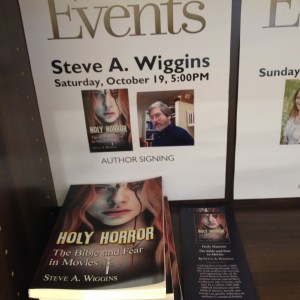
Okay, so I’ve got a book signing for Holy Horror coming up at the Moravian Book Shop in Bethlehem.  And they’ve advertised it in the local paper.  I’m humbled and honored by this, especially since I have no local following.  When I go to the website of the newspaper, The Morning Call, ads pop up on the top, bottom, and center of the page, obscuring the event.  I take this as kind of symbolic.  Life is crowded.  We seem to have turned the corner to autumn around here with nights being distinctly chilly.   After the languorous heat of summer when even thinking about winterizing seemed to add another layer of insulation over already too warm body, now we suddenly have to try to fit it in among an already crowded schedule.  At least I don’t have to commute too much any more.

I’m trying to get ready for the book signing, but I don’t really know what to do.  Perhaps I should try to get some business cards printed up.  Maybe I should think of some catch-phrase to use if anyone actually buys a high-priced book.  What should I wear?  Working at home can make you feel like a recluse sometimes.  I don’t have enough money to be considered eccentric, but I don’t get out among hoi polloi much either.  If most people have as much trouble as I do clicking off the ads to get to the event underneath, those who swing by the table are likely to be few.  Still, I’m looking forward to meeting local horror film fans.  They are, in general, a surprisingly cordial bunch.

After Nightmares with the Bible I’m going to focus on trying to find more mainstream publishers.  The reason is simple: academic publishers tend to be overpriced.  I’ve worked in publishing long enough to be able to decode pricing schemes.  There is a logic to them, even if at times it feels like you’re being overshadowed by pop-up windows.  To get a wide readership you need a pretty big platform, and getting a following on any form of social media takes the one thing I don’t have enough of.  Time.  You see, just the other day it was summer and we felt like we were baking.  Now the equinox has plunged us into the days of getting the furnace cleaned and operational and looking at the prices of insulation and shaking our heads.  Somewhere under all of these pop-ups are ideas waiting to be written down.


Whether or Weather

It was a self-inflicted double feature.  I’d been pondering movies about the weather.  Tons of movies have the weather in them, sometimes even as a significant plot element.  Few films, however, take the weather as their central thesis.  These movies verge on horror as the weather is something much larger than we are and which is deadly.  Let’s face it, a film about sunny skies and light breezes doesn’t have much of a hook.  I began by watching The Perfect Storm.  I’d seen it before, of course.  Not much like its book, which is nonfiction, it follows the loss of the sword boat Andrea Gail in the eponymous storm of 1991.  Not all members of the crew get a backstory, and since nobody knows what really happened, it was a chance for special effects to drive the story just as massive waves drive the boat.  The weather, while central, is seldom commented upon.  The characters are motivated by trying to make a living but there’s not enough time to give all six of them adequate stories.  Add to that another boat with no backstory and the movie become disjointed and smoky.

The next feature was The Day after Tomorrow.  Again, I’d seen it before, but you know how one thing leads to another.  Like The Perfect Storm, The Day after Tomorrow introduces more subplots than the movie can handle, even bringing a Russian freighter up Fifth Avenue in order to have a wolf-chase scene that is simply dropped after it’s discovered that wolves can’t climb ladders.  Still, the latter story has an environmental message.  Aware that human activity does lead to global warming, it tries to picture what would happen if it were speeded up into a matter of weeks rather than years.  No  matter how long it takes, the weather will get you.

As I’ve contended before, the sheer scope of the weather practically makes it divine.  Although we live in different climatic zones we’re all tied together under a single, volatile, powerful atmosphere.  Early humans realized that their survival depended on the weather.  Drought kills as readily as sudden ice ages.  The key, it seems, is balance.  Nature isn’t kind to species who assert too much dominance.  One of the means of nature’s control is the weather.  Until the development of meteorology, and even after its first tentative steps, the weather was considered a divine bailiwick.  We may proclaim it entirely natural, but it still commands its share of awe and majesty.  And it can easily claim a few weekend hours searching the skies for some kind of meaning.


A Decade

Please pardon my being sentimental, but today marks one decade of blogging on Sects and Violence in the Ancient World.  I realized, thinking this over, that I used to make some interesting, perhaps even quotable statements back then.  Why not, I thought, farm those older posts to celebrate what I was thinking when I was a tenth-of-a-century younger?  So for today’s post, I’m presenting some quotable quotes from July 2009, starting with one of the zingers from my very first post.  For convenience, I’ve even provided the links to the posts so you can see them in context, if your July has somehow not filled itself up already.

Sects and Violence in the Ancient World, by the way, was the name given when one of my nieces thrust a recorder in my face and asked me what I would call a blog, if I had one.  She subsequently set this site up for me.  One aspect of the title may not have been evident: it’s a quasi-anagram for my initials.  It has been, from the beginning, mostly metaphorical.  Without further ado, then, a few of my favorite lines from a decade long gone:

“He had a sidekick called Cypher (sold separately), and arch-enemies with such names as Primordious Drool and Wacky Protestor. I marveled at the missed opportunity here — they could have called them Text Critic and Doctor Mentary Hypothesis!” First post: Bible Guy, July 12, 2009. <https://steveawiggins.com/2009/07/12/bible-guy/>

“Technology has outstripped reality.” Asherah Begins, July 13, 2009 <https://steveawiggins.com/2009/07/13/asherah-begins/>

“Black and white are not in the palette of serious religious studies.”  God is Great (not)?, July 14, 2009 <https://steveawiggins.com/2009/07/14/god-is-great-not/>

“When he [Aqhat] refuses to release it to the goddess he is unfortunately pecked to death in a hitchcockian demise by a swarm of buzzards with attitudes.” Sects and Violence, July 15, 2009 <https://steveawiggins.com/2009/07/15/sects-and-violence/>

“Indeed, one may think of them [religion and monsters] as fellow ventricles in the anatomy of fear.” Vampires, Mummies and the Holy Ghost, July 16, 2009 <https://steveawiggins.com/2009/07/16/vampires-mummies-and-the-holy-ghost/>

“Better to consider it [weather] human than to face unfeeling nature.” Changing Faces of the Divine, July 18, 2009 <https://steveawiggins.com/2009/07/18/changing-faces-of-the-divine/>

“As the gods are drinking themselves senseless (how else can the latest Bush administration be explained?)…” Drunken Moonshine, July 20, 2009 <https://steveawiggins.com/2009/07/20/drunken-moonshine/>

“As usual, we kill off what we don’t comprehend.” Not Lion, July 22, 2009 <https://steveawiggins.com/2009/07/22/not-lion/>

“A bonobo was recently documented as uttering the word ‘yes’ to a keeper’s question, officially making her more articulate than some clergy I’ve known. Even today there are churches that still call their leaders Primates!” Religious Origins, July 23, 2009 <https://steveawiggins.com/2009/07/23/religious-origins/>

“I never used a computer regularly until I began my Ph.D., and then it was only a glorified typewriter, qwerty on steroids.” Who We Were, July 27, 2009 <https://steveawiggins.com/2009/07/27/who-we-were/>

“I grew up in a blue-collar household where paying ladies for favors was itself considered a sin.” Yes, Mammon, July 28, 2009 <https://steveawiggins.com/2009/07/28/yes-mammon/>

Where do you suppose we’ll be a decade from now?


Why July?

The weather in July can be exhausting.  I’ve always pretty much associated the Fourth of July with hot, sticky weather and this year’s holiday weekend has lived up to that.  Combine it with the incessant rain in the eastern half of the country and you’ve got a mix that won’t permit you to open your windows, but makes you simmer if you stay inside.  We often handle this by seeking out air conditioned facilities where you don’t have to spend a ton of money in order to find some relief.  It also happens that today is the anniversary of our moving into our new house when, as I recall, the current rainy cycle began.  Restless, stormy nights may be Gothic, but they don’t fit the staid, steady nine-to-five lifestyle very well.

Despite it all, I still value summer.  The sense of carefree days, as my friend over on Verbomania says, give estival days a shimmer like none other.  So much so that it’s difficult to keep track of what day it actually is.  For me this particular date will always remind me of buying a house for the first time and spending a literally sleepless hot night learning the hard lessons of homeownership.  Still, since I mentioned Independence Day, I continue to find myself relieved at the lack of land lordliness when it comes to the list of those who hold something over my head.  If only I could catch up on some sleep over a long weekend it might all seem more real.  July can be like that.

As I saw this weekend approaching from a distance, I made plans at how much I would accomplish.  I would get so much writing done that I’d be well ahead on my next project.  I might figure out what it was most important to say, and maybe finally find the meaning to life.  (Summer makes me feel optimistic, it seems.)  I would post new videos on my YouTube channel.  The weather, however, as the Psalms indicate, can change your plans.  Twilight lengthens to the point of making night and day difficult to distinguish.  Sleep doesn’t refresh the way it usually does and morning—my writing time—is hazy and lazy.  My next book sits untouched on my hard disc while I look over boxes that remain unpacked from a year ago.  Childhood summers set the pattern of dropping all and experiencing the mini-anarchy that lack of structure brings.  Despite all that I’d hoped to accomplish, I find myself welcoming this hot and humid anniversary.  That’s what July is like.


Weathering the Sun

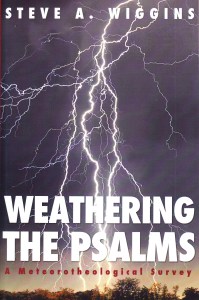
I may have given up on Weathering the Psalms a bit prematurely.  Those who know me know that the weather impacts my mood.  Now that I have a yard to mow that feeling has grown exponentially since perpetually wet grass is happy grass and is impossible to cut with a reel mower.  Today, while those of pagan inclinations celebrate the sun, there’s more rain in the forecast.  As there has been since Sunday.  If Yahweh’s the God of the sun, then Baal’s had the upper hand for some time now.  As an article on Gizmodo has pointed out, this has been the rainiest twelve months on record for the United States.  And we’re largely to blame.  We’ve known we’ve been warming the globe since the 1980s, at least.  Yet we do nothing about it.  You can’t stop the rain. 

Our species occupies that odd role of predator and prey.  Most predators, actually, are prey to somebody else.  Not being nocturnal by nature, we fear the dark when we feel more like prey.  Since we’re visually oriented, we crave the light.  Today, when the conditions are right, we have it abundantly.  Ironically, of the seasonal celebrations, the summer solstice is the only one with no notable holidays.  Easter and a host of May Day-like holidays welcome spring and Halloween and Thanksgiving settle us into fall.  December holidays around the other solstice are the most intense, but summer, with its abundant light and warmth, is perhaps celebration enough.  Or maybe we know that marking the longest day is a transition point, since now we’ve reached a natural turning point.

So, it’s the solstice.  From here on out the days start getting shorter and we slowly move toward the time of year when horror becomes fashionable again.  The light that we crave now ebbs slowly to the dark we fear.  There should be a holiday around here somewhere, for those of us outside academia continuing working right on through.  The problem is western religions, especially Christianity, place no especially memorable events here.  Resurrection’s a hard act to follow.  Calendars, apart from telling us when to plant and harvest, are primarily religious tools in origin.  When things are their darkest, six months from now, the church moved the likely spring birthday of Jesus to counteract pagan festivals encouraging the return of the light.  I, for one, would like to see a day to commemorate it, even if it’s raining again.


Refuge in Diversity

The Easton Saturday morning farmer’s market is a happening place.  Daring to spend a non-raining Saturday away from mowing, my wife and I decided to check it out.  If you’re not familiar with Easton, Pennsylvania, it has more than the Crayola factory that smells like childhood itself.  The downtown is marked by a traffic circle with an island in the middle large enough to fit, well, a thriving farmer’s market.  As usual, large gatherings attract those selling spiritual rather than material goods.  A very well dressed gentleman handed me a flier and when I got home I had to look up Refuge Church of Christ to find out what it it’s all about.  A New York City-based denomination of predominantly African-American membership, the church has over 500,000 members.  That I hadn’t heard of it before is no surprise.  There are well over 40,000 denominations of Christianity alone and it’s difficult to keep track of them all.

There comes a time in the life of anyone who takes religion seriously enough to study it professionally when s/he’s inclined to ask which is the original.  Think about it: you’re bartering with your eternal soul on the barrelhead here and don’t want to make the wrong choice.  When someone invites me to convert (I don’t know the secret handshake to show I’m already a member) I’m curious about them.  The unfortunate thing about all of this is that each tradition believes it has the truth and most, if not all, others have got it wrong.  Few are the faiths that declare, “Believe whatever, just believe.”

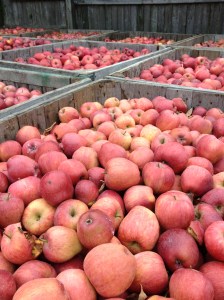
I once tried to make a denominational genealogy chart.  Part of the problem is that tracing things back to Catholicism isn’t quite right.  The Roman Catholic Church as it exists today is quite different than anything Paul, or Peter, or James would’ve recognized.  To say nothing of Jesus.  And that’s inevitable.  Religions don’t stay the same.  They evolve as soon as they pass from person to person.  Those who belong to denominations often do not know what the official teachings of the body are, and getting back to the original they’d find that their denomination started out believing things quite different than its own current theology.  If you’ve got only one soul with which to make that eternal decision and literally thousands of choices, well, let’s just say that you don’t want to think about it too much.  Besides, we’re here for fresh fruits and vegetables.  And it’s a rare gift of a Saturday without rain, no matter who’s responsible.


Idol Thoughts

The Enlightenment led, in some respects, to a condescending view of the past.  Historians know, for example, that the basics of science and engineering predate the Middle Ages.  Just consider the pyramids.  The people of antiquity were anything but naive.  We tend to think in Whiggish ways, despite our awareness of past achievement.  Perhaps it’s because we misunderstand past religious thought.  After all, the Enlightenment is generally understood as freeing the human race from “superstition” and leading to empiricism.  Empirical thinking had been there all along, of course, only it hadn’t been the sole way of making sense of the world.  Consider, for example, the “idol.”  In the biblical world food was left for statues of the gods, but it seems to me that people were smart enough to figure out that images didn’t actually eat it.

Elaborate rituals, of course, attended the making of gods.  These symbolic actions were said to make this object more than just a piece of wood, stone, or metal.  Assuming it required food, however, strains credulity.  The symbolic nature of the offering, however, was accepted.  The same is likely true of the offering of food to the deceased.  Even in ancient Israel the time-honored practice of leaving sustenance for the dead was carried out.  Was this symbolic rather than naive?  I tend to think so.  Reason told the ancients that the dead ceased to move, and therefore to eat and drink.  It was nevertheless a sign of respect to leave food, which, in a world of frequent malnutrition, could have been put to better use.  It was a symbolic sacrifice.

Surely they didn’t understand the fine interactions of nature that require microscopes and telescopes to see, but their knowledge relied on the divine world to address what remained mysterious.  We still, for example, have difficulty predicting weather.  We understand that the atmosphere is subject to fluid dynamics and countless minuscule factors that contribute to it.  We’re also aware that global warming is a reality.  Like the ancients we can choose to ignore, or pretend that the obvious doesn’t exist.  Like them, we do so for a reason.  Our political leaders are unwilling to stand in the way of the wealthy.  Reelection and all its perquisites—including personal enrichment—are simply too enticing.  Empirical evidence is worth ignoring for such emoluments.  When we feel tempted to assert our superiority over those of past ages, we might pause to consider that we still offer food to idols.  And get just as much in return.


Bradbury’s Dream

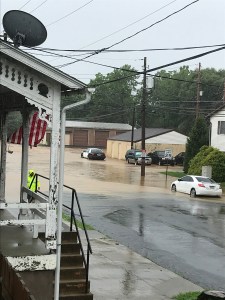
There’s a Ray Bradbury story—I can’t recall the title, but with the Internet that’s just a lame excuse—where explorers on Venus are being driven insane by the constant tapping of rain on their helmets.  They try to concentrate on discovery, but the distraction becomes too much for them.  Living in Pennsylvania has been a bit like that.  I grew up in the state and I knew it rained a lot.  Here in the eastern end we’ve hardly since the sun since March.  And when you’ve got a leak in your roof that only compounds the problem.  If I were weathering the Psalms, mine would be a lament, I’m afraid.  You see, the ground’s squishy around here.  Mud all over the place.  Rivers have been running so high that they’re thinking about changing their courses.  And still it rains.

There’s a lesson to be taken away from all this.  The fact that we use water for our own ends sometimes masks the fact that it’s extremely powerful.  Not tame.  The persistence of water to reach the lowest point contributes to erosion of mountains and valleys.  Its ease of transport which defines fluidity means that slowly, over time, all obstacles can be erased.  It’s a lesson in which we could stand to be schooled from time to time.  Rain is an artist, even if it’s making its way through the poorly done roofing job previous occupants put into place.  Would we want to live in a world without valleys and pleasant streams?  And even raging rivers?

There’s no denying that some of us are impacted by too much cloudiness.  When denied the sun it becomes easy to understand why so many ancient people worshipped it.  Around here the temperatures have plummeted with this current nor-easter and the heat kicked back on.  Still, it’s good to be reminded that mother nature’s in control.  Our high officials have decided global warming’s just alright with them, and we’re warned that things will grow much more erratic than this.  As I hear the rain tapping on my roof all day long, for days at a time, I think of Bradbury’s Venus.  Okay, so the story’s appropriately called “The Long Rain” (I looked it up).  Meanwhile tectonic forces beneath our feet are creating new mountains to add to the scene.  Nature is indeed an artist, whether or not our species is here to appreciate it.  If it is, it might help to bring an umbrella this time around.


Suddenly Spring

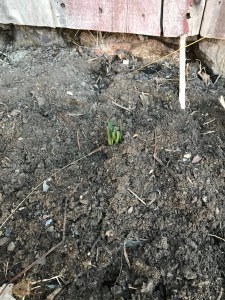
Maybe it’s just a sign of passing years, but spring seems much more sudden to me now.  One day I’m wearing multiple layers and shivering in the mornings and the next day I need to take a machete to the lawn for its first mowing.  Those weeds along the fence, which weren’t there a day ago—I swear!—are now two feet tall and aching for an appointment with the weed whacker.  I mean, the snow shovel’s still on the porch.  When did this happen?  How did we go from brown grass to sprouting trees of heaven just overnight?  I haven’t had time to build up my calluses yet for pushing the lawn mower (we have the environmentally friendly kind, powered by naught but human effort).  Morpheus was right, I guess.

This past week was so unexpectedly busy that I haven’t had time to stop and muse over some important happenings.  My current project, Nightmares with the Bible, involves trying to sort out The Conjuring universe, and I wanted to reflect on the passing of Lorraine Warren.  Her obituary in the New York Times  by Neil Genzlinger was surprisingly respectful.  Whether or not she was really onto something, people in general seem to believe she and Ed were sincere in their convictions.  There are those who claim they were charlatans, but those who perpetrate hoaxes tend to leave telltale signs.  Those who claim they couldn’t have experienced the paranormal because there’s no supernatural to experience are entitled to their opinions, of course.  Being tolerant of those who see differently, however, has never been more important.

The natural cycles of the earth never fail to surprise me.  Supernatural or not, the explosion of life following one warm, wet week is nothing shy of astounding.  I walked around to the seldom visited north side of the house to find a veritable jungle that wasn’t there just the week before.  Staring at the flowers and weeds, I can’t help but think of the hackneyed phrase “pushing up daisies.”  Much happened this past week.  The mower was oiled up and played the grim reaper to the grasses and other plants of my neglected yard.  Life, as Jurassic Park (which my lawn resembles) teaches, is persistent.  I never met or in any way corresponded with the Warrens, but I feel that in some sense I have gotten to know them.  And just yesterday it still felt like winter.


Different Kind of Salvation

It’s encouraging and disheartening all at the same time.  And seldom has the evil of money been so obvious.  Last night I attended an environmental panel discussion at a local church.  It was encouraging to see so many people out on a rainy, chilly night in Bethlehem, a city famous for its might steel mill.  Everyone there knew the problem and agreed that something had to be done.  As the speakers gave their presentations it became clear just how corrupt politicians are.  Corruption is bipartisan, of course.  In the name of “economic growth” we allow the fracking rape of our state despite the known and proven environmental hazards.  Despite the fact that Pennsylvania has a green amendment in its state constitution.  Money, as Cyndi reminds us, changes everything.

Shortly after even Mitch McConnell admitted climate change is real, at the state level climate deniers are running things.  It brought to mind the frightening and omnipresent teachings of my Fundamentalist youth: the sooner we can destroy this planet the sooner we’ll make Jesus come again.  Convinced of the absolute certainty of that second coming, there is almost a mandate to ruin, pillage, and plunder natural resources because the Good Book ensures us that, upon a white horse the savior will come in the nick of time.  Politicians, elected officials believe this.  They also believe in mammon.  If you’re gonna go down, you might as well do it in style.  Like John Jacob Astor on the Titanic.  It’s the way of the aristocrat.  Rising seas drown rich and poor alike.

It was a miserable night to be out.  The weather has been freakishly off for some time now, and all the science—real science, that is—predicts it’s only going to get worse.  How the government became the enemy of the planet that gave it birth would be a fascinating story if only it were fiction.  The truth is we’ve elected people that can be bought.  And bought easily.  Laws are passed that violate the constitution of this commonwealth and meetings are held behind closed doors.  Local activists are very active while most of us struggle to keep ourselves employed, heads, as it were, above water.  We need to pause now and again to consider what a wonder this planet is.  We must learn that the only power money has is that which we freely give it.  Rain was pouring down.  Brontide was actual thunder as the state legislature drew up chairs for the last supper.


Thunderers

“Storms are the embodiment of Mother Nature’s flair for the dramatic, and the words that we use to write about them are infused with that drama,”—the words aren’t mine, but they express something I often acknowledge.  The quote comes from a Verbomania post about the word “brontide”—a noun for things that sound like distant thunder.  Weather-related words are indeed part of the religious vocabulary as well.  I wasn’t quite daring enough to suggest it in Weathering the Psalms, but it seems that thunder may be behind most basic religious beliefs.  Well, that and bad luck.  Think about it—most cultures have a very powerful storm-deity.  That power is expressed in thunder.  Even in the twenty-first century a sudden clap can made the sophisticated duck and cover.  

We don’t know as much about ancient Mesopotamian culture as we’d like to, but it’s pretty clear that storm deities commanded major of respect.  Eventually in the city-state of Ugarit, in what is now northern Syria, a god named Hadad (aka “thunderer”) became the patron of the city and was known mainly by his title “lord” (Baal).  There may have been more than one lord, but the one in charge of day-to-day affairs was the one who controlled storms.  We’ve entered another rainy season around here (something you tend to notice when the roof leaks), and my thoughts often turn to how very much the weather controls us.  Interestingly, thunder hasn’t been much in the picture.  We’ve lived in our house coming up on a year and I have been awoken by thunder (something that still scares me as much as when I was a kid) only once.  Thunder is the approach of gods.

There’s drama about the weather.  In fact, fiction writers have long known that one of the most effective ways to suggest the mood of a story is the meteorological method.  Weather sets the scene.  The sound of distant thunder has a naturally ominous, almost predatory quality.  The growling, low and loud bursts from the sky sound so like human expressions of rage that it is only natural that they should be interpreted this way.  Since the sky is (or used to be) out of the reach of humans, the sounds from above were from the realm of the divine.  When gods approach the mood is threatening.  We dare not meet them.  That mythology has long informed our perceptions of meteorological phenomenon, acknowledged or not.  Brontide is an underused word that brings the drama of both nature and the divine together.  It could be a psalm word.


Croce’s Lament

So how much time is there?  I mean all together.  I suppose there’s no way to know that because we have no idea what came before the Big Bang.  Those who invent technology, however, seem not to have received the memo.  New tech requires more time and most of us don’t have enough seconds as it is.  Perhaps in the height of folly (for if you read me you know I admit to that possibility) I’ve begun uploading material to my YouTube channel  (I hope I got that link right!). These are cut-rate productions; when you’re a single-person operation you can’t fire the help.  I figured if those who don’t like reading prefer watching perhaps I could generate a little interest in Holy Horror visually.  (I like my other books too, but I know they’re not likely to sell.)

The question, as always, is where to find the time for this.  My nights are generally less than eight hours, but work is generally more.  What else is necessary in life, since there are still, averaged out, eight more left?  Writing has its reserved slot daily.  And reading.  Then there are the things you must do: pay taxes, get physical exercise, perhaps prepare a meal or two.  Soon, mow the lawn.  It may be foolishness to enter into yet another form of social media when I can’t keep up with those I already have.  What you have to do to drive interest in books these days!  I think of it as taking one for the tribe.  Readers trying to get the attention of watchers.

There’s an old academic trick I tried a time or two: double-dipping.  It works like this: you write an article, and another one, and another one.  Then you make them into a book.  I did pre-publish one chapter of a book once, but getting permission to republish convinced me that all my work should be original.  That applies to reviews on Goodreads—they’re never the same as my reviews on this blog—as well as to my YouTube videos.  There’ll be some overlap, sure.  But the content is new each time around.  So you can see why I’m wondering about time.  Who has some to spare?  Brother, can you spare some time?  I’ve been shooting footage (which really involves only electrons instead of actual linear imperial measures) for some time now.  I’ve got three pieces posted and more are planned to follow.  If only I can find the time.


The Rules of Waiting

Tom Petty must’ve been a commuter.  On a winter’s morning after switching to Daylight Saving Time, waiting is the indeed the hardest part.  For a bus, that is.  In the dark.  The saving grace is that humans are rule-makers.  Before I even began commuting into New York I’d been instructed in the etiquette.  Those who get there first leave some kind of avatar—a briefcase, an umbrella, a lunch box—in their place in line and then sit in their cars.  Being the paranoid sort, and also thinking myself tough, I’ve always just stood at my place as the chill wind finds its way down my collar and then buffets me almost off of my feet.  With the time-change, however, I decided to do like the commuters do.  I walked out to the line of objects to find one widely separated from the others.  Being a law-abider, I put my lunch down after the errant water bottle.

“Hey,” a stranger called me on my way back to my car.  “Somebody just left that water bottle—you should move your bag up next to the backpack.”  Thanking him, I did so.  Not only was this person I didn’t know watching me in the dark, but he was also keeping the rules.  Indeed, when the bus crested the hill and commuters lined up next to their possessions, the water bottle remained unclaimed.  It was still there fourteen hours later when I got off the returning bus.  Now, I’m not a big fan of anarchy, but this incident demonstrates just how inclined we are toward civil behavior.  There’s no bus stop police force to ensure nobody jumps line.  Even at the Port Authority waiting in the queue at the end of the day the rules are mostly self-governing.  Those who don’t obey are scolded by their peers and generally comply.

There’s a natural sort of ethic among those who catch the bus before 5 a.m.  We’ve all been awake earlier than nature would seem to dictate.  We’re in a dark, isolated location outside town.  We look out for one another, realizing that any one of us might easily lose our place in line should the rules break down.  I was struck by the kindness of this caliginous stranger.  Or perhaps it was just his love of order.  Had my representation been out of place, other commuters might’ve grown confused.  The system might’ve broken down.  The last thing anyone wants is chaos before cock-crow.  I decided to interpret it as kindness, however, as I made my way back to my car to put on Tom Petty to face the hardest part.


Symbolic Delays

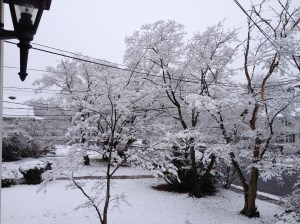
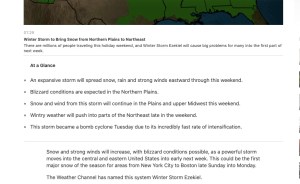
Weather affects more than the Psalms, of course.  With all the hype of the latest winter storm things were closed or delayed before any accumulation even started.  Now I’ll admit up front that I’m a fan of snow days; we dutifully trudge to our desk jobs as if we’re doing something vital when many of us are really just trying to make money for the man.  A snow day’s a little unplanned levity in our lives when staying off the roads seems like a good idea.  It’s one of life’s guilty pleasures.  Of course, the dreaded delayed opening brings its own set of issues.  You can’t sleep in unless it’s announced the night before, and once you’re up your mind heads to work anyway.  Working remotely, alas, means you have no excuse, no matter what the weather.

Snow is a great symbol.  I don’t mean its whiteness and purity—there are plenty of white things that aren’t pure.  No, I mean it’s a great symbol in its ability to control people.  We don’t like rain, although we understand its necessity.  Snow, however, fills us with a childlike wonder.  Anticipation.  Unlike a winter rain, it can be fun to play in.  It covers everything.  The suggestion of a blanket ironically makes us feel warm, even as the temperature dips below freezing.  But for me the most potent symbol is light.  I awake early, even on snow days.  As I make my way downstairs in the dark, it’s immediately evident when snow covers everything because the sky is lighter than it should be this time of day.  Whatever light’s trapped below the clouds reflects off the snow creating a luminosity that’s almost otherworldly in its calm.  It doesn’t last too long for the sun is rising earlier, at least it is until our pointless time change, but for a few hours we’re in the midst of an unnatural light.

Darkness is far too prevalent.  We know that someday even our mighty sun will use up all its fuel.  We crave the light for it’s limited.  Days are noticeably longer now than they were at the start of December.  Those few moments of serenity before the sun comes up, when the snow produces what seems like its own light, are among the most tranquil of life.  Before the plows begin scraping metal against asphalt, hoping for a snow day while wrapped in a fleece throw, face clouding the chilly window before it.  Yes, it’s a powerful symbol.  Even if the internet means work awaits just as usual.  


Tempestuous Wind

There was quite a windstorm that blew through here yesterday.  It reminded me rather forcefully of Weathering the Psalms.  Firstly, it blew loudly enough to wake me up a few times in the night.  When I finally climbed out of bed, listening to the blustery concussions beating the house, I remembered that the first chapter of Weathering was about the willful wind.  That’s not just a poetic phrase—according to the Psalter, the wind does the will of God.  Like much of the weather, it’s weaponized by the Bible.  Seeing what the wind can do, the reasons for this should be obvious.  Hurricanes are tremendous windstorms (although unknown in the land of the Bible), but they are also known for their tremendous rain.  Tornadoes, however, are pure wind and are among the most destructive forces on the planet.  (Before people came along, anyway.)  Wind commands respect.  We’re a very long way from taming it.

When thinking of meteorology, it’s easy to forget wind.  Rain and snow are pretty obvious.  Even desert heat is impossible to ignore.  The wind, invisible and powerful, is perhaps the most godlike of weather’s many features.  To the ancient way of thought, it was also inexplicable.  We understand the earth’s rotation and temperature differentials between water and land and the uneven heating between the surface of the ground and air aloft.  The ancients understood it more to be a pure act of God.  The wind certainly can seem spiteful.  It’s not difficult to attribute agency to it.  Such things go through my mind when the howling is loud enough to wake me.

Invisibility suggests power.  It wasn’t so much the “monotheism” of Israel that made it distinctive as it was the inability to see its deity.  That lack of visual confirmation not only necessitates a kind of faith, but it also veils a threat.  We humans tend to be visually focused.  We fear the dark.  Foggy, misty settings can give a story an atmosphere of foreboding.  Placing the divine out of site only enhances supernatural powers.  So it is with the wind.  As is to be expected, the windstorm has mostly blown itself out by now—moving on to another location until the temperature differentials even out and its howl becomes more of a whimper.  It will have done its work, however, for even as it passed through it brought to mind the proper respect for that which cannot be seen.