Insecticide

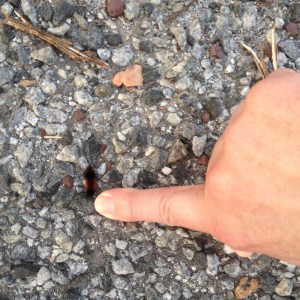
Although Halloween is more about spiders than insects, a real fear seems to be swirling around the latter.  For the second time in a year, a study has been published indicating a precipitous drop in the numbers of six-legged creatures worldwide.  This is alarming because everything’s connected.  Loss of insects means loss of vertebrates that feed on them and that leads to loss of species upon which we depend.  The problem with “humans first,” simply “America first” writ large, is that all species are interconnected.  The loss of one will lead to the loss of others—that’s the way connections work—until the entire picture changes.  And it won’t be prettier.  Even for lack of bugs.

Scientists aren’t sure of why this is happening, but the likely culprit seems to be global warming.  Temperatures are changing so rapidly that evolution can’t keep up.  And since those in political power don’t believe in evolution—America first!—they have difficulty seeing how global warming—a myth!—could possibly pose any threat.  Just ask the wooly mammoth.  The fact is that the very small frequently offer the answers long before it’s too late.  The problem is you have to pay attention.  And that attention must be not on America, or Trump, or Kavanaugh.  The Supreme Court is jobless if there are no people left.  We are part of an ecosystem, and the silence of that ecosystem is very loud indeed.   Decades ago Rachel Carson wrote Silent Spring to warn of the dangers of pesticides.  In our short-sighted way, we responded by banning the most dangerous of them and turning up the heat.

We like to focus on the negative aspects of religion these days, but one of the overlooked benefits of it has been religions’ ability to shift focus.  Christianity, for example, has been an advocate of thinking of others before thinking of oneself.  Now certain elected officials seem constitutionally unable to think of anyone but themselves, but the fact is none of us would be here if it weren’t for the insects.  They work to keep our planet neat and tidy, even if we regard them as a sign of uncleanness in our houses.  Maybe not the lowest, they are one of the essential building blocks of the world we know and recognize.  And they are disappearing.  As Carson recognized decades ago, the loss of insects leads to a silent spring because the birds that feed on them will disappear.  And what about pollination—whose job will that become?  I suppose we could assign it to migrant workers, but we’re sending them away too.  America first will be America the silent and hungry.  Unless we listen to what the insects tell us.


Writers Reading

A lot of misconceptions about books abound out there.  One of those misconceptions that has become clear to me is that authors write books to teach.  (Or to make money.  Ha!)  That may well be part of the motivation, but for me, the larger part has been writing books to learn.  You see, the frontiers of human knowledge cannot be reached without stretching.  Writing a book is a way of learning.  Long gone are the days when a person could read every known published work.  Indeed, there aren’t enough hours on the clock for anyone even to read all published books on the Bible, let alone the far bigger topics these days.  And so writing a book that deals with a biblical topic—let’s say demons—is the ultimate learning exercise.  It’s a very humbling one.

I recently read an article where book pirates (yes, there is such a thing!  I should explain: there are those who believe authors are ripping off society by getting royalties for their books.  These pirates, like those of galleys of yore, take ebooks and make them available for free on the internet.) call authors “elitists” for wanting to earn something from their labors.  These folks, I’d humbly suggest, have never written a book.  Most books (and I’m mainly familiar with non-fiction publishing here, but the same applies to the other kind) take years to write.  Authors read incessantly, and if they have day jobs (which many do) it is their “free time” that goes into reading and writing.  They do it for many reasons, but in my case, I do it to learn.

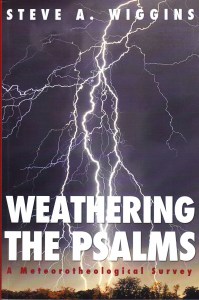
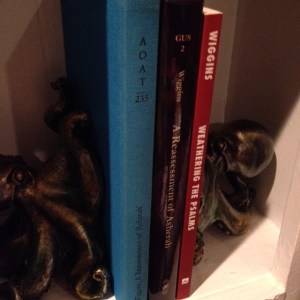
The doctoral dissertation is accomplished by reading as much as possible beforehand and writing up the results quick, before someone else takes your thesis.  It is the practice I also used for my second book as well, Weathering the Psalms.  The third book, Holy Horror, was a little bit different.  Yes, I read beforehand, but much of the research went on after the body of the book had largely taken form.  I had to test my assumptions, which are on ground most academics, needing and fearing tenure, tremble to tread.  I read books academic and popular, and having been classically trained, often went back and read the books that led to the first books I read.  It is a never-ending journey.  I could easily spend a lifetime writing because I’d be learning.  But like other misconceptions, those who write books don’t lead lives of luxury.  They work for a living, but they live for the chance to learn.  And that’s worth more than royalties.  Besides, the nine-to-five demands constant attention.


Virgin-Haunted World

One of the most frequent accusations of “idolatry” I heard as a child was leveled at Roman Catholic devotion to the virgin Mary.  Lessons learned during childhood are difficult to displace, especially when they concern your eternal destination.  I overcame this particular objection, a bit, during my sojourn among the Episcopalians, but I have to confess I never felt right praying to Mary.  In my Protestant-steeped mind, there were two classes of entities involved: gods (of which, properly, there was only one) and human beings.  Only the former received prayers.  The rest of us simply had to contend with non-supernatural powers and do the best we could.  Still, I met many believers devoted to Mary, and honestly, some accounts of Marian apparitions are pretty impressive.

A local source for inexpensive advertising in our area is essentially a weekly set of want ads.  For a small fee you can advertise just about anything you want to buy or have to sell.  Spiritual or physical.  A few weeks ago, someone ran a magnanimous piece on a prayer to the virgin never known to fail.  The words of the prayer were printed, along with the instructions, for nothing is quite as simple as “ask and you shall receive.”  The prayer must be recited thrice, and thanksgiving publicly proclaimed.  A number of questions occurred to me, regarding not only this, but all prayers for divine action.  One is the rather simple query of how you can know if a prayer has never failed.  I suspect this is known by faith alone.

There are any number of things most of us would like to change about our lives, and the larger issue of prayer is the daisy-chaining of causality.  One change causes another, causes another, and often that for which we pray will impact another person in a negative way.  This is the classic “contradictory prayer” conundrum—one person prays for sunny skies while another prays for rain.  Neither is evil, both have their reasons, perhaps equally important.  (The weekday is a workday for many, and that’s non-negotiable in a capitalist society, so I suspect prayers for sunny skies tend to be weekend prayers, but still…)  The prayer never known to fail is either a rock or a hard place.  It’s that certitude that does it.  I don’t begrudge anyone a prayer that works.  Faith alone can test the results.  And although we could use a little less rain around here, we could all benefit from a little more faith, I suspect.  And for that there’s no fee.


A Kind of Happening

The roofers were here.  One of the things you learn only after laying down a ton of money is that those selling a house like to withhold information.  Moving during one of the rainiest summers in history, we naturally discovered leaks.  And so the roofers are here, like noisy angels banging above my head.  Given the orientation of our house, their access is outside the window of my work office.  I figured it was an opportunity to learn.  As the old shingles came raining down, however, I couldn’t help thinking of M. Night Shyamalan’s The Happening.  One of his more disappointing efforts, this horror film involved a memorable scene of mass suicide where people jumped off of a high building one after another.  Maybe other people would think of other comparisons, but the falling debris brought the film to mind in my case.

It’s a matter of framing, I suppose.  I’ve watched enough horror that it has become a framing device.  This is true although it has literally been months since I’ve seen a horror film.  (Moving proved to be its own kind of nightmare and one day I suspect we’ll be unpacked enough to watch movies again.)  Instead of losing the frame of reference, however, I find it intact.  If you spend long enough with Poe, he gets under your skin.  And changing states to M. Night Shyamalan’s eastern Pennsylvania might have something to do with it.  This is Bucks County territory, after all.  Another frame of reference, mediated by media.

As I watch the old shingles drop, I realize the window through which I’m witnessing this is another frame.  Like a camera lens, it limits my view.  At times it can be like Hitchcock’s Rear Window, seeing neighbors at their daily business.   Indulge me. For nearly the past five years I worked in a cubicle with no view of any windows whatsoever.  I was completely cut off from the outside.  (Which, for those of you who’ll admit to having seen The Happening, might not have been an entirely bad thing.)  Now that I have a window—my own framing device—I realize some of what I’d been missing.  At Routledge I had a window, but at such a level that the Manhattan outside seemed artificial.  You couldn’t see individuals down on the street.  The entire wall was a window—too much of a frame.  Gorgias Press involved working in a windowless room as well.  I’m professional enough not to let the falling material or the pounding distract me much.  There’s work to do because there are bills to pay.  And horror films prepared me for that as well.  It’s the ultimate framing device.


Be It Resolved

I’m not a believer in New Years Resolutions.  A constant and critical self-monitor, when I notice a bad behavior I try to correct it right away.  Sometimes I’m actually successful.  Now that I’ve finally removed all books from the garage—some were being held high above the water-line on plastic boxes—I’ve started to sort through systematically what is beyond redemption.  A comment of occasional visitors, however, has goaded me into a resolution; you see, people sometimes ask “Are you going to read those again?”  While aching to address the mindset betrayed by that very question, I cede a point; if I’m going to the expense of replacing a non-reference book, I should want to read it again.  My resolution—when I buy another copy, I will read it then and there.

One of the stinging parts of this resolution is that some of the books were read by me just this past year, or even earlier this year.  Jude the Obscure, although I enjoyed it, cost me a quarter year of my life of evening reading time.  On that basis alone I should replace it, but if I’m not going to reread it why should I incur the expense?  (Moving is anything but cheap.)   I will also face rereading old favorites that have been put aside for a while.  No house, for example, should be without Emily Brönte’s Wuthering Heights, although I read it again just months back, or so it feels.  

This is perhaps a way of making lemonade from a cloud.  Or finding the silver lining on a lemon.  Whichever it is, I sense that it will figure toward my reading goal for next year.  As I’ve spent the rainy weekend unpacking books, literacy is on my mind.  For those who see my literomania as some kind of disease, I was cheered to note just how many of the books on display I had indeed read.  The same goes true for a number of the academic books in the study, but, I must confess, while pulling them from their boxes I thought how boring most of them are.  Boring, however, doesn’t equate to useless when it comes to books.  Given their price points some of them may take years to replace.  That’s the point of a resolution, in any case.  It can cause some pain.  As I stuff the moldy, distorted tomes into their body-bags I hope that rereading their replacements will bring them back to life.  After all, resolution and resurrection are not so far apart.


August Mornings

It’s August and I’m already starting to feel haunted.  While science may declare it nonsense, there’s a feeling in the air—particularly in the early morning—that tells us the seasons are changing.  While it may be different for everyone, for me it begins in the tip of my nose.  I can smell the change coming.  That doesn’t mean that we won’t have more hot days—a long string of them yet awaits—but the shift has begun.  Autumn is perhaps the season closest to the soul.  While I like all seasons for what they represent, fall has always put me in mind of melancholy rapture.  It’s a difficult concept to explain,  a kind of blissful evisceration.  A hitching of the breath in my lungs.  A sudden rush of joy followed by sadness.  The ease of summer living is ending.

Summer is the growth season when we look out and see the promise of provisions that will see us through long months of cold and chill.  The times we huddle down only to be blinded by the arctic beauty of the sun on a snow-covered day.  The indoors time.  Summer is when we can dash outside without a coat, giving no thought to whether we will be warm enough.  The scent of autumn is a slight chill.  It reminds me that while the crops have been growing, the monsters have too.  There’s a reason horror films are released in the fall.  I’m not the only one who knows they are coming.

Late summer is a liminal time.  While the calendar may tell us summer lasts until the autumnal equinox, traditional cultures marked time in a different way.  Equinoxes and solstices were closer to the middle of a season than its start.  Most years we begin to feel summer in May, or even April.  Winter cuts through November, and the thaw may begin as early as February.  When I step outside just after sunrise and breathe deeply, I can feel the monsters coming.  In a way I can’t explain, their lurking fills me with a frisson of anticipation.  Already the days are noticeably shorter.  Daylight itself seems to be fleeing before the ethereal chill that is still available in our rapidly warming world.  The seasons are all about feelings.  Emotions suffuse the changes of weather and human habits that accommodate to it.  There are shivers and then there are shivers that the creatures of autumn bring.  They’ve already begun to gather.


Animal Rains

We may have been to the moon—if not personally, collectively—but we still don’t control the weather down here.  It’s probably not news that the eastern part of the country has been getting a lot of rain lately.  One of the factors that led me to write Weathering the Psalms was the overwhelming tendency for humans to attribute weather to the divine.  It used to be that we couldn’t reach the sky, so placing deities there seemed a safe bet.  Now that we’ve shot through the thin membrane of atmosphere that swaddles our planet, we’ve discovered beyond a cold, dark space liberally sprinkled with stars and planets but mostly full of dark matter.  The deity we thought lived beyond the sky somehow wasn’t anywhere our probes flew and recorded.

Still, down here on the surface, we live with the realities of weather and still think of it in terms of punishment and pleasure.  When we don’t get enough rain, God is destroying us with drought.  Too much rain, and the Almighty is washing us away with flood.  The true variable in all of this is, obviously, human perception.  Sure, animals experience the weather too, and they sometimes look to be as disgusted as humans when it snows too early or too late, or when the rain just won’t stop.  I have to wonder if somewhere in their animals brains there’s the seed of an idea that the bird, or squirrel, or woodchuck in the sky is angry at them for some unspecified faunal sin.

While heading to the store yesterday, after weather reports assured us the rain was finally over for the day, the skies told a different story.  The vistas around here are never what they were in the midwest—or what they are in Big Sky country—but the approaching storm was pretty obvious.  An opaque drapery of precipitation was coming our way and although a rainbow would cheekily show up afterward, knowing that we’d been caught away from home with our windows open felt like punishment for something.  Perhaps the hubris of buying a house when all I really require is a corner in which to write.  Somewhere in my reptilian brain I translated a natural event into a supernatural one.  When we got home to discover the storm had gone north of us, it felt like redemption.  I spied the birds sheltering in shadows from the sun’s heat.  Were they thinking it was some kind of divine avian displeasure, and hoping for some rain to cool things off for a bit?  If so, was our religion correct, or was theirs?


Soggy Symbols

House-buying is perhaps best left for the young.  Flexibility is, unfortunately, something that effaces with age, and house-buying is a rough transition at best.  For anyone following this blog over the past month, the theme of moving is familiar.  How we hired a moving company that didn’t get us in our new place until after 2:30 in the morning.  How torrential rains came later and flooded our worldly goods temporarily stored in the garage.  How mowing the lawn caused me to question my faith—wait—I haven’t told that one yet!  Well, you get the picture.  Suffice it to say that although I didn’t think moving would be easy, it’s been a lot more difficult than I could’ve possibly imagined.  In the midst of it came a dove.

At times, I must confess, I’m tempted toward superstition.  A strange significance between events that are, in actual fact, random.  We’ve all read of people who buy a house and discover some secret treasure left stashed away in the attic.  The former owners of our house only left undisclosed defects that become clear in periods of prolonged rain.  Even so, as I was feeling as miserable as one of Ray Bradbury’s astronauts on Venus—yes, the precipitation does begin to drive you insane after a while!—I decided to try an impose some order on the chaos that is our garage (we haven’t had a dry weekend since moving in to transfer the soggy stuff to our house) I looked down.  There, amid the screws and other little detritus left behind in the way of treasure, I found a dove charm.  A dove sent after a flood.

The symbolism of the dove with hope is ancient indeed.  It predates the Bible when it comes to a symbol that the flood is nearly over.  The Mesopotamians also had a dove sent out from the ark, and I’m given to believe this is something ancient mariners, whether they rhymed or not, regularly did to assess if land was near.  Unlike our heavy, wingless species, birds can soar over chaos.  At least for a while.  They are a symbol of hope.  Was that dove sent to me on purpose at a time when I needed it, or was it just a random find, one of those too much stuff in a small world moments?  There’s no way to assess that, I suppose.  For me, on yet another rainy day, it’s a symbol of hope.  The only other choice, it seems, would be to build an ark.


Water Monsters

Chaos is a monster.  More than personal opinion, that’s a biblical view.  If, like many modern people with theological training, you’ve been taught that Genesis narrates a creation out of nothing, you’ve become a victim of this monster.  You see, although ancient Israel had no “systematic theology”—the Bible can be quite inconsistent if you’re willing to read what it says—the view that chaos was constantly lurking outside the ordered realm of creation was a common one.  One of the more intriguing episodes in Ugaritic mythology involves a broken text where the god Hadad, aka Baal, refuses to allow a window in his palace.  The reason?  Apparently he feared chaos (in the form of Yam, the sea) might slip in and kidnap his daughters.

More than a theological statement, the story of creation was actually a singular episode in Yahweh’s ongoing struggle against chaos.  Step outside and look at the sky.  If it’s blue it’s because there’s unruly water being held back by a great dome over our heads.  If it’s gray, it may be raining, or it probably will be soon.  Stroll to where the land ends.  What do you see?  Water.  That water is lapping at land, trying to take it over.  Although the ancients didn’t have geologic ages (the Mesopotamians came close, with ancient kings living thousands of years) rivers eroded land and they had tendencies to flood.  The thing about chaos is that it makes you start again, from the beginning.

One of the many unfortunate things about biblical literalism is that it loses sight of this biblical truth.  It exchanges something everyone can understand for a theological abstraction that makes no sense in the world that we experience.  Ancient belief held that the human role in the world was to fight chaos, not to get to Heaven.  In fact, in the Hebrew Bible there’s no concept of Heaven at all.  Instead, the commandments were all about order.  You can’t build on the water.  What you do build water tries to wash away—Israel has a rainy season, and one of the characteristics of such seasons is the occasional violent storm and heavy rains.  Although we need the water from the heavens, heavy rains cause, well, chaos.  In ancient thought, this was the monster hiding in plain sight.  That blue sky is a reminder that a dragon awaits.  Rather than starry-eyed Heaven-gazers, the ancient biblical person was a monster-fighter.  And that’s the biblical truth.


Childhood’s End?

Writers are agents against chaos.  Those of you who read this blog frequently know that chaos has been one of my themes lately.  Moving, which is a process that takes months and months of time, is pure chaos.  Whenever I settle down to write, yet another moving-related task comes to me—this box needs to be unpacked, that gap in the fence must be mended, where did I put the toolbox?  Mundane things.  Writers like to think the world conforms, somehow, to their inner lives.  In reality, things are far more complex than that and don’t seem to be getting any easier.  Starting to learn about house ownership is something best left for the young, I suspect.  Every question (where should we put the television?) leads to a daisy-chain of other issues (but first we need to move that hutch, but it’s too heavy for either of us to lift, etc.).

In ancient times water symbolized chaos.  Before we left on vacation, the main issue was to get all boxes off the floor in the garage.  We haven’t had time to move them safely inside yet, what with planning for vacation and all, so plastic became the order of the day.  We do need, however, to get things inside eventually.  A slow process for two middle-aged people with full-time jobs, even without jet lag.  Writing feels like a luxury item, for what is most required is time—time to move things to their proper places.  Time to figure out what those proper places are.  Time to go to work again.

Had we thought this through, we might’ve used vacation this year to unpack.  We bought our plane tickets, however, before we bought the house.  This latter transaction is one of chaos embodied.  Who knew, for example, that the grass had to be cut so often?  That all roofs leak?  That chaos is constant, and not intermittent?  In biblical times, one of the signs of God’s greatness was the ability of the Almighty to hold chaos in constant check.  The waters were always lurking, looking for any opening—except when you need rain and it just won’t come.  Sitting here writing feels like the giddy irresponsibility of childhood where there’s so much to get done and so little time in which to do it.  And neighbors don’t appreciate the lawn being mowed before the sun is properly out of bed.  The renter pays a price for living with, for at least some stretches of time, chaos-free maintenance.  The home-owner quickly learns that any time left over for writing feels like being irresponsible, and a little bit divine.


Chaoskampf

It’s a poignant thing to hold a dying book in your hands.  What was once, straight, flat, and dry, now dissolves into a pulpy mess that, if it ever recovers, will be warped and distorted out of shape forever.  The loss of dozens of books hit me hard.  I think one of the many reasons for this is that books represent, for me, order.  They stand at attention all in a row, many on shelves I built lovingly for them.  I remember where I purchased them, the thoughts and feelings of that time.  In a world that’s far too bumpy and lumpy, books represented the ultimate in orderly array.  Now The Golden Bough is melting in my palm, smearing my fingers royal blue.  The forecast for the week—more rain.

The story of creation in the Bible—more properly, stories, for there are many—is not creation out of nothing.  Creation is the making of order out of chaos.  Ancient people, including the Israelites, believed that water was chaos, if not an actual dragon, that constantly worked against order.  You can’t build on water, it attacks the shoreline, it drowns those who fall in.  Never a seafaring people, Israel equated big water with evil.  God, then, fought constantly this unruly foe.  Whether it was with word or sword, the Almighty vanquished that sloshing, thrashing element that tries to tear apart everything we build.  Read Genesis 1 closely; the water is already there when the creating starts.

Life has a way of getting out of control.  It’s not without irony, however.  A person buys a house to store their books, and before the books can be moved in, they’re destroyed.  It’s rather like a parable, don’t you think?  If that person unfortunately thinks of him or herself as a summation of the books s/he’s read then the loss is like losing a limb or two in that endless battle against the forces of confusion that attempt to overcome our world.  When this happens some of us turn to books for comfort.  The books, however, are disintegrating in our hands.  My Amazon account, it seems, is mocking me at the moment with it’s mover’s discount.  Why buy something that will only hurt me when the water gets in once again?  The people of ancient times knew that the waters of chaos had to be held in check constantly.  They look for any opportunity to get in and destroy.  Ancient writers knew that in order to defeat them, only the most powerful gods will do.  


High Places

I have gotten me away unto an high place.  No, that’s no biblical, but it sure sounds psalm-like.  Part of the anxiety I felt about the literary loss over the past few days is that it happened just before a long anticipated, and paid for, vacation.  As Thursday dawned, I knew I had only two days to try to rearrange the undamaged books and try to salvage what I could of those that were soaked.  And I had to do it quickly and then leave, only to see the results when I returned.  Not yet having met any neighbors, and not really being in a position to prevail upon their presumed good will, it was a test of personal endurance.  Our garage has an upper floor that remained dry.  I made well over an hundred trips up those stairs, book boxes in hand.  One cares for ones friends.

For now, however, I am at my favorite high place, in the mountains.  On a lake.  I’m having to reconcile myself with my old foe H2O, for here it is placid welcoming.  It stays outside the cabin and we remain friends.  And truth be told, there is a kind of idolatrous element involved in my visits to the lake.  You see, I covet peace.  Since childhood violence and bullies have led me to a quasi-monastic life—Paul Simon reflected that perfectly in his early song “I am a Rock.”  Even Superman had to have his fortress of solitude.  Some fear being alone with their thoughts.  Although I struggle with them, they are, like my books, who I am.

Dawn’s early light; and it only got worse as the day went on.

Prophets and deuteronomists railed against high places.  Such were locations where the God of Israel grew jealous of the attention lavished on other deities.  Perhaps religious promiscuity comes naturally to people, but we need our high places to regain perspective.  To breathe pine-scented air and feel the chill of a July morning at altitude.  Yes, even to reconcile with the splash of water that is here to make life possible rather than to destroy that which you have worked to acquire.  Ironically some of the destroyed books had been with me since college—theological classics such as Niebuhr, Gutiérrez, and Tillich, lying on the unmown grass beneath a healing sun.  Perhaps they were trying to warn me of the idolatry of such retreat.  But here I am, reflecting on loss and hope, and praying that somehow we might just all get along.


Prelude to Chaos

Liquids are the enemy.  Don’t let the cuteness of this little guy fool you—there’s collusion here.  For as well as creating life, and being necessary to sustain it, water destroys.  Creator, annihilator.  We moved during a time when neither of us had vacation and we told the over-tired movers that it was okay to put our boxes in the garage.  We planned to move them soon, but, you know, work.  Then the rains came.  Not just sprinkles, but downpours.  The garage isn’t water-tight.  Boxes were soaked.  Many books were damaged.  This wasn’t a flood that can be claimed on insurance, it was simply rain pooling where people usually park their (normally waterproof) cars.  In their place sat our books.

We both worked the day after the rains.  When we discovered the damage the next evening, it looked manageable.  I had to work the next day, of course, and a few breaks sufficed to get the many, many boxes of damaged books out into the sun.  It was carnage.  We don’t have much in the way of material goods; we spend a bit of money on books, however.  Now they’ve become the victims laid out on this altar of home ownership which, at the time, seemed like a good idea.  We needed a house for our books.  We needed time to move them from the garage to the house.  Yes, old friend Morpheus, “Time is always against us.”  

Job sat upon his ash-heap and pondered why he’d paid the movers so much only to have his moved goods destroyed.  And in a manner in which insurance assessors are trained to point to the fine print.  Those who store their goods in the garage reap the wrath of liquid.  You see, when water reaches cardboard, or paper, the wood pulp sucks it up.  Carefully dried, the paper remembers the compelling nature of water.  Too little, and you die.  Too much, and you die.  No wonder the ancients thought that water was a deity.  It claims all—tries to get in through your roof.  Lays insouciantly on your basement floor.  And the garage—yes, who thought of the garage when the immediate concern was to shut the windows to keep Leviathan out of the house?  I spent weeks carefully packing those books against shipping damage.  Used up my vacation days doing so.  Chaos has claimed them.  I would weep, but that would be collusion with the enemy, even if nobody sees.


Fair Weather

“I just saw God up on your ridge.”  (Kudos to anyone who can name the source of that quote!)  Many years ago I read Stewart Guthrie’s remarkable Faces in the Clouds.  The idea that he presents is that pareidolia—seeing faces or people where they don’t actually exist—may account for the belief in God.  Early people, not knowing any way to interpret such obvious examples of humans writ everywhere thought they were gods or spirits.  Since reading this book, I’ve taken to trying to capture incidents of pareidolia where I can.  The other day as I was working away in my home office, I noticed a literal face in the clouds.  I thought “I just saw God outside my window.”

Now I know this isn’t really what I saw.  I know matrixing (mistaking noise for signal) when I experience it.  I hope.  Nevertheless, the resemblance was detailed—brow ridge, nose, distinct lips, chin.  The lighting in the fair weather cumulus will likely make this difficult for you to make out, and you might see a face other than the one I saw.  Not everyone thinks of the Almighty in the same way.  Looking at the picture I snapped I can see at least two faces stacked on top of one another—the council of the gods?  Who am I to tell deities what they can or can’t do?   Or to prevent imagination from going where it will?  Religion seems to be an evolved characteristic of our biological makeup—our eyes show us what to believe about the world around us.  The rest is hermeneutics.

Gods and the skies naturally go together.  We can’t reach the heavens nor can we control them.  We can increase greenhouse gases in them, though, threatening the very illusion we see in the clouds.  The glimpse of the divine we once saw there can easily dissolve into acid rain.  Heaven and Hell, according to the story of Dives and Lazarus, aren’t very far apart.  Even as we gaze into the cerulean sky seeking serenity, others are bending laws to allow them to destroy it for profit.  There’s a reason Dives is simply called “the rich man.”  Does Scripture defend the practice of environmental destruction?  Dives’ friends claim the planet was given to us to use and use up and Jesus will swoop out of those clouds we’re manipulating at the last minute and rescue us from the mess we’ve made.  Looking into God’s face in the clouds, I interpret this all as a mere excuse.  To destroy the environment is to side with Dives as he makes his flaming bed of nails in Hell. This is why windows in an office are divine.


Melting Psalmists

With weather like this, I could use a Psalm or two.  Of course, in my mind, weather and Psalms are closely connected.  Here in the mid-Atlantic states, we’ve been experiencing a heat wave.  Unlike many parts of the west, such heat here in the east is accompanied by very moist air, meaning that cooling down is only possible in a large body of water or air conditioned interiors.  We have neither readily available at our place, so we try our best to keep cool and compose psalms, mostly imprecatory, I fear, about the weather.  Although it was thunderstorms that stirred my interest to write Weathering the Psalms, I included a chapter about temperature, for the Psalter sings of hot and cold as well as lightning and thunder.

The world of ancient Israel was quite different from that of North America.  There are mainly two seasons in the Levant—dry and rainy.  The dry season isn’t always as hot as we tend to imagine it, although the day I visited Masada the air temperature was about 120 degrees.  Enough to make a dip in the Dead Sea look inviting.  The Bible often views high heat as a form of divine punishment.  Although we human beings have expanded to fill just about every ecosystem our planet has to offer, we thrive in central California conditions.  Not all of us can live there, however.  And it’s a good thing that global warming’s a myth since it’s awfully hard to function when it is over 90 degrees for days in a row.  WWDD?  What would David draft?  Perhaps, “I’m melting”?

The interesting thing about the global warming myth is how real it feels.  I suppose the solution is to use more fossil fuels to help keep cool.  Fans, arctic air conditioning, lingering languidly at the open freezer door.  I stand here sweating, wondering what the Almighty could possibly find wrong with a country that is now great again.  One that takes children from their mothers yet insists birth control is evil.  One that loudly and punishingly insists guns should be in every home.  One where the elected head of government is involved in over 3,500 lawsuits, yet gets to appoint justices in the Supreme Court.  David got caught, if not in flagrante delicto, at least within a couple months of adultery with Bathsheba.  Instead of paying her off, he had her husband murdered.  But then—and here’s the key difference—he humbled himself and repented.  The sweet Psalmist of Israel might yet have something to teach us yet about weather and the Psalter.  Until the United States becomes the chosen nation again, I think a cold shower will have to do.