The Birth of Nightmares

It’s often said that it takes a village to raise a child.  A similar idea lies behind the writing of a book.  Sure, the lion’s share of the research and writing are done by the author—the person who gets credit for the work—but publishing is an industry.  That means other people’s livelihoods are based on the end result as well.  The author often doesn’t know what’s going on when the book is in production.  It was a pleasant surprise, then, to find the publisher’s website for my book is up.  You can see it here.  My own site for the book has been up for months (here; go ahead and take a look, there’s not much traffic).  Those who only read these posts on Facebook, Goodreads, or Twitter may not realize there’s a whole website out here that addresses things like books and articles.  (I think the CV part requires updating, though.)

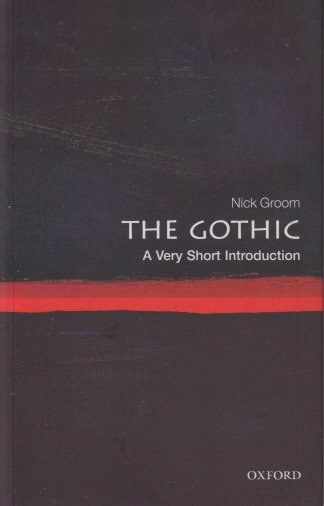
In a writer’s experience, seeing a book’s website—receiving an ISBN—is like the quickening of a baby.  You’ve known for some time that it’s there, but the proof is in knowing that other people can find out.  I only learned of this because a friend wanted a link to the book page.  If you google the title without quotation marks you’ll find lots of websites about Christians and nightmares.  (Who knew?)  People of my generation still often don’t realize that, much of the time, searches with quotations marks are increasing necessary on a very, very full internet.  I’m still not sure of a publication date for Nightmares with the Bible, but you can preorder it.  (Sorry about the price.)

Once a friend asked me why we do it.  Writers, I mean.  Unless you’re one of the few who are very successful you don’t make much money off the project that has taken years of your life to complete.  I’ve never earned enough in royalties even to pay for the books I had to purchase to research the topics on which I write.  It’s not an earning thing, although that would be nice.  For some it’s an expectation of their job.  For some of us where it’s not, writing books is perhaps best thought of as monument building, a long and intensive “Kilroy was here.”  You notice something you think other people might find interesting, and so you write it down.  Chances are the number of other interested people will be small.  Family (maybe) and a few dedicated friends will lay down the cash for an academic book.  But still, there’s a village behind it, and I need to thank them here.


Summer of Horror

Summer vacation—or at least what used to be known as summer vacation—is winding down.  Unlike most years when the season is marked by a carefree sense of time off and travel, many of us spent it locked down while the Republicans have used revisionist history on the pandemic, claiming against all facts that America handled it best.  Is it any wonder some of us turned to horror to cope?  My latest piece in Horror Homeroom has just appeared (you can read it here).  It’s on the movie Burnt Offerings.  The movie is set in summer with its denouement coming just as vacation time ends.  I’ve written about it here before, so what I’d like to mull over just now is transitions.  The end of summer is traditionally when minds turn to hauntings.

Doing the various household repairs that summer affords the time and weather for, I was recently masked up and in Lowe’s.  Although it was only mid-August at the time, Halloween decorations were prominent.  Since this pandemic—which the GOP claims isn’t really happening—has tanked the economy, many are hoping that Halloween spending (which has been growing for years) will help.  My own guess is that plague doctor costumes will be popular this year.  Unlike the Christmas decorations that we’ll see beginning to appear in October (for we go from spending holiday to spending holiday) I don’t mind seeing Halloween baubles early.  There is a melancholy feel about the coming harvest and the months of chill and darkness that come with it.  Burnt Offerings isn’t the greatest horror film, but it captures transitions well.  (That’s not the focus of the Horror Homeroom piece.)

Many of us are wondering how it will all unfold.  Some schools have already opened only to close a week or two later.  Those in Republican districts are sacrificing their children (this is the point of the Burnt Offerings piece) in order to pretend that 45’s fantasy land is the reality.  The wheels of the capitalist economy have always been greased with the blood of workers.  (Is it any wonder I watch horror?)  As I step outside for my morning jog I catch a whiff of September in the air, for each season has its own distinct scent.  I also know that until the situation improves it will likely be the last I’ll be outdoors for the day.  It has been a summer of being cooped up and, thankfully, we’ve had movies like Midsommar and Burnt Offerings to help us get through.


The Birth of Horror

In both Holy Horror and Nightmares with the Bible I concern myself with horror films that have appeared since 1960.  I’m not enough of a cinema studies type to argue eloquently about the various stages of the horror genre on celluloid, but the many histories I’ve read settle on 1931, the year Universal’s Dracula and Frankenstein both appeared.  Dealing with more contemporary fare, I often use that as a mental benchmark.  Gary D. Rhodes has changed  that perspective, however.  The Birth of the American Horror Film is a somewhat sprawling treatment of a subject that’s more involved than I had supposed.  Early films didn’t suddenly appear, of course, and Rhodes spends some time surveying what came before the film that eventually produced what we recognize as cinema.  One of the things he notices is that which we call “horror” was pretty much there from the beginning.

Call it morbid curiosity.  While not everyone admits it, it is a pretty widespread human condition.  After surveying literature, theater, and visual culture, Rhodes moves on to consider many different genres of pre-1915 horror.  Some of them don’t strike every reader as horror today, but that’s a point I tried to make in Holy Horror.  The definition depends on the viewer.  Rhodes suggests throughout that American viewers tended to prefer non-supernatural horror.  While statistically this may be true, he devotes several chapters to genres that fall into the supernatural category.  These were, in the opinion of this reader, the best in the book.  One of the reasons is that horror and the supernatural naturally go together.  Many of us working in this field have noticed, some with embarrassment, that the two are closely related.

What might strike other readers as starkly as it did me, is just how terribly prevalent “horror” films were before there was a proper genre.  Rhodes makes the point that even if we like to think otherwise of ourselves, if there hadn’t been a substantial market for such movies they wouldn’t have thrived.  Some of them, like murder mysteries and other dramas, we might cast more as “thrillers” today.  I included a few of them in Holy Horror.  The real terror, however, often arises from subjects that were somewhat taboo in the late eighteenth and early nineteenth centuries.  Religion was handled with all seriousness.  I wonder if this might be one of the reasons that the supernatural didn’t appear, in the early days, as much as it would later.  This is one of those books that raises many questions such as this, and that makes me glad that the author is working on a sequel.


Creation of Horror

I recently read the article “The Christian Worldview of Annabelle: Creation” by Neil Gravino on Horror Homeroom.  I’m pleased to see that the complex world of religion and horror is being addressed by other scholars.  (I know that many actually work in this area, but if you don’t have access to an academic library finding their articles can be impossible.  Also, did I ever think I would miss Religion Index One and Two so much?)  Since I have a piece that is scheduled to appear on Horror Homeroom concerning the 1976 movie Burnt Offerings, I’m glad for the company.  As in my article, Gravino makes the case that the relationship between horror and religion (the Christianity of Annabelle: Creation and its need to be a horror film) is fraught.  This is something I describe in some detail in Nightmares with the Bible.

Back when I was writing Holy Horror I realized that putting individual horror films into a series creates continuity issues.  Annabelle: Creation is part of the wildly successful Conjuring franchise, the latest installment of which has been delayed by the pandemic.  Depending on how you count it, there are already seven films in that particular universe and the shifting of the story is the focus of an entire chapter in Nightmares.  The reason it requires such sustained attention is that, apart from being the most successful horror franchise after Godzilla, these movies are squarely based on Christianity.  Lacking the unrelenting gravitas of The Exorcist, they feature (in the main branch of the diegesis) the Catholics Ed and Lorraine Warren.  In an almost Dantesque view of Heaven and Hell, the characters struggle with monsters that hover between ghosts and demons.  They’re closer to the latter.

Many horror films—but by no means all—are based on fears associated with religion.  That religion isn’t always Christianity, as both The Wicker Man and Midsommar show, but the warnings against extremism apply equally to belief systems across the board.  Another thing I miss, being outside the academy, is the funding to do some in-depth research on this.  It’s good to know that others are seeing what I’m seeing as well, as is appropriate when you encounter something unexpected.  Our religion haunts us.  The reasons we believe are often tied to the self-same fear that the religions themselves generate.  And like religions, horror movies hold the possibility of earning quite a lot of money.  The parallels should not, I believe, be overlooked.


More than Kids’ Stuff

Children and Young Adult literature (which has its own Library of Congress acronym!) has come a long way since I was a kid.  Don’t get me wrong—I enjoyed the books I read as a young person, but there are many more choices that use a lot more imagination these days.  I’ve been reading Robert Repino’s books since Mort(e) appeared in 2015.  Spark and the League of Ursus is his latest and it continues his trademark use of animals (and stand-ins) to get at very human situations.  Spark is a carefully crafted story based on the idea that teddy bears do more than provide cuddles at night.  They are, in fact, a force for good, protecting human children from monsters.

As usual when I discuss books, I won’t give too much away.  I’m one of those guys who doesn’t even like to read back-cover blurbs because I’m afraid they’ll spoil the story.  Instead, I’m going to applaud the use of imagination in a world that seems stuck on a limited number of plot points.  Books like this, which stretch the imagination of the young without talking down to them—why does it cost us so much effort to admit that kids are smart?—are a great addition to CYA literature.  I was exploring this concept with another friend who writes when I read Hank Green’s An Absolutely Remarkable Thing.  A story’s intended audience is often signaled by the age bracket of the protagonists.  I’d suppose ‘tweens might be about the age here, based on that metric.  (Green was more like New Adult, a category that lasts until about age 30.)

Reading material written for younger readers makes me feel younger myself.  I read Ransom Riggs first three Miss Peregrine novels (also published by Quirk, the house that publishes Spark).  You see, I’m really encouraged by this growth in younger readers’ material.  If we can get kids into books with such engaging stories I suspect there’ll be less chance that they become unimaginative, straight-laced adults who want to keep things just like they were when they were kids.  Imagination has that kind of liberating ability.  Besides, who doesn’t want their teddy bear to come to their rescue once in a while?  It’s not just children that can take a lesson from imaginative story-telling.  Repino’s War with No Name series was intended for adult readers but it is good preparation for getting a sense of the possibilities for readers who might, in all hope, never have to face wars at all.


Mummy’s Daddy

Now that I’ve broached the subject of the Agade listserv, I’m bound to find some interesting stories therein.  The title of this blog “Sects and Violence in the Ancient World” is an artifact that demonstrates eleven years ago I was still keeping up with Ancient Near Eastern studies.  I was calling it “Ancient West Asian studies” then, but I’ve been in publishing long enough to know that shifts in terminology are frowned upon by those in an industry that moves at a glacial pace.  (Just remember that the tortoise wins in the end.)  In any case, one of the recent articles on Agade had to do with the “curse” of Tutankhamen’s tomb.  This is an idea that goes back to the 1920s and was in some respects expressed in the Universal monster film The Mummy.  In pop culture the idea lives on.

Photo credit: The New York Times (public domain)

It seems that some, but not all, of those involved in opening Tut’s tomb died in unusual ways shortly thereafter.  The deaths were not concentrated within a day, let alone a week or a month, and some of them were natural but premature.  The ideas of curses, however, fit the spiritual economy of the human psyche so well that they suggest themselves in such circumstances.  A run of bad luck may last for years, causing the sufferer to think they might be living under a curse.  It is, in many ways, the pinnacle of magical thinking.  No matter how scientific we become the idea never goes completely away.  Just when Mr. Spock seems in control of the Enterprise Harry Potter beams aboard.  Our minds are funny that way.

The particular article I saw was one that had clearly followed on an earlier piece that I had missed.  It mentions “the documentary” but doesn’t say which one.  I suppose there are many such filmed attempts to make sense of memes such as the Pharaoh’s curse.  From my teaching days I have documentaries about a number of weird things that the History or Discovery channel, and maybe A&E, spun out back in the Dark Ages.  I’m not convinced that scientific thinking is really under any threat from such journeys down the paths of speculation.  I’m also not sure that there really is any connection to the various deaths surrounding the Carter expedition in 1922.  In just two years’ time we’ll be at the centenary of the discovery of the tomb and I’m sure there will be plenty of information on offer then.  As long as the curse doesn’t get us all first.


Upgraded at Last

Those who pay close attention to labels may have noticed the tag “Neo-Luddism” appended to some of my blog posts.  Luddites were nineteenth-century protestors against machines because, their thinking went, machines denied people jobs.  I’m not fully in line with this way of thinking, of course, but I do occasionally point out the ironies of how our technological life has become, well, life.  Tech seems to have taken over life itself and some people really like that.  Others of us miss the outdoors and even the “free time” we used to have indoors.  Our computers, phones, iPads, left behind and maybe a physical book cracked open—this seems a dream at times.  I really do enjoy our connected life, for the most part.  It makes this blog possible, for instance.  What I object to is being forced to upgrade.  That should be a decision I make, not one thrust upon me.

Which cloud is it?

This is just one small instance of what I’m talking about: my laptop wants an update.  It has for a couple of months now.  Since it’s in rather constant use I can only devote the time to it on the weekends and the past four weekends have all been used up with other things, including two that had over eight hours of Zoom meetings scheduled.  Now, you see, the update isn’t just a matter of simply updating.  You need to clear space off your computer first.  I like to keep my files and the tech companies want to pressure me into keeping them on “the cloud” so they can charge me for the privilege of accessing the things I created.  Instead I back them up on terabyte drives, sorting as I go.  Photos, formerly iPhotos, take seven or eight clicks to upload and delete for each and every set.  If you snap a lot of pix that translates to hours of time.  It also means when I want to access my files I have to remember where I put the terabyte drive, and then connect it to the computer.  At least I know where my files are.

But do I?  If I were to crack open the drive would I have any means of locating what, on my laptop, looks like memories of family, friends, and places I’ve been?  Are they real at all?  If you’re sympathetic to this existential crisis created by the tech world in which we live, you might understand, in some measure Neo-Luddism.  Of course memory is available for purchase and it will surely last you at least until the next upgrade.


Marching down the Middle

It is true that I have a fondness for nineteenth-century British novels.  Even though they often lack a strong speculative element they tend to be gothic, at least if written by one of the Brontë sisters.  I’d only ever read one of George Eliot’s novels before, and that was in ninth grade.  Middlemarch has been on my list for many years, but due to its intimidating size I’ve kept putting it off.  Now that I’ve read it I feel like I’ve accomplished something.  I had no idea what the story was about in advance, and no idea how it ended.  Unlike many pieces of literature of its time it hasn’t made a huge impact in pop culture, so this was the opportunity to lose myself for a few months in a world completely unknown.

I’m not foolhardy enough to try to summarize an 800-page novel here, but one aspect that the reader can’t help but notice is the prominence of clergy.  And not only prominence, but prestige.  In a world built around the solid belief in different classes of individuals, where pride takes a place in marriages that are supposed to be within class, the clergy are minor nobility.  Since this is the Church of England the vicars can marry and indeed, one such marriage sets off the tension that lasts throughout the hundreds of pages to come.  The clergy of the time were often gentleman scholars—the role that was envisioned for Charles Darwin as a young man.  Eliot plays on that idea with some of her preachers being amateur scientists.

The conflict—that now feels inherent—between science and religion has less to do with older forms of Christianity than it has to do with evangelicalism.  A relatively new expression of Christianity, evangelicalism set itself against modernity and its science.  Quite often today when commentators rail against “religion” it is really evangelicalism that they have in mind.  In the world Eliot sketches, she sees no difficulties between a rational view of things and an ecclesiastical one.  Clergy are often seen at the whist tables and taking long walks down country lanes.  The distinction between them and the average citizen is that they have been to university to study.  Today, in mainstream Christianity anyway, clergy are educated at least to the master’s level.  They’re no longer among the minor nobility, however.  Middlemarch has more than a hint of nostalgia to it, and the clergy roles show that clearly.


Never Too Late

In these weary days of bleak news, I’m always glad to find a bit of cheer.  A friend recently shared the story of Giuseppe Paternò from The Guardian.  Paternò is a 96-year-old first time college graduate.  As the story explains Paternò had wanted to attend college his entire life but being raised in poverty he never had the opportunity.  We all know how life is a rushing river that snatches you in its current, and thus Paternò found himself unable to attain his dream.  Until his nineties.  Just this year he graduated from the University of Palermo.  What really spoke to me about this story is that Paternò is now considering working on his master’s degree.  While some might wonder if this is practical, to me it demonstrates that knowledge is never wasted.

We live in an era where education is seen as either a useless luxury or as just another business.  Both views are fatal to our civilization.  We have reached where we are by progressively educating our young (and old) so that our collective knowledge-base grows.  When education is seen as a business (and I saw this in my ill-fated university teaching career) it becomes something different.  This isn’t on the part of the faculty, for the most part, but on administrations.  Paying corporate-level salaries to administrators—schools top-heavy with deans—they can’t afford to hire faculty and cut departments that aren’t profitable.  Knowledge, in turn, suffers.  Paternò, I sincerely hope, avoided the politics of academia.  A man hungry for knowledge, he studied philosophy at an age when most of us think people should just sit around and stare at the walls all day.  Knowledge should never be wasted.

Those of us who’ve been excluded from the academy sometimes try to continue our contribution.  Some of us still write books and articles.  It does nothing for our promotion or tenure.  It certainly doesn’t bear much in royalties.  “Why do it?” a friend once asked me.  When we cease seeking knowledge we stagnate and die.  We see this playing out in the politics of our day.  Washington houses many who see education as a threat to the unrestrained acquisition of mere money.  This is why universities suffer—they are not businesses.  One size does not fit all.  At their best they’re places where those of us raised in poverty can go to have our eyes opened.  And they are places where even nonagenarians can go to contribute to the growth of knowledge.


Etymological Serpents

Snakes get a bad rap.  There are biological, evolutionary reasons people tend to fear them (some are dangerous and the way they move is literally creepy), but snakes are a necessary part of our ecosystem and very successful reptilian forms.  Nevertheless they get associated with evil.  The other day I was consulting a book of Christian symbolism.  This was actually a book I’ve had since my childhood.  My eye fell upon the entry for serpent and the book gave the etymology as from Latin for “sin.”  I’d never heard this before and as I thought about it, “serpent” has the same ending as “repent,” so I wondered if the terms might indeed be related.  That most authoritative of lexicons, the Oxford English Dictionary, soon set me straight.  The etymology of serpent is from Latin (at least partially) but not for the word “sin” but from the word “creeping.”

Given what serpents do, that name origin makes sense.  The idea of sin being attached to snakes is a biblical one.  The Garden of Eden oh so long ago, and a serpent wrapped around a fruit tree.  That story has become one of the most influential in western culture, played and endlessly replayed with some combination of apple, woman, and serpent.  Genesis, of course, doesn’t specify the tree as an apple tree.  That association seems to come again from the Latin.  The word “apple” is malum, which may also be used for evil.  In Latin they have different vowel lengths and only become homophones in the languages of non-native speakers.  The serpent, on the scene at the primordial fruit tree, becomes associated with sin because of this story, not by its etymology.

The biblical view of snakes is not a positive one.  By the time of Revelation the serpent is associated with Satan.  It’s also called a dragon, which, as modern fantasy aficionados can tell you, is quite a different thing.  The dragon becomes associated with evil because of the Good Book also.  The reptile order generally doesn’t fare too well in the biblical world.  There do seem to be Sumerian prototypes for the story of the snake and the tree.  It’s not completely original with Genesis.  Still, you’d like to think that if someone is going to write a book about symbols they might take extra care with the etymologies.  People tend to fear snakes.  It’s hardwired into our primate biology.  That’s no reason to make them the bad guys, though.  All you need is a good dictionary to clear things up.


Agade

The word “listserv” feels abrupt to me, as if someone couldn’t be bothered to type one more “e” to give the reader a sense of satisfied completion.  Technology terms are often like that—not really descriptive of what they are and leaving us older folks wondering about the words and not quite comprehending what they’re supposed to signify.  Back in the early 1990s I joined a listserv that eventually came to be known as “Agade,” since it carried news of the Ancient Near Eastern variety.  Since I seldom have the opportunity to work in that field any longer, I long ago ceased to be on the Agade listserv and consequently have lost track of what’s happening in real time.  Or at least close to it.  An author with whom I was working recently asked me to post about his book on Agade so I had to resubscribe.  It’s nice to see the listserv, whatever that is, still alive and kicking.

One of the articles posted recently had the intriguing title “Burnt remains from 586 BCE Jerusalem may hold key to protecting planet.”  I’m not sure, beyond evangelicals chomping for Armageddon, who doesn’t want to protect the planet, so I read on.  Archaeologists, I know, sometimes feel put upon to defend their work.  Yes, it’s sexy and cool, but it’s also expensive and not as well funded as it needs to be.  It does occasionally lead to real scientific breakthroughs.  This particular story is about Earth’s magnetic field.  It is vital for life as we know it, and we know that it is constantly shifting.  In fact, some pundits are fearing a flip in magnetic poles which, for a guy who can’t even understand listserv, sounds really catastrophic.  The article, however, is about the fact that the destruction of the temple in Jerusalem by fire that led to a trapped picture of the magnetic field at the time, and we know the date.  Magnetic materials under high heat preserve indicators of the Earth’s magnetic field, whether it had been discovered or not.

Image credit: NASA/ISS Expedition 28, public domain from Wikimedia Commons

The book of Genesis says nothing about the creation of the magnetic field that makes life on our planet possible.  Knowing that we understand so little about something that makes our existence possible, I suspect, indicates that there are many factors of life we haven’t even begun to comprehend.  There are further discoveries to be made.  We’re not even sure if our definition of “life” is entirely accurate.  One thing our history has taught us, however, is that if we build great structures there will be those eager to burn them.  As we sift through the rubble we might discover something about the direction in which we’re going.  And a listserv will be there to share the news.


A Slice of Childhood

Few names from childhood are as well known as Dr. Seuss.  When my wife and I read Theodor Seuss Geisel, in the Lives and Legacies series, we realized that neither one of us had learned to read with his books.  It’s not that they hadn’t been written and widely adopted yet (they had by the time we started school), but rather that our districts had gone with other fare.  I learned with the famous Dick and Jane series, and I think there must’ve been some Seuss thrown in here and there.  We didn’t own any of his books, but I remember my mother reading from library copies of Hop on Pop.  When our daughter was born we read to her daily and Dr. Seuss was a large part of our informal curriculum.  Before reading this book, however, I knew very little about who Theodor Geisel was.

The series Lives and Legacies features short books, so this is a quick and no-frills way to meet the man.  Although Geisel was born into a middle class family, he experienced (ironically) the trauma of being in a German family during the First World War.  What we would call hate crimes today were committed against German-Americans during the war, even though there were sizable populations of Teutonic Americans by that point (including my mother’s family).  Not only that, but Prohibition put his father’s brewing company out of business.  Still, Seuss was accepted at Dartmouth and, like many who make it to the Ivy League, his connections helped him to a successful career in advertising and then in writing children’s books.

Geisel was a successful man, but wasn’t driven by money.  He was an artist both with images and words, and as Pease makes clear he approached his craft seriously.  As he matured he began to address social and political issues in his larger formatted books.  He eventually became the most successful children’s book author in history.  Reading to my daughter when she was young we discovered that, unlike the often idealized times of the fifties (followed by the sixties into which I was born) there is a wealth of quality children’s literature available.  It’s easy for middle-class kids to be raised loving reading.  Dr. Seuss knew that the pretensions of adults often created the seriousness with which we face life.  Children enjoy fun and the ridiculous.  He never lost sight of that simple fact.  We live in times when it is readily to be wished that many of the adults in power would go back and read a little Seuss and perhaps, just perhaps, learn their lessons.


The Parable of the Doves

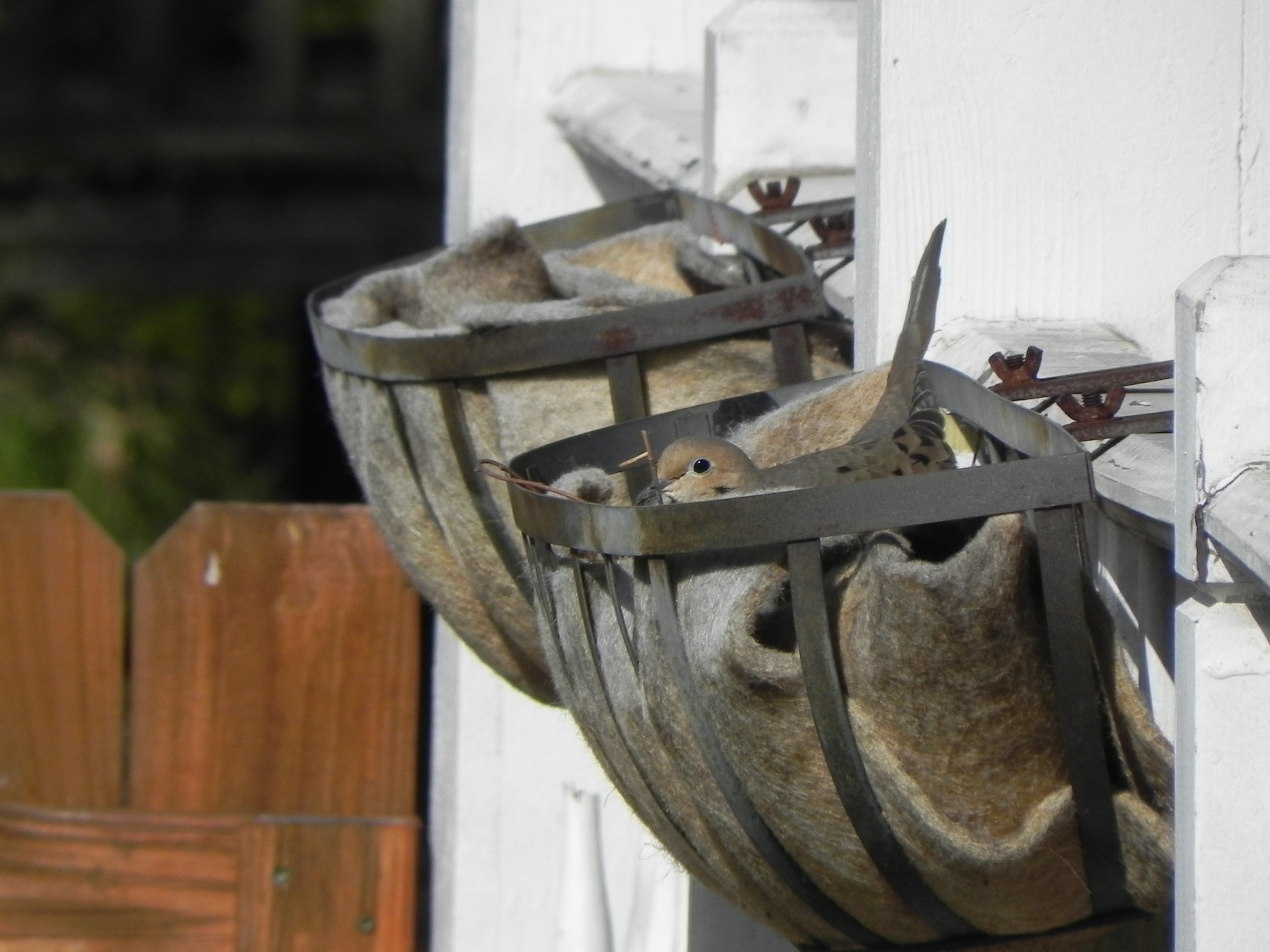
A loud flapping of wings.  I looked out my window in time to see a mourning dove land on the roof opposite with audible bump.  The poor thing sat there, looking stunned.  Then another flapping of wings.  Another dove flew over the gutter onto the higher roof.  It was then that it dawned on me that these two were being pushed out of the nest.  I’ll admit that I doubted the wisdom of a dove building a nest in the neighbor’s gutters, especially when the tropical storm dumped several inches of rain on us last week.  Sometimes animals know what they’re doing, however, and even after the storm I could see the mother dove winking at me, her head just above the level of her aluminum-sided home.

The stunned youngster sat there for quite some time.  As soon as Mom was gone, the one that had flapped above climbed back into nest.  Was I watching a parable unfold?  Mom flew back when chick number two decided to flap down and join its sibling.  Throughout the morning I watched as the mother returned, landed in sight of her offspring, then showed them how to get down to the ground.  Ensuring they were watching, she waddled to the edge, dropped, and spread her wings.  She did this several times as the young birds kept carefully away from the edge.  Mom, it seemed to me, was growing impatient.  She’d occasionally fly back to peck them, but the siblings simply wouldn’t take the leap.  She started coming back to feed them instead.  I wondered how she managed with two beaks jammed into her own at the same time.

I kept an eye on the drama the entire day.  By the time I turned in for the night, the two youngsters were bedded down next to each other on the roof.  Their mother had landed, cooed insistently to them, but they dutifully ignored her, afraid of falling.  We look at birds and think they’re built to fly.  It’s one of their greatest assets.  It is the kind of gift, however, that requires overcoming obstacles.  Just because you can fly doesn’t mean that you’re not afraid to fall.  There’s learning involved.  Such episodes of animal intelligence always inspire me.  We could learn so much if only we would take the time to see how birds learn to fly.  The transition from coddled nesting to the freedom of the skies is not easy, and being built to fly still requires overcoming a very natural fear.


Fiction

All writing is fiction.  I suppose that requires some unpacking.  One of the first things we do when we approach a piece of writing is answer the question “what kind of writing is this?”  We may not do this consciously, but we wouldn’t benefit much from reading if we didn’t.  If your significant other leaves you a note stuck to your computer monitor or the refrigerator door, you know at a glance that it likely contains pithy, factual information.  If you pick up a newspaper you know what to expect the contents to be like.  It’s quite different if you pick up The Onion.  Or a romance novel.  These categories are extremely helpful, but they can also be problematic.  Any writer knows that you write and others decide on your genre.

I read a lot of nonfiction.  It is a kind of fiction, however, since it follows a narrative and it contains mistakes, or perhaps faulty assumptions.  Moreover, nonfiction is a reflection of its own time.  Geoffrey of Monmouth’s England had giants in its past.  It simply did.  Today we question his working assumptions just as surely as future people (if we long survive) will ours.  This current generation doesn’t really excel at critical thinking.  Many academics, as critical as they are in their own fields, fall into standard assumptions once you get beyond their expertise.  They accept the fictions of their era just as readily as does everybody else.  In reality our nonfiction is not the naked fact we like to think it is—it is the narrative of one perspective.  It is perhaps the truth as it is perceived in its own time.

This may seem to be a subtle distinction, but it is an important one.  Genres are very convenient handles that we use to classify what we’re reading.  Very often they become straightjackets that constrain what writing has the potential to be.  The word “genre” is related to the concept of genus, the classification about species.  Zonkeys and other, perhaps rare, but possible cross-breedings show us that hopeful monsters of the literary world are also possible.  We would soon suffer without genres in a world as full of words as this one is.  We also suffer from simple distinctions that somehow become iron-clad over time.  Think about the narrative that comes out of the White House.  We’re accustomed to it being mostly nonfiction.  At least we were until recently.  Watergate broke our trust in that, and now we live in a world of fiction masquerading as reality.  Critical thinking is, perhaps, the only way to make sense of any of this.


Holy Smoke

I’m not inclined to read news about drug use, and, to be honest, I barely have time to read about the culture of ancient Israel any more.  I very occasionally hear from people who find out that my book on Asherah is free on Academia.edu (it is) that tell me how they plan to use the information.  It’s gratifying, but as with anything put out there for public consumption, you never know which direction it’s going to go.  Thus I found myself on Lucid News’ website.  With the tagline “Psychedelics, Consciousness Technologies, and the Future of Wellness,” ideas begin to form in the mind.  But a citation is a citation, and so I read the opinion piece “Drugs, the Israelites and the Emergence of Patriarchy,” by Danny Nemu.

The story follows on the announcement from some time ago that chemical analysis of an interior altar of an ancient temple at Arad (from ancient Israelite times) revealed that it had been used to burn cannabis.  The biblical story—now questioned by archaeology—is that there was only one official temple and that was the one in Jerusalem.  It was destroyed by the Babylonians in the sixth century BCE and then again by the Romans in the first century CE.  We have no access to the altars that stood in the temple, but we do know that incense, particularly frankincense, was valued for its pleasant smell.  According to the article in Lucid, a second altar in Arad showed residue of frankincense.  Both altars were in a small, enclosed room—the bong of the Lord, as it were—and that together the two forms of smoke would’ve created an intense religious experience for a priest in there for any length of time.  Although the article doesn’t suggest this, it could also explain why animal sacrifices were going on in the courtyard, I guess.

You might be wondering about Asherah.  While the jury’s out on her actual worship and what it entailed, the academic establishment has decided that she was Yahweh’s spouse and was worshipped together with him in the ceremonies that have been forgotten to time.  With all that heavy substance burning I guess it’s not surprising that some things might’ve been forgotten.  I don’t really advocate the use of drugs, but the science behind archaeology shows us that religions have used them for centuries and centuries to reach other levels of consciousness.  I was in chapel services at Nashotah House where the incense was so thick you could barely breathe.  Did such circumstances play a role in the religion that now identifies itself as white-shirted evangelicals?  It boggles the mind.