Something Blue

I’ve worked for two British publishers.  This probably has nothing to do with the fact that I lived in the United Kingdom for over three years, but the two situations have this in common: they’re bloody complicated.  I say that for a reason.  I’ve always wondered why “bloody” is considered swearing in Her Majesty’s realm, but not over here.  Profanities tend to be culturally specific, of course, while some forms (scatological and blasphemous, in particular) are generally universals.  I had always assumed “bloody” had something to do with religion, kind of like the more tame “zounds” is an abbreviated form of “God’s wounds.”  In fact, the folk etymology of bloody suggests just that.  Folk etymologies, I learned as a budding philologist many years ago, aren’t the same as scientific etymologies.  In other words, like folklore, they aren’t entirely accurate.

One of the lessons I learned in Britain was that if you wish to cite a lexicon, it should be the Oxford English Dictionary.  It’s The authority.  So I thought I’d bloody well check it out on this.  There, it turns out, the emphatic use of bloody has to do with breeding, not bleeding.  Back in the seventeenth and eighteenth centuries there were rowdy aristocrats, or “bloods,” that gave the phrase it’s referent.  These privileged wealthy classes, as befitting the stereotype, could afford idle drink.  They did not work, so life was a matter of passing the time with aristocratic pursuits, such as imbibing.  This led to a phrase “blood drunk,” which, disappointingly, didn’t refer to Dracula, but meant drunk like a blood.  It was only a short, tipsy walk to “bloody drunk.”

Antoine-Jean Duclos, from Wikimedia Commons

Disengaging the adjective—like the saucer part of the Enterprise pulling away from its iconic Star Trek hull—you get stand-alone “bloody.”  This swear has nothing to do with sacred blood, but rather blue blood.  Which brings us to the realm of sacre-bleu, in which the word “blue” (bleu) features.  But this has nothing to do with the color blue (such as Marian blue, known from mythology of the virgin) but from the fact that bleu rhymes with dieu, and using the name of a deity (although “god” is actually a title, not a name) is swearing.  In fact, it is technically what is meant by blasphemy.  Working for British-based publishers has been its own kind of education.  It’s easy to get lost in etymological labyrinths.  But is that the bloody time?  I’ve got to get to work.


Troubled Trilogy

The quest for the truth is never-ending.  New information keeps emerging and our poor brains have evolved to survive the perils of weather and wild animals, not to receive all available information.  It’s the fear that I might’ve missed something that has me going back to a place I’d rather not go.  Andrea Perron’s account of what happened in Harrisville, Rhode Island is the only real published source by eyewitnesses that’s readily available.  Her three-book account, however, is a deeply personal ramble that isn’t easy for the fact-finder to follow.  A couple of months ago I posted on volume one, intimating that I would probably have to go back and read two and three.  There’s a compunction about completion that humans have.  An economist once told me not to measure a venture by sunk funds.  The same applies to books, I guess.

In my ongoing research into demons, and particularly the work of Ed and Lorraine Warren, I felt I had to continue with the troubled trilogy.  Volume one barely mentioned the Warrens.  Volume two finally revealed some of the story.  It took 260 pages to get there, but finally, an eyewitness account!  It has plenty of gaps, of course, but it is, as they say, different from the movie.  You have to understand that a certain sector of the internet was buzzing like flies in January over The Conjuring.  Based on a true story, it was a sympathetic treatment of the Warrens’ work that it was hoped would give credibility to the demon-hunting duo.

House of Darkness, House of Light in total is well over a thousand pages long.  I know, I know—“caveat emptor.”  Nevertheless, I’ve always felt that long books owe it to their readers to deliver on the promises.  I want my haunted house books to be scary.  Or at least moody with a gothic sensibility.  I do understand the desire—the compunction—to approach life philosophically.  Were I ever to put my life out there on display, beyond the occasional forays on this blog, I would hope to do it in a way that left readers wanting more, not less.  Biography is a dicey subject.  Autobiography even more so.  The traditional publisher steps in with an editor firmly in hand.  I know because I’ve been doing this for about a decade now.  The writer and the editor, like the farmer and the cowman, should be friends.  It’s tough, painful even, when someone takes a pen to what you’ve carefully crafted.  The results, when they work, give the reader what s/he wants.  The quest may indeed be never-ending.  At least trilogies have only three parts.


Quiet on the Winter Front

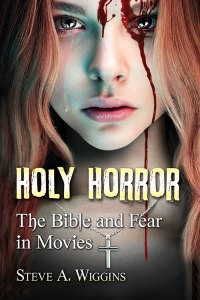
There’s a weird silent time, after a book is published, when you start wondering how it’s doing.  Holy Horror was apparently released November 29, and published December 29, if done according to standard publishing practice.  The release date is when stock is received in the warehouse.  The book is printed and technically available, but not yet published.  Publication is about a month later when the sellers, distributors, etc., have received their orders and can begin sending them out.  Publishing, as I’ve noted before, is a slow business.  Somewhere around this point you start wondering how your book is doing.  Reviews take some time to appear.  The publisher falls silent (I know this from the editorial perspective as well).  You start thinking, did it really happen?

This is the internet syndrome.  We’ve become used to instant results and it’s difficult to believe that can get by without minute-by-minute updates.  The problem is publishing is slow.  Reading a book takes time.  Not all readers review.  It’s perhaps the kind of malaise you expect in late winter.  In my case, however, my book was an autumn book that missed its release date by a few months.  Yes, hardcore horror fans are still chomping at the bit for upcoming features like Us, but the public in general is well on its way to Valentines Day and what comes after.  We are pretty much a holiday-driven culture and Holy Horror was a Halloween book released after Christmas.  That, and the combination of Bible and horror is unexpected, with many, I’m guessing, thinking the book is something it isn’t.

Often at work I ponder how publishing has changed, even if it runs like sap in January.  Professional writers—those who lived from their books alone—used to be rare.  Most authors were otherwise employed, and many of them worked in publishing.  It stands to reason when you think about it.  I’ve worked for three publishers and finding other writers is, and has been, a rarity.  Instead editorial boards consist of people who largely don’t have the experience of writing a book of their own talking about author expectations.  A disconnect has emerged where writers find employment in other industries and find themselves wondering why publishers do things the way they do.  Even with that background knowledge, I do wonder how my little book is doing.  It’s only natural.  And now that we’ve progressed to February, it’s only eight months more until October.


Ground, Candle, and February

The world’s hairiest prophet?

Relying on the prophetic ability of a rodent may seem like a fool’s errand, but to understand Groundhog Day you have to go back to Candlemas.  Apart from when I lived at Nashotah House, I’ve never been anywhere that people knew what Candlemas was.  It’s also known as the Feast of the Presentation, and it in itself is built on an archaic ritual based on a creative understanding of biology.  In ancient Israel, a woman was considered impure for seven days.  The eighth day, if the child was a boy, he was circumcised.  Thirty-three days later the woman, finally considered pure enough to approach the temple precincts, was to take a sacrifice for her purification.  And oh, if she bore a girl the impurity lasted sixty-six days.  It’s all there in Leviticus.

What does any of this have to do with Groundhog Day?  Well, according to the much later tradition that Jesus was born of a virgin on December 25, if you do the math you’ll find Mary’s purification falls on February 2.  And if Jesus had been a girl Candlemas would be a moveable feat since February sometimes has 29 days.  Since it’s still dark out for most of the time in February a couple of traditions developed: one was a way of finding out when winter would be over and the other was the blessing of candles since you’d still be needing them for awhile.  That gave the feast its common name.  The tradition grew that clear weather on Candlemas meant that winter was to last for a good long time yet.  Since Germanic peoples love their Christmas traditions, a badger was used for the long-range forecast part of the celebration.

In Pennsylvania Dutch territory, badgers are rare.  Woodchucks, or groundhogs, are just about everywhere and they live in burrows like badgers do.  In a carryover from Candlemas’s clear weather foretelling the future,  the belief was that a badger or groundhog seeing its shadow—because it’s clear, get it?—meant six more weeks of winter.  Of course nobody knew about global warming in those days.  Candlemas, it turns out, was one of the earliest Christian celebrations and it was part of the Christmas complex of holidays.  It’s still winter out there.  It’s also Saturday which means I already have a list of chores as long as a badger’s shadow.  Now I’ve got to remember to get my candles blessed as well.   Winter, it seems, never ends.


Desert Demons

After reading many popular books, coming to a scholarly tome can be a shock to the system.  This is especially the case when said academic volume contains lots of information (not all do, believe me!).  David Brakke’s Demons and the Making of the Monk: Spiritual Combat in Early Christianity has been on my reading list for quite some time.  One of the perils of being a renegade academic is that you have no university library at hand and I’m not sure I want to reveal this side of myself to the local public librarian yet.  In any case, it would be difficult to summarize all that Brakke covers in this insightful treatment.  One of the elements that struck this reader, however, is the protean nature of the demons with which the eponymous monks wrestled.

Keep in mind that although demons appear throughout the Bible in various forms there is no single definition of what they are.  They appear to be spiritual monsters, in short.  Some passages seem to suggest they are fallen angels.  Others that they are foreign (primarily pre-Christian) gods.  Later ideas add the possibility that they are children of the Watchers, or even, as Brakke explains, evil thoughts.  The desert monks didn’t dwell on trying to discern their origin myth—they were out there to purify their souls, not to do academic research.  The Hebrew Bible does suggest that demons were creatures of the desert.  As monasticism began, appropriately in Egypt, one natural resource found in abundance was wilderness real estate.  The mortgage, however, was a constant struggle with demons.

Many of these demons developed into the seven deadly sins.  Not surprisingly, men living alone in the desert found themselves the victims of sexual temptation.  This led to, in some cases, the demonizing of women.  We’d call this classic blaming the victim, but this is theology, not common sense.  Anything that stood between a monk and his (sometimes her) direct experience of God could, in some sense, be considered demonic.  Brakke presents a description of several of these early desert-dwellers and their warfare with their demons.  Much of their characterization of evil would be considered racist and sexist today.  Brakke does make the point that during the Roman Empire—the period of the earliest monks—race wasn’t perceived the same way that it is in modern times.  Nevertheless, some of this book can make the reader uncomfortable, and not just because of demons.  Or, perhaps, that’s what they really are after all. 


Evolving Intelligence

In the process of unpacking books, it became clear that evolution has been a large part of my life.  More sophisticated colleagues might wonder why anyone would be concerned about an issue that biblical scholars long ago dismissed as passé.  Genesis 1–11 is a set of myths, many of which have clear parallels in the world of ancient West Asia.  Why even bother asking whether creationism has any merit?  I pondered this as I unpacked the many books on Genesis I’d bought and read while teaching.  Why this intense interest in this particular story?  It goes back, no doubt, to the same roots that stop me in my tracks whenever I see a fossil.  The reason I pause to think whenever I see a dinosaur represented in a museum or movie.  When a “caveman” suggests a rather lowbrow version of Adam and Eve.  When I read about the Big Bang.

The fact is evolution was the first solid evidence that the Bible isn’t literally true.  That time comes in every intelligent life (at least among those raised reading the Good Book).  You realize, with a horrific shock, that what you’d been told all along was a back-filled fabrication that was meant to save the reputation of book written before the advent of science.  The Bible, as the study of said book clearly reveals, is not what the Fundamentalists say it is.  Although all of modern scientific medicine is based on the fact of evolution, many who benefit from said medicine deny the very truth behind it.  Evolution, since 1859, has been the ditch in which Fundies are willing to die.  For this reason, perhaps, I took a very early interest in Genesis.

Back in my teaching days it was my intention to write a book on this.  I’d read quite a lot on both Genesis and evolution.  I read science voraciously.  I taught courses on it.  I’d carefully preserved childhood books declaring the evils of evolution.  To this day Genesis can stop me cold and I will begin to think over the implications.  When we teach children that the Bible is a scientific record, we’re doing a disservice to both religion and society.  This false thinking can take a lifetime to overcome, and even then doubts will remain.  Such is the power of magical thinking.  I keep my books on Genesis, although the classroom is rare to me these days.  I do it because it is part of my life.  And I wonder if it is something I’ll ever be able to outgrow.


McChristianity

Christianity isn’t known for its sense of humor.  The same can be said of other religions as well, of course.  What else should we expect concerning belief systems that claim eternal consequences?  A story by Colin Dwyer on NPR explains that the Haifa Museum of Art had to remove a sculpture titled “McJesus” due to public violence.  The sculpture depicts a crucified Ronald McDonald, and a number of althoughs follow: although Haifa is in Israel a large number of Christians protested.  Although the practice of crucifixion was uncomfortably common in ancient days it has come to be associated with one particular case.  Although the message might be interpreted as a condemnation of commercialism, protestors took it to be aimed at their faith.  Perhaps it was.  Artists can be notoriously ambiguous in that way.

Ronald McDonald is a liminal, if ubiquitous figure.  Instantly recognizable, he has been challenged before as a threat to christendom.  I once heard a priest lament that children recognized the golden arches more than the cross.  Well, that’s not surprising—we don’t go around telling our kids about crucifixion daily.  (Or shouldn’t.)  A massive Ronnie, on the other hand, floats down Manhattan every Thanksgiving Day.  He’s on posters, commercials, and 42nd Street.  He’s the patron saint of branding.  With his garish clashing color palette, his red and yellow never mix to orange and they linger in our minds to ensure us that no matter where we might be there’s always cheap, if unhealthy, food nearby.  Mr. McDonald has become a religious symbol of capitalism.

Even as a child I noticed the great deal of excitement that accompanied the opening of the local McDonald’s.  In a small, corroded corner of the rust belt, families piled into cars to drive to Oil City to see this wonder.  It was like an epiphany.  Eating out that the poor could afford.  Just about everything in downtown Oil City is now closed, but the last time I was there that McDonald’s still stood.  Back in Haifa an ironic depiction led to real violence.  Angry Christians carrying stones couldn’t see the statue as a condemnation of consumer culture.  Their beleaguered religion was at risk.  Blood flowed and the art piece was removed and packed off to Finland.  Although the point of the display was to question religious appropriation in the support of consumerism, and although that message could ultimately support the teachings of the religion it evokes, the branding came across all wrong.  Church is your kind of place…


Epigraphic Ephemera

Photo credit: Napoleon Sarony, via Wikimedia Commons

“We live in an age when unnecessary things are our only necessities.” ― Oscar Wilde

In certain kinds of books, epigraphs are popular.  In fact, I’m currently reading a book where every part of every chapter begins and ends with an epigram.  It starts to taste like an epigram cracker after a while.  Don’t get me wrong, every great once in a while there’s a quote that just illustrates your point in a chapter so pithily that you can’t resist.   Still, epigraphs ought to come with a warning label.  Working in publishing one of the first things I learned is that unlike quotes in the body of a text, an epigraph that’s covered by copyright isn’t considered “fair use.”  It’s an ornament, an embellishment.  If you want to use one, you need to get permission from the rights holder.  (Unless it’s in the public domain.)

While the idea of copyright itself isn’t that complicated—the creator of intellectual property is the owner of said property—copyright laws can be complex.  Publishers discourage the use of epigraphs (which only academics seem to use any more) because of permissions complications.  You see, when you publish a book (or article) you’re trading your copyright for whatever emoluments the publisher or the journal has to offer.  Most publishers, no matter how noble, are businesses.  There are costs with producing books.  If someone wants to reuse part of a another book—apart from the standard academic quote—they must have permission to do so.  Epigraph permissions can really slow a book down.  And make it expensive.

Reading is an involved process.  We human beings are seldom given such direct access to the interior lives of others.  Think about it—books are private thoughts made public.  Sometimes writers like to show that others have been thinking along similar lines, especially if what they have to say challenges convention.  Thus the epigraph.  The quotable quote.  But did you have permission to take that?  I like poetry.  It takes longer to read than prose, but it says so much in so few words.  That means using poetry in epigraphs becomes a nightmare.  Rights holders often charge by the percentage of the poem used.  And once a book becomes e book there no stopping the spread of its epigraphs used so carefully by permission.  Indeed, e-books are easily pirated, increasing the concerns of those who sell other’s thoughts for a living.  Before sticking that clever quote at the start of your chapter, it’s worth pondering the epigraph above (in the public domain, of course).


Prejudices of the Time

When my daughter was in middle and high school, I made an effort to read every book she was assigned for her English classes.  This gave us something to talk about during the years when many teens grow laconic and uncommunicative.  Some of the books I’d read before, but one frightened me off.  Ken Kesey’s One Flew Over the Cuckoo’s Nest pressed the wrong buttons.  You have to understand that I saw the movie for a class in college.  It disturbed me.  Even before encountering H. P. Lovecraft, one of my deepest phobias was insanity.  Children of alcoholics sometimes fear those who are out of control, and mental patients had become, in my head, associated with the non-rational behavior of my father that frightened me so.  During a clown ministry event we visited the local state hospital for mental patients.  I trembled for about a week after we left.

One Flew Over the Cuckoo’s Nest is in many ways a sixties novel.  One reflection of that is the fact that the religious imagery in the novel is presented in the form of punishment.  Everyone knows the narrative of R. P. McMurphy’s battle of the wills against Nurse Ratched.  The latter uses electroshock therapy as punishment and she tries to wear McMurphy down by using it repeatedly after the fight in the shower.  The electroshock table is described as a cross.  The metal headset is a crown of thorns.  Indeed, one of the patients is described as being crucified to the wall of the ward where he hangs throughout the novel.  The sixties frequently saw religion—especially the staid, conservative evangelicalism of the 1950s—as a form of punishment.  That’s pretty clear here.

Although the novel celebrates the freedom of the sixties, it also reflects the prejudices of the times.  The African-American attendees on the ward aren’t portrayed sympathetically.  The women—nurses and prostitutes alike—are there for the pleasure of the male patients’ gaze, exemplified in the leering laugh of McMurphy.  Still, there’s a kind of catharsis to this tale.  The Chief, from whose point-of-view the story’s told, is arguably cured by the antics and special attention McMurphy shows him.  Beneath the callous, self-serving conman there is a human decency that “the system” fails to find.  Indeed, McMurphy is a kind of Christ figure.  A fallen savior, no doubt, but a liberator nonetheless.  This was a difficult novel to read.  I couldn’t make myself pick it up half-a-decade ago, but I suspect somewhere beneath the surface I’m glad I’ve finally read it.  It didn’t cure any of my phobias but it made me think.


January 2019

When January starts grinding you down you have to find something to hang onto.  See, I even ended a sentence with a preposition.  January.  If I’m not careful I can find myself getting quite depressed, so a bit of self-induced music therapy helps.  Although I hate to admit it, I am a bit of a fussy person when it comes to my likes.  My music tastes are quite personal and I mourn when a performer I like retires or dies.  There’s not a ton of stuff that I enjoy and I don’t listen to music as often as I should.  I work from home most days so I could have music on, but I find it hard to read (which is much of my job) with music playing.  Like I said, fussy.

The other day—a weekend—I pulled out John Cale’s Paris 1919.  John Cale is an underrated member of the Velvet Underground.  Okay, with Lou Reed in the lead it’s gonna be tough to stand out.  Cale, who suffers from competing with J. J. Cale (who was actually John Cale too; I empathize!), is a very thoughtful lyricist.  Despite having been abused by a priest in his youth, he sprinkles his songs with religious references.  “Andalucia” is a haunting single with the words “castles and Christians” hanging there for anyone to interpret.  And “Hanky Panky Nohow” has an intriguing line about nothing being more frightening than religion at one’s door.  There’s something profound here.

I grew up listening to The Velvet Underground & Nico when my older brother played it and the curtain door between our rooms didn’t block any sound.  The only performer I could name was Reed.  Years later, when the music of my young, virginal ears started in with a longing I couldn’t explain, I bought the album and learned of John Cale.  I have to confess that I first encountered his name as the performer of Leonard Cohen’s “Hallelujah” in Shrek.  It drove me nuts when ill-informed students used to say it was Rufus Wainwright; yes, he performed it on the CD, but not in the movie.  John Cale is one of those somewhat offbeat singers, who, like Nick Cave, salts his songs with images of a Christian upbringing that show a grown man clinging to something to which he somehow can’t fully commit.  It makes us who we are and then leaves us wondering.  It must be January.


Book Life

Like a book, life can be divided into chapters.  This is perhaps an instance of art following reality, or perhaps it’s the other way around.  The episodic nature of life suggests the chapter structure of books.  As I was waking up this morning (disappointingly before 4:00 a.m.) I was reflecting on the chapters of my life.  As with a book, the most recently read decade is perhaps freshest in one’s mind, but the decades do seem to fall roughly into format.  We tend to think of that first decade—childhood—fondly, even if in reality it wasn’t all games and candy.  It’s biology’s way of encouraging us toward that weird teen chapter of puberty with its intense emotions and maturing bodies.  That chapter is recalled, at least in my experience, as a turmoil involving both good and bad.

The twenties, in my book, were spent in higher education.  It was a cerebral chapter.  Finishing college and starting grad school.  Finishing a masters and discovering employment difficult to find with a master’s degree.  In my book marriage was in the twenties chapter, along with a doctorate.  The next chapter, the thirties, was spent entirely at Nashotah House.  That involved becoming a father as well as a professor.  The other faculty were fathers of a different sort.  I always thought chapters should show some continuity but the forties chapter was that part of the book known as the crisis.  The upending of convention.  The self-reinvention.  The move.  I suppose in terms of a novel that was when it started to get really interesting, but from my perspective life had been plenty interesting enough by that point.

The fifties have been a bit more settled.  The publishing chapter.  The house-buying move added drama, of course, but otherwise the nine-to-five is like a mind-numbing drug.  Mine involved a commute that lead to its own unpublished book, as well as two somewhat academic  tomes.  All of this was going through my head the way thoughts do when you can’t force yourself back to sleep.  The paradigm suggests itself to someone who has, in one form or another, been writing for his entire life.  Or writing his life.  My first attempts at being a novelist began in chapter two.  On yellowed paper somewhere in the attic I still have that first handwritten attempt at literary expression.  The current chapter has me becoming a gruncle (with a nod to Gravity Falls fans) and wondering how a great niece might read a book written like this.  If she will even have an interest.  That’s the way of books, as any librarian knows.  Maybe some warm milk and a cookie are indicated.

Life is a book.


Mastering the Elements

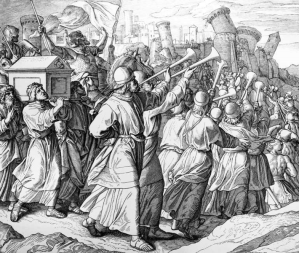
First time home ownership is best left to younger people.  And perhaps younger houses.  The constant onslaught of things falling apart, or falling off (it has been an extreme weather year) has soured me on the idea.  You get set in your ways, you see.  The move from apartment to house didn’t come with a raise that would cover all the repairs invisible to a home inspector’s eye.  Although our house has stood for over 120 years, the last owners let lots of things go with a lick and a promise and we, the naive middle-aged first-time buyers in a seller’s market, bit.  I thought there would be repairs to make, but not all at once.  The royalties from books like Holy Horror don’t make even a small dent in the contractor’s fees.  We should maybe have bought a house in Jericho instead.  One right on the city wall.

The shake-down voyage of a ship reveals the problems, so the theory goes.  It stands to reason that people have to go through a shake-down year as well.  I’ve got the roofer on speed-dial, and I keep a wary eye on a garage that has more love than actual care poured into it.  All I want to do is read and write (which I could do just fine as a renter, thank you) in a place dry and not too cold.  The weather, however, has been unforgiving.  Rain and more rain.  There’s something primal about all this—an element of having to struggle against nature in order to survive.  In the modern world we’ve taken for granted our ability to keep the beasts and weather at bay.  Storm systems like the one that has just blown through serve to remind our species that there are things that will forever remain beyond our control.

The lament is the most numerous genre of psalm

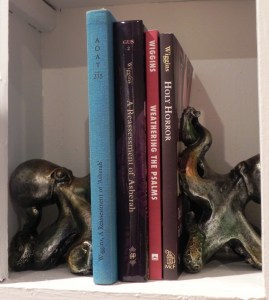
Something like this was going through my mind as I wrote Weathering the Psalms.  (We didn’t own our house at Nashotah House, though.  Whose house?  Nashotah’s house.)  Living in the Midwest gave me a new appreciation for the weather.  Some of the storms we witnessed were nothing short of theophanic.  Global warming has a way of bringing the weather front and center.  Elements of this element, however, are within our control.  We understand at least the human-driven elements of global warming.  We deny they exist to scrape together a few more pennies at the end of the day.  Meanwhile those who buy houses need to do their homework.  If need a roofer too, I’ve got one on speed-dial.


For the Love of Dog

All I have to do is say “Old Yellar,” and everyone will know the feeling.  Everyone of a certain age, I should add, who’s owned a canine.  The love of dog.  From where I pass my days I can see out the window into the neighbors’ back yards for four houses over.  They all have dogs.  Big dogs, mostly.  They also have fenced in backyards.  One of the things I haven’t seen too much in our neighborhood is dog walking.  People let their dogs out to frolic, and do their, ahem, other outdoor activities in the yard.  Once a day some member of the family, either with the basic plastic bag or with the specialized, long-handled brush and scooper, slowly surveys the yard to remove any offensive matter so the space may be used for human activities.  It’s a level of care that most would shudder to provide for their own species.

Wolves were the earliest domesticated animals.  In those hunter-gatherer days either they or humans—the jury’s out on which—realized the advantages of working together.  Kind of like we were fated to be partners.  Besides, unless the dog turns on us, there’s no question of who’s the master here, and everyone likes to be the boss.  When I catch a glimpse of one of the neighborhood pets being scolded, or praised, it’s clear they share emotions with us.  The bond is deep.  I often wonder about this—they recognize the tone of voice, something that takes humans a while to learn.  I grew up with dogs and I found out that even if you insult them in a friendly, encouraging tone of voice they’ll love you for it.  Dogs are just that way.

Our first real dog—the one that ended up staying with us his whole life, was a beagle pup we got at a farm.  Dogs like to be with others.  Unlike humans, they don’t have to pretend.  (Although they can do that too, as when they growl at you during a game of tug-o-war.)  Then we leave home and go to our places of business, where capitalism reigns.  We treat other humans coldly, clinically.  “It’s only business,” we’ll parrot, especially if we feel bad about doing what the boss tells us.  That’s the way we treat our own species when money’s involved.  And we’ll sit at our desks, daydreaming of our dog at home that will be so glad to see us when we walk through that door.  And we’ll gladly clean up after our pets what we find obscene even to write in human language.  It kind of makes me wonder when I glance out the window while at work.


Walls and Calls

With a barely concealed chortle the man’s ebullient voice burbled on my answering machine.  For a donation right now, he gushed, Republicans would send bricks to Chuck Schumer and Nancy Pelosi to show my (non-existent) support for Trump’s wall.  Our government has been shut down for a record period over a temper-tantrum by a man desperate to leave something tangible from his wasted term as president.  Apart from the clean-up of the Trumpian incontinence that has befouled this nation, his legacy as the most incompetent holder of the office is likely all that will be left behind in the swamp.  With two full years of control of both houses of congress and the White House there has been pitifully little to show.  Now the GOP has turned to pranking the citizenry to deflect once again the fact that nothing worthwhile has been done.

Read the wall

Walls, for those who know how to read, don’t work.  Republicans have forgotten how their former darling, Ronald Reagan, both gloried in his purported role in knocking down the Berlin Wall and his hatred of the Russians.  In a matter of three decades a major political party has excelled only in having outdone Watergate and completely reversing its position on everything that used to define it.  Claiming to be the party of Lincoln they nominated and elected a man who publicly supports the klan.  Branding has never smelled so cheap.  And get off my phone—I’m expecting some important calls.

What the GOP doesn’t seem to understand is that the price of a soul is far more than a long distance call.  Building a wall is mere rhetoric reified.  It would be an incredible waste of taxpayer’s money.  I’ve been paying into the system for 42 years now—others have been paying longer—and I’ve not yet met a rank and file Republican who wants a wall.  And yet our government, one of the most powerful in the world, is shut down over it.  The 2016 election itself was stolen by a game called the electoral college.  We’ve sat two years and watched democracy crumbling.  Now that a small check has been introduced we have an unbalanced man insisting on his own way over the will of the nation.   There are more important things to buy, for my money.  With my money.  Acknowledging how government works shouldn’t be a great effort for someone who aspires to be president.  If his party has to resort to sending novelty bricks, the wall has already been built.


Mastication Meditation

Musing while munching a bowl of Wheaties, a thought came to me.  Not only do we owe the practice of eating breakfast cereal to an evangelical strain of Christianity, but we also encounter the early morning ideas that stay with us through the day.  Cereal boxes start our day.  Advertisers and marketers know that images are important.  If successfully done they stay with us and may influence future purchasing choices.  In the case of Wheaties (which I’ve always liked) the box shows some athlete or other, implying that we’ll be champions too if we partake.  We are what we wheat.  Now, I don’t follow sports.  I can tell a football from a basketball, but watching grown men (usually) chasing one about really has no appeal to me.  I don’t eat Wheaties to become big and strong.  (At my age you don’t want to get bigger.)

As I ponder my fodder, I wonder what it would be like if we put pictures of people reading on our cereal boxes.  Would we experience a massive renaissance of literacy if cool people were shown with a book instead of a ball?  Don’t get me wrong—I’m all for exercise.  I’m a fidgety sort of guy who doesn’t sit still well.  I like to get out and jog or walk.  I don’t mind doing household repairs.  I like to move about.  But reading is one of the great rewards I allow myself.  When work becomes dull, I look forward to an evening of reading (I tend to do my writing in the morning, before the mental exhaustion of the day kicks in.  Wheaties are, after all, a morning food).  It’s kind of like living in pre-television times, I suspect.

Among the publishing industry the fate of book reading is a constant topic of discussion.  Or, not to put too fine a point on it, book buying.  Reading itself is doing fine.  If, for example, you are reading this you are probably doing so on a screen but you’re still reading.  You don’t have to pay for reading, and it passes the time.  No, the crises is getting people to buy books.  People like yours truly buy books even when many are available free online.  I spend at least eight hours a workday in front of a computer screen, and by the end of it, nervous and twitchy, I need a break.  I need a physical book.  And maybe a physical constitutional walk.  If only my breakfast cereal encouraged others to explore the joys of the literary life—but then, I’ve got to get going; my Wheaties are getting soggy.