Xenophobia’s Children

There are consequences, it seems, for not paying attention in school.  I have no way of knowing, of course, but I suspect most of us are taught that basic fairness is the social ideal.  Xenophobia is deeply embedded in the primate psyche, but to those who claim we haven’t evolved, there seems to be no way to convince them that “racial” differences are merely a matter of differing collectives separated by natural borders.  Over time traits favorable to the region predominate, and humans therefore have what seems to be a very wide array of potential appearances.  There should be nothing in all of this that suggests one group is superior to another.  Primate evolution, however, helps to explain but not to excuse.  Xenophobia is something from which we can evolve.

Fear is at the heart of any phobia.  In a society that measures the worth of individuals by their wealth, fear that another will take it is constant.  Perhaps, in a part of our souls we’d rather not acknowledge, we know it’s wrong to have too much while others don’t have enough.  It’s very cold this Martin Luther King Jr. Day.  In Manhattan on Saturday I saw many people on the street, those who’d met the wrong end of capitalism.  I’ve seen human beings shivering in Dickensian conditions in the twenty-first century.  I’ve known capable adults who couldn’t find work, even when they’ve tried.  We fear the street person.  We know that, but for slight shifts in capitalism, that could be us.

Xenophobia has come under threat with globalization.  We’ve made travel to remote locations affordable in order to spread capitalism to regions ready to be exploited.  And we see nothing wrong with taking from those who can’t prevent us from doing so.  Then we wonder why people just like us turn out to march in the cold.  Civil rights marches took place half a century ago.  Crowds thronged the nation’s capital seeking basic human treatment.  Fifty years later over a million women and supporters had to show up to make the same point again.  Fair treatment should not be a commodity.  Those who have fear the stranger.  Those who have don’t wish to share.  They claim the name of “Christian” and mock the very tenets upon which that belief system was founded.  It’s cold outside today.  As we huddle inside, we should have time to think.  It is a waste of a national holiday if we don’t at least ponder for a few moments what it is we celebrate.  And the real costs of xenophobia.


Truth Is Marching On

A funny thing happens to human minds when they’re in a crowd.  They begin thinking collectively.  We’ve all heard of “mob mentality” and dismiss it as so common that we don’t stop to think how remarkable it is.  Maybe we’re afraid to.  Yesterday I attended my third Women’s March, this time in New York City again.  Being an introvert, I find the prospect of putting myself into a large crowd daunting, and with a winter storm warning posted, worries  about getting home provided a convenient excuse.  My wife knows me well enough, however, to sense when my enochlophobia kicks in and tries to kick out that part of me that’s passionate about social justice.  You see, women are still not counted equal citizens in this “land of equality.”  The Equal Rights Amendment has never passed.  Pay is still based on gender rather than qualification.  And we have an unrepentant misogynist in the White House.

Once I’m in a likeminded crowd, supporting social justice, it’s clear that my thinking is influenced by the activity of all those brains around me.  Scientists know this happens in nature.  Ant colonies, for example, “know” more than a single individual does.  Recent studies have even suggested this “hive consciousness” can exist beyond a lifespan, creating an archive of learning that exceeds the lives of an entire generation.  If only we could teach Republicans to do that.  In any case, being in the crowd of bright, intelligent, hard-working women found me in a good head-space.  The men in DC are certainly doing nothing to make the male gender proud.

Although crowd estimation isn’t an exact science, the media has consistently underestimated the sheer numbers of these marches.  The National Park Service, on duty in Washington in 2017, estimated 1.3 million had shown up for the march.  It’s still not unusual to see the number cited as 500,000.  Regardless, with the sister marches it was the largest single-day protest event in U.S. history.  We have to keep marching as long as men continue to elect the most ignorant of their gender to high office.  There’s nothing controlled about the chaos in the White House.  Fake news, alternative facts, a revolving door of staff, and Fox News’ nose so brown you could grown corn on it is not the way to run a democracy.  I may have been part of a hive mind for a few hours yesterday, and it was a far better mind than those that abound in the federal government seeking only their own glory.  Let’s hope the collective mind outlives this generation.


Poe et Tree

When winter gets a little dreary with its constant chill and perpetually gray skies, I often think of Edgar Allan Poe.  There’s been so much going on lately, however, that I overlooked that today is his birthday until my friend over at Verbomania reminded me of the fact.  I’ve posted on Poe many times, but this morning I had an email concerning my work on Nightmares with the Bible stating that my use of Poe in that book was a nice touch.  Sometimes I need to be hit over the head with things, though, to make them sink in.  It seems impossible that it was 210 years ago that Poe was born.  Our Januaries have become remarkably crueler since those times, what with inaugurations and all.

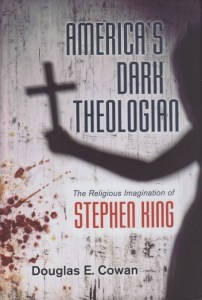
I have often mused that we’ve lived beyond the era where one person can have the widespread impact (for good, that is) that influences an era.  In the area of my doctorate, for example, like him or not William Foxwell Albright rearranged the field of Bible and Ancient Near Eastern Studies.  Nobody has been able to do it since because, well, Albright already did it.  Poe gave us many things—the struggling writer determined to make a living by his pen, the scary short story, detective fiction, the Raven.  Those of us who dabble in fiction do so in his shadow.  (I know Poe wasn’t the only writer of his era, but it’s his birthday, so let’s celebrate him!)  Other writers like H. P. Lovecraft, now a hot commodity, would draw their inspiration from Poe.  And from Poe and Lovecraft came the early work of Stephen King.

A winter storm advisory is in effect.  Outside it looks bleak and the clouds appear as if they wish to weep.  A nation founded by immigrants (my apologies, first nations) has come to believe that it was here first in a world full of need and suffering.  Building a silly, expensive, and utterly pointless wall is a telltale sign that the heart has ceased to beat.  Two centuries and a decade ago a writer was born.  He had penetrating insight into what makes people behave wickedly toward their fellows.  Just when things seemed to be making progress we find ourselves prematurely buried under masonry and rubble.  How could I have forgotten Poe’s birthday?  Too much has been crowding my January, I’m afraid.  I don’t take the time I should to gaze out at the winter and wonder.


Turnabout

Fair play, so the adage dictates, includes turnabout.  Well, that may be overstating it a bit, but after reading Joe Nickell I decided to give the other side a shot.  Guy Lyon Playfair’s account, This House Is Haunted: The Amazing Inside Story of the Enfield Poltergeist, was originally written in the aftermath of the truly bizarre happenings at that location in the late 1970s.  My reason for reading the book, as maybe you’ve guessed, is that Ed and Lorraine Warren had a hand in the story.  Or at least a finger.  The movie The Conjuring 2 was based on the Enfield case and it placed the Warrens front and center in its resolution.  This is Hollywood, however, and since I’m working on a book on demons I need to try to dig beneath the surface a bit, into regions where tenure-seeking academics often fear to tread.

Interestingly, the Warrens are not even mentioned in Playfair’s book.  The edition I read was updated in 2011.  Playfair himself was one of the two primary investigators from the Society for Psychical Research.  The other was Maurice Grosse (who features in the movie).  Before eyeballs start rolling, it’s worth noting that the Society for Psychical Research is actually a respectable academic association.  As Playfair makes clear in his book, many of the members are skeptical and few believed that the evidence gathered by Grosse and Playfair indicated anything paranormal at all.  The book isn’t shy about dropping the names of the many investigators who dropped in—some uninvited—to either study or debunk the infamous poltergeist.  The incident, however, went on to inspire the movie Poltergeist by giving it free license to change almost all of the details.  Of the many investigators the Warrens remain unmentioned.

On this blog I’ve been chronicling the on-going struggle of trying to figure out what Ed and Lorraine Warren were up to.  Those who met and interviewed them invariably state that they were/are sincere.  They didn’t accept payment for their investigations, and often seem to have been genuinely interested in helping the people plagued by what mainstream science claims simply can’t exist.  Nevertheless, they had and have detractors even amid the parapsychology crowd.  Playfair’s account is quite interesting.  Called in early after the onset of strangeness on Wood Lane, Playfair recorded and recounted what he saw.  He caught some trickery and wasn’t shy about pointing it out.  At the end of the episode, however, he remained convinced that something unexplained had happened there.  Nickell dismisses it all with a sentence or two.  In the interest of fair play it would seem only right to hear the other side of the story.


OBSO

Oxford Biblical Studies Online is a subscription service for institutions that gives access to many biblical studies resources produced by the press.  It also features current essays that stand on this side of the paywall, written on contemporary issues.  In a shameless self-promoting plug, I’d direct you to this link to see my latest publication.  You see, I’m not alone in looking at Bible through the lens of horror.  As the acknowledgements to Holy Horror reveal, many conversations were going on that led to that book.  While the ideas contained in it are my own, I’m by no means the only one to have noticed that the Good Book makes guest appearances in genre fiction.  One of the points I made to my students when I held a teaching post was that the Bible is ubiquitous in our culture, whether we know it or not.  Just look at the Republican Party and beg to differ.

The idea is not without precedent.  For those who read the Bible real horror isn’t hard to find.  The Good Book can be quite a scary book.  Consider for just a moment the final installment—Revelation, apart from being full of amazing imagery, is an amazingly violent book.  Attack helicopters and atomic bombs may not yet have been invented, but there was no shortage of ways to kill people in the pre-gunpowder world.  Revelation paints the world in the throes of horrible suffering and death.  Indeed, the completely fictional Left Behind series rejoices in the death of the unrighteous who are, well, left behind.  Even today there’s a significant segment of “Christianity” that rejoices in the chaos Trump has unleashed.

In the OBSO article I sketch a brief history of how this came to be.  The history could work in the other direction as well.  The fact is the Bible and horror have always gone fairly well together.  Among genre literature, however, horror is a distinctive category only after the eighteenth century (CE).  Early horror novels, under the guise of Gothic fiction, often involve religious elements.  Culture was already biblically suffused then.  This is a natural outgrowth of a would steeped in violence.  Personally, I don’t like gore.  I don’t watch horror to get any kind of gross-out fix.  My purposes are somewhat different than many viewers, I suspect.  What we do all have in common, though, is that we realize horror has something honest to say to us.  And it has been saying it to us since from in the beginning.


Not Quite Thursday

I discovered Jasper Fforde, as these things so often happen, at the recommendation of a friend.  A writer of rare talent, he’s conjured a few meta-worlds where fiction is the subject of fiction.  Probably best known for his Thursday Next novels, the premise is that fiction can be distorted by malevolent sorts within the Book World, which is like the Outside (our world) only much more interesting.  The sole problem with series is that in order to follow the storylines, you need to be able to recall where things were left the last time.  That’s complicated when you don’t read the books in order.  I haven’t followed Thursday Next in sequence—I find Fforde’s books sporadically and pick them up when I do (I prefer not to buy fiction on Amazon, for some reason).

The latest installment I found is One of Our Thursdays Is Missing.  It’s a bit more convoluted than the last plot I recall, but the writing is still good.  In this story, which mostly takes place in Book World, the written Thursday Next has to find the real Thursday Next (who is, of course, also written, thus the “meta” I mentioned earlier).  This is probably not the best place to start the series for neophytes.  There was an interesting aspect, however, that I feel compelled to share.  The majority of this novel takes place on an island dedicated to fiction, divided into different “countries” by genre.   Just north of Horror and east of Racy Novel is Dogma.  It’s just southeast of the Dismal Woods.  This plays into the plot, of course, but the placement is interesting.  As Thursday tells it, the full name of the region is Outdated Religious Dogma.  Then I realized something.

Simply placing Dogma on this island plays into the idea that religious thought is fiction.  There are other islands in Fforde’s world, including non-fiction.  Dogma, of course, is not the same as religion.  The definition of dogma is something that is incontrovertibly true, by the authority that states it.  Problem is, nothing is inconvertibly true any more (if it ever was).  When Christianity ruled Europe, such ideas became highly politicized.  Indeed, parts of the world could well have fit into the Book World map.  Fforde’s novel is really just for fun, and Dogma doesn’t play a major role in the story.  That doesn’t prevent it, however, from being a legitimate point over which to pause and wonder.  Fiction can be factual, but not in a dogmatic way.


Quantum Magic

This history of ideas is perhaps the most stimulating of intellectual topics.  At least to me.  The pedigree of an idea tells us something of its validity—its authority, as it were.  I have been reading about the early days of science.  (Even the idea that science is modern is a mistaken concept; the earliest tool-makers were in some sense scientists.)   A book I was reading made the point that in the Renaissance, magic was a proper competitor to science.  Magic was sophisticated, based on much of what we would now call “science”—the belief was that the connections between an interconnected universe were hidden.  All things were tied together, nevertheless.  This presages not only the concept of evolution but modern cosmology as well.  The more I thought of this, the more it occurred to me that oppositional thinking, in some sense, dooms the possibilities of finding the truth.

Quantum mechanics, which I understand only on a lay level, has been puzzling over entanglement for some years now.  Entanglement was characterized by Einstein’s phrase “spooky action at a distance.”  Still, experiments have show that particles that have no way of “knowing” what each other are doing, are nevertheless connected.  That connection is nothing physical, nothing material.  Indeed, it makes materialists quite nervous.  The inert world of quanta should show no tendency towards “will” or “intention” at all.  So we call it something else—entanglement.  As I read about Renaissance magic, I realized that it was suggesting just this.  Of course, they had no means of observing what particle accelerators, such as that at CERN, reveal.  Their “science,” however, successfully predicted it.  Were it not for the history of ideas we could let materialists think they’ve discovered something new.  Historically, though, they haven’t.  (I’m not suggesting that quantum mechanics work on the macro level, but I’m observing that magic supposed some kind of entanglement existed.)

This is some kind of entanglement!

Often I have made bold to challenge Occam.  I wear a beard for a reason.  One size does not fit all in the entangled universe.  Some consider the exploration of spiritual aspects of life to be a waste of time.  Look at any university pay scales and be so bold as to differ.  The funny thing is, science is only now beginning to catch up with what we historically have called magic.  There seem to be multiple explanations to the behavior of the material world instead of a single one.  Once an idea becomes orthodoxy it becomes dangerous.  Reason is very, very important.  But reason sometimes get entangled in a world only revealed in the history of ideas.


Fun with Skeptics

You have to love skeptics.  Really.  Like most people who’ve spent many years attaining a doctorate, I’m naturally skeptical about many things.  One thing that I only temporarily lost (between about 1991 and ’99, if I recall) was an open mind.  That is to say, I discounted many things out of hand because people with doctorates don’t countenance such things.  I eventually realized the folly of academic arrogance and went back to considering things by actual evidence.  The results were interesting.  In order to help with my Ed and Lorraine Warren dilemma, I decided to read The Science of Ghosts by Joe Nickell.  It’s hard not to like Nickell.  He was a stage magician and eventually earned a doctorate in folklore.  He then made a career out of being a paranormal investigator.

He begins his book by claiming to have an open mind about ghosts.  Very quickly, however, a skeptical reader with an open mind notices his magician’s tricks.  He’s very good at misdirection.  While putatively not debunking (but actually debunking) ghostly encounters, he time and again comes to the states of consciousness when individual super-impose images from the  unconscious mind onto what they’re seeing: when falling asleep, in the middle of the night, when waking up, when doing routine chores, when concentrating, when working.  That about covers over 90 percent of human time.  During these periods we’re likely to mistake what’s not really there for what is.  It could explain much of the driving I’ve witnessed in New Jersey, if not ghosts.  And he also picks straw men (and women) to knock over (pardon the violent metaphor).  Accounts by the credulous are his favorites to explain away.

What we really need is a middle ground between credulousness and a skepticism that can’t be convinced even by evidence.  Yes, ghost hunters use ridiculous methods for claiming “proof.”  Yes, some credible people legitimately see incredible things.  Nickell never deviates from his definition of ghosts as a form of energy left by the departed.  Nobody knows for sure what ghosts are, of course.  If they did there’d be little mystery about them.  Although Nickell claims openmindedness, he states at several points that at death brain activity ceases therefore nothing can think, walk, or talk afterward.  As any experimentalist knows, the results reflect the way an experiment is set up.  If the assumption is that there can’t be ghosts, there won’t be ghosts.  To get to the truth of the matter something between credulousness and biased skepticism must be brought to the table to see if it really tips.  Skeptics are fun, but an actual conversation might be more fruitful.


Now Hiring?

In keeping with my recent theme of jobs you never knew you could have, I recently read a story a friend sent me from The Vintage News.  The story concerns a spiritual counselor who is planning to marry a ghost.  I didn’t know that spiritual counselor was an available job.  You see, I had taken enough psychology courses in college that I could’ve had it as a minor, but I didn’t declare it.  At the time I was destined, or so I thought, for a career in ministry and psychology seemed a good subject to assist with that.  Also, I naturally tend to try to figure out what motivates people.  Like most career options, not having a science background prevented me from pursuing psychology as a fall-back career.  But spiritual counselor?

The woman in the story lives in the United Kingdom.  Here in the United States, where unhappy people seek any opportunity they can find to sue someone, having a job as a spiritual counselor probably involves ordination.  Even if you’re ordained, as I learned from long years both attending and teaching in seminaries, you always refer those who come to you to a licensed psychologist.  Clergy can easily be sued for providing bad advice.  That’s why the counselor part of this job seems so odd to me.  That, and the woman the story features is only 27.  I suppose that’s time enough to finish a doctorate, for the truly ambitious, but apparently she doesn’t have a terminal degree.  Just a post-terminal lover.

Also, I learned that spectrophilia is a condition with a name.  The idea of intimacy with spirits is nothing new, of course.  The ancient idea of incubi and succubi reflect this concept, and a number of the stories in the Ed and Lorraine Warren oeuvre include sexual attacks by demons or ghosts.  What’s different here is that the young woman wants to marry a spirit she can’t see.  Unlike most such reputed cases of spectrophilia, she claims spirits are superior to physical lovers.  Despite the oddities that make such a story newsworthy (in a sense) a potentially important point could emerge from all of this.  Love is not a physical phenomenon.  We all know it when we feel it.  I suspect that other such feelings, like finding the perfect job that matches your skills and interests, are likewise intangible.  The problem is finding out that such jobs even exist.


The Truth of Fiction

The thing about reading is that it’s a lifestyle.  I record books both here and on Goodreads, but I read a lot more than books.  Although I don’t have much time for magazines or even newspapers, I read a lot on the web.  And billboards.  And sidewalks.  I’m quite content doing it.  One thing I’ve noticed in all this reading is that fiction writers tend to be more often cited as experts and intellectuals than do non-fiction writers.  Oh the non-fic practitioners get their footnotes, and other specialists mention them, but fiction writers get analyzed, probed, and explored.  Literary types wonder what they meant by some obscure doggerel they wrote.  When’s the last time a non-fiction writer drew that kind of attention?  It makes me wonder about all the time I’ve been spending on non-fiction lately.

I suffer from graphomania.  There’s no cure.  The other day I went looking for an old, pre-electric typewriter to get my fix in case the power goes out.  I have notebooks, zibaldones, commonplace books.  I carry one in my pocket.  I have one on my bedside stand.  And the thing I’ve noticed is that the ideas that come to me unbidden are often fictional.  You see, I have a hidden life as a fiction writer.  That persona is very poor since he’s never made any money from his writing.  He was nominated for a Pushcart Prize some years ago, but he never won.  That fiction writer has been suffering cabin fever because I’ve been finding publishers for my non-fiction work.  I wonder, however, if maybe I shouldn’t be spending my time on fiction.  It’ll never get me to the point I can make a living on it, but it might get quoted after I’m gone.

Writing, after all, is a stab at immortality.  Those of us who do it are legacy builders.  Even as the web has moved us more and more toward visual, iconic forms of entertainment, it has still left a few dusty corners for the written word.  When I pass the sometimes impressive graffiti on the way into New York I think I know what the vandals are feeling.  We’re kindred spirits.  We don’t want to be forgotten.  Whether with spray can, fingers on a keyboard, or fountain pen (or maybe even an old-fashioned typewriter) we are trying to say, “I was here.”  I used to print out all my blog posts in case the web failed.  It grew to thousands of pages.  I had to stop.  I was beginning to act like a fictional character.


Not about Pigs

Pseudepigrapha always struck me as a great name for a pet guinea pig.  Neither members of the porcine family nor from Guinea, these rodents are remarkably companionable.  But like the word pseudepigrapha, this post isn’t about guinea pigs.  I’ve been reading various documents among this sprawling category of texts, and I can see the fascination they hold for scholars of Second Temple Judaism.  My own specialization was on the earlier end of the spectrum—Ugarit had ceased to exist even before a first temple was built and provided clues to how this whole religion got started in the first place, but that’s a story for another time.  The account of the pseudepigrapha  cannot be summarized easily.  Some of the documents have been known to scholars for a very long time.  Others have been (and continue to be) discovered, some quite recently.

Not a pig.

The documents classified as pseudepigrapha generally bear the name of someone who couldn’t have been their “author.”  We now know that ancients didn’t think of writing the same way we do.  They didn’t publish books like modern writers do, and scholars have been exploring how the category of “book” distorts even the Bible, let alone books that didn’t make the cut.  None of this diminishes the intrigue of these ancient texts.  The world into which Jesus of Nazareth was born contained many texts and traditions.  There was no Bible as we know it today—it was still being written (or compiled)—and no canon, literally a measuring stick, existed to determine what was holy and what was not.  

As discoveries in Mesopotamia have made clear, although few could read or write, writing itself was prolific, at least given the technological limitations.  Today if one wishes to specialize the literature of one subsection of one time period, and probably even some subdivision of that, has to be selected.  Universities don’t see the point, and much of this ancient material is understudied because there remains money to be made in looking at economically viable topics.  The pseudepigrapha have nevertheless come into their own.  Perhaps because some of the stories these documents contain have made their way into pop culture.  Even as I make my way through many of these texts that are young in my eyes, I realize the proliferation of writing made such growth almost inevitable.  There remains, however, a high-pitched squealing that demands attention, regardless of what the exact genus and species of the creature may be.


Mephistopheles

Jeffrey Burton Russell is one of the clearest thinkers I’ve ever read.  I first encountered him in my background reading for Holy Horror, and have subsequently tracked down his books on the history of evil.  In what is a dangerous move for a scholar, Russell admits in The Devil that he believes in some kind of personified evil.  Except for religion scholars employed in seminaries, such thoughts are generally kept carefully guarded as academia has followed the materialist paradigm since it boldly declared that there’s no other way to know the world.  Russell’s intellect penetrates through that posturing and logically lays out what can or can’t be known based on empirical evidence.  And in Mephistopheles: The Devil in the Modern World, he concludes his historical sweep of an idea as old as civilization itself.

This is a wide-ranging book.  The previous three covered long periods as well: antiquity through the Hebrew Bible, New Testament through late antiquity, and the Medieval Period.  Mephistopheles has to cover from the Reformation through the present of the latter 20th century (when it was written).  Finding evil in the modern world is arguably way too easy.  Since 2016 it has become more fashionable to the point that an entire political party can laud it.  Russell writes with the strong conviction that love and the will to goodness can overcome the tendencies of humans to allow hatred, fear, and prejudice to rule.  What seems to be lacking, some three decades on, is the will.  We have given in to our cynicism and elected the worst of our inclinations.

In William Friedkin’s documentary The Devil and Father Amorth, Russell, looking depressed, is interviewed about the reality of demons.  His advice is to look for the good instead.  Nevertheless, having spent years of his life researching how evil appears and reappears, his own fascination demonstrates why we return to the subject time and again.  The world hasn’t righted itself.  His books indicate that there is a way, but we continue to ignore that way, preferring instead to follow the loudest of mouths rather than the warmest of hearts.  Some would personify this into Mephistopheles, the modern, entertaining aspect of the Devil.  Others would claim it’s merely a metaphor.  No matter which may be the case there’s no denying that evil exists.  And if it exists it behooves us to know about it.  And once we learn its identity we must name it.


Care and Keeping of Books

I take good care of books.  It’s my personal goal that after I’ve read a book you won’t be able to tell.  I used to mark books up, but it occurred to me that I want the books to outlast me and if someone else is to get the full benefit of them I shouldn’t be doing such scribbling.  Of course, when a book has to commute with you there’s bound to be some scuffing from being put into a briefcase along with other necessities.  On the days I don’t commute, I try to replicate bus time for reading.  I curl up in a chair with my book and a cup of coffee to warm my fingers, and read.  The other day as I did this, a drop of coffee made its way from my mug onto the open page.  I was aghast.

Reading a marred book page is eternally distracting.  My eye is immediately drawn to the imperfection and I sometimes can’t even make sense of the sentence in which the blemish occurs.  Not because I can’t read it, but because I can’t get beyond the hurt.  Coffee rings are chic, I know, on the cover of a book or a notebook page.  It’s one of the truest clichés of the literary crowd.  Coffee and a good book.  Not coffee in a good book!  I tried to get back into the flow of the narrative.  My eye kept wandering back to the spot I’d unintentionally marred—I’d violated my own principles.  Unintentionally of course—this isn’t Starbucks where the heat is set at a reasonable level and you don’t have to scrunch up to keep warm.  But still.  But still.

After many minutes of feeling like I’d shot a friend, I managed to move on.  I kept turning back to my coffee page to see if the damage was as distracting as I thought it was.  After work that night when I picked my book up again—commuting is a twice a day activity—I turned back to the damaged page and frowned.  Books are, to some of us, friends.  I want to treat them right.  I line them up in order on their shelves, knowing just where to find them when I need them again.  One careless drop of coffee had taken its eternal toll on an innocent tome.  I realize this world lacks perfection; I’m not naive.  Still, this book, which wasn’t cheap, now bears a scar that I dealt it.  Will I ever comprehend what that one page says?  I hope my silent friend will forgive.


Shut up or Shut down?

So the government’s shut down over a presidential temper tantrum.  Like most people, I suspect, I haven’t really noticed.  Except for two things.  When I drove up to Ithaca over the holidays, some of the highway rest stops were closed.  It seems our government wants to share the misery of not being able to relieve itself.  Secondly, the NOAA weather forecasts are no longer updated as frequently as they should be.  I’m no expert on the weather—I did write a book on meteorotheology, which took quite a bit of research on weather in ancient times, but I know that doesn’t qualify.  Still, I rely on weather forecasts to get daily business done.  In particular, we were expecting a winter storm around here that had been predicted, by NOAA, to arrive around 11 p.m.

Okay, I thought, people will be off the roads by then, and crews will be out to treat the icy conditions by morning.  Seven hours early, around 4 p.m., I noticed a rain, sleet, snow mix falling.  The ice particles looked quite a lot like salt crystals, but I was pretty sure that the government doesn’t have that kind of pull.  In any case, when weather catches me unawares, I turn to NOAA since our government is apparently God’s own chosen one, figuring that the Almighty might know a thing or two about what goes on upstairs.  The current conditions, NOAA said, were “unknown precipitation.”  Apparently the government isn’t even allowed to look out the window during a shut-down.  Maybe it was salt after all.

So, among those of the “God of the gaps” crowd, the weather is perhaps the last refuge of a dying theology.  Their cheery refrain of “science can’t explain” has grown somewhat foreshortened these last few decades, but when unknown precipitation is falling outside all bets are off.  Come to think of it, Weathering the Psalms could’ve been titled Unknown Precipitation, but it’s a little late for that now.  A creature long of habit, I awoke just after 3 a.m.  Hastily dressing against the chill of the nighttime thermostat setting, I wandered to the window, wondering whether there would be a snow day.  It’s dark this time of night, as I well know, but in the streetlights’ glow it seemed as if no weather event had happened at all.  It’s just like our shut-down government to get such basic things wrong.  As long as I’m up, I might as well get to work on my current book on horror.  It’s only fitting.


Instant Gramification

To be a writer these days, so industry publicists tell us, one must be savvy on social media.  But do not spend too much time, they tell us, on that same media.  What publicists don’t understand is that social media has become a zero-sum game.  It demands your time.  Just for instance, I was trying to get set up on Instagram.  Why?  Because, apparently, there is a large presence of those who like looking at pictures of books on Instagram.  The real problem for anyone who writes is to let people know when you’ve got a book out.  (By the way, I have a book out.)  Print catalogues and newspaper ads don’t have the same punch they used to, and social media is the reason.  So I tried to get set up on Instagram.

It took a few hours before I realized that Instagram is meant only for mobile devices.  My phone is several years old now and although it does (mostly) what I need it to do, it has trouble with upgraded apps.  Instagram, for instance.  You might say “it’s time for a new phone, then,” but I don’t like feeling coerced into upgrading when an iPhone 4S is already smarter than I am and it functions just fine as a phone.  And a camera.  And a GPS.  And a tape recorder.  What it doesn’t do so well is social media.  Ah, yes, and that’s what got me into this mess in the first place.  My thumbs aren’t dextrous enough to text, let alone post.  I feel old fashioned because I use a computer.

After a few hours, during which Dropbox kept telling me my storage was almost full and for a recurring charge I could upgrade it, I finally managed to get a photo (not my best) posted on Instagram.  I can’t access my “library” where a number of decent photos dwell.  It complains vociferously if I try to access said photos.  I’m not even sure it will do any good to bring awareness to my recent publication.  Our publicists like Twitter better anyway.  You can’t tweet during the day, however, when people from your company follow you.  Herein lies another of the dilemmas of a working writer.  You’ve got to manage to keep your day job.  Writing books, unless you’ve got an agent, doesn’t bring in enough money to pay your electric bill, let alone your mortgage.  And besides, work is where I learn such valuable things from publicists, like using social media so that I have a readership for my reduced time to write.