Scaping By

Failure is a part of life. We don’t like stories about failure, however, unless the protagonist goes out with a memorable bang. So it is that when we fail we start looking for a scapegoat. Now it’s a little too early to tell if Ken Ham’s Ark Encounter can be considered a failure. According to a story on Friendly Atheist, “Ken Ham is Now Blaming Atheists for the Economic Failures of Ark Encounter,” the ark may be loaded with dinosaurs, but not money. People need their myths, yes, but myths that take themselves too seriously often fail to convince. Atheists, even the friendly variety, have always been convenient scapegoats. I wonder how many scapegoat species are in the Ark Encounter.

I don’t know about you, but I’m curious about the Ark Encounter. I don’t want to go because I don’t want them to have any of my money. As I’ve told academic friends who visit—I just can’t see contributing to their cause. Although the Right seems to implode when it reaches power (there are far too many selfish people in the Party, and selfishness leads to easy splintering) one thing that it has is money. Think about it, the extremely wealthy are on their side. If I was given a free pass I might find it worth my while to wend my way back down to Kentucky. Who doesn’t like a spectacle? And I would like to see how they represent scapegoats in their dioramas. Besides, with sea levels rising from “fictional” global warming it might not be a bad idea to get a few tips on how to build an ark, no matter what you believe.

You only fail when you fail to try. That was a phrase a friend used to repeat to me before disappearing from my life. A friend from college once told me that I had to stop admitting my failures if I wanted to move ahead in life. There is a danger in easy appearances of success, however. Failure can be a very noble teacher. There are mornings when I’m walking across Manhattan, passing the homeless in their blankets on the street, and I realize that I would not be where I am were it not for failures. I could hide them, but if I haven’t learned from them they’ll only burst out of the closet again when it gets too full. Is Ken Ham’s Ark Encounter a failure? It’s far too early to tell. One thing we know for sure, however, is that scapegoats will never be an endangered species even if there’s a world-wide flood.
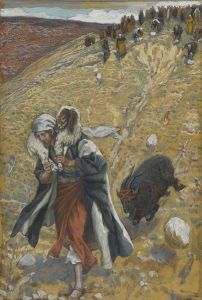
James Tissot,Agnus-Dei: The Scapegoat (Brooklyn Museum via Wikimedia Commons)
Gilded Age

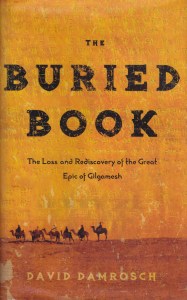
What relevance could the Gilgamesh Epic possible hold for contemporary people? Well, one of my colleagues has said that every book is now about Trump. While I resist such thinking, he has a point. Even in reading David Damrosch’s The Buried Book: The Loss and Rediscovery of the Great Epic of Gilgamesh it’s hard to avoid making comparisons. The famous epic is about a bully king who is eventually humbled by the gods. That should make the contemporary association clear enough. Damrosch’s book, however, is actually about how one of the world’s classics—if not the first classic—was lost to the human race and rediscovered only in the nineteenth century. The cast of characters involved in finding the text is colorful and tragic, rather like the epic itself.

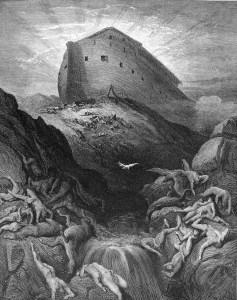
Hormuzd Rassam, associate of some of the largest names in Assyriology, was a native Iraqi whose role in the recovery of antiquity was overlooked in his lifetime. Although Rassam did much of the actual finding he was unfortunate enough not to have been born English. While Sir Henry Creswicke Rawlinson and Sir Austen Henry Layard, and even the irrepressible George Smith, gleaned fame over the rediscovery of the glories of ancient Iraq, the very model of a modern Middle Easterner simply didn’t receive his fair share. Rassam wrote books that were essentially ignored. The moving tale of his treatment makes this already gripping story poignant. The Epic, however, not only became world famous—it forced scholars to reevaluate how to interpret the Bible. Although not the earliest flood story, already in the mid-1800s it was recognized that the flood myth in Gilgamesh had more than just a passing influence on grand old Noah.

One of the stories behind the preservation of Gilgamesh is that of Ashurbanipal, the Assyrian emperor. Ashurbanipal believed that to be a world leader one had to be well read. He was the most powerful man in the world in his time. The idea of government is useless without the corrective of history. That doesn’t mean people should only look backward, but those who refuse to look back at all are doomed to make mistakes that go all the way back to the Bronze Age and before. In fact, Stone Age mistakes can (as we are living to see) be repeated even in a nuclear age. That’s part of the charm of Gilgamesh. Reading the classics serves a higher purpose than might be obvious at first.


Ammonia Avenue

It’s 7:00 p.m. I’m still sitting on a bus, in unmoving traffic a mere three miles from home. I stepped out of my front door over 13 hours ago and I have only another hour before retiring to start it all over again tomorrow. My phone’s down to a charge level that the effort of getting a non-wifi connection will only drain it completely. I have no idea why I’m being rerouted. Later I’ll learn that we’ve been instructed to shelter in place because of a N-Aminoethylpiperazine spill. Better living through chemicals. I’m sheltering in place, all right. This bus is my ark.

There’s much about this complex world that I don’t understand. I readily admit that I don’t know much. One thing I do know is that I live my life trying not to impact others negatively. I’m reminded of this every time someone blows a cloud of smoke into my path, plays their music so loud that even they can’t really hear it, or spills Aminoethylpiperazine all over the place. I don’t haul corrosive chemicals (beyond what may be trapped in my gray matter) through anybody’s hometown. I think of that scene from Close Encounters of the Third Kind—a dangerous chemical spill. Evacuate Devil’s Tower. There’s nothing to see here, folks. It strikes me that this is a larger ethical issue. The right to use, and potentially destroy, somebody else’s space. If you inhale Aminoethylpiperazine fumes, it can be fatal. It may take longer, but the same is true of second-hand smoke. The things that go beyond our own personal self-abuse into the realm of harming others. Somebody call an ethicist!

Commuting isn’t really a lifestyle choice. There may be a few stalwarts on this bus that really enjoy it, but from hearing the weary conversation of the regulars somehow I doubt it. We’ve been rerouted to New York City for our jobs. Our free time is consigned to an aluminum lozenge on wheels. Sometimes it actually moves. Have you ever tried to read a book when the head of the snoring guy next to you keeps falling into your lap? I think about those animals on the ark. Life is more than eating and breathing. You’ve got to have some space to move about. Even when I wake up I’m not in the same position as when I went to sleep. Of course, ethics demands I look at it from the other’s point of view. Someone needed a truckload of Aminoethylpiperazine, and they’re disappointed that it never arrived. Just don’t breathe too deeply. This flood can’t last forever.


Making Prophets

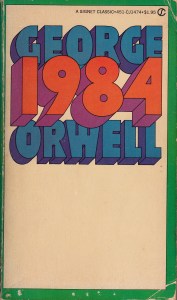
I first read 1984 around its eponymous date. The context is informative. I was a student at Grove City College, a conservative, Reagan-esque school of strong free-market inclinations. Being a first-generation college student I knew nothing of choosing a school, and since my upbringing was Fundamentalist, and since Grove City was a place I’d been many times, it seemed the natural choice. As my four years there wore one, my conservatism became effaced before what should be the effect of higher education. I was reading and learning new things—ideas that in the pre-internet days were simply inaccessible to someone from a small town which had no library, no bookstore, and, to be honest, no charm. How was someone supposed to learn in those circumstances? Largely it came down to high school (for those who finished) in a nearby town, and television. George Orwell saw the potential of the latter far too clearly.

It was in this great conservative bastion that I read 1984—I don’t even remember what course it was for. I do remember vividly the discussion of the Appendix on Newspeak—that it was a danger, a very real danger, to engineer language to prevent free thought. That was conservatism in the literal era of 1984. When that year passed we breathed a collective sigh of relief that Orwell’s prophecy hadn’t happened. Maybe Orwell wasn’t a prophet after all. The thing about prophecy, however, is that it unfolds slowly. Trump may have caught the world by surprise, but the evidence is there that the Orwellian groundwork was being consciously laid from the time of the Clinton Administration onward. Those who seemed to think Ingsoc was onto something good began working in local politics—the level of school boards and state elections, to build a strong conservative bloc. How many states have Republican governors? Go ahead and look it up, I’ll wait.

Progressives blithely moved ahead, making real ethical strides. One problem that they’ve always had, however, is believing that Evil is real. It’s an outmoded idea, fit for Medievalist thinking only. There are, however, very real racial supremacists out there. And avowed, unrepentant sexists. They feel that the great white way has been slighted and they are itching for revenge. Don’t believe me? Turn on the news. This is not your father’s Republican Party. In 1984 the Republicans were warning us about 1984. By the next decade they were actively emulating it. Orwell died paranoid and the world was relieved as his prophecy was harmlessly classified as fiction.


A Kind of Contact

I find myself in Ithaca, New York. Places have a resonance with people, and this is one of those places I feel like I belong. The feeling may not be mutual, but that makes it no less real. At least on my part. Dominated by the presence of Cornell University, this town of waterfalls and free spirits represents everything I value. Education, creativity, and an easy familiarity with nature all have a place here. And Carl Sagan. No doubt astrophysics is far more sexy than religious studies. I didn’t watch Cosmos when it aired, but I knew of Sagan as its driving force. Before being daunted by the math, I had considered astronomy as a career; Denied tenure at Harvard, Sagan came to be associated with Cornell, to Ithaca’s enduring benefit. His house above Ithaca Falls is still pointed out by the locals.

Star status for academics, so I’m informed, is a mixed blessing. Accusations of being a popularizer are flung somewhat liberally at those who know how to explain things to non-specialists. Part of the ivory tower mystique is to remain inaccessible and impenetrable. Teaching, at the same time, is expected to open lost worlds to the curious. Sagan, like Bill Nye—another Cornell star—wasn’t afraid to take his knowledge to the streets. And such receptive streets there are in Ithaca. It’s a place a child of the sixties can feel at home. Looking for fossils in the many gorges, I’m reminded that the old and new are not so different in a universe billions of years old.

The sense of place, while scientifically dubious, is nevertheless real. Part of my ancestral heritage lies in upstate New York. My grandfather, while not a college man, took a couple of courses at what was then Cornell College to launch his teaching career. Following in grand-dad’s footsteps, my own teaching career (which, however, never included Cornell) didn’t last long. Yet somehow we both ended up passing through Ithaca. People on the street. Waiting to be enlightened by stars that shine brighter than my own. Life is a series of places. All, it turns out, are temporary. Rod Serling once said, ”Everyone has to have a hometown, Binghamton’s mine.” He left the nearby town, but he has remained there ever since. Places are that way. I’m in Ithaca right now, but the stark reality of New Jersey awaits at the end of the day.


Remember Ronnie?

Listening to Comrade Trump, I wonder what it is the GOP really wants. My doublethink may be fuddled a bit, but I’m old enough to remember a guy called Ronald Reagan—champion and darling of the Republicans, some of whom say he was the greatest president ever—who stood firmly against Russia and its designs on this country. Now there is clear evidence that, no matter what the Comrade-in-Chief personally did, his inner circle has been dancing with Putin and they’re more than just a little tipsy. And the GOP stands up and cheers. I don’t know about you, but those who voted for Trump have to be wondering where they laid their Russian dictionaries about now. The Red Scare has come to town and Ronnie’s rolling in his presidential tomb.

The utter stupidity of not seeing when you’re being played astounds me. Look, I’m not the most worldly guy—I taught Bible for goodness sake!—but even I can see when a senator’s smirk says “sucker!” Where were the Trump supporters in the 1980s when we were against everything the Russians were doing, and that’s when they had Gorbachov leading them out of communism? It’s enough to make an old believer in common sense like yours truly crawl into a bottle of vodka and never come back out. Of course, in my days at Nashotah House some in the Episcopal Church were having their own fling with Russian Orthodoxy. Even to the point that the refectory was ordered to serve borscht. I personally didn’t see the charm in it.

I’m not the greatest nationalist alive. Borders, which are artificial, cause far more problems than they solve. You might call me a communist, since that’s in vogue these days. Nevertheless, if we wanted another country to decide our fate for us, I wouldn’t have chosen Russia. My personal choice? Vatican. As the smallest nation in the world they seem to have the best leader on offer. Pope Francis at least has a serious concern for the poor and needy at heart. There are those, after all, who argue that JFK, our only Catholic president, was even better than Reagan, as hard to believe as that might be. There seemed to be a little kerfuffle about missiles in Cuba, I seem to recall, but let’s let bygones be bygones. We live in a world of Newspeak and tweets. And if I didn’t know better, I’d say this borscht tastes a bit off to me.


Viewing Religion

Scholars employed by the academy sometimes fall under its privileged bubble. In that rarified space, the classics, the Bible, and even serious contemporary literature can be parsed and prodded until it’s no longer recognized and everyone thinks it’s normal. Out on the streets (for some of us taste the outer darkness) people have a difficult time with such minute attention to detail. People like movies. They’re visual, colorful, and they meet deep human needs. Scholars were slow to take cinema seriously, though. It was one of those passing things. Ephemeral. Shadows flickering on a screen. Never mind that the budget for a single Hollywood blockbuster could finance an entire humanities department for years. This is a strange dynamic when you stop to think about it.

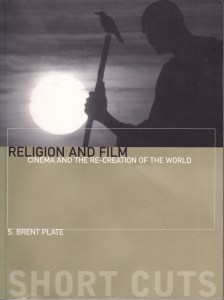
S. Brent Plate, in his book Religion and Film: Cinema and the Re-creation of the World, addresses in a very intelligent way, how film is like religion. Of course, religion is often on the university chopping block these days, so it is perhaps no surprise that among the first academics to pay serious attention to movies in their discipline were religion scholars. What is truly surprising is the depth of that connection between movies and belief. For such a brief book, Plate dives deep and quickly. In a society that seems to have outlived its need for structured religion, movies have managed to hold on through recessions and depressions and terrorist attacks. Indeed, they often provide meaning during those very times. They have a ritual form that meets the kinds of needs religion has traditionally filled. Movies are well worth the time we spend getting to know them.

Sometimes, under the barrage of rhetoric that says all answers are physical, we forget that humans are meaning-seeking creatures. If there’s no purpose to life, our wellbeing suffers. Nobody looking at modern civilization objectively would say that we’re an overwhelmingly happy bunch. One way to understand the popularity of movies is to see them as venues of finding meaning. For 90 minutes to 2 hours we’re shown some version of modern mythology (at least in some cases) that serves many of the same functions as a sermon or scripture. Although Plate hyphenates the word, it is worth pondering that this is for more than mere recreation. The Sabbath idea always involved more than just a day off work. Movies offer us a way toward meaning. So naturally, the academy tends to ignore them. There are, it seems, more important things to do.


Overdone

One of the things you see quite a lot of as an editor is “the next big thing.” Authors with an ego that awes me ensure me that this book will be the sea change we’ve all been waiting for. Things will be different after this is published. I don’t blame them. The trades all say that you’ve got to convince the editor that this project is worth her or his while. Overstating the case is par on this course. All of this got me to thinking. If you’ve read biblical studies seriously you’ll recognize the name Wellhausen. I don’t even have to use his first name—you know who I mean, right? Well, we’ve gone beyond the days when you could be a Wellhausen. When I was a student people spoke of the Wright, Bright, and Albright school. We knew who each of these gentlemen was. Now there are so many spoons in the pot that we’re not even certain what’s cooking.

Have you seen this man?

I’m not sure what the attraction to advanced degrees in this area is. If my case is anything to go by (and I don’t claim that it is) you grow up in a Bible reading family and you want to take the next logical steps. When you’re far enough along on the path to realize what’s happened, it’s too late to turn back. Many things in life are that way. There is a tipping point, a moment of crisis, then nothing will be the same. Then you learn you’ll never be the new Wellhausen. There was only one, and that was a couple of centuries ago now. I run into some pretty strange stuff when it comes to ways of reading the Bible. When the dust settles, however, we’ll still be counting J, E, D, and P on our fingers.

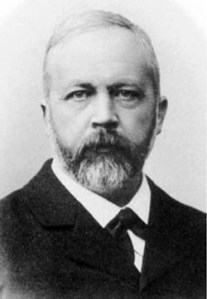
This isn’t a field for fame. Don’t believe me? Approach a stranger on the street and ask them if they know who Wellhausen is. Alas and alack, one of our greatest names is nobody outside the academy! In my own days among the privileged professorate, I never suspected I’d be anything but one of many voices trying to be heard. After all, my training was really more in history of religions than Bible in the first place. Dead languages had to be negotiated, but that’s all part of becoming an expert in something nobody really cares about. But then I think of Wellhausen. There was a time when all of this could make a nation such as Germany sit up and take notice. That day was centuries ago, and I’d better check that pot—I think maybe whatever’s in it may be done.


Living Challenged

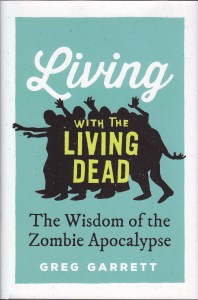
One of the surest signs of hope for the world is that academics are beginning to notice monsters. A trickle began some time ago and it’s probably best to call it a trickle still, nevertheless, the quality of the trickle is improving. Some serious publishers are now counted among the mix of those who pay attention to the lovable unlovable. Greg Garrett’s Living with the Living Dead: The Wisdom of the Zombie Apocalypse is one of the more recent approaches to the undead that looks for religious themes among them. They’ve been there from the beginning with zombies, of course, but few with tenured positions bothered to look. It’s an open question how long the current fascination with the undead might last, but Garrett’s treatment finds them useful sources of theological thought.

Perhaps the aspect of my own fascination that I feel most often compelled to explain is why fear has such an appeal. Garrett makes the point that fear often causes people to make bad choices, and I would have to agree. It is, however, the fear of fear that takes a greater toll. You see, fear is a survival instinct. Without fight or flight we’re all zombie food. Some of us learn this harsh lesson early in life, and if we manage to survive long enough we might even become nostalgic for it. It’s not that I like be afraid, but I do know that if we fear fear—if we avoid looking at what scares us—we put ourselves in danger that the flight response might well prevent.

Garrett’s treatment is helpful in demonstrating that there is a reason for such stories. In fact, according to his analysis zombies can leave you with a profound sense of hope. He uses the living dead as a means of thinking about community, ethics, and apocalypse. Not all end of the world scenarios are that bad. How we treat the living dead may tell us quite a bit about our own rectitude or lack thereof. In other words, zombies are more than their puerile thrills might suggest. There’s something of substance here. I don’t agree with all of Garrett’s conclusions, but he offers a stimulating tour of the current media frenzy around the living challenged and is surely correct that there is more going on with monsters than many of our parents would like to have a religion expert admit. Those childhood years might not have been wasted on monsters after all.


The Birds

While waiting for the bus, now that it’s light out that early, I like watching the birds. They have complex interactions and so many different styles of flying. They have ways that are a closed book to our species. From human eyes they seem so playful that it’s difficult to believe they participate in a struggle for survival. Evolution tells a different story, of course. Living not far from the great human nest of Newark’s Liberty Airport, it’s not unusual to see an engineered flying machine soaring high over their avian heads. Which, I wonder, are the better fliers? Birds, after all, evolved. Flying wasn’t planned, as far as we can tell. Although not so much around here, some birds don’t even fly.

I once read—many years ago and I can’t recall where—that if a person were to fly they would need an enormous chest to beat the very large wings they’d need for lift-off. Birds, apart from being naturally aerodynamic, have hollow bones which make them a touch fragile, but less tied to gravity. Our planes and jets, unlike the escape vehicle in Chicken Run, don’t flap. Bernoulli’s law keeps them aloft, along with some meticulous engineering and heavy fuel consumption. Humans may imitate nature, but they supersede it when they can. Still, I have to wonder why, if birds were a special creation as our literalist friends claim, God didn’t make them more like a plane.

Holding your wings out stiff all day, I’ll allow, would get pretty tiresome. Still, if you’re designing a critter to fly you might as well go with the best parts available, right? If not, I’m going to have a talk with my mechanic and ask for some of my money back. Birds, for all their charm, are very good illustrations of evolution at work. Dinosaurs taking to the air is so poetic that it has an organic feel. Flying is a great way to escape your land-bound predators. That step from long leaping to flying may be a doozie, but it seems to explain the shape of birds better than any intelligent design. Among bipeds, though, only one claims the place of being god-like in shape. Having said that, there are some flaws that a good biomechanical engineer might address. But then, who said God majored in engineering? When I went to college I was firmly under the impression that he’d majored in religion. And that, as many engineers might suppose, is for the birds.


O Absalom

It feels like confession every time I go to get my hair cut. I sit in the chair and a girl younger than my daughter looks perplexed when I explain it’s been a few months since my last shearing. “Forgive me, daughter, for I have sinned…” Haircuts take too much time is the truth of it. I’ve never been one to worry overmuch about outward appearances. I’m an internal kind of guy. I’ve never liked shaving and I can’t really see giving up ten more minutes of my busy morning than I have to, only to hover a sharp blade near my already beauty-challenged face. No, the scissors trim takes just a few minutes once a week or so, and everything’s good for a few more days. But the haircut is more on Absalom’s time schedule. Frankly, I just don’t think about it. Suddenly hirsute.

Absalom’s hair was both his pride and his fall. Usurping the kingdom from David, Absalom had a head of hair that left the girls screaming. Then, routed in the forest, his head got caught in a tree. The Bible doesn’t say specifically that it was his hair, but use your imagination. In antiquity, hair meant something. Alexander the Great was known for his luxurious locks. Even the word “Caesar” means “hairy.” Hair was considered a natural head covering, a kind of piety that required little effort. Ironically in evangelical circuits the Roman haircut and clean-shaven look predominated. I had a job after college that required me to shave my beard since “customers don’t trust a man with facial hair.”

But I’m not into hair for the fame. I just don’t have the time. Weekends are scarce and short and I’ve got a lot to do. I’ve got a book that needs publishing and a life that needs living. I can do it with long hair. I can’t do it without time. Absalom spent his free time plotting. His coup was the result of careful planning. I’m sure he didn’t stand there outside the city gates thinking, “people would like me better if I had short hair.” Quite the opposite. In this country of clean, biblical living, however, we’ve opted for the razor and scissors. I’ve had people ask if a beard is hard to keep clean, as if I’m a dirty old man under these silver strands. Hair and beards can be washed and be as hygienic as any person can be in New York City. I just take care to duck when I go under trees.


Flat Devils

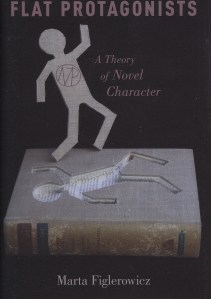
Fiction is a framework to approach reality. People are drawn to stories because they help us to make sense of a bewildering world which wasn’t, in reality, custom made for us. Marta Figlerowicz’s Flat Protagonists: A Theory of Novel Character explores the types of characters that modern novelists are taught to avoid. She points out, however, that they occur in great novels beginning from the early stages of the category up through fairly contemporary classics. The flat protagonist, in short, isn’t believable. I’m not enough of a literary critic to judge her examples, but I have been thinking of one such character that occurs in popular culture all the time—the personification of evil. In my reading on writing I’ve learned this is to be avoided. Nobody is pure evil. Popular media begs to differ.

Being of working class sensibilities I can’t separate myself from the lowbrow crowd, I’m afraid. My fascination with Sleepy Hollow is pretty obvious on this blog. One of the recurring themes in the series is the antagonist that is indeed pure evil. Whether it’s Moloch, Death, Pandora, or the Hidden One, those who are evil represent the dark side of humanity, or the universe. They glory in destruction. Of course, in late Judaism and early Christianity this was a role taken by the Devil. As a child I was taught that it was wrong to feel sorry for Satan. This clashed in my head with the idea of forgiveness and with the love of all. Could God not love his (and he was masculine) own enemy? How could we hope to do the same, then?

In the most ancient of religions, as far as we know, evil wasn’t personified. Yes, evil happened, but it was simply part of the matrix of being. Some gods tended toward good while others tended the other direction, but a being of pure evil doesn’t seem to have existed. Even Tiamat loved her children, at least until they killed her consort. The stark black-and-white world of monotheism can’t explain evil without an divine enemy. A flat protagonist, to be sure, but one you can always count on to do the wrong thing. The closest we come to that in real life is the Republican Party. Insidious, sneaky, using every possible loophole to shove their agenda through, they are the perfect flat protagonists. No, I’m not inclined to believe in the Devil. Or at least I wasn’t until November of 2016.


The Nature of Evidence

Home alone on a Friday night, I turned to Werner Herzog’s Nosferatu. Not a typical horror film, this art house production is an updating and remaking of F. W. Murnau’s technically illegal 1922 adaptation of Bram Stoker’s Dracula. It has been a few years since I’ve watched it, but the beauty of the cinematography kept coming back to me at unexpected times. Klaus Kinski is an unforgettable Count Dracula, hideous and compelling simultaneously. He draws pity and revulsion. When he’s not on camera you can’t wait for him to appear. There’s not much new in the story, of course, as it follows Murnau pretty closely, with some shots being nearly identical. One exception to this is the plague. Wherever Dracula appears the Black Death accompanies him. This leads to one of the most unusual twists of this retelling—the role of Dr. Van Helsing.

Instead of being the authority on vampires and leader of the attack, Van Helsing is here a reluctant rationalist who doesn’t accept superstition. He encourages the town elders to respond calmly to an outbreak of the plague. When Lucy Harker insists that Jonathan has been the victim of a vampire (which he has) the professor again urges caution. He insists that this must be approached scientifically, empirically. You don’t pull up wheat to see if it’s growing, he notes philosophically. Take time, trust science, and all will be well. Meanwhile the audience knows the reality of the vampire. There is a supernatural threat and it is moving fast. Lucy knows they must strike against Dracula before the vampire destroys the whole town. Despite the mounting number of deaths by plague, Van Helsing still clings to slow and steady evidence, only realizing after Lucy’s death that she had been right all along.

There’s quite a bit to unpack in this retelling after all. A female takes the lead. Lucy is the one determined to stop the vampire. She does so out of belief. Van Helsing rightly points out that this is a dangerous way to approach a problem. One ponders what might’ve happened had science been allowed to run its course. Van Helsing, if science be science, would’ve had to at last come to the same conclusion that Lucy had experientially. She’d read Jonathan’s diary and she had a late night conversation with Dracula where he did not appear in her mirror and did shy away from her crucifix. She too is evaluating evidence, only she has to allow for the reality of the supernatural. Since the story is old and the production artistic, this is no bloodbath horror spectacle. It is a thoughtful, almost quiet reflection on how we perceive reality. Even among the many vampire films it remains a thing of beauty.


Keeping Pace

I had no idea my life was in danger. I was out for a weekend walk with my wife, when suddenly, there they were. Snails. In case you think I’m over-reacting, take a look at Christopher Jobson’s piece on Colossal titled “Why Knights Fought Snails in the Margins of Medieval Books.” One of the main points is that the snails were symbols. We tend to forget the power of symbols today. Even modern vampires no longer react to crucifixes—what are we supposed to do? For those who are willing to linger a moment instead of rushing on immediately to the next thing, snails give us quite a bit to contemplate. In a world that hates slow-pokes, “consider,” as my friend Ecclesiastes might’ve said, “the snail.”

As highly evolved cousins of the snail, we suppose we were cut out for greater things. We build towers. We make new nations. We watch them both crumble. On the ruins of those walls we find snails. They have very little to do and expend no worries about getting there on time. Nobody emulates them, although some masticate them. They tend to disappear when the sun is hot. They don’t like the limelight. Yet snails contribute to our world in ways we simply don’t take the time to contemplate. Our time has been commodified. We’re told when to sleep and when to wake for our jobs. Then we’re told none of it matters anymore since 45 has decided to change the rules with his latest tweet. And still the snails crawl.

Before I learned to fear them, I remember happy childhood moments finding snails. This was generally not at home since we rented even then, and landlords have a weird compulsion about landscaping. When wandering far enough from home I’d find snails crawling on stalks of damp grasses early in the morning. They fascinated me. If I plucked them off, they’d pull in their eye-stalks and retreat into their shells. So secure. So symbolic. Eventually I learned that I was obligated to move fast. Keep pace. Be measured by my productivity. Pharaoh’s watching, after all, and that quantity of bricks required isn’t getting any smaller. Not many, I would learn, share my appreciation of snails. It takes a great deal of confidence to go slowly. Those who routinely ignore speed limits won’t understand my symbolism here, I know. Still, I can’t help but think we have a great deal to learn from our cousins who remind us that time isn’t everything after all.


Analyze This

Reading other people’s scripture is a privilege. Although somewhere in my long study of the history of religion I must have read excerpts of The Analects, I have not concentrated on reading them through before. Reading other people’s scripture is like being invited into their houses. You can learn a great deal in a little time, but that doesn’t make you an expert. Confucianism is about the same age as classical Judaism. The foci of the belief systems are clearly culturally bound, and those of us raised in cultures heavily influenced by Judaism and Christianity find scriptures like The Analects somewhat bewildering. For those raised in Confucian cultures, the Bible must also be like coming into an unfamiliar country. That’s the way scriptures are, and it doesn’t mean that any are more or less valid than others. That’s often difficult to accept.

I don’t know much about Confucianism, but it is clear that The Analects are intended as a guide particularly for those who seek public office. In Confucian thought, unlike that of the current United States, only the brightest are believed to be worthy of high office. Indeed, it is impossible to read The Analects at this time in history and not see that Trump is so wrong in multiple languages. Master Kong’s description of “the small man,” the petty sort who has no business governing, is the job description of the GOP right now. Is it possible that one political party has ruined two religions? Probably far more.

Learning—even in small increments—of the religions of others takes away the need to feel superior. In fact there are many commonalities between religions, particularly on the ethical front. Reading other people’s scriptures isn’t easy. There’s so much that’s foreign in them. But like the fact that foreign trade brings desirable things from abroad for us, so should be the study of other religions. There is much of value here. I don’t read Chinese. I’ve never been to China. Reading The Analects, however, demonstrates that the noble minds of different cultures have much to learn from one another. No scripture is perfect. All are necessary. It’s only when one faith decides that it alone is true that religious strife begins to replace religious respect. I’m not about to become a Confucianist, but I do have a a slightly better sense of what it might mean to be one. And small steps can lead to impressive places for those willing to learn.