Fame and Fortune

I was that awkward introvert in high school. Actually, I’m still that awkward introvert now, as easily talked over in editorial board meetings as I always have been at the lunchroom table. As a consequence I’ll gladly take any help I can get on my street cred. No doubt it will have to come from others. I get rejection emails from agents saying I’m just not famous enough to merit attention, so I guess I’ll have to bask in the glory of strangers. I do have a famous brother-in-law. It also turns out that I’m also only 43-degrees separated from J. R. R. Tolkien. I’ll take it!

One of the beauties of genealogy is that we learn we’re all connected. As much as we might want to distance ourselves from any unsightly Trumps in the family tree, we are all, at some remove, related. J. R. R., as those of us in the fam like to call him, had a common great uncle who had some descendants who by marriage became connected to the obscure Tauberschmidt family, of which I’m a member. I posted some time back on my degrees of separation from Bob Dylan, but the closest near miss to fame in my background is Melvin Purvis, “the man who shot Dillinger.” Even he’s only related by marriage. Still, I can’t help but wonder if we all took our relations seriously if it might not help to understand that when we oppress anyone we’re actually violating our own family. Makes you think.
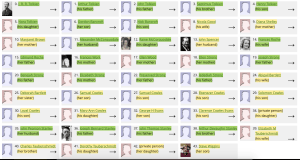
Wiki-Tree is a great place for finding connections. Unfortunately I don’t have much time for genealogy anymore. I used to spend quite a bit of time at it and now I can’t even find my paper files. Those of us on the obscure end of the human continuum have to take whatever jobs we’re offered, even if it means moving so many times that those family tree files from pre-electronic days get buried in the back of some attic crawl space in your rental. So it goes. I’m sure J. R. R. had his own rough times. At least he doesn’t have to try to get published in today’s market. I suspect that if the Inklings were to meet today they’d all be chatting about the merits of self-publishing on Amazon. In ebook form. Publishing’s not for the feint-hearted. So as I open yet another pinhead email, I think of my 43rd cousin and smile.

Filmy Substance

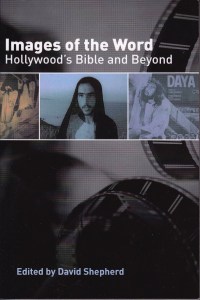
It’s all about Jesus. Well, that’s an overstatement, even in context. One of the amazing things to me about books addressing the Bible in film is just how often Jesus movies come up. If it’s not Jesus movies, it’s movies that have a “Christ figure” or some such Christian trope. Don’t get me wrong—I have no issues with Jesus. It’s just that the Bible and film have so much more in common than this. David Shepherd’s edited collection, Images of the Word: Hollywood’s Bible and Beyond, has some insightful pieces in it and some of what has become “standard fare” already in a field that’s so new. I found Richard A. Blake’s response fascinating. Maybe this was because he doesn’t approach the topic from a biblicists’ point of view.

I’m not really complaining about scholars who look to cinema for a rich source of reception history. I do it myself from time to time. Most of the books on this topic are collections of essays and collections are, by default, uneven. There’s an amazing amount of biblical material in movies that simply goes overlooked. Also, I would suggest, movies offer valid interpretations of the Bible. Somewhere along the development of the discipline we seem to have slipped into thinking that only certain people can legitimately interpret the Good Book. If it is a sacred text, however, it is as much in the public domain as any text can be. And texts in the public domain can legitimately be interpreted by hoi polloi. That’s the nature of being a text with universal assertions, I suspect. Directors and writers, therefore, are legitimate interpreters. We could learn a lot about the Bible from going to the theater.

Like many who’ve taught Bible to undergrads, I sometimes discussed films with them. I always believed students were legitimate interpreters of Scripture, too. This is a dialogue. One of the more interesting aspects of Shepherd’s collection is the pieces that focus on non-Hollywood movies. I don’t see a problem discussing Hollywood since we can assume a larger body of those who’ve seen the film. It is nice, however, to be reminded that “foreign” films also delve into what is sometimes treated as propriety material by Christians. Hindu representations of the life of Jesus? That’s a very interesting idea! Of course, not everyone likes to know how “outsiders” see them. That’s one of the beauties of using cinema as a means of interpreting the Bible. Those of us who study it don’t have the money to influence movies enough to make them in our image. It’s fun to watch someone else’s interpretation.


Bull

Bulls have long been symbols. If I write “that’s bull” your mind will likely fill in the missing implied word. In ancient times the king of the gods, El, was known as “bull El”—probably for a very different reason than the veiled scatological reference above. Bulls were powerful and, to those in settled, agrarian societies, necessary for life. Of course, they can turn on you and kill you with little thought. Even in our high-tech, urbanite world, we keep our bulls at hand. “Charging Bull,” a golden calf if there ever was one, is a famous Wall Street statue erected to the glory of mammon and greed. On May 7, to celebrate International Women’s Day, a statue called “Fearless Girl” was placed in front of “Charging Bull.” Our symbols require some reevaluation. In a kind of Trump-up, another artist placed a statue of a dog lifting its leg on the girl, according to the Washington Post.

We creative types can be sensitive about our work. Apart from writing I’ve dabbled in drawing, painting, and sculpting, although few have seen the results. I know that the space around an artwork is part of the art. I’ve posted before about Grounds for Sculpture, one of my favorite places in New Jersey. The idea of a sculpture park is that the context of the image is important. Statues show up fairly frequently in New York City. The ever-changing art along the pedestrianized part of Broadway in Midtown keeps the walk to work interesting. Interacting with art is performance. At the same time, the respectful viewer knows, artists are making a statement. Placing a girl before a charging bull says so very much.

“Fearless Girl,” unlike the great lummox she faces, is temporary. Nevertheless, the statement she makes is loud and clear. Wall Street might more aptly be named Ball Street for the amount of testosterone that surges through the place. Men erected a system to keep women out of positions of power. And even when a small symbol of female resistance is placed, some man has to have a pug pee on her. I wonder what our society’s become. We’re hardly agrarian any more, yet we still feel “bullish” about things. When’s the last time anyone used “girlish” as a compliment in a business context? “Fearless Girl” will be allowed to stand until February. The pug is temporarily gone, but will be back. When the girl goes the pug will follow. All that will be left in Bowling Green Park will be bull.


Girls to Men

Seminary in the 1980s was a time of endless debate. Some of my classmates at Boston University School of Theology thought me too conservative—I’d made progress from my Fundamentalist days, but these things wear off slowly. Part of the issue, however, was that I look at things in terms of history. (That’s how I ended up teaching Hebrew Bible although my work is generally history of religions.) I remember an argument over changing a text from reading “man” to “human.” The latter, of course, still has the offensive root, but language is only so flexible. My thought at the time (which has changed since then) was that English “man” derives from German “Man.” In German the noun is masculine since all nouns have gender, but it can refer to either a female or a male. “Man,” in origin, is gender-neutral on the human side of the equation. Mark Twain once famously wrote an essay on the barbarities of the German language where he highlights this.

I’d studied German seriously in high school. After four years of the language I felt that I could understand it in a way that comes when you begin the think of certain expressions and wonder how you say that in English. I had come from strongly Teutonic stock on my mother’s side, and German felt quite natural to me. Of course, in college I had little opportunity to use it. Even less so at seminary, so the details had begun to slip considerably. If “Man” could mean “woman” what was the problem, I wondered. Then I started to think of it from a woman’s perspective. As English speakers, “man” is an exclusive term. It refers to males. Over time it has come to refer to males only. Retaining it in hymns or Bible translations makes them exclusive. We need language to meet new ways of thinking.

The other day I was consulting an Oxford dictionary for something. My eye fell on the word “girl.” To my surprise, I read that “girl” originally referred to a small child of either gender in its germanic roots. This is an archaic usage to be sure, but it helped to explain old photographs where toddler boys were dressed as girls and had long, flowing hair. The young were girls, the adults were men. Gender, I have come to see over the years, is a concept that doesn’t conform to simple binaries. Intersex individuals don’t fit into the either/or paradigm. Language struggles to keep up with reality. Traditionally we all started out as girls and ended up as men. And those would be fighting words these days, whether in seminary or out.


Hex Marks the Spot

Public versus private has been on my mind quite a bit lately. Partially it’s because I’ve been reading about magical beliefs and their persistence. It always amazes me how publicly we declare ourselves rational and uninfluenced by the supernatural. Once we get behind the closed doors of our domiciles, however, a transformation takes place. Our insecurities and uncertainties surface. Given the right circumstances we might even confess that we believe in magic. I know I’m generalizing here, but private space does allow for private thoughts and getting out with others can bring a much-needed relief. I was reading about Hex Hollow in an article a friend sent me from Roadtrippers. Hex Hollow is a small town in my native Pennsylvania where a murder took place over witchcraft. I won’t go into the details here—the Roadtripper story is quite brief and tells the tale—but it turns out a man was killed for being a witch. His murderer was also a witch who’d been sent to him by yet a third witch. The crime took place in 1928.

Think about the timeframe for a second. It was between the World Wars. Technology was fairly advanced. Witch trials had ended centuries ago. Still, some people believed enough in witches to kill for their conviction. Historians of religion have pointed out that Americans have never really outgrown the belief in magic that we deny so assiduously. I’m not trying to single out one nation here—there is widespread evidence that magical thinking is endemic to the human thought process. We aren’t so quick to let something go that, according to reason, has served us well. Had magical thinking been purely detrimental it should’ve died out long ago. We need our magic.

As yesterday, so today.

I’m not suggesting witchcraft is real. At the same time I know that it’s natural enough for thoughts to move into familiar terrain when stressed out. In Hex Hollow the man who did the murdering was convinced he’d been hexed by his victim. Perhaps he’d climbed the ladder of inference (what we tend to call confirmation bias) to a rung where the only way down was a criminal act of desperation. That’s no excuse to kill someone, of course, but it fits with what we know of an all-too-human form of stress relief. Nor is it rustic rubes to blame. Psychics in New York City are abundant and even US presidents have been known to consult the stars a time or two. Of course, once I step outside that door I’ll say it’s all nonsense.


The Preacher

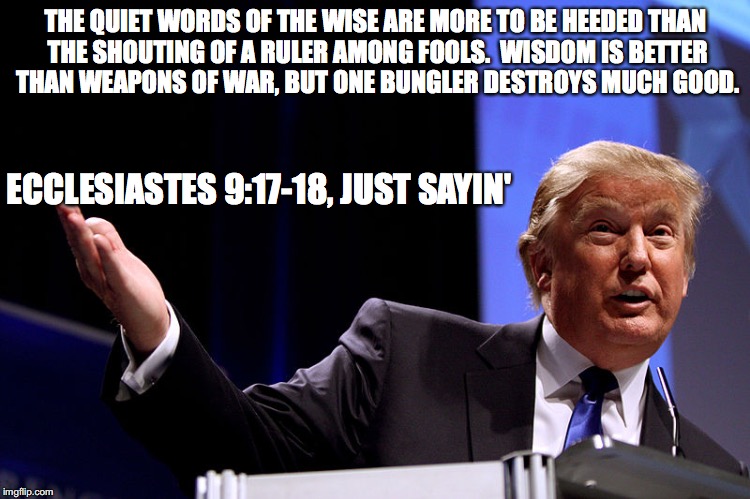
Ecclesiastes, I used to tell my students, is one of the most unusual books of the Bible. And that’s saying something. When we think of the Good Book we think of pious thoughts and lofty feelings—you know, the white-shirt, evangelical sort. The Bible, however, isn’t what most people think it is. Ecclesiastes, nestled right there near the geographic center of the Protestant Bible (and there’s more to say about this) is a book unlike any other. It is philosophical, weighty, and somewhat gloomy. It is a book where God can’t be relied on to help you and the world may very well be against you. It honestly admits that things just aren’t as they should be. “The quiet words of the wise are more to be heeded than the shouting of a ruler among fools,” it says, “Wisdom is better than weapons of war, but one bungler destroys much good.” (That’s 9:17-18, in case you want to check me out.)

America used to be known around the world for its pragmatism. Now it’s being laughed at as the master of irrationality. I remember when elections were matters of gravitas and serious consideration of the issues. They’ve now become high school popularity contests, even including the locker-room talk. Trump insults his own party and they kiss up. We have a president more impressed by kid’s toys in Saudi Arabia than by the top-notch research universities in his own country. I turn to Ecclesiastes for consolation. It’s a good book to read when everything’s going wrong. “For there is no enduring remembrance of the wise or of fools, seeing that in the days to come all will have been long forgotten.”

My white-shirted friends will surely object. I’m taking verses out of context—prooftexting, it’s called. But, my evangelical friends, you say Scripture is the word of God. Fully inspired and inerrant, is it not? How can you dismiss the wise, wonderful, woeful book of Ecclesiastes? The world is a complex place. Those who seek office as public servants should at least be able to distinguish the servant from the master. They lay their hand upon the Bible to take a sacred oath of office. Beneath that withered hand lies the book of Ecclesiastes, forsaken among its more cheerful siblings. Do not forget Ecclesiastes. It is the book that best makes sense of our day. “Better is the end of a thing than its beginning; the patient in spirit are better than the proud in spirit.” Herein lieth the truth.


Sea Around Us

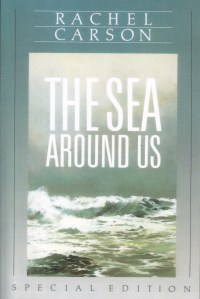
Re-reading books is something I do somewhat too infrequently. One of the obvious reasons is that I won’t possibly finish everything I want to read in my lifetime as it is, and once something’s in the vault I tend to move on. I keep books, however, because I frequently go back to them to refresh my memory. Wholesale re-reading takes commitment. I just finished re-reading Rachel Carson’s The Sea Around Us. It’s difficult to describe the impact this book had on me when I first read it, years ago. Even though modern editions state that it retains its authority (broadly it does) I couldn’t help but be struck by a number of things this time through. Carson thought of herself as a writer. In her day that meant adhering to the conventions of language, which was, I admit, embarrassingly masculine. The assumptions of the 1940s and ‘50s against which Carson struggled set the very frame for the discussion. I recall being told in school, by female English teachers, that the only proper pronoun to use when the subject was of indeterminate gender was the masculine. I raised my eyebrows, but being good at following rules, I didn’t raise my hand.

Not that this takes away from the poetry and mastery of The Sea Around Us. It is a wonderful book. It also made many people stop and think about the ocean for the first time. Really think. And that’s a second observation about my re-reading. Hearing the recitation of how, historically—or prehistorically—the oceans covered much of North America. Thinking about how my hometown, far, far inland would’ve been underwater for eons really made me ponder. We’ve built our coastal cities rapidly, and with typical human short-sightedness. Even without our generous input, global warming has been ongoing for centuries. Sea-levels have been rising. Our desire for wealth, settling as close as possible to the water to facilitate trade, didn’t take into account what would happen in the perhaps foreseeable future. Even now when the warning is loud and clear the businessmen of the White House are in full denial.

There’s a kind of strange justice to this. You see, one of the other features of The Sea Around Us, and one of the most compelling aspects of the book, is Carson’s narrative of how we came from the sea and our desire is to return to the sea. Our blood evolved from ocean water. We rely constantly and in significant ways on the oceans. They, for example, are the powerhouses and condensation points for almost all of our weather. They separate us and bring us together. The very origin of life itself basks in pelagic profundity. Indeed, the ocean supplies the very concept of “profound.” The deeps. Although it had a beginning, it seems the world ocean will outlive our tribal little race. Damaged and poisoned by our greed, in eons it will recover. And those beings that survive will find their own wisdom beneath the waves.


How to Type a Stereo

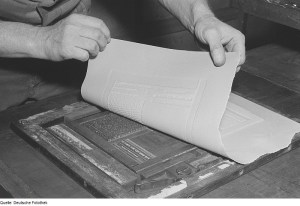
In the early days of publishing, type was set by hand. Individual letters, inserted backward onto plates, were used for printing the positive of a page. Printers could make as many pages as desired, but once the letters were released, it was time-consuming and costly to arrange them all again. If a book (principally) was expected to sell well enough for reprints, a plaster or papier-mâché mold was made of the page. This could be used to cast a solid metal plate of the pages to store for future print runs. This solid plate was known as a stereotype. Every copy from the plate would be exactly the same. When the plate was no longer needed it could be melted down and recast. The origin of stereotyping is a useful reminder of what happens when we preconceive a notion. For example, if I write “computer programmer” there is probably an image that comes to mind. No matter how many stereotypes confirm that mental picture, it isn’t true to the original.

Photo credit: Roger and Renate Rössing, Deutsche Fotothek, via Wikimedia Commons.

A piece by Josh O’Connor on Timeline, “Women pioneered computer programming. Then men took their industry over,” tells the story. Back in the early days of computing, when programming was seen as the menial labor of swapping out cables and plugs, it was “women’s work.” When it became clear how complex this was, and how many men didn’t understand it, the job was upgraded to “men’s work” and women in the industry were replaced. Stereotyping wasn’t just for boilerplate any more. The unequal assumptions here have led to a situation where computer engineering jobs still overwhelmingly go to men while women take on more “gender appropriate” employment. Any task that requires mental calculus benefits from input from both genders. One’s reproductive equipment is hardly a measure of what a mind is capable of doing.

Stereotyping is so easy that only with effort can we force ourselves to stop and reevaluate. The computer industry is only one among many that has been remade in the image of man. Our archaic view of the world in which everything is cast metal should be softening with the warming of intellectual fires. A large part of the electorate in our technically advanced nation admitted it just wasn’t ready for a woman in the role Trump is daily cocking up. It will take more hard lessons, perhaps, before even men can be made to admit that women can do it just as well, if not better. Stereotypes, after all, are eventually melted down to make way for new words. This may be one case where literalism might be a reliable guide.


Light and Dark

Prophets, mothers, messiahs. A new religion for a new world. While these may not be main themes of Robert Repino’s new novel D’Arc, they’re clearly there in the background offering verisimilitude to a world turned upside down. Continuing the diegesis created in his previous two novels Mort(e) and Culdesac, Repino again shows an uncommon awareness that when survival becomes difficult people (and animals) turn to religion. Many fiction writers create worlds under stress and pretend that characters simply forget the religious option. That may be realistic on an individual level, but as history shows, not on a societal one. People—and mutated animals—are meaning-seeking beings. D’Arc doesn’t shy away from this fact. In a wildly integrated world of different species coping with consciousness and opposable thumbs in various ways, religion naturally arises.

If you haven’t been initiated into Repino’s universe, it begins with a virus and/or a plot—themselves religious—which allow animals to become bipedal and to grow human hands. They can talk and reason and they show us a true reflection of who we are. D’Arc, the female companion of Mort(e), finds her way in a world under threat. Planning to speed up global warming in a dramatic way, the aquatic antagonists conspire to melt the ice caps to flood the entire world. Repino knows the value of the flood story and uses it to full advantage. Along the way we meet beavers who’ve developed a religion that functions between water and dry land. Indeed, as a species their religion defines them as much as their engineering skills. This is a world that’s just been through war and instead of reconciling all species, there remain those (most notably humans) who can only live with their own superiority. This is a complex universe.

The hero of this tale, D’Arc, is sympathetic to the religious sensibilities that have sprung up around her. She herself is a character prophesied in this world where Mort(e) is messianic. There’s a scripture in the background somewhere and theirs is a world without embarrassment about it. There’s also plenty of action and adventure—the war with no name is really not over—but there’s a subtlety to the narrative as well. When things go awry many people do assume they’re alone in the universe and try to find their own way. It’s equally true that many look for meaning in a structured form of belief where all of this has been foretold. Such worlds, to me, seem to be more honest to the human condition, even when the characters are cast as talking animals.


Ellis Island

A few years back we made a trip to Ellis Island. This is a common field trip here in New Jersey, although none of my immediate family passed through this portal. The most recent immigrants in my own heritage seem to have arrived by the early 1800s. In any case, Ellis Island is an impressive location. Now a museum, you can wander through the rooms and get an idea of what newcomers faced after a long and trying ocean voyage. What struck me the most was that large numbers of people were turned away for mental problems. I suspect mental illness of one sort or another is unnervingly common among human beings, and our current frenetic pace of life probably only exacerbates the situation. Still, I wonder if we really have a clear grasp on what is “normal.”

As humans become more adept at understanding their own brains, a need for more precise definitions asserts itself. A friend recently sent me an article suggesting “Neurologists Have Identified Brain Lesions That Could Be Linked to Religious Fundamentalism” on Science Alert. The article my Mike McRae ultimately doesn’t suggest that brain damage is the answer to Fundamentalism, but the story reminded me of an unscientific observation by one of my seminary professors decades ago. Harrell Beck once said something along the lines of Fundamentalism isn’t a theological position, it’s a psychological problem. Indeed, those who fall into the literalist camp have a preternatural urge to see things in black and white. Rules that can’t be violated, even if it means your deity’s an angry old God. With literally Hell to pay if you’re wrong, the right course of action is strikingly clear. Only life’s seldom so simple.

We study our brains but we don’t have a baseline for normal. I can’t believe that waking before dawn to catch a bus to work a job that pays less than a successful high school degree in other states is a good bet by anybody’s standard measure of normalcy. Those who read probing biographies find that even our brightest and best have quirks they didn’t wear in public. Surely the physicians on Ellis Island had some guidelines in mind when they were turning away those who didn’t measure up to the standard of what an ideal American mentality should be. Although Ellis Island shut its doors over half a century ago, it’s clear that even if we kept some unstable candidates out, we’ve done a stellar job of growing our own. And that can be taken as truth by faith alone.


Beat the Press

Like many people, I’ve been re-reading 1984 and wondering what’s going on in a country I thought I knew. With clear evidence of wrong-doing on the part of the chief executive, Republicans have been closing ranks to ensure that bullies rule the playground. It couldn’t have been clearer than it was in Montana this past week. In a special election to replace one of Trump’s few appointees, Republican Greg Gianforte won the election the day after being charged with assault. This, despite being unendorsed by major Montana newspapers after attacking a reporter. In this world of alternative facts, the press is the real enemy. Those who support what’s going on in Washington are either badly deluded or unable to understand how proposed budgets will effect them. And the idiocy goes rolling along.

Our nation is weary. Headlines that could be pulled from MAD magazine appear and we count on our fingers the days until the midterm elections to try to introduce some kind of balance to this wildly yawing ship of government. You get the sense that newspaper editors are looking for anything to say that makes sense. Totalitarian governments always seek to discredit the free press. I learned about propaganda in high school, but apparently that lesson has been missing from the curricula of many schools where one man’s lies are as good as the facts of an entire nation. I admit to being a bit disoriented myself. I’ve got a life to lead and I can’t trust my government—I know, welcome to the Stateside Bloc. Can someone tell me what’s really going on?

Perhaps the most disturbing element of all of this is that the GOP is showing its true colors. Democrats aren’t perfect—not by a long shot—but they have never tried to rob the electorate of their rights and obfuscate to the point that the Father of Lies himself could take early retirement. There are books that explain this, but the Republican Party doesn’t like books and discourages reading any literature that it doesn’t sanction. Trump can completely contradict himself in Tweets and his handlers say “No, he didn’t” and that’s good enough for pushing an agenda through. Even Spicer’s lies aren’t extreme enough. We’re mainlining deception and can’t stop. Reporters can be thrown to the ground and the electorate stands and cheers. Tell people what they want to hear, and since facts are the same as opinions casting a vote is the same as throwing a punch.


Incident at the Wailing Wall

While reading about Jerusalem lately, I recalled my first visit to the Wailing Wall. The Wailing Wall is the only standing part left of the temple that Herod the Great refurbished on the site of the temple originally built during Solomon’s reign, destroyed by the Babylonians, and rebuilt under the Persians. This was called the “Second Temple” because the first had been razed and although Herod had basically rebuilt it, the second one had never been destroyed (that would happen a few decades down the road). Today the Wailing Wall, the western wall of that magnificent temple, is a sacred site to Jews, and to not a few Christians. My visit took place in 1987. I was volunteering on a dig at Tel Dor, and on a free weekend I’d taken the bus to Jerusalem with some friends to look around.

It was late Friday afternoon. I was on my first trip overseas, and, like most fresh-eyed youngsters, photo-documenting as much as I could. I raised my camera. A guard walked up to me. “No pictures on the Sabbath,” he said. He had a machine gun and I didn’t, so there was no arguing the point. Besides, I had just finished the roll. (Does anyone out there remember film cameras?) I stepped into the shade of an alcove to change the roll. A couple of Hasidic men stopped me. “No photos on the Sabbath,” they warned. I assured them I was just changing my film. It was clear, however, that no more pics would be snapped. I rejoined my party and took out a notebook—at least I could jot down a few impressions. Another guard approached, “No writing on the Sabbath,” he said.

This episode has stayed with me over the years. With Trump’s international tour, I’m reminded that I’ve always striven to avoid the “ugly American” syndrome. I respect the local rules. The incident at the Wailing Wall, however, was a case of religious rules, wasn’t it? Does the enforced rest of the Sabbath apply to Protestants? Indeed, I’d been warned that if I didn’t catch a bus before sundown I’d never make it to Jerusalem on a Friday evening at all. Conflicting theocracies have led to more than their share of international sorrow. Why not take the high road and simply absorb what is going on around me? There’s a profound wisdom in that. Travel should inform our worldview. Those who encounter walls should stop and consider all they might mean to all who will eventually face them.


Human Omniscience

This might take some thought, but please bear with me. I’ve been reading about how some scientists are eager to promote rationality only as the true understanding of the universe. The flaws in this logic are immense. The greatest gaff here is assuming that evolved biological creatures with only five senses have come to comprehend the vastness of a universe in which we matter very, very, very, (and some scientific notation may be helpful here) very little. And we assume that’s all there is to know. Consider that when you want to spot the Pleiades in the nighttime sky, the best way to do it is not to look directly at the constellation. Our rods, which are far more sensitive than our cones, are not concentrated in the center of our field of vision. That means, in some circumstances, you see something better by looking slightly away from it. Don’t take my word for it, test it yourself on a clear night.

We also know that some animals have senses that we don’t. When’s the last time you picked up the earth’s magnetic field? We know it’s there and we know that some animals sense it. We don’t. Or consider the ant. If ants make you itchy, any hive mind will do. There are creatures right here on earth that think collectively, not as individuals. As humans we’ve evolved to think that our limited experience tells us everything there possibly is to know about truth. We don’t know how living under water influences perceptions because we can’t do it. No, we’re a race of surface dwellers. (There’s a metaphor there for those of you who believe in such things.) We’ve learned some basic laws of physics and suddenly we preside over the courtroom of the universe since our evolved logic is the only and the best the cosmos has to offer.

Evolution, however, also made us religious. If logic is at all what it seems we have to admit that study after study has shown the benefits of religious belief to the beleaguered human psyche. If we try to measure it empirically it crumbles in our fingers. Only logic would tell us simply to ignore it then. I’m no enemy of reason. It’s the best way we have of getting along in this world. I love science and support its evidence-based health. It’s just that as I’m standing here in the dark wondering where the seven sisters are, I sometimes have to trust my rods instead of focusing on what I can see plainly with my everyday sight. Logic tells me there are other things outside my sensory range as well.

Photo credit: NASA


Cloaking Device

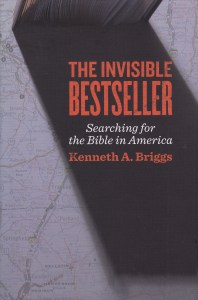
America’s book is seldom read. Those of us who spend an unusual amount of time with the Bible know this from personal experience, but others are starting to notice too. Kenneth A. Briggs’ The Invisible Bestseller: Searching for the Bible in America is a rambling account of the way a variety of everyday people from prisoners to academics and clergy use, read or not read, and perhaps inwardly digest the Good Book. There are moments of stark insight in this book, but with no narrative arc it is somewhat easy to feel like you’re reading about what random people say about the Bible. I don’t need a book to tell me that I’m odd, but much of what I read here was old hat to a guy who grew up Evangelical, went to seminary but never got ordained, completed a doctorate and taught the Bible nearly two decades before being booted out of its company. I’m not sure what I expected to find. Perhaps redemption?

Briggs does provide some useful statistics, and not as maniacally as sociologists do. We learn that few people read the Bible and the numbers are declining. Still, people buy the Bible and tend to have multiple copies in their domiciles. It is cheaper than insurance, after all. Holy Writ, however, is an alien among us. Few people have any idea what it was like to live before smart phones, let alone before the smelting of iron. The concerns and dialogues of the Bible seem so terribly provincial and, to be honest, unenlightened (if one can say such a thing about divine revelation). Still, we won’t accept a president who doesn’t lay his (and it’s always his) hand on the Good Book and swear to uphold America.

The Invisible Bestseller gave me plenty of information to ponder. Some of the tales Briggs tells are interesting. Others are so mundane as to be stultifying. The overarching fact is that the Bible is an established object in our culture. Some take it seriously enough to read it and stick with it—this isn’t easy to do, and I speak from experience here. Such people are rare. After all, apart from getting you a hall pass out of Hell, the Bible doesn’t seem to do much for people these days. Still, when I take a moment to read the Sermon on the Mount, I can’t help but feel we might be missing some wonderful rhetoric by ignoring the Good Book so much. But then again, I’m fully aware that I’m the one that’s odd. Briggs’ book stands as a testament to a couple of testaments that continue to wield enormous power without ever being read.


Sleepy Holy

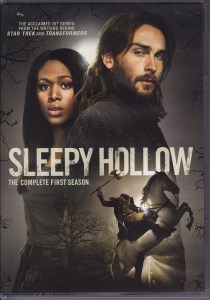
Fox recently announced that, after four seasons, Sleepy Hollow is being cancelled. The news, while not unexpected, is still disappointing. The initial success of the series caught just about everybody by surprise. Intelligent, witty, and literate, this program tapped into a number of themes dear to American sensitivities. One of those sensitivities, surprisingly, was the Bible. I sometimes wonder if the Bible might’ve been able to save Sleepy Hollow. In my limited view the first season was the best. It started out with an all-American apocalypse. To survive an apocalypse you need a Bible. George Washington’s Bible featured throughout the mythology of the first installment. Two of the four horsemen of the apocalypse had arrived in Sleepy Hollow. Then something went wrong.

In season two, Moloch—clearly a stand-in for the Devil in the series—was killed off. Apocalypse no. The end of the world, in Scofield’s canonical view, had been cancelled. Even Ichabod and Abbie began to wonder what good it is to be mentioned in Revelation if your role as world saviors has been made redundant. A new arch-villain was needed. The coven that had shielded Ichabod, headless without its horsemen, simply faded away. Ichabod learned how to drive. Where’s an enemy when you need one? Enter Pandora for season three. But wasn’t she rather a sympathetic figure? Sure, she unleashed lots of negativity but hardly with malicious intent. There’s no villain like a biblical one.

Where do you go after the apocalypse is over? What use is the Bible in such a world? Pandora has no book of Revelation behind her. No special effects budget can rival Pestilence, War, Famine, and Death. What can make you shudder like that pale horse and its skeletal rider? In a world with ebola and zika it would seem that pestilence still has a place. Famine in a world of plenty is horror defined. Two out of four isn’t bad, I suppose, but when you start off with Death you’re not leaving yourself much room for maneuver. Of course, after the horsemen there are three seals left. Perhaps if Sleepy Hollow had stayed with the script and followed through until just before the final trump, it might still be here among the land of the living. Just like creation, the “end of the world” has multiple versions in the Good Book. The Bible’s a consistent narrative only in the imagination of harmonizers eager for easy answers. The possibilities are endless. Where there is no vision, the people parish.