Just Books

It’s very difficult to make your voice heard in this world. I’ve been talking for nearly half a century, and most of the time it’s like nobody’s listening. For those who follow the Chronicle of Higher Education, the fact that Herbert Richardson, the founder of Edwin Mellen Press, is threatening to sue some librarians for comments made on various blogs, is not really news. When the Chronicle ran a story this week on Herbert Richardson’s career, I gained a renewed appreciation for what he’s doing. I say “renewed” because I remember the days when I was very poor. My first year of teaching, with my wife in a university program and my own student loans due, I was paid a measly ten grand for a salary (this was in 1992). Despite these privations, my wife and I attended the Society of Biblical Literature annual meeting on a very tight budget. For those of you who’ve not been, SBL offers a book orgy for scholars. Publishers of all descriptions offer books at a discount, but even so, many titles are out of reach. My wife was researching Methodist hymnody for her thesis, and Edwin Mellen Press had a resource that she needed. We simply couldn’t afford it. Herbert Richardson saw our earnest discussion at his book stall, walked over, picked up the book, handed to my wife and said, “Take it.”

Although Herbert Richardson would not recognize me, he has on other occasions, shown me unsolicited kindness. Reading the Chronicle account, I learned that he is a Presbyterian minister and that he had taught at Harvard Divinity School. He is unconventional in some respects, but he also enjoys bucking the trends. Edwin Mellen Press publishes good research that mainstream publishers pass up because their eyes are always on the prize. The bottom line. I never published with Mellen, but I have had snooty presses turn down very careful scholarship of my own. My sympathies are with the underdog, and with the guy who tries to help the underdog. Academia is a cruel world. Some of us have received nothing but backhanded salutes from “established institutions” for all of our adult lives. It’s hard to feel sorry for them. What are the needs of one man in a machine so vast? Not much, apparently.

I’m not the litigious sort. Lawyers have generally caused mostly grief, in my experience. But I don’t castigate the important work Herbert Richardson is trying to do. It might be easy for those lucky enough to be welcomed by academia to forget just how lucky they are and noses are easily looked down towards those of us who never received a chance to shine. No, I wouldn’t sue those who bad-mouth me, and I’m sure there are plenty, but I think Herbert Richardson’s heart is in the right place. As a guy who would happily work for books if food, shelter, and healthcare could somehow be had, I know what it is to covet a book and not be able to afford it. I know what it is like to feel want. Herbert Richardson, based on my encounters with the man—we continue to cross paths from time to time—understands those who love books. That is a principle I can live by.
IMG_0506


Paranormal Academy

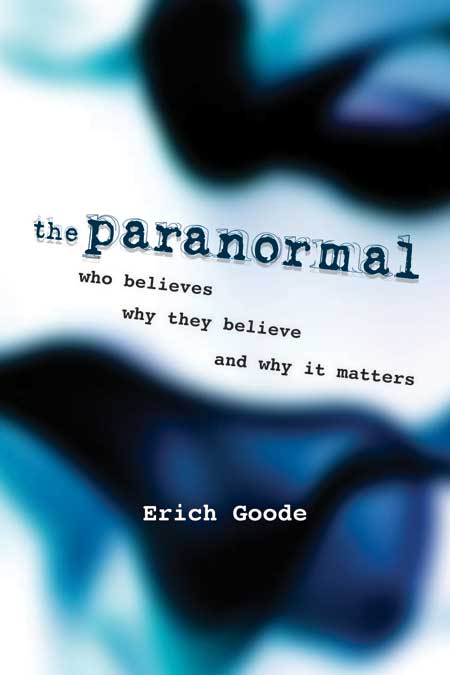
ParanormalA recurrent theme on this blog (as my faithful few will doubtless know) is that religion draws from the same stream of cultural energies as do other phenomena such as horror movies and the paranormal. Religion and fear and curiosity seem to share some common parameters, and every now and again serious academics tackle these connections as well. Erich Goode, a sociologist, has taken on unconventional beliefs in his The Paranormal: Who Believes, Why They Believe, and Why it Matters. Unlike many academic writers on the topic, Goode does not attempt to debunk, but it is also clear that he does not ascribe to the unconventional viewpoints he examines either. In what must be an important realization among sociologists, Goode, like some of his colleagues who also consider the paranormal, finds that belief is widespread. Large segments of the US population allow for some validity toward ghosts, psychics, aliens, and yes, even creationism.

That last one stopped me for a second. Several seconds, actually. Creationism paranormal? When Goode’s delineations are considered, this is not completely inappropriate, but creationism is pure-blood religion. Not that it is necessary for religion, but its birth and considerable growth has been among the conventicle of true Bible believers. It is clear that in Goode’s line of reasoning there is only a fuzzy line between religion and the paranormal. I’ve asserted that same fuzzy line, but I’d never considered biblical literalism as paranormal. Maybe because I was raised in that environment it seemed normal and natural to me. Maybe because it is in the Bible it feels weird to hear it classed as paranormal. Maybe because believers in ghosts, aliens, and undiscovered forces have at least some viable evidence to indicate their beliefs are valid; the creationist distortion appears not to belong in the same camp.

Creationism is a complex psychological phenomenon, to be sure. How people who know the obvious practicalities of science (such as television and the internet, where creationism can be expounded) have demonstrated that its overall methodology is sound, how such people can accept a fairy tale beginning to a Grimm tales world is difficult to fathom. And creationists, in general, would reject belief in what most of society considers paranormal. Can these coexist in the same category? While Goode constructs his paradigm as those who accept and reject empirical reductionism, I’m not convinced that religious belief is the same as paranormal belief. The parsing is a bit too coarse here. Creationism, which began life as a religious belief, has become a political agenda all about domination. It is not so much naiveté as it is need to rule. Somehow I doubt the ghost hunter with her or his night vision camera and digital voice recorder has any real designs on textbook distortion or having women keep silent on Sunday morning.


Rorschach Test

Rutgers University, College Avenue Campus. I recall coming out on a sweltering night once in a while during a summer term, only to find a street evangelist inveighing against undergraduate evils. He, and it was invariably a he, may have delved into the darker sins of graduate students, but I didn’t stay around to find out. Colleges attempt to educate while street preachers try to halt the process. Shall we go forward or retreat? I occasionally run into off-campus preachers on my university visits. I still look like a professor, I suppose, so I am treated to their version of salvation along with the people less than half my age, facing all the temptations of adulthood. The last evangelists I saw were handing out tracts about the evils of tattoos. I know tattoos are very popular, although I’ve personally never seen the draw. With one eye cast warily ahead, I think of what happens when that firm bit of skin starts to sag and the bold decoration begins to shrivel to make us look less like rebels and more like crepe paper left too long in the rain. Besides, I could never think of a picture that I’d want attached to me for the rest of my life. Too many changes come along, best leaving tattoos for those who appreciate a strong dose of irony.

Tattoo

Our evangelist friends, of course, object because tattoos are expressly forbidden in the Hebrew Bible. “Ye shall not make any cuttings in your flesh for the dead, nor print any marks upon you. I am the Lord,” so the Lord declares in Leviticus 19. I resisted the urge to ask my ersatz savior if his clothing contained any blends of materials, forbidden earlier in the same chapter. Or if he trimmed the hair on the sides of his head. Or rotated his crops. The problem, according to the tract, is that tattooing was considered a heathen or pagan activity as Christianity spread to new lands. Presumably the very popular cross or crucifix tattoo design had not yet evolved. The tattoo is a tribal mark, indicating loyalty to a (presumably unChristian) group. My tract sets itself out on a history of tattooing, and suggests that it became popular as a form of entertainment, suggestively knocking on the door of that devil, idleness. They even cite Rick Warren as making church too entertaining. This isn’t supposed to be fun, people!

The real problem is that tattooing is getting society prepared to receive the mark of the beast. With echoes of Hal Lindsey’s Late, Great Planet Earth (now severely dated), the tract tells us that the mark is a tattoo and that among the most popular designs is the dragon. China, which venerates the dragon, is hostile to Christians—coincidence?! And, it should be noted, “Studies have shown that WOMEN who get DRAGON tattoos become more SELF CONFIDENT and ASSERTIVE” (emphasis in the original). And that, they want us to believe, is a bad thing. At least with Fundamentalists, agendas are rarely hidden. Too many assertive women and scheming foreigners are trying to lead us to the very tattoo parlor of the beast. Who knew that so much could be unpacked from half a verse in Leviticus? The name Levi, by the way, some suggest, comes from the same root as leviathan, the dragon.


Bridge over Troubled

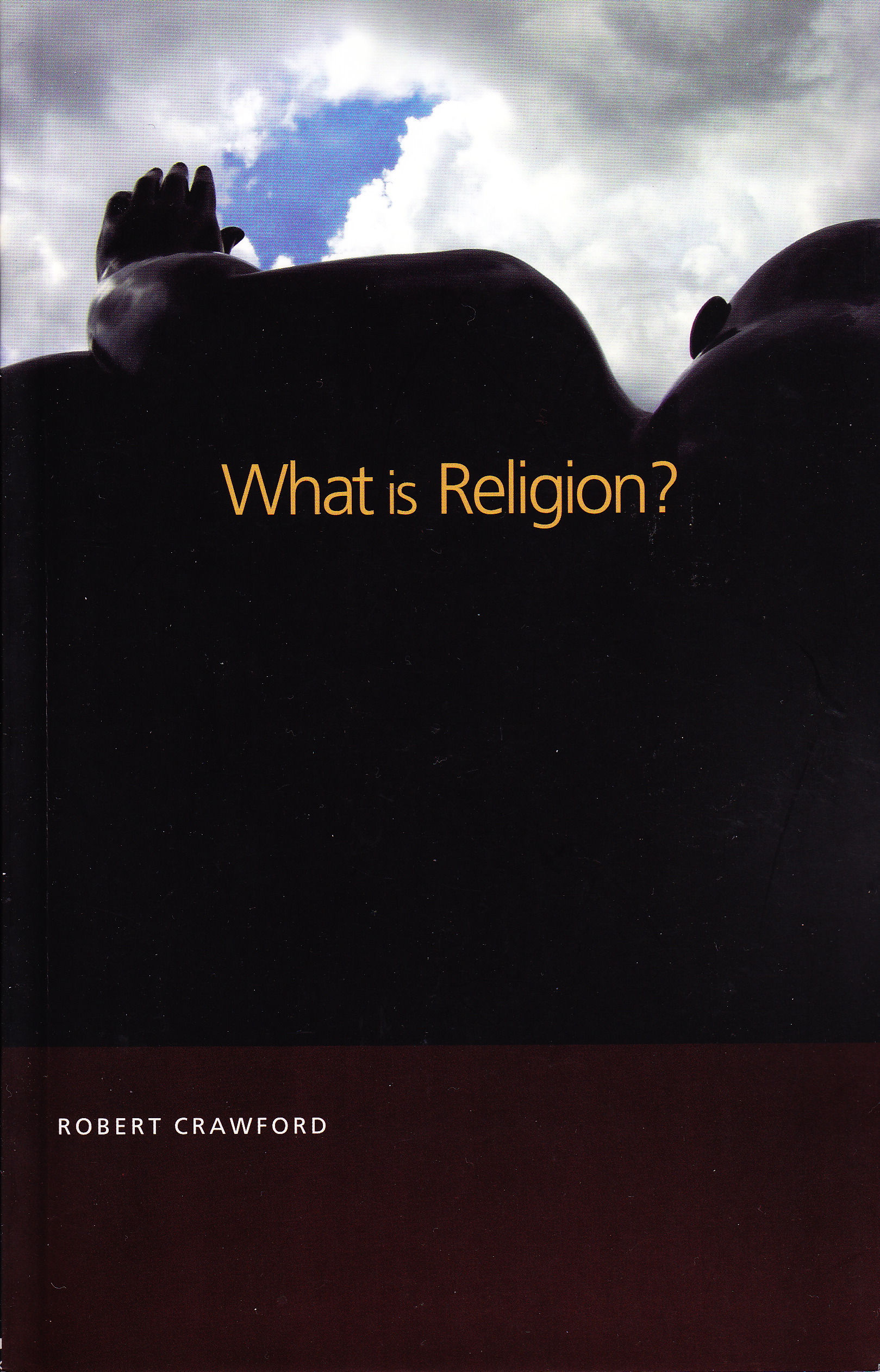
ReligionThe fundamental question of what counts as religion remains elusive. I read Robert Crawford’s What is Religion? hoping to find out. Crawford begins with the admirable assertion that in a pluralistic world all religions must learn to get along. Unfortunately, learning hasn’t always been one of religion’s strong suits. And we still don’t even know what religion is. As becomes clear within minutes of starting the book, consensus will be a stranger in this room. Nevertheless Crawford plows on, hoping against hope that comparison will reveal conformity. Religions aren’t really team players in that way.

Crawford keeps his focus on the “big six”: Judaism, Christianity, Islam, Hinduism, Buddhism, and Sikhism. Although these faiths contain the lion’s share of numbers, they in no way corner the market on religion. I wonder if Crawford’s net is really large enough. When trying to define religion, cutting corners gets you into trouble every time. No matter how we count it, religion is more than a matter of belief and broader than prescribed rituals. It must take seriously the attempts of even small knots of seekers in its preternatural accounting. Crawford sometimes gets bogged down in the details. Science plays a key role in his discussion but then the scope shifts to Christianity, a religion with more than its share of scientific troubles. Islam, for a while anyway, led the world in scientific thinking. What of Sikhs and science?

The more I read of What is Religion?, the more I got the feeling that all of these pieces don’t go to the same puzzle. Religions develop out of historical circumstances and needs. They, with a few exceptions, are not consciously devised by a bunch of eggheads shut up in ivory towers. Religions develop from people in difficult situations, whether physical or psychological. Think about it. If the Bible is to be believed Judaism grew out of slavery in Egypt (either that or Abraham’s childlessness). Christianity out of Roman oppression. Islam from Muhammad’s conviction that polytheism didn’t add up. Hinduism’s old enough to have lost its origins in deep antiquity, but Buddhism is clearly a reaction to pervasive suffering. Sikhism tried to steer between the clashes of Hinduism and Islam. We could go on, but I don’t wish to try your patience. I’m not suggesting I’ve finally done the impossible and defined religion. In fact, I may be suggesting the opposite. Religion encompasses many ways of being in the world. Crawford maybe got a start on the discussion, but it will go on as long as people have troubles.


Loneliness of Long-Distance Runners

1988. I was standing along Boylston Street, in Copley Square, watching the Boston Marathon. As the weary first place runner trudged by, I somehow neglected to take a photograph. I did snap one of the number two winner. I always have had an affinity for those who don’t win. Those who try, only to be beaten by others. His name didn’t stay with me, but I still have that photo, a moment in time, when everyone was excited about the culmination of a long tradition. When I heard that there was a bombing at the marathon yesterday, I experienced a different kind of culmination. I wondered what kind of people we had become. The Boston Marathon, a long-time symbol of endurance and pushing oneself to the limit, came to a crashing end. Along with another chapter in the innocence of a world gone mad. Just last October, I posted a photo on this blog that I had snapped near where one of the bombs went off. As I write this nobody has a clue as to who was responsible or what they were trying to prove.

BostonMarathon

The NRA gun barons were not on hand to stop the terrorists, I note. Funny how they always show up too late. Perhaps we should all start carrying hand-grenades. We all have a choice whether to do more good or evil in the world. To leave behind a better place or a worse one. The Boston Marathon is an international event, with long-distance runners from around the world competing. More against themselves than against anyone else. Just to finish the grueling course. Who would want to hurt just anyone, including several children—those who love to race and dream and hope for a better tomorrow?

The news saddens me, for we like to think we live in an enlightened nation. Maybe a little soft around the middle, but generally a congenial place. We hold events like the Boston Marathon to celebrate human achievement—those who push themselves to the limit but then keep going. Standing in the crowd in 1988, I remember how we clapped for those who seemed too exhausted to trudge those last few yards to the finish line. We wanted them to succeed. I couldn’t tell you one of their names, but we were all wishing the best for them. That is the human spirit. It takes a coward’s coward to plant bombs amid crowds and then not even claim your own evil victory. Terrorism, already heinous, without even trying to make a point. And yet the runners run on. Like the marathon itself, we must keep believing that we can reach that ribbon and that the vast majority are hoping for our success.


Sea Wonders

There’s a hole in the bottom of the sea, if we are to believe childhood songs. News reports this past week, however, have suggested that just the opposite applies to the Sea of Galilee. According to Science on NBC, a huge stone structure, larger than Stonehenge, rests at the bottom of the lake over which Jesus reputedly walked at the height of a storm. To the untrained eye, this stone pile looks like just that—a stone pile. The problem is that there is no natural source for the mound, and it seems highly unlikely that it was built under the water. This astonishing find is only one of the many underwater structures known that seem to defy conventional chronologies and logical behaviors. If this gigantic cairn was built on land, the means remain a problem. It is one thing to climb a conventional pyramid, complete with ramps and sledges, and quite another to mount a mound of apparently random stones to drop another on top. Perhaps it was built under water after all, like one of those tantalizing toys where you try to land your penny in the cup at the bottom of a tank of water.

Pacman's Sea of Galilee from Wikimedia

Pacman’s Sea of Galilee from Wikimedia

Ancient monuments are one of the great fascinations of antiquity. When no rational explanation is forthcoming, a religious one will be declared. Without written records, we know nothing of the real purpose of Stonehenge or Avebury, let alone Galilee-henge. With the pyramids of Egypt we have a better set of data, and we can feel justified calling them religious structures. But why were ancient people building massive rock mounds in what was to become the Sea of Galilee? The place has irrevocable religious associations to the modern mind. Did it possess such connections in the deep pre-Israelite period as well? The false mountain of Silbury Hill, not far from Stonehenge, comes to mind. People are mountain makers.

Cairns have been among the most persistent of human monuments, but what makes this new finding of interest is its location. Baptized in the very lake that holds the headwaters of River Jordan, the mysterious mound has already claimed its sanctity. Who built it, why and when, will take backseat to the fact of its holy location. Archaeologists will eventually dive and probe and will declare an anthropologically sound explanation for this newly found, artificial, miniature mountain. Mountains and gods go together, however, as readily as offering plates and churches. Whatever this newly discovered structure may turn out to be, it will always be a religious site for those who believe.


Parochial Education

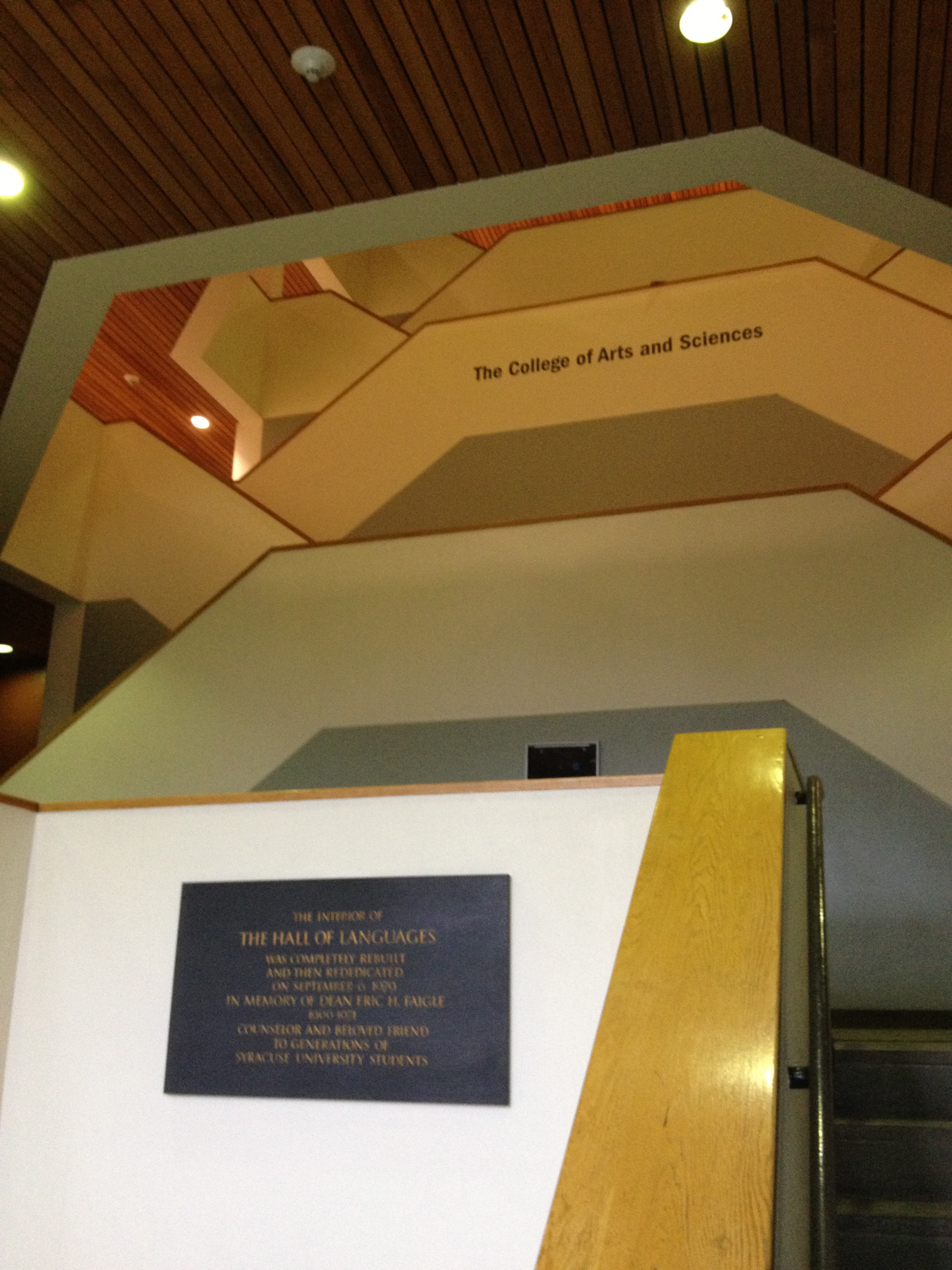
I’m sitting in King David’s Restaurant in Syracuse, New York. I’ve spent two days speaking with a wide diversity of religion scholars, and I’m realizing religion is not yet dead. A few days ago I wrote about the Burnt Over District and the Second Great Awakening. It occurs to me as I climbed the hill to the Religion Department in the rain, that I am on the trail of that Great Awakening. Syracuse University began as a Methodist school. Today, although affiliated with the United Methodist Church, it considers itself non-sectarian. Yet without those abstemious Methodists, they wouldn’t be here. The Methodists, now primarily represented by the United Methodist Church, owe their explosive growth to the Second Great Awakening. Out on the frontiers—for America was a rural nation—the revivals became showcases of the social, the supernatural, and the salacious. The Methodists and Baptists, in terms of numbers, benefited immensely.

With their enviable population base, the Methodists invested in higher education. Syracuse University, just up the hill, Adrian College, Boston, Central Methodist, Drew, Duke, Emory Universities, Florida Southern College—you could go nearly through the alphabet and not exhaust their schools—all owe their beginnings or present stature in part to those thrifty Methodists. Believers in an educated clergy, they reached out to embrace an educated laity as well. Although many of these institutions grew up and left their religion behind, the Methodists have impressed their stamp on American higher education unlike nearly any other denomination. Even when numbers in the pews decline, the Methodists will have left a legacy on the wider culture through their belief in education. About the only other Christian group invested so heavily in higher education has been the Catholic Church. Even so, the Methodist academic reputation climbs a bit higher.

I spent many happy years among the Methodists. Their way of looking at life, officially, anyway, isn’t extremist. Some aver that John Wesley was an extreme evangelist. Today he’d be snowboarding down the Alps to seek the unsaved, a Red Bull or two in his belly to stoke that restless fire. His followers, via media Methodists, eased into the mainstream—in some ways defined the mainstream. Methodism was good for a kid who needed to fit in. So as I sit in King David’s Restaurant, reflecting over my past that has landed me in this most unusual place, I am thinking about my Methodist roots. I’ve failed to impress those Methodist institutions where I was once courted for a circuit riding future. Now I watch as they educate other people’s kids. It is a safe guess that King David wouldn’t even be here if it hadn’t been for John Wesley and his personal need for assurance. If only more churches took education so seriously.

Climb that hill

Climb that hill


Adjunct Values

Well, the internet seems to have discovered adjunct Hell. Naturally, I’m too late to be part of the statistics, but I never rule that out as a future fate. This week I’ve seen several stories, some of them on major news network sites, shocked and indignant about the conditions under which adjunct instructors live. There’s quite a lot of hand-wringing and finger-pointing, but journalists and academics alike are tip-toeing around the blue whale in the room. Our society does not value education. Yes, we insist on educating children to the point of basic competency, but do we really, as a society, value that education? Ask just about any teacher. These people pour out their talent and efforts to give other people’s children the boost they need to get along in life. And many of them have to work second jobs just to make ends meet. Do we expect any less of higher education? We want it cheap and dirty with guaranteed jobs when it’s done. Universities want star faculty who publish all the time. You can’t do that when you’re busy teaching all the time. And we’ve got a glut.

The glut is PhDs. We’re cheap. More accurately, we’re broke. One of the things they don’t tell you when you apply for doctoral programs is that you are signing up to be ungainfully employed for your best earning years. Universities won’t tell you that because they need the money that graduate students bring with them, mostly in the form of student loans. News flash, America: education is not cheap! Another news flash: we are fast falling behind other cultures where teachers are respected, well paid, and even venerated. Gasp! Do such fantasy lands exist? Yes, they do.

Try a little experiment: think where you would be without your teachers. You certainly wouldn’t be reading this blog, and probably not reading at all. Your employment would likely be manual labor. Your math skills would be such that you’d be easily cheated of your wages. You would probably believe in a myth about the earth being created in six days and think that was science. When I read about the societies advancing the swiftest, America does not top the the list any more. When I learn more about those societies where the cutting edge is measured by Singapore or Beijing, I find out they highly value their teachers. They are paid well. They are respected. Here, in the US, chances are that the person teaching your kids in college makes a poverty-level salary and may be surviving by food stamps. Three quarters of our higher education teaching force consists of adjuncts. Three quarters. And these people are no slouches. They’re simply the victims of a society that doesn’t want to pay for education. Listening to administrators attempting to justify their decisions makes me squirm. How much did you say that Greg Schiano, Brady Hoke, or Bo Pelini “earn(ed)” in a year? Where your treasure is, there will your heart be also.

Any old school will do

Any old school will do


Sterling Serling

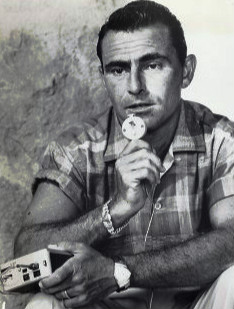
“There is a fifth dimension beyond that which is known to man. It is a dimension as vast as space and as timeless as infinity. It is the middle ground between light and shadow, between science and superstition, and it lies between the pit of man’s fears and the summit of his knowledge. This is the dimension of imagination. It is an area which we call the Twilight Zone.” The words are those of Rod Serling, native of Syracuse and Binghamton, and creator of The Twilight Zone. When I travel to a new place, I like to honor the writers and creators of the region. Yes, there always have been many creators. By my age, Rod Serling was dead, but he had, before that time, created a cultural phenomenon that would stay with the world forever after. It would be difficult to quantify the effect The Twilight Zone had upon me as a child. That opening took ahold of my young mind and convinced me that there was more to life than what appeared on the surface. It is the power of creation.

Rod_Serling_dictating_script_1959

Serling was a fighter. “The angry young man of Hollywood” who used his fiction to protest war and racism, Serling took on many issues in The Twilight Zone that would have been censored had they been presented as fact. Fiction is the vehicle in which truth rides. The bizarre world Serling envisioned captured the imagination to such a point that if I write, “do-do-DO-do, do-do-DO-do” many of you will be able to conjure the theme of The Twilight Zone in your heads. We all know that this is a sign that something strange is about to happen.

There is something about place. I’ve written about sacred geography before, and it is one of the more fascinating aspects of human subconscious life. Something about Syracuse-Binghamton still says “Rod Serling.” Maybe it’s in the low, glowering clouds or the ancient Native American names and traditions that can still be found in this region. Although I’ve never lived in New York, my ancestors did, in the region just east of here. A lifelong wanderer, I sometimes wonder what it is to belong to a place. I have often felt the persistent call of upstate New York, the salmon wisdom whispering me home, perhaps. I’ve never lived here, but maybe I belong here. New York is now proud to claim Rod Serling, and I drive from Syracuse to Binghamton delving deeply into the sacred geography of the region and ponder how such a mind came to be. Even creators, it turns out, have to be created.


Burnt Over

I find myself in Syracuse. Skirting the very edge of the Burnt Over District, Syracuse is only a short distant from Oneida, birthplace of one of the uniquely American religions to have been conceived in this area. Moving further west, several of the religions following the “Second Great Awakening” roared through the state, including the one that was to become the Mormon Church. Looking out over the rugged hills, I wonder what might be in this land that inspires such religiosity. Americans are known world-wide for their religious predilections, and back before the South took the privilege of doling out religious mandates, upstate New York was busy churning out new religions. Of course, this was in the days before the extreme urbanization of culture took hold. Individuals, often isolated from others and struggling to survive in a sometimes harsh climate (they are calling for snow this weekend, still), they turned to God in new and innovative ways.

There must be a point at which religion reaches satiety. How many religions does one nation need? Thus, revivalists found a tired population here in the Burnt Over District. How much energy does it take to build a new faith from scratch? Some flared brightly and burned out (like the Oneida Community), while others flourished to the point of putting forth presidential candidates (I need not say which new religion has offered us a candidate too wealthy to countenance). Something in the soil, perhaps. Something in the mountain air.

Scholars opine that the Second Great Awakening occurred in part, at least, in reaction to the skepticism that was surging through intellectual circles at the time. America has always been good for a backlash or two. While many thinkers were praising the accomplishments of intellect, Smiths and Noyeses were at home brewing up that new-time religion for which Americans thirst. We are great consumers of religion. In the early 1800s revival after revival spread through New York, as well as through the southern states. The south reacted by boosting the Methodist and Baptist populations. New York gave us new religions. Americans aren’t that choosey. In a pinch, just about any religion will do. I stand here in Syracuse, the mid-April snow drifting down about me and wonder what is about to awake in this skeptical age.

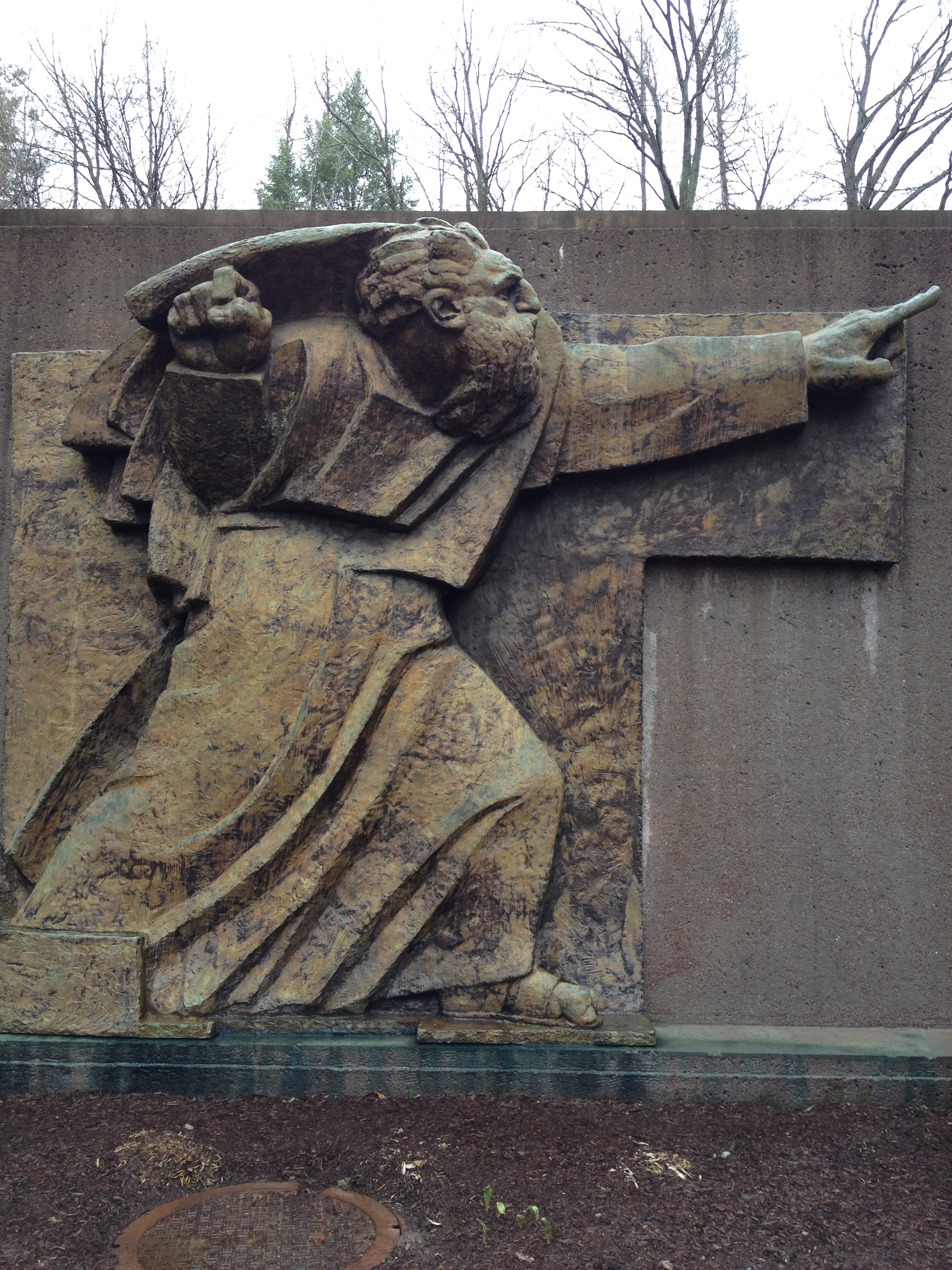
Moses starts a new religion

Moses starts a new religion


The Spice of Religion

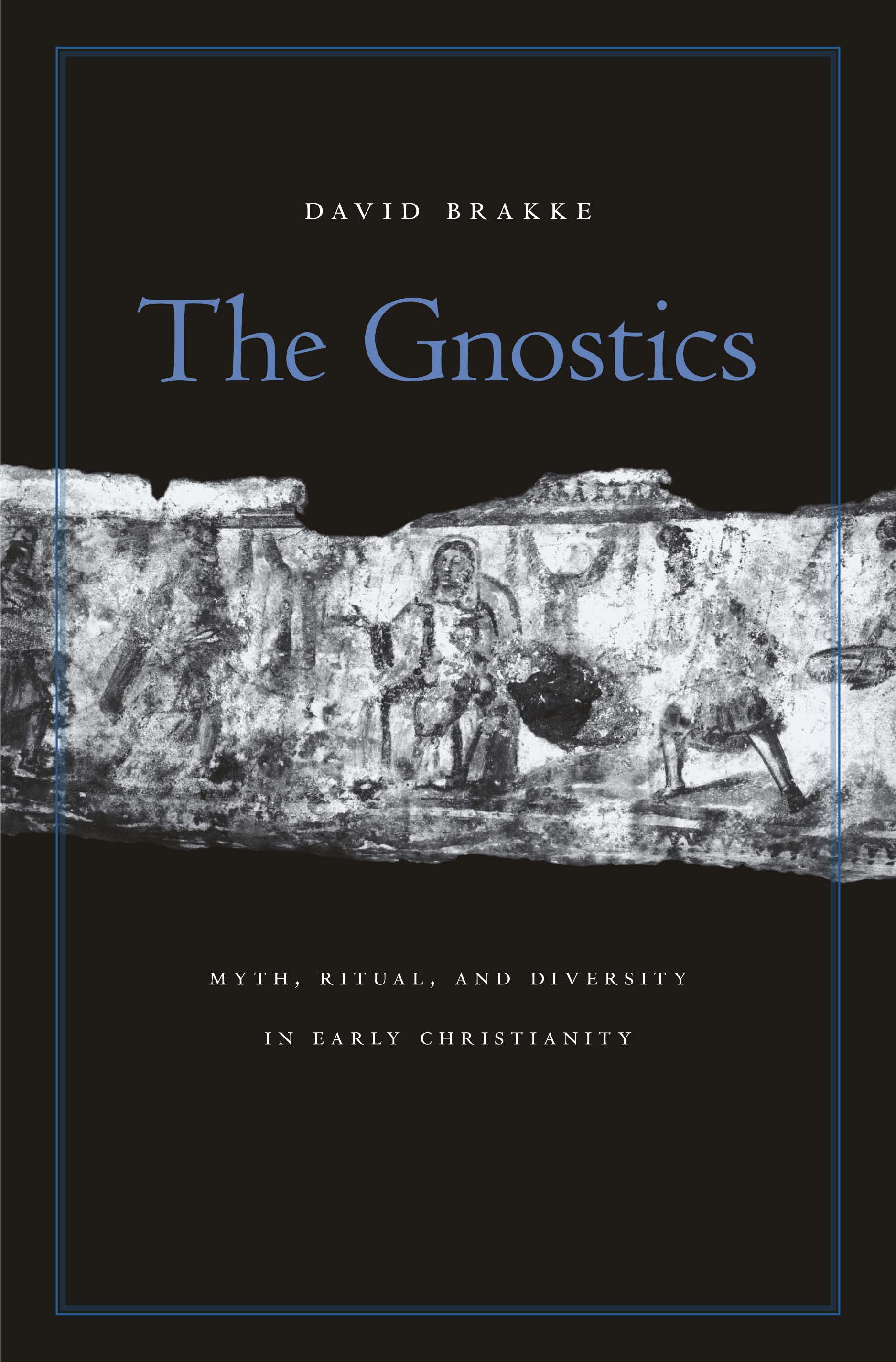
BrakkeGnosticsI haven’t really forgotten about the Bible. It has been such an integral part of my life that I couldn’t escape it if I tried. Going into religious studies, however, I feared New Testament studies. You see, having gotten a taste of historical criticism with good old J, E, P, and D, I was afraid what might happen if I looked Q a little too closely in the face. We now know, however, that the New Testament was just as redacted as the “Old,” and that there wasn’t a single variety of Christianity, even in the first century. I just finished David Brakke’s The Gnostics: Myth, Ritual and Diversity in Early Christianity. Brakke admits right up front that some will see him as not being radical enough, but since middle-of-the-road is a comfortable place to be, I found his introduction in the realm of the little bear, just right. The old story, perhaps originating with Irenaeus of Lyon, is that Christianity began as a monolithic faith and then came along these spoil-sports like the Gnostics and soon nobody could keep the truth straight any more. This is, of course, an over-simplification.

Religions are constantly shifting. As Brakke points out, there was no definitive Christianity when Christianity was still Jewish. Paul never calls himself a Christian, and he was, by his own declaration, Jewish. His interpretation of Jesus varies greatly from that of the eponymous John, of Gospel and Epistle fame. No, there never was a single Christianity. Probably from the very beginning there were Gnostics too. And, again with Brakke, they would have supposed they were following what was to become Christianity as well. Same world, different worldviews. They were not sinister and plotting, any more than other varieties of Christians were sinister and plotting. They were trying to live out lives in accordance with what they thought life was all about.

It has become clear over the last several decades that Christianity never really did unify into a single belief system. Constantine certainly gave it his best shot, but Christianity had spread beyond the bounds of the Roman Empire already, and heterodoxy was rife. No account of Late Antiquity can be honest without noting all the fighting going on among true believers about who was a, well, true believer. Really. Tensions existed early between eastern and western brands of Christianity and schisms became as common as missals. Nobody was really able to put Christianity back together again. In fact, this Humpty Dumpty never was an uncracked egg. I’m afraid I’m taking liberties with Brakke here, but the basic truth remains. Christianity came in its own 57 varieties, most of which didn’t blend very well. The Gnostics come out looking pretty good. That is especially the case when the proto-orthodox start gathering stones. In such a case, it is perhaps time to read the Gnostic scriptures to get a little perspective.


Lady Madonna

IMG_0611

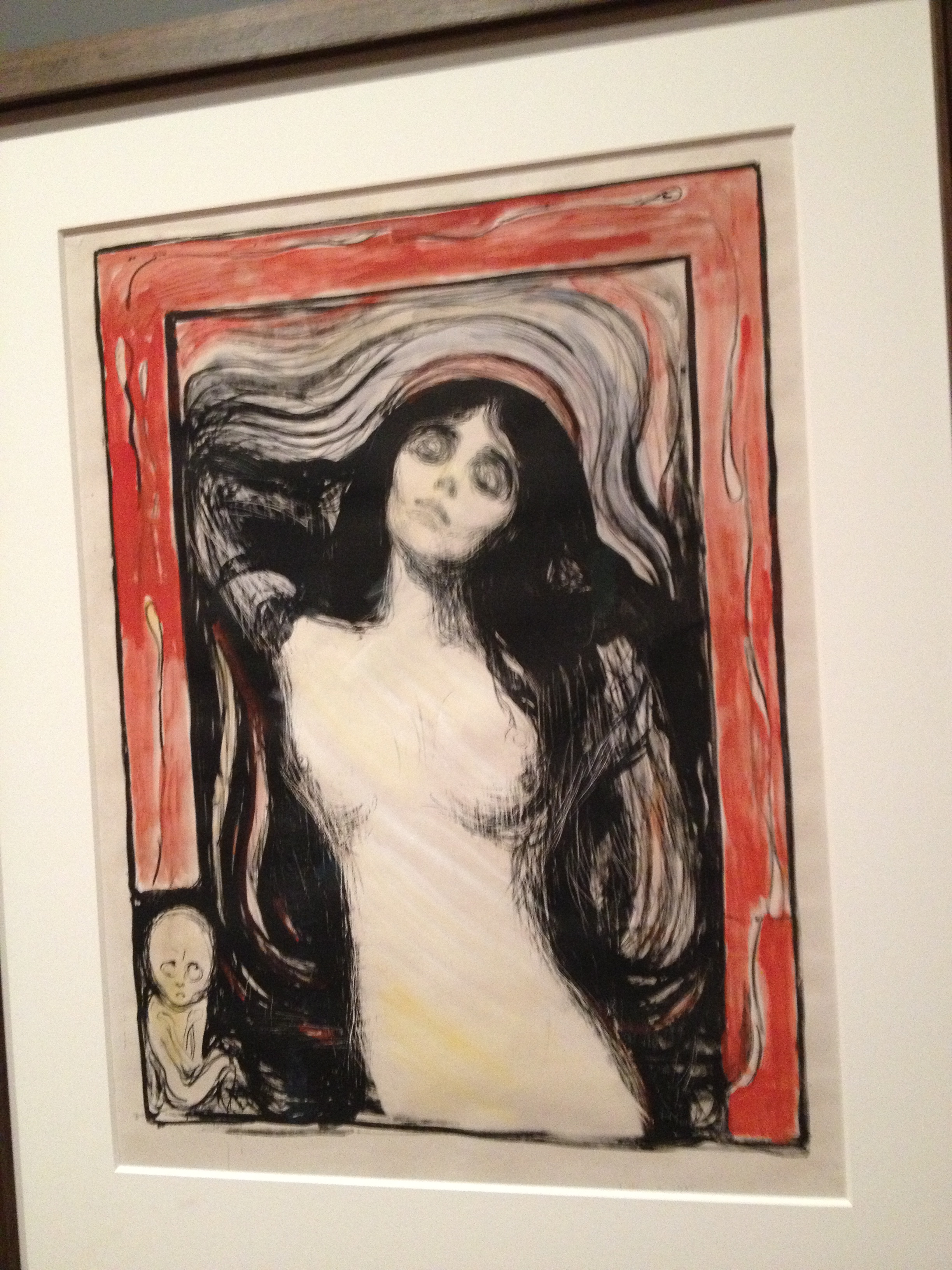
Among the paintings and prints in the Edvard Munch collection on display at the Museum of Modern Art in New York is a rendition of his famous Madonna. I first saw a reproduction of this piece in a discussion of Christian art. The question, of course, was whether it could be considered Christian art or not. Munch was not known for creating religious-themed art. Angst was his more natural home. While not the only Madonna to pose naked, Munch predated the aging pop star by a fair number of decades, and named this piece after an icon of Catholic orthodoxy. The problem is the female body. Religion in the western world has pretty much always had difficulty dealing with embodiment. My generation grew up with Charlton Heston and any number of bare-chested, sculpted idols of manhood playing such characters as Tarzan, Ben-Hur, and Moses. Moses? Yes, even Cecil B. DeMille knew the draw of having a biblical hero bathed by a bunch of young, Egyptian women. We are used to seeing Jesus nearly naked on the cross—but Mary?

The issues tied to embodiment, although they effect every person who has a body, fall more heavily upon females. While there is little agreement as to the why, the excuse is often given that “man” is in the image of God and “woman” is derivative. In actual fact it seems more likely to me that men prefer an easy excuse for bad behavior. Biology sends a pretty strong reproductive message to most males, but, in the human realm at least, the larger burden rests with the females. By blaming the victims the male hierarchy—undeniable in the case of the church, as in many religions—insists that the female body is the problem. Males perform as God intended, thank you. But the reasoning is all backward here. Munch, if he intended this to be the Madonna, is problematizing the discourse.

Art, like holy writ, is open to interpretation. Munch did not explain his enigmatic Madonna, but like Leonardo da Vinci, lets the silent woman speak for herself. Scholars have long noted the multiplicity of Marys in Jesus’ life. At some points the Gospel writers leave a little too much inference up to the reader. It is pretty clear that Jesus had no trouble with women. But he was a singular visionary in a time when cheap blame was easily found. So Edvard Munch may have been following in the footsteps of the master when he portrayed the Madonna who accuses the world of double-dealing and false standards. It is an arresting artwork, and not for prurient reasons. What is being exposed here is a soul. She may be called the blessed virgin or the mother of God, but her gender is still castigated even by those who mouth such holy epithets. We may never know who Munch intended this to be, but we know she is every woman who has been repressed by the religion of men, yearning to be free.


Intelligence, Evolved

intelligenceinnatureAnyone who has looked into the eyes of a cat or dog can have little doubt that they think. What exactly they think is, of course, a matter of conjecture. I had been meaning to read Jeremy Narby’s Intelligence in Nature for a few years now. We are taught at a young age to eschew anthropomorphism—although our eschewers don’t use that word—as the childish way of perceiving the world. Animals don’t think because that’s reserved for people. We sit in the finest spots in the poshest corners of the animal kingdom and the sign says “No Dogs Allowed.” I never really outgrew this child-like belief because the minimal scientific evidence I’ve been able to infer supports the idea that like us, other animals think. Narby, an anthropologist, agrees. At least to a point. I don’t wish to make claims for Dr. Narby that he wouldn’t support, but he provides fascinating empirical evidence, “down” to the level of amebas and plants, that indicates intentionality. Nature is alive with thought.

As an anthropologist, Narby begins his consideration with the insights of shamans. Although scientists rarely countenance shamans, they are among the earliest of human religious specialists and they have long promoted the idea that humans are fully integrated into nature. We are not separate and above. From our brains to our bones, we are one with the natural world. If we think, should not animals think? Interestingly, this idea brings Narby into some of the same territory as Thomas Nagel; intelligence may be a cumulative process. Our brains’ ability to think may be the result of collecting together the thought processes of our fellow creatures to a point where our thinking becomes abstract. We’re told that dolphins and whales don’t think like us—they don’t build cities, do they? Maybe it’s because they didn’t evolve opposable thumbs. Maybe it’s because they’re smarter than we are.

There are, it seems, many thinkers on the outside of the hallowed confines of hard science that are chipping away at the strict materialist edifice. There can be no serious question that the empirical method explains much of what we experience in the universe. It has always amazed me, however, that we assume that humans are able to find the outer limits of existence with our limited senses. We know animals can see, hear, smell, taste, and maybe even feel in ways beyond our capabilities. Who’s to say that there isn’t other input well beyond our limited senses that we use to survive in this environment? After all, we didn’t evolve to know everything—we evolved to be able to thrive in our ecosystems. For that you don’t need all the answers—just enough to get by. If you doubt my reasoning here, I suggest you ask your dog or cat.


The Triumph of Lovecraft

The deeper you peer into the mouth of nature, the more Lovecraftian the world becomes. Just days after I had posted a little meditation on Cthulhu, the great old god of H. P. Lovecraft’s unholy pantheon broke into the mainstream news. No less a source than NBC ran the headline “Tiny Cthulhu ‘monsters’ discovered in termite guts” only a few days ago. The microbe with the scientific name Cthulhu macrofasciculumque lives in the digestive system of termites, helping them in their destructive work. True, Lovecraft described Cthulhu as a bit bigger than that, but the first appearance of the microbes, according to Megan Gannon, reminded the discoverers of the eponymous terror of the Cthulhu mythos.

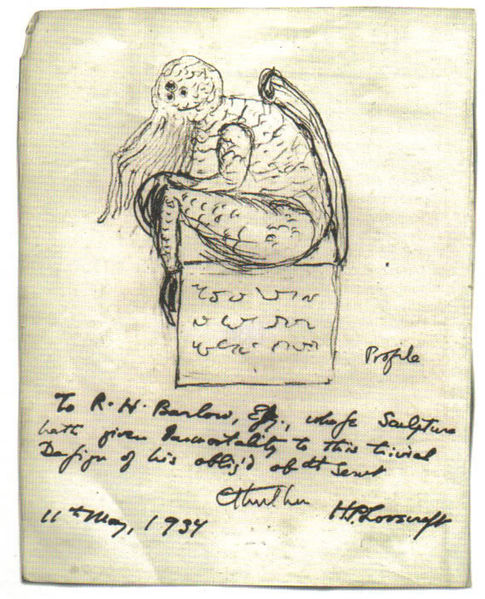
From microbes to the major football leagues such as the Baltimore Ravens, writers of the macabre have left their mark on our culture. The darkness they describe so richly is something we all feel at some level, but that we sublimate most of the time so that we can get on with our lives. Cthulhu macrofasciculumque may be very, very small, but the super-viruses and bacteria that we are encountering have the ability to destroy us just as surely as the chimerical colossus of Lovecraft’s nightmares. When we look for a way to describe these terrors, we have brave literary heroes from whom we might draw. We would be lost without them. They make it safe for us to venture into that darkened room, for they have been there before us. Lovecraft gave the world its first scientific description of Cthulhu, and although that description defies adequate reconstruction, we recognize it when we see it.

As Lovecraft saw him.

As Lovecraft saw him.

Science has brought us so very far. We can now see to almost the brink of an infinite universe and delve into the guts of termites. We have the ability to prolong life and increase physical comfort for those who can afford it, and we can annihilate entire nations at the press of a button. Drones can fly overhead and do the dirty work, and we don’t even have to step outdoors. Yet when we meet something that shivers our scientific spines, we turn back to the old gods to name it. Yes, religion may be the bête noire of science, but the dark night of the soul is not illuminated by LED’s or lasers. To see in this dark you need to have the night vision of literary perception. And those lenses, according to Lovecraft, reveal that the old gods are dead but still dreaming.


Which Lethbridge Witch?

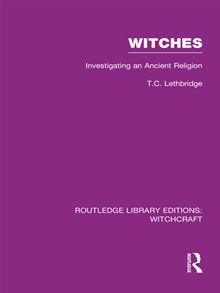
witcheslethbridge Thomas Charles Lethbridge was a twentieth-century explorer. I knew his name only from book covers, and since books published before the cynical 1980s have a feel of the parsimoniousness to them, I tend to be trusting. As a former academic, my choice of reading is, in an odd way, sequential. You see, academic research is often a matter of following leads, rather like Sherlock Holmes with his clues. One thing leads to another. I’ve been learning about paganism at work, and so when I noticed T. C. Lethbridge’s book, Witches: Investigating an Ancient Religion, I figured that I might learn something about belief in witches in the Middle Ages. The book was published by the Routledge Kegan Paul phase of my employer in 1962. I quickly learned that Lethbridge was far from conventional, even in the twenty-first century.

Lethbridge’s book on witches turned out to be a romp through mostly Celtic mythology, with a bit of Norse and ancient Near Eastern myth thrown in for good measure. It turns out that Lethbridge literally did believe in the power of magic and was no slouch when it came to dowsing. In the great Frazerian tradition, Lethbridge brings together some elements that are probably best left separate, but the result is undeniably interesting and entertaining. I’m not sure he would be considered a balanced source for research purposes today, yet his book does contain unexpected insights. But no witches. Witches, according to Lethbridge, were adherents of the old gods. Their worldview collapsed with geocentrism and there was little left for magic to do in an empirical world.

Lethbridge’s constellation has dimmed from the scholarly zodiac. In recent days he has found a new set of disciples, however, who see his work as profoundly prophetic, in a manner of speaking. Lethbridge was an occult investigator before such pursuits became big business. Among mainstream academics these ideas still fall into the category of bogus, naive, or superstitious, but that is beginning to change in some quarters. Lethbridge, as it quickly becomes apparent, reserved a kind of scorn for establishment academics. It is true that stepping out of line has its consequences even in the rarified halls of higher education, but the results of the research are often of high quality. Even witches can be studied with an academic eye. The difference seems to be that T. C. Lethbridge believed what the witches said. That makes him a real explorer.