Girls Rising

While I was home watching Bruce Almighty, my wife was attending a local screening of the documentary Girl Rising. (There was a good reason for this discrepancy; you’ll need to trust me on this one.) Chances are that many readers haven’t heard of Girl Rising; I know that if I weren’t the husband and father of Girl Scouts, I’d likely have missed it myself. Isn’t that part of the problem? Why does our society make females invisible, unless sex objects? Tabby Biddle has a thoughtful observation about this in the Huffington Post. She notes the importance of the film, but laments that the only way to make it through to the masculine mind is to pose the argument that educating girls will increase the GDP of less fortunate nations. Girls should be educated for their very humanness, Biddle suggests, but our view of a masculine God often prevents this from happening. While Biddle may have fallen a little under the spell of Marija Gimbutas, she makes a very valid point: there is no human reason that girls should not receive equal opportunities with boys. The fact that I even have to write that in the twenty-first century saddens me. It is not just “Third World” girls that have to struggle to gain what is rightfully theirs.

In my career I have been passed over more than once so that a woman might take the advertised position. (I have even been informed of this fact by friends on search committees.) Somehow I can’t find any injustice in this situation, as much as it has personally disappointed my hopes and dreams. Men have been frustrating female hopes and dreams for millennia. Maybe the matriarchy that Gimbutas envisioned never really existed, but the concept is sound: women and men both contribute to this thing we call civilization. Our religions, as they developed in our societies, have held the mirror up to the might-makes-right paradigm from the very beginning. Wouldn’t a male god with a more muscular upper body shove a fair, and giving goddess out of the way every time? Just ask Zeus. Or Odin. Or El. Divine civilization is only human projection, and we just can’t relate to a genderless God. So he becomes the excuse for female repression.
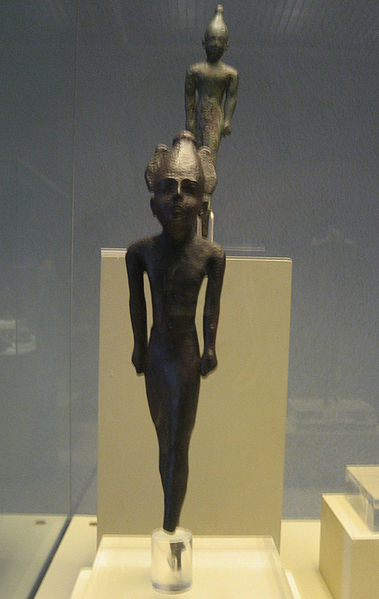
The face of divinity?

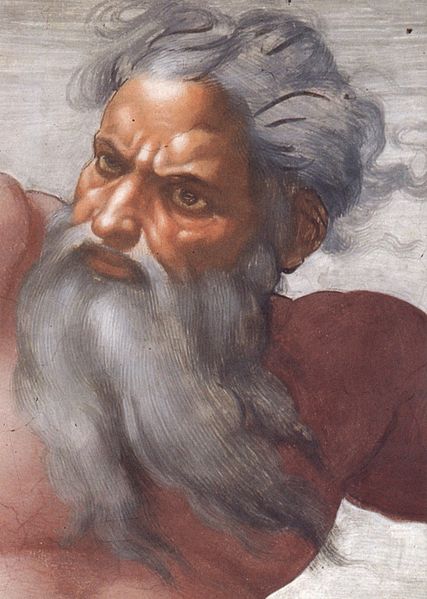
The face of divinity?

We’ve firmly entered a new millennium, and, looking at our treatment of half of our species, we still have an incredibly long way to go. In much of the western world, traditional religion has lost its grip, but I’m a little frightened by what I see taking its place. There are a few pockets of female-friendly religions awaking, but there are many more backlashes from the traditional male preserves of conservatism, patriarchy, and free enterprise. It is time for all men to consider that none of us would be here without our real-life goddesses. Some may rail against unorthodoxy, but unfair structures must be imploded for a new, and true, orthodoxy to be established. Women and men—not women for men, not women for profit—that is the only right teaching. So we should promote Girl Rising, and we should seek to move beyond the mere financial benefits for a free market to find the divine spark that masculine interest seems to have lost.
God has Left the Theater

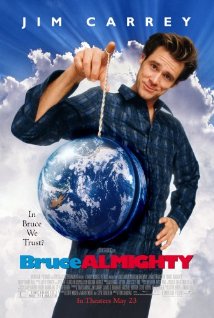
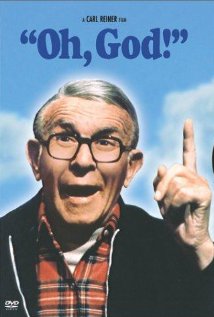
When teaching religion at the University of Wisconsin Oshkosh, I realized that an effective way to engage students was through popular culture. I could assign them just about any choice of movie and have them look for the religious themes of whatever class in it for a short paper. Of course, most went for the low-hanging fruit, over my teaching years, and I eventually had to ban movies with obvious religious themes or premises. One of those movies was Bruce Almighty. In a fit of nostalgia, I recently rewatched it. Never a big Jim Carrie fan, I nevertheless always enjoyed Bruce Almighty—it was such an improvement over those truly dreadful Oh, God! movies that were so popular in the late 70’s and early 80’s. I never found George Burns funny, and he made for an awfully feeble God. Everyone was buzzing in the new millennium when God was portrayed by a black man, Morgan Freeman. Still, we await a director who dares cast a female God. Patriarchy runs deep.

BruceAlmighty

One of the features that movies portraying God run up against is showing a believable omnipotence. The powers granted to mortals always seem so petty. Theodicy is always raised in these kinds of movies—why people suffer if God is good and all powerful—and since movies rely on directors and writers rather than theologians, they often leave the answer at the doorstep of free will. Human suffering is our own fault. In our society we can’t have a movie that actually pins the blame back on the divine, because that wouldn’t be funny. And movies where people meet God are almost always comedies. But Bruce Almighty is actually a bit more sophisticated than it seems at first. That is best seen in the outtakes perhaps, where Morgan Freeman seems to care more about people than George Burns did. Of course, my memory on the older movies is hazy. They were considered slightly blasphemous three-and-a-half decades ago. Today they seem tame.

OhGod

Why do movies with God in the cast rake it in at the box office? A couple of reasons suggest themselves. As humans, we like to place ourselves in the role of the divine to consider what we would do with unlimited power. Who wouldn’t, like Bruce Nolan, at least include their own satisfaction in the package? I think, however, there is a deeper, more serious reason. We do genuinely wonder about God’s motivation. Most of us don’t have the training to know how to grapple with the often incomprehensible arguments that theologians make. Even when we do, they still make no sense. Our movie gods appeal to us because they are so terribly Freudian—made in the human image. We can’t conceive of a god who’s not like us, so we at least make the situation funny. If we can’t achieve omnipotence, at least we can hope for a few laughs.


Witching Fiction

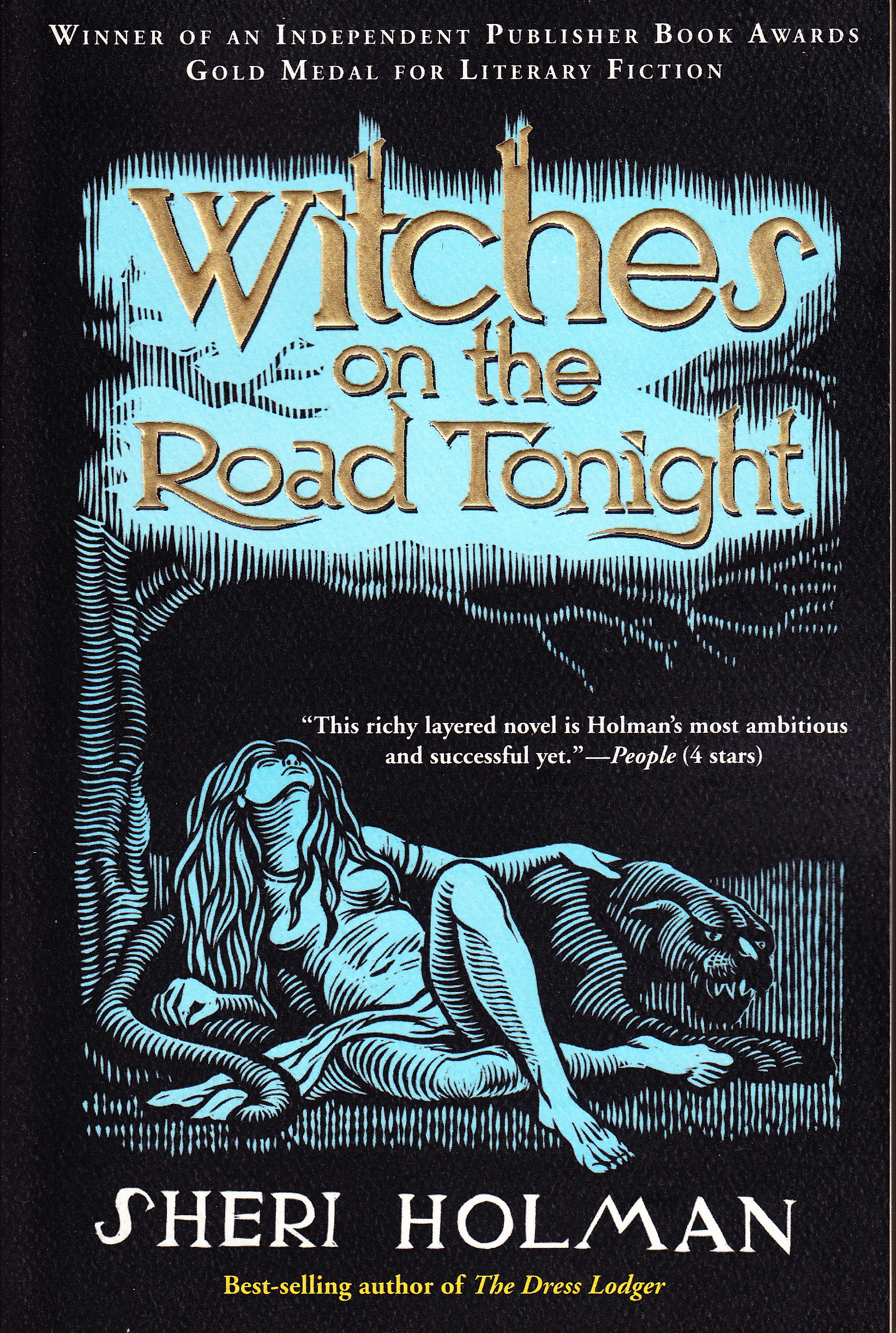
WitchesRoadLiterary fiction is a rich trove of religious thinking. Consuming fiction sustains the soul as well as the mind. Sheri Holman’s Witches on the Road Tonight was an impulse buy. The title, the cover, the intricate implications, the price were all right. It turned out to be a rewarding story that involved, possibly, witches and certainly religion. Not that it is a story about religion—definitely not. Yet, the protagonist is a weatherman who dresses as a vampire to present old monster movies on late night television. His relationships define him and, as his daughter learns, he may be the son of a witch. Deeply textured with the earthy reality of the rural poverty-stricken, at several points in the novel a thoroughly naturalized biblical vocabulary effortlessly flows. At crucial moments the story is poised on the crux of heathenism and religiosity. It is a book difficult to forget.

The fascination with witches has deep explanatory roots. When hopes are not realized as they are carefully planned, people naturally seek a scapegoat, someone to blame. Too often in history the blame has fallen on the powerless, the marginalized. Too often on women. In the somewhat enlightened twenty-first century it has become passably safe to declare oneself a witch. Our scientific worldview allows it as a harmless delusion, but the issue is more than it might seem. For some, witchcraft is the only channel available for a power that should belong to all. For others it retains a taint of evil, primarily because of a biblical point-of-view.

Israel in antiquity was a patriarchal culture. It was a man’s world that kept most women from any seat of power. “Witches” in this world are simply those who continue the trajectory of a kind of animistic faith in the vibrant life of nature. Prior to “revelation” it was self-evident that nature itself was full of vitality—spirits—if you will. When God was added to the equation, the life-force of nature fell on the “less than” side of the comparison. Even today children recognize the shaman under the name “witch-doctor,” euphemistically applied to those closer to nature than to the Bible. Reading Witches on the Road Tonight brought all of this back to me. Although largely set in New York City, it spoke to me as a rural urbanite who left something valuable in the woods of my childhood.


Iconic Book

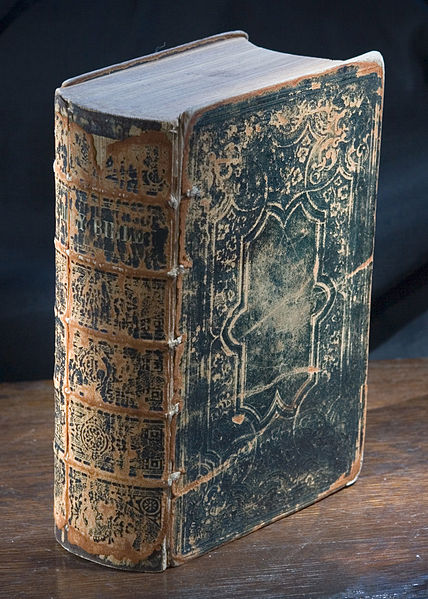
A recent Associated Press story celebrated the achievement of Phillip Patterson. In an age when we just can’t get enough technology, when we live with, sleep with, and dream of electronically generated reality, Mr. Patterson was feted for his arcane accomplishment. Decidedly low tech, at that. After four years Phillip Patterson has finished copying a book, word-for-word. I don’t even have to mention which book, because we already know it can only be the book that Americans recognize without reading. It is the iconic book. The holy book. Sometimes working up to 14 hours a day on the quest, according to AP, Patterson was not undertaking a spiritual journey here. He was simply wanting to learn about the book. If it had been any other book, it would hardly have been newsworthy.

An iconic book (photo by David Ball)

An iconic book (photo by David Ball)

I have recently been introduced to the concept of the iconic book. A colleague of mine kindly shared the idea during a campus visit. He and I happen to share advanced training in reading the same book, but, as he pointed out, it is the book and not its contents that our society recognizes. This is what makes it an iconic book. When we go to court we are asked to place our hands upon it and swear—something the book itself would doubtlessly consider some form of idolatry. We use it for inaugurating the highest officials in our land. We see it laid out in public places and private homes. We consider harming or disrespecting it to be an act of sacrilege. To us, it is more than paper, ink, leather and glue.

The dedication of Phillip Patterson ought to be celebrated. As he noted, to learn more about a book, you have to be willing to dig deeply. Look at every single word. Not that such treatment is fashionable. In a society enamored of power, we prefer the power of the iconic book over its often troubling content. It is certainly much easier trumpeting it than reading it. As I listen to the debates about public policy, the endless attempts to legislate morality, I ponder how little people actually read Mr. Patterson’s book. That’s what makes his accomplishment so remarkable. In producing an iconic book, a book that I don’t need to name because anyone might figure out what it is, our protagonist actually read it. In this age of technology, that is an accomplishment to be celebrated indeed.


Inhumane Society

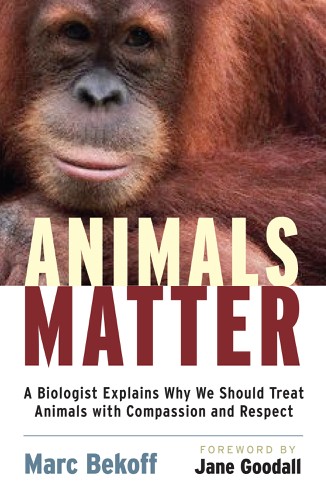
AnimalsMatter“I’m a member of PETA,” I’ve had more than one wag say, quoting bumper sticker wisdom as if it were profound, upon learning I’m a vegetarian. “People Eating Tasty Animals,” they then spell out with a smirk. I stopped eating animals at about the turn of the millennium, and since then I’ve discovered more and more reasons that it was the correct decision. I’ve just read Marc Bekoff’s Animals Matter: A Biologist Explains Why We Should Treat Animals with Compassion and Respect. It saddens me that in our world where nothing escapes being posted on Facebook, people still tend not to notice the suffering we impose upon animals as a matter of course. I’ve always been inclined to look closely at things, including animals. Watching them, it is clear that humans are indeed animals only differently evolved. Our mannerisms, our emotions, even our expressions, can be found among our animated kin. We share a planet on which we all evolved together, so why do we find it so easy to exploit other creatures?

One of the reasons Bekoff notes, without being judgmental, is that some religions inform us that people alone are special because we bear the image of God. Although God is supposed to be altruistic, we don’t wish to share that exalted status with any other species, apparently. Even in the twenty-first century many otherwise intelligent people still claim that animals feel no pain. Can’t reason. Are mere machines. We’ve been taught to distrust common sense that informs us that if an animal in distress acts like a human in distress that it experiences the same anxiety. The more we study animals the more human they become. The theology of Genesis has much for which it will be called to answer.

It seems, however, that the Bible is used as a mere excuse here. We exploit other animals because we can. We have taught bovines and ovines to trust us so that we may more easily slaughter them. Perhaps this is an exercise in divine image bearing, but somehow I doubt it. Reading Animals Matter in many ways felt like listening to a scientist who has taken the message of the Lorax to heart. We treat animals the way we do because we don’t understand their language, but we are morally obligated to speak for those who have no tongues. Although accessible to younger readers, Animals Matter is nevertheless a profoundly disturbing book. What does it say about the highly evolved when they exploit their relatives who’ve not learned the language of humans? Or, more accurately, who’ve not learned to vocalize like humans. Other animals speak, just like people sometimes, if we would only translate their actions into words.


Oklahoma

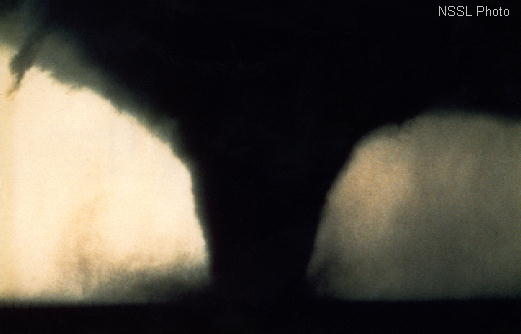
The tragedy outside Oklahoma City transcends petty human differences. Tornadoes, no matter how we dress them up, look like the wrath of God incarnate. The fifteen years I spent in the Midwest were filled with literal nightmares of tornadoes and even a few hours spent cowering in the basement. Such phenomena remind us that we are quite small in the face of nature, and the news reports are full of religious sentiment as people want assurance that God hasn’t abandoned them. Nature doesn’t favor humans over anything else that happens to be in the way of whirling 200 mile-per-hour winds. Even one’s belief might get blown away. Yet it doesn’t.

Although a tornado hit New York City last year, my terror of the storm evaporated when we moved back east. In the Midwest, although there were hills, I felt so exposed under the open expanse of the heavens. In the utterly flat part of central Illinois, I recall some truly awe-inspiring storms. The sky was so ubiquitous and overpowering, and you could see clouds towering thousands of feet over your head, throbbing with constant lightning. It was then I began having the idea for my book on weather terminology and the book of Psalms. Humans helpless in the face of nature. This is the raw material of religion. Like children we pray to God to make it go away. Storms do not obey prayers.

TornadoBlack

By their very nature tornadoes are capricious. We like to believe the good are spared and the evil punished, but as schools are destroyed and children killed we have to face the cruelty of nature. What happened in Oklahoma was a random act of nature, as much as hurricanes Andrew, Katrina, and Sandy were. We can’t help, however, any more than the people of the Bible, supposing that God must somehow be behind the weather. We may influence it, as global warming has repeatedly demonstrated, but seldom for good. And when we look for the divine in the fierce winds, we will end up facing tragedy.


Heaven Forbid

Cars can be a nuisance—they consume resources, pollute the environment, and have a habit of being very expensive to repair. We’ve been pretty good about taking our car in for its regularly scheduled Toyota check-up. Since the garage is several miles away and my wife and I both work, it is often a matter of the one who can most easily work from home the day of the car doctor appointment taking it in. Our Toyota dealer has in-store wifi for those who can’t live without the internet. For some of us, work is almost exclusively internet. So it was that I drew the short straw and dutifully drove out to the dealership. I was pleased that my VPN connected so easily; this was going to be a snap. I was working happily away when I had to find somebody on a university website. I googled the name and clicked. I received a forbidden website message (copied below) explaining tersely: “Block reason: Forbidden Category ‘Religion’.” I tried again on the Society of Biblical Literature website—same message.

ForbiddenReligion copy

Now I can understand workplaces blocking pornography sites, and even Facebook (I found the latter to be blocked at Toyota some time ago, but I’ve never tried the former), but religion? I am a religion editor. How am I to work when I can’t access websites that contain the word “religion”? The more I pondered this—I could still check my email, and do VPN-type work with files from the office—the more it bothered me. On the television in the background inane daytime talkshow hosts were interviewing someone who’d written a book about God. How many more businesses out there are biased against internet religion? That means my blog is blacklisted along with the scantily clad and overly chatty. I fully support the disestablishment clause, but I also subscribe to the freedom of religion. Smirks aside, there is a serious undertone to all of this.

I have no desire to be proselytized at work. I also agree that it is the right of others to expect the same. Sometimes, however, a little religion might help work go down like a poppinian spoonful of sugar. One time when I worked for Ritz Camera in Brookline, Massachusetts (I seem to have a knack for working for businesses that are on the way out), I had a tough day. Some of our customers could be quite abrasive, and since the customer is always right, we had to take personal insults with a smile. One lunch-hour I told my manager that I needed to recoup my moxy (I didn’t use those words). I ducked out the door and stomped to the first church I could find and asked if I could just sit in the pew for a few minutes. The church secretary, a complete stranger to me, said “of course.” Ten minutes later I returned to work collected and able to face more unreasonable customers for the rest of the afternoon. Maybe it wasn’t religion, maybe it was only the calm of sitting in what some believed to be a sacred space, but my capitalist company got better performance out of me that day because of it. Ironically, at Toyota, my religion editing is cast in with the tax collectors and prostitutes. Only the tax collectors, I’m pretty certain, are always permitted to work.


Godly Violence

Just a full-term human pregnancy ago, a disturbed young man murdered two grocery store employees in Old Bridge, New Jersey. He then shot himself dead. Of course, such events will never sway those who staunchly defend our right to bear arms. The ratio isn’t too severe after all. Just two to one. We’ve had worse. But that was nine months ago. Earlier this week a police report revealed that Terence Tyler, the perpetrator, had a tattoo on his chest that read, “If there is a God he loves violence. It is his gift to mankind. It is truly magnificent and for this I am thankful.” The newspaper used the understated adjective “disturbing” to describe it. As an erstwhile biblical scholar, my first inclination is to exegete this strange scripture a little bit.

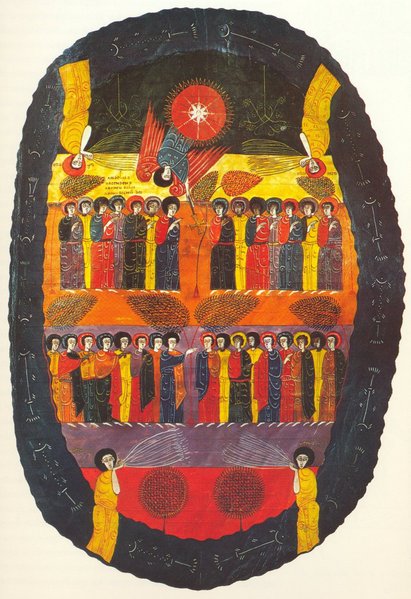
411px-B_Facundus_145“If there is a God.” The mind of the shooter is one for hedging bets. God is an unscientific proposition, and, we are told even by theologians, unknowable. Long ago Pascal urged a wager: God may not be real, but the safer bet is on the divine—you can’t really lose by believing. “He loves violence.” I’m sure many believers disagree, but those who read the Bible will have to admit that Tyler had a point there. There is an ancient kind of bloodlust that hangs heavily over demands for genocide and animal sacrifices. Even, according to mainstream Christianity, the death of an only son will serve divine ends. “It is his gift to mankind.” This may seem counterintuitive, but again, the Bible would seem to back this up, at least in part. Without violence the 144,000 martyrs wouldn’t have much to sing about. “It is truly magnificent and for this I am thankful.” Were this a biblical passage we would probably have to posit a redactor here, or at least an interpolation. Such editorializing doesn’t fit the spirit of the previous three verses.

Religions, while generally abhorring violence, too often condone it. This mostly comes through literal readings of ancient texts whose contexts have changed so much that the originals are unrecognizable by today’s standards. Bibles and Qurans must be understood by those who’ve managed to outlive them. They become the basis for, the excuse for violence that, as a whole, they condemn. In the United States, however, we trust cordite over creed, and guns over gods. We have moved on from the Old Bridge shootings, already for those outside the families of the victims and the local community, the headlines took a minute to jangle the bells of distant recollection. Not much has changed; the NRA still claims, even more vehemently than ever, that guns are our best friends. And, one can almost hear as a subtext, in good eisegetical style, “if there is a god he loves violence.”


Divine Election

Jesus, it seems, has given up appearing on tortillas and hedgerows to start endorsing political candidates. Of course, this is not really new news. Rick Santorum, Herman Cain, Rick Perry, and now Anna Pierre, candidate for mayor of North Miami, all claimed their campaigns were endorsed by the Almighty. Seems that God isn’t that great at picking winners. Anna Pierre, according to a story on NBC, came in last in the polls. Is it any surprise? Jesus always did have a soft spot for the underdog.

pierrejesus

American culture is an odd mix of secular and religious. We seem to want it both ways. Citizens like to believe that they are autonomous in their daily lives, free to choose their non-religious professions and pass-times, and on Sunday God takes over for an hour or two. Charged up on religious conviction, we want society to become more sacred, less trashy. But we still want to watch Fox at night. This disconnect has long fascinated me. No matter how many times God loses the election, a new crop of candidates will spring up with divine endorsements. The electorate, at least a significant part of it, will mindlessly follow along. Perhaps we prefer to believe in a deity whose hand is too short to save. Perhaps omnipotence is best left to boasts rather than belief.

The divine approval of a candidate has become so hackneyed that it has become almost the starting point for political contests. Where do you go after you’ve invoked the highest trump in the deck? Whose word means more than the Lord’s? In the heat of the campaign when policies and platforms just don’t sway the masses, who else can you trust? Often those who play such tactics consider those of us on the liberal side of the spectrum to be cynical. Theirs is religion in the service of the higher good, apparently. We wouldn’t want to be thought of as cynical, now, would we? Otherwise we might note that although Jesus may save, it seems that he certainly can’t vote.


Holding out for a Hero

Over at Religion Link, a story about superheroes and spirituality was posted recently. I guess it should’ve been clearer to me as a child with his head in the clouds that the superheroes buzzing around up there were really gods. Well, in an ultra-thou-shalt-have-no-other-gods setting, that wasn’t really a possibility my young mind could even comprehend. They were just guys (almost always) with super powers. In the Bible they would have been miracle workers. I dared not think of Samson in the same thought as the Incredible Hulk. Heroes, after all, are about wish-fulfillment. We all want to be more than we are—I can imagine a better me (speaking strictly for myself), so why not present that self in the form of a hero? The Greeks, and before them the Mesopotamians did it. Heracles was a Europeanized Gilgamesh, perhaps through the mediation of a Levantine Melqart, after all.

Gods or heroes?

Gods or heroes?

The brief article on Religion Link points out that young people identify with gods in popular culture more than a God in the pew. A veteran of many, many hours in church, I think I can understand that. What adults say is going on in the service is arcane and not prone to any empirical verification. What child sitting in church hasn’t wanted to be home watching real superheroes fight evil on television instead? The movies of the past decade or so have shown us flawed gods. Heroes with troubles. These are the gods for the twenty-first century. Omnipotence isn’t all that it’s cracked up to be.

Scholars of religion are beginning to pay serious attention to superheroes. Books are beginning to appear offering analyses of these god-men, and a few god-women, among us. Funnily enough, some people find them more believable than the traditional gods. Perhaps that is the draw of heroes from the very beginning. Gilgamesh, after all, is asking the very human questions we still ask today. Where can I find a true companion? Why can’t it last forever? Why must we die? To find the answer Gilgamesh is sent off on an impossible task. He has fought monsters, he has defied the very gods. And when he finds the plant that offers a kind of immortality, it is stolen away by a snake. The story clearly influenced the tale of Eve and Adam in Eden. It has also inspired the more recent incarnations of superheroes, and we are beginning to realize that they often fly in the face of the divine.


Evolving Morals

CNN recently interviewed Frans de Waal about his new book, The Bonobo and the Atheist: In Search of Humanism among the Primates. Of course the book immediately went on my “to read” list. I’ve followed de Waal’s non-technical work for years and I have come to trust his judgment. As director of part of Yerkes Primate Research Center, de Waal knows apes better than most of us know our neighbors. He has been exploring the origins of altruism and empathy in the great apes and has come to some amazing conclusions. His past work has shown that much of what we have attributed to special revelation has actually arisen in people through regular evolution. The apes, particularly the bonobos, but also chimpanzees, show startlingly human reactions to moral situations. In the interview, de Waal notes the implications for religion. In his opinion, morality predates religion since the former is seen in other primates while the latter is not.

As much as I trust de Waal’s judgment, the unanswered question remains: what exactly is religion? Animals display rudimentary religious behaviors, but in human-speak religion is often intertwined with belief. In watching a recent episode of Morgan Freeman’s Through the Wormhole—“Is There Life After Death?”—it was clear that while scientists tend to stand on the “no” side of this divide, in the end it comes down to a matter of belief. Not all religions, however, are tied to belief. Some religions assert that what you believe is not important, but rather, what you do. In such religions morality is much more like our primate kin’s version of religion. As Freeman points out, you really can’t know what another person believes. You can ask, but if you believe their response is always an open question. Here is the dilemma of religion as a matter of belief. Even Jesus putatively said, “by their fruits you will know them.” Morality here sounds like religion.

Frans de Waal suggests in his interview that morality differs from religion by being earlier in the evolutionary scale. If, however, religion evolved—which it surely did, as we can continue to observe its evolution today—it may be of a piece with morality. We object to suggesting animals have religion; this suggestion would knock humanity off its pedestal as the only species to which an incredibly human-like god revealed (as it is said) himself. What de Waal has gone beyond proving in his previous books is that much of what qualifies as religion is found among the great apes. De Waal doesn’t put it in those words, but as a lifelong student of religion I have observed the connections first-hand. A scientist may not feel qualified to define religion, just as a religionist is not qualified to correct a scientist. I eagerly await the chance to read The Bonobo and the Atheist, but I already know that I will find much of what de Waal writes to be beyond question, and we may all be much closer to the origins of religion than we realize. Even our great ape kin.

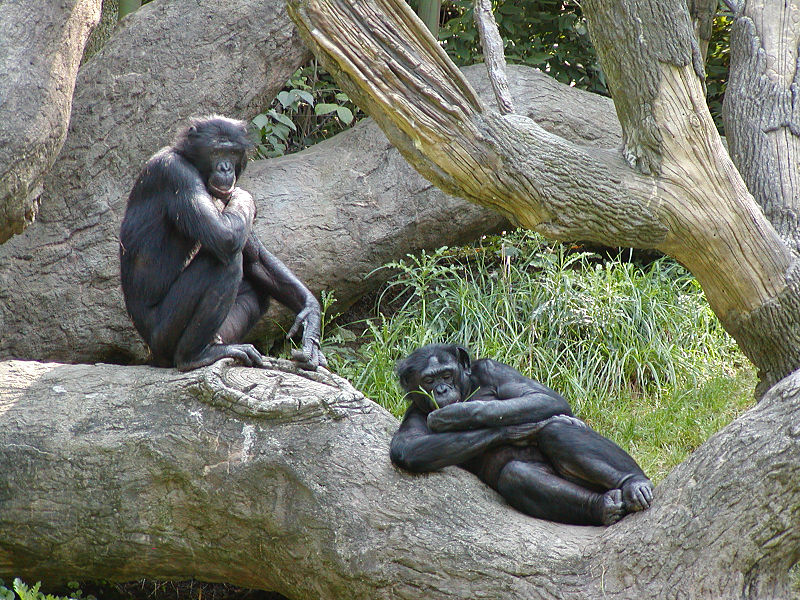
Michelangelo's muse? (Photo by Greg Hume)

Michelangelo’s muse? (Photo by Greg Hume)


Is Golden

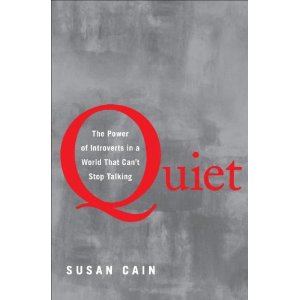
quiet When I grew up I sometimes thought I’d join a monastery. It’s a funny idea since I’m not Catholic and I am happily married. I think what appealed to me most about the idea was the quiet. We don’t choose jobs any more than we choose our own names. My first “real job” was teaching at Nashotah House, a seminary founded on the principles of a monastery—once all male, meals eaten together, and lots and lots of quiet. Many parts of life on campus drove me crazy, but I liked the silence. Yes, I am an introvert. Anyone who knows me knows that. Until I read Susan Cain’s book Quiet: The Power of Introverts in a World That Can’t Stop Talking, I had figured there was just something wrong with me. I put the book down feeling strangely ebullient, as if I’d just read my own biography and it turned out happy. Here was someone finally speaking up for the quiet among us. The world wasn’t quite so lonely any more.

My only fear about Quiet is that not enough people will read it. Here I learned that a large part of the population, although still a minority by a considerable margin, is introverted. The label is often used like a swear word. How many times have I been told at work that I must assert myself more, make more noise? How many times have I been made to feel shame at being what I am? I lost count years ago. Ironically, I have no fear of public speaking. Teaching (and once upon a time, preaching) came as naturally to me as breathing. But don’t expect me to get in somebody else’s face. I don’t do cold calls. I like to think things through. I can’t praise the insights of Cain’s book enough.

In addition to my natural disposition, I also grew up believing the world owed me nothing. We lived in humble circumstances, and I tried hard not to make more noise than necessary. Sure, as a young child I “rared” with my brothers, but I preferred the quiet play even more. Religion taught me that silence is a special kind of gift. Most days I arise at 3:30 a.m. to spend the first two hours of the day in quiet contemplation. I write, I think. I live. For me the day has already begun to slip into chaos as soon as I climb onto the roaring bus. I silently read my book, but conversation picks up around me as more and more people stomp on. By the time we reach Manhattan, the peace is gone for another day. I felt strangely empowered holding Quiet before my face on the bus. For once, it seemed, someone approved of a silent man and welcomed him to the human race.


Running to Stand Still

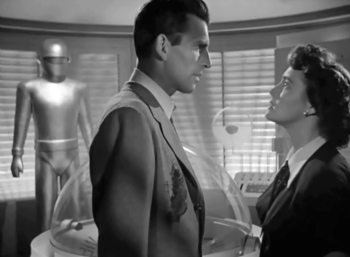
“You have faith, Professor Barnhardt?” Klaatu asks the scientist in the classic The Day the Earth Stood Still. Barnhardt demurs, stating that curiosity is what makes good science, not faith. But sometimes I wonder if the professor or if the alien is correct. Science fiction was young in 1951, and Robert Wise would go on to give us such diverse fare as West Side Story, The Haunting, The Sound of Music, and the first Star Trek movie. Still, The Day the Earth Stood Still has always been my favorite movie that he directed. In 1951 quite a bit could be assumed about America’s religious sensibilities. Yes, diversity had been part of the mix from the very beginning, but the view of America as a “Christian nation,” although not in any way official, was not seriously challenged in those days. This shows through clearly in the movie. Although the opening sequence is intended to be a Klaatu eye-view of descending to earth in his space ship, it is reminiscent of the stock “creation” imagery that would become so familiar to those of us who watched Bible movies. It is a God’s eye-view as well.

Christ-like, Klaatu descends to earth to bring a message of peace, but also an apocalyptic threat, from the powers beyond. He is capable of miracles, such as the eponymous day the earth stood still—the ultimate in non-violent protest because hospitals and airplanes still have power and nobody is harmed. In his human incarnation Klaatu not so subtly takes the name Carpenter, making the corollary clear. In case you missed that, however, he is killed, resurrected and in the end ascends to heaven. Klaatu becomes the prototype of the messianic alien, a figure we would see in guises from ET to Starman. Believers in ancient astronauts or not, the makers of our space movies know that God is an alien.

daytheearthstoodstill

The Day the Earth Stood Still came early on in the Cold War. The obviousness of distrust in the Soviet Union is placed in the mouths and knowing glances of various characters. Some even suspect that Klaatu is a Russian rather than a spaceman. Sputnik was still six years in the future, but the atomic bomb was already in the past. We had learned to destroy ourselves before we had learned how to escape the only planet we have. Klaatu delivers his final homily not to politicians, but to scientists of all races (and, unspoken, creeds). Seated on folding chairs in the outdoors, as if at a revival meeting, they listen as Klaatu tells them the decision of how to live is up to us, but Gort, a kind of avenging angel, is always overhead. The invocation that can save humanity, however, is given to the female lead Helen Benson. She alone knows the sacred words “Klaatu barada nikto.” Amen.


Crab Walking

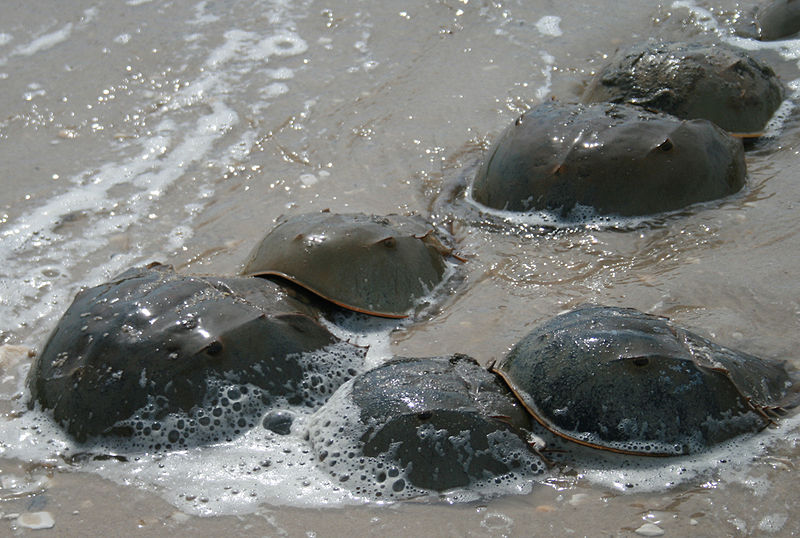
445 million years may seem like a long time. For the horseshoe crab, however, the eons have been spans of years with little change from a rather simple existence that involves lurking under the water and crawling out this time of year to breed. For many of us, Hurricane Sandy is already a somewhat distant memory of days (weeks for some) of no electricity, sitting in the dark, wondering when life would get back to normal. Some parts of the Jersey shore are still suffering from the after-effects, but many of us have had to “just get on with it,” and forget about the damage caused. For the horseshoe crab, however, it is not so easy. For creatures that have survived virtually unchanged for hundreds of millions of years, Sandy dealt a cruel blow. The largest concentration of hermit crabs in the world breeds in Delaware Bay, just down where New Jersey and Delaware nearly come together. Numbers had been declining in recent years as horseshoe crabs were used for bait by fishers, landing them on the “near threatened” scale of the countdown to extinction. Hurricane Sandy eroded the beaches where the crabs breed, and human detritus, left years earlier to protect expensive homes, now provided unsurpassable barriers for most of the crabs. Biologists are at work trying to rebuild the habitat in time.

Not only the time-honored horseshoe crab, but the American subspecies of the Red Knot, a migrating shorebird, has come under threat. The Red Knot, which stops in New Jersey to snack on horseshoe crab eggs on its way to the northern breeding grounds, has been declining in numbers. No crabs, no birds. While the troubles of two species may not seem like cause for concern, the fact that one of those species has been successful since millions of years before the first dinosaur even appeared should give us pause. Dinosaurs showed up some 200 million years after the horseshoe crab had been solidly established on the beaches of the pre-Triassic world. Nature would not be set to wipe out the crabs after a single hurricane, but human obstacles may do what nature would not—endanger a perfectly adapted species so that “valuable” real estate can be protected.

It is tragic when people lose what they’ve worked to attain. It is, however, shortsighted to think that we are the only important species on the planet. We have evolved in a system that includes all the other organisms on our world—our family tree goes beyond that cousin that always embarrasses us to the very crabs that crawl in the silty, brackish water of the Delaware Bay. We’ve all had an impact on each other. Even if you’ve never seen a horseshoe crab, just by reading this post they have come into your life in some way. When we start constructing our grand dreams for a fine life, it seems that we should take into account those who have been here long, long before us. Their requirements are modest, but their place in the cladistic tree of life is just as important as ours. Extinction is forever.

From Wikipedia, by Asturnut

From Wikipedia, by Asturnut


Tell-Tale Hearts

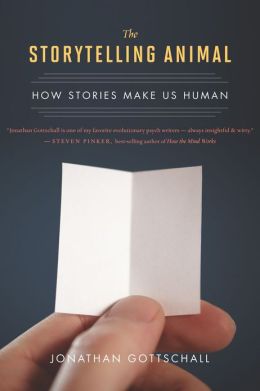
StorytellingAnimal As a sometime dabbler in the fictional arts, I was intrigued by Jonathan Gottschall’s The Storytelling Animal: How Stories Make us Human. I read the book because of my own fascination with fiction—it is a transcendent activity to read it, but more so to write it. I‘ve always wondered why. Gottschall, a fellow academic making a living as an adjunct instructor, is a lucid writer and a great storyteller. His book opens with the unusual fact that even the most logical and rational of humans are addicted to stories. Our brains work to spin unrelated events into narratives. Even while we sleep, our minds continue to tell fictitious accounts of weird adventures. To be human, Gottschall clearly demonstrates, is to be in love with stories.

In chapter 6, “The Moral of the Story,” Gottschall turns his attention to religions. That far into his book it is no surprise that we find religions are largely based on story. Those who’ve studied mythology plainly see the story-ridden origins of religions. Religions, after all, have nothing if not great explanatory value. They tell the tales of why we’re here—the technical name is “etiology,” stories of origins, but also tales of what the gods, the tao, or the force demand of us. Believers often take such fanciful narratives literally, missing the point of it all, the proverbial moral of the story. The story is the moral. We find the deepest truths in fiction.

Many of my friends are fiction writers. Most have never been published or struggle to find representation. None simply give up. The draw of narrative is as palpable as the need to eat or sleep, as strong as the urge for sex or recognition. It is far stronger than the desire for money since nothing material can substitute for our desire for stories. After a busy day we send our children off to bed with a nighttime tale. Many of us climb into bed with a book—the more fictional the better—to end our conscious hours each day. We dream our way through the night and spend our long days fabricating a narrative we call “my life.” Those of us who indulge in fiction are sometimes solitary individuals, but we crave the awareness that we are not alone. Others too, as Gottschall clearly proves, are alone with us. In fact, all humans are gathered around this campfire of the storyteller. Thank you, fiction, for coming to the rescue.