Washington’s Birthday

Today’s post is an excerpt from an unpublished tween book I wrote on the origin of American holidays a few years back. Other excerpts are available on the Full Essays page of this blog.
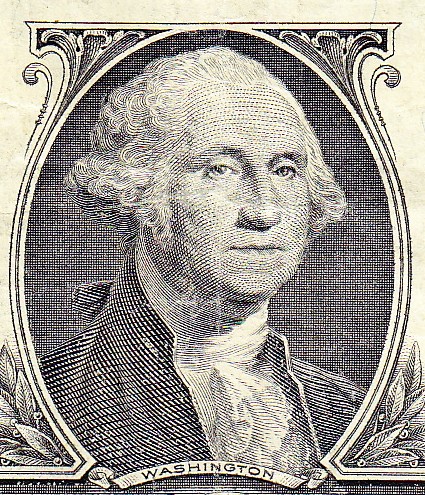
Our founding father, a little worse for wear

Today is the earliest of only three government holidays devoted to an individual, specifically George Washington. Also called President’s Day, this holiday comes on the third Monday in February. Washington was born February 11, 1731. In an interesting twist of fate, when the Gregorian calendar was finally accepted in the United States in 1752 Washington found his birthday shifted to February 22. Washington died in 1799, but the idea of national holidays for a single person had not yet been invented. It took almost a century for someone to do something about it. When Washington’s Birthday was first observed in 1880 only the government offices in the District of Columbia (named for Washington, of course) got the day off. Naturally, they celebrated it on February 22. Five years later, in 1885, all federal offices took the day off.

Now, the problem with government holidays is that Post Offices, which are run by the government, are also closed. That means no mail. For businesses that used to mean an interruption of work – believe it or not, before the Internet was invented nearly all business relied on snail mail! It is hard for a business to take a day off in the middle of a week, so in 1971 George Washington’s birthday was moved again so that it would always be on a Monday. Washington, being long dead, said nothing.

When I was a kid I always thought Abraham Lincoln’s birthday (February 12, 1809) was a holiday too. It came before Washington’s birthday, but still in February. Since junk mail hadn’t yet been invented, I didn’t notice whether the mail came or not. Lincoln’s birthday was printed on the calendar, but it has never been an official federal holiday. Now, here’s a funny thing: individual states have the right to set state holidays or even rename federal holidays. Lincoln’s Birthday, for example, is a state holiday in Illinois.

In the 1980s Washington’s Birthday underwent another transformation. Noticing that Lincoln’s Birthday was ten days before Washington’s (remember, on the Julian calendar Washington’s birthday was February 11) businesses could call it President’s Day and stores could offer sales. So, wait, what is this holiday called and when is it? Its official, federal name is Washington’s Birthday. Many people, and some states, call it President’s Day. It is always observed on the third Monday in February. And George Washington would have been just as confused as anybody, because he is the only president with three different birthdays!
Wayward Ninevites

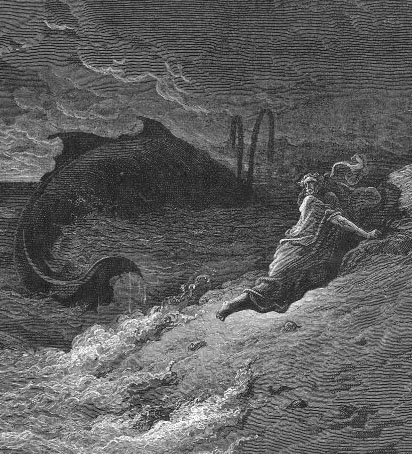
“Come listen to my tale, of Jonah and the whale, way down in the bottom of the ocean;” a children’s song with a catchy tune that has a way of becoming a lifetime companion. Among the earliest Bible stories many children learn is the remarkable story of Jonah and the whale. And since the Bible is God’s word, it must be historical, right? Many modern readers have a difficult time fathoming that Jonah is not a book of history. As if living three days underwater isn’t enough of a stretch, stalwart bibliolaters ignore the tons of archival material from Nineveh itself and claim that the entire city spent a day, or a week, worshiping Yahweh. It stretches the imagination.

Too close for comfort

While working at Gorgias Press I discovered, in an entirely unexpected way, just how seriously some otherwise rational adults take this tale. I had to postpone an important meeting with an influential client because it had fallen on “the Rogation of the Ninevites.” As a lifelong biblical scholar and student of ancient religions, this was a festival I’d never before encountered. A web search refused to yield too much information for as long as my curiosity lasted, but I did find out that the date is difficult to nail down (apparently sometime a week or two ago), and that it predominates among Orthodox Christians of Iraq and Syria. These believers claim the heritage of the fictionally converted Ninevites. Even if the book of Jonah were intended as history, the conversion would have been to Judaism, not Christianity.

As I tried to find a new date with our lucrative associate, I realized once again just how far faith is willing and able to stretch. The story of Jonah is a cautionary tale, almost a fable, reminding post-exilic Jews of the occasional righteousness of the other. While other interpretations have been ceaselessly floated by serious scholars, I have never discovered anyone outside the putative descendents of the fabricated Ninevites who take this non-historical event to be important enough to jeopardize an essential business deal. Anyone who attempts to introduce logic into such an equation may well find him-or-herself, Geppetto-like, slowly digesting in the enormous gastric cavity of a whale that has a taste for prophets.


Fruits of the Dearth

Religions developed out of universal concerns. While I can’t hope to compete with the masterful insight of Pascal Boyer, I do have a gut feeling that as soon as humans evolved the ability of foresight we began to worry. Where is that next meal coming from? Will we survive another day? Is there any way to hedge our bets? In ancient times mortality’s unblinking stare would have been much closer to our faces. Even as recently as the Middle Ages death was much more on the mind, much more frequently seen.

One way to ensure survival is to propitiate those gods who control the productivity of the soil. Long before Demeter lost Persephone ancient people mourned the death of gods who ensured fertile soil, hoping against hope that they might come back each spring. I recall the seriousness with which Rogation Days were taken in the Midwest. At Nashotah House the earth itself was blessed. I recall a priest from Central Illinois who gleefully recounted that the University of Illinois crop experiments were always a little skewed because each year he blessed them on Rogation Days, giving Ceres a boost. CPR for mother earth; give us our daily bread.

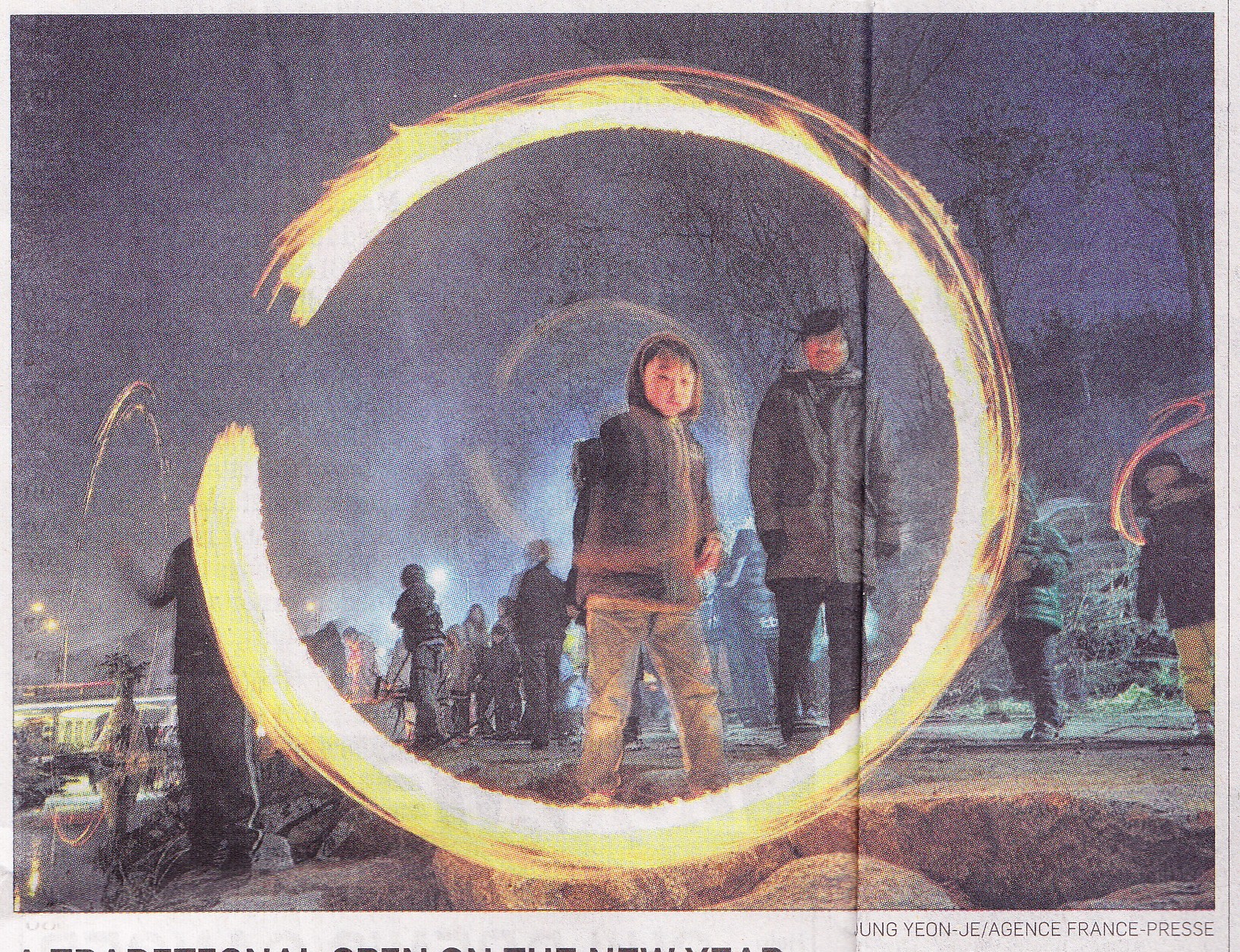
The picture of a South Korean boy spinning a can filled with glowing embers over a field on the first full moon of the Korean New Year reaffirms that concerns are the same everywhere. In our sterilized, indoor, urbanized lives where food is grown, harvested, processed and packaged by others for simple consumption of the vast majority, we have lost one of the most poignant aspects of religion. People pray for survival against the devious plans of terrorists, or the insidious diseases that threaten those who make a living simply moving electrons from place to place. Meanwhile somewhere in a country teetering on the brink of nuclear winter, a young boy swings a bucket full of hope.


Blessed Virgin (Not)

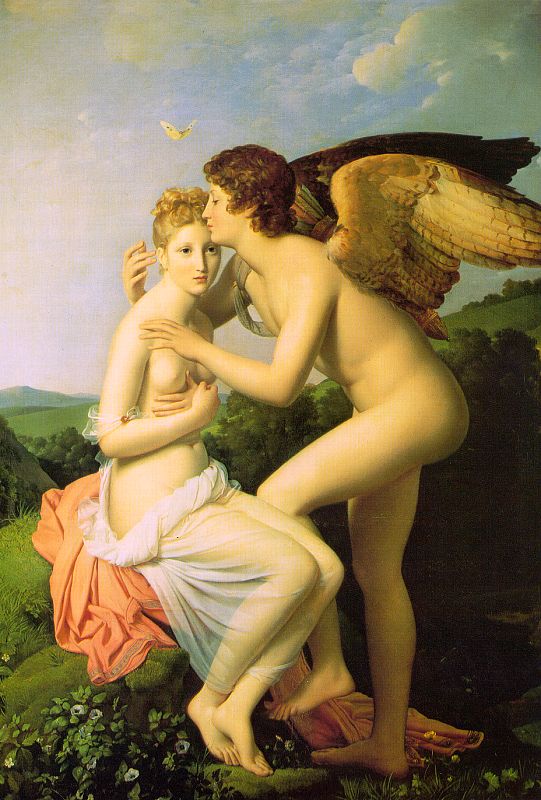
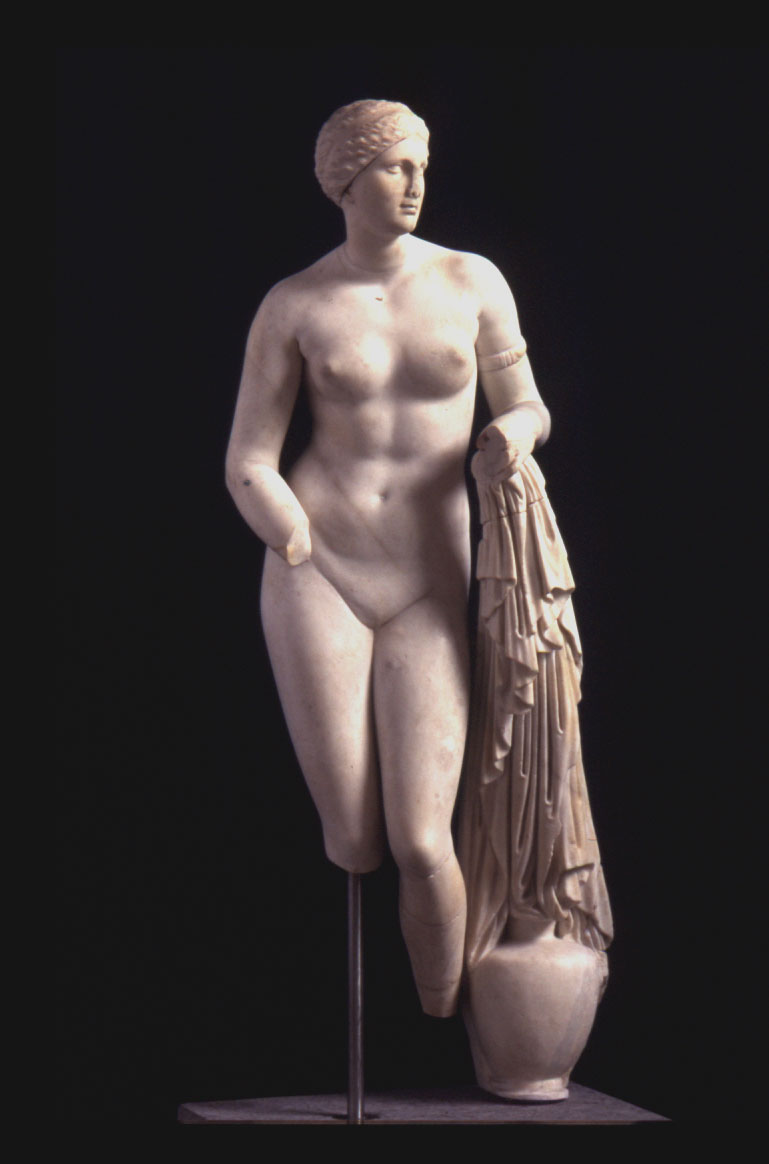
What’s not to like about Aphrodite? Hesiod’s first Olympian, she represents the exuberance of life itself in the pursuit of love. In our patriarchal world her erstwhile consort Cupid has come to represent that strange and compelling force that drives so much of what mere mortals spend their time on. A colleague has pointed me to a new documentary that is being produced on Aphrodite (trailer available on YouTube). In addition to fascinating footage illustrating modern Cypriot rituals to the goddess, the film contains what many would consider a sacrilege: on Cyprus the virgin Mary and Aphrodite are viewed by many as two forms of the same entity.

While the modern, monotheistic sensibility bristles at any notion of shared divinity, it seems perfectly natural that when the “mother of God” was introduced to the island that gave the world its Venus, “its desire,” a mental connection became inevitable. Unlike many “virgin goddesses” of the ancient world, Aphrodite had no false modesty regarding matters of love. Even the mighty Zeus, so powerful that he might be called simply “God,” was unable to resist her draw. Ancient peoples often celebrated the gift of love without the embarrassment that the Victorian Age has so generously bestowed on much of the western hemisphere.

Pressing the point even further, when monotheism emerged the equality of genders became an impossibility. The one god must, by the standards of all human imagination, possess a gender. And since men dominated the societies that embraced monotheism the divine feminine was lost. Orthodoxy replaced humanity, and thus it remained until only recent years when women finally managed to make their voices heard. Aphrodite, unlike Hera, is not under the control of a lordly king. The film by Stavros Papageorghiou offers viewers a chance to see what has been lost by the western world keeping half of the human race silent.


Agenda in Pink

One advantage of the technological revolution is that it is a lot easier to look things up in the Bible now. As a biblical scholar who cut his teeth the hard way by reading and rereading Holy Writ until great swaths were committed to memory, now I find it much easier to visit BibleGateway.com rather than haul out the old print concordance and crack my knuckles before straining a muscle to lift the thing. The other day while looking up a passage for class on BibleGateway, I saw an advertisement that made me cringe. Zondervan, owned by Rupert Murdoch’s News Corporation, is now offering a “Precious Princess Bible.” I did a literalist double-take at the banner. My imagination began to spin: does this edition offer all the misogynistic passages in pink letters? Should not the owner of all FOX News do all that is possible to keep women in their place?

Even a short list will serve to make the point:
Exodus 21.7: And if a man sell his daughter to be a maidservant, she shall not go out as the menservants do.
Leviticus 27.3-4: And thy estimation shall be of the male from twenty years old even unto sixty years old, even thy estimation shall be fifty shekels of silver, after the shekel of the sanctuary. And if it be a female, then thy estimation shall be thirty shekels.
1 Corinthians 11.3: But I would have you know, that the head of every man is Christ; and the head of the woman is the man; and the head of Christ is God.
1 Corinthians 14.35: And if they will learn any thing, let them ask their husbands at home: for it is a shame for women to speak in the church.
1 Timothy 2.12-13: But I suffer not a woman to teach, nor to usurp authority over the man, but to be in silence. For Adam was first formed, then Eve.

The Bible is hardly a tome to affirm the “precious princess” concept that many modern parents believe they are fortunate enough to claim. No matter how much we candy-coat it, this is salvation with a double standard. One of the truly remarkable aspects of Christianity is the number of women who adhere to it despite the secondary status the foundation document lends to them. Despite a few harsh words, Jesus is depicted as treating women well. But the Bible tantalizingly refuses to tip even his hand in favor of feminism. The Bible is a man’s world. I am personally awaiting the He-Man Combat edition. It would fit many parts of the Scriptures remarkably well.


When Machines Fall in Love

When I want to have a good scare, I seldom think to turn to Time magazine. This week’s issue, however, has me more jittery than a Stephen King novel. One of the purest delights in life is being introduced to new concepts. Those of us hopelessly addicted to education know the narcotic draw of expanding worldviews. Once in a while, however, a development changes everything and leaves you wondering what you were doing before you started reading. A change so profound that nothing will ever return to normal. Singularity. The point of no return. According to the cover story by Lev Grossman, we are fast approaching what theorist and technologist Raymond Kurzweil projects as the moment when humanity will be superseded by its own technology. The Singularity. Noting the exponential growth of technology, Singularitarians – almost religious in their zeal – predict that computing power will match and then surpass human brain speed and capacity by 2023. By 2045 computers will outdistance the thought capacity of every human brain on the planet (more challenging for some than for others, no doubt). The software (us) will have become obsolete.

A corollary to this technological paradise is that by advancing medical techniques (for those who can afford them) and synching tissue with silicone chip, we may be able to make humans immortal. We will have finally crossed that line into godhood. Kurzweil notes laconically, death is why we have religion. Once death is conquered, some of us will be left without a job. (Those of my colleagues who actually have jobs, that is.) We have empirically explained events as far back as the Big Bang, and no deities need apply. The evolution of life seems natural and inevitable with no divine spark. And now we are to slough off mortality itself. O brave new world!

There was a time when mythographers created the very gods. They gave us direction and focus beyond scraping an existence from unyielding soil. We have, however, grown up. There are a few problems, nevertheless. Scientists are no nearer explaining or understanding emotion than they were at the birth of psychology. We might explain what chemicals produce which response, but we can’t explain how it feels. Emotion, as the very word indicates, drives us. Until Apple comes out with iMotion and our electronic devices feel for us we are stuck falling in love for ourselves. Computers can only do, we are told, what they are programmed to do. The mythographer steps down, the programmer steps up as the new God designer. Having dealt extensively with both, I feel I know which I trust better to provide an emotionally satisfying future.

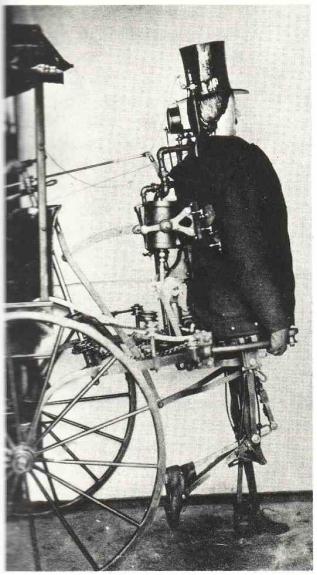
Zadoc P. Dederick's Steam-Man


Devils and Mooncussers

New Jersey is an easy state to caricature. Some of the most remarkable aspects, however, are those that seldom find their way into the popular media. An unseasonably warm spell led my family to a sudden awareness of cabin fever that sent us seeking diversion over the weekend. We ended up at Tuckerton Seaport. To get to the museum from our location meant a long drive through the pine barrens. This unique ecosystem is impressive for its size (over a million acres) as well as for its unique plant-life and relative lack of population. And, of course, the Jersey Devil.

A relatively harmless Jersey Devil

Even serious museums such as the Seaport can be expected to play up the heritage a bit. In a corner of the wildlife diorama is tucked a little sculpture of the Jersey Devil. The diabolical aspect comes only from the folklore of its birth as an accursed child. Far more dangerous were the human elements in the maritime history. Mooncussers were those who set out false lights for ships, hoping to lure them into the shore where the vessels would run aground, leading to easy plundering. The lighthouse has long been a religious symbol, a metaphor ready-made for illumination, safety, and solidity. This very reputation led the way for mooncussers to steal the signs of security to enhance personal gain.

The devil of personal gain unfortunately haunts more than the remote pine barrens of New Jersey. Those who use religion to attain that gain are the modern mooncussers who draw the unwary too near to the rocks and shoals. And mooncussers encourage others to participate in their sham, as long as there are gullible captains who are uncertain of the shore. The early church liked to compare itself to a ship. This image inspired many a nave ceiling to be designed as the hull of an upturned boat. Unfortunately, the hull often appears to have been capsized and the mooncussers appear in the role of diabolical captains set on wrecking the very vessel they command. Who needs a devil when human greed is far more than adequate to lead even the upright to opt for easy gain at others’ expense?


In the Name of Hate

Saint Valentine’s Day: a minor holiday that no one gets off work or school, but which has both naughty and nice aspects to it. A day with long pre-Christian associations (sorry St. Valentine), the celebration has become an icon of love in the Hallmarkian holiday world. It is a welcome change to the weariness of winter that drags on around the northern hemisphere, reminding lovers and curmudgeons alike spring is on its way. A holiday of hope.

At the same time, an editorial in Saturday’s New Jersey Star-Ledger raises the ghosts of less pleasant times. The Mississippi Division of Sons of Confederate Veterans is attempting to sponsor state license plates honoring General Nathan Forrest, first Grand Wizard of the Ku Klux Klan. While pointing out that Forrest eventually distanced himself from the movement, state officials want to acknowledge his contribution to their state’s history. License plates advertise to the nation as a whole what states uphold as their most attractive traits. In a world where the Klan is still seething under the surface, with active groups in nearly all states, it is not hard to see that hate can not lead us forward. It has failed in the past and it has no hope of success in the future.

Among the most distressing, if not revealing, features of various hate groups is their outspoken adherence to “old time” Christianity. Religion is but one tool in their arsenal, but what makes it so deadly is that even “peaceful” religions such as Christianity have a violent heritage. The Bible can be used to justify genocide as well as rescuing the widow and orphan. Christianity has a long history of being used for political, often hateful, ends in America. It is a trend that is dressed up in its Sunday best for glib talk-show hosts and windbag politicians who claim that “old time” values (read “white privilege”) are what America needs. Do we really need more hate? It’s Valentine’s Day. Let’s give it a break on the rhetoric of hate for at least a day. Who knows? It may become a habit.


Terror Able

Saturday afternoons were made for B movies. After a hectic week, nothing soothes like grainy picture quality and poor dialogue. This weekend offered a chance to view The Terror. This 1963 Roger Corman film won its bad marks the honest way – by earning them. Nevertheless with Jack Nicholson playing against Boris Karloff and a plot so convoluted that I had to draw a chart to figure out what I’d just watched, the movie lived up to its grade. Throw in Francis Ford Coppola as an associate producer and it’s party time. Corman’s legendary cheapness and fondness for disproportionate claims of scares that never materialize only add to the charm. After watching the opening sequence one gets the distinct impression that Franklin J. Schaffner had watched this film before setting up the climatic scene of Planet of the Apes.

In keeping with a recent trend on this blog, the plot involved a witch. An old woman from Poland resettles in France to avenge her murdered son. The crone casts a spell transforming a bird into a beautiful young woman. The first words of the spells sent me fumbling for the “rewind” button. “Tetragrammaton, tetragrammaton,” the old woman intones to begin her spell. In a movie fraught with dialogue problems, this might be considered simply a choice of foreign-sounding, mysterious syllables to be uttered for an audience not expected to know that tetragrammaton is the title of the sacred four-letter name of Yahweh. By this point the plot was so convoluted that making God the agent behind a pagan curse seemed almost natural.

The analog with the Bible soon became clear. The Bible holds its sway over many because of its often beautiful rhetoric. Sparing the time to study what the rhetoric might have meant in its original context is an exercise few believers can afford to undertake. Our world has become so full of things that taking time to explore the implications of one’s religion must compete with ever increasing Internet options, thousands of channels of television, and plain, old-fashioned figuring out how to get along. Religion is a luxury item and, as experience tells us, it is best not to look too closely at luxuries – their flaws too readily appear upon detailed inspection. Allowing religion its exotic sounding mumbo-jumbo preserves its mystery and power. And if a witch says a theologically freighted word we can just chalk it up to entertainment. We are too busy to examine what our religions really say. Roger Corman may have unintentionally discovered a real terror in a movie that will keep no one awake at night.


Neverwhere Angel

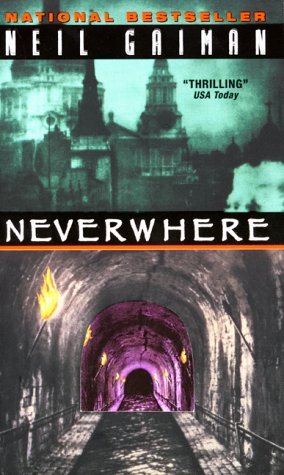
Neil Gaiman is popular among my students. At least among those that still read for fun. A couple of years back one of them lent me a copy of American Gods, and the story stayed with me. Having lived for many years in Wisconsin, and having visited the House on the Rock, the novel was like a kaleidoscope of some of my more pleasant memories of the state. Neverwhere is quite different and yet equally compelling. Gaiman peoples his worlds with characters just on the edge of believability thrown in with protagonists who tend to be completely confused by what they’re experiencing. Instead of gods, in Neverwhere there is an angel with the unlikely name of Islington and we have the myth of Lucifer’s fall retold in fantasy format, rolled together with Alice in Wonderland and the myth of Theseus. For starters.

A person is a composite of what s/he reads and learns and accepts. The books we digest, each in a unique recipe fitting our individual tastes, create new compounds and concepts that explore our personal realities. Neverwhere takes the reader down a rat-hole instead of a rabbit-hole, but nevertheless follows a young girl on a journey of maturity. The hero’s quest is undertaken to actualize both protagonist and idol, and along the way the beast in the labyrinth must be encountered and slain. Theseus, the flawed hero, dominates a world where even saviors have peccadilloes.

The protagonist of Neverwhere does not believe in angels, despite his encounter with one. As Gaiman puts it: “it was much easier not to believe in something when it was not actually looking directly at you and saying your name.” Belief generally involves not seeing. Once the object of belief is empirically confirmed, belief becomes knowledge. Today the belief in angels remains unabated. No empirical proof, nothing tangible confirms this belief beyond the anecdotal accounts of those who claim to have experienced them. Even the fanciful image of their androgynous good looks and unlikely wings remain untainted for all the centuries. Neverwhere raises an intelligent question about angels, but to discover what it is you’ll need to go down the rat-hole as well.


Evolving in America

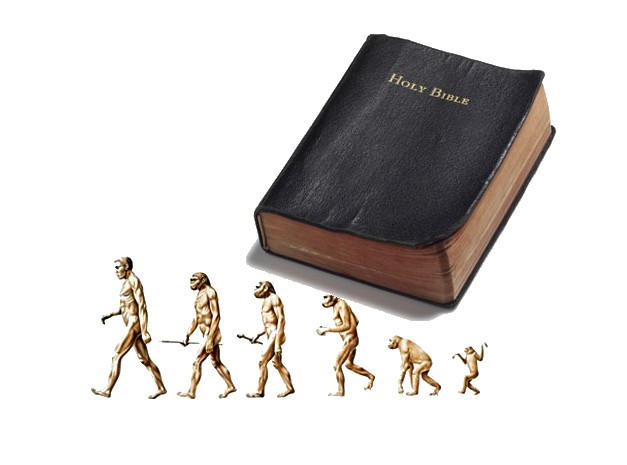
Columnist Leonard Pitts Jr. is one of the most sensible men in America right now. Witty, humble, and bright, he sees clearly and shoots straight. In an allegory entitled “A tale of a giant grown stupid” he illustrates the frustration many intelligent people feel in a country where thinking is viewed askance, and accepting empirical data is rife with suspicion. He begins his article by citing a statistic in Science that indicates some 60 percent of high school biology teachers in the United States inform their students that they don’t have to believe in evolution, they just have to know enough to get through the test. And evolution is not alone in the field of falsified information. Americans are regularly fed a high-fat, low-fiber diet of poor quality religion and told it is the only correct one.

While the remainder of the developed world has moved on to more important issues, we in America are still stuck in Fundamentalist kindergarten. The constant barrage of insipid theology from self-proclaimed doyens of the Scriptures assures the masses that the price of heaven is a healthy dose of creationism. Making matters worse, most biblical scholars choose not to engage these misguided spokespersons, choosing instead to believe they’ll eventually just go away. But why go away when you’re winning the fight?

Evolution is such an odd issue over which to argue. Neither serious biologists nor serious biblical scholars have any problem with it. Only a society increasingly under the power of a jacked-up, over-eager, offensive Christianity buys the feeble creationist rhetoric. And buys it in bulk. That is the American way. For many, society’s ills may be blamed on too much thinking. The Bible requires no thought, just the ability to see in black and white. And the Bible has proven a more powerful weapon than an H-bomb in the educational curriculum of our bright young minds. America itself is evolving. Unfortunately it is evolving into a nation satisfied with simplistic solutions to complex problems. And Bible scholars do nothing and wonder why everyone ignores them. Once upon a time there was a giant. Only it was not sleeping, it was already dead.


Witch World

Little did I realize when I posted an entry on witches two days ago that the news this week would itself become bewitched. Tuesday’s New Jersey Star Ledger contained a piece entitled “Catholics publish guide to witches and wizards.” Then the next day a former student posted a link to CBC News article headlined “Witches to face prison for false predictions.” Last week the Jehovah’s Witnesses left an issue of Awake! at my door that reveals “The Truth About the Occult.” Coincidence or black magic? Are we really in the twenty-first century? If only employment had the same staying power as superstition there would be no jobless rate to complain about!

The Roman Catholic Church in England and Wales is concerned about all the interest Harry Potter is generating. Afraid that tweens and teens might tiptoe into the dark side, the Catholic Truth Society has produced a booklet called “Wicca and Witchcraft: Understanding the Dangers.” The booklet, written by a former Wiccan, is a strange answer to J. K. Rowling given that Potter and friends are not members of the Wiccan faith. They are simply fictional witches that haven’t been grounded by the constraints of the Enlightenment. Fantasy grants them their magical powers, not the Devil. In Romania, meanwhile, witches beset by income tax laws are now facing hard time if their predictions don’t pan out. New laws in the economically depressed nation would require witching permits to be obtained and receipts to be given to customers. This is not to sweep out paganism, but to gain some lucre from it. The Jehovah’s Witnesses are just concerned that occult practices, often seen as mere entertainment, might lead the younger generation down the road to sex and violence.

I was disabused of belief in witches before I failed out of kindergarten the first time. Teaching religion and mythology classes at two major universities, I see students from many different backgrounds trying to improve their minds. But once the sun goes down a backlash against the empirical method is nightly unleashed. I’m not sure whether to pick up my Kant and Descartes or my mugwort and rosemary. Religion breeds these darker manipulators of magic, a force against which many fear God has no recourse. So in our world of high tech gadgets and space stations and cyclotrons, we still have to worry about witches. Theirs is a metaphor yet to be fully appreciated.

Weird sisters or strange attractors?


iConfess; Indulge Me

I confess to being a Luddite at times. I was a late-onset cell-phone user and my last laptop (Macintosh, of course) survived ten years of hard, academic use before an accidental drop forced me into a newer model. Now I walk through student centers and see banners advertising “new apps” and wonder what an app is and whether it is something I should have already had old versions of. I’ve figured out that “app” is an apocopated form of application, and that it generally has something to do with handheld electronic devices. Now it seems that I’ve been out-teched by the Catholic Church. That great bastion of faith that agonized over Galileo for four centuries has now whizzed by guys like myself who cut our high-tech teeth on telephones that had rotary dials.

What is this new app? According to the New York Daily News, the app is called Confession. The program apparently lets you choose a commandment that you’ve violated and offers a list of sins to tick off. (I envy the priest who got that job!) A press of the button and your sins are forgiven. Sure is a lot easier than getting down on your knees and telling it all to a guy you barely know. This handy app even automatically tracks the time since your last confession, so you can give it to the holy father in nanoseconds. It only costs $1.99.

Technology has wreaked havoc on ecclesiastical tradition. Only the most severely shortsighted of churches denies the draw and retention of the electronic revolution. Problem is, the worldview that generated these religions simply doesn’t fit into a palm-sized box. The world of century one was full of demons and dragons, and all on a very flat earth. Confession, when it became a requirement, was a visceral outpouring of deep secrets and fears before a black-garbed authority figure who had the power to dole out Hail Marys like a theophanic thunderstorm. Now it can be done at the stoplight on the way to Starbucks. The last time the church had asked for payment for forgiveness Martin Luther nailed 95 Theses to the Wittenberg Door. Today, I’m sure, it would be an electronic error report posted to a Wiki-board Domain, whatever that might be.

Forgive me, Father -- oh! I've got email!


Witches or Prophets?

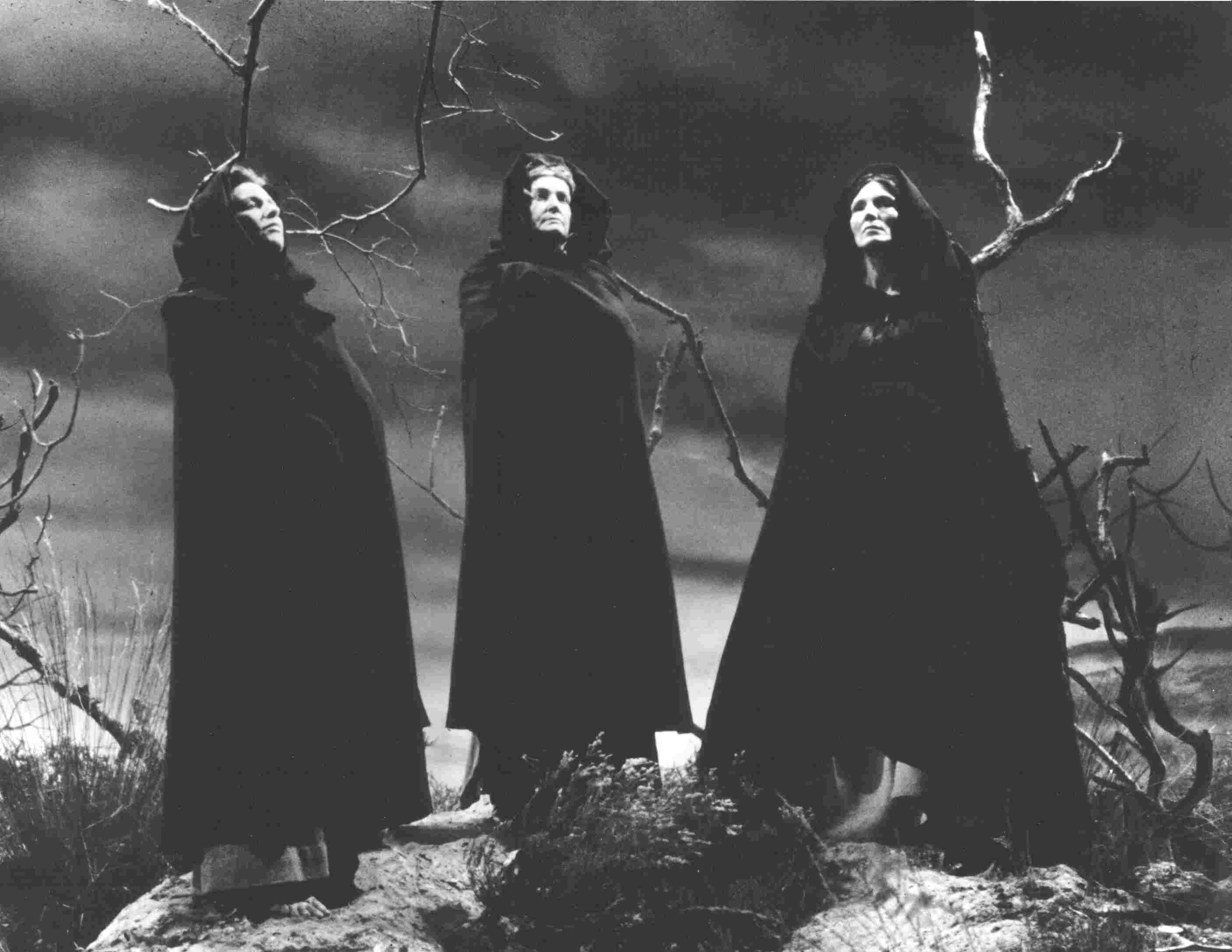
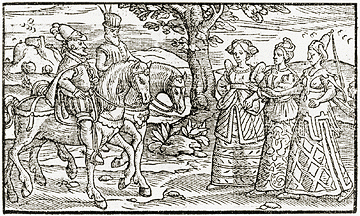
Some things never change. My daughter’s English class has finished its Shakespeare unit and this year’s selection was MacBeth. I recall the play from my own high school days, perhaps one of the hidden attractors that eventually drew me to Scotland. Shakespeare’s use of Holinshed’s Chronicles, however, was news to me. Raphael Holinshed was a 16th century chronicler of world history and his work gave Shakespeare the outline of MacBeth. The passage from Holinshed that stood out, concerning the witches, reads: “But afterwards the common opinion was, that these women were either the weird sisters, that is (as ye would say) the goddesses of destinie, or else some nymphs or feiries, indued with knowledge of prophesie by their necromanticall science, bicause euerie thing came to passe as they had spoken” (page 269 of volume 5, Scotland).

Being in the midst of courses on both prophecy and mythology, this passage ties a number of popular concepts together. Clearly the clairvoyance of magical females is simply accepted, and the easy association with classical characters such as the Fates or nymphs is evident. This is a world of mythical literalism. The weird sisters are able to predict the future with their necromancy. In a more nuanced view of prophecy, the concept actually incorporates effective speaking rather than future predicting. If a prophet speaks the words of Yahweh, in the Bible, then those words must of necessity transpire. When the stated events take place, it looks like prediction. Here Holinshed suggests the source of such knowledge for the women was more suspect.

Few of the biblical prophets are female. It is almost as if clandestine knowledge possessed by a woman marked her as a necromancer while a man might legitimately wield esoteric knowledge. This double standard no doubt applied in biblical times, and has lasted in various forms to the present day. The male establishment fears the knowledgeable female. Privilege takes many forms, all of them greedy. In my case I must gladly acknowledge that I would not have learned of Holinshed’s Chronicles if it weren’t for my daughter, and I am pleased for the opportunity to expand my esoteric knowledge.


Sacred Bowl

No winners in this game

I am not a sports fan. Nevertheless, in years when we can afford cable I’ve watched the Super Bowl with a perverse curiosity. Especially when I’ve lived near the locus of one of the competing teams. Having grown up just north of Pittsburgh and having spent fourteen years just south of Green Bay, this year would have been a toss-up for me anyway. I have friends from both Pennsylvania and Wisconsin, and it was interesting to watch the pre-game posturing, knowing that someone’s self esteem would be low this morning after. The Super Bowl, unlike Sunday religious meetings, is an event that never fails to fill the pews. Football reaches across denominational borders into personal pride. It is an odd thing to find regional self-worth in the antics of highly paid professional players from all over the country secured in a single location by money alone.

Sports are religious for many. There are acolytes, saints, bishops and high priests of the gaming community. And the congregation feels special when their team wins. An odd way to measure civic pride. When was the last time that a city bragged about the social care offered to its unfortunate? Would sponsors pay millions to see a city cleansed of unemployment, uneven health care, and corruption? Shining cities just aren’t set on the hills any more. What shines are lycra leggings and polycarbonate helmets. And funny commercials. For one day many Americans are gathered around the common altar of the television screen and many, many prayers are uttered.

In a world full of serious problems, playtime may be essential release. Nevertheless, when the game is over the problems remain. If only people could get as excited about solving a genuine crisis, and feel a sense of accomplishment by helping those on the opposite team. Instead religions divide up into teams and compete for stakes higher than even a Vince Lombardi, stakes that are sometimes taken too literally. No matter what the teams may be, the losers are always the same. They are the ones who suffer no matter which team walks away with the prize. Who won the Super Bowl? Did anybody really win?