Myth of Jerusalem

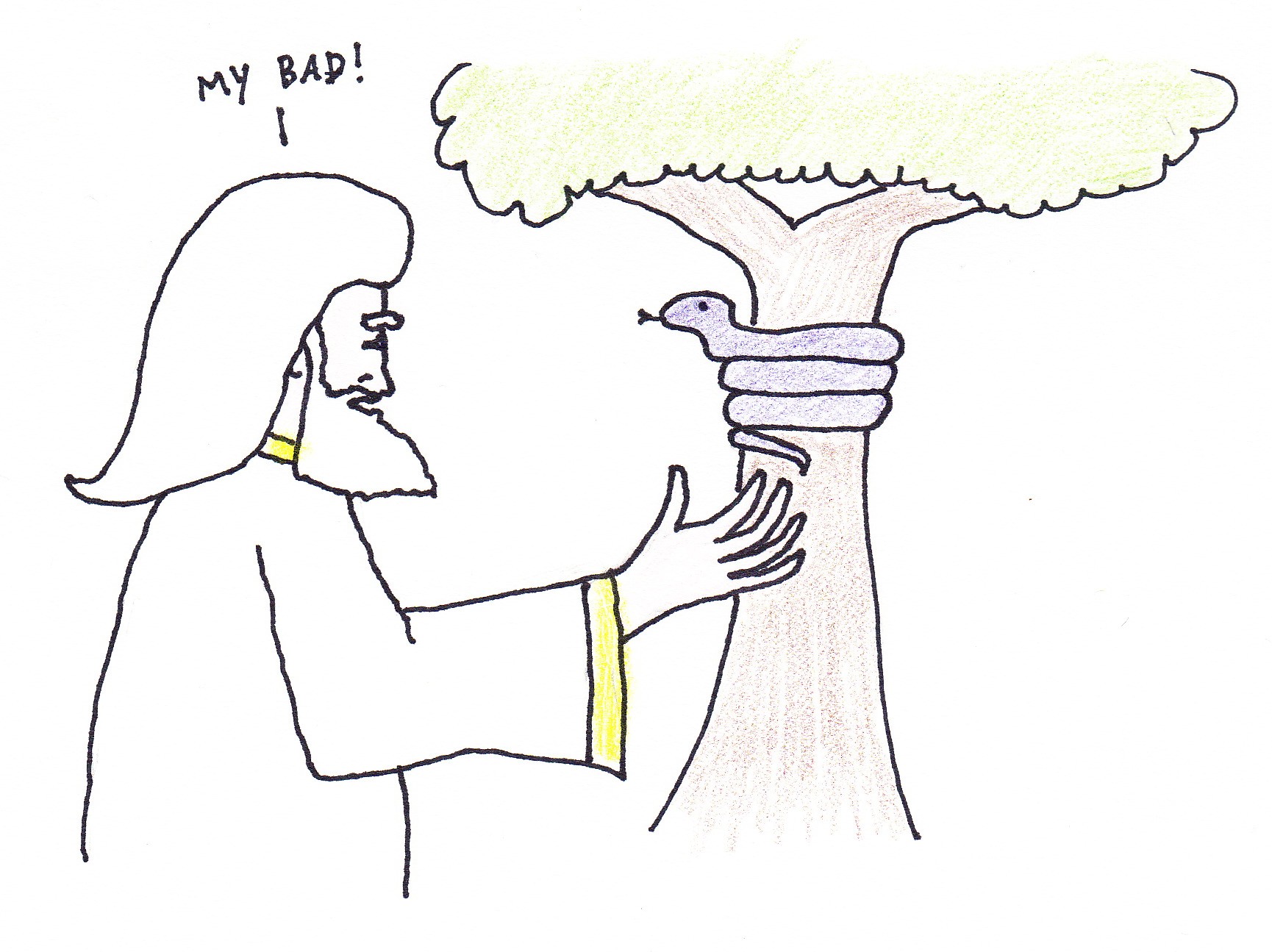
As I stood atop the Mount of Olives watching the sun set over Jerusalem several years ago, I had difficulty believing I was actually there. For a working class kid who’d only ever been to Canada before (and only because we lived not too far from Niagara Falls), this was a moment like a scene from the Bible itself. Jerusalem is a city of myth and dream, and it represents just how seriously mythology may be taken. A new book, Jerusalem, Jerusalem: How the Ancient City Ignited Our Modern World, by James Carroll, was reviewed in Sunday’s newspaper. I have not yet read the book myself, but a couple of lines from Tom Mackin’s review leapt out at me: “Jerusalem is as much a symbol as a reality. Because most Orthodox males spend their time studying the Torah, they are unemployed. Piety brings poverty.” This is editorializing with parsimony.

Those of us raised to believe that pursuit of the highest calling of humankind is that of seeking the divine often end up forced to live the consequences. This pursuit does not pay, unless one is willing to sell one’s soul to become a televangelist. Unemployment has a way of sharpening one’s focus. The message repeatedly heaped upon you by society is that you have nothing of value to contribute. True, religious founders often declare the ineffectual satisfaction of lucre, but then, most of them didn’t have a child to put through college. Having spent nine years after high school studying the Torah (and Prophets and Writings and documents written long before any of this), I see now what could not be seen then.

When I watched the sun set over Jerusalem with some friends, a stray cat wandered over, looking for affection. Or, more likely, food. I had some scraps that I shared with the hungry kitten when it unexpectedly bit my finger and scampered away. My friends, concerned for rabies or some other infection, rushed me down the Mount of Olives and into the Holy City seeking a holy pharmacy. Little did I know at the time that a myth was being enacted at the expense of my aching finger. Acts of kindness are rewarded with the hand that feeds being bitten. I had to come down from the mountain, earn a doctorate, and be dismissed by well-groomed evangelicals before I could finally see that the symbol was the same as reality. I need to read this book to restore my faith in mythology.

More and less than it seems


Gila’s Got the Whole World

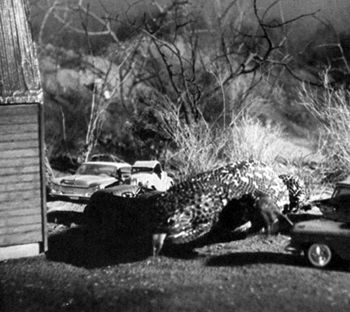
Singing pretty-boys and colossal lizards – it must be time for The Giant Gila Monster. A horror film that portrays all the innocence of the 1950s before the Beat Generation led us down the path to reality, the film has earned cult status in recent years. More accurately titled, “A Regular-Sized Gila Monster Filmed in Close-Up,” the sub-mediocrity of the movie has probably done more for preserving it in popular culture than any other aspect. The film stars the relatively unknown Don Sullivan as a great teen role model who writes and performs his own songs. The number that receives the most Internet attention, and the one that makes this movie of interest to this blog is “The Mushroom Song.” Chase Winstead (Sullivan’s character) has a young sister who is just learning to walk with leg braces. To cheer her, he picks up a ukulele and sings: “And the Lord he said I created for you/A world of joy from out of the blue/And all that is left to complete the joy–/Just the laugh of a girl and boy/And there was a garden, a beautiful garden/Held in the arms of a world without joy/Then there was laughter, wonderful laughter/For he created, a girl and a boy/And the Lord said, laugh, children, laugh/The Lord said, laugh, children, laugh” with the final line repeated numerous times.

Laugh, children, laugh

Perhaps intended to underscore the societal norms of a time when “the Lord” made frequent appearances as an unseen supporting actor in many movies, this song is oddly out of place. The disability of Missy Winstead is obviously a device to raise tension: how will a disabled girl run from a giant lizard? The song, however, provides the resolution – the Lord will take care of all good people. Their response should be to laugh. The reference to Adam and Eve, fitting for teen fantasies of all generations, also belies the evolution of this monster. The gila grows to its great size because of chemicals in the water that wash to the delta somewhere in Texas. This creature did not evolve. The Lord will take care of it. The Lord and nitroglycerin.

Respectful teenagers with predictable haircuts and a society that believes a missing teenage couple could be doing nothing but eloping fits the world of the Religious Right exceptionally well. Even though they may not be perfect, these kids know right from wrong for they live in a black-and-white world with no ambiguity or ambivalence. Children of subsequent generations have grown up with shades of gray or psychedelic colors. The older generation is frightened by new developments, claiming that the world they know is about to end. In fact, an evolution is occurring. Those who try to hold society to the norms of the 1950s would do well to move ahead a decade and at least listen to Bob Dylan. No matter how far we progress, however, it seems that Texas will always delight in producing Lord-loving, bloated threats to rational civilization.


In the Beginning FIRST

Robots can be strangely emotional. Partly it’s that Colosseum atmosphere of a FIRST Robotics event, partly it’s being reminded of the vitality of youth, partly it’s hope for the future, and partly it is being part of something larger than yourself. Sounds religious. All that and lack of sleep. Yesterday was the culmination of the New Jersey Regional competition of this year’s FIRST Robotics season. As a non-scientist/engineer wannabe parent, I attend the competitions I am able to and I always leave deeply conflicted. There is a strange disconnect between science and religion that maintains an uneasy peace in many educated minds. My malaise began when I saw the following plaque, quoting the Bible, outside the Trenton Sun National Bank Center. In a state where labor is constantly under attack by its aristocratic government, it was a poignant reminder that such events as this celebration of science would not be possible without the efforts of laborers.

Bible lesson before the games

Emulating sports events, FIRST Robotics begins its events with a ritual. This in itself goes back to classical religions where competitions were dedicated to the gods. As a local speaker stood before the crowd of several hundred youth, mentors, and advisors, he reiterated the commitment the FIRST program has to service. To make his point, he began speaking about what he’d learned in church. It was here that the conflict settled home. For many years I taught (still do, in a less direct way) those who were training for careers in the church. I am committed to teaching them that religious reactions against a scientific worldview are misguided and bound to collapse. And yet here was a highly educated scientist simply accepting the teaching of a minister. There is a deeper issue here.

I know many clergy, perhaps too many for the good of one layman. And I know that many of them are far too busy to sort out the detailed intricacies of how science and religion interact. In fact this may be the only truly honest way to engage our world. As I listened to excited kids making announcements about the millions of dollars available for budding science students in college, I reflected on our treasure lying where our hearts are. Looking around at the mess the world is in, I see religion often taking a leading role in violence and distrust, reaping the benefits of science for evil purposes. I see scientists attempting to instill a rational worldview on societies deeply mired in unreflective religion. And I find them mixing at the fringes. I salute FIRST Robotics, but I wonder if we can ever truly escape the wrath of the gods.


Get Lent

Time to get Lent

Each year as spring struggles to overcome winter’s terminal chill, colorful flowers begin to burst from the earth to announce the rebirth of hope. So it is that bright purple signs have begun to spring up all over town announcing the joy that is Lent. Wait a moment – Lent and joy in the same sentence? The radiant signs read, “Lent: a good time to come home.” That’s not the Lent I remember. Having spent the longest decade of my life at a seminary that was frequently touted as “all Lent, all the time,” I suffered my share of the season. While I think I comprehend the tactic behind this attendance boosting campaign, I wonder if it isn’t leading with the chin.

Back when flowers were the first colorful signs of spring, when I was young, churches did not advertise. Stolid bastions of the truth, each and every one, they awaited sinners to come to their senses and select the correct avenue to the truth. If you missed, well, Hell never turned anyone away. Nowadays, however, we need advertising to convince us. In a consumerist heaven, we are deluged with choices. When the faithful dither, it must be time to advertise.

The first to admit personal bias, my experience of Lent has usually been dreary and unrelenting. A naturally quiet and self-critical individual, I don’t need a whole denomination on my back to force me to think about the faults I already castigate. The thought of the season makes me shudder – people who spend all the rest of the year looking out for number one are to emulate Jesus’ reflective 40 days in the wilderness to be like their savior, only to snap back to their old self-serving ways on Easter. Could be a recipe for collective schizophrenia. Temporary Christianity. Do we really need more occasions to be glum? My favorite part of Lent was always Mardi Gras; at least then we were working on something new to contemplate during the next 40 long, chilly days.


Shake Your Booty?

The Roman Catholic Church has been making headlines again. Yesterday’s newspaper afforded two headlines to the great mother church – or maybe I should say “pleasant parent church.” The first story regards the Pope’s new book, Jesus of Nazareth-Part II, due for release next week. In it the Teutonic Vater exonerates the Jewish people for the death of Jesus. The embarrassing mastodon in the room, however, is why the church ever blamed the Jews in the first place. From the beginning Christian theology declared Jesus’ death part of God’s master plan. It also provided a convenient excuse for centuries of hate crimes that continue to this day. Believers, however, are quick to justify God’s actions, even when the Bible tentatively raises its own objections. In my prophet’s course, many students had trouble accepting the fact that the story of Micaiah ben-Imlah in 1 Kings 22 indicates that God sanctions lies in the mouths of prophets for a larger divine purpose. Perhaps we should also look for Micaiah ben-Imlah-Part I on the bookstore shelves soon.

The second article, already making its rounds on the Internet, concerns a new translation of the Bible. Shaking the traditional word “booty” from its vaunted position, the Ash Wednesday Bible calls it “spoils of war.” I was pleased to see my personal friend Bishop Sklba interviewed as part of the release publicity. As he rightly notes, “English is a living language,” to which some have subtly added, “and a dying art.” The article rehearses the sophomoric tittering at funny-sounding verses that has plagued the church ever since the laity have been educated. Gelding the Bible is a small price to pay for sanctity.

Regardless of efforts on the part of the religious, the Bible remains an often bawdy text set in the context of a sexist and supersessionist world. It is the world in which the Roman Catholic Church came of age. As we start to see the first, faint blooms of a distant equality beginning to push through a vast leaf-litter of decomposing, brown tradition, the theology and foundational document of the church require some window-dressing. In this world of aggressive, bully governors and oh-so-self-righteous politicians, it is encouraging to see a massive religious organization bashfully blushing and suggesting that shoving others may not be the best method of getting your own way. Could it be that the church still has some valuable lessons to teach the world?

Oh, uh, sorry about that...


Flaming Chariots

Religion is a demanding taskmaster, often completely at odds with the lifestyles of even its most staunch practitioners. Having spent my entire lifetime trying to understand it, I marvel at its imperiousness. In a story reminiscent of the unlikely hit film of 1981, Chariots of Fire, a recent Verizon human interest story highlights how religion sometimes impedes people, particularly children, from achieving what they may believe God put them here for. The story focuses on aspiring gymnast Amalya Knapp, yet to see 10, who has been prevented from full competition potential because of observing the Sabbath. As the article points out, this is not an issue limited to Orthodox Judaism, since “She isn’t the only young athlete faced with reconciling her passion for sports with religious obligation. Experts say the issue arises in all faiths, in nearly every sport, and at all levels of competition.” In one of the great ironies of human psychological development, we have engineered religions to prevent us from reaching our full potential.

In a way that few can appreciate today, the Sabbath rest was originally an unexpected gift. Ancient people had no concept of a weekend, a harrowing thought for most frantic people today who live their lives for the brief respite from insanity that the weekend offers. The recognition that a mandatory day off might actually improve the human condition was as prescient as it was radical. Time off to improve productivity? Today we know it to be true. But the more a religion gives its adherents, the more it seeks to take away. The God who gives you that free time wants to take it back. It is not really your time after all. “I believe God made me for a purpose, but he also made me fast. And when I run I feel His pleasure.” So says Eric Liddell in Chariots of Fire. He will also refuse to feel his pleasure on the Sabbath.

Religions disagree on the fine details of why the divine put us here. They are united in the belief that such a reason exists, but the terms of the contract differ widely. For reasons that the divine alone can comprehend, many human activities are subject to heavenly hegemony. The classical Greeks called it hubris when a mere mortal excelled to a point that embarrassed the gods. In response a human who wanted the most out of life knew not to show the gods what you are truly made of. For even the kindest of gods are jealous of divinity. And as all religions repeatedly demonstrate, despite divine demands for us mortals to share, gods are in no way obligated by their own rules.


Sanity Plea

How far up the chain of command does an insanity plea go? Back in 2005 Boyce Singleton Jr. admitted stabbing his girlfriend to death because “God told him to do it.” An appellate panel has just decided that the guilty verdict must be thrown out because the jury had not been instructed in insanity plea etiquette. “But, the appellate panel said [Judge] LeBon should have told jurors that they could acquit Singleton by reason of insanity – even if they found Singleton knew killing Michelle Cazan was wrong – if they believed he felt God compelled him to act,” according to the New Jersey Star-Ledger. A former colleague at an institution plagued with insanity once told me, “humor the mental.” That may be the best advice a weary nation might hope for. While political rulers from the privileged caste whittle, hack, and bludgeon away at the meager benefits of their underlings (previously known as constituents), those who refuse to pull back hands and feet endanger a digit or two. In the name of God, why doesn’t somebody do something?

There was a time when saying God made you do something evil was considered blasphemy. In today’s America it is an open justification for just about any war crime or personal vendetta you may want to implement. You see, God is freely available for those who know that a mere human committing their heinous acts would be clapped in irons. Long generations of televangelists have given the public the divine American Express card number. Do you hate this particular group? So does God! Do you want to declare war on that country? So does God! Do you want to stab your spouse? So does God! The rhetoric is so normative that a president can declare a personal quarrel a national crusade because God told him to. No one even bothers to look up from Facebook.

It is time to remove God from the equation. When I was a child Flip Wilson ratcheted up the laugh meter with his catch phrase, “the Devil made me do it!” Classic transference was funny because everyone knew it was a bogus excuse. Not long after Flip’s demise the catch-phrase spread to the White House with only a simple title change. Are not the Devil and God interchangeable? Once a president claims divine precedent, doesn’t it trickle down to those lower in the social order? That’s the way of democracy, and God has been very democratized. Who needs an insanity plea when you’ve got the creator of the universe in your back pocket?

Where did you say this boat stops?


Not the Oscars

I could blame this week’s Time magazine for declaring that one thing we don’t need to worry about is an end to the zombie craze, but in truth I really have no one to blame but myself. Having watched White Zombie a few weeks back, I decided to see Revolt of the Zombies, its sequel, this weekend. With holes in the plot large enough for a small planet to pass through, it leaves a great deal of creativity – and imagined continuity – up to the viewer. It’s a movie bad enough to make you want to slap the television in frustration, but it did bring a number of my standard (read “tired”) themes on this blog together.

In this confused romp through sci-fi horror, excused only leniently for having been filmed in 1936, the terms robot, zombie, and automaton are used interchangeably. This is one of the technically redeeming features of the film. The term “robot” was coined to indicate a mindless servant, and in their religious origins zombies shared exactly that function of the automaton. Today’s robots are machines, and the future of the Singularity (posted on a couple weeks back) revolves around this very point: machines will complete the degenerating biological frame. Somehow the zombies will save us.

The zombies of 1936 were surrounded by swaggering, stereotyped caricatures of the helpless female who has very little mind of her own (perhaps less than the zombies who actually do something to better their state). Racist images including a wizened Scot called MacDonald and subservient Asians make the film uncomfortable for present day viewers. One glimmer of intelligence in the film, however, comes from an awareness of the classics. After a rat’s nest of a plot that is essentially one man wanting another man’s girl, old MacDonald gives a commentary on the assassinated master of the zombies. He takes his line from Euripides’ play Medea – an original strong female that the Greeks so feared. “He whom the gods destroy, first they make mad.” Second, I would add, they make watch Revolt of the Zombies.


Devil’s Ethics

It’s that time of year when state employees (even part-timers) are subjected to ethics training. Each year the irony of the situation becomes thicker and more viscous. You see, those of us who have part-time engagements are often on the receiving end of ethical violations, and we know better than to make ripples since we are disposable. I’ll say nothing of the well-known (almost infamous) ethical history of New Jersey, but today’s headlines suggest an even higher power when it comes to unethical actions. An Associated Press story bears the headline “U.S. biological horror stories brought before commission.” The report concerns official United States studies conducted on its own citizens by exposing people to and deliberately infecting them with various diseases. This may come as a shock to many, but already in the 1980s it was documented that America’s guinea pigs were its own citizens.

Leonard Cole’s Clouds of Secrecy: The Army’s Germ Warfare Tests over Populated Areas, published in 1988, exposed many documented incidents of biological agent testing on non-consenting, and unsuspecting citizens. The testing was done in the name of national security (for which you may now be groped by any TSA official whose hands are not otherwise engaged). As this report demonstrates, our own government has viewed those of us not in positions of power as manipulable, expendable, and somehow less valuable than those elected by schemes they devise themselves. Democracy, it seems, is not free.

We are expected to heave a sigh of relief (come on now, everybody, it’s okay) since the history exposed is between 40 and 80 years old. That’s ancient history, right? An industrial-military complex today would never violate the rights of citizens. At least not officially. At least not as long as the Freedom of Information Act ensures that citizens have access to records (several years after the fact), and as long as it is not deemed a matter of national security. The color of your underwear and the shape of what is beneath are government assets. Also, so is your immune system. Otherwise you are free to live your life uninhibited. Unless, that is, you are a state employee with an extensive ethics background. Excuse me, but I’ve got to get back to my ethics training.


Sinking Ships

In anticipation of the Academy Awards, last night I revisited Titanic. Since I tend to view art from the perspective of metaphor, I was once again struck by how our society resembles that great ship. In particular, with the current turmoil between plutocratic governors and the average citizens who’ve elected them, the brazen upper-class passengers on the Titanic embody the interests of the self-interested. When Captain Smith leads the privileged first class travelers in “Eternal Father, Strong to Save,” in their own private chapel unsullied by the second and third class detritus, the line “for those in peril on the sea” resonates with the Prosperity Gospel. The well-to-do are that way through no fault of their own; God loves them more and made them better off than the rest. And when icebergs float, those unloved by their creator sink.

Over the past few weeks, in the shadow of events unfolding in Egypt and even Libya, we have seen the assertions of the aristocratic governor class assailing the workers. Attempting to make unions illegal, reducing the services offered to the poor, attempting to shorten the lives of the elderly by withdrawing medical programs (let us not ask how much profit pharmaceutical companies make for they are dearly loved by their father who art in Fort Knox), they know the rush of divine power. Indeed, populations are so complacent that as long as we have our MTV (substitute here your favorite media narcotic), that we shrug our collective shoulders and say “whatever.”

Perhaps it is not the metaphor James Cameron intended, but it is the working class Jack who sinks to an icy grave while the privileged but bankrupt Rose remains afloat. Our sympathies are with the young lady abused by privileged society, but the lifeboats should best remain half empty to preserve the upper crust rather than risk all going down together. After all, the Bible informs us that bread cast upon the waters comes back. And those who take up more than their fair share of the lifeboats wager that when that bread comes back it will be docile and subdued after its ordeals in the North Atlantic, and the Carpathia will come and restore society to its proper order. And so perhaps it is only a metaphor that more than a decade later the shoo-in for the Academy Awards is a film about the royal family. I think I see an iceberg ahead.

This is only a metaphor


Be Neith It All

Goddesses have lately been on my mind. Both an occupational hazard and an avocation, study of the divine feminine deflects the trajectory that traditional monotheism traced and places us in the realm of the empowered female. This week my mythology class considered Athena, perhaps the truest embodiment of divinity in classical Greece. I regularly mention that in the ancient world even Plato suggests a connection between Athena and the Egyptian goddess Neith, one of the most ancient of the gods of Lower Egypt. When a friend coincidentally emailed a question about Neith, I realized the goddess was calling out for a blog post.

Neith is difficult to define partially because of the nature of Egyptian religion and its evidence, but also because of her great antiquity. She is a predynastic goddess, dating from before the founding of a united Egypt (back in the days when Egypt was united). She is represented by symbols of both weaponry and weaving (thus associated with Athena), and since she is so ancient, she became a creator. She is occasionally regarded as the mother of the gods. A question that naturally arises for all creators is from whence did they come – the classic chicken-or-the-egg conundrum. Mythology offers a number of options for self-generation, but most often creator gods simply bring themselves into being without many details being supplied. After all, no one was there to witness the miracle of the first birth.

Like most Egyptian creator gods, Neith represented preexistence and creation. She is occasionally androgynous – a necessary precondition for being an initial creator – and is said, by Proclus to have claimed, “I am all that has been and is and will be.” In short, nobody knows where she originated. Like many pre-biblical gods, Neith practices creation by speaking aspects of the world into existence, a technique called creation by divine fiat. This is something that Yahweh will later borrow in Israel. Although the Egyptian myths do not directly address the coming into being of Neith, she represents what every observer of nature knows: monotheism loses an essential element when it supplants one gender instead of embracing both.


Carrie That Weight

When it comes to keeping up with the classics, I have a lot of catch-up to do. This even applies to classic horror films – I’ve been a fan since college but slipped out of the groove for a decade or so and now I’m working my way back in. Recently I watched Carrie for the first time. Considering that it came out in 1976 (I still remember the original trailers), it has held up remarkably well. The story of the child struggling to become an adult against the wishes of an overweening parent never goes out of style. In keeping with a long-term theme on this blog, the religious element was fully represented as well.

The portrayal of Margaret White as a religious fanatic included incongruous elements that had clearly been selected for their ability to set a creepy mood. The statue of St. Sebastian with an abdomen full of arrows seems a strange fit for a Christianity that is apparently Protestant. Mrs. White’s veneration of the Bible settles better in a Protestant milieu than the Catholic background of director Brian De Palma. The decidedly unnerving scene where Carrie returns home from the prom to find hundreds of candles burning recalls a more Popish atmosphere, but the prayer closet resonates better with reformed traditions. This unholy mix creates a disturbing lack of specificity, as if religion itself is the danger.

Writers and movie-makers attempting to scare audiences have long drawn on the stock character of the over-zealous religious believer. One reason may be the lack of understanding such characters demonstrate towards those who do not share their views. While it would be comforting to suggest that this is a mere caricature, experience unfortunately belies this assertion. Religions around the world all have adherents who brook no rivals and claim victory only in convert manifests or body counts. Truly classic horror films draw their power from a deep honesty. And many people are honestly afraid.


Skullduggery

Perhaps it’s just what I deserve for reading Stephen King’s Pet Sematary, or maybe it is just one of the perks of living in New Jersey. On the front page of today’s New Jersey Star-Ledger is a story of grave robbery. Two recent graves, one eerily reminiscent of King’s novel, have been plundered for what officials are calling a “non-traditional religious practice.” If the locally popular magazine Weird NJ is to be believed, the state hosts many religious groups that fall into the non-traditional category. This is a predictable by-product of religious freedom; some people find religious fulfillment in idiosyncratic rituals. And all religions are concerned about death.

“Some religious sects use human remains in ceremonies,” the journalists state matter-of-factly. The concept has an ancient pedigree, even in orthodox varieties of religion. The macabre practice of keeping a bone, or occasionally a whole body, of a saint for veneration is cut from the same cloth. In King’s novel, the darker side of resurrection is explored. We miss our dead, but do we really want them back here with us? The use of human bones is disturbing because it suggests the rest and sanctity of the dead has been violated. Perhaps a Halloweenish horde of restless deceased will be unbound among us. We prefer our dead to be left in peace.

Perhaps it is that lives filled with the turmoil of our frenetic scramble to stay ahead of tragedy look forward to death’s eternal slumber. Anything that suggests the dead have been disturbed sends ripples through the psyche of the living. While visiting an ancestral plot some years ago, I discovered that vandals had tipped over the tombstone where my great-grandfather and several great uncles rested. No caretaker was on duty at the remote cemetery, so I found the address and mailed a request to have the stone set back in place. The image of that fallen stone distressed me for several days. Those who rob graves likely do not take the distress of family into account – their religion requires human remains and we attach great significance to the inert matter that used to be one of us. It is an impasse. Religions make demands and those who get in the way, either living or dead, often end up violated.

Even the dead mourn


Origins of Evil

The Bible might have benefited from a good editor. The final product is a world classic, of course, but contemporary people with their busy lives prefer straight and simple answers. These, often, the Bible refuses to yield. During a discussion of prophecy in class the other night the question of the origin of evil arose. I incidentally made reference to Isaiah 45.7 where God casually drops the line, “Forming light and creating darkness, making peace and creating evil, I am Yahweh making all this.” Many English translations attempt to mask the bald use of ra‘ “evil,” in this passage with nicer words such as “woe” or “calamity.” As I explained to my students, however, in a truly monotheistic system all fingers must point the same way for the ultimate responsibility. In this passage of Isaiah, Yahweh is presented as causing evil.

Now the editing of the Bible was never undertaken with the intention of creating uniformity, despite the railing of Fundamentalists. There are plentiful internal inconsistencies and disagreements. We should expect no less of a book written over a period of about a thousand years by several different writers grappling with life’s big questions. Inevitably students ask about the Garden of Eden. Genesis 2.17 has Yahweh state that newly created people must not eat of the “tree of knowledge of good and evil (ra‘).” Here the evil grows on a tree. Who planted that tree? It’s like blatantly laying the keys before your teenager and saying, “now don’t take the car.” Who is the source of that tree? (And, less frequently noted, the eating of the fruit in Genesis 3 is never called “sin.”)

The quintessential problem with a compilation is lack of uniformity. This did not bother ancient people as much as it does modern Fundamentalists. One reason is that many people equate the Bible’s value with it being a book that has all the answers from a single viewpoint. This the Bible lacks. According to the Bible there are various sources of evil. According to a strict monotheism (late in the Hebrew Bible) there can only be one. Enter the devil. To save the goodness of God a Zoroastrian anti-God had to be introduced. But the devil must stand in line to make his patent claim on evil.


Vindication

Back in the summer of 2009, I chose the name of this blog on a whim. Relatives had been encouraging me to provide a platform for podcasts and the occasional post and asked me what I would call such a blog. The pun of sects and violence initially drew some good humored interest, but there was a serious subtext beneath the choice. Nature has now published an article declaring that violence and sex are related. (Sects and violence is a no-brainer; just look at the newspaper.) The connection has been established satisfactorily only in the brains of mice so far, but what is the real difference between mice and men?

Yes, men. The studies focus on the male brain, that organ that continues to confound those of us who daily try to use one. Certain circuits in the mouse hypothalamus trigger either a violent or loving response when stimulated certain ways. Aggression is almost an automatic response. My mind tied this in with the Singularity article in last week’s Time. As we race forward with technological mergers between artificial intelligence and the human machine, do we really understand what that brain is that we are attempting to emulate electronically? Biology, according to many theorists, does not bow to the rules of reductionism. What happens when the violence of natural circuits (fight or flight) kick in with titanium feet?

I commented on a friend’s post when he cited the Singularity article in Time. Others responded to my remarks suggesting I did not take the reality of this seriously enough. Those who are familiar with Sects and Violence in the Ancient World will have no such questions. The minds that have given us both gods and guns are machines that can not be replicated precisely. Their function is to keep a degenerating biological mass alive. Electronic brains with replaceable parts (think Wall-e) have no such concerns. The missing limb syndrome is a very human response that is well recognized by those who understand the human psyche. And that psyche, it seems, is ready to fight as long as it is properly stimulated.

A boy's eye-view of the world