Anvil Chorus

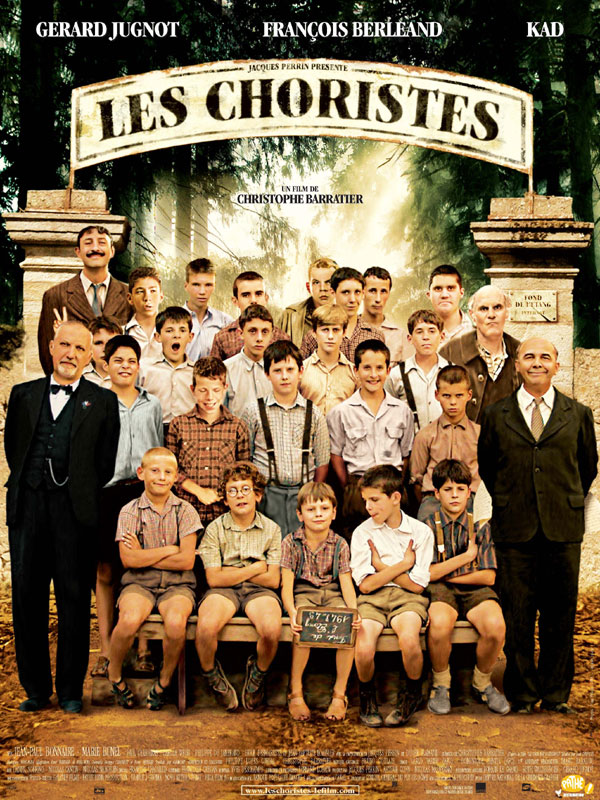
Last night I watched Les Choristes, the 2004 film that received two Academy Award nominations. The story, set in a school for troubled boys in France, felt eerily familiar. Not only did it resurrect the ghosts of Dead Poets Society, it felt like a page – or a substantial chapter – from my own life. The movie was recommended to my wife by one of my colleagues at Nashotah House, an institution that the film strangely resembles. The more I pondered the implications of a small school run by an authoritarian headmaster full of students with malevolent tendencies, the more I realized how much my Nashotah House experience has set the tone for much of my life. While I was at Nashotah, P. D. James’ murder-mystery novel, Death in Holy Orders came out. Immediately students and faculty began to speculate that James must have known of or have visited the seminary. Similarly, the Harry Potter novels led many to compare Nashotah to a decidedly less magical Hogwarts. Some of the students even honored me as the putative master of Ravenclaw.

My personal experience with religious institutions has led me to conclude that they indulge themselves in doling out the abuse that only religious sanction permits. I had attended the Presbyterian-affiliated Grove City College where chapel attendance was mandatory. My experience at Boston University School of Theology convinced me that seminaries were not a good fit for most people, particularly those like myself. I left declaring I would teach anywhere but a seminary. There is no balm in Gilead.

Forever after, any small, religious school with dark secrets would be my Nashotah House. But the problem is much wider than that. Religions seek to control. Some manage to do so benevolently, but too often the human element eclipses the divine. It is a temptation, when in positions of religious leadership, to insist that one’s personal outlook is correct. We all believe that our views are right. Those who receive the holy unction of an institution have the means to make it so. It is not Nashotah House, but human nature. When religious leaders confuse divinity and authority, that is when trouble inevitably begins.
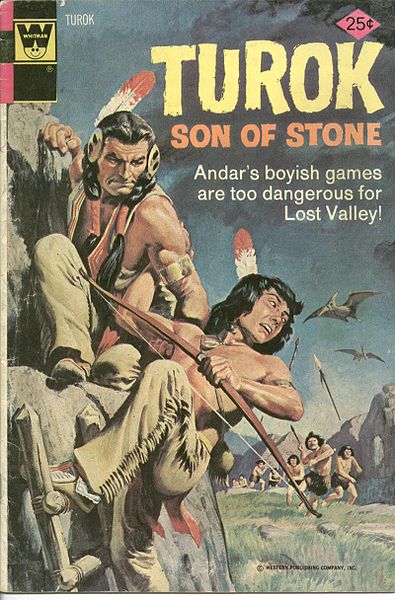

Son of Stone Flies

One of my favorite comic books growing up was Turok, Son of Stone. We couldn’t afford as many comics as our friends, but among brothers we’d share our resources and get a fair variety of reading material. Turok belonged to my older brother. It felt so ancient and sophisticated, tinged with primal urgency as Turok and Andar attempted to make their way from the Lost Valley where dinosaurs daily threatened their existence. The comics had a gravitas that even The Valley of Gwangi lacked. In one installment, a scroll-keeper joined Turok and Andar and claimed his sacred scrolls would show them the way free of this accursed valley. Turok doubted this and was rebuffed with “Fools scoff at what they don’t understand!” as their erstwhile companion decisively re-rolled his scrolls for storage in a handy leather pouch.

One pilgrim's progress

That image comes back to me when I think of how ancient writers sometimes used ridicule to castigate competing religions. It even happens in the Bible. A friend recently inquired into the figure of Baalzebub, the famous “Lord of the flies.” The Bible attributes worship of such a deity to the Philistines, the popular pagan foil of the children of Israel. The Philistines, as we know today, were a sophisticated group of Indo-European settlers on the coast of the eastern Mediterranean who showed up about the same time as the early Israelites were emerging from their “Canaanite” milieu. Since they didn’t practice circumcision and didn’t worship Yahweh, the Philistines were shackled with the worship of ineffectual fish-and-insect deities. (Dagon would never regain his proper significance until he was rediscovered by H. P. Lovecraft many centuries later.)

A different pilgrim's progress

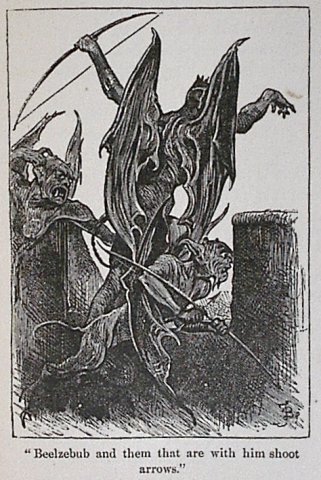
With the discovery of the Ugaritic tablets, the common usage of the term zbl (let’s say zebul, so it can be pronounced) was clarified. Zebul commonly designed “prince.” One of the recipients of this honored title was the deity formerly known as Baal. Baal-Zebul, “Prince-Lord,” the great thunderer Hadad. From the sketchy evidence of Philistine religious practice, it seems the new-comers did adopt some of the gods of their new land, and perhaps among them the lordly Baal. In order to disparage the cafeteria choice of their neighbors’ gods, a biblical writer renamed Baal-Zebul, Baal-Zebub, Lord of the Flies. There have been other explanations for the title, but the lessons learned from our youngest days often furnish our adult interpretative lenses. This explanation makes sense to me, and it reminds me of a bit of wisdom from Turok, Son of Stone.


Cyclotrons and Stardust

While recently watching an episode of Morgan Freeman’s Through the Wormhole, a connection emerged between religion and science. In an episode entitled “What Are We Really Made of?” the viewer is taken deep into CERN, and shown the tunnel where the Large Hadron Collider slithers like a 17-mile metallic snake coiling back on itself. In a quest for what ultimately constitutes sub-atomic particles, the script informs us, when the Collider is up to full speed it will recreate conditions as they were nanoseconds after the Big Bang. Scientists will be witnesses to creation itself. Their book of Genesis, however, will not be as easy to read as the one we currently have.

From CERN's website; the apocalyptic LHC

CERN represents perhaps the most sophisticated scientific instrument ever built. And the Kepler Space Telescope, one of the far-sighted members of our arsenal of understanding, has discovered rocky planets like our own 2,000 light years away. When the light of their sun left, Christianity was just beginning. Since then, millions of earthlings have died because of religious fanaticism. The deeper we peer, the less unique we become. Life is surely out there, and maybe building cyclotrons larger than CERN. The more we populate the universe, the lonelier we feel.

Kepler's guide to planets, from NASA

Scientists are also closing in on the creation of life itself. Working with self-replicating collectively autocatalytic peptide sets, they are nearing the point where we might say life has emerged independently in a laboratory. Where might religion be then? Human initiative in discovering the secrets of nature has balanced a divine creator on a precarious precipice. If life may emerge from a large soup of non-living peptides, and if we push the moments from the Big Bang back to merest fractions of a second while waving to our neighbors light-years away, have we consigned God to the unemployment line? I feel in better company now, although the light may have taken eons to arrive this far.


Faith Stealing

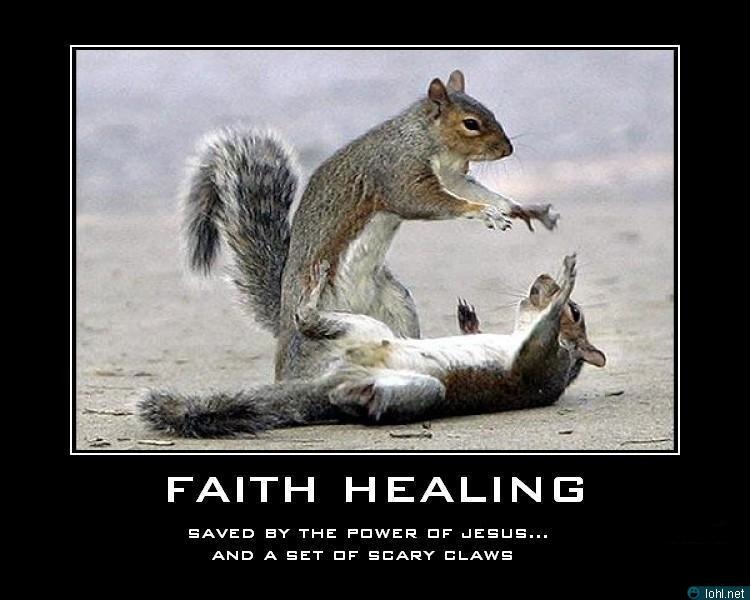
The sad story of the Schaible family of Philadelphia has reached a compromise that demonstrates just how awkwardly religion and politics sit together. Believers in faith healing, the Schaibles watched their two-year old son die for lack of medical attention. No limits exist on what people are capable of believing. Belief is at the root of most religions, so any nation that advocates freedom of religion has to open itself to the bizarre and wonderful possibilities that follow. Belief can’t be legislated. Too many revolutions throughout the world have amply demonstrated that. If a religion decides that the use of turn-signals is sinful (apparently a popular doctrinal stance here in New Jersey), it may bring conflicts with civil authorities and other citizens. When a religion declares professional medical treatment to be wrong, it is simply exercising its right to believe. When civil laws declare that parents must watch over the physical welfare of their children, clashes with such faith systems are inevitable. Believe what you will, physical death will not be cheated.

The shift of religion from praxis to belief gave believers a shove down a very slippery slope. Ancient religions tended to be matters of practice: gods demand sacrifice, so we grudgingly give them that. In actual fact, sacrifices supported the temple staff, often an arm of the government. It was, although probably not disingenuous, taxation in disguise. To be the member of a community, you have to pay the price. The system started to break down when religious individuals began to internalize this external structure. Instead of just offering the sacrifice, you have to do it with the right intentions. Those intentions evolve into beliefs. And beliefs are the ultimate free agents.

When a society defines religion as a belief system to which you may (or may not) subscribe, then myriad religious concepts emerge. Offering religious institutions tax-exempt status only encourages such behavior. If you tax them, on the other hand, the wealthier religions will have more political influence. No matter what pious lips may say, money will always trump pure belief. Meanwhile very real human suffering takes place, hostage to belief systems made up by somebody else. Religion has given us many lofty ideals; maybe one of those ideals is that we should limit its own infinite power.

Borrowed from some place on the Internet


Return of the Frost Giants

We have ceased believing in the gods, but we still feel their wrath. The recent winter storms encompassing much of the nation demonstrate our arrogance in the face of the uncontrollable. It has long been my contention that the chief god is a personification of the weather. No matter how many HAARPs we put into place or how many satellites we hurl over our heads, the atmosphere remains a chaotic system. Global warming triggers unpredictable weather and extreme conditions. Yet people claim the moderate level of snow in the northeast is proof against the facts. I say the gods are laughing. How quickly we forget the ice ages.

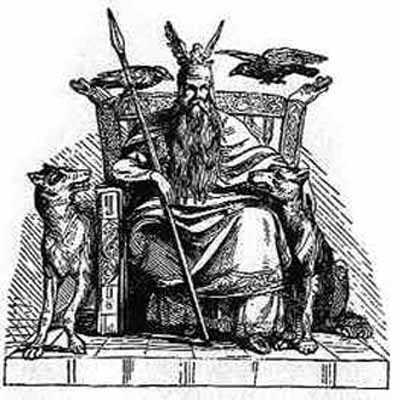
As a child Norse mythology was among my favorite pagan religious systems. Obviously those responsible for naming our weekdays felt the same. The struggles and weaknesses of Odin, Thor, and Loki are far more honest than claims of pristine intention on the part of the majority of gods. The most captivating aspect was the eventual victory of the frost giants at a kind of Ragnarök. In Scotland, so close to the landfall of many a Viking, I took advantage of indulging in Viking sagas and myths. My understanding remains that of a curious layman, but I sense a deep wisdom at work here.

A recent email from a university dean on a particularly treacherous weather morning admonished all instructors that classroom presence was a commodity that paying students have a right to expect. Deans, with their six-figure salaries, are not accustomed to not getting their own way. How hard it is to admit that the gods have bested us! There are those who’ve not bothered to study global warming but nevertheless like to make pronouncements about it. They claim such weather disproves that the world is heating up, despite the global warming models that predict erratic and localized colder weather. We have released the frost giants. The more we mess with them the more dangerous they become. So, what is my solution to the dilemma of too much weather? Well, I’m morally obligated not to say until I receive my six-figure salary.

The little wolf laughed to see such sport


The Heart of Babylon

One of life’s great ironies I’ve been pondering is how I earned a Ph.D. in a world-class university only to find myself unemployed, and apparently unemployable. Never one to rest on laurels – my own or anybody else’s – I nevertheless feel a sting whenever an alumni magazine arrives in my mailbox. All those successful, smiling faces depress me. Some of them have even studied religion and found a place in the field. When my advisors encouraged my aspirations in the academic world I wish they’d told me that it is really an old boys’ network of drinking partners and back-room favors. The university days I dream of ended long ago. I still look through the magazines to try to understand what went wrong.

FREDDY II is happy to meet you

So it was that the article on FREDDY in the Edinburgh alumni circular caught my attention. As the flummoxed president of Team 102, the local high school FIRST Robotics team, I was glad to be reminded of my alma mater’s hand in the field. FREDDY was developed in Edinburgh as the “first automated industrial robot to integrate perception and action” (according to my alumni rag). This meant that robots would be able to perform complex tasks in industry and earn lots of money the university would never see. So it is that we build our own nemeses. We look for progress and find the creature no longer requires the service of the creator. Those who gaze too deeply into the light lose their vision.

I am awaiting the automated university professor. I sing the soul electric (with apologies to Walt Whitman and Ray Bradbury). Should we not be honest about what we want? Universities seek entrepreneurs and sports stars: real learning takes place in the market and on the gridiron. Never mind the current economic meltdown; it’s all part of the classroom experience. Meanwhile the number of adjunct instructors nationally now outnumbers the full-time faculty of the university world. We have built a machine designed to deconstruct itself. As more and more colleagues join me on the sidelines we will always have something to read, as long as we share. I have enough alumni magazines to last any victim of academia a lifetime, and everyone in them seems destined to live happily ever after.


Two Ghosts

To escape the harsh realities of a fractured career, I turn to celluloid. Lest Hollywood distract me too much, I strictly limit my movie viewing to weekends when I can let down, for a few moments, my constant anxiety. Since my religious antennae are always prickling, I notice implications sometimes in unexpected places. So this weekend’s fare included two ghost stories. Both of them utilize religion to resolve the haunting, but in very different ways. An American Haunting purports to be based on real events involving the putative “Bell witch” of Tennessee. The movie takes many liberties with this scant folktale, including a church condemning a seemingly upstanding member and a Bible being dismembered as the angry spirit attacks the Bell family. In the end, the plot is confused by a revelation of family abuse and the viewer wonders who it is that tears apart Bibles.

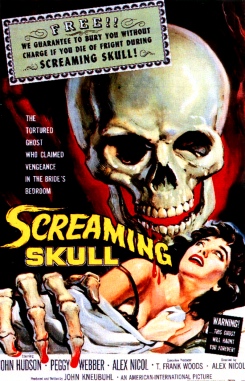
The second part of my double-feature was The Screaming Skull, a 1958 horror film that fails to raise a single follicle in fear. Nevertheless, the moody movie does provide the Dies Irae for Stanley Kubrick’s opening theme of The Shining as well as a sense of isolation that would also inform the latter exemplar. The religious element comes in the form of a priest who is a close friend to a clandestine murderer. With the help of a ghostly screaming skull, the priest is the one who eventually solves the murder and rescues the intended victim of our erstwhile protagonist.

Nearly half a century separate these two ghost stories, and the role of religion in them has reversed. In the 1950s the clergy were society’s protectors. Even though Rev. Snow is the only main character who does not actually see the ghost, he is a safe haven for the victims of evil. Fifty years later, it is the church that sets up the haunting of the Bell family by its unyielding laws. The family quotes the Bible at the spirit and the ghost tears the Bible apart. There is no sanctuary here. Films, no doubt, reflect social attitudes. When the foundations have lost their hold, confusion results. Who is to blame for the suffering of Betsy Bell? The movie leaves that up to the viewer. There is no solid Rev. Snow to whiten the sins of this world. Only ghosts remain.


Old Deuteronomy

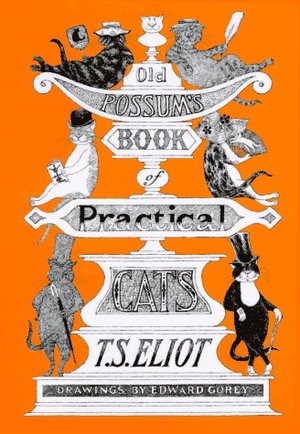
Last night my family attended a performance of CATS. We can seldom afford shows, or even movies for that matter, but when CATS comes to town it is non-negotiable with my daughter. It is a must-see musical. Anyone who has seen the show knows it is all just for fun with only the thinnest of plots and the most colorful of non-religious characters (they are, after all, cats). T. S. Eliot and Andrew Lloyd Webber, however, were/are solidly C of E, and that orientation comes through in both some of the characters from Old Possum’s Book of Practical Cats and the arrangement of the poems into the lyric of CATS. The basic message of the show is redemption, but the angle that I particularly noticed last night was the mosaic aspect of Old Deuteronomy.

Old Deuteronomy, the patriarch of jellicle cats and father of many of the cats in the junkyard, is a hobbled, old character who assumes the aspect of a law-giver to the younger generation. He has been to the Heavyside Lair and knows the path there. He leads Grizabella to her rebirth with the Everlasting Cat. Even his name suggests his association with the Torah, famously summarized in the book of Deuteronomy. When he is kidnapped (cat-knapped?) his return leads directly to the culmination of the show, the return to Mount Sinai.

No one would claim that CATS contains a profound religious impact, and yet the show conveys an unexpected emotional power. T. S. Eliot was not particularly known for his religious poetry, yet his personal beliefs permeate the children’s poems that form the basis for the show. His Moses is non-judgmental, a cat who was quite frisky in his younger years and who knows the value of a life well lived. A cat that believes in second chances. That simple message kept audiences returning to Broadway to see CATS on its incredibly long run. For those of us whose careers have run aground in mid-course, a Moses more like Old Deuteronomy would be a hopeful religious leader indeed.

Redemption through work


Baal Necessities

Baal has been on my mind lately, despite the limited time I’m able to dedicate to research. You see, Baal and I share a common interest in weather. One of those people whose moods synchronize with the atmosphere, I have always felt what the sky projects. So when a colleague asked me to lecture his class on the Baal Cycle, I felt it was a kind of catharsis after all the gray skies and snow we’ve had this year. Baal, or properly Hadad, was doyen of the skies. In modern perspective it is often difficult to realize that the seasons and climate of ancient Aram were quite distinct from our own. Whatever came from the sky came from Baal.

In the documentation we have on this god, we find him particularly associated with thunder, lightning, and rain. These were more common in the Mediterranean basin than the snows of the higher elevations. It stands to reason, however, that Baal meted out the weather to the denizens of Ugarit, no matter how wet or cold. Even his daughters’ names reflect their meteorological roles. Thunder and lightning may be the most dramatic expressions of divine power, but nothing makes you shiver like a good snow.

It is difficult not to take the weather personally when my long commute days are permeated with ice and snow. Continuing a pattern initiated last spring semester, my lengthy drive to Montclair has been accompanied by snow each class session I’ve been assigned so far this semester. Even the students have begun to notice. One co-ed asked why it always snows when I’m teaching. Meteorologists may have their naturalistic explanations, but somewhere deep down, I’m afraid that Baal has it in for me. It’s time to go and shovel the front steps again.

A Baal's eye-view


Works and Fridays

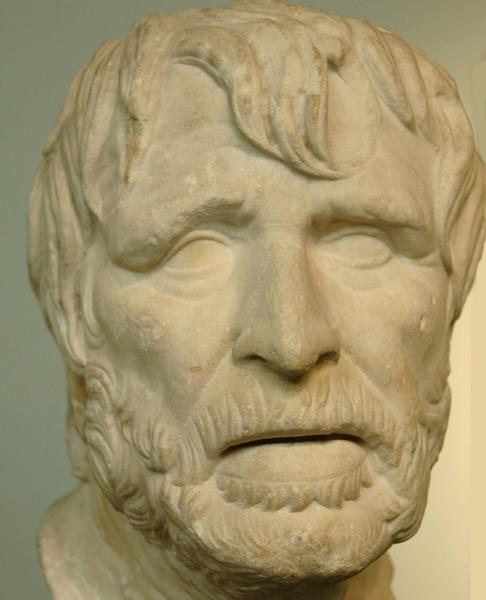
In rereading Hesiod’s classic Works and Days in preparation for my mythology class, I found the similarities with the Bible to be intriguing. One of the most noteworthy features of biblical wisdom literature is its universality. In a way that many believers find difficult to swallow even today, the wisdom authors accept – perhaps extol – the wisdom of sagacious “heathens.” We live in a world where religions are frequently engaged in building walls the envy of Jericho itself, while parts of the Hebrew Bible invite outsiders to join the party without even converting. Hesiod might have been a grumpy guest, but many of his words would have struck a familiar note with old Ecclesiastes.

Be not deceived – life is hard – so Hesiod tells us. The Greek gods made humanity to fend for itself. Men first and then Pandora to cause endless trouble, like the figure of Lady Foolishness in Proverbs. The misogynistic authors wave their flag in surrender to their passions; life is hard indeed. Instead of complaining (excessively anyway), the writers of wisdom interpret this difficulty as the crowning achievement of the human spirit. The gods made us to struggle, and when we’re up against it, we’re at our best.

Both Hesiod and the Hebrew Bible remind us that gods make the rules and we must obey. The human lot in life acquires an attenuated glory through living by divine standards. We will never shine like them, but we may sometimes outshine them. In the meantime, we must live by their apparently arbitrary rules. Reading the Torah, some of the Bible’s rules seem less-than-necessary to live a decent, honest, and moral life. We are not, however, to question the will of the divine. So it is that Hesiod warns, “don’t piss standing up while facing the sun” (Stanley Lombardo’s translation). Common sense might have added “while facing into a head-wind.” Such is the difference between gods and men.


The Triumph of Baal

“Snow weariness” is no strange phenomenon even to those of us who were reared in the legendary snow belt of Lake Erie. Although Buffalo consistently topped our records, months of deep snow burying all the familiar features of our landscape in northwestern Pennsylvania were regular expectations of winter. Snow weariness generally settled in around March when we longed for green pastures and unstill waters. As an adult in generally snow-deprived New Jersey, the weariness sets in much quicker. Attempting to drive on highways with sneophytes is a challenge; before I had my license I had driven in plenty of snow, otherwise I’d have had to hibernate from December through April of each year. Digging out from New Jersey’s third major snow-plop of January, however, the magic seems to have vanished.

Baal was a god who controlled the weather. Some years back I finished a book (still unpublished) on weather terminology in the Psalms. Many psalms are notable for containing archaic imagery and phrasing, leading some scholars to suggest they might have been new, revised “Canaanite” versions of songs originally dedicated to Baal. Perhaps so. The Psalms frequently note the wonder of weather, even occasionally of the snow. Psalm 147 contains the lines:

16 The one giving snow like the wool,
he scatters hoarfrost like the ashes,
17 throwing his rime like crumbs,
before his cold who will stand?

Originally a paean to Baal? Who knows? It’s just that we’re all shivering down here. And Israelites didn’t have to shovel a path to their cars to turn over reluctant engines to get a modicum of warm air circulating before they actually arrived at work.

Once Israel’s monotheism set in, Yahweh took control of the weather, thank you. Even a glance at the Psalms demonstrates the superiority of Israel’s divine weather-maker. From the view down here, however, it looks like maybe Baal has a few tricks still to play. Would Yahweh ever cause a Bible class to be cancelled because of inclement weather?

Dawn in the new snow Baal


Dog Gone!

Religion is a strange attractor. Maybe not in the exact same sense as in chaos theory, but in reality it brings together mental states so bizarre that science fiction and fantasy writers have a buyer’s choice. Yesterday the New York Daily News reported on a South Carolina woman who hanged and burned a one-year old pit-bull puppy. Why? The bitch had bitten the woman’s Bible. Citing the animal as a “Devil dog,” the southern woman became a vigilante for the Lord. Now she’s being tried on charges of animal cruelty. This story touched me in a number of ways.

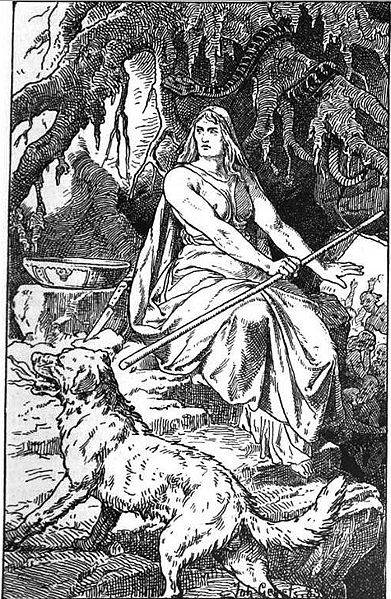
With family roots in South Carolina, I can conjure up images of this happening. Having known many, many Fundamentalists, it seems even more plausible. Given the constant barrage of contrary messages descrying the presence of evil in the world, all the sudden any mutt can become Mephistopheles. Begging off the Baskervilles, the demonic hound has a long pedigree in mythical imagination. It is well known that the Bible cites dogs as unclean animals, but it is their charnel character that leads to the development of the full-blooded hellhound. Prior to the Hebrew Bible, in ancient Ugarit dogs had an infernal connection. It isn’t seen clearly, but the association is there. Snatches of the underworldly dog appear long before Cerberus, and last well nigh into the twenty-first century.

Hel and his hound

Unfortunately for the deceased canine, it is a myth. Hellhounds still abound in popular media, everywhere from The Omen to O Brother, Where Art Thou? Dogs, however, were among humanity’s earliest partners in the survival game. From about as early as I can remember, we always had dogs in the house, and nary a demonic encounter. We never put them on trial, even when house-training was in progress and an accident occurred.

The news story reminded me of an episode of Dragnet I saw as a child. A woman was arrested for murder, and Sergeant Friday, in his unflappable voice, told his partner it was because the victim had shot one of her books. In the final fade out, after Bill Gannon asked what book it had been, Friday holds up a Bible with a bullet-hole through it. I was a little confused. Was the woman guilty or was someone shooting a Bible just cause? The episode did not answer the moral dilemma. I can’t even remember the outcome. But in 2011 things haven’t much changed. If he goes to South Carolina McGruff better watch what he takes a bite out of, or it could be lynching time again.


Beside Metallic Waters


My brother recently pointed out the story of Rev. John Van Sloten, a Canadian pastor who has written a book about how he’s come to see the gospel in the songs of Metallica. Yes, Metallica. Even the members of the 1980’s hard rock band found the association a little surprising. It all came about, it seems, through an open mind. The story is narrated in basic form on the Gibson guitar website. Young parishioners at Van Sloten’s church suggested he should listen to Metallica. Perhaps aware of the principally negative conservative Christian reaction to rock in general and hard rock in particular, the pastor says he ignored the advice. Then the minister was presented with Metallica tickets. A divine mix was in the works.

At the concert the pastor had a revelation: the issues wailed against by the band resonate well with the concerns of Christianity. In fact, some of the band’s concerns sound downright prophetic. The concept of prophecy today often revolves around a prediction of future events (à la Harry Potter). Prophecy in the Hebrew Bible far more often concerns social justice, speaking out against the oppressor. Metal bands, from their inception, were vehicles for protest. Disillusionment against a system that perpetuates unfairness either at a governmental or a cosmic level. When I sat down to listen to the lyrics of Black Sabbath for the first time, I was surprised how biblical many of them were (don’t tell Ozzy).

Many religious folks prejudge heavy metal as “satanic” and evil without even listening to it. I have always been struck by how much these groups frequently draw on bleak biblical images. Today we treat biblical characters as paragons of emulation. The Bible does many of its characters no such disservice. Prophets are to be heard, not emulated. We think of Isaiahs or Jeremiahs as pleasant supper guests who happen to have a divine word inside. In the Bible their actions often lead to recriminations, but their uncomfortable message is sound. I grew up in a tradition that discouraged heavy metal, as if something in the music were inherently evil. I applaud Rev. Van Sloten for approaching one of the formative bands of the genre with an open mind. Truth may be found in some very unlikely places.


New Age Present

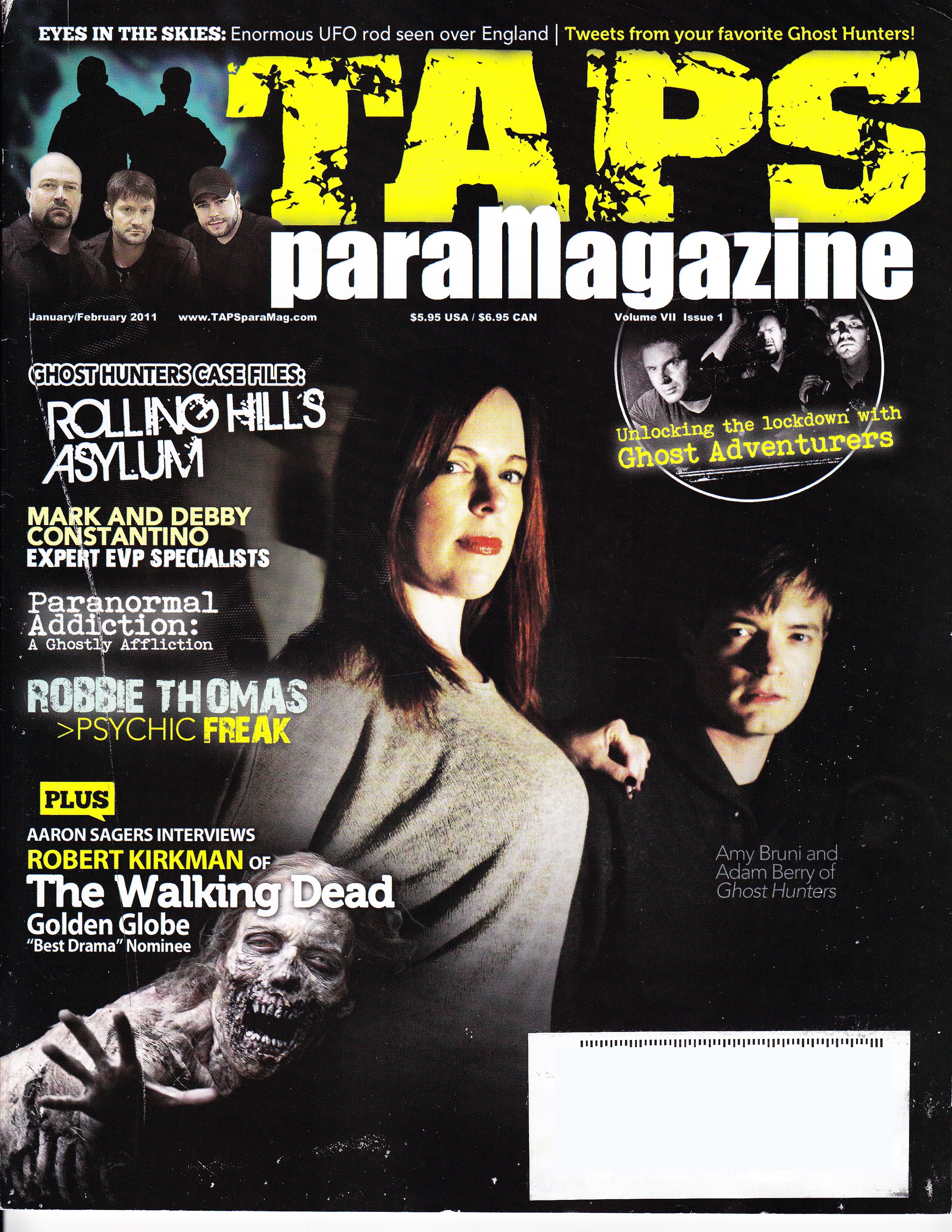
Okay, so I admit I’m curious. As my “six month” subscription to TAPS Paramagazine continues into its second year, itself somewhat paranormal, I get the feeling that I’m witnessing the birth of a new religion. I’ve been in this business long enough to know that new religions are hardly rare, but this one seems an accidental entry into the field. Now ghosts and religion are natural enough as corollaries. Both involve afterlife concerns and the unknown. Having watched TAPS Paramagazine feature fairies, tarot cards, and zombies, however, I wonder if the distinctions are becoming blurred. In this latest issue (January/February) many of the articles make explicit mention of God. God and ghost in the same breath, with the exception of a particularly holy spirit, is an odd combination, given the biblical injunction against mediums.

Spiritualism in the late nineteenth and early twentieth centuries was descried by famous debunkers such as Harry Houdini and accepted by famous intellectuals like Sir Arthur Conan Doyle. It is that liminal area that stays out of the reach of traditional Christianity and Judaism, but strays into the afterlife-prepared psyche. If the dead are out there, they should be able to communicate. Right? And with God’s full approval, so it seems. This latest issue alone suggests that UFOs may be demonic, that clergy may be legitimately interested in ghosts, God may speak through dead children, and that one may become addicted to paranormal investigation. Sounds like a recipe for a New Age mythology. Throwing in light-hearted contributions about the Walking Dead, and suddenly zombies become real as well. Oh, and skunks have a special wisdom.

Traditional Christianity cautions against all of these things (except skunks). When it comes to the supernatural, it claims, there is only one super, supernatural being. The rest are charlatans and wannabes. The Bible certainly does not encourage consorting with ghosts, and yet, in this New Age milieu it is possible to find any remotely spiritual entity touted as proof of reality beyond reality. As Bader, Mencken, and Bader observe in Paranormal America, citizens of this country are inclined to believe. Where does belief lead when there is no pole-star to guide the ship? I sense that we may be steering into uncharted waters. Anyone want to volunteer to be captain? Religions always get to make up their own rules, so feel free to devise your own compass.


Black and White Zombies

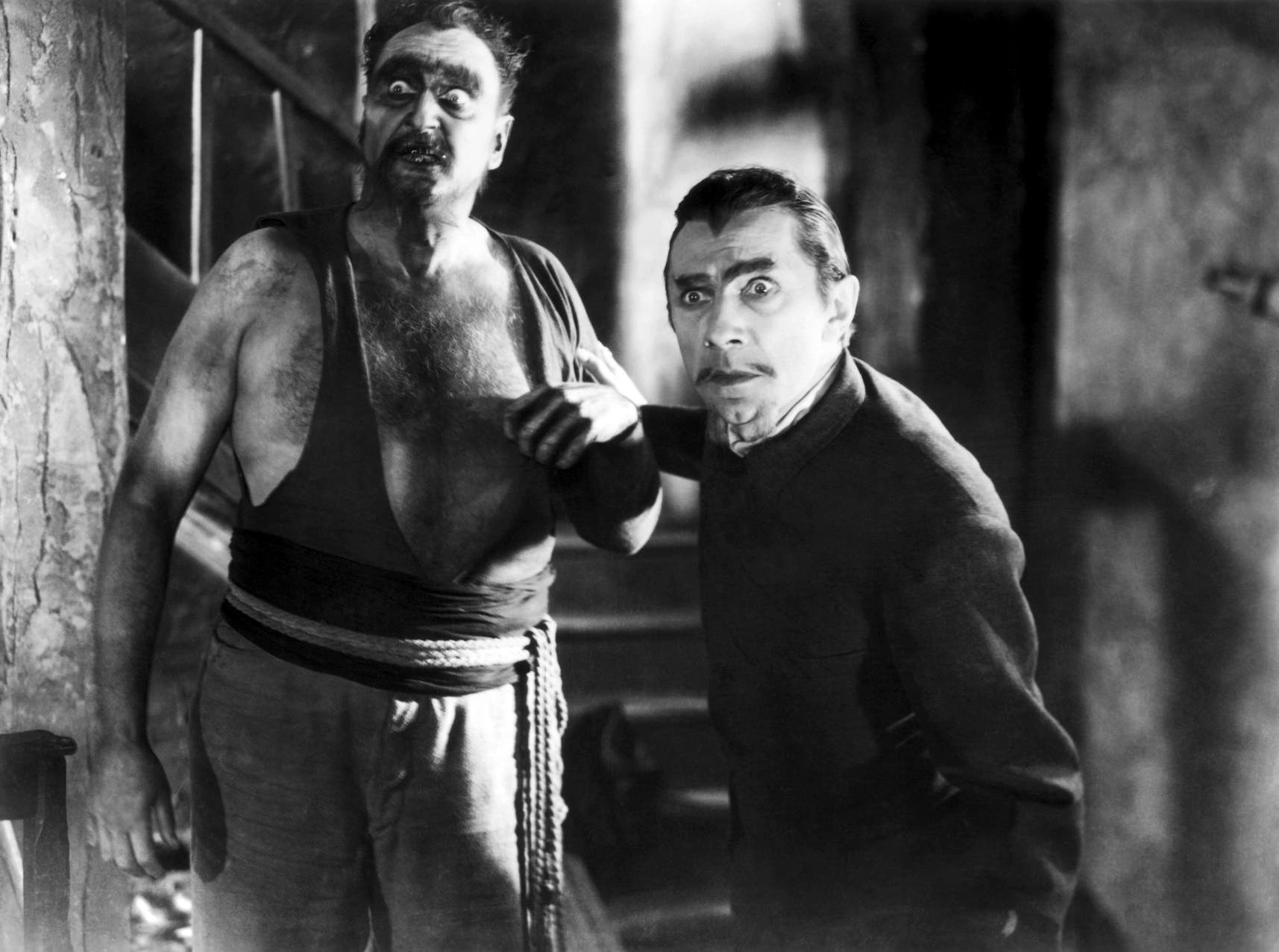
One of the sweetest privileges of a school-year weekend is the Saturday afternoon movie. The advent of relatively cheap, boxed sets of old films has opened the realm of many forgotten classics for me. My wife recently purchased one of those 50-movie boxes of classic horror films for me, and I’ve been making my way through it weekend-by-weekend, and occasionally there is a gem among the tailings. Yesterday I saw White Zombie for the first time. Back in the days when Bela Lugosi claimed a faithful following after his trend-setting interpretation of Dracula, he played a voodoo doctor with the power over zombies in this widely panned movie. In these days of the Walking Dead, it may be hard to appreciate that White Zombie was the first full-length film about our undead friends.

With the exception of the always professional Lugosi, the acting in the film received a well-deserved trouncing. Interestingly, the “van Helsing” of the drama, the doctor who overcame the monster, was a missionary. White Zombie is authentically set in Haiti, and it is never made clear whether the undead are really deceased or simply mindless. But the goofy, pipe-smoking missionary is the one who defeats evil at the end of the day. As noted elsewhere on this blog, monsters frequently emerge from the dark realms of religion, and the zombie especially so. Today, however, the zombie is all the scarier for being secular, unaffected by God or human deterrent. Originally it was a case of voodoo versus Christianity.

In what is perhaps an unintentional irony, the character who comes across the most sympathetically in the film, apart from the fetchingly pouting Madge Bellamy, is Murder Legendre (Lugosi). The missionary wins out by dim-witted happenstance, while the character responsible for the actual death of the zombie master is a partially aware zombie fighting against his fate. It may be assigning far too much credit to assert that the film had intentional social commentary, but White Zombie has had an often unrecognized impact on what has today become the symbol of corporate America: the once humble zombie.

A typical zombie