Remembering Downtown

Monroeville Mall.  Even those who’ve never been to Pittsburgh may recognize it as the site of George Romero’s Dawn of the Dead.  I have to confess that, although living in Pittsburgh for a little while I never got there myself.  It has nevertheless been a pilgrimage site for fans of the movie, but, according to the New York Times, the mall has been purchased by Walmart.  Their plans?  Tear it down.  No empathy.  No sense of decorum.  Just cheap prices and sub-par goods.  I recently had to go to a Walmart.  It had literally been perhaps a decade since I entered one.  I dislike their business practices and they have ruined many a small town downtown area as well as many a mall.  In fact, the one I’d be in prior to this recent trip was the store located in Seneca, Pennsylvania.

Across from that giant Walmart stands the husk of the once trendy Cranberry Mall.  Not far away is the struggling downtown of Oil City.  My aging mother lived in Seneca—had once worked in the mall—but getting down the hill into Oil City was more difficult than nipping over to the super Walmart for groceries or other necessities.  Prices were cheap and she wasn’t flush with cash.    The same applied to many of her neighbors.  Walmart exploits such situations, becoming the only show in town.  Mom and pop stores can’t compete with their prices.  Malls, although many affluent specimens still exist, have struggled in working-class areas.  They served for more than shopping, however.  They were meeting places.  They too contributed to the troubles downtown.

Monroeville Mall never went upscale enough to survive.  Ironically, it was the message that shopping had become a source of meaning that was critiqued by Romero’s movie.  It’s that same corporate greed for more and more market share that will be the eventual death-knell of capitalism.  Any system founded on greed is the same thing as “might makes right.”  We’re seeing that in the politics of our own day.  The paradox of this ouroboros will become clear eventually, if our species survives long enough to observe.  We become attached to places.  While not all movie props can be preserved, we’re compelled toward pilgrimage, and Pittsburgh is the home of the modern zombie.  A message that may not always come through in Dawn of the Dead is that all of us are being made into zombies.  Not by some satellite picking up something in space and then returning to earth, but by good old capitalism.


Horror for Folk

I’ve been following a few auteurs these days, and I discovered  Damian McCarthy somewhat accidentally.  Wanting to watch a movie and relying on the two streaming services I can choose from, I watched and enjoyed Oddity.  A bit of Celtic folk horror, its story is disturbing rather than the kind of thing that destroys you psychologically.  A friend then told me that he’d directed only one other movie, Caveat, which I also watched.  Hokum is the third and most recent of the folk horror trilogy and is a movie I’m glad to have seen.  It follows an acerbic American writer, Ohm Bauman, who goes to Ireland to scatter his parents’ ashes at a place they enjoyed.  He arrives at Halloween and finds the hotel owner frightening two young boys with stories of the Cailleach, a witch associated with the coming of winter.

Bauman treats everyone poorly except Fiona, the one woman on the staff.  He hangs himself after disposing of the ashes but is rescued by Fiona and the single bellhop.  After he’s released from the hospital, Bauman finds the hotel closing for the season and Fiona missing.  He suspects she’s in the forbidden honeymoon suite and Mal, the front desk clerk, reluctantly allows him to explore it.  Bauman finds Fiona’s body and learns that Mal murdered her because he got her pregnant.  I’m leaving out a lot, but the movie’s worth watching.  The witch, in the film’s scariest scene, circles Bauman as he hides in the curtained four-poster bed while trapped in the honeymoon suite.  Mal realizes that his only option is to kill Bauman and the two end up in the hotel basement where Mal is caught by the witch.  Bauman, we learn, was playing with a gun as a boy and accidentally shot and killed his mother, thus his guilt and depression.

A little research after watching Hokum revealed some of the subtlety of the film.  The Cailleach, who drags away the murderous Mal, is associated with winter.  In Celtic timekeeping, Halloween is the onset of winter and the murder that leads to Mal’s demise took place on Halloween.  It’s even shown with a carved turnip jack-o-lantern.  Holiday horror, anyone?  Another aspect that comes out is that the witch’s minions strip off body parts as the unwary are dragged away.  The owner frightens the boys at the start by implying the witch will take their private parts.  Mal is guilty of murdering Fiona because he impregnated her.  Subtle, but effective.  There’s more to the film than I can summarize in the brief space here, but it is another example of sophisticated folk horror from Damian McCarthy.  He is an auteur worth following.


Fictional Dreams

It’s difficult to be discreet when you feel like shouting.  My first novel has been accepted for publication.  Since my fiction is published under a pseudonym I can’t tell you the title, but I’m very excited.  Chuffed, even.  It’s no secret that I’ve been publishing short fiction for years.  Even this novel was initially finished when I was in my forties.  Publishing is a slow business.  Although I could interest no agents (not for lack of trying), a couple said it was good.  Another publisher had decided, after accepting it, to pass on it anyway.  Mostly I’ve tried small, independent publishers.  Editors, however, are people with personal tastes and aligning your vision with theirs is half the trick.  If not three-quarters.

I’ve avoided self-publishing not because of the stigma—traditional publishing is devilishly hard to break into—but because of the effort involved.  Yes, you can price your books in the affordable range, but you have to arrange for printing and design.  Distribution can be a nightmare.  Also, it’s difficult to do with a nom de guerre.  Pen names are about as early as fiction writing itself, and unless you’re a major name, the title’s more likely to sell your book than your name is.  As more than one editor has told me, “It’s the writing that counts.”  Using a pseudonym comes naturally enough when you have a professional standing in a “serious” business.  Somehow we tend to think fiction writers can’t be serious people.  If they are they may have trouble finding a publisher.

Recently I’ve spoken to a couple of people who’d like to get published as a way of making money.  I try not to discourage such folk, but it’s important to keep in mind that making significant money from publishing is very rare.  You need to keep your day job.  I certainly wouldn’t complain if most royalties checks were actually over thirty dollars (which is very seldom, and since royalties come maybe once or twice a year, don’t base your mortgage on your wordsmithing).  Those of us who persist in writing tend to do so because we have no choice.  I can’t not write.  The forthcoming novel is, I think, fairly well written.  Some of the stories I had published, in retrospect, weren’t.  (Others very much were.)  At the time they seemed pretty good.  Although written over a decade ago, this novel seems to have held up over time.  At least I hope it has.  When it comes out it’ll be mixed in here amid the other books I discuss, I expect.  If I don’t end up shouting too loud, and spilling the beans, first.


Survival Writing

Word of mouth tends to be remote these days.  I suspect local readers of this blog are quite few.  I work remotely and, like many Americans, have trouble getting to know people in the town where I live.  Still, I use this blog instead of my mouth.  Elizabeth Rosen used to write for Nickelodeon, which I find highly impressive.  As someone who has found venues to publish my fiction as common as oases in the Sahara, anyone who’s made a few bucks off their work makes me want to stand up and salute as if a general just walked into the room.  I just read Rosen’s chapbook Survival Skills and thought I’d talk about it.  (As an aside, I always thought “chapbook” referred to chapters, which confused me because most books have chapters.  The term probably derives from “chapman,” a kind of traveling salesperson who used to include these kinds of small books among the wares they sold.)

The seven stories in Survival Skills are short—Rosen tends toward flash fiction.  I’m impressed with how effective she is at it.  I’ve tried to write flash fiction and have found I need more narrative space that it allows.  Chapbooks are easily read in an hour or so, if you’re the kind to rush through things, but these tales left me thoughtful.  You get a sense from these brief accounts that people often do nasty things to one another, or to animals, and that sometimes we really should stop and think about what we’re doing.  At other times we have to realize that we’re animals too.  We forget that at our own peril.

As much as I like reading short stories, books of such are always difficult to summarize.  Going through Survival Skills, the stories do seem organically connected.  This is something that has prevented me from trying too hard to publish collections of my stories.  Like my mind, they’re all over the place.  I’ve attempted, from time to time, to approach my short story writing thematically but it has only resulted in a few tales of each subject.  I’d never considered a chapbook approach.  Even Edgar Allan Poe made his mark in the literary world with short stories.  Washington Irving published his Sketch Book in fascicles.  Publishing exists in many forms for those with stories to tell.  I’m glad to have found Rosen’s little book.  It has spurred me on to reading more short stories, which I should be doing as a matter of course.


Shy Incubus

Shelby Oaks is one of those horror films that benefits from more explanation than the camera gives.  Or maybe I just missed some things.  Yet another religion and horror movie that utilizes demons, which are legion these days—paging Nightmares with the Bible—it goes like this: Riley, along with three friends, is a YouTuber.  (I sincerely think my life would’ve been different if that were a career option when I was in high school.)  They run a channel under the name Paranormal Paranoids.  While investigating the Ohio ghost town of Shelby Oaks, they disappear.  Many think it’s a publicity stunt, but the three friends are found murdered and Riley is still missing.  Her sister Mia can’t rest not knowing the fate of her sister.  She’s interviewed by other YouTubers, but after a man (Wilson Miles)  shoots himself in the head at her front door, she becomes an investigator herself.  Her husband is less enthused by the idea.  There will be spoilers below.

Throughout, it becomes clear that Mia and Riley were close and that Riley, and once Mia, saw a demon looking through her second-floor bedroom window at night when she was a child.  The demon, Tarion, it turns out, is an incubus.  The man who killed himself was Riley’s kidnapper/rapist.  It turns out that Tarion, unlike the usual incubus, doesn’t perform the sex himself.  Mia finds Riley alive, but her child is dedicated to Tarion—a step removed from Rosemary, whom the Devil himself raped—and Riley tries to kill the boy.  Mia accidentally knocks Riley through a window where hellhounds consume her.  Tarion had planned, since childhood, that Mia would watch his progeny that Riley would bear.

There are some creepy things here.  The use of Wilson Miles’ initials to form the sigil for Tarion brings Blair Witch elements to she story.  The use of the sisters’ initials to show their connection was a nice touch.  And the found footage aspects are done pretty well—the camera doesn’t move excessively, making viewers ill.  Overall, however, the movie has trouble hanging together.  This is a demon without a Bible, a shy incubus who sends others to do his work.  Ideas aren’t fully developed, leading viewers to wonder a number of things—why didn’t Mia wash the blood off herself until after watching the video Wilson had in his hands?  Why did Wilson kill himself in the first place?  This isn’t a bad horror film, but the religion in it could be further developed.  The two naturally go together.


Re-Telling Poe

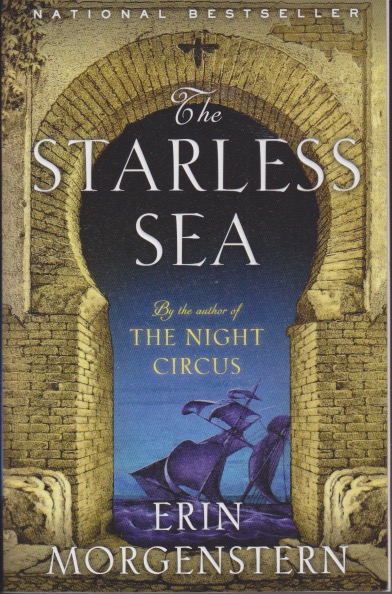
Retelling stories is a very old tradition.  Fiction writers often do it.  Some even argue there are no new stories (I tend to disagree with that).  In any case, T. Kingfisher decided to try retelling my favorite short story, Edgar Allan Poe’s, “The Fall of the House of Usher.”  What Moves the Dead has Roderick and Madeline Usher and their creepy house but the story revolves around the narrator, Easton.  (There’s a helpful author’s note at the end that discusses this.)  As Kingfisher notes, the narrative warps around fully-formed new characters and the question is whether that works or not.  Anyone who’s spent much time on this blog will know that I’m a diehard Poe fan.  It takes a lot to convince me that anyone has done him justice.  What Moves the Dead is a quick read, but perhaps unsurprisingly I had trouble accepting Easton as the interloper to the story.  

One of the most compelling aspects of Poe’s tale is the point of view of his unnamed narrator.  He expresses his horror at what happens but manages to keep himself out of the spotlight.  Easton intrudes a bit too much in the narrative.  And other characters also tend to overshadow the Ushers.  The main thing that is missing, however, is Poe’s unity of effect.  There is a dread running throughout Poe’s “Usher,” and analysts have suggested that every detail of the story is relevant.  There’s a reason it’s my favorite short story—it is just so good!  So good that the few times I’ve ridden on a horse in my life, the first thought that always comes to mind is the opening of Poe’s story.

If you’re looking for a quick horror book to read, which has a bit of humor to it, What Moves the Dead isn’t bad.  Kingfisher is a talented writer and her characters are creative.  It’s just that they muddy the waters, as it were, of Poe’s masterpiece.  Ironically, I think the story would’ve been much more compelling without the Poe tie-in.  The idea of infecting mushrooms (she also discusses this in the author’s note) can be a really compelling tactic.  In fact, it is used quite a lot in horror these days (and I completely understand Kingfisher picking up another book that does what you’re trying to do when you’re in the middle of a project—that has happened to me more than once).  For me, Poe’s story is pretty much perfect and it’s difficult to improve on perfection.


Life’s Work

It’s official.  I’ve now worked as an editor longer than I was a professor.  The latter was my chosen vocation, the former my fall-back.  I feel like I’ve tipped over a precipice.  As I’ve written before, I still think like a professor and would welcome back life in the classroom.  This came home to me in a major why when I realized that in my current position, in less than a month’s time, there will be only five people remaining in my starting department who were at my employer before I was.  At least twenty editors who were there when I started have left, most of them younger than me.  This was a world-rattling revelation.  You can’t choose your destiny.  You can do everything possible to make your plans happen, but change is constant and you have to make do.  None of this changes my mind, however.  A life has a calling, fulfilled or not.

I’m very grateful for all that I’ve learned about publishing, even if there’s still so much to learn.  As a young person I knew that writing would be part of my life.  I didn’t know what form it would take, and I guess I still don’t.  I’ve been getting positive signals from a publisher about a novel I completed thirteen years ago.  I’m doing my last set of edits on a very different novel that I finished initially last year.  I’ve made good progress on my seventh nonfiction book.  And there are many shorter projects in hand as well.

I was reading a book the other day where I was cited.  This got me to thinking about the concept of “life’s work.”  For some of us that’s measured in words.  I have no idea how many academic books cite me.  There’s software to measure such things, but it doesn’t capture every publication and I’m not that deluded that I’d spend much time checking on it.  Still, I do wonder if my life’s work (which is generally measured in written form) has made any difference at all.  I post thoughts here daily and they cover disparate topics.  (I had a record five “likes” recently for a post on the Bible.  Sometimes posts on monsters near that record.  Just sayin’.)  Academics tend not to cite blogs.  This one is, believe it or not, research-based.  That’s why I’m working on a bibliography.  When I’m dead and gone, and the auto-renew on this blog runs out, a good chunk of my life’s work will be archived away somewhere until electronic media cease to exist.  But one thing seems certain, most of the mentions I will have in print will be in the form of acknowledgements from having been an editor.


Smile for a Second

I’d read that Smile 2 was better than the first Smile.  But there was a gap of about a year between seeing the sequel and I might’ve forgotten some details about how this was supposed to work.  The “smile” entity possesses someone when they see the previously possessed person die by suicide.  Okay, we’re back where we started.  The movie makes a fairly heavy use of hallucinations, so it’s difficult to know how far to “rewind” to get back to what “really” happened.  So let’s start at the beginning.  Skye Riley is a pop artist who’s trying to stage a comeback tour after a bad stint with drug abuse that led to the death of her boyfriend in a car crash.  Since Skye was in the car, she sustained several injuries but she’s healed up and ready to perform again.

The problem is that she’s still in pain.  A high school friend, who unfortunately is possessed by the smile entity, deals in drugs so she tries to get some Vicodin from him.  She witnesses his death by suicide and becomes infected.  From that point on the hallucinations start.  We learn that the possessing entity drives the victim, or host, insane within a week.  Skye meets a nurse who offers to help her by stopping her heart, thus killing the entity, and then reviving her at the last moment.  She naturally thinks him insane.  Meanwhile the hallucinations continue and the viewer doesn’t know what is “real” and what is not.  After reconciling with her best friend, and killing her mother, Skye decides she has to take the nurse’s offer.  She’s tricked by hallucinations into not having the procedure done and (somewhat predictably) dies by suicide in front of a huge audience, thereby infecting them all.

The film was praised for its acting, and no doubt, it is good.  The premise is scary enough, but somehow it just didn’t convince me.  Perhaps it was a little too slick.  A little too self aware of the previous film.  The explanation for the entity is that it’s some kind of demon or spirit, but when the movie ends up showing its “true form” it doesn’t seem as scary as all that.  Maybe because it’s smiling.  I’m glad that the critics found it good.  Horror does deserve more positive press than it tends to get.  The creepy smile is effective, but the movie itself, while introducing religion, in the form of a demon, felt like more of the same.


Rumblings

Despite the many books on Tambora, it surprisingly gets little press.  Of the volumes on the volcano I’ve read, Gillen D’Arcy Wood’s Tambora has been the best.  He, like many others, makes a case for the world-changing impact of that eruption that led to “the year without a summer” in 1816.  Knock-on effects remain with us to this day.  Wood also throws in a good bit of concern about our current climate crisis.  As he points out, the volcanic aerosols of Tambora remained in the stratosphere for three years (leading to three chilly summers), but our current carbon emissions, on-going, have no end in sight.  We all already know that weather has become more extreme.  As I write this, family members in Europe are experiencing 100-degree temperatures that used to be unheard of on that continent.  We’ve seen hurricanes increase in intensity, and have had our own erratic weather for a few years now.  The atmosphere’s too large for us to predict just who might receive the God-like wrath of the weather.

Wood uses Mary Shelley’s Frankenstein both as an illustration of the year without a summer and as the atmospheric monster we’ve created.  He also narrates other historical events brought on by the temporary change in climate in the eighteen-teens.  One of them was the breaking up of Arctic ice that led to the ill-fated Franklin expedition many years later.  (I was unintentionally also reading Dan Simmon’s The Terror even as I read Wood’s chapter about the expedition.)  More than that, this book describes the typhoid outbreak and pandemic that followed on from erratic weather in South Asia.  And deadly changes in parts of China.  The disaster of the breaking of the Giétro glacial ice dam, and an earlier famine in Ireland fueled by British hostility toward the Irish, as well as Tambora’s weather.

The developments that grew out of the human response to the changed climate caused by Tambora led to many institutions still with us.  Governments, slowly, of course, realized that disaster preparedness and care for the working class were necessary for any nation to remain strong.  The privileged lose said privilege when there’s nobody else left to compare it with.  (Capitalism has blood all over its hands.)  Overall, this is a provocative book making the case that the world we recognize today evolved this way largely in response to an environmental crisis that occurred before steam engines had been invented, when sails drove shipping and horses drew vehicles.  When a single volcano changed everything.  And although we should learn from such things, being what we are, we tend to overlook that largest volcanic eruption in recorded human history.


Whose Bible?

“What the Bible really says.”  That’s a phrase you find in many places.  In academic books and on the lips of “true believers.”  Nevertheless, it’s a problematic formulation, no matter who uses it.  Biblical scholars often like to “correct” public assumptions about the Bible, but since the association of most people with the Bible is emotional, chances of changing any opinions remain slim.  There seem to be two troublesome words in the phrase: “Bible” and “really.”  Let’s take them in turn.  The Bible doesn’t exist.  Well, it does, but it’s an intellectual formulation, not a book.  This can be asserted with a great deal of certainty.  Why?  Because the boundaries of the Bible are porous and nobody, but nobody, has the authority to close them.  Just a quick example: the books of the Apocrypha—Bible or not?  Most Protestants fall on the “not” side of that question, although the King James Bible included some of the Apocrypha.

The question gets more vexed when we start asking about books like Jubilees and 1 Enoch.  There are ancient Christian churches that include them.  Since they are African, however, Europeans/North Americans have privileged the western canon, and have excluded them.  They are, however, part of “the Bible” for millions of people.  The book of Jude quotes Enoch as Scripture, just saying.  Things get even dicier when you include scholarly opinion.  Many biblical scholars believe The Gospel of Thomas has just as much credibility as (if not more than) the canonical four.  Since biblical scholars can’t add or remove books, however, it’s a moot point, although they are the best informed. 

“Really” is really problematic.  Who has the authority to determine what the Bible “really” says?  Doesn’t this actually mean, “the correct interpretation”?  Who is qualified to make such a statement?  A preacher?  Did God tell them personally?  Did they think to record it?  Or should it be the experts—biblical scholars who spend their lives and careers learning everything possible about the Good Book?  Again, no person, or body of people, has the right and authority to make that decision.  What does the Bible really mean?  I wouldn’t leave that up to any of the many, many clergy I know.  It requires a bit more training than they have.  And I’m still really bothered by the “really” part.  It’s always going to be a matter of interpretation.  Yes, I know hermeneutics always spoil a good time.  Until, however, we can all agree on what “the Bible” is, nobody can say what it “really” says.


Long Winter

I have to confess that I often feel uncharitable towards very long books.  Mainly, I think, that is because one of my main blogging topics is books and when it takes a long time to read one I have to come up with other things to write about.  Still Dan Simmons’ The Terror had been strongly recommended.  I found it in an indy bookshop on independent bookstore day and began reading it sometime back in May.  It started out strong, but about three-hundred pages in began to feel a bit tedious and self-indulgent.  (I’ve done that myself with my fiction, so this criticism is also aimed at the one writing this reflection.)  In case you haven’t read it, the Terror of the title is HMS Terror, the ship captained by Francis Crozier under the command of Sir John Franklin, captain of HMS Erebus.  Both ships, seeking the northwest passage, froze in the Arctic ice in 1846 and their combined crews of 129 died without ever being found.

That’s a strong basis for a horror novel.  Your mind can’t help but wonder what it’d be like to be stuck in the dark, sunless winter, temperatures well below what most of us could survive, and realizing that you were never going to get out.  Simmons traces the story arcs of several of the crew that historically populated the ships.  Since there were no survivors, just about anything is fair game.  Including creating a monster to attack them.  Even as I began to warm to the book in the last hundred or so pages, it seems that some of this could’ve been trimmed and the same sprawling majesty been preserved.  Maybe I’m just jealous because none of my novels have been published and I keep being told you have to keep things short to get any traction.

In any case, by the end of the book I was really drawn in.  This was after the villain got his own, and Crozier starts to recognize the indigenous Arctic people for their truly remarkable survival skills.  (Not vegan friendly, of course, since vegetation doesn’t thrive in ice-bound conditions.)  It comes to a remarkable conclusion and I gradually found myself letting go of my petulance for having to invest so much time in one book.  I’m a slow reader with a very large pile of books yet to read.  In any case, Simmons won me back.  I quite enjoyed his Night of Summer and A Winter Haunting many years ago.  If you’re not afraid of big books, and you’d like to read about what can go wrong with a group of men trapped in the Arctic, then The Terror may be for you.


Spliced

Predictably, I watched Splice again after reading the novelization by Claire Donner.  It is, as I indicated in my post on the book, a sad story.  During this rewatch, a few things stood out.  First and foremost, how many times you must rewatch a film to pull off writing the novel.  Either that, or hit the pause button constantly.  When I was writing Holy Horror I did both of those things quite a lot.  A detail you want to catch, and you have to see what’s on the screen.  I’d pause a scene and put my face right next to the screen, seeing individual pixels.  You have to know your stuff.  Another factor is that actors really do have influence on your understanding of character motivation.  An ambiguous look for the camera comes away pregnant with meaning in the novelization.

The emotional life of the characters is really filled in, in print.  The movie felt like it was going too fast.  That’s a finger on the pulse of reading a book versus watching a movie.  For a writer a movie deal can be a real boon but often you read about how they dislike the results.  That’s really no surprise.  A book takes time to read and you reflect as you go.  Movies hit you with constantly shifting images.  Both can be powerful media, but in different ways.  Another thing I noticed (I hadn’t seen the movie for thirteen years before reading the book) is that the mental image I’d formed of the characters was quite different from what the actors looked like.  

In the introduction to the novelization, screenwriter and director Vincenzo Natali notes that he likes how Donner explores Dren’s inner life.  Dren, in case you’ve not read or watched, is the hybrid.  Indeed, that is an element largely missing from the movie.  Some critics suggested that it should’ve explored that more.  For many of us, emotion is a major motivating factor of life.  We are frequently driven by our feelings, and, despite what AI says, they are integral in our thought process.  What was going through the mind of a creature, part human, with no parents?  I know that having grown up not really knowing my father left deep impressions, voids, in my life.  The novelization explores these kinds of things for all the main principals.  In my opinion, reading the book enhances watching the movie.  Of course, I’ve always been on the book side of the equation to begin with.  


Novelization

I watched the sci-fi horror film Splice a few years ago.  Long enough that I don’t recall many details.  When Claire Donner, a friend of mine from Miskatonic Institute of Horror Studies, told me she’d written a novelization of Splice, I knew I had to read it.  If you’ve seen the movie then you know the story.  If you haven’t, you can read it in her book.  I don’t often read novelizations—I read the one for Tim Burton’s Sleepy Hollow, and as a young person read the original three Star Wars novelizations.  Such books really only apply to movies not already based on a novel, of course.  They give the reader a path into the inner lives of the characters.  Naturally, now I have to watch Splice again to see it through Donner’s lens.  The basic idea, if you want some encouragement, is that a couple of scientists add some human DNA into a gene-spliced animal being lab grown for enzymes to fight disease.

In the rawest sense, this is the story of Frankenstein for a more technological crowd.  Like Frankenstein, it is a sad story.  And like said sad story, it involves reproduction without two human parents.  The real builder this time, however, is Elsa and Donner gives considerable development to her motivations and thought process.  (I’m very curious to know if I can see that in the movie or not.)  Clive, her partner, isn’t aware of the source of the human DNA.  The spliced creature grows into the passably human Dren, who finds herself asking the questions Frankenstein’s creature asked about his own existence.  Like said creature, Dren has to be hidden away, and controlled.  At the same time, she is evolutionarily superior to her maker.  There’s a lot to see here, folks!

Having written a fair bit of fiction in my time, I do wonder what it might be like to do a novelization.  I suspect most of us, if a movie is well made, decide on the motivations of characters but how often do we delve into their inner lives?  I’m not sure that I do that most of the time.  When I write fiction I do it all the time.  I want to know my characters and why they are the way they are.  Sometimes they remain mysteries to me, but that doesn’t prevent me from trying.  This novelization is deftly done, and approved by the screenwriter/director.  And the deep motivations make the scenario plausible.  If you haven’t seen Splice you might enjoy doing so.  And then read the novel.  Or the other way around.


Freedom

This year has been marked by small clusters of holidays.  I wrote about Friday the 13th, St. Valentine’s Day, and President’s Day occurring the same weekend back in February.  Then in March, I noted we had a second Friday the 13th, the weekend before St. Patrick’s Day.  Here in June we find another cluster as today is Juneteenth—an important holiday finally recognized—and Sunday is both the summer solstice and Father’s Day.  Now, Father’s Day is always a conflicted day for me.  My father was largely absentee, and an alcoholic when present and accounted for.  For many of my childhood years we didn’t know where he was.  I always have difficulty feeling mad at him, though, because his self-sabotage wasn’t malicious in any way.  He was a man overwhelmed by what life threw at him.  Besides, mothers, it seems to me, give a lot more of themselves than fathers do.  But today’s Juneteenth.

Photo by Zulmaury Saavedra on Unsplash

Those with skin darker than pink folk have a more difficult time in the society we’ve built.  With open racism in the White House the struggle has been set back many years.  One thing I sometimes feel personally, having grown up poor, is that disadvantage of any kind is difficult to overcome.  Who, after all, seeks to make friends with someone who’s poor?  What’s the advantage in that?  Sometimes capitalism seems to be the ultimate evil where even people are commodities to be sold.  Human Resources, we call it.  Human capital.  Human assets.  Meanwhile our economic system has birthed us all a new trillionaire just a few days ago.  Juneteenth is an important reminder.  Human beings are not chattels to be bought and sold.  How people who’d ever read the gospels could allow that, I simply can’t fathom.

These holiday clusters occur now and again, like the alignment of the planets along the ecliptic.  They give us time to pause and ponder.  Are we really going the right direction?  Are we lost and unwilling to admit it?  Deep down, all but sociopaths know that all people deserve fair treatment.  Some people are unable to take care of themselves.  Juneteenth reminds us that simply seeing them as some “other,” some “not me,” and steeling ourselves against their needs is a high moral infraction.  It’s close kin to murder.  We are the ones who built this system.  We have the power to change it.  Juneteenth reminds us that anyone who openly, or even discreetly, believes that one race is better than another has no business telling others what to do.  The longest day is coming, if only we’d use it to consider what we’re doing.


Forever Young

It’s strange.  People my age (and younger) are retiring.  It’s strange because in my head I’m still a teenager.  The mirror lies to me when I glance at it.  I’m not a guy old enough to have colleagues I’ve known for thirty years retiring.  Not me.  This hit me kind of suddenly at work.  One of the things an editor has to do is arrange for peer reviews.  One of my usual sources for reviewers has been showing names I don’t recognize, as of late.  Look, I was never some super-professor, but I knew quite a few of those who worked in biblical studies.  The same names would come around year after year at conferences.  They would age, but I would not.  I was still the same guy, teaching at Nashotah House, publishing articles, chatting with friends.  Where have they gone?

I recently saw a survey to which some colleagues I know and trust had responded.  They listed themselves as “late career.”  How is that possible?  I still work 9-2-5 and likely will until I die.  Who are these young people taking their places at the table?  Our minds, it seems, are as Bob Dylan termed it, forever young.  We remember, however imperfectly, our younger selves as we discover our lives entangled in work and other complications, and our bodies aging.  Me, I’m still trying to get through each day, just like I was in college.  Just like I was in high school.  Awaiting some ill defined destination where I might be able to relax for a while.  Like I could when I was young.  Before capitalism got its hooks in me.  Before AI.

Consciousness is a strange thing.  Our thought processes are formed by early experiences in our lives and we spend most of the rest of our time on earth reacting to them.  Our brains evolved to help us survive.  We do this communally (which is why Trumpism, tearing communities apart, is so dangerous).  I couldn’t survive with my desk job if many people—most of them younger than me these days—didn’t contribute to this experiment we call society.  I sometimes see people born the same year that I was and think, “they’re old.”  Why doesn’t that apply to me?  It’s not that I want to feel old, but rather that I’m still looking for the things I was seeking as a young person.  Financial security, books, love and acceptance.  And trying to avoid tedious tasks—there do seem to be more and more of those as you age.  I’ll have to ask some people who are old if that’s true.