Being Equal Again

Things creep up on you.  Like the equinox.  It really should be a holiday, but then again today’s already Saturday.  And from today, for the next six months, there will be more light than darkness.  It was an occasion ancient cultures marked and celebrated.  For us, unless it happens to fall near Easter (it’s still a couple weeks away this year), it’s an item in the news feed and nothing more.  It is, however, an opportunity to celebrate our place in nature.  The temperatures are beginning to warm just a bit around here, despite the flecks of snow in the air just three days ago.  The more tenacious of the spring perennials have already begun to shine green.  Things have begun to come back to life.  That’s why Easter is always in the spring.

Today it will be light as much as it is dark.  Balance.  Our old wobbly earth strikes this metaphorical fulcrum twice a year, giving us a glimpse of what lies ahead.  Birds, those great prognosticators, have been showing up to let us know things are about to change.  Finches, robins, starlings, and mourning doves have been conspicuous the last few days.  Even as the dirty, icy snow piles continue to hold on in their private mountains, they too seem to know time has come to be moving on.  Change is the way of nature.  This just happens to be the half of the year when we can see what we’re doing.  At this great balancing point of the year we should take the opportunity to ask if we like where we’re heading.  Do we welcome the light?

Soon enough we’ll begin to take it for granted.  Life will continue its busy ways even as we tell ourselves summer is the time for vacations.  Perhaps so.  But let’s linger in this moment.  Take a few minutes to ponder what it means to be in balance.  Equality.  It feels like something worth celebrating.  Corporate American parsimoniously counts days that might be considered grudging respites from trying to cop a profit.  Although we’re given Christmas off it can’t abide that moving target called Easter, which always comes on a Sunday anyway.  Here in that calendrical holiday barren zone between Presidents’ and Memorial days, we’ll always find spring, if we look for it.  It’s evident in the changing of the light, even if there’s still a chill in the air.  Even as our bosses ignore it, the red buds begin to appear on the trees.


The Spiritual Life

Genuine spiritual experiences don’t sit well with a nine-to-five job.  When something truly profound happens to a person s/he requires time to think about it.  Ponder the experience.  If such a thing occurs on a Sunday (imagine that!), the next morning, still reeling, you need to go to work.  Perform duties that no longer seem significant.  And continue to do so for four more days, until the fire has gone out.  This paradox has plagued me for some time.  Perhaps it’s the fate die cast for an editor who can’t just read submissions for their financial payoff.  Who asks, “What if she’s right?”  Doesn’t that affect everything?  Especially in the case of a religion editor.

Blown away.

I first noticed this in college.  Even there the schedule was quite flexible, according to classes you had to take.  The professors were sincere in their presentation of ideas you should take seriously, but then in the work world your boss indicates that you’re not being paid to do that.  You’re being paid to produce.  Contribute to the machine.  Cogs and sprockets don’t think.  They do.  Then a significant weekend would come (or a holiday, say) where the message would really speak to me.  Change my outlook.  Until Monday morning.  The outlook would still be changed, of course, but the demands on routine would not also be changed.  It’s quite a dilemma.  As the great contemplatives throughout history have known, these ideas must be wrestled with.  Conversed with.  Tried on for size.  Walked with.  Such things can’t be done in the context of what you’re paid to do.  “Do it on your own time.”

What is your own time?  The weekend, essentially.  Work expands to fill the quiet times of weekdays.  Your time is owed to somebody who pays you less than the national average to do something any nonspiritual person could do.  Such is the danger of being open to new ways of looking at things.  Vacations need to be planned.  They are rejuvenating, but spiritual experiences can’t be planned.  They just happen.  HR has no algorithm for them.  Not exactly sick days or floating holidays.  And what if you need more than one day?  That meeting that was scheduled for Tuesday, what about that?  As if such things were really important.  Perhaps you too had the professor late for class because s/he was struggling with an idea, an experience that fit her or his specialization.  There were always office hours to recover.  That’s all fine and good, but it’s time for work.


Getting into SHAPE

The British Academy, in cooperation with a publisher or two, has taken the initiative to promote SHAPE. Social Sciences, Humanities, and the Arts for People and the Economy (SHAPE) may never match the steam of STEM, but the idea is an important one.  Science, Technology, Engineering, and Mathematics have driven society (and the job market) for many years now.  It’s sometimes easy to forget that we’re human beings and we act irrationally from time to time.  (Consider the last four years in these Untied States.)  Higher education was founded on the premises that the Humanities wouldn’t get studied on their own.  Business keeps us too busy.  Either that, or the egos of rulers lead us into war after war.  What gets left behind is the study of what makes us who we are.  The liberal arts college, learning for learning’s sake, has fallen on hard times.  What’s the profit in it?

SHAPE suggests a society suffers if it doesn’t promote social sciences—the so-call “soft sciences” that state humanity the proper study of humans—the humanities, and the arts.  The acronym itself contains a lesson “for people and the economy.”  The dismal science does, in some sense drive the initiative since we live in a world where tech does most of the work we used to.  We’re left with the non-paying business of being human.  Caring for an aging population where people live longer but aren’t given jobs that pay well enough to retire.  Looking in the mirror to see that the economy’s fruits go unfairly to those who already have too much.  The rest of us, are left to survive as, well, humans do.  Why not celebrate—and better yet, value—what people do?  Or humans for humans’ sake?

I’ve long felt that the priorities of capitalism are badly skewed.  The value of gold is artificial, one assigned by human beings and their love of shiny metals.  Our entire society is set up to, as we’re told, pursue wealth.  There is far more to life.  We humans, we love to create.  We love to socialize.  We love to help one another out.  These aren’t paid activities.  They don’t have to be commodified.  The one who goes home with the most stuff isn’t always the winner, especially when the majority of humans are left without enough.  It’s too early to tell if SHAPE will catch on, but I applaud the effort.  It is time we stopped exchanging the warmth of being human for the coldness of numbers and calculation.


International Women’s Day 2021

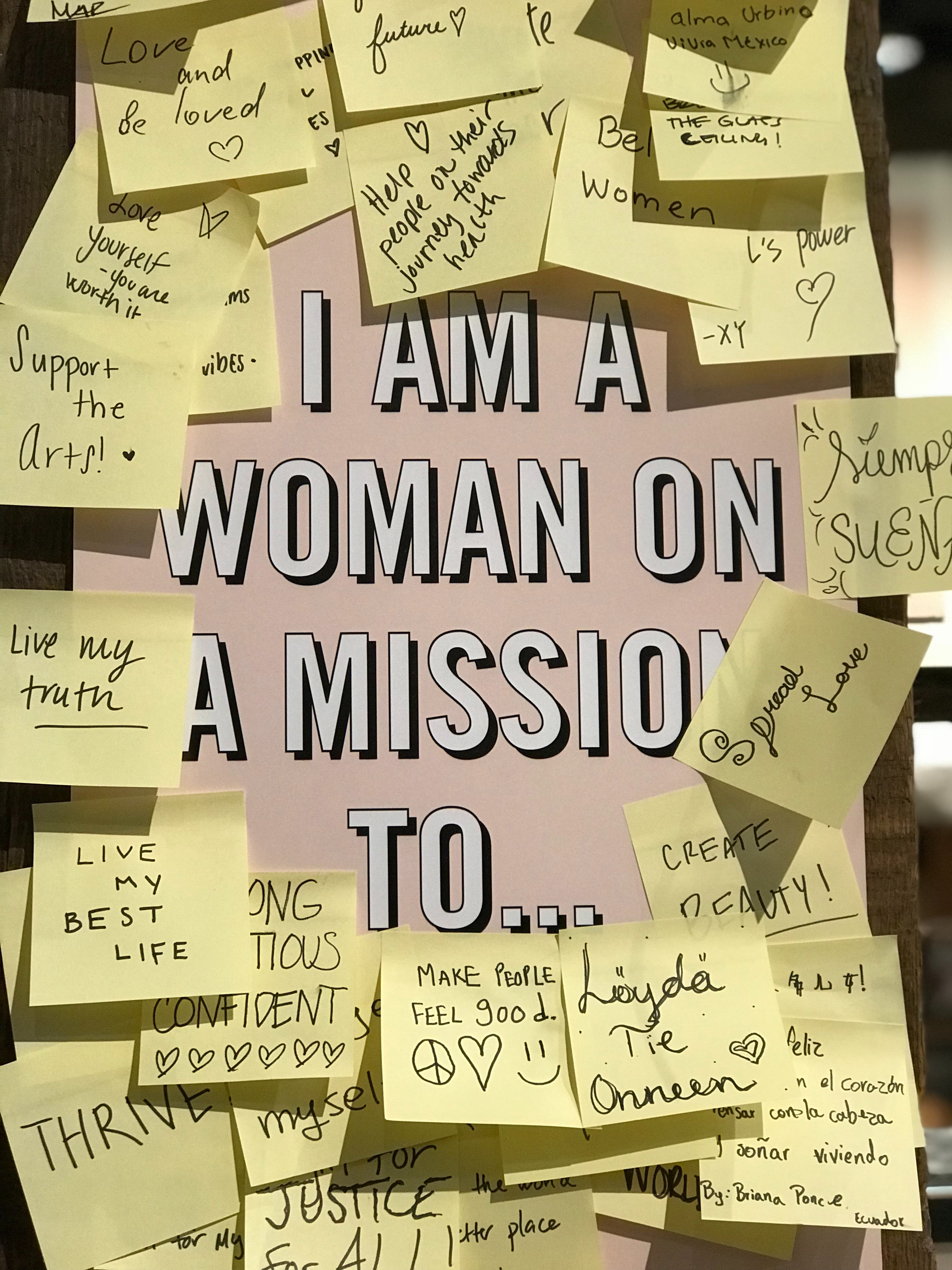
Changing one’s way of thinking is difficult.  So difficult that we generally don’t try it unless we’re compelled to do so.  One such compulsion is education.  Cultures that have embraced education are those that have led to great advances.  In this context it’s more than a little surprising that women’s rights are still held to be less important than those of men.  More education is required, it seems.  Today is International Women’s Day.  Of course it’s not a day off work because capitalism is all about men’s need for endless acquisition.  At least we can pause and consider for a few moments that life itself wouldn’t be possible without women, and justice, nearly worldwide, is represented in feminine form.  What can we do to make the world open its eyes to the obvious?

I read a lot about religion.  While I post here about the books I read, they are really only the tip of an iceberg.  My job largely consists of reading.  One of the themes that constantly runs through my own personal continuing education is that religion has indelibly changed our ways of thinking.  Even strident atheists today announce their stridency from a context formed by religion.  I’ve pointed out on this blog numerous times where even scientific thinking is mired in a wider context that has been constructed by religious thought.  One of those larger contexts is the subordinate role of women.  It is likely no coincidence that matriarchal cultures developed where there wasn’t a religion devised by men to impose a patriarchal governance on the world.  It’s so obvious once you learn to see it.  We need to be educated.

Women, it is obvious from an unbiased point of view, are equal to men.  As we educate ourselves further about gender and how religion has informed its perception, we come to realize that even binary assumptions—either male or female—are premature.  Underlying it all is humanity.  Human lives.  Those of men are no more important than those of women, or of those between.  Religions often like to make sharp distinctions.  Those distinctions are more abstract than reality.  The world is made up of real people and roughly half of them are female.  Today is set aside to recognize and celebrate that fact.  To recognize the contributions women have always made to society and civilization.  Let’s take the opportunity to educate ourselves, and  let’s be conscious of the fact that women are just as valuable as men and their foibles.  More than that, let’s put this truth into practice.


Ode to Snow Days

Once upon a time there were special gifts called “snow days.”  On these special days no one was required to report to school or work.  It was a caesura to late capitalism, albeit a brief one, in which the forces of nature triumphed over making everyone “go out” to work or school.  The pandemic has, of course, eliminated snow days.  Never again will there be the excuse of “I left my laptop at the office,” or “the roads are unsafe.”  The evil monster that enslaved all mortals of a certain class had won.  No brave knight, wearing mittens or not, dared face this great beast, and so nobody lived happily ever after.

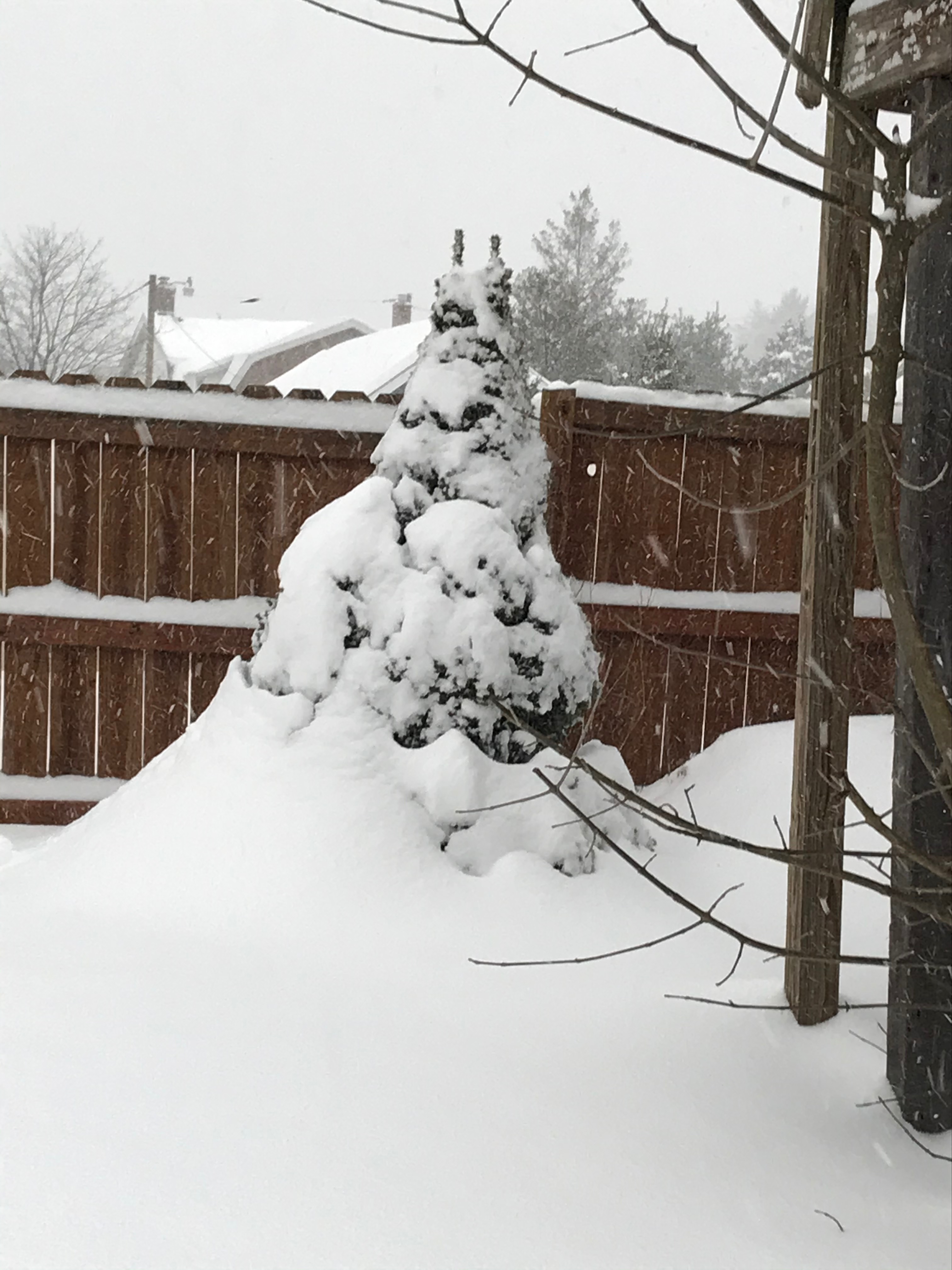
There is a moral to this story.  Well, not so much a moral as an addendum.  During snow days we had time for our civic duty of clearing sidewalks of snow.  I begin work before the sun comes up, and consequently I don’t stay awake very late.  Over the past few days we’ve had several inches of snow.  It began falling Sunday morning, and it fell through Tuesday morning.  I had to take time out of my usual work schedule to shovel in the morning.  By that point it was already six inches at least of the kind of snow that’s so heavy that it starts to turn blue beneath the surface.  I hurried back to work since I had a couple morning meetings.  The snow continued to fall.  I normally don’t take a lunch break, but I had to on Monday, just to stay ahead of the snow.  After work, just before dark, I was out in it again.

The snow day, in other words, isn’t just about time off from work.  It’s also about taking care of things that need to be done in a weather emergency.  The idea of remote work being work without ceasing has really caught on during the pandemic.  Without office walls to constrain it, capitalism is free to take over our private spaces—and our civic duties—as well.  The dearly departed snow day was more than just a lark.  For younger couples it meant being home to take care of the kids when school was cancelled.  In other words, it was a day to acknowledge that weather is still in control.  We do need that reminder once in a while.  The snow out there is pretty.  It’s also deep.  More than that, it is even a symbol.


Mothers’ Instinct

Maternity leave (not for me, but still) demonstrates just how sexist capitalism is.  This becomes very clear in publishing where schedules are reinforced by incentives (instead of paying properly) for meeting agreed-upon deadlines.  If an author gets pregnant while writing a book—not an unusual situation—it can throw shockwaves all through a book’s schedule from production all the way back up to editorial.  Why?  Because incentives are on the line.  It’s possible to counter with what if an author falls sick?  Or dies?  Yes, these happen too, but pregnancy isn’t an illness and isn’t infrequently a biologically constrained event—there is an age at which it ceases to become an issue.  So incentives, which are based on schedules drawn up before an author conceives, put the capitalist machine into a tizzy.

If employers didn’t rely on incentives, but paid better wages, this could make the issue less acute.  The entire system is devised from a male perspective.  Sickness and death do occur from time to time, but the invariability of a schedule (which ironically takes about nine months) is based on a view that doesn’t account for the somewhat likely event of a pregnancy.  I often think about this.  The corporate structure was made by men, for men.  We now give lip-service to equality while refusing to change the masculinist structure that underlies it.  By doing so the valuable contributions and improvements that women might make are kept under the standard business model.  No wonder it feels like we’re stuck in a rut.

Societal change is generally slow, and that conservative tendency preserves our property and our means of making a living.  If we gave women more prominence in leadership I would hope that this would start to change.  The male-oriented viewpoints of the capitalist entrepreneur, the stolid religious leader, and the halls of government, and even education, are reluctant to let people think differently.  We want to move forward, but we’re afraid of losing what we have.  This is why the conversation needs to widen.  Maternity leave reminds us that some things are more important than work.  Care for a helpless human being is something nearly all people would support.  It’s when they grow up that society feels it can safely ignore their needs.  We need a mother’s wisdom here.  Every time a pregnancy sets publication schedules in a frenzy I ask myself why we have to rely on incentives beyond just being the most human that we can be.


Year Book

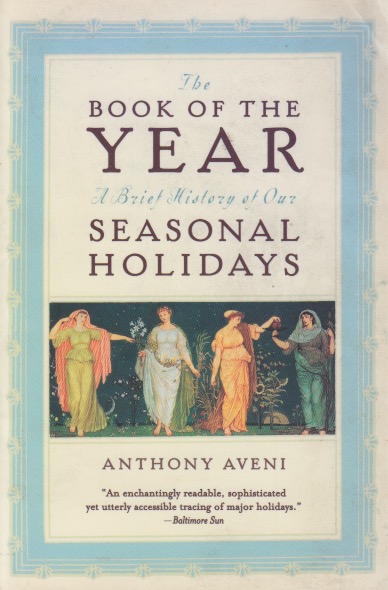
I have to confess that I’ve had trouble letting go of the holidays this year.  Actually, that’s kind of normal.  The let down from “sacred time” (however that may be understood) to “ordinary time” is often a rough transition.  Anthony Aveni discusses this, among other things, in his short study, The Book of the Year: A Brief History of Our Seasonal Holidays.  Not a deep history, but a thoughtful consideration of the seasons of our celebrations, the book informs and entertains.  There are surprisingly few books that cover the holidays, despite their centrality to modern life.  What person in business doesn’t look forward to the third quarter?  Who doesn’t anticipate a little time off work, punctuated throughout the year?  Aveni is one of the few general purpose books that you can go to for background on several seasonal holidays.

Aveni is somewhat of a polymath, being both an astronomer and an anthropologist.  He clearly has a special interest in first nations studies as well, as The Book of the Year occasionally dips into the rituals of Latin America.  A number of holiday traditions are explored here, leaving the reader wanting more.  I find the question of why we celebrate the way that we do a fascinating one.  Many of our customs have unexpected roots and many of them were transformed along the way by the church.  An unusually high number boast recent developments that we tend to think of as foundational to their essence.  The holidays as we grew up with them likely stay in our minds as the default way they should be.  Interestingly, bringing them into continuity with ancient customs reveals a steady evolution, mostly from sacred to commercial.

Since I wrote a book (unpublished) about the holidays several years ago (and have read a number of the same), I’ve always dug into books like this whenever I can find them.  Holidays are the heartbeat of the year.  Many of us look for something to help pace us in the reckless spinning vortex that we call capitalism.  Our lives are all interconnected, and the holidays also have subtle intricacies as well.  As they wind down, they tend to point both back to the previous red-letter day and forward to the next one.  Aveni doesn’t cover political holidays very much.  He does mention Martin Luther King Day, the next federally recognized day of rest.  As Aveni points out, the end of the Christmas season can stretch as far as Candlemas, so I guess we still have a few weeks to go before it’s all officially over, in sacred time.


Non-sacred Time

It’s difficult to say goodbye to the holiday season (although, according to its origins it’s not over yet!).  While the church still recognizes a couple more days until Epiphany—which until recent times was more important than Christmas—the secular “work world” is back to usual after New Year’s Day.  2021 started with a bonus, giving us a long weekend as well.  In any case, getting back to normal time is always a difficult transition.  For those of us who spent many years in academia, the holidays began about mid-December, and in my case, stretched fairly well into January.  Now, using a combination of vacation days and floating holidays, I’m able to set up a mini semester break of a couple of weeks.  Although I have trouble sleeping in, I was still able to spend the days with family and not worrying about business.

There is a difference in the quality of time off.  Some, I suspect, are eager to get back to work.  For me this first Monday back is difficult to face.  Some would argue that the difference in time quality is merely a subjective projection.  There is nothing scientifically changed from the last two weeks to the reality of the first Monday back.  This is one of those places where religion steps in as the more understanding boss (such instances are rare, so appreciate them while you can!).  Sacred time is taken very seriously by any number of religious traditions.  Even our beloved weekends have a basis in religious observance.  Holidays, even in a secular setting, are opportunities to recharge.  For me the spring semester was something I never dreaded.  We’ve allowed capitalism to take precedence over sacred time.

The problem with ordinary time is its mundanity.  Looking back, I’d been anticipating the holiday season with its time off for well over a month.  A full twelfth of the year.  To help with the transition, with my family I spent some weekend time cobbling together a personalized Modern Mrs. Darcy reading challenge.  Knowing I have good books in the future helps immensely, although I have much less time to read when work takes up much of my waking time.  Even that new start can’t be scientifically measured.  It’s something unique to human minds.  January begins with endings.  No matter how difficult 2020 may have been, at least it ended with a relaxing couple of weeks with family and no pressures to sit in front of a computer screen for over nine hours a day.  There will be more holidays ahead, and each one of them will be sacred time.


Pre-Soul

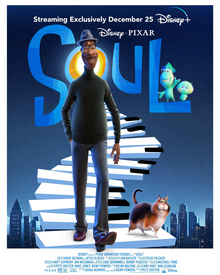
Streaming seems to be the way of the future.  I’m reluctant to trust corporations (does anyone remember Ultra Violet?) keeping content I’ve paid for, but the pandemic makes movie theaters scary places.  Some of the movies I’m eager to see aren’t even released on DVD or Blu-ray any longer, and your only choice, increasingly, is to subscribe to the death-by-a-thousand-cuts method of “buying” a subscription.  You’ve got to go where the content is.  All of this is a long way of saying I saw Disney/Pixar’s Soul very nearly on its release day.  It underscored a couple things for me.  One is that the idea of transmigration of souls is alive and well.  Second, and this is a point I make in Holy Horror, movies are often where people get their understanding of religious concepts.

In case, like me, you have to have movies pointed out to you by others more aware, Soul is about a jazz musician who dies the very day he gets his big break.  On his way into the great beyond, he tries to escape and ends up where souls are prepared for their embodiment on earth, “The Great Before.”  In order to make the leap, they must find their “spark”—the thing that makes them who they are.  Pixar may not be a theological seminary, but there are people who find meaning in many of their films, even to the point of  using them as coping mechanisms for real life.  When the internet didn’t exist and animated films required years of drawing or stop-motion animation to complete, people tended to go to religious/psychological professionals for such issues.  Now we have corporations.

The reason I find this of concern is that I have an idea of how content is created.  How those who come up with ideas have to pitch them to financial backers or publishers, and how those backers weight concepts in the scales of lucre.  In other words, money is frequently the deciding factor.  Those doing the pitching are seldom the same people with specialized training in the subject addressed, and yet they reach far larger viewerships than the classroom of such an expert does.  The financial implications are troublesome.  None of this is to suggest Soul is a flawed film.  I know many former seminary professors who’d quibble—or perhaps something stronger—with the way the afterlife/beforelife are presented here.  The movie itself is both fun and profound.  Don’t ask me, though.  I’m still trying to figure out this streaming thing.


Thoughts of Christmas

Christmas, in merry old England, used to be the day when bills were due.  There are vestiges of that still.  Just this past week, when my mind was on upcoming celebrations and family time, companies continue to email me their bills, reminding me that all celebrations are but temporary.  Money’s the real thing, and it takes no holidays.  While the holiday season may be subdued for some due to lack of travel, for me any day that I don’t need to leave the house is a good one.  We had a pretty nasty patch of weather on Christmas Eve, and one might be tempted to say that the atmospheric conditions outside are frightful.  There’s a coziness about staying indoors around the holidays.  Besides, there’s a pandemic out there too.

We’ve got a quiet day planned at home with our usual traditions.  We added a Yule log to our celebrations this year—much of what we now recognize as Christmas derived from the teutonic Yule.  Otherwise, we are quiet people with rather simple tastes.  Even if we can’t afford much, the holidays mean time off work.  Time for those close to us without constantly having to auto-correct back to earning money at work.  I frequently reflect on how distorted capitalism has made us.  Our European colleagues have far more time off work than Americans do.  They don’t seem to suffer for it.  There’s not much light outside anyway, so why not hunker down a while?  Reflect on what’s really important?

First thing this morning, after watering the tree, I fired up the computer to write a few words before the festivities began.  The first two emails in my inbox were, as if on cue, bills.  Computers have no idea this is a holiday, and our neighbor’s early morning car announcing its lock secured tells me that he’s just getting home from work.  The fiction that we all have today off, as time home with family, plays out every year.  Holidays are often the privilege of the affluent, which is why, I suppose, Saturnalia was marked by a reversal of roles for several days.  Rome wasn’t exactly a friendly empire, but it wasn’t a capitalist one either.  This Christmas I’m hoping that those who have to work today—healthcare workers, those who keep stores open for last-minute supplies, emergency workers of all kinds—will have adequate time for peace coming to them.  Even non-essential work can be wearying.  Let’s celebrate, thankful that we’ve survived these last few years at all.  The bills will wait until tomorrow.


Conflict Management

Conflict has come to dominate the twenty-first century in an unhealthy way.  No longer do religions, political parties, or even scholars of different disciplines want to try to see it from somebody else’s point of view.  Such “I’m rightism” is distressing, given that the greatest minds in history always left some room for doubt.  Einstein tried not to say too much about God, but his occasional references left some space for admitting he just didn’t know.  He was following closely in the footsteps of Sir Isaac Newton, who, ironically and iconically stands as one of the founding fathers of empiricism.  I say “ironically” because his real driving interests, as became clear only after his death, were religious.  With the science and religion conflict paradigm, it took a long time for many to admit that Isaac Newton was fascinated by religion.

A story in The Guardian recently noted that Newton’s unpublished notes on pyramidology have gone on auction.  These papers are even further indications of just how much religion mattered in the mind of the man who gave us a clockmaker God who wound up the universe and left it to run according to scientific principles.  My wish isn’t to cast any aspersions on Newton.  No, quite the opposite.  I wonder if we mightn’t use his wide-ranging interests to raise a relevant question: why do we see religion unworthy of attention while science, because it can be “proven,” is all we really need?  Especially since scientifically-based hypotheses about the origins of religion tell us that human beings need it.

Admittedly Newton was just as human as the rest of us.  Perhaps far more intelligent than most, but still human.  The humanities are the part of the human curriculum that has been under duress for many years at “universities.”  As business interests and money have taken on larger and larger roles in how schools conceptualize themselves, the humanities—which don’t make money—are undervalued and cut.  Capitalism takes no prisoners.  Education that has bought into that paradigm is bound to overlook certain facts.  Newton’s “arcane” interests were well hidden for a couple of centuries because who wants to think of the great rationalist as beholden to such a paltry thing as religion?  We’d rather keep our eyes firmly closed.  A conflict paradigm seems the better way to eradicate this troubling, so very human, aspect of even geniuses.  As long as there’s money to be made conflict will be the reigning model. 


Bethlehem’s Grinch

We’ve got a Grinch around Bethlehem, according to Nextdoor.com.  A guy driving around stealing boxes from porches, in broad daylight.  According to home security cams, he wears a mask (which is more than many Republicans do).  The understandable outrage in the comments is at least partially justified.  A Covid-ridden populace is reluctant to go into shops, and shipping is easy.  You pay for a gift for someone you love and a stranger steals it with impunity.  There is anger there.  It’s also troubling to me, however, how people react.

One commenter claimed this guy was stealing from working people instead of getting a job.  Anger often speaks rashly, I know, but I had to exegete this a bit.  Without knowing this masked man, how are we to judge his employment status?  I mean people like Donald Trump have made entire careers of cheating other people for their own personal gain.  Isn’t this the way of capitalism?  And perhaps this man has a job and thieving is simply moonlighting.  Or, more seriously, perhaps he had a job that was taken away when the Republican-controlled White House and Senate refused to do anything about the pandemic and can’t even agree on a deal to help working people out?  Who’s the real Grinch here?  Theft can take many forms, some of them perfectly legal.

This holiday news, of course, makes people paranoid.  With many vendors trying to compete with Amazon’s (generally) first-class delivery system, packages are left on porches past bedtime.  Even without a Grinch about, that makes me nervous.  Just last night an Amazon package listed as “delivered” didn’t show up.  I found myself on the customer service chat pouring out my soul to a stranger halfway across the world.  Knowing my carefully chosen gift might be stolen to be resold by a faceless thief made for an anxious evening.  Amazon assured me it would be replaced if it really wasn’t delivered after all.

So I’d be upset too, if my orders were actually stolen.  Some people have medications or other necessities shipped, regardless of holiday seasons.  Stealing boxes is wrong.  It may not be the only thing wrong, however.  Isn’t a system that forces people to desperation inherently wrong?  A system that makes getting ahead almost impossible for most people so that a very few can control nearly all the wealth is hardly one that doesn’t involve theft.  Those stolen from are rightfully upset.  But who is really doing the stealing in the first place?


Turning Point

As the “Keep Christ in Christmas” crowd gears up for another Yuletide season, its capitalistic brother wonders about how good Christians will shop during a pandemic.  We’re not great materialists in my house, and our holiday spending tends to be modest.  Even so, the stocking stuffer is the kind of thing you find while browsing in stores.  I don’t feel comfortable indoors with strangers now.  Apart from groceries and hardware I haven’t been in any kind of store for at least a month now.  How to get ideas for those little, often inconsequential gifts that are demanded by homage to Saint Nicholas?  The holiday season is a wonderful amalgamation of differing traditions that should, in a perfect world, suggest openness to all and inclusivity.  At least this year we have that to look forward to.

Inclusivity is a gift worth giving.  Many of us are weary of the privileged “angry white man” who has held control of just about everything for the past several centuries but is still never satisfied.  The holidays around the winter solstice—itself the marker of days finally beginning to lengthen again—should be a symbol of the many traditions that make Christmas what it is.  There is no one “pure” idea of what this season represents (beyond shopping) because people all over have traditionally welcomed the return of light after many days of darkness.  Sometimes that darkness of exclusivity can last for years.  Now that we are beginning to spy a sliver a light on a distant horizon perhaps we can see enough to correct the error of our ways.  Perhaps.

That still doesn’t solve the dilemma of pestilence-filled stores where people want to huddle inside because it’s cold out there.  I can’t seem to recall where they hung the stockings in the manger, but surely they must’ve been there.  It’s how to fill them that’s the issue.  Our world has become so virtual.  How do you put streaming into a sock?  How do you stuff that cuddly subscription service into hosiery?  In a pandemic we’re reaping the fruits planted by a technologically-based society.  The art of browsing hasn’t been electronically replicated.  It’s the moment of inspiration in that curiosity shop that seems to be missing this year.  Most of us, I suppose, would be pleased to find a vaccine in our carefully hung stocking.  At least a government that takes the threat seriously will be something to anticipate.  Just a little longer, and the light will be coming.


Money Days

Those of us who live in caves (figuratively) have trouble filling all this in.  Not a great fan of capitalism, I find “Black Friday” a troubling add-on to the holiday schedule.  Now I’ve lost track of all the expanding special days: Small Business Saturday, Cyber Monday, Giving Tuesday.  Must we celebrate capitalism so much?  I have no problem with non-Christian holidays, but when money becomes the sole basis for special days I have to wonder.  Mammon is a deity of which we’d been warned a couple of millennia ago.  The real irony is that it’s the very religion that posted that warning that now seems most closely related to the capitalistic system that perpetuates its worship.  It wouldn’t be such an issue except that the religion that has bought into the system so readily is the one that is putatively based on its condemnation.

Irony is something for which historians are always on the lookout.  Perhaps this is especially so among historians of religion.  Religion has come to denote a codification of our highest ideals and aspirations.  When did money attained such spiritual status?  It seems that Christianity was the vehicle.  Although it’s most obvious in American politics, the relationship goes back to the whole colonial enterprise.  Once Christianity became an imperial religion under Constantine, its focus began to shift.  Even those splinter groups that started off with higher ideals soon came under the overarching umbrella of the capitalistic system sprung from the teachings of a poor carpenter from Nazareth.  And so we find ourselves amid a creeping array of money-based holidays that provide the secular answer to Advent.

Of course, Advent itself became a season of anticipating the commercialized holiday of Christmas.  And here as the calendar year winds down the financial year hopes for a shot in the arm because economy is the doctrine of this new religious thinking.  And the irony is that the system is set up so those who already have too much get more while those who don’t have enough end up with even less.  Sounds biblical, no?  Ever since my ouster from academia, I’ve had to cash in vacation days to make myself a little semester break.  A body gets used to a certain schedule, and those rhythms are difficult to shake.  As we work our way through pandemic-laced spending holidays I’ve got my eyes on a bit of time off from my small part in supporting this all-consuming machine.  


Trade Wars?

A few friends are suffering sticker shock at the cost of Nightmares with the Bible.  I offer my sincere apologies.  To those in the normal world (outside academia) such pricing appears predatory.  It is, but you’re not the intended prey.  One of the pillars upon which capitalism rests is “what the market will bear.”  You price up any product until people stop buying it, then you retreat.  I’m no fan of the dismal science, but I am certainly not in the cheering section for capitalism.  Institutionalized greed.  Still, I can explain a little of why Nightmares comes with such a high price tag.  Publishers have long indulged in “library pricing.”  Although many libraries now buy ebooks instead, the model persists.  The idea is that libraries can afford higher prices than mere mortals.  For those of you not in academia, $100 is actually on the low end.  Believe it or not.

In researching Nightmares I saw monographs I coveted.  Some of them priced at $175.  Considering that some of these were under 200 pages, my primitive math sets the rate at about 87 cents per page (single-sided).  Here’s where the disconnect comes in.  Nightmares was written for general readers.  I long ago gave up the idea that to be intelligent a book must be impenetrable.  And academics wonder why people question their utility?  Only after I signed the contract did I learn that the Horror and Scripture series, of which Nightmares is the second volume, would suffer “library pricing.”  There is a discount code for those who may not be libraries.  But please, have your library buy a copy.  That’ll give me fuel for a paperback argument.

In a “catch-22” scenario, it goes like this: a publisher tells an author, “if your book sells well enough at this price we’ll issue a paperback.”  The truth is your hardcover only sells well if you’re well known or if your choice of topic is truly compelling.  If the unit cost were actually the same as the library pricing I’d be a rich man.  Where does all that money go?  It’s a legitimate question.  It’s not royalties!  Academic publishing is an expensive business to run.  Apart from overheads—there are always overheads—you need to pay tech companies to ready your files so they can be printed.  Unless the print run (generally under 200 now) is intended to sell out you’ll have it done domestically so that you don’t have to pay warehousing costs on unsold stock.  I knew a single-man academic publisher who stored his stock in his basement.  Excuses aside, my apologies that Nightmares costs so much.  I’ll send the discount code to anyone who’d like it.