Life Underground

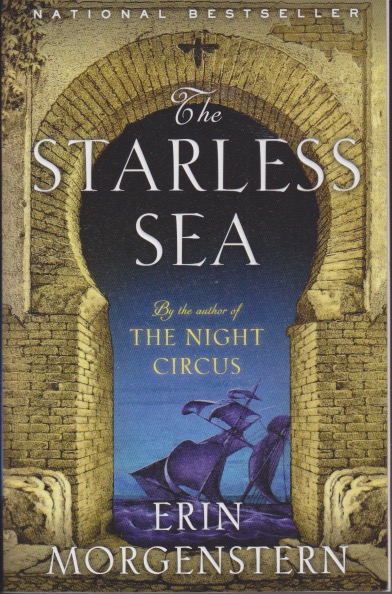
Having really enjoyed Erin Morgenstern’s The Night Circus, I was looking forward to The Starless Sea, despite its nearly 600 pages.  I don’t mind getting lost in a book; in fact it’s one of life’s true and simple joys.  The Starless Sea came to my attention as a dark academia book.  The story is a good one, but in my uninformed opinion, a bit too long.  The fault is my own, I’m sure.  My sensitivity to high fantasy has reached a point where swords tend to put me off.  And some bits, particularly in book V were a bit confusing.  Still, Morgenstern’s writing is beautiful, and at some points sublime.  If it’d been a bit shorter I’d probably be gushing.  Instead I’m reflectively admiring.  As a sometime writer myself, I know that you write what you write and others may not get it.  That’s life.

The story generally follows grad student Zachary Ezra Rawlins as he finds a book from a library of a world that’s beneath the ground.  A world that includes a harbor on the Starless Sea.  That world is inhabited by the surviving members of a decaying society made up of stories.  Most members of this world (and it’s difficult not to see this as an allegory) have left for the world above (this world).  Access between the two worlds is through doors.  Sometimes real doors, other times doors painted on a wall.  Zachary finally goes through one, having not tried one outside his house when he was just a boy.  He’s not sure if he wants to stay in the Starless Sea world or not, but he gets roped into the story.

Many other characters, at varying levels of the story within a story get involved, of course.  He meets his true love, and one of the undergrads he taught gets interested in his fate, and the denizens of the world below are intriguing characters in their own right.  Despite the length of the book, there are still plenty of gaps left for the readers to fill in for themselves.  Again, my own limitations prefer to have not too many gaps because I get confused.  The story tips a hat to several of its influences explicitly, and in many ways reminded me of Susanna Clarke’s Piranesi.  With its grad school protagonist, lots of libraries, and even a secret society, this fantasy is a card-carrying dark academia novel.  The genre encompasses may differing books and styles.  And I’m glad to have read this one as part of my own quest in that genre.  It was a sustained escape from life in the upper world.

Nightly Entertainment

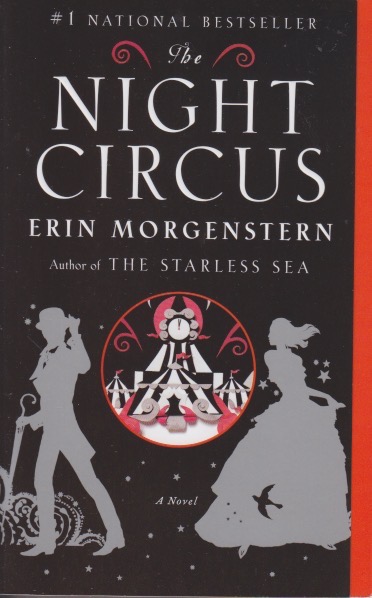
A list of most gothic recent books, I believe it was, that suggested The Night Circus by Erin Morgenstern.  It’s a big book—over 500 pages—so I decided I’d wait until autumn to get underway.  It ended up taking most of September and half of October to finish it.  Since I prefer to start fresh, I had no idea what it was about.  A night circus, of course, as the title indicates.  It is set in the late Victorian period, although I’m not sure all the turns of phrase in the book were current at that time.  There may be a few spoilers in the description, should you want to go out and read this yourself first.  I mention that because something that only becomes clear near the end is a pretty good starting place for giving an idea of what the story’s about.

A very old man (who doesn’t look or act old) is a very accomplished magician (not the stage variety).  One of his students becomes very proficient and the two begin a rivalry that involves each setting a protege against that of the other.  It is a contest, we eventually learn, to the death.  The younger magician selects a daughter he didn’t even know he had, while the original teacher selects a young man without prospects.  The battleground on which these two duel is the eponymous night circus.  Each tries to outdo the other in creativity and wonder.  The circus is open only at night (hence the name) and is fueled by actual magic.  A cast of characters gets introduced, and they’re very well drawn.  In my experience of reading the book, they drew me back in because you pretty much liked most of them and with magic involved, well, you never know.

The novel was gothic in the Victorian setting and in the sense that there is an ancient contest underway here that interrupts into the then present.  There aren’t spooky castles, however, or really even damsels in distress.  The women characters are all strong and resilient.  The writing is lively and the resolution is satisfying.  The real draw for this book is the writing and the complex story that doesn’t overwhelm or leave you feeling too lost.  It’s a magical realism with boundaries and offers a good message that magic is all around, if we only open our eyes to it.  It’s a good book to get lost in for a few weeks.  I appreciated the fact that the villains weren’t the focus and the violence was mostly implied.  It kept me turning pages, gothic or not.