Duck, Dynasty

The Fundamentalist mouth has no filter. I’m a bit surprised by the furor raised by Phil Robertson’s comments about race and sexuality. Did A&E not realize that it was dealing with a Fundamentalist family on Duck Dynasty? I’m frequently amazed at how Fundamentalism is exoticised by the media as some quaint, back-woodsy phenomenon. Do they not realize that similar views are held by several members of congress and the pre-Obama presidential incumbent? By the numbers, Fundamentalism is a powerful force, but, like our universities, the media can’t be bothered to try to understand religion until a large demographic is suddenly threatened. A&E supports equality across sexual orientations, and, as it should go without saying in the twenty-first century, races. Prejudices, however, run very deep. Perhaps it’s just not so surprising to me, having been raised in a Fundamentalist environment. There was nothing exotic about it. It was, as we understood it, simple survival.

Phil Robertson has been suspended from his own show for comments made off-air. Wealth does not necessarily make one a better person. In fact, the figures trend in the other direction all too often. If instead of just promoting books written by the stars of the anatine series, the studio executives read those books they might have foreseen something like this coming. The Fundamentalist mind, I know from experience, tends to see things as black or white. Despite the camo, gray is a loathed color. Rainbow is even worse. The Fundamentalist psyche is not encouraged to try to see things from the other’s point of view. There is only one perspective: the right one. And when asked a straightforward question, a straightforward, if misguided answer will be given. It’s the price of fame.

The Robertson family, according to CNN, has closed ranks with their founder, claiming he is a godly man. There’s no irony here, folks. Fundamentalism isn’t into irony or subtle possibilities. Religious rights and freedoms are being press-ganged to the aid of those who long to speak free. Not about ducks, or guns, or calls. But about the naturalness of white skin and heterosexual love. And the Bible as the only possible source of the truth. The media often treats Fundamentalism as if it were a game, turned on or off at a whim. In reality it is a comprehensive worldview in which the inmates are commanded to speak the truth. The filters are not on their mouths, but are in their minds. Until we can learn to take them seriously, no duck anywhere will be safe.
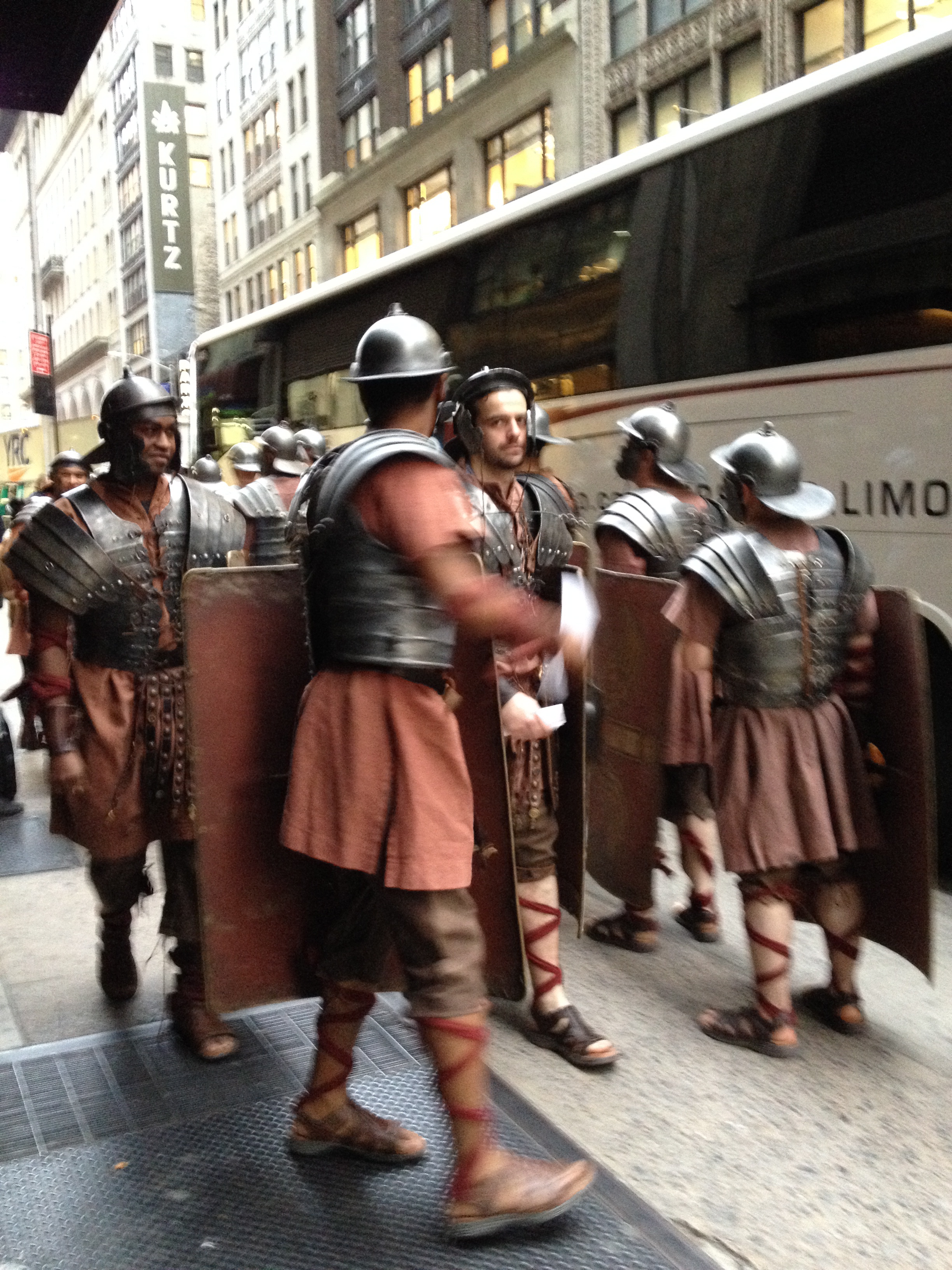
Even the Roman Empire didn't last forever...

Even the Roman Empire didn’t last forever…


Cultural Religion

IMG_0825

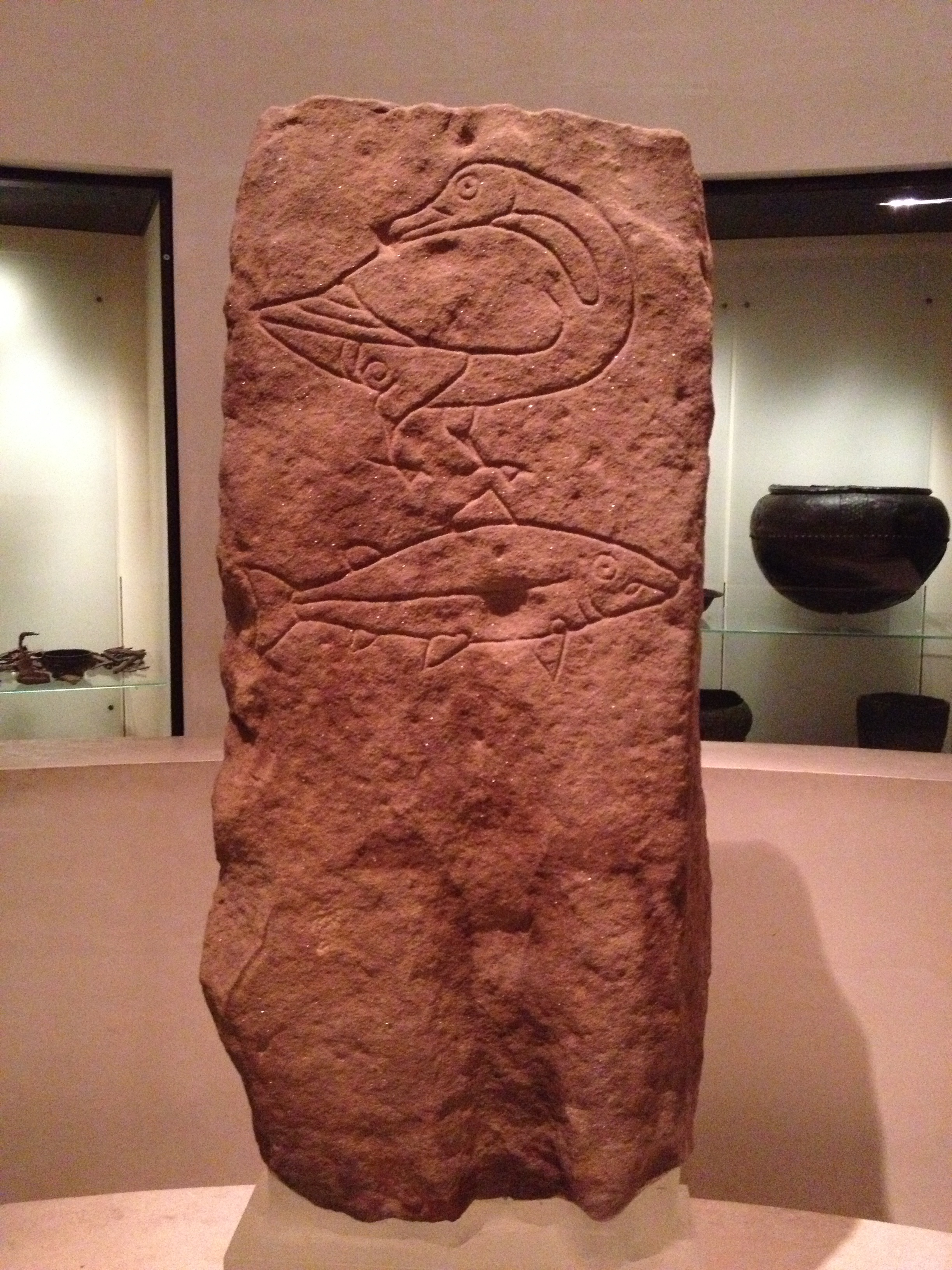
The National Museum of Scotland, like many museums in the British Isles, is free to visitors. Such museums are repositories of national pride and provide a sense of the scope of a nation’s history. While penurious grad students (as opposed to plain penurious, as best describes those long unemployed), my wife and I would wander over to Chalmers Street and pop in for an hour or two of inexpensive culture. During the last minutes of my recent trip to Scotland, I ducked into the newly—well, it has been nearly two decades, I have to admit—expanded museum for a gander. I was naturally drawn to the history of Scotland section—you can see dinosaurs and robots in the US, after all—and was struck at how very religious it was.

IMG_0857

It’s not that the Scots are any more pious than other peoples, but it is the nature of religious artifacts to receive special treatment, and therefore, to survive time’s greedy decay. No one dares to anger the gods. Beginning with the Stone Age Picts, and flowing through contact with the Romans and eventually to the Celtic culture now associated with Scotland, religion is obviously preserved. Prehistoric Picts, by definition, didn’t leave written accounts of their religion, but the treatment of special artifacts in a gritty, harsh world shows where social values were to be found. Christianization, with its apocalyptic earnestness, only accelerated the process. Celtic crosses, case after case of precious metal sacramental artifacts, and a large display of the Reformation denominated the more secular displays, or so it seemed. (The working steam engines and large looms, however, gainsay a bit of my enthusiasm. And swords seemed to be everywhere.)

IMG_0837

While there is a genetic base for some sense of nationhood, it is not unusual to hear a person of African or Indian heritage speaking with the familiar Scottish brogue. Surely they are Scottish too. Culture clearly ties disparate peoples together into a “nationality.” In this museum that reaches back to the dinosaurs and beyond, a great deal of the history involves people of similar ancestry who come into contact repeatedly with those of other heritages. What gets left behind after those encounters, when it’s not swords, is religious. The religions themselves then clash, fracturing into a new stage of cultural development. Even in today’s secular Europe, some of the most notable buildings are the cathedrals. And in its own way, the National Museum of Scotland is a cathedral to all who wish to understand what makes us human.

IMG_0838


Monument to Madness

Reflections on the implications of my recent trip to the United Kingdom will likely continue to filter into conscious expression over the next few days. Jet lag will inevitably fade, and some concepts will shake down and settle into place as the reality known as work once again demands its pound of flesh per day. One of the realities that struck me during my time in St Andrews was how violent the Reformation was when it came to Scotland. Truth holds the world hostage, since everyone wants to believe they own it. And it’s my word against yours unless one of us can pull in a larger authority—and who is larger than God? There was a lot of credibility riding on the Reformers’ certitudes. And resistance was strong. Fatal even.

Reform is nearly never gentle, especially religious reform. After the Society of Biblical Literature’s meeting disbanded last week, I wandered around the old, medieval section of St Andrews, trying to get a sense of what such conviction must have been. One of the participants narrated to me more of the stories of those who’d died in the course of conversion. Patrick Hamilton, it turns out, may have been the first victim of the Reformation, but he was not the last. Walking along on a sunny afternoon in a country where several religions consciously coexist (I was, as an American, surprised to see so many large mosques in the UK), it seemed difficult to believe that humane individuals would torture someone to a horrendous death by burning just because of religious differences. The killing times seemed so long ago. Or perhaps our killing has just become more subtle.

IMG_0814

Following the directions I’d been given, I came upon the Monument to the Martyrs. Not wishing to belittle the atrocity of undeserved deaths, I could not help thinking of the pillar as a Monument to Madness. Is the need to feel right so great that others must be made to die for it? After all, among those generally considered to be sane, we all believe that we are right. Who consciously accepts untruth as reality? In such circumstances the best, the only reasonable response is to agree to disagree. I can let you accept your truth, if you’ll let me accept mine. And perhaps such tolerance would serve our planet well. Even the number of trees spared had autos-da-fé been forbidden provides a silence to the wisdom of allowing difference to thrive.


Burning Faith

1528. February 29. St Andrews, Scotland. 24 year old Patrick Hamilton was burned to death for espousing the teachings of Martin Luther. St Andrews University is the oldest of Scotland’s four ancient centers of higher education. Heterodox religious teaching was considered a very dangerous thing in those days, especially in the halls of academe. Once infected with Lutheranism, like a zombie, you had to be burned so that the rest of the world could be safe, the virus contained. Only the problem in this case was an all too human one—difference of opinion regarding religion. The Thundering Scot, John Knox, would’ve been all of about 14 at the time, and reformation for the Catholic Scotland was still years in the future. Now, one of the largest European cathedrals, in St Andrews, lies in ruins because of that very reformation.

Religious bickering has a tendency to move beyond the ridiculous to the insane. Burning young men, after decades of burning hundreds of young and old women alike throughout Europe, was one of the most heinous symptoms of a horrid madness that had grown from religious fervor and fear. Religion itself is not to blame as much as the human tendency to use it as a weapon against those who are perceived as different. Some five centuries later and the physical stakes are gone but the fervor and fear are as strong as ever. As we hear politicians and televangelists lash out against those of whom God disapproves, the smoke still rises from the spot where Patrick Hamilton, late of the University of St Andrews, was sacrificed for his faith.

IMG_0729

Ironically, as I sat on the quiet morning train from Edinburgh to Leuchars, from the headphones on the young man behind me wafted AC/DC’s “Highway to Hell.” Was Patrick Hamilton aware that he was on a literal highway to hell as he returned home to Scotland? Did he have an inkling that his own people would torture him to death because he taught such dangerous ideas as salvation by faith alone and Scripture as the instruction for that salvation? Could anyone have guessed that the then teenaged John Knox would introduce what was to become an even less forgiving form of Christianity to Scotland by the time young Hamilton should’ve reached his dotage? Religion is funny that way. Even those who give their all to defend it easily become its victims. And a few yards down the road the Society of Biblical Literature meets in a university building dedicated to the sciences. History’s ironies never end.


Guiding Girls

Girl Guides are the British equivalent to the Girl Scouts. I first learned about them during the three years that I lived in the UK, although, as far as I know, they don’t sell cookies. An article in the Huffington Post last week announced that the Girl Guides have decided to drop God from their pledge, as a move toward inclusiveness. I’ve often pondered the place god holds in various social societies. At my daughter’s Girl Scout bridging ceremony a couple weeks back, I noticed God in the pledge. In New Jersey, where diversity is synonymous with breathing, I wondered how this antiquated oath felt to those who maybe grew up without the concept. Stretching my mind back a few years, when my daughter was in Middle School, she was awarded a good student prize by the Elks. As I sat in the tastefully decorated meeting room, with only a very faint tinge of beer in the air, I wondered if I might ever join a fraternal order. One of the officers stood to welcome us, inviting applications for membership. Democratically, she was a woman in a “fraternal” organization. She reeled off the requirements. As an afterthought she said, “and you have to believe in god.”

How does one measure belief in divinity? It has been my experience that many beliefs fluctuate with time. I can decide to believe, but in many ways, belief decides me. As a mantra to modern society, on the old X-Files series Fox Mulder’s famous poster read, “I Want to Believe.” To join the Girl Scouts, the Boy Scouts, or the Elks, you have to say you believe. Nobody’s going to hook you up to a polygraph machine, but you need to make your public declaration. At least in the last case, beer come later.

Religious diversity is a reality of our lives. From the invention of the steam engine, it became inevitable. Our world was going to grow smaller as we met people who had previously been isolated from us by distance. In 1893 the World Columbian Exposition was held in Chicago. As part of it, the Parliament of the World’s Religions introduced many Americans to the religions of the world for the first time. Hinduism, once an exotic strain quaintly captured in the archaic spelling “Hindoo,” became a sudden fascination. Buddhism was a curiosity. How had it been that the United States seemed only to know about Christianity, Judaism, and Islam (in that order) when other belief systems existed? How could we have missed them? More importantly, what were we going to do now that we knew about them? We couldn’t unknow them, like you can unfriend someone on Facebook. We were going to have to learn to live together. After all, we all have just one planet to share. Social organizations are great places for introducing tolerance. You can be moral without being Judeo-Christian. And if our social organizations want to promote equality of membership, maybe the Girl Guides are truly living up to their name.

1918_girl_guides


Religion, Generally

Attempting to keep this blog focused on religion, has, of course, relegated it to the hopelessly outmoded pile for many people. I run into this all the time, professional, sophisticated individuals who have moved beyond the need for religion don’t see why we should waste our time with it. It’s about as useful as a room full of year-old newspapers. Like most people who end up studying religion, for me it began as an outgrowth of a religious upbringing. When you get to college they ask what you’re interested in. When your response is “Not going to Hell,” they’re likely to send you over to the Religion Department (if there happens to be one). One of the early lessons you learn as a religion major is (or at least should be) tolerance. Sure, the beliefs of other religions, when encountered for the first time, may seem weird. If you step outside your own tradition, however, chances are a great deal of what you believe could be considered odd as well. In such circumstances tolerance is perhaps the only way to avoid violence.

The few readers who leave comments on my posts give me pause to think. I largely study religion in isolation now, without the give-and-take of academic colleagues. It is not unusual for someone to point out the bizarre, or even unethical behavior of someone else’s religion (New Atheists do this all the time). When trying to understand religion, however, we have to be honest about the fact that all religions, and non-religions share instances of bad behavior. As my grade-school teachers said, “one bad one ruins it for everyone.” Religions are just as subject to human perversions as any other activity. People do bad things occasionally. Sometimes in the name of religion (or non-religion). Rationally it is obvious that we shouldn’t blame the religion for the poor behavior of some adherents. Yet we often do.

Religion-bashing is a popular sport. Those who engage in it, however, frequently fail to take into account just how widespread religion is. By far the vast majority of people in the world, educated or not, believe in a religion. This is complicated by the fact that an agreed definition of religion is still lacking. We don’t know what religion is, but we know it when we see it. Our universities and public intellectuals often ridicule it as unsophisticated and naive. As someone who has spent a lifetime thinking about religion, I suppose I’m obligated to say it, but there is a deep truth here: religions do motivate for good as well as for evil. Both non-religious and very religious people can be bad or good. What we require to get along in such a world is tolerance. And a willingness to listen to others. Otherwise both religion and non may not survive to criticize each other.

Jacob-angel


Backyard Wisdom

From where I was sitting, the robin appeared to be asleep. It was an overcast and chilly spring morning, so I had to admit that I was a little envious. Our back yard is divided from the neighboring landlord’s property by a kind of picket fence with square-topped stanchions every ten feet or so. The robin was sleeping on the stanchion closest to an old maple tree. A wiggle of movement caught my eye. Further down the fence, maybe seven or eight pickets back, sat an impatient gray squirrel. It was sitting up on its haunches, and flashing its bushy tail in an obvious attempt to draw attention to itself. The robin sat, implacable. The squirrel looked around like a nervous commuter who will be late for work. It hoped a picket or two closer. Up on its haunches, looked around, jiggled its tail. Still the robin sat. The squirrel turned toward the maple tree and reared back, preparing to jump. It was too far. The squirrel turned back to look at the bird. The robin, flapping its wings a time or two, hopped into the air and landed on a picket two further down beyond the stanchion. The squirrel climbed onto the now vacant spot and leapt into the tree. The robin flew back to its original post.

This little exchange brought home to me once again the intelligence of animals. I don’t know what was going through the minds of these two different species, but they obviously both wanted to be at the same place at the same time. Perhaps some moral imperative passed in unspoken form between them. The squirrel needed to be close enough to make the leap into the tree, and the robin was clearly comfortable where it was sitting. Something had to give. I don’t know if robins peck on squirrels when nobody’s looking, but the rodent, larger than the bird, was obviously cautious. In the end, a compromise was reached and each ended up where they wanted to be.

More than a show of intelligence, I also saw this as a parable. I imagined how differently it might have worked out if the robin were a Christian and the squirrel a Muslim. Would there be any giving way? Any acknowledgement of the need of the other? A few wing flaps, a little leap to the left, and the squirrel found its sanctuary. The robin simply returned to where it was. They both wanted the same sacred space. They didn’t raise voices or argue—the whole exchange was terribly polite. Behavioral biologists often suggest that we can learn much by watching animals. As I watched what must have been only a minor incident in the backyard world of robins and squirrels, I felt as if two of the great teachers of our many religions were enacting a parable for humankind. If only we would pay attention.

IMG_0675


Austin City Limits

Maybe it’s just because Texas feels like the brass buckle of the Bible Belt, but I had moral qualms about landing in George Bush International Airport this afternoon. Texas has so many worthy heroes, but in the land of Rick Perry, recent Republican politics is king. Not queen. But king. It felt like a work of supererogation to drive to Austin after a three-and-a-half hour flight to Houston, but Texas reminded me of Illinois with palm trees. And cacti. Well, okay, and longhorns. One could get culture-lash flying here from New York. Before I embarked I had visions of my rental car being a huge Cadillac with real steer horns for a hood ornament. I just couldn’t picture myself in a ten-gallon hat.

I sometimes wonder how religion could’ve come to divide a nation such as the United States. Founded on the principles of religious liberty, lately one party has been claiming the right to legislate morality for all, deeply polarizing a populace that should be able to accept differing viewpoints. Still, there are issues on which human rights insist there can be no compromise: women have equal rights with men, and have the right to self-determination just like men. It truly amazes me that such common sense can even become a divisive issue. If we could agree on even that, we’d have to declare it progress over the objections of the Religious Right. My thoughts wander that way when I tarry in the south. It’s really a pity. The people are friendly here and the landscape has its own beauty. Are we really that different?

I’m not altogether convinced that this isn’t just a case of prejudice masking as religious sensibility. Religions can be all too gullible when they feel their honors might have been impugned. While I regularly express my opinion here, I do respect nearly every form of sincerely held religious belief. None of us has all the answers, and it seems the height of hypocrisy to insist that anyone is right all the time. Nevertheless, my sojourn beneath the Bible Belt has me wondering about the origins of various religious squabbles. Or maybe it was the just the long drive along the “presidential corridor” after touching down at an facility that most websites still refer to as simply, Houston International Airport. Travel broadens the mind—it is, in fact, an excellent form of education. Maybe if we got out more we would all get along better.

From here we all look the same.

From here we all look the same.


The Price of Tolerance

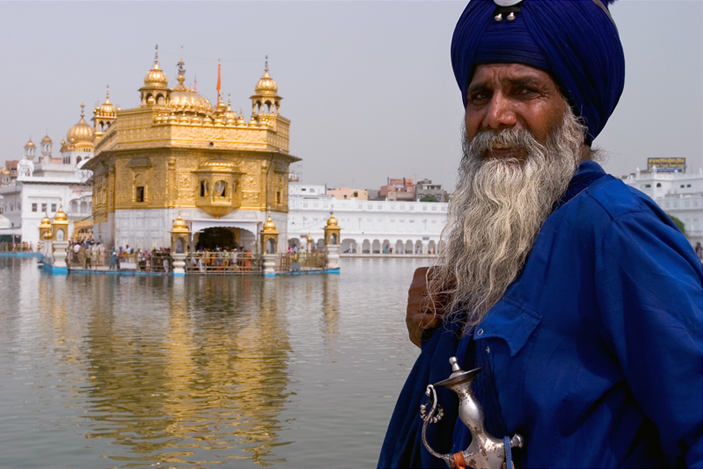
While on a trip to New England recently, my family had taken an exit to look for a bite of lunch. We followed one of those innocuous dinner-plate symbols that often grace roadside signs next to a stylized hotel bed and a gas pump that looks like a suicidal robot. This particular exit, however, seemed unwilling to deliver on the food part. As we wound down an unfamiliar road, we came across the golden cupolas of a Sikh temple. This was the first Sikh temple I’d ever seen, and my daughter asked why she’s never heard of Sikhs before. “Because they never cause problems,” was my reply. Of the major world religions, Sikhism is notable for its lack of overt violence even though a sword is one of the religion’s symbols. Unfortunately, over the weekend, violence found some innocent Sikhs.

As of the moment, no one is able to identify the motives of the man who gunned down four Sikhs preparing to worship in Wisconsin. For many Americans the religion is a mystery. We hear of Hinduism and Buddhism in the course of many historical and literary ventures. Sikhism is somewhat newer on the world religious scene, but it still predates regular European trade with India during the “age of exploration.” Although the classification of religions is always disputed, Sikhism is generally considered around the sixth largest world religion in terms of numbers, and they have avoided the limelight in the western world, showing that a religion can rest on its principles. One of the truly praiseworthy principles of Sikhism is toleration, an idea that his held in very high regard.

From WikiCommons

Toleration often clashes with gun ownership in the United States. Just weeks after twelve people were murdered for going to the movies, we have more headlines of private citizens (some mentally disturbed) with ready access to firearms. And more innocent people are dead. Even the shooter is dead, so we will never likely know whether this was simply a case of mistaken identity or hideous intolerance at work. In my time in Wisconsin I came across many Christians who were extremely intolerant of any viewpoint other than their own. Fortunately, they were the vast minority among the people that I knew. Still, the paradigm that I see emerging disturbs me to the core: we claim it is our right to own guns while identifying with a deity who let himself be tortured to death rather than harm anyone. I wonder if a culture can spell schizophrenia?


Doubting Peter

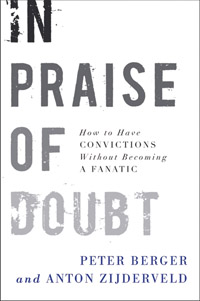
As a student at that university across the river from Harvard, it was clearly a matter of institutional pride that Boston University could claim Peter Berger. He was one that Harvard didn’t manage to get. Of course, I never took any courses with Professor Berger, but his work on sociology of religion is still considered the standard in the field. When his recent book, In Praise of Doubt, appeared a couple of years back, I knew that I had to read it. Originally published by an academic press, it was unnecessarily expensive (well, as the minion of an academic publisher I now realize the rationale for the prices, but I still get spasms in my wallet every time). When it appeared in paperback I finally located a copy that I could justify buying. I was not disappointed.

This little book begins innocuously enough, but by the end you find yourself realizing that you’ve just downed a potent draught. We are all familiar with doubt, but what many of us do not stop to consider is its role in different religious perspectives. Moving us through absolutism and relativism, In Praise of Doubt demonstrates how either position may lead to a “fundamentalism” of sorts, and for the same basic reason: neither position professes enough doubt. Having been raised in a fundamentalist environment, I knew that doubt was the great enemy. Certainty was the only true sign of faithfulness. The problem, for me, is that I’ve always harbored doubts. The more I learned, the less certain I became. Doubt had acquired the stench of sin, and I tried to avoid the very element that constituted my personality. Berger has finally given doubt its due.

In a world of extremists—extreme religionists and extreme atheists—the still, small voice of doubt is frequently drowned out. Doubt, however, has a noble pedigree and even more remarkable progeny: tolerance. Those who are certain tend to have little tolerance for those who differ, or worse, those who challenge their views. The doubter, as Berger (and co-author Anton Zijderveld) asserts, is less spineless than s/he appears, being open to the fact that no one has all the answers. No matter how eloquently Hitchens, Harris, or Dawkins may grow, they do not have all the answers any more than (god help us) Pat Robertson, Rick Warren or Tim Tebow. Probability and logic tend to suggest the former are closer (much closer) to the evidence than the latter, but who knows? It might even be possible that the Evangelical camp may one day learn the virtue of a little uncertainty by reading this book. But frankly, I doubt it.


And Lowe

Hate is harder to muster for people just like us. I mean, if they live like us and look like us, what grounds do we have to distrust and fear them? This appears to be one of the premises behind the TLC show “All-American Muslim.” Many people know Muslims without knowing it and fear them without being aware of whom they fear. With this insidious kind of fear and hatred, religion must be involved.

Over the weekend, CNN online ran an article noting how Lowe’s is pulling advertising from the program. It seems that conservative Christian outcry is rising like the children of Israel in Egypt; the Muslims aren’t shown as bad guys—they’re like your next-door neighbor! Fear of takeovers has long been on the Neo-conservative agenda. If Romney is elected we will by overrun by Mormons. If we sleep, we’ll awake to Muslim neighbors. And we certainly can’t expect to all get along. If it weren’t for the media, we would probably never even know they held a different religion.

I’ve lived lots of places. With the exception of Grove City College and Nashotah House, I never once was aware of the religion (if any) of my neighbors. If they are civil and respect my right to believe what I will, they are entitled to the same. Religious supersessionism and maybe a pinch of jealousy play into this attitude of keeping others a minority. Is it because Muslims and Mormons are more effective at winning converts? The modern evangelicals have been relying on political bullying to get their way. Why not learn to appreciate your neighbor’s religion instead?

Religious freedom is a two-edged sword. Many of those who are worried now were quite happy when they were in the clear majority. When the lines get blurry the trigger finger gets itchy. Come on, Lowe’s! Educating ourselves about other religions is the best home-building project out there.


Remembrance Day

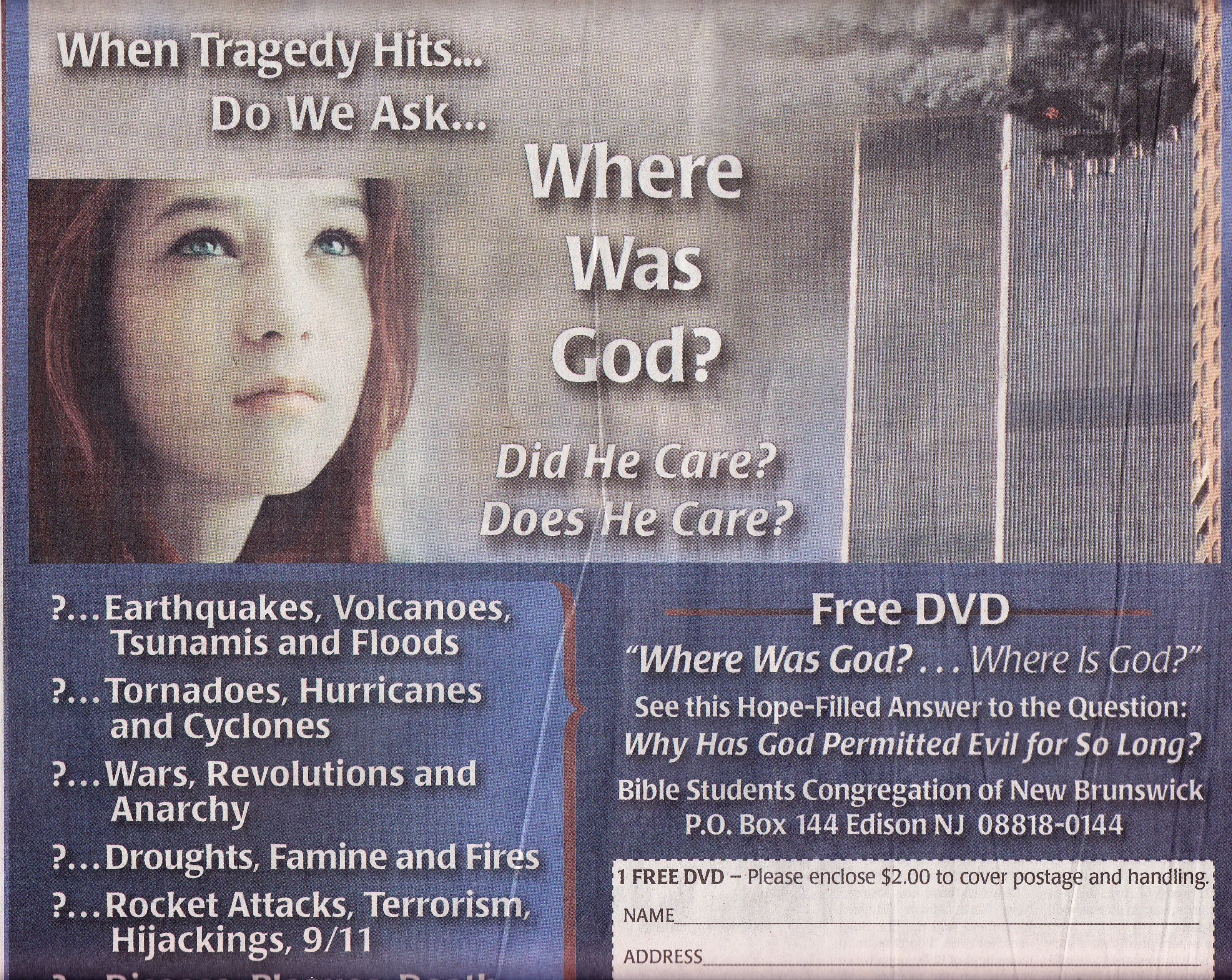
September 11, 2001 is on America’s collective consciousness. A decade ago thousands lost their lives in a religiously motivated and misguided attack on what some see as a wicked culture. Those who hate America have never come to know it. What a sad commentary it is that religious belief lends its strength of conviction to those whom it has convinced that evil is righteousness and that terror is divine. It is somber to experience this tenth anniversary so close to New York City. When I ride in to work now every day I see the new World Trade Center rising, literally, from the ashes. It is a monument to what America tries to embody.

Twin towers, 13 years old.

Our nation is not perfect. None is. Too easily we accept the casual relegation of various minority groups to poverty. Too easily we allow the obscenely wealthy to escape all sense of social obligation. Too easily we focus on our selves rather than our community. No, we cannot claim to be perfect. Nevertheless, we strive for an ideal that will not die.

Some have boldly claimed twentieth century notables as “the greatest generation.” I believe that praise, although deserved in a sense, to be misplaced. The greatest generation was that rag-tag group of colonial citizens who’d fled from cesspools of oppression to find freedom in a new world. They were not perfect. They oppressed and displaced Native Americans who still suffer under repressive policies that ensure the great embarrassment of their treatment will remain out of sight. The greatest generation I envision is those who, at the risk of their own lives, decreed that the world should, must contain a haven for those who cannot live without a free conscience. A place where religion, or even the very words you say or write, cannot be dictated by the government. A place where people could go on to become the putative “greatest generation”s of the future.

When I first heard about the attacks on 9/11 I was at Nashotah House. Those first moments of confusion were terrifying—our daughter had just started school and was not close enough to hold. My wife and I watched the television in sheer unbelief, tears on our faces, our lives being forever wrenched and twisted in new directions. In was a day that sobered up an entire country.

(Please read the remainder at Full Essays.)