Writing, as We Know it

Times New Roman, I believe, is the font of this blog post.  I grew curious about how our fairly long-lasting Roman letters came to be in this form we use today.  The Romans, like the Greeks, tended to write in uncial form—what we call “upper case” because printers literally kept them in a case above the “lower case” or minuscule type.  Apparently the reason all caps faded from popularity wasn’t that people felt they were being shouted at all the time, but they took too long to write.  You’ve probably seen examples of medieval manuscripts where the letters are an odd mix between uncial and minuscule forms.  These eventually settled into what is called Roman half-uncial, a font that eventually favored minuscule to majuscule—a name for uncial that has very small, or no, ascenders (as in lower case b or d) or descenders (like lower case p and q).

As the power of the Roman Empire waned, a variety of scripts developed in different parts of Europe.  One that eventually came to have influence on the nascent Holy Roman Empire was scriptura Germanica, or the German script.  Under Charlemagne, the Holy Roman Emperor, the favored, and widespread form of writing Roman letters was carolingian minuscule.  This isn’t too difficult to read for modern people but it’s not the script we use.  Carolingian minuscule was eventually replaced by blackletter.  This heavy, Gothic-looking script isn’t always easy to read.  (It was used for German publications until 1941; I used to have an old German book written in blackletter.)  Keep in mind that during all this time there was no printing press in Europe; manuscripts were handwritten and read by few.  Literacy was rare.  Even so, the difficulty of reading blackletter eventually led writers to go back to carolingian minuscule to develop a new writing style, influenced by blackletter as well.

Blackletter. Image credit: Arpingstone, public domain, via Wikimedia Commons

The new writing style, called humanist minuscule, also known as “whiteletter,” is basically what we use today.  It comes in several different fonts, of course, but the basic idea of capital letters beginning sentences and proper nouns, but most letters being minuscules, has become the standard for most typefaces based on Latin letter-forms.  This history of writing, let alone individual scripts, is amazingly complex.  Today fonts have to be licensed to be used by publishers of print materials and techies can invent new fonts to license or sell.  I still have a soft spot for the “Roman” style, which is why this blog post, at least on my screen, is in Times New Roman. 


Talking Sleepy Hollow

After writing a book comes talking about it.  I very aware that this blog has quite a limited reach, which is why I’m very grateful for friends who are willing to chat about my books.  John Morehead’s TheoFantastique is a blog I’ve known about, and appreciated, since I began this blog sixteen years ago.  John has always been very gracious and generous with his time and has interviewed me about each book since Holy Horror on.  Yesterday we had a chance to talk about Sleepy Hollow as American Myth.  The blog post with the recording is located here.  Please give it a watch if you have any interest.  To those of us not inclined to inflate opinions of ourselves, doing self-promotion feels awkward, and so it’s always good to have a friend willing to help us over the hurdle.  John has written and edited many books himself, and we’ve both published with McFarland. You might enjoy some time on his blog.

Writing a book on a subject may not automatically make you and expert, but it does give you a voice in the conversation.  Talking about a book helps you to think of aspects you might’ve missed or things that you really need other eyes to see.  Those fortunate enough to have academic posts sometimes have colleagues willing to read their nascent books and discuss them.  I never had colleagues who wanted to read what I was working on, but then, I was never really in a position where people paid much attention.  As a result, I work on my books alone.  This one had a peer reviewer when an agent took a temporary interest in it, and I received some feedback then, but otherwise it was me wondering what others might think of it once it was available.  The strange thing is, after writing a book you often feel like you could write another on the same subject, looking at different angles.

Since I’m trying to break into that rare sphere of getting a supplemental income from my books (free advice: academic writing really isn’t the way to do this), getting even a little buzz is immensely helpful.  I have contacted bookstore owners and museum shop holders in the Hudson Valley to tell them about my book.  I’m trying to arrange for a local book festival slot to talk about it.  But, of course, I have a 9-2-5 that doesn’t really make an allowance for time off to support your sideline job.  So I’m very grateful for John Morehead’s willingness to talk about my work.  If you’ve got some time, and interest, you can hear a bit more here.


Not Intelligent

The day AI was released—and I’m looking at you, Chat GPT—research died.  I work with high-level academics and many have jumped on the bandwagon despite the fact that AI cannot think and it’s horrible for the environment.  Let me say that first part again, AI cannot think.  I read a recent article where an author engaged AI about her work.  It is worth reading at length.  In short, AI makes stuff up.  It does not think—I say again, it cannot think—and tries to convince people that it can.  In principle, I do not even look at Google’s AI generated answers when I search.  I’d rather go to a website created by one of my own species.  I even heard from someone recently that AI could be compared to demons.  (Not in a literal way.)  I wonder if there’s some truth to that.

Photo by Igor Omilaev on Unsplash

I would’ve thought that academics, aware of the propensity of AI to give false information, would have shunned it.  Made a stand.  Lots of people are pressured, I know, by brutal schedules and high demands on the part of their managers (ugh!).  AI is a time cutter.  It’s also a corner cutter.  What if that issue you ask it about is one about which it’s lying?  (Here again, the article I mention is instructive.)  We know that it has that tendency rampant among politicians, to avoid the truth.  Yet it is being trusted, more and more.  When first ousted from the academy, I found research online difficult, if not impossible.  Verifying sources was difficult, if it could be done at all.  Since nullius in verba is something to which I aspire, this was a problem.  Now publishers, even academic ones, are talking about little else but AI.

I recently watched a movie that had been altered on Amazon Prime without those who’d “bought” it being told.  A crucial scene was omitted due to someone’s scruples.  I’ve purchased books online and when the supplier goes bust, you lose what you paid for.  Electronic existence isn’t our savior.  Before GPS became necessary, I’d drive through major cities with a paper map and common sense.  Sometimes it even got me there quicker than AI seems to.  And sometimes you just want to take the scenic route.  Ever since consumerism has been pushed by the government, people have allowed their concerns about quality to erode.  Quick and cheap, thank you, then to the landfill.  I’m no longer an academic, but were I, I would not use AI.  I believe in actual research and I believe, with Mulder, that the truth is out there.


Missing the Rose

It was Edinburgh, my wife and I concluded.  That’s where we’d seen The Name of the Rose.  Edinburgh was over three decades ago now, and since the movie is sometimes called dark academia we decided to give it another go.  A rather prominent scene that we both remembered, however, had been cut.  If you read the novel (I had for Medieval Church History in seminary), you knew that scene was not only crucial to the plot, but the very reason for the title.  In case you’re unfamiliar, the story is of a detective-like monk, William of Baskerville, solving a suicide and murders at an abbey even as the inquisition arrives and takes over.  It isn’t the greatest movie, but it does have a kind of dark academic feel to it.  But that missing scene.

Of course, it’s the sex scene between Adso, the novice, and the unnamed “rose.”  Sex scenes are fairly common in R-rated films, often gratuitous.  But since this one is what makes sense of the plot, why was it cut in its entirety?  Now the internet only gives half truths, so any research is only ever partial.  According to IMDb (owned by Amazon; and we’d watched it on Amazon Prime) the scene was cut to comply with local laws.  More to the point, can we trust movies that we stream haven’t been altered?  I watch quite a few on Tubi or Pluto and I sometimes have the sneaking suspicion that I’m missing something.  How would I know, unless I’d seen it before, or if I had a disc against which to compare it?  There was no indication on Amazon that the movie wasn’t the full version before we rented it.

The movie business is complex.  Digital formats, with their rights management, mean it’s quite simple to change the version of record.  Presumably, those who’ve pointed out the editing (quite clumsy, I’d say) in reviews had likely seen the movie before.  Curious, I glanced at the DVDs and Blu-ray discs on offer.  The playing time indicated they were the edited version.  Still, none of the advertising copy on the “hard copy” discs indicates that it is not the original.  Perhaps I’m paranoid, but Amazon does run IMDb, and the original version is now listed as “alternate.”  Now that I’ve refreshed my memory from over three decades ago, it’s unlikely that I’ll be watching the film again.  I’ll leave it to William of Baskerville to figure out why a crucial scene was silently cut and is now being touted as the way the story was originally released.


The Printed Word

I miss them, newspapers.  Now, I’ve never been a great newspaper reader—I tend to live in my own little world, I guess, and I really have no taste for politics.  I still glance over the New York Times headlines daily (mostly) but that’s not what I’m talking about.  I’m talking about physical newspapers.  The other day we had a family creativity session.  This generally involves painting in some form or other and I realized with chagrin that we had no newspapers to lay down.  Nothing to protect the table top.  The same is true when we carve pumpkins, or do other activities that make you think that you want to protect your furniture.  Newspapers were always there.  We used to line our birdcage with them.  Made papier-mâché out of them.  They were handy to have around.

Josef Danhauser, Newspaper Readers, public domain. Image credit: Österreichische Galerie Belvedere, via Wikimedia Commons

We live fairly close to our means, so we don’t have lots of drop cloths lying about.  (Plastic is so much less feeling than paper.)  We don’t have rolls of butcher paper in our kitchen.  We even use cloth bags for groceries, so grocery bags are at a premium.  Our electronic mania has meant that physical creativity suffers.  I do applaud the saving of trees, but you sometimes just need the disposable broadsheet to catch the drips.  (And when I paint, believe me, there are drips.)  But perhaps this is a symptom of this insipid internet life into which we’ve slipped.  The other day I was searching for an electronic services store.  I’m not even sure what to call them anymore.  I had to go to the physical store (yes, they still make them) to have something looked at.

The website kept telling me a store with a different name was what I was looking for.  All I wanted to know was whether this was an actual store or some knockoff.  If you’ve purchased what are being called “dups” now you know that companies blatantly use other companies ads to sell cheap knockoffs that don’t resemble the product you wanted at all.  This all seems to be perfectly legal.  I guess I’m just nostalgic for the days when you had to have patience and doing things slowly was a sign of good quality.  The 24-hour news cycle has hardly been a benefit, and Trump could’ve never been elected without it.  And if you wanted to paint something, you’d just go to the stack of newspapers that every house seemed to have, and paint over any headlines you wished you hadn’t seen.


Dark Poetry

Playful.  Serious. Weird.  Very intelligent.  These are the words that come to mind.  Adrienne Raphel’s Our Dark Academia is a poetry book unlike any other I’ve read.  The poems take many forms from impressionistic reflections on life to a crossword puzzle.  From cutout paper-doll clothes to a faux Wikipedia article on dark academia.  It’s quite difficult to summarize since it’s more of an experience than anything else.  It’s the kind of book that makes you want to get to know the author.  Economy of language and an ability to manipulate words are required for poetry, and although I still dabble in it now and again, my tortured mind finds long-form prose a bit easier to produce.  I do try to keep these blog posts short, but I write a lot of other stuff as well.  In any case, Raphel’s keen intellect is obvious throughout this collection.  And she holds a doctorate from Harvard.

I’ve been exploring what is now being called dark academia pretty much my entire life.  And it has an articulate spokesperson here.  The academic life, although I love it, isn’t always the cushy existence it’s thought to be.  It requires a lot of work and long hours.  Those jealous of the lifestyle probably know it by fantasy.  It has taken a hard turn towards the political since about the seventies, something I didn’t know as I enrolled in a doctoral program in the next decade.  You learn by experience, and it’s clear Raphel has that.  The life of the adjunct instructor, which I tried to live for two years, demonstrates the inhumane things educated people can do to one another.  Of course it’s because of money.  In a late capitalist society, what else really matters?

One thing I know about myself is that I tend to take on the characteristics of authors I read, while I’m reading them, if they have distinctive voices.  Thought processes carry on in the mind even after a book is put down.  I find reading endlessly fascinating and wish I could share this enthusiasm with everyone.  I have to stop and remind myself, however, that our society only works with those who are doers as well as thinkers.  It works best, it seems to me, when those who are thinkers are in charge.  But not all thinkers are good.  My solution, at the moment, would be to have them read Our Dark Academia.


Book Stories

I’m a headline browser.  Sometimes a story will make me sit up straight and click.  I was browsing the headlines in Publisher’s Weekly’s daily updates earlier this week.  One of their regular sections is on independent bookstore news.  When I saw “Oil City” and “Pennsylvania” in the same headline, well, I sat up straight.  I grew up very near Oil City, and attended Oil City High School.  One thing I noticed, even as a child, is that the nearest bookstore we knew of was over in Meadville.  (Eventually a B. Dalton’s, or Waldens, I can’t remember which, opened in the local mall that is now a very sad superstructure to visit.)  I would work the summers and after buying my school clothes would beg mom to take me to Meadville so that I could visit the bookstore.  It was a place that made me happy.

I don’t remember a bookstore ever being in Oil City (or Franklin, except a Christian bookstore).  I wish Raven’s End very well.  If it weren’t six hours away I’d drive there this weekend just to support them.  In these times of challenging human intelligence, we need more bookstores.  We need more readers.  That’s one of the reasons, I suspect, that Publisher’s Weekly informs readers of new bookstores opening.  As a young person you tend to accept things the way that they are.  In one of my philosophy classes I learned that this was called “naive realism.”  I also learned along the way that our brains evolved to help us survive, not to discover reality.  We have to work at the latter, and that means reading.

I live in the Lehigh Valley, a community that has had to remake itself after the closing of Bethlehem Steel.  I grew up in the Oil City and Franklin area which would eventually have to remake itself after the closing of Pennzoil and other large, heavy industries.  As I was growing up there I found books, but in department stores like Woolworths, or more commonly, secondhand at Goodwill.  People are changed by the books they read and, given their own devices, most won’t go online looking for books.  After work I tend to shut the computer down and pick up a book to read.  I also try to carve out reading time each morning.  I grew up without easy access to bookstores.  It gladdens me to see one opening in the small town where I began to realize the importance of picking up a book and learning about this ever-changing world.


Remembering to Forget

I think I’ve discussed memory before.  I forget.  Anyway, I recently ran across Ebbinghaus’ Forgetting Curve.  Now, I’ve long known that when you reach my age (let’s just say closer to a century than to 1), your short-term memory tends to suffer.  I value my memories, so I try to refresh what’s important frequently.  In any case, Ebbinghaus’ curve isn’t, as far as I can tell, age specific.  It’s primarily an adult problem, but it also resonates with any of us who had to study hard to recall things in school.   The forgetting curve suggests that within one hour of learning new information, 42% is forgotten.  Within 24 hours, 67% is gone.  This is why teachers “drill” students.  Hopefully you’ll remember things like the multiplication table until well into retirement age because you had to repeat it until it stuck.  Where you put the car keys, however, is in that 42%.

I’m a creature of habit.  One of the reasons is that I fear forgetting where something important might be.  The other day it was my wallet.  In these remote working days you don’t need to put on fully equipped pants every day.  Pajama bottoms work fine for Zoom meetings and if you don’t have to go anywhere, why fuss with the wallet, cell phone, pocket tissues-laden pants?  You can put your phone on the desk next to a box of tissues.  The wallet gets left in its usual pocket.  One day I pulled on the pants I last wore and as I was headed to the car noticed my wallet was gone.  Fighting Ebbinghaus, I tried to remember where I’d last used my wallet.  We’d gone to a restaurant the previous weekend that seemed the most likely culprit.  It could’ve fallen out in the car, or maybe down a crack in an overstuffed chair.  I couldn’t find it anywhere, swearing to myself I was going to buy one of those wallet chains if I ever found it again.

(I did eventually find it, in the bathroom.  Apparently this has happened to others as well.)  In this instance, my memory was not to blame.  It had been right in the pocket where I last remembered putting it.  But other things do slip.  Think about the most recent book you read.  How much of it do you remember?  That’s the part that scares me.  I spend lots of time reading, and more than half is gone a day after it’s read.  Unless it’s reinforced.  The solution, I guess, is to read even more.  Maybe about Ebbinghaus’ Forgetting Curve.


Mexican Philosophy

Once upon a time, I applied for a teaching post at Syracuse University.  (Actually, twice upon a time, but that’s a longer story.)  I was able to gather that one reason I failed to merit an interview was that the religion department prided itself on its dedication to continental philosophy.  Lacking imagination, I couldn’t see how that might apply to teaching Hebrew Bible but then again, I don’t know much.  I’m starting off with than anecdote because it is in keeping with the spirit of Carlos Alberto Sánchez’s excellent Blooming in the Ruins: How Mexican Philosophy Can Guide Us toward the Good LifeI recently wrote about how reading philosophy is something I enjoy when I can find the time, but what really struck me about this book is that Mexican philosophy is a counter to continental (i.e., European) philosophy and it is much closer to my own outlook.  I’m not in any danger of being offered a new job so it’s safe to say so.

I actually picked up a copy of Sánchez’s book because of a chapter that I’d read.  Much of the work begins with anecdotal accounts, followed on by something original, amplified, and solid (you’ll need to read the book to flesh that out).  Mexican philosophy rejects the idea of universals because each of us is socially located.  What may have seemed universal to European philosophers of the seventeenth through the nineteenth centuries, many of them quite privileged, simply doesn’t apply to a person raised poor in Mexico.  (Or Pennsylvania, for that matter.)  I read the continental philosophers in school, but they had not had my experiences.  My traumas.  And yes, Sánchez emphasizes that trauma is part of the picture.

While I can’t summarize this wonderful little book here, I can recommend it.  If you have an interest in the larger questions, and if you want some philosophy that doesn’t try to impress you with big words and complex grammatical formulations, this may be for you.  Sánchez writes as if he’d be willing to sit down with you and discuss the matters that make life worth talking about.  The chapter that sold me on his book was the one on the Mexican view of death.  It is only one of several that deserve a bit of your time to chew over.  So I was not welcome among those who specialize in continental philosophy.  Maybe I was looking in the wrong place.  Maybe those who are open to homegrown thinkers of sometimes deep thoughts live south of the border.


Editorializing

One of the realities of being an editor is that you have authors consistently ignore your advice and then ask you for solutions when what you predicted would happen does.  Oh, that sentence!  Let me put it this way: there used to be a time when simultaneous submission was frowned upon.  Even “forbidden” by some publishers.  The internet has changed all that.  Publishers who won’t accept submissions if anyone else is also considering them, lose out.  There are lots of publishers out there.  Many more than most people think.  Some of them are small and fly-by-night, but others are also ultra-specialized so they can hit their markets.  Even among academic publishers there are many to choose from.  If you submit to only one, wait to hear, and then get a “no,” you have to start all over again.  Or submit simultaneously.

Peer review can take a long time.  I mean a l-o-n-g time.  Especially since the pandemic, but even before, overwrought academics have trouble committing to adding one more thing to their plates.  If they do accept a review offer, the response is likely to be quite late; more often after the deadline than before.  I’ve been an anxious author waiting.  It’s the kind of limbo few actually enjoy.  It’s a reality, however.  If your book is about current events, or something trending, well, godspeed.  That’s a tough place to be.  Submitting to more than one publisher at a time gives you the leg up of not losing time if someone turns you down.  Some authors prefer a certain publisher and want to hold out for them.  Publishers get lots of proposals.  If I had so many proposals when I was in college I wouldn’t have been nearly so lonely.  Holding out is bad dating advice.

The best piece of editorial advice I can muster is to research publishers.  Academics are researchers by nature, but few take the time to research publishers.  There’s plenty of information out there.  When I couldn’t get an agent interested in Holy Horror, I turned to McFarland.  Why?  Because I’d familiarized myself with the kinds of books they publish and mine seemed a good fit for them.  Sure, there were more prestigious places to go, but I’m a bit too busy to bang my head against that wall all day.  Even a little bit of web searching on publishers can pay off.  Publishing is a business.  Never forget that.  If you only want to get your ideas out there, starting a website (which isn’t expensive) is probably a better way than getting a book published.  Writing books is great, and getting them published is incredibly validating.  But do yourself a favor, if your editor suggests a course of action to you, take it.


Scientific Monsters

The rule is simple.  If you buy something in the gift shop, you can get into A Nightmare in New Hope for free.  So I naturally gravitated towards the books.  I picked up Meg Hafdahl and Kelly Florence’s The Science of Monsters: The Truth about Zombies, Witches, Werewolves, Vampires, and Other Legendary Creatures.  I noticed that the authors weren’t scientists, so I wasn’t expecting anything hard core.  In fact, I mostly wanted it for fun.  And also, I’m fascinated by anyone who can manage to get published by a trade press, the kind that publish books for under twenty bucks.  (Lest you think that’s a random amount, I’ve been invited to events where I was told $22—the then price of Weathering the Psalms, my least expensive book—was too much for most of the audience.)  The science in this particular book is akin to the science of various ghost hunters—the use of science as a framework, but not really being actual science.

Still, it’s a fun read.  Divided into ten sections of three chapters each, it covers a range of horror movies and asks various questions about aspects of “could it happen?”  Of course, in the sections featuring serial killers, we already know the answer.  Sometimes the authors shift to the “why” question when something obviously does happen in real life.  Now, I bought this book as a horror consumer and I have to say that it made me feel a sense of accomplishment that of the thirty chapters I’d seen all but one of the featured films.  The one I haven’t seen is Cujo, but I’ve read the book.  What I’ve noticed about other horror aficionados is that seldom have we all seen all the same movies.  Since the advent of VHS and watching movies at home, and the various technologies that came after, those of us with an appetite can be starved for choice.

While I wouldn’t turn to this book for any actual science, I did get a few ideas for horror stories from reading it.  One of them I’ve been working on since the chapter on The Tingler.  Both for fiction and non, I often think about publishers and how to break into that below twenty market.  This book is classified, in its BISAC code (the topic on the back of a book that tells you its genre) as science.  The publisher doesn’t publish in pop culture, which is what horror movies are.  There must be a science to getting publishers to buy into a good book idea like this.  Maybe there’s a science to it.


Double-Dipping

Double-dipping takes many forms.  The kind I’m talking about is trying to get more than your fair share by either taking twice, or by fooling others into buying the same thing two times.  I’ve fallen victim myself.  Some publishers will sell a hardcover book and then release the paperback with a different title a couple years later.  If you’re a fan of the subject, you’ll buy the same book twice because they won’t easily tell you that it is the same one.  On paper the strategy is to get libraries to buy the hardcover (which costs more) instead of waiting for the paperback.  Why change the title if not to fool someone?  Maybe I’m just embarrassed by the vegan egg on my own face because I realize that I’ve bought the same book more than once.  Maybe more than once.  With a limited budget, I don’t appreciate being deceived.

The egg is even older and more obvious when I realize that those of us of a certain age can’t keep our memories as sharp as they used to be.  I read a lot.  I try to get through 60 or 70 books a year.  Have done for over a decade now.  If a book doesn’t create a strong impact, it may go into that category of enjoyable but not really memorable.  So when I recently learned that a publisher had double-dipped with a book I’d bought and read—twice—I felt violated and embarrassed.  Even more troubling was the fact that I wrote blog posts about each of the books (about three years apart) without recognizing I’d already read it.  To be fair, buried on the copyright page (who reads that?) the paperback confessed that it was the same as the differently titled hardcover.  Of course, I’d already bought the book, read it, and blogged about it (twice) before someone pointed out to me that it was the same book.  Gotcha!

I hold myself to high ethical standards.  I hope that I’m an honest person; I tell the truth whenever possible.  I’d certainly not try to sell someone two of the same thing without telling them that they weren’t buying something new, but simply giving more money for something they already had.  Even Amazon says, “Purchased on,” and gives you the date if you call up a book you’ve already bought.  Publishers, I know, have a difficult time.  Publishing is a “low margin” business, which means that you have to sell lots in order to stay solvent, and each sale brings in only a small profit.  Temptation to double-dip must be very strong.  Still, I feel a bit silly to have fallen for it, even when it’s what I do for a living.


Being Perceived

The philosopher George Berkeley argued that to be is to be perceived.  This perspective goes by the name of immaterialism and I have to admit to being sometimes seduced by it.  The real question comes down to who counts as a perceiver.  In any case, as a book author there’s always a worry that the book sent to the publisher isn’t real until it appears in print.  I’m Berkeleyian enough to think that ebooks aren’t really perceived, and so I mean in print.  Until I see a copy of the book, I don’t really believe it exists.  This entire week I’ve been waiting.  Sleepy Hollow as American Myth was released on either Monday or Wednesday, depending on who you believe about such things, and my author copies have been on their way.  At last, the book exists!

In the publishing industry there are those who consider a book like a box of puzzle pieces.  They often refer to books as “content,” or “product.”  Something that can be divided up and sold piecemeal in electronic form.  A chapter at a time.  Never mind what the author was trying to do when s/he wrote the book.  Such people, it seems to me, should be forced to spend several years working on an integrated project only to see the producer of said product take it apart and sell insubstantial pieces of the whole.  It feels like being eviscerated.  Books are objects and those who love them form cultures.  I know there are people who read ebooks, and I don’t judge them for it—readers are readers and we need more of them!  But for me, book culture involves, well, books.

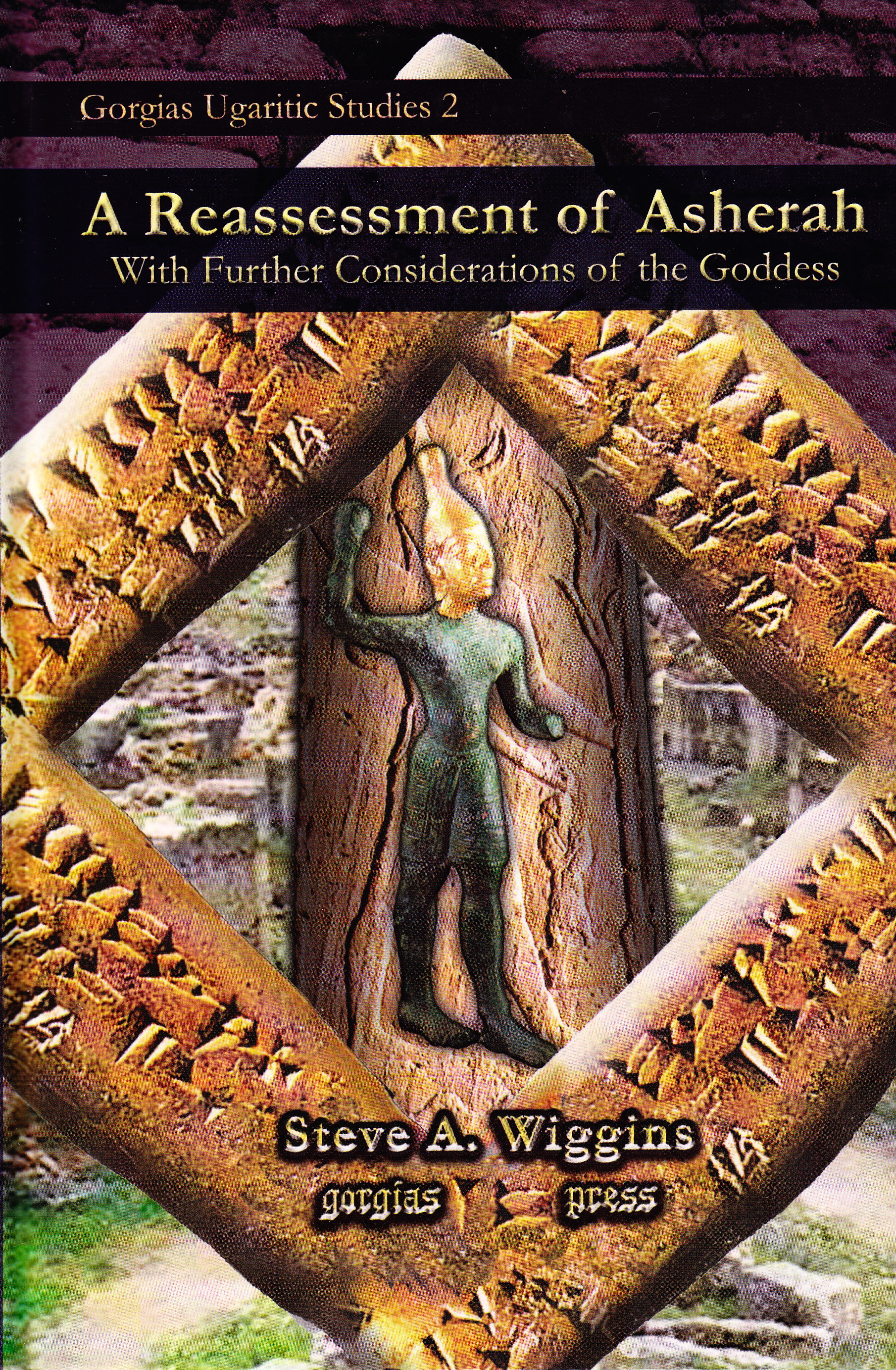
One of the greatest thrills a writer can know is opening that first box of their author copies of a book.  Many academic publishers are cutting down the numbers, to save money, of course.  McFarland, I’m happy to report, still provides ten, which used to be standard.  So before I start doling them out, I have, for the moment, ten copies of my sixth book.  I have only one copy of the second edition of A Reassessment of Asherah and two copies of Nightmares with the Bible.  They’re both too expensive for me to buy more.  (Income from writing books may bring images of Stephen King or J. K. Rowling to mind, but they’re household names because their situation is so exceptional.)  Right now, however, I’m bathing in the glow of knowing, at least at the moment, my latest book is being perceived.


A Glimmer

You just never know.  A few months back I emailed Liverpool University Press because my book, The Wicker Man, has apparently not sold any copies.  I had never received (have still never received) a royalty statement or any payment.  Now, I’m willing to accept that no copies have sold.  I’m not a recognized name and a bigger book came out in 2023, the fiftieth anniversary of the film.  I moved on.  Then, the day before my Sleepy Hollow as American Myth copies were scheduled to arrive, a friend sent me a text that made my day.  He’d seen on the MIT bookstore staff picks shelf, a copy of my humble little book.  I was floored.  Someone had read it and liked it.  And MIT!  I mean, that’s worth celebrating.  It also made me curious.

Image credit: a friend

I checked a website that tracks classroom adoptions.  The Wicker Man had been adopted for a class at Kennesaw State University in Georgia.  Ironically, just the day before my friend’s text arrived, a colleague at a nearby seminary asked if I’d come and give a talk about Weathering the Psalms.  This is all very dizzying to me.  I am an obscure private intellectual because no schools will open resident scholar or any other such non-tenure positions to me.  I can’t even verify myself on Google Scholar.  But a few people, it seems, have found my books.  In case you might think otherwise, I’m very well aware that the scholarly world is small (and the current administration would like to make it smaller by the day).  But I tend to think of myself as lost in that small world.

The Wicker Man was a departure for me, as is Sleepy Hollow as American Myth.  In these two books I moved away from my identity as a scholar of religion.  Don’t get me wrong, I’ve used my background and experience, and even latent knowledge of religious studies in both books, but they aren’t fronting religion.  It remains to be seen if the just curious will pick them up.  I know many people don’t default to, “I find this interesting, I’ll buy a book on it,” as I do.  And I’m more than willing to suppose that others aren’t interested in what I have to say.  Still, just when I’m starting to feel down on all my efforts, a little ray of hope shines through.  Someone in a bookstore somewhere has recommended one of my books.  And it feels good.


Publish, Perish

Publish or perish has been around for quite a while and I feel for younger scholars who are trying to publish their collected essays as their second book.  Collected essays, in case you’re not familiar with dark academia, are generally what senior scholars do before they retire and they can’t be bothered to rewrite everything into a proper book.  Or maybe the topics are disparate and don’t easily fit together in one category.  When I was teaching the general rule was an article a year and a second book for tenure.  I was able to do this without a sabbatical, and with a heavy teaching load and administrative duties at Nashotah House.  It’s a lot of work.  My biggest challenge was coming up with ideas for new books.  Eventually I published my collected essays on Asherah in the second edition of my dissertation.

I’d written a 50-page article on Shapshu, the Ugaritic sun deity, that was intended to be my second book.  Then J. C. L. Gibson retired and I had to have something for his Festschrift.  There it went.   It was about that time that I started Weathering the Psalms.  That was my “tenure book.”  There was over a decade between that and Holy Horror, for a number of reasons.  The main one was that I was trying to cobble together a career between Gorgias Press and moonlighting as an adjunct at Rutgers University.  There was no time for research and publication.  Ironically, that only came after I gave up academia to enter the commercial world of publishing.  I see younger scholars now expected to produce that second book, and some of them go for the collected essays approach.  I understand.

Back when I was applying for first jobs—and the scene was already very tight, I assure you, despite promises just a few years earlier—I applied for everything.  One search committee chair wrote a scolding letter saying I wasn’t senior enough to apply.  By the end of his dressing down, he concluded with something along the lines of “unless you’re applying because there are so few positions, in which case it’s understandable.”  He was right.  So few jobs and so much student debt!  I landed at Nashotah and began cranking out the articles.  In a moment of weakness I offered to write some further academic treatments after my horror movie books appeared.  They don’t do anything for my career, of course.  And they take away time from popular writing practice.  Who knows?  Maybe some day I’ll gather them into a book.  Then again, maybe I’ll find myself growing younger too.