
In 1874 (C.E.) a mysterious ghost of an artifact from Brazil was announced. In a story full of twists and turns and multiple Spanish surnames, a director of the National Museum of Rio de Janeiro had received a copy of a Phoenician inscription allegedly found in Brazil. Efforts to trace the letter to its source and to find the actual artifact both ended unsuccessfully, leading the director, Ladislau de Souza Mello Neto, to conclude the letter was a hoax and the artifact non-extant. The story might have ended there had not Cyrus Gordon, one of the premier Semiticists of the last century, allowed his open mind to reexamine the evidence. Gordon, in an article in 1968, argued that the inscription had to be authentic because of advances made in the understanding of Phoenician that would have been unavailable in the 1870’s. Gordon’s interpretation was in turn challenged by Frank Moore Cross, noted Harvard epigraphist, and scholarship heaved a collective sigh of relief and returned to the status quo. No Phoenicians ever crossed the Atlantic.
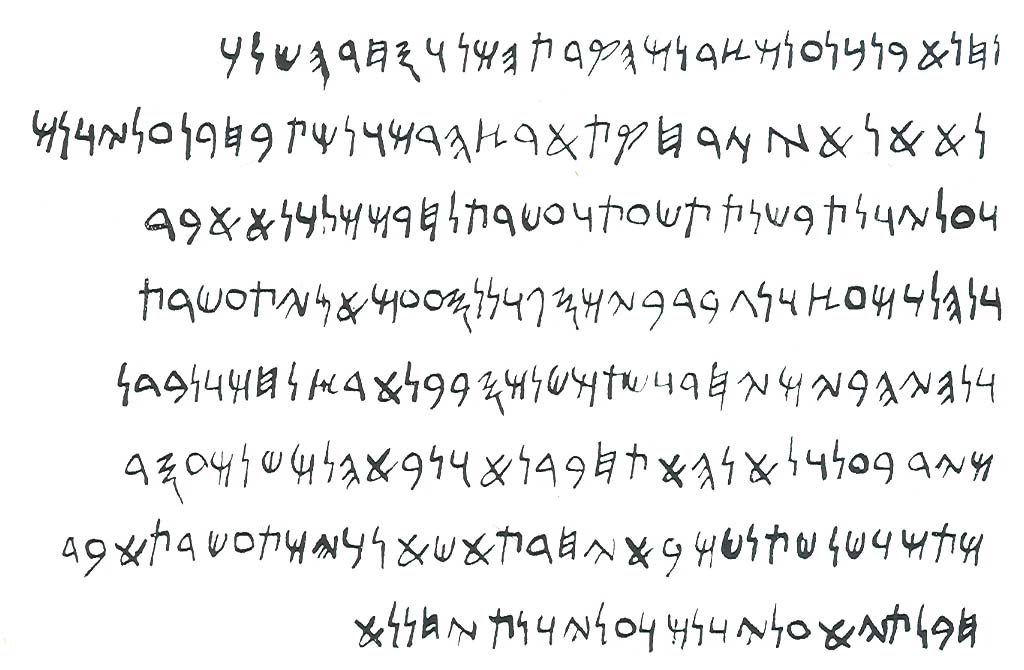
Neto's un-copy of the un-inscription
This little incident highlights one of the persistent conundrums of academic life. Anomalous objects are found/reported every once in a while and mainstream academia immediately debunks them to come back to center. A student of Hinduism asked me recently about the correlation of ancient calendars; before British colonialism hit India artifacts were dated to much earlier periods. Under the influence of Britain Dravidian culture grew younger and the background to European culture was considered more ancient, more time-honored. Those with investment in the system do not like to have privileged positions challenged.
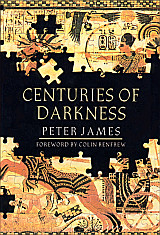
While a post-graduate student at Edinburgh, my advisor had me read Peter James’ Centuries of Darkness, a study that challenged the accepted chronology of the ancient world. Intrigued, we set up a seminar with representatives from the Archaeology Department to discuss whether this was a feasible approach to the many problem areas of ancient chronology. The archaeologists duly trooped in, set up their weapons and took pot-shots at the book, blowing multiple ugly holes in its arguments. After about an hour, when the archaeologists were unable to answer a very specific question by my advisor, he asked, “How many of you have read the book?” Sheepishly, not a hand was raised. The premise of the book was sufficient for its well-deserved snubbing. I learned a valuable lesson about academia that day — open minds lead to trouble. It is a lesson that demonstrates a very basic insecurity of those who do not wish to have their assumptions challenged.


7 thoughts on “Anomalies in Paradise”