
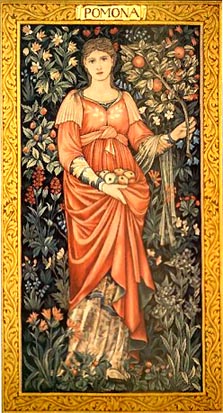
Ancient goddesses have long been a fascination with me. After writing my Edinburgh dissertation on Asherah, and taking employment at an Anglo-Catholic seminary that venerated the BVM – Blessed Virgin Mary, and not some underwear brand, as I had supposed – I realized that male-dominated religions still recognize the need for the sacred feminine. In my recent post on Halloween, I mentioned the Roman goddess Pomona. Roman religion is generally not treated with the finesse of classical Greek mythology, but it represents an important part of our western heritage. Pomona is an etiological goddess. Etiologies are stories of origins, and like other goddesses of the ancient world Pomona was used to explain the mysterious ways of nature.
The story that best describes Pomona is preserved by Ovid in his Metamorphoses. Pomona is one of the virgin goddesses, specifically the goddess of fruit. She has no known Greek antecedents. The myth involves her devoted chastity and her commitment to ripening fruit, particularly apples (and sometimes pears). Shunning all lovers, she was eventually wooed by Vertumnus, the god of changing seasons. Disguising himself as an old woman, Vertumnus visits Pomona and tells her of the wonders of love and of the attributes of Vertumnus especially. Eventually Vertumnus reveals himself, and Pomona, delighted at what she sees, loves him. Of course, apples ripen and seasons change. Winter is soon to come once the apples fall from the tree. The goddess has been subdued by masculine designs.
So it often is with goddesses. Men recognize the need for the divine feminine, but fear it and attempt to tame it. Pomona, however, survives. One of the memorable objets d’art at Nashotah House, where I sat in that chapel for over a dozen long years, was a frieze of the BVM. More technically, a Madonna and Child. The frieze hung over an altar in a side chapel behind the choir, so most people didn’t spend much time looking at it. Mary, holding Jesus, was surrounded by a frame of fruit rendered in plaster. Apples were prominent among them. There are those who suggest that apples show how Mary overcame the heinous sin of Eve. I believe, however, that the fruits surrounding the virgin demonstrate that Pomona, the virgin goddess who eventually succumbs to the advances of the male deity, still has a place in the patriarchal world of Christendom.
 Steve A. Wiggins
3 thoughts on “O Pomona!”