
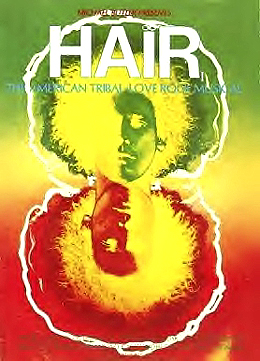
“This is the dawning of the age of Aquarius.” So we hear in the first number of the musical Hair. Since my daughter is learning about the 1960’s counter-culture in US History, she asked her middle-aged parents what life was like then. Well, my wife and I were both born in the early sixties and were a little young to get the full scope of things through juvenile eyes. Besides, I was raised in a biblically literalist family—probably not the best place to gain a great deal of insight into popular culture. We decided to watch Hair instead. One of the few aspects of that era I recall is the Vietnam War (something George W. Bush apparently didn’t remember). The optimism of the hippie movement never really came to fruition leaving an entire era of disillusionment to hang over the remaining years of the millennium. Nevertheless, there is a sense of freedom in Hair that conveys the exuberance of young idealism—something I can honestly claim to have never outgrown. Without idealism we, as a species, are lost.
As I watched the movie for the first time in years its biblical subtext occurred to me this time around. The identity of the youthful protestors is in their counter-cultural hair. Indeed, the show takes its very name from that aspect. Apart from the ubiquity of the hirsute righteousness on the screen, it is essential to the plot. As Claude Bukowski stops in New York City on his way to join the army, he falls in with the Philistine element of society—the long-haired (read uncircumcised) misfits who defy the principles of decency. The dinner party at the Franklin residence makes that perfectly clear. When thrown in jail Woof protests over-strenuously to having his hair cut, leading to the title number. When the friends decide to visit Claude on the army base on the eve of his departure for Vietnam, George Berger has his hair shorn (by a woman) and subsequently loses his strength. His vital force of arguing his way out of any predicament is sapped as he marches to the troop transport plane that flies him to his death. Singing about believing in God as he goes.
I have never used drugs—life has a way of being weird enough already without them—but the sixties seem to have had a moral righteousness that the Tea Party just can’t claim. It was a righteousness borne of speaking the uncomfortable truth to a society that honored the status quo above all else. The very status quo ante the Tea Party craves—a society of bigotry and inequality. A society of privilege and strict conformity. A balding society that has lost its voice. Drugs are not necessary to see unbelievable things. One of the Bible’s original Avengers, Samson tears his Hulk-like way through any crowd, felled only by the cutting of his hair. Hair also led to the death of Absalom, the son whose life David valued more than his own. At the end of the show it is quite clear where the righteousness really lies.
 Steve A. Wiggins
4 thoughts on “Hair Cut”