
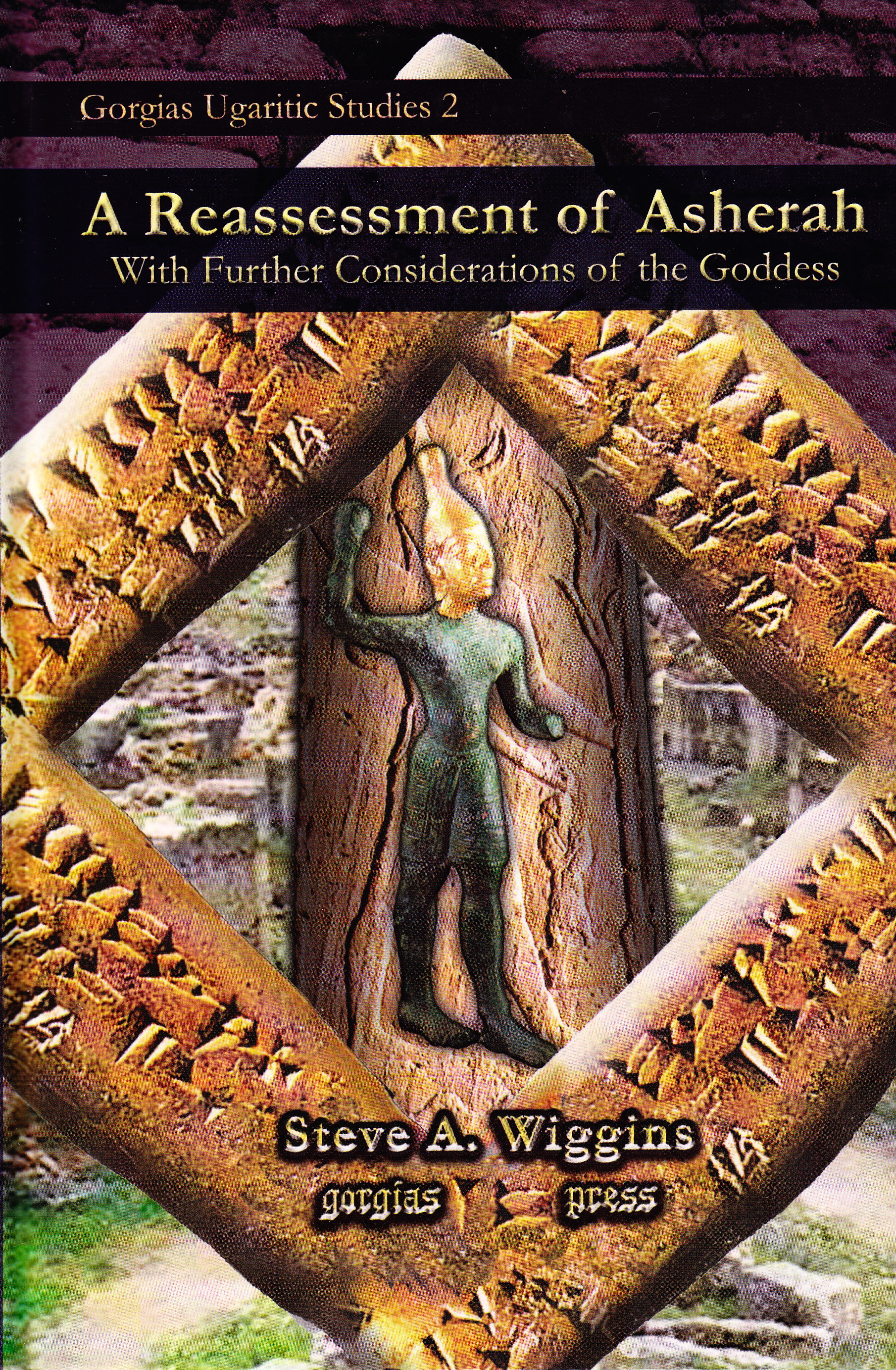
Asherah has a way of coming back into my life. I’d pretty much laid my research on her to rest when a friend convinced Gorgias Press to release my Reassessment in paperback. A few months later I was asked to discuss the goddess on the Biblical Time Machine podcast. You can listen here. My interest, as a young scholar, was to peel back the layers and see what was behind. I’ve always been interested in origins (that interest shows through in all my work) and when I started my dissertation on Asherah only a few monographs existed. In those pre-internet days I didn’t know that at least three others were overlapping with mine. Part of the problem in researching pre-biblical religions is that records are, overall, scarce. There’s a lot of Mesopotamian sources, but their religion is only known in a fragmentary way. The fact is, the largest archive of Asherah material comes from Ugarit. And two Ugaritologists were at Edinburgh in my day there.
I’ve been watching over the years as specialists in Ugarit have begun to disappear. It was as if it wasn’t a sexy enough field of study. From the thirties through the nineties of the last century, interest seemed to be growing. As I’ve argued elsewhere, however, competing with the Dead Sea Scrolls was a fool’s errand. And as I’ve continued to watch, interest seems to have shifted to the Persian Era. There’s nothing wrong with that, of course, but what about the origins? I regret that my grasp of Akkadian wasn’t solid enough, and my appointment at Nashotah House not well situated enough to delve into earlier origins. Origins are why I’ve always been interested in Darwin and Genesis.
One of the research projects that I never had time to pursue was work on Genesis. After all, it deals with beginnings. I did a lot of research for a book that never really had time to take form. The fate of most of those who pursue advanced study in ancient west Asian religions, if they get a job at all, is teaching biblical studies. Others in that boat I used to find working on either Psalms, Job, or Genesis. You see, it all comes back to origins. Asherah was a goddess recognized in some form in ancient Mesopotamia. Not much is known about her. Her role in the Bible and the world of ancient Israel is likewise unclear. With all our technology we can’t replace ancient records lost to time, but when Mars, named after an ancient god, is in our sights, that we can afford. If only we had a Time Machine.
 Steve A. Wiggins