Glossophobia

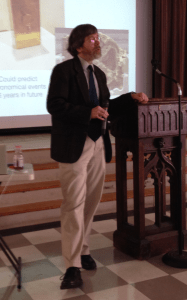
For a guy so full of phobias that there’s no elbow room at Hotel Fear in my head, people are sometimes curious as to why I don’t suffer one of the most common sources of terror: speaking in front of crowds.  Glossophobia is extremely normal.  I suspect it’s one of evolutions tricks for keeping metaphorical cooks out of the allegorical kitchen.  If we’re all talking at once, who can be heard?  The internet will prove to be some kind of experiment in that regard, I expect.  Thing is, I’m not what most public speakers appear to be: confident.  I’m not.  Beneath the surface all kinds of phobias are vying for the next private room to become available.  Over the weekend I had a public speaking engagement, and that made me consider this again—why doesn’t it bother me?
Although the answer to “why” questions will always remain provisional, I have an idea.  It’s kind of creepy, but true.  In my fundamentalist upbringing, I was taught that my life was being taped.  You see, it goes like this: since the book of Hebrews says “And as it is appointed unto men once to die, but after this the judgment,” some Fundies like Jack Chick illustrated this as an outdoor cinema in Heaven.  Or rather, in the clouds just outside Heaven.  Here you’d be summoned, buck naked, as soon as you died.  Other nude souls would gather round the big screen and your entire life would be projected for all to see.  Since everyone’s dead there are apparently no time constraints.  As a kid I realized that I was being watched.  All the time.  Now, I’m not conscious of this constantly, but I did translate it to public appearances.  We’re all, it seems, actors.

With a lifetime of performing experience, by the time I was a teen I wasn’t afraid of public speaking.  Introspection was a big part of my psyche, and when I had a speaking engagement, I knew that I had to be conscious of what I did and said, because people would be watching me.  I learned to play the part.  I did take a college course in public speaking, and even a preaching course offered by the Western Pennsylvania Conference of the United Methodist Church, but both of these were long after I’d begun taking public speaking roles.  I make mistakes, of course, and early on I learned to laugh at them before the audience did.  We were all being taped, after all, and there’s no outtake reel before the pearly gates.  Strange, but true.  If you’re afraid to speak in public just remember—you’re being watched, all the time.

Summertime Boos

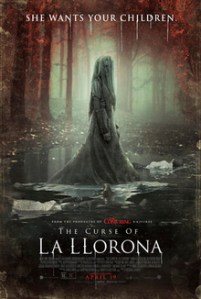
There are so many of them that it’s difficult to keep up.  Movies, I mean.  And they can be an expensive habit.  As some readers may know, I’ve followed The Conjuring franchise pretty much from the beginning.  That particular film was long anticipated (at least in certain circles), but still I waited until it was available for home viewing to see it.  I always feel kind of selfish going to the movies on my own since they are a kind of event—a form of social outing.  For me, however, horror movies are research, but that hasn’t taken away the thrill of seeing one on the big screen once in a while.  The Conjuring branched off into the Annabelle movies, and I caught the latest offering in the latter series in a theater.  I hadn’t realized that The Curse of La Llorona had been released a couple months earlier, and that it was being considered part of the diegesis.  It was back to the small screen to catch up.

La Llorona is based on a Mexican folktale and is tied to the other films in its universe by a character who recurs from Annabelle, Fr. Perez.  He’s not the protagonist, but he does introduce one way in which horror responds to the present insanity we call the US government—the character who defeats the fiend is hispanic.  In fact, most of the characters in the film are from hispanic families in Los Angeles.  They take down the ghost without the assistance of border guards or any kind of wall.  They don’t need the simpering help of the GOP.  Like most of the movies in this franchise, however, they do make use of religion.

When Fr. Perez can’t offer immediate help to the family beset by La Llorona (“the weeping woman”), he points them to a local shaman.  In this otherwise Catholic world, the truly amazing outcome is that the faith healer does possess the knowledge and ability to stop the evil.  While the backstory of the ghost is well known, the nature of the entity is a bit unclear.  Most Conjuring films feature a demonic presence, so it’s kind of a relief to have a garden variety ghost for a change.  You see, when Ed and Lorraine Warren challenge entities in these movies they do so with religious accoutrements which tend not to fail.  Ghosts, however, traditionally don’t require a religious banishment.  We’re entering new territory here, of course.  And I hadn’t even known about this film until after I’d seen its predecessor.  How can you hope to keep up with spirits?  It’s a full-time job. 


Conjuring Success

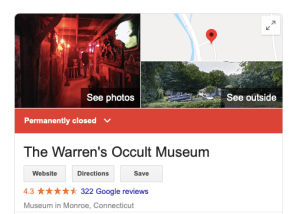
I wonder if it’s one of the consequences of success.  While writing up some thoughts on The Conjuring diegesis, I got to wondering how accurate the movies’ portrayal of the occult museum of Ed and Lorraine Warren is.  The museum set appears in multiple films, and in Annabelle Comes Home it serves up a smorgasbord of horror.  Some of these artifacts, such as Annabelle, really do hold places of infamy in the establishment and some are clearly used in the cinematic version to set up spinoffs to keep the franchise alive forever.  Curiosity drove me to the open web—website owners of spaces of reputation now distrust this “open web,” what with its money grubbing and lack of peer review—to peruse some actual photos.  That’s how I learned the museum is permanently closed.  The reason given: zoning issues.  (I presume they don’t refer to the Twilight Zone issues.)

That The Conjuring franchise has proven remarkably successful hardly requires footnoting.  With The Conjuring 3 due out next year, a total of eight films will have been produced over seven years, currently and it currently stands as the second most profitable horror franchise in history.  For anyone wondering why I wrote Holy Horror, such numbers may help explain.  Now what of these zoning issues?  I wonder if it’s not the number of visitors drawn by the films that have created a problem.  (Those with questions aren’t purchasing Holy Horror, that’s for sure!)  Since the Warrens have now both passed away, the New England Society of Psychic Research runs the museum and is seeking a new place for it.  (We have space in my garage, just sayin’.)  And hey, Gettysburg isn’t too long a drive from here!

Success, I suspect, does come with its price tag.  People are drawn to those who’ve captured the interest of the big screen, and what with everyone dying death is a growth industry.  I suspect part of horror’s appeal is just that.  We all have to face it some day and while many run from it screaming some use this opportunity to prepare.  But I’ve also got to wonder if it can maintain its level of fear.  I recently watched the current iteration of It and found little that was even frightening about it.  But then again, clowns have never bothered me that much.  The bullies are the scariest thing in the film and Washington DC’s full of them.  Talk about success and its consequences.


Monsters and Gods

Nothing makes you feel quite as old as seeing a documentary where the names of the experts are unfamiliar to you because they’re too young.  So it was when I watched PBS’s Ancient Skies episode “Gods and Monsters.”  They had me at “Monsters” although I know that when paired with gods the term generally refers to Greek mythology.  This documentary had a pretty cool rendition of Marduk battling Tiamat that would’ve left many a Babylonian quaking in his or her sandals.  Ranging across the world, it showed the earliest efforts to understand astronomy, and then went on to contrast it with how the ancients nevertheless still believed in gods.  It was a striking kind of condescension, I thought.  Many scientists today still believe in a deity, although it’s no longer the fashion.

That sharp dichotomy, that either/or, bothers me a bit.  It’s not that I have a problem with science—I’ve always supported the scientific method.  No, it’s the idea that everything is explained that bothers me.  We understand so little about the universe.  Yes, we’ve made great strides over the past millennia, but we’ve not even been out of the cosmic neighborhood yet.  And I wish we could acknowledge that even on earth life is still a mystery that can only be solved with poetry as well as reason.  “Gods and Monsters” made the point that the ancients realized the explanatory value of stories.  Myths weren’t just idle constructs to pass the time.  They were ways of understanding how this universe works.  Some people take their mythology too seriously, of course, but that doesn’t mean that no stories are required to make sense of it all.

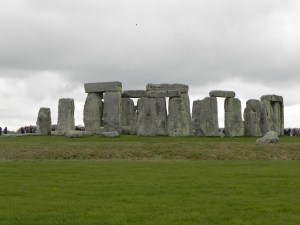
It was the inherent conflict implied between science and religion, I think, that bothered me the most.  Not everything in life comes down to an equation.  That doesn’t mean that equations are wrong, just that they’re not everything.  One of the points Ancient Skies makes is that people of bygone eras had a very sophisticated understanding of the sky.  It featured the builders of the great pyramid of Khufu, those who constructed Stonehenge, the Maya, and the Babylonians.  They all knew much of the math that would only be formulated in Europe much later.  And they all assuredly believed in gods.  It didn’t prevent them from complex thought in either architecture or astronomy.  Our modern dilemma is the razor burn left by standing before the mirror too long with Occam.  You don’t have to shave to support science.


Funny Business

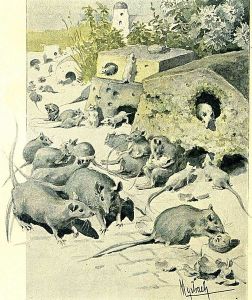
Do animals laugh?  The question sounds innocuous enough, and when my wife played me a RadioLab episode on that very question, the conclusion, although cautious, was that at least rats and chimpanzees do.  This is an instance in which the very question strikes me as terribly speciesist.  Despite the fact that evolution suggests otherwise, Homo sapiens are constantly seeking that fabled northwest passage that will separate us from animals once and for all.  One by one, over the decades, the defining traits have fallen aside.  Animals make and use tools, they build dwellings with ornaments, they solve puzzles, they communicate, and they laugh.  Were we not so obsessed with our own greatness (and consider whom we’ve elected over the past few years!) we might easily recognize that we have evolved to be what we are.

Perhaps it’s because we wish to retain our right to exploit animals.  After all, eating animals is big business and it’s harder to eat someone who’s not so very different from you.  In our culture certain animals are taboo for fodder: dogs, cats, and horses, for example.  This isn’t universally the case, and knowing that animals laugh might just make it a little worse.  We like to think animals “react” using “instinct” rather than respond with genuine emotion.  Until we fuss and fawn over Rover, and accept his affection as genuine.  Consciousness can be quite a burden to bear.  Funny, isn’t it?

We accept evolution up to a point.  Is it any wonder then that creationists still are a force with which to contend?  Often we fail to recognize that science, as it has developed in the western hemisphere, gestated in a largely Christian context.  The reason for drawing a hard line between animals and humans is ultimately, in this setting, biblical.  We’ve moved beyond the idea of God creating each separate species one-by-one, but we haven’t gotten beyond the literal truth of Adam naming and dominating them.  If we don’t consider the biblical origins of these ideas they continue unchallenged, even into the laboratories and sterile rooms of today.  It makes us a bit uncomfortable to consider just how influenced we still are by the Good Book.  At the same time we consider its meta view on the biological world, even as the evidence continues to pile up that little, if anything, really separates us from our faunal kin.  Try explaining that to the rats.  That sound you can’t hear without special equipment, by the way, is their laughing.


Identity Crisis

Living in Boston can be a heady trip for a budding academic.  Even if you’re across the river from Harvard and MIT, it’s a city known for its education scene.  Like many who studied there, I never wanted to leave.  A fringe benefit of being a student of religion was that a short trip would take you to Peabody.  Why?  Peabody was home to CBD—Christian Book Distributors.  In their showroom they had rock-bottom prices for something theology students crave—books.  That was many years ago now, and over time CBD grew to be the largest distributor of Christian paraphernalia in the country.  In my mind they’ll always be associated with happy little trips that ended in armloads of reading.  What more could you want?

A story by Emily McFarlan Miller explains why the revered CBD is changing its name.  Cannabidiol, a legal derivative of cannabis, is popularly known as cbd.  Lots of things share initials, of course, but these are the days of the web, and an internet search for cbd now pushes the distributor (at least the book distributor) off the first page.  One thing we all know in this online universe is that you’ve got to be on the first page.  CBD’s decision might seem extreme—changing the name of the business to get back on the front page.  Despite the amusing aspects to this story, it emphasizes something of an ongoing jeremiad with me: the web has redefined reality.  Think about it this way: when a digital image is over-enlarged it pixellates.  That’s because it’s composed of minuscule squares of a single color.   When brought together in a pattern, they form images we recognize.  It their basis, however, they are squares.

The earth, however, is an orb.  The natural state of falling liquids—the principle behind the shot tower—is a sphere.  Now, spheres together in a closed space leave gaps—just look at a jar of marbles and you’ll see what I mean.  That’s the order of the natural world.  Reality, if you will.  Tech, on the other hand, is pixels.  They fill the space better, and if done well can create the illusion of a curved line.  They can never, however, fit into a round hole of the same surface area.  The world has gone after the convenience of the internet in a small box.  It has changed the recording industry, the movie industry, and the publishing industry.  And just try to find your way to CBD on it.  You might have to change your search parameters.


Digging Well

Having spent a good bit of the past week in waiting rooms in Ithaca, I fell to reading Tompkins Weekly, the free local community paper.  If you’ve spent any time on this blog you’re no doubt aware that I have an interest in the weird and unusual.  Although I got teased rather mercilessly for this as a kid, thanks to The X-Files such interest has become somewhat mainstream.  In any case, after fumbling with the crossword and finishing the sudoku, I read an article about dowsing.  Now Tompkins County is the home of both Cornell University and Ithaca College, so I was a little surprised in finding such a topic addressed at all.  What’s more, the usual ridicule expected with anything even approaching the paranormal was lacking.

Dowsing is the practice of finding water, or other underground resources, by using a crotched stick or dowsing rods.  A larger version of the quantum “spooky action at a distance,” dowsing is said to produce an effect on the twig or rods that will point to the hidden source.  Like ESP it is decried by mainstream science yet used by some governments when other methods fail.  As an example of “folk wisdom” dowsing occupies a similar, if less conventional, space to religion.  Scientism has taught us not to trust the invisible.  Scientists, however, are well aware that we can’t see everything.  We slide a finger around our collar, however, when something “unscientific” seems to work.  As the dowsers explain, however, there is a kind of science to what they do.  Problem is it doesn’t work for everyone.  Only some people can do it.

Now I’m not a credulous person.  I spent many years and even more dollars learning how to be a critical thinker.  Skepticism, however, leads me to ask how we know that dowsing can’t possibly work.  Have we discovered all there is to know in this infinite but expanding universe?  With finite minds it seems highly unlikely.  Duke and Princeton Universities once studied parapsychology in an academic setting, and the University of Virginia has left some related areas open to investigation.  The real problem is that we’ve been taught to laugh at anything we’re told to.  The US Navy, for instance, has recently revealed that it takes UFO reports seriously (unlike Project Bluebook).  We’ve been laughing so long it’s difficult to take even the military at face value.   Does dowsing work?  It’s difficult to say without all the facts.  Of course, I’ve been sitting in a waiting room, pondering what we don’t understand.


Born Once More

Every once in a while a reader, either here or on other social media, asks me what my religious beliefs are.  The expected answer to such a question is the standard label of a denomination of some sort.  My response, however, is that knowing the group I belong to (and I do) should not effect the way my thoughts are viewed.  With the exception of some groups suspected of mind control, standard religions are generally trusted as being motivated by pure intentions.  Having both attended and taught in seminary settings, and knowing a great number of clergy, however, it becomes clear that denomination is less important than one might think.  In short, I answer this question in the public forum of neither classroom nor blog as I truly believe there’s nothing to be gained by readers/students knowing where I personally seek meaning, denominationally.

It’s no secret that it was once the Episcopal Church.  (I could not have taught at Nashotah House otherwise.)  It was made pretty clear after being at said seminary for many years that the Episcopalians had no official place for me.  Even when I worked a few blocks from the church’s headquarters in New York City I could find no one willing to listen or consider my credentials.  Its Church Publishing branch wouldn’t consider me in their book wing.  Were it not for some former students who still minister to me, it was clear they did not miss me.  So it was with some surprise that I found myself in Nativity Cathedral in Bethlehem on Saturday for their Celtic Mass.  The Cathedral itself is lovely with a négligée of wrought iron tracery for a reredos, appropriate for a city built by steel.  Eight angels with outspread wings stood atop it.  Like most sanctuaries, it was a place of refuge from the busy, noisy street outside.

The reading from Amos 7 stood out to me.  Lectionaries, by definition, take pericopes (selections) out of context.  Amos’ vision of the plumb line is actually part of a series of visions, but here stands alone with the episode of Amaziah trying to send Amos back to Judah.  The prophet responds by saying he’s not a prophet, but just a guy who’s received a message from God.  In ancient times there were prophets paid for their services.  They supported the government positions and governments made sure they were cared for.  The situation hasn’t much changed, at least among conservative religious groups under a Republican administration.  There were other parallels here, but saying too much on them might end up giving too much away.


Bible Misunderstood

Okay, so I wrote a post a couple days ago about evangelicals challenging Trump’s China tariffs because it will raise the price of Bibles.  Little did I know that Miriam Adelson wants a “Book of Trump” added to that very Bible.  Now, heroes are a personal business; to each their own.  Adding someone to the Bible, however, especially when that person has no idea of what Jesus said, is problematic.  Biblical and ecclesiastical scholars know that even if most Christians agreed books simply can’t be added to Scripture.  Many think the Gospel of Thomas should qualify—it may actually be closer to the words of Jesus than some of the canonical gospels and was putatively written by a disciple.  Thomas, however, will never make the cut.  Early bishops and elders in the church set pretty firm limits to the New Testament.  

Some religious traditions, such as Mormonism, have gotten around this impasse by writing entirely new sacred texts.  Loyal Trump followers might indeed fit the description of what used to be called a cult.  Thing is, George W., and George H. W., and even Ronald Reagan were more religious than the incumbent and nobody suggested adding them to the Good Book.  Our world has somehow flipped upside down in the last three years.  All I know is that in the photos of Trump with the most Jesus-like Pope in modern memory the Holy Father wasn’t smiling.  Then again, the Pontiff would likely not autograph Bibles if asked to do so.  Has anyone suggested a book of George Washington?  There’s such a thing as getting carried away.  

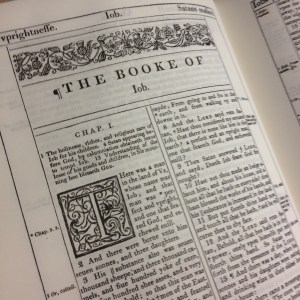
The Bible, apart from being the sole recognized authoritative text of the world’s largest organized religion, is an iconic text.  This means that the Bible is recognized as an important book—perhaps even a stand-in for God—without considering what it actually says.  This was a major point behind Holy Horror and it’s essential to understanding American political behavior.  Manipulating Scripture for political ends is generally the most cynical of approaches to the Good Book.  In America you can drive down highways and see the Bible advertised on billboards.  Large segments of an increasingly secular society are still motivated by it.  There was a time when it was believed that such cavalier suggestions as that of Ms. Adelson would constitute blasphemy, or would at least profane the founding book of Christianity.  In the minds of some Trump has clearly become a god.  So it was in Rome before the fall.


Good Ground

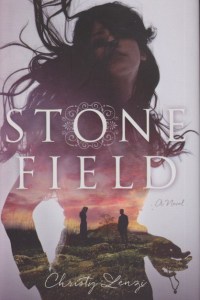
Young adult literature gives me hope.  The quality, speaking for a guy who grew up in a small town with limited choices, has improved astronomically over the past several years.  One of my favorite (adult) novels is Wuthering Heights, and so it’s no surprise that I found Christy Lenzi’s debut novel Stone Field quite engaging.  Set in a different time and place, and with a younger readership in mind, it retells the story of forbidden love based on xenophobia.  The message has never been more relevant.  Although it avoids explicit language, it does include adult situations and features a strong female protagonist in an age of explicit gender inequality.  During the chaos leading up to the Civil War, star-crossed lovers are set against one another because prejudice is a most effective poison.

While not a religious story, the iconic Bible plays a large role in it.  One of the main characters is a preacher, but even without him Catrina Dickinson’s family and friends are ready to quote the Good Book as unquestioningly as a Republican (with my apologies to fiscally conservative friends untainted by this aberration).  This is beyond a realistic portrayal of American life of the 1860s, it reflects the way that many people continue to think of Scripture.  Nevertheless, in one crucial episode of the story set in the church at Roubidoux, Missouri, the iconic role of the Bible becomes clear.  It is deftly woven throughout the story in a way that might serve as a lesson for modern writers seeking verisimilitude.  Many authors fear to address religion, but the Good Book is alive and well in these post-frontier days.

Often the desire to avoid religious motivations leads to stories that lack a key element of the social fabric.  In my own attempts at fiction religion is seldom absent.  It is the way average people live.  Lenzi presents Cat as being aware of but unwilling to be cowed by the Bible.  Indeed, as the story unfolds with several tragic events (remember, Wuthering Heights) she demonstrates that Catrina knows but doesn’t accept the strictures of Scripture.  The issue of theodicy hangs heavily in the atmosphere of the novel.  To me, this makes stories appear more life-like than tales that simply suppose religion doesn’t impact people.  When tragedy strikes, many people question what God, or their stand-in for the divine, is doing.  Anyone who’s asked “why me?” has directed that question into the world of theodicy, whether intentionally or not.  Reading this story while going through a family illness may have drawn this to the surface, but it underscores just how effective it may be for a realism that is otherwise lacking, whether in fact or young adult fiction.


A Decade

Please pardon my being sentimental, but today marks one decade of blogging on Sects and Violence in the Ancient World.  I realized, thinking this over, that I used to make some interesting, perhaps even quotable statements back then.  Why not, I thought, farm those older posts to celebrate what I was thinking when I was a tenth-of-a-century younger?  So for today’s post, I’m presenting some quotable quotes from July 2009, starting with one of the zingers from my very first post.  For convenience, I’ve even provided the links to the posts so you can see them in context, if your July has somehow not filled itself up already.

Sects and Violence in the Ancient World, by the way, was the name given when one of my nieces thrust a recorder in my face and asked me what I would call a blog, if I had one.  She subsequently set this site up for me.  One aspect of the title may not have been evident: it’s a quasi-anagram for my initials.  It has been, from the beginning, mostly metaphorical.  Without further ado, then, a few of my favorite lines from a decade long gone:

“He had a sidekick called Cypher (sold separately), and arch-enemies with such names as Primordious Drool and Wacky Protestor. I marveled at the missed opportunity here — they could have called them Text Critic and Doctor Mentary Hypothesis!” First post: Bible Guy, July 12, 2009. <https://steveawiggins.com/2009/07/12/bible-guy/>

“Technology has outstripped reality.” Asherah Begins, July 13, 2009 <https://steveawiggins.com/2009/07/13/asherah-begins/>

“Black and white are not in the palette of serious religious studies.”  God is Great (not)?, July 14, 2009 <https://steveawiggins.com/2009/07/14/god-is-great-not/>

“When he [Aqhat] refuses to release it to the goddess he is unfortunately pecked to death in a hitchcockian demise by a swarm of buzzards with attitudes.” Sects and Violence, July 15, 2009 <https://steveawiggins.com/2009/07/15/sects-and-violence/>

“Indeed, one may think of them [religion and monsters] as fellow ventricles in the anatomy of fear.” Vampires, Mummies and the Holy Ghost, July 16, 2009 <https://steveawiggins.com/2009/07/16/vampires-mummies-and-the-holy-ghost/>

“Better to consider it [weather] human than to face unfeeling nature.” Changing Faces of the Divine, July 18, 2009 <https://steveawiggins.com/2009/07/18/changing-faces-of-the-divine/>

“As the gods are drinking themselves senseless (how else can the latest Bush administration be explained?)…” Drunken Moonshine, July 20, 2009 <https://steveawiggins.com/2009/07/20/drunken-moonshine/>

“As usual, we kill off what we don’t comprehend.” Not Lion, July 22, 2009 <https://steveawiggins.com/2009/07/22/not-lion/>

“A bonobo was recently documented as uttering the word ‘yes’ to a keeper’s question, officially making her more articulate than some clergy I’ve known. Even today there are churches that still call their leaders Primates!” Religious Origins, July 23, 2009 <https://steveawiggins.com/2009/07/23/religious-origins/>

“I never used a computer regularly until I began my Ph.D., and then it was only a glorified typewriter, qwerty on steroids.” Who We Were, July 27, 2009 <https://steveawiggins.com/2009/07/27/who-we-were/>

“I grew up in a blue-collar household where paying ladies for favors was itself considered a sin.” Yes, Mammon, July 28, 2009 <https://steveawiggins.com/2009/07/28/yes-mammon/>

Where do you suppose we’ll be a decade from now?


Trumping the Bible

The media is chattering about one of the very many contradictions of evangelicals who support Trump.  Since I have a foot in the world of the Bible business, I read with interest how Trump’s tariffs on China will put Bible publishers in a bind.  You see, the Good Book is generally sent offshore since printing costs (and technologies) are too expensive to replicate in God’s new chosen nation itself.  This lack of divine foresight should be a bit disturbing.  The entire evangelical enterprise is based on their reading of Scripture, and the belief that the divine choice of America is behind such momentous events as 45’s election.  Maybe we should check our pipes for lead.  In any case, Bibles, which are printed cheaply in high volume overseas, are set to become too expensive to give away because of the great pretender’s tariffs.

A few media outlets have picked up this story, including one that noted Trump’s favorite Bible verse is “an eye for an eye, and a tooth for a tooth.”  The famous lex talionis statement was famously, well, trumped by Jesus who said that the ideal was to turn the other cheek.  In a rather Philistine way, evangelicals have sided with a man who says Jesus was wrong.  If you want to check up on me in your Bible you’d better get your wallet out.  Ironically from a Republican point of view, tariffs are themselves the breaking of the commandment of free trade.  Still the party that claims to believe that does nothing to prevent the sale of their souls, cash on the barrelhead.

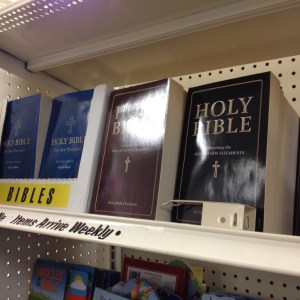
Many evangelicals may find the idea of Bibles as a business distasteful.  It is, however, extremely profitable for those on the supply end of the deal.  Bibles are printed at a volume that would make most authors green, and due to its size the Good Book requires specialized paper most of the time.  This is so much the case that Bibles not printed on “Bible paper” just don’t feel like sacred writ.  Since costs of living in the United States are quite high, and since this kind of specialized printing would be too expensive in this situation, publishers outsource God’s word.  Some publishers have been pleading with the government to exclude books from Trump’s tariff so the Good News can continue to spread.  The fact is that only one deity, called Mammon in the Bible, runs this enterprise.  And to continue to buy Bibles at the evangelical rate will soon be requiring an act of sacrifice.  I guess the lex talionis still applies.


Naming Rainbows

Living in the area around Allentown-Bethlehem-Easton (ABE, in airport parlance), one can’t help but be aware that Crayola is based in the E sector.  We visited the Crayola Experience while still residents of New Jersey and if there’s any place that smells like childhood this was it.  One of the truly interesting aspect of Crayola is that it defined specific shades of color.  Or at least Crayola’s version of it.  Many of us have pretty clear ideas about the basic six colors: red, orange, yellow, green, blue, and purple.  Sure, they added “indigo” to make it into a pronounceable name, and changed purple to “violet” to give us the standard seven, but this illustrates the point that I’m making—colors are somewhat relative.  Try to get anyone to describe, famously, puce (which I’ve learned is French for “fleas”).

A friend has recently been sharing stories from a book on the origins of color names (Secret Lives of Colors by Kassia St Clair), from which I learned about puce.  Although I haven’t read the book myself, it has become clear that colors indicate different things to different people.  All of this reminded me of a crisis I faced in my youth.  One of my teachers in middle school, in physics class, mentioned that not all people perceived the same color in the same way.  Or at least there’s no way to know whether they do or not.  Perhaps, he suggested, everyone has the same favorite color, but what they call it is different.  While the latter point seems unlikely, I took to heart that not everyone sees things the same way.  The same dilemma came back to me as my friend showed me various colors and said that her idea of what that color name designated was something quite different.

As in much of what I write, there are metaphors and analogies active here.  A paradox of religions is the great variety among them combined with the certainty that one’s own alone is “the truth.”  And all religious believers tend to be certain that theirs is true.  Like the color names we learn as children, we seldom grow up to question what we were told in our youth.  Some religions appeal to adult converts, but most people stay close to the orthodoxies of their youth.  Religions, like colors names, are a matter of consensus, for there are any number of shades and hues, and what we decide to name them is not revealed from on high.  They do, however, give the world considerable color.


Waiting for a Miracle

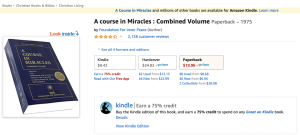
A friend recently sent me a New York Times story about Marianne Williamson’s spiritual background.  Before I say anything more about this I have a confession to make.  I didn’t know who Marianne Williamson was and, consequently, I’ve never read any of her books.  I also didn’t know about her presidential bid, although she seems much more grounded than whatever it is that sits in the Oval Office these days.  In any case, it’s the spiritual background part on which I’d like to focus.  Williamson is apparently a devotee of A Course in Miracles, a book written by Helen Schucman in the 1970s.  According to the NYT article, Schucman penned the book by the dictation of a divine voice.  This aspect seems worthy of further exploration, regardless of politics.

You see, sacred books have a long history of divine dictation.  The Bible makes such claims only obliquely, but clearly there were some who believed that Moses was the recipient of narration from on high.  Mohammed heard a voice saying “Write.”  Centuries later the Book of Mormon was written out at the dictation of Joseph Smith.  The point is that such texts are often believed to have had sacred origins.  I find Schucman’s reluctance to put herself down as the author of A Course in Miracles instructive.  She didn’t believe she wrote it.  Not to devalue any of these sacred texts mentioned, I would nevertheless note that authors often feel that their words come to them.  Maybe academic books don’t count, but when I’m writing fiction, it’s like somebody’s hands are on the wheel, but I’m not sure I’m the one driving (with apologies to Jeff Daniels).

A Course in Miracles has been translated into double-digits languages, something quite rare even among many bestsellers.  What this says to me is that people still crave answers from an authoritative text.  The written word has a power that electronic publication lacks.  Who wants to point to a screen and say, “this is divinely revealed truth”?  Hefting a heavy book, printed on actual paper, has a symbolic power that outweighs that of ebooks.  Probably it’s because the Bible paved the way.  We’re already primed for a sacred text, in physical form.  The longer I study holy books the clearer it becomes that they will unlikely ever cease to be written.  Helen Schucman didn’t have the last word.  As long as people write it’s doubtful anyone ever will.


Dark Theology

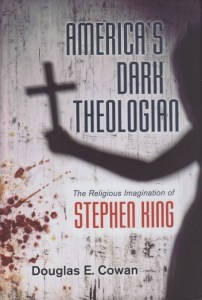
I’ve been struggling for several years, I expect it’s no secret, with how horror and religion relate to one another.  Many think the task itself pointless, as if pop culture can simply be brushed off like an annoying bug.  But flies keep coming back.  They won’t be ignored.  Almost a decade ago I discovered Douglas E. Cowan was also walking this spooky path past the cemetery.  I also know that as an academic he must demonstrate his chops in technical projects.  America’s Dark Theologian: The Religious Imagination of Stephen King was extremely welcomed by me.  Like many people I’ve read some Stephen King.  Like Cowan, I’ve noticed how often and how deeply religion is entangled in his story-worlds.  Before King is simply dismissed, we must reckon with the fact that movies based on his novels and stories have a long  pedigree and almost canonical status.

This is not the place to analyze America’s Dark Theologian in depth, but it is a place that would highly recommend the book.  Cowan takes several aspects of King’s works and shows how they tie explicitly to traditional religious thinking and longing.  I haven’t read nearly all the books Cowan cites here, nevertheless, the analysis he offers is compelling.  Scholars of disciplines outside religious studies have tended to dismiss it as being moribund.  Cowan shows that those who make a living in pop culture disagree.  King makes no bones about the fact that he sees the application not only of religion, but also theology, as one of the driving forces for his fiction.  We dismiss such observations at our peril.  Think of you favorite King novel and ponder; is there religion there?

Clearly religion’s not always the cause, but Cowan gives a careful consideration to much of King’s oeuvre, and there’s no denying he’s onto something.  As he points out, King is far more interested in the questions than in the answers.  Those who know religious studies—theology, if you must—know that the same is true there.  I’ve studied religion my entire intellectual life.  One of the reasons students evaluated my teaching so positively, at least I hope, is that because I encouraged the questions and did not privilege the answers.  In this field, answers are merely speculations.  We only really fall into serious danger when we cease asking questions.  Cowan does an excellent job of parsing out some various pieces that will make some kind of basis for a systematic theology of Stephen King’s thought-worlds.  We would be wise, I believe, to pay attention.