Now You Don’t

Quite some time ago I realized I should read Ralph Ellison’s Invisible Man.  What put me off, as usual, was length.  Long books take a real time commitment, but since Black History month is coming up, and we’ve just celebrated Martin Luther King, I planned ahead and read.  A profound book, at several points I felt like a voyeur reading it.  The African-American experience of life is something I always feel uncomfortable approaching.  I’m afraid of appropriation, and I’m afraid of not paying attention.  I grew up not having a sense of racism, but nevertheless am implicated in the whole.  Maybe that was intentional.  As a story Invisible Man is often described as a picaresque, but having an unreliable narrator who was a victim of my own culture was difficult to countenance.  It was hard to know what to think.

We never understand another person’s experience of life.  We sympathize, we empathize, but we can’t really get inside the head of even our best friends.  I can’t help but think we’d all be better off we recognized that race is a social construct, and a potentially evil one at that.  We are all human beings and we should act that way.  But this novel left me wondering if it’s really possible.  Good novels will do that to you.  So I’m sitting here scratching my head and a little bit flummoxed by what I’ve just experienced.  Was it authentic or can I not help but project my own experience as an non-minority upon someone else’s writing?  Even questions like this are socially conditioned.  I too am trapped in my own mind.

You might think that by this time we would have evolved beyond our distrust of those long separated from us by natural barriers.  Homo sapiens are distrustful of strangers, and even the internet hasn’t brought us the understanding we require.  Not yet, anyway.  The background to “race relations” in the United States can’t be separated from slavery and the attitudes it engendered.  On almost every page of Invisible Man its traces can be seen.  That kind of cultural memory, and other cultural memories such as Jews being routinely castigated by Christians, or monotheists being raised to combat polytheism, are deep dividers.  Our cure for these evils is understanding.  I had to keep reminding myself that this was a work of literary fiction.  It rings true, however, and although it represents a world I do not know the fact of its publication invites  those of us outside the tradition to read.  Indeed, doing so is one way of attempting to reach understanding.


Poe’s Demons

In Nightmares with the Bible I use an idea penned by Edgar Allan Poe as one of the threads holding the book together.  One early reader complained that Poe didn’t write about demons, so the use of the great man was inappropriate.  That reader misunderstood me.  Today is Poe’s birthday.  As I think about the influence a writer can have on a young mind, I come back to this reader’s comments.  I can’t think of my book without Poe.  No, Poe did not write about demons, but he set the stage for what I’m trying to do in my book.  I’ve read analysts who claim Poe wasn’t a horror writer.  Certainly in the modern sense that’s probably true.  Still, he, like many others, was brave enough to suggest the tenebrous side of life was worth exploring, even if you only had a candle.  

Poe’s monsters were often interior.  They were psychologically probing, and although Sigmund Freud had not yet been born, it’s not inappropriate to say that Poe explored psychology.  Writers, I suspect, often deal with things they can’t name.  This is the way knowledge moves forward, even with fiction.  Especially with fiction.  As I’m reading books by academics who’ve done well for themselves, I often reflect how their legacy will remain within their field only.  It’s the rare nonfiction writer who manages to reach a cultural status that will find readers from other disciplines.  Most of us, however, will admit to reading a novel or two now and again.  Fiction writers, such as Poe, can claim things without backing them up with footnotes and citations.  That doesn’t mean they were any less astute at observing the world than academic writers are.  Often they’re more so.

I didn’t put Poe into Nightmares to show off.  His work has long been in the public domain.  I don’t cite him to claim that he would have agreed with my use of his insights.  No, I cite him because even if he wasn’t a horror writer my early encounter with him started me on a path of exploration.  Poe had trouble getting along in a literary world where rejection was endemic (it still is, I know from personal experience) and making a living as a literary person was unheard of.  He nevertheless knew that fiction was more honest than the alternatives, at least for some of us.  If we wish to face the world with integrity, we should admit that our heroes may have been made so in our own minds.  That doesn’t make them any less authentic, just because we’ve appropriated them for our own purposes.  We borrow what we find meaningful.


Qohelet’s Advice

Academic hypersensitivity.  I fear it’s on the rise.  I know I’ve experienced it myself—that flushing rage and disbelief that someone has written a book on the very topic on which you also published a book, and didn’t cite you.  How could they have overlooked your contribution?  I’ve seen scholars angered to the point of wanting to ruin someone’s career for not citing them.  Now academics can be a sensitive lot.  Remember, some of them specialize to a point of general social incompetence.  Anyone publishing in their specialization is like making a claim to have slept with their spouse.  This subject is theirs!  They’ve spent years reading and researching it.  How dare some new-comer not know this!

One thing many academics don’t realize is just how much material is published.  The flip side of this is just how obscure their work is.  Trade publishing and academic publishing aren’t the same thing, and the former are the books that really get noticed.  When I wrote my dissertation, back in the early 1990s, I had read everthing I possibly could on the goddess Asherah.  When I proposed the dissertation topic there had been a total of about three books written on Asherah that I knew of.  Enough to have a research base, but not enough to suggest it was a crowded field.  While I was whiling away my time in Edinburgh, another American ex-pat was writing on the same topic in Oxford.  The day of my doctoral defense, the outside examiner came in with a book just out on Asherah—in German, no less—and asked how my dissertation related to it.  Even today when I see a book on Israelite religion I flip to the back to see if my book’s listed.  Generally it’s not.  Today it’s impossible to read everything published on Asherah.

In my own case, however, I’m slowly coming to perceive the reality of the situation.  Books continue to be produced.  Articles are published at a blinding rate.  Even Google has to take a little time to find them all.  An overly inflated sense of self-importance can be a painful thing when it meets with the sharp pin of reality.  Your academic book may well go unnoticed.  Even if it’s good.  It may be priced at over a hundred dollars—I still pause and fret and kick the dirt a few times before buying any book that costs more than twenty.  Silently and slowly, I suspect, the frustration builds.  You see a book, then two, then three, that seem to be oblivious to your contribution.  A new book for review lands on your desk and Vesuvius erupts—why am I not cited?!  Has my work been forgotten?  Calm down.  Breathe deeply.  The book of that neophyte before you will also become obscure in due course.


Strange Powers

Some books take you to strange places.  Not all of them are fiction.  I began Nightmares with the Bible as a way of understanding the many, disparate ideas of demons I encounter in popular culture.  (I can’t tell you too much about my conclusions, otherwise you wouldn’t be tempted to buy the book!)  One of those nagging questions is: what does “based on a true story” mean?  I’ve known of Walter Wink’s powers trilogy for many years.  Because of my research I’ve now settled down to read Unmasking the Powers (number two, for those keeping count).  This book will take you into strange places.  Wink was very much a Christian in his outlook and orientation.  At the same time, he raises questions I’ve had other Christians put to me—were the “gods” of other nations, as in the Bible, real?  That word real is slippery, and Wink tries to hold onto it.

Unmasking the Powers is a kind of systematic exploration of the various “spirits” found in the universe we inhabit.  One of these is the Devil, and although Wink doesn’t see him as necessarily a “being,” neither does he find the Bible making him entirely evil.  Indeed, one of the great conundrums of monotheistic belief is theodicy; how is it possible to justify the goodness of a single, all-powerful deity in a world with so much suffering?  Wink approaches this question from an angle we might not anticipate.  He then deals with demons.  Since this is my subject in Nightmares, I found his discussion apt.  And yet again, strange.  Powers emanate from the institutions we create (you might have correctly guessed this was the book I wrote about on Tuesday).  Wink is willing to challenge materialism and take such powers seriously.

Finding a new perspective when we’ve been reared in a materialistic one, can be difficult.  For those of us raised religious, there was an inherent schizophrenia involved.  Our teachers told us of a mechanistic universe, but had Bibles on their desks.  (Yes, this was public school, but let’s not kid ourselves.)  While physics taught us everything could be quantified, church taught us that spirit couldn’t.  At least not by any empirical means.  Wink will unblinkingly take you there.  He offers both scientific and spiritual points of view on these entities, although he tries to refrain from calling them such.  Still, he records many people who have seen angels.  And although quantum entanglement wasn’t really known when he wrote this book, if it had been, Wink would’ve been nodding his head.


New Year Reading

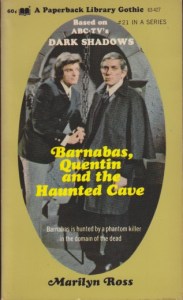
Childhood has a powerful draw.  I first started reading Dark Shadows books when they were published for (I kid you not) 60 cents.  I got them for cheaper than that at Goodwill.  Every time I read one I wonder what my young imagination found so compelling in them, but in an effort to trust my younger self I keep on.  So I read Marilyn Ross’ Barnabas, Quentin and the Witch’s Curse.  The book doesn’t really say anything about a witch’s curse, providing as it does some of the backstory for Quentin.  If you aren’t familiar with that background, and you want to be, Barnabas is a vampire and his cousin Quentin is a werewolf.  Both were made so by curses, a plight the Collins family has long faced.  

In recent years I have read the 19 volumes in the series preceding this one.  They tend to be formulaic, and often show the signs of having been written quickly.  W. E. D. Ross is sometimes listed as the most prolific Canadian author ever.  He wrote over 300 books, mostly in genre fiction.  It’s no wonder many of them sound the same.  Still, I have to admit that both from watching Dark Shadows and from reading these novels as a kid, I liked Quentin.  Yes, he was smug and self-confident, but as a werewolf he had the ability to become someone else.  Unlike other books in the series, this one focuses on Quentin and points a pretty heavy finger to him being a Satanist.  That seemed pretty harsh to me.  There’s a difference between being the victim of a curse and being a Devil worshipper.

Now I know I shouldn’t take this as belles lettres.  Ross is not remembered as a great stylist, master of character development, or for being all that creative.  Dark Shadows was a soap opera—one of the more intelligent of the genre—and there’s only so much you can do with it.  Satanism was a cultural concern in the 1970s.  In the following decades it would bloom into an outright panic.  I’m pretty sure that I never read this particular volume when I was young.  Even now as a relatively mature man I found the implications somewhat disturbing.  The Scooby-Doo ending doesn’t do much to ameliorate the undercurrent of evil.  Quentin always seemed like such a sympathetic character to me.  Maybe it just goes to show what happens when you go for a quick read rather than choosing a book of substance.  Childhood can be that way.


Hereby Resolved

Photo credit: chensiyuan, Wikipedia Commons

New Year’s resolutions have never been my thing.  Having had a good Calvinistic upbringing, I’m a natural self-corrector.  If I’m aware I’m doing something wrong, I attempt to change my behavior right away.  This makes annual reviews at work exceptionally uncomfortable for me.  I’d much rather have my boss point out foibles as they happen so that I can stop doing them right away.  I realize my mindset here may be weird to those who were raised in more normal ways, and employers love process.  So I sit here in Ithaca on New Year’s day, preparing to drive home to face all kinds of unfinished business from 2019.  I’m still doing research for Nightmares with the Bible, thus it’s not ready to go back to the publisher or series editors yet.  I’ve started a new round of queries to agents about one of my novels, but I haven’t sent them yet.  And don’t even mention projects that need to be done to the house.

Life is busy.  I’ve taken on some new duties at the church I attend, exemplifying that old saw “If you want something done, ask a busy person.”  As the pressures from that obligation mount, I start to think that most people don’t have any idea just how all-consuming writing a book can be.  I work long days and although I don’t commute much any more, most of the rest of each day is taken up with writing and reading so as to write some more.  I hesitate to call myself a writer since I make laughably little lucre from it.  I can’t stop myself from doing it, though.  And although it’s the season for resolutions, I don’t plan to stop.  I know from work that graphomaniacs can be a problem.  Anything can be overdone.  On days when I don’t have to work I have to be pried away from my computer.  Otherwise I’ll write all day long.  It’s an issue, I know.

Perhaps because life on the national scale is so depressing, writing about things like horror movies is a great release.  I’ve been so busy lately that I haven’t had the chance to write pieces for venues like the excellent Horror Homeroom.  I used to contribute to Religion Dispatches.  That time has been sucked into getting my books that nobody will read finished.  Having written that self-disparaging remark I have to remind myself that one of my alumni magazines published a notice about Holy Horror without me having to send said notice personally.  That self-disparaging thing requires some fixing, I guess.  And were I not too busy already in 2020, I’d start on it right now.


2019 Books

  Goodreads is always a little eager to put the tally on a year’s worth of reading.  This year, however, since I’ve been engaged in some larger books, they may be on target.  According to their count I’ve read 71 books this year.  (I re-read two, so my personal count is 73.)  New Year’s Eve, for me, is a time to reflect about what I’ve learned in the past year.  Much of that involves books I’ve read.  A good deal of my reading has been for Nightmares with the Bible.  To write a book you need to read books.  Frequently it means taking them on regardless of your mood—and I tend to be a mood-driven reader.  So what books stand out from 2019?  (They all have individual posts on this blog, in case you missed them.)

My first nonfiction book of the year was Christopher Skaife’s The Ravenmaster.  Animal intelligence always makes for good reading and this was reprised in Jennifer Ackerman’s The Genius of Birds.  I’ve fallen behind in my Frans de Waal reading, though.  Of the many research books on the Devil and demons, Jeffrey Burton Russell’s Mephistopheles stands out.  Russell’s clear thinking and wide view make him a pleasure to read even on unpleasant subjects.  Other books in that category didn’t quite rise to his level.  Monster books, on the other hand, rocked.  I loved James Neibaur’s Monster Movies of Universal Studios, Mallory O’Meara’s Lady from the Black Lagoon, and Kröger and Anderson’s Monster, She Wrote.  These were all excellent.  Tipping toward the unusual, Guy Playfair’s This House Is Haunted and Jeffrey Kripal’s The Flip gave me pause for thought.

Perhaps because I was reading longer books, this year didn’t have fiction in the numbers I usually strive for.  Most of it was quite good, though.   David Mitchell’s Cloud Atlas was memorable and Italo Calvino’s If on a Winter’s Night a Traveller (strangely similar to Mitchell) became an instant favorite.  My young adult fix came through Christy Lenzi’s Stonefield and Lois Lowry’s The Giver.  Victor Gischler scored with Vampire a Go-Go and Cherie Priest made a fine impression with The Toll.  I mentioned Neal Stephenson’s Fall yesterday, but it will stay with me into 2020.

A couple of memories/biographies also made deep marks on my mind.  Anne Serling’s As I Knew Him brought me close to Rod Serling and Barbara Taylor Brown’s Learning to Walk in the Dark found me where I live.  America’s Dark Theologian by Douglas E. Cowan isn’t really biography, but it was thought-provoking (as his books always are) and increased my resolve to read some more Stephen King.  The books I read make me more myself.  At the end of each year I think back over it all.  And this year I pondered what got me through a difficult 2019.  I have ended the year more myself than ever, I suspect, and I looking forward to a reading through the new decade.


Falling

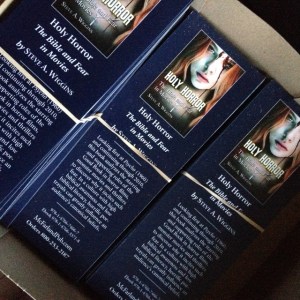
Time.   It’s a resource of which I’ve become acutely aware.  If I probe this I find that among the assorted reasons is the fact that I’ve finished my fourth book and I realized I’m much further behind that I’d hoped to be at this point.  It took me a decade to get Weathering the Psalms published and Holy Horror seems never to have gotten off the ground.  I’ve pretty much decided to try to move on to writing that people might actually read, and academic publishing clearly is not the means of reaching actual readers.  I can’t help compare myself with prolific writers like Neal Stephenson.  (It helps that he’s a relative.)  I just finished Fall, Or Dodge in Hell, and was wowed by the impact of both the Bible and mythology on the story.  I’ve always admired the way that writers like Neal can not only comprehend technology, but also can project directions into which it seems to go. 

Not to put lots of spoilers here, but the story of one generation of gods being conquered by another is the stuff of classic mythology.  Many assume it was the Greeks who came up with the idea, what with their Titans and Olympians and all.  In actual fact, these stories go back to the earliest recorded mythologies in what is now called western Asia.  For whatever reason, people have always thought that there was a generation of older gods that had been overcome by a younger generation.  Even some of the archaic names shine through here.  Like many of Neal’s books, Fall takes some time to read.  It’s long, but it also is the kind of story you like to mull over and not rush through.  Life, it seems, is just too busy.

There’s a lot of theological nuance in Fall, and the title clearly has resonance with what many in the Christian tradition categorize as the “Fall.”  (Yes, there are Adam and Eve characters.)  Those who are inclined to take a less Pauline view of things suggest that said “fall” wasn’t really the introduction of sin into the world.  Anyone who reads Genesis closely will see that the word “sin” doesn’t occur in this account at all.  One might wonder what the point of the story is, then.  I would posit that it is similar to the point of reading books like Fall.  To gain wisdom.  Reading is an opportunity to do just that.  And if readers decide to look into matters they will find a lot of homework awaits them.  And those who do it will be rewarded.


Writing Prophets

So I was sitting at a table with two writers I’d just met.  It was at the Easton Book Festival and since I’m new to the area I was very aware that I didn’t know anybody.  I was also aware that my book, Holy Horror, wasn’t on anybody’s radar screen, despite it being mid-October.  As we were talking my two interlocutors mentioned the advances they’d received for their books, one of whom was able to buy a house with said advance.  As I listened I kept my mouth shut, because that’s polite, even though my jaw was slack.  The other person hadn’t been able to buy a house, but after writing on a topic so obscure I can’t remember it, had been able to do something noteworthy with the advance.  My royalties from Holy Horror wouldn’t have covered the cost of this dinner.

In the weeks following the festival—always busy with AAR/SBL looming, then Thanksgiving, then December—I began some soul-searching.  What was I doing wrong?  I also did some web-searching.  One of the articles that came up, written by a business writer, suggested pulling up your socks and getting to it, demanding money for your writing.  I don’t see anywhere to put a coin slot on this blog, which is more of a labor of love than anything anyway.  Then the kicker came.  This business writer cited Hosea 4.6, “My people are destroyed for a lack of knowledge,” as the basis of why people would pay for content.  Now pardon me for taking things a little literally, but I doubt Hosea was in the business of giving business advice.  The knowledge people lack, in context, is knowledge of Yahweh.

Now here I was back on familiar territory.  I’ve taught classes on Hosea, and this intriguing prophet was commenting on Israel’s lack of knowledge of God’s ways.  There were some folks akin to prosperity gospelers back in the pre-Gospel days, suggesting that if you kept God happy rewards would roll your way, but history had other plans.  Israel fell to the Assyrians shortly after Hosea’s time, his writing advice apparently unheeded.  As I revise Nightmares with the Bible for publication—the reviewer felt it was too tradey—I have to wonder about my conversation back in October.  Neither book of my conversation partners was one of broad appeal.  In fact, the second was rather technical.  They had, however, been paid for their work.  Academic publishing is built on the paradigm that the writer already has a university job and doesn’t need the money.  Hosea also said, if I recall, something about what happens if you sow the wind.


Conversations

Arnold Lakhovsky, The Conversation, via Wikimedia Commons

While I tend not to discuss books on this blog until I’ve finished them, I realize this practice comes with a price tag.  Reading is a conversation.  Your mind interacts and engages with that of another person (or persons, for books aren’t usually individual efforts).  I find myself as I’m going along asking questions of the author—whether living or dead doesn’t matter—and finding answers.  Materialists would claim said answers are only electro-chemical illusions spawned by this mass of gray cells in my skull, only this and nothing more.  The realia of lived experience, however, tells us something quite different.  These interior conversations are shaping the way I think.  There’s a reason all those teachers in grade school encouraged us to read.  Reading leads to an equation the sum of which is greater than the total of the addends.

I’ve been reading through Walter Wink’s oeuvre.  Specifically his trilogy on the powers.  Although this was written going on four decades ago, I’m struck by how pertinent and necessary it is for today.  As he posited in his first volume, the embrace of materialism has blinded us to spiritual realities.  Wink was bright enough to know that biblical texts were products of their times and that simple acceptance of these texts as “facts” distorts what they really are.  He also convinces the reader that institutions have “powers.”  Call them what you will, they do exist.  Throughout much of western history the “power” cast off by the church has been somewhat positive.  Christianities has established institutions to care for the poor and for victims of abuse and natural disaster.  Orphans and widows, yes, but also those beaten down by capitalism.  They have established institutions of higher education to improve our minds.  Until, that is, we start objecting that our improved outlook demonstrates that the biblical base isn’t literal history.

Churches then often fight against those educated within its own institutions.  Ossified in ancient outlooks that value form over essence, many churches take rearguard actions that we would call “evil” if they were undertaken by a political leader such as Stalin or Hitler.  Those evil actions are justified by claiming they are ordained by an amorphous “Scripture” that doesn’t really support those behaviors at all.  I’ve been pondering this quite a lot lately.  Although I taught Bible for many years my training has been primarily as an historian of religions.  I specialized in the ancient world of the northern levant, for that culture provided the background of what would eventually become the Bible.  Reading Wink, I think I begin to see how some of this fits together.  I won’t have the answer—we many never attain it—but I will know that along the way I’ve been engaged in fruitful conversation.


Seasonal Reading (Not)

I might excuse writing a post on Satan on Christmas Eve by positing that I misread the title of this book as Santa.  After all, as Ryan Stokes explains, the Greek form of the title is ho satanas, which clearly contains the first of the canonical tripartite “Ho, ho, ho.”  The reality, however, is that work on Nightmares with the Bible continues despite the holidays, and there’s so much reading to do that not all of it can be seasonal.  I’ve known about Stokes’ book for some time, even as I’ve known his name through his various articles about the Satan.  This book, while not exhaustive, is certainly comprehensive for the time period covered and lays considerable groundwork for future discussions of the Devil.  What becomes obvious working through it, however, is that many different ideas about the Satan are represented in the Bible and related literature.

Long ago, as far back as my dissertation, I realized that it’s a problem for modern readers to systematize what ancients viewed disparately.  The Bible has no single idea of the Devil.  We’re quite accustomed to saying that “Satan” (which Stokes shows may not be a name in the Bible) and “the Devil” and Lucifer are all synonyms.  That’s not really the case.  Ancient peoples had many names for beings that caused problems, but not all of these entities were evil.  Belial, Mastema, Melchiresha, Beelzebub (and the list could go on) were designations used by different groups at different times.  These entities are sometimes agents of Yahweh, doing God’s will.  At other times they seem to be enemies of God, adversaries.  “Executioners,” is Stokes’ emphasis in these roles.  In early (and more recent) attempts at systematization, readers have tried to roll these various images into one.  With but limited success.

Ancient peoples didn’t feel the necessity that more modern ones do to make everything fit “scientifically.”  After all William of Ockham hadn’t shown up yet to suggest complicated ways of explaining things should be simplified.  We get the sense from reading ancient texts, including the Bible, that lots of ideas were floating around as to who these nasty beings might’ve been.  And their nastiness was really the result of human perceptions of who they were because often they were in league with the Almighty.  Theirs was not a simple, binary world of black and white.  It was more like a photo that we would still designate by that term but which is really grayscale.  Grayscale shades from white to black with the chiaroscuro preventing simple explanations.  Although it’s not about Santa, this book is very informative and will raise any number of questions at any time of year.


Aging Goddesses

While not a woman, I am over fifty and I have both a personal and professional interest in goddesses.  Some friends recently asked how I came to write a dissertation on a goddess, and thinking about that has revealed some aspects about my outlook, but those will need to wait a little.  We read Goddesses in Older Women by Jean Shinoda Bolen because my wife wanted my opinion on it.  We read books together while washing dishes—we’ve been doing this since we married over thirty years ago—and despite my not requiring the subtitle, Becoming a Juicy Crone, I was game.  I have been curious about the experience of others since I was quite young.  Since half the others in the world are female, it makes sense to be in dialogue and to be willing to learn.

Bolen uses classical goddesses as Jungian archetypes to help post-menopausal women sort out their feelings and spirituality in what has been called the “crone” phase of life.  This is part of an antique triad that many would rather dismiss: virgin, mother, crone.  Still, Bolen embraces it as fairly common in women’s experience.  Men, although they can be elected to the White House while doddering old fools, don’t pass through such distinctive stages.  In fact, some never mature.  Women’s lives are defined by reproductive capabilities in ways men’s simply aren’t.  Instead of dismissing half of human experience as irrelevant, we should listen to the accumulated wisdom of women.  Bolen, who is an M.D., isn’t an historian of religion, but her remarks about the various goddesses explored (Asherah isn’t one of them) are insightful.  I listened as my wife read, and this was quite a learning experience.

We have, as a species, often failed our females.  Males, using that “might makes right” physiology and theology, have often assumed masculine agendas are the only ones that matter.  Look around the world today and see where that’s gotten us.  We’re killing our own planet in the name of greed and ignorance just so that nobody can be richer than me.  I think it’s time we let the women have a chance to run things.  Even though ancient mythologies often reflect the patriarchies under which they were written, many allow women more powerful and authentic roles than they currently have.  Even El, the head of the Ugaritic pantheon, could change his mind when approached by Asherah.  I learned much from this book, just as we learn so very much by listening to those who differ from ourselves.  And the goddesses, almost always, are the ones who possess true wisdom.


Job’s Jobs

Many years ago, after Nashotah House decided it no longer required my unique outlook, I bought a book.  (That’s my default reaction.)  This book was on how to write killer cover letters.  I don’t remember the title or the author, but I followed the advice, well, religiously.  It got me nowhere.  Business tricks, at least historically, don’t work in academia.  Sitting at home, pondering my sins, I flipped to the chapter on advice to take if none of the rest of this was working for you.  Here’s where the human side began to show through.  Have you been eating onions or garlic before your interviews? it asked.   Do you need to lose weight?  Try dressing nicer.  It occurred to me that the business world lacks the imagination required for denying jobs.  And besides, who was getting any interviews before which I shouldn’t eat garlic?

Business advice is, in a word, shallow.  It assumes that if you’ve got the goods there’s no reason you won’t get hired.  Reality is a bit more complex than that.  I often ponder how people simply go for what they want.  They reach for the biggest piece without pondering the repercussions of their actions.  I see it in my small world of publishing all the time.  Those who are “hungry” (read “greedy”) succeed.  Those who wait behind to help others simply can’t compete.  So the cover letter book did get that part right.  Is it possible, however, to devise a society where everyone fits?  Not all are created equal, perhaps, but do we have to reward those who seem to care only for themselves?  Let them eat garlic.

The cover letter book, in the end, never really did me any good.  I found my way into publishing by being willing to aim low.  I’ve written many cover letters since leaving Nashotah House, and only two ever led to a job.  Those who work in business, what with their concerns about readers’ aromas and weights, seem never to have considered the intricacies of the intellectual job market.  What strikes me as particularly odd is that there are plenty of smart people out there, and yet they haven’t organized to offer alternatives to the greed-based structure on which our work lives are based.  They can’t, it seems, gaze beyond capitalism as a mechanism for helping individuals lead productive lives.  Business operates on the principle of replaceable parts, many of which happen to be human.  And even those who know how to write can’t hope to compete against those who prefer cogs that know to avoid onions.


Powerful Wink

Those of us who became academically aware (in the biblical field) in the 1980s knew the name of Walter Wink.  Now, if you’ve ever become academically aware, you know that we all know some names vaguely, as if seen in a glass darkly, and some more intimately.  Wink fell into the former category for me.  He specialized in “the other testament,” and although I read Greek quite well, my academic track led me through Hebrew to Ugaritic and beyond, in the opposite direction.  I taught New Testament in my academic career, but never found the time to go back to Wink.  I knew he’d written about “the powers,” and the idea was interesting, but I had other research I was doing and I never got around to him.  Now I’ve finally finished the first volume of his famed trilogy on the powers (Naming the Powers).

“Powers” was a circumlocution for many things in antiquity.  It is a high abstraction.  Why do you do what you’re told?  The powers.  They can be human, such as bullies or governments (which are increasingly difficult to distinguish), or they can be supernatural.  Much of Wink’s book is technical—this isn’t easy going, even if it’s theology.  He looks closely at the terminology of power and exegetes it minutely.   The book comes alive, however, in part 3.  There were quite a few worthy insights here, but the one that struck me the hardest is how institutions generate a power that no one individual can control or contain, let alone comprehend.  As Wink points out, a school isn’t a building.  What goes on inside such a building takes on a power that reaches beyond any of the individuals involved in teaching or learning.  Think of Harvard.  What is it?  Who is it?  It bears power simply by the citation of its name.  No scientist can quantify it, but none will dispute it either.

Thinking about “the powers that be” in this way is transformative.  Wink draws this into the ancient perception that what is happening “down here” is merely a reflection of what is taking place on high.  Not unique to Christianity, or even monotheism, the idea that our lives reflect the reality of some higher power is pervasive in human thought.  And institutions.  Harvard, as most prestigious universities, essentially began as a place to train clergy.  Even at this stage it began to exert a power.  Today Harvard (and many other schools) still hosts a seminary and training ground for clergy.  They face a largely unbelieving society when they’re done.  And if they’re at all like me, it might take them decades to realize something may be missing.


To Be Continued

I’m about in the middle of Neal Stephenson’s Fall: Or Dodge in Hell.  I’ve also just about finished Walter Wink’s Naming the Powers.  At the same time I’m revising the draft of Nightmares with the Bible, which will become my fourth published book.  While doing all of this at the same time (and working about nine hours a day), it occurred to me that to really “get” an author you should theoretically read her or his oeuvre from start to finish.  Ideally, to trace the arc of thought, you shouldn’t leave anything out.  The reason that this is as important as it is futile is one of the nagging problems that came to me while working on my doctorate: how do you know what a source you’re citing is really saying?

Pardon my nihilism, but this is an important matter when it comes to academic practice.  Academics cite many sources, and often miscite them.  I’ve seen it regarding my own work.  One scholar argued the exact opposite of what I published in an article and even made the point that he was building on what I’d stated.  Clearly he was digging where I’d been building or vice versa.  We were going in opposite directions and what I’d written was to undermine what he was arguing.  The thought came to me now because both Stephenson and Wink are the writers of many volumes.  I need to cite my sources, but it’s clear that the books are merely slices of lifetimes of thought.  Academia wants you to show your work, but its dated even before you press the “send” button.

I’m not knocking scholarly process.  It’s the best system we’ve come up with for getting near to the truth.  Since no one person has the entire truth, however, we get closer still if we follow a writer from start to finish.  Those of use who use pseudonyms in order to keep our day jobs only complicate things.  Our works (which we hope will outlast us) are only fragments of a larger world of thought that goes on behind the writing of books.  And what about weblogs, or “blogs”?  The million-plus words on this one are a stream of consciousness that weave within, behind, and outside of the books, articles, and stories I write.  Some writers make bold as to attempt biographies of other writers.  Some try to read everything said writers wrote.  Even so they’re only getting part of the picture.  To understand where a writer’s coming from requires more commitment than we’re likely willing to spare.  Now, if you’ll excuse me, I’ve got some books to finish.