Checkmate

March has been designated as Women’s History Month.  Since history has been written, well, historically by males, women have frequently been excluded.  History as a serious attempt to describe “what actually happened” is a fairly recent phenomenon.  Yes, men (mostly) have been writing their views of what events meant from the days of the Bible and the Classics on.  A few females had made their way into the narratives, but reading history often makes it seem like males were the only people of consequence.  I was thinking about this the other day after I read a reference to the Red Queen in Lewis Carroll.  Chess, I realized, is a game with a message.  Now I don’t often have time for games, but this felt important.

I’m not a good chess player, but I know that if you lose your queen you’ve got to be far better than I am at it to win the game.  In fact, the queen is the most powerful piece on the board.  Now if you plan to come back with something like “using the bishop, knight, and rook you can surpass the power of the queen” it suggests two things.  One, you’re better than me at chess, and two, you’re missing the point.  The queen can move in both perpendicular and diagonal lines.  She can land on either color.  The range of her motion is limited only by the size of the board.  The bishop is limited to one color square only and the rook takes two moves to equal the queen’s diagonal skills.  

Think about the king—he moves one space at a time, and mostly only to avoid capture.  The queen is out there defending the realm.  Even as a kid learning to play chess, it was obvious that the queen did far more than a bishop limited to his ecclesiastical domain, or the rook with his brute force.  The knight makes a move the queen cannot, but his range in limited.  If a player retained only a queen the opponent’s king could still be captured, in my mind.  Chess should be a queen’s game.  

History is a way of looking at things.  Although it involves facts—and this is where the government narrative goes off the rails; the denial of facts is an autocrat’s game—it’s not the same as facts.  History is an interpretation of facts.  The fact is that male history of the world just could not have been possible without women.  It’s time not just to acknowledge it, but to celebrate it.
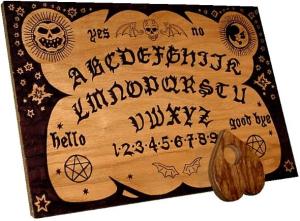

Yes or No

Reading about demonic possession is enough to scare you away from ever using a ouija board.  In fact, I’ve never played with one; growing up my strict religion would’ve prevented it in any case, and already as a child I’d been warned of the dangers.  During my research for Nightmares with the Bible, I’ve been reading quite a bit about ouija.  Originally a species of divination, the ouija, or spirit board, became popular during the growth of Spiritualism.  Spiritualism is a religion based on the idea that the dead still communicate with the living, ensuring believers that life continues beyond death.  It still exists, but not with the numbers that it boasted in the early days.  Among the solemn admonitions of Ed and Lorraine Warren (about whom I’ve posted much in recent months) was that ouija boards opened doorways for demonic entities.  Some of their stories are quite scary.

Image credit: Mijail0711, via Wikimedia Commons

Whatever else you can say about America, a fact beyond dispute is that if something can make a buck it will be marketed and sold.  So it was with ouija boards in the 1970s.  I remember seeing them on the shelf with other games at local department stores.  Even then I knew they weren’t a toy and I wondered how anyone could be promoting them for general consumption.  At Grove City College—that bastion of undergraduate conservatism—stories circulated about how students (usually coeds) were attacked in their locked rooms after playing with ouija boards.  This is, I was later to learn, a staple of collegiate urban legends.  At the time, however, I took it very seriously.  

Thus it’s strange when I find out that others my age were more curious about them.  Recently at a party with friends around Valentine’s Day, the question naturally came up of how some of us met our spouses.  One of the women mentioned that before she’d met or even heard of her future husband (who has an unusual surname) a ouija board spelled out his name.  She later met and married him, not on the board’s recommendation, but she remembered that years before she’d been given a hint.  Now these friends are not cheats and liars—they’re not even Republicans.  They’re people we trust.  On our drive home that night my wife mentioned she’d used a ouija board once, with friends, back in her high school years.  She asked the name of her spouse (long before we met) and came up with Sam.  I’m no Sam, but when we first met in grad school I was still going by my stepfather’s surname and my initials were S-A-M.  Coincidence?  Probably.  My future wife did not pursue me; indeed, it was the other way around.  Even so, there in the dark on the nighttime highway I felt a familiar frisson from childhood concerning a form of divination that seems to know more than it should.


Love, Not Fear

How do we celebrate Valentine’s Day when our governments advocate hate?  You have to wonder when the autocrats last fell in love.  Building entire polities on hatred harshes the elevated feelings of letting love, well, love.  The only time Republicans seem to smile is when they’re taking advantage of someone else.  But it’s Valentine’s Day, so I’ll try to think charitable thoughts about even them.  

My reading recently has been taking me into the realm of sin.  Let me rephrase that—I’ve been reading a lot about sin recently.  One of the more striking aspects about badness is that it seems closely related to love, or at least lust.  I’ve often pondered why Christianity especially has tended to treat sex as bad.  While all religions take an interest in sexuality, not all of them declare it a negative aspect of life.  In fact, many see as it quite the opposite.  Since I like to trace things to their origins, I wonder why this might be.  Why did Christianity, whose putative founder declared the greatness of love, decide that although love is well and good that making it is problematic?

Paul of Tarsus, whom some credit with being the actual founder of Christianity, considered his celibate lifestyle to be superior.  While he didn’t mandate it of his followers, he highly recommended keeping their commitments to divine causes rather than to prurient human ones.  He believed a second coming was going to occur any day now, and that was nearly two millennia ago.  He was also, through no fault of his own, an inheritor of an incorrect understanding of gender and sexuality.  Even today there’s much about these that we don’t understand, but we do have more evidence-based ideas about what’s going on.  And not surprisingly, we tend to find that love is good and expressing it (appropriately) is also good.  Valentine, after all, was a saint.

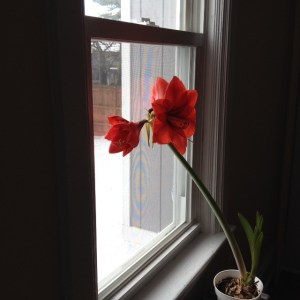
Looking out my window, it’s still clearly winter.  There’s snow on the ground from the most recent storm and I’m aching from the upper-body workout that it required to get it off the walk.  But still, in the pre-dawn hours I start to hear—rarely but clearly—the birds begin to sing.  The amaryllis on the sill has sprung into full bloom.  The thing about love is that there’s enough to go around.  It’s a renewable resource.  If only our leaders showed a fraction of interest in it as they show in hate and fear. 


Quiet on the Winter Front

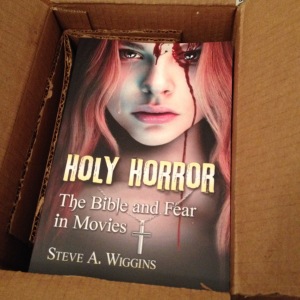
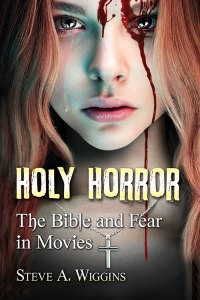
There’s a weird silent time, after a book is published, when you start wondering how it’s doing.  Holy Horror was apparently released November 29, and published December 29, if done according to standard publishing practice.  The release date is when stock is received in the warehouse.  The book is printed and technically available, but not yet published.  Publication is about a month later when the sellers, distributors, etc., have received their orders and can begin sending them out.  Publishing, as I’ve noted before, is a slow business.  Somewhere around this point you start wondering how your book is doing.  Reviews take some time to appear.  The publisher falls silent (I know this from the editorial perspective as well).  You start thinking, did it really happen?

This is the internet syndrome.  We’ve become used to instant results and it’s difficult to believe that can get by without minute-by-minute updates.  The problem is publishing is slow.  Reading a book takes time.  Not all readers review.  It’s perhaps the kind of malaise you expect in late winter.  In my case, however, my book was an autumn book that missed its release date by a few months.  Yes, hardcore horror fans are still chomping at the bit for upcoming features like Us, but the public in general is well on its way to Valentines Day and what comes after.  We are pretty much a holiday-driven culture and Holy Horror was a Halloween book released after Christmas.  That, and the combination of Bible and horror is unexpected, with many, I’m guessing, thinking the book is something it isn’t.

Often at work I ponder how publishing has changed, even if it runs like sap in January.  Professional writers—those who lived from their books alone—used to be rare.  Most authors were otherwise employed, and many of them worked in publishing.  It stands to reason when you think about it.  I’ve worked for three publishers and finding other writers is, and has been, a rarity.  Instead editorial boards consist of people who largely don’t have the experience of writing a book of their own talking about author expectations.  A disconnect has emerged where writers find employment in other industries and find themselves wondering why publishers do things the way they do.  Even with that background knowledge, I do wonder how my little book is doing.  It’s only natural.  And now that we’ve progressed to February, it’s only eight months more until October.


Ground, Candle, and February

The world’s hairiest prophet?

Relying on the prophetic ability of a rodent may seem like a fool’s errand, but to understand Groundhog Day you have to go back to Candlemas.  Apart from when I lived at Nashotah House, I’ve never been anywhere that people knew what Candlemas was.  It’s also known as the Feast of the Presentation, and it in itself is built on an archaic ritual based on a creative understanding of biology.  In ancient Israel, a woman was considered impure for seven days.  The eighth day, if the child was a boy, he was circumcised.  Thirty-three days later the woman, finally considered pure enough to approach the temple precincts, was to take a sacrifice for her purification.  And oh, if she bore a girl the impurity lasted sixty-six days.  It’s all there in Leviticus.

What does any of this have to do with Groundhog Day?  Well, according to the much later tradition that Jesus was born of a virgin on December 25, if you do the math you’ll find Mary’s purification falls on February 2.  And if Jesus had been a girl Candlemas would be a moveable feat since February sometimes has 29 days.  Since it’s still dark out for most of the time in February a couple of traditions developed: one was a way of finding out when winter would be over and the other was the blessing of candles since you’d still be needing them for awhile.  That gave the feast its common name.  The tradition grew that clear weather on Candlemas meant that winter was to last for a good long time yet.  Since Germanic peoples love their Christmas traditions, a badger was used for the long-range forecast part of the celebration.

In Pennsylvania Dutch territory, badgers are rare.  Woodchucks, or groundhogs, are just about everywhere and they live in burrows like badgers do.  In a carryover from Candlemas’s clear weather foretelling the future,  the belief was that a badger or groundhog seeing its shadow—because it’s clear, get it?—meant six more weeks of winter.  Of course nobody knew about global warming in those days.  Candlemas, it turns out, was one of the earliest Christian celebrations and it was part of the Christmas complex of holidays.  It’s still winter out there.  It’s also Saturday which means I already have a list of chores as long as a badger’s shadow.  Now I’ve got to remember to get my candles blessed as well.   Winter, it seems, never ends.


Xenophobia’s Children

There are consequences, it seems, for not paying attention in school.  I have no way of knowing, of course, but I suspect most of us are taught that basic fairness is the social ideal.  Xenophobia is deeply embedded in the primate psyche, but to those who claim we haven’t evolved, there seems to be no way to convince them that “racial” differences are merely a matter of differing collectives separated by natural borders.  Over time traits favorable to the region predominate, and humans therefore have what seems to be a very wide array of potential appearances.  There should be nothing in all of this that suggests one group is superior to another.  Primate evolution, however, helps to explain but not to excuse.  Xenophobia is something from which we can evolve.

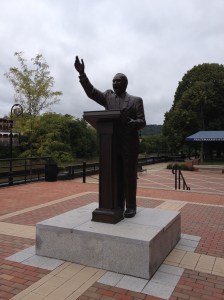
Fear is at the heart of any phobia.  In a society that measures the worth of individuals by their wealth, fear that another will take it is constant.  Perhaps, in a part of our souls we’d rather not acknowledge, we know it’s wrong to have too much while others don’t have enough.  It’s very cold this Martin Luther King Jr. Day.  In Manhattan on Saturday I saw many people on the street, those who’d met the wrong end of capitalism.  I’ve seen human beings shivering in Dickensian conditions in the twenty-first century.  I’ve known capable adults who couldn’t find work, even when they’ve tried.  We fear the street person.  We know that, but for slight shifts in capitalism, that could be us.

Xenophobia has come under threat with globalization.  We’ve made travel to remote locations affordable in order to spread capitalism to regions ready to be exploited.  And we see nothing wrong with taking from those who can’t prevent us from doing so.  Then we wonder why people just like us turn out to march in the cold.  Civil rights marches took place half a century ago.  Crowds thronged the nation’s capital seeking basic human treatment.  Fifty years later over a million women and supporters had to show up to make the same point again.  Fair treatment should not be a commodity.  Those who have fear the stranger.  Those who have don’t wish to share.  They claim the name of “Christian” and mock the very tenets upon which that belief system was founded.  It’s cold outside today.  As we huddle inside, we should have time to think.  It is a waste of a national holiday if we don’t at least ponder for a few moments what it is we celebrate.  And the real costs of xenophobia.


Poe et Tree

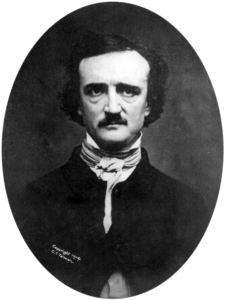
When winter gets a little dreary with its constant chill and perpetually gray skies, I often think of Edgar Allan Poe.  There’s been so much going on lately, however, that I overlooked that today is his birthday until my friend over at Verbomania reminded me of the fact.  I’ve posted on Poe many times, but this morning I had an email concerning my work on Nightmares with the Bible stating that my use of Poe in that book was a nice touch.  Sometimes I need to be hit over the head with things, though, to make them sink in.  It seems impossible that it was 210 years ago that Poe was born.  Our Januaries have become remarkably crueler since those times, what with inaugurations and all.

I have often mused that we’ve lived beyond the era where one person can have the widespread impact (for good, that is) that influences an era.  In the area of my doctorate, for example, like him or not William Foxwell Albright rearranged the field of Bible and Ancient Near Eastern Studies.  Nobody has been able to do it since because, well, Albright already did it.  Poe gave us many things—the struggling writer determined to make a living by his pen, the scary short story, detective fiction, the Raven.  Those of us who dabble in fiction do so in his shadow.  (I know Poe wasn’t the only writer of his era, but it’s his birthday, so let’s celebrate him!)  Other writers like H. P. Lovecraft, now a hot commodity, would draw their inspiration from Poe.  And from Poe and Lovecraft came the early work of Stephen King.

A winter storm advisory is in effect.  Outside it looks bleak and the clouds appear as if they wish to weep.  A nation founded by immigrants (my apologies, first nations) has come to believe that it was here first in a world full of need and suffering.  Building a silly, expensive, and utterly pointless wall is a telltale sign that the heart has ceased to beat.  Two centuries and a decade ago a writer was born.  He had penetrating insight into what makes people behave wickedly toward their fellows.  Just when things seemed to be making progress we find ourselves prematurely buried under masonry and rubble.  How could I have forgotten Poe’s birthday?  Too much has been crowding my January, I’m afraid.  I don’t take the time I should to gaze out at the winter and wonder.


New Horror

Now that Holy Horror is out I’ve been noticing an increasing number of scholars who are writing on the topic of monsters.  Book writing takes several years, as a rule, and when I began work on my contribution to the discussion the bibliography was a touch slim.  There weren’t many books out there and academics who addressed the topic did so warily.  Now scarcely a day or two will pass when I won’t find another book I should read on the topic.  Publishing may be an industry in crisis, but there’s no dearth of new books being produced.  Monsters—which define horror—are a means of coping with the realities of a world out of control.  Since 2016 many of us have felt a vague, if at times pointed, sense that something is seriously threatening out there.  Horror seems a logical response.

Academia tends to run behind trends rather than setting them.  Academic books in general don’t sell too well, and monsters often have crossover appeal.  The longer I’m at this, the more I think of how knowledge as a whole is gathered.  Having that shiny Ph.D. doesn’t do so much anymore when it comes to credibility.  It may get you in the publisher’s door, but to attract readers it helps to pick topics that scholars have typically avoided.  Monsters are a calculated risk in this regard.  Those who publish in the field become somewhat suspect among their colleagues, as if the subject is one that can only play itself out in naivety, an under-developed sense of sophistication.  Anything popular tends to be devalued in the academic mindset.  It is, therefore, encouraging to see others addressing my beloved monsters.

A new year is starting and, like many people I have high hopes that it will show some improvement over the past.  I can actually dream of a world without monsters and although pleasant it isn’t realistic.  We have evil with which we must deal.  Horror allows for a fair amount of practice in that regard.  I’m very well aware that many people find the topic repugnant, or at least distasteful.  Academics, it seems, are following their restless curiosities to the darker corners of the mind.  It’s getting difficult to keep up with the monster books appearing, even from reputable presses.  Holy Horror is my first contribution to the discussion and Nightmares with the Bible, which I hope to finish this year, will continue the conversation.  It looks like it’s becoming trickier to find a voice in this crowd already.  I wonder if that implies a better 2019, as we run behind the times.


Holly Days

Thirty years ago today, my wife and I were penniless grad students.  Trying to be logical about when to marry—I’d been accepted at Edinburgh University shortly after we’d decided on a May wedding and the latest I could matriculate was April—we decided the holidays would be the best time.  Not Christmas, of course.  Or New Year’s Day.  As students we held to the illusion that others observed the natural caesura between the two.  We considered it from the feast of Stephen to New Year’s Eve, days when everyone is recovering from the intensity of Christmas or staying up late to welcome in 1989.  We settled on December 30.  The church was already decorated for Christmas, saving that expense.  Having moved up the date by some five months we did ask them to remove the banner that read “For unto us a child is born.”  Our reasons were purely academic.

I generally avoid writing too much about my personal life on this blog, but a thirty-year wedding anniversary is somewhat extraordinary.  Being a working-class kid I told my wife when I proposed that I couldn’t promise much but I could assure her our life together would be interesting.  That slippery qualifier has proven correct time and again.  Our first three years as a couple were spent in Edinburgh, and quite unexpectedly, the next fourteen at Nashotah House.  The first two of those years involved being apart from Sunday through Wednesday as I commuted from Champaign-Urbana to Delafield to teach my courses.  And, of course, to attend chapel.  Our daughter was born while we lived at the seminary and a Fundamentalist takeover led to the loss of my first (and to date only) full-time academic job.

The academic job market had been tough when I started and it had tanked in the meantime.  We had to uproot and move to New Jersey to find any work at all.  Publishing proved remarkably unstable and yet we stuck together.  This year we bought a house and moved to Pennsylvania.  It took three decades, but we’ve finally achieved what some would term normalcy.  The fact is, though, that long-term marriages are to be celebrated.  Many of the vicissitudes we’ve faced could easily have capsized our little boat.  Looking back over the years I can see that we never did prosper in any kind of financial or career situation.  Life has indeed been interesting.  I don’t blog much about my personal life, but today I can’t help but think of how incredibly fortunate I am to have found a soul-mate willing to stick with a guy who still thinks like a penniless grad student.  Thirty years of schooling and it’s not nearly enough.

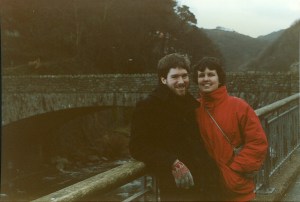
A young couple’s anniversary in Wales.


Poppins Fresh

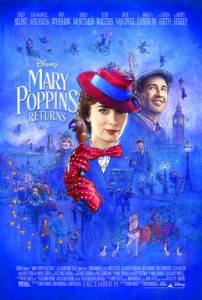
The holiday season often means doing things out of the ordinary.  Despite writing books that deal with movies, I can’t afford to see them in theaters often, but we went as a family to see Mary Poppins Returns.  A few things about that: I grew up never having seen Mary Poppins (I first encountered it in college).  The new movie is neither a remake nor a sequel proper.  It follows the same basic pattern as the original but with new songs and animations, and all of it based on a somewhat darker premise—the death of the mother (which allows Jane and Michael, as adults to both be back in their childhood home) has led to financial straights that threaten to leave the Banks family homeless.  The bank has turned cruelly capitalistic and wants as many foreclosures as possible.  Sinister stuff.

The reason I mention the movie here, however, is a premise that it shares with Hook: children can see things that adults can’t.  Or more precisely, that adults learn not to see.  Some investigators of unusual phenomena suggest that as we grow we’re taught not to believe what we see if it’s impossible.  I’m in no position to assess the validity of such an assertion, being an adult, but it does give me pause for wonder.  We regularly shut out the vast majority of stimuli we experience; our brains are not capable of taking in every little detail all the time.  Instead, we’ve evolved to pay attention to that which is threatening or rewarding to our survival, and we tend to ignore many of the mundane feelings, sights, sounds, and smells that are constantly around us.  Perhaps we do shut out what we’re taught is impossible.  Mary Poppins Returns says it outright. 

In many ways this is behind the materialism we’re spoon-fed daily.  The only reality, we’re told, is that which can be measured and quantified with scientific instruments.  Any apparent reality beyond that is simply illusion.  We all know, however, that our experience of life doesn’t feel that way at all.  There seems to be no counter-argument, however, since we have no empirical evidence to offer.  Experience, we’re told, is unreliable.  Perhaps we’re not too old to learn a few things from the movies.  Mary Poppins Returns won’t likely become the cultural sensation that its forebear was, nevertheless it contains a message that may be worth preserving.  Childhood may hold the keys to understanding reality.


The Cult of Relaxation

Relaxation comes with a price.  As with most people who work hard, I find taking more than a day or two off work tricky.  It’s not that I want to go to work, but that I feel the need to keep improving my mind.  I read quite a bit on holidays, and, being of the opinion that movies are the modern mythology, I like to watch what I can.  Last night I saw a film I’m too embarrassed to name, but which was so utterly awful that I can’t get it out of my head.  Call it an experiment in relaxation.  Or call it madness.  Either way, I came to realize just how much impact a movie might have without really containing anything to give back.  This particular film is often listed as a cult classic.

I’ll confess right now that I loved Attack of the Killer Tomatoes the first time I saw it.  (This is not last night’s feature.)  It is a bad movie—so bad that it’s good.  My professional reputation may suffer for it, but I have to admit to having watched it multiple times over the years.  I’d heard that last night’s film was like that.  So bad that it’s good.  And that made me ponder the blurring of these categories.  Without a universal deity to declare the terms, good and bad are matters of consensus.  No quantitative means exists for making, a movie for example, good or bad, beyond the human judgment of viewers.  We tend to listen to critics, who experience more cinema than the rest of us can afford, but I’m sure we all have our secret likes that don’t match the decrees of the experts.

Films that flaunt convention so radically, and which gather disciples, are, as I mentioned, called “cult classics.”  This is the language of religion.  Although religionists have moved away from the use of the word, cult implies irrational intensity of devotion toward that which is clearly, in the eyes of the majority, bad.  Again we come to the question of who defines value.  For most of human history it has simply been majority opinion.  Cults, however, give meaning to those who “get it.”  Cult classics have faithful followers.  In the line of duty some months back I watched Exorcist II: The Heretic.  I later found out that it also frequently makes the list of all-time worst movies, despite starring Linda Blair, James Earl Jones, Paul Henreid, and Richard Burton.  It’s a cult classic.  The unnamed film from last night has no known stars.  Hideous acting.  Ludicrous writing.  I watched it to relax.  Now I wonder if I’ve joined a cult, or if I just need a vacation.


Puzzling Traditions

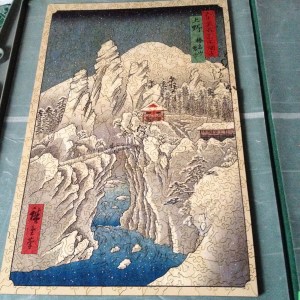
Like most families, we have tried over the years to develop our own holiday traditions.  These, like all things, evolve.  When I was a professor the semester break meant, after a flurry of grading, a month of a more relaxed schedule.  We would travel to family outside of Wisconsin every year, and worked on what a “usual” holiday might look like for our small family in the remaining time at home.  Now that I work for a company, and my wife works for a company, the holiday break is severely curtailed, but it has allowed us the opportunity to invent our own traditions.  One of them is to put together a quality jigsaw puzzle on Christmas Day.  (Two of these puzzles were destroyed in the flood that ruined so many books, and will need to be replaced eventually.)

I’m aware how nerdy puzzle-solving might sound.  I’m not spending the day out riding an ATV through the woods, discharging a firearm, or watching sports on television.  Piecing together a puzzle is a quieter pursuit, and the puzzles we have are of quality artworks, and completing one makes it feel like all is right with the world for a little while.  As with most things on this blog, it also serves as a metaphor.  Yesterday as we watched the movie The Man Who Invested Christmas (which portrays very well the life of those who try to write; the exception being that Dickens had little trouble finding publishers and the benefit of early success), it occurred to me that as we put together the puzzle of our lives, we do so with the box top missing.  We don’t know what the picture is.  Slowly some sections start to come together, but overall, we don’t know what we’re doing.

Long ago I learned the folly of planning out a life.  Moving forward is good, yes, and making plans wise.  You cannot, however, know the way those plans might fit elsewhere in this decades-long unfinished puzzle.  There’a a fairly large section of mine called Nashotah House.  I would never have planned that intentionally, and thinking back, it was being there that renewed my interest in horror.  I thought I’d be at a university where I might continue my research into ancient deities and how the world of biblical Israel developed its own conception of that world.  That’s what I thought the cover of the box would look like.  Instead I’ve found myself editing the books that others write and using the scant time left over to write my own, on a topic far different than that in which I earned an advanced degree.  As the last piece slips into the puzzle, I feel a sense of accomplishment.  I may not have done much, but I’ve used the limited time off to step back and try to take, however briefly, the larger view.


Christmas Lights

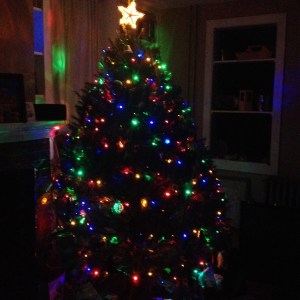
How many people read a blog on a major holiday?  The process of writing takes no vacations, however, and I often think of holidays as a time to write.  It doesn’t really matter if anyone reads it; writing is our witness to the cosmos that “Kilroy was here.”  Even if most of us have no idea who Kilroy was.  So I find myself awake earlier than most children on Christmas morning.  My long habit of rising early to catch the bus hasn’t been easy to break.   I creep down the stairs and water the tree before turning on its colorful lights.  I make a cup of coffee and wash the dishes left in the sink after a festive Christmas Eve.  And I think.  There’s always the thinking.

The meaning of Christmas, as the holiday classic tells us, eludes Charlie Brown.  Linus van Pelt gives one rendition—that of the Gospel of Luke—as the canonical meaning, but in my experience it shifts during a lifetime.  Christmas, after all, is one of a host of solstice celebrations.  My thinking these days is that it’s all about light.  Shimmering angels, glowing stars, light coming into the darkness.  These ideas seem to have, for the most part, Zoroastrian origins, but they’ve been thoroughly appropriated and, in true American style, commercialized.  The news headlines read how disappointed retailers always are.  The take could’ve been bigger.  Capitalism relies on Christmas to make the third quarter.  Light in the darkness, in its own distorted way.

As I sit for these quiet moments in the glow of only a tree, I think of those for whom the holiday has become a kind of disappointment.  Not a cheery Christmas thought, I know, but an honest one.  As families grow and diversify the childhood Christmas of excited children scrambling under the tree to excavate the next gift for me starts to fade.  Our economic system separates, and the dearth of days off around the holidays makes travel back to childhood homes difficult.  We do the best we can, but the fact is the sixties (speaking for me) are over.  Our reality is colder and darker than it used to be.  I part the curtains and look for any sign of dawn.  It will be a few hours yet before the sun brightens this winter sky, but then, that’s what the holiday has come to mean for me.  At least this year, it is the hope of light returning.  And that, alone, makes it a holiday.


The Night before Reading

Like many people bound to their circumstances by work (and now a mortgage) I see travel to far-off places is a dream.  On my personal bucket-list is Iceland.  Perhaps that’s a strange place to yearn for in winter, but it’s on my mind today because of Jolabokaflod.  I’ve posted on Jolabokaflod before, but in case the concept is unfamiliar I’d summarize it by saying Icelanders, who are exceptionally literate, give each other books on Christmas Eve and spend the dark hours reading.  For the past three years I’ve taken part in a reading challenge that lists a book in translation, and invariably I choose one by an Icelandic author.  Publishers in Iceland, being less corporate than our native species, accept books for publication somewhat more readily—I’ve been shopping a novel around for nearly a decade now and I’ve read worse.  If it doesn’t jack up the dollar signs, so nobody around here’s interested.

I’m sure it’s not all sweetness and light in Iceland.  I suspect, for one thing, it’s hard to be vegan there.  Then there’d be the need to learn Icelandic.  The nights would be even longer in winter, but then, those long nights would be filled with books.  I sometimes imagine how different America would be if we loved books that much.  I remember well—as you may also—the classmates who grumbled about “having to read” as part of their school curriculum.  And this began well before high school.  Young people’s bodies are full of energy and they want action (which can be found in books, I might add) and new experiences (ditto).  Our culture feeds them the myth that such things lead to happiness.  Instead, they find sitting still tedious.  When life leads them to commute, they fill bus time with devices.

The other day I had an electrician in our house—the previous occupants had some strange ideas about power distribution.  He, as most visitors do, commented that we have a lot of books.  I’m beginning to feel less apologetic about it than I used to.  We have books not only because it’s been part of my job to read, but because we like books.  One of the painful memories of 2018 was the loss of many volumes due to a rainstorm that flooded our garage right after our move.  It still makes me sad to go out there, remembering the friends I lost.  Nevertheless, it’s Christmas Eve, at least in my tradition, and the thought of books combined with the long hours of darkness brings a joy that I’d almost characterize as being Icelandic.  At least in my mind.  Jolabokaflod might well be translated, “silent night, holy night.”


Solstice Musings

Should my posts of late be castigated as against the Christmas spirit I would rely on Andy Williams’ song, “The Most Wonderful Time of the Year” in my defense.  “There’ll be scary ghost stories,” the crooner sings amid images of cheer and celebration.  What may not be appreciated by my less sober celebrants is that the long nights of winter have as close an association with ghosts as they do with the numerous religious holidays that fervently pray for the return of the light at this time of year.  In merry old England, which along with Germany developed the modern concept of Christmas, the holiday was observed with evening ghost stories as is well represented by Charles Dickens’ A Christmas Carol (likely the source behind Williams’ lyric reference).

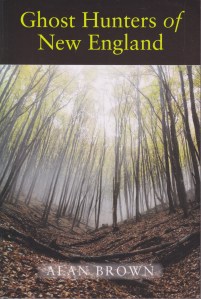
So I read about ghosts when the light begins to fail.  Or at least that’s my excuse.  When Ghost Hunters took to the air in 2004 the world became aware that electronic devices can pick up anomalies and other ghost-hunting groups began to appear.  Alan Brown, apparently curious about this development, wrote Ghost Hunters of New England as a field guide of sorts to paranormal investigators.  The book divides the region by states and includes the answers to survey questions asked to each of them.  The result isn’t especially inspirational, however, as these groups share in common the obvious absence of scientists.  It may be that professional scientists fear the career impact of such associations, but as is the case in many academic disciplines, their lack of participation simply erodes the credibility of science in the eyes of many.

Human investigation of the world has reached a point where many academic specialists can no longer communicate effectively with the average person.  I work in academic publishing and it is clear that many specialists simply do not recollect the level at which those without advanced training read.  We therefore see the rise of hoi polloi as self-appointed experts.  If scientists won’t investigate ghosts, plumbers will.  And since, no matter what science declares, many people experience ghosts, they will listen to those who at least seek answers.  The problem with books like Brown’s, of course, is that if a fad fades the groups disappear leaving the information outdated.  A couple of the groups were interesting enough to send me to the websites listed only to find the domain name for sale and the ghost hunting shingle removed from the door.  Still, the book had some useful information for those willing to consider the possibilities.  After all, the nights can be awfully long in December.  And there’ll be scary ghost stories…