Page Count

Research has taken on a different flavor now that I don’t have a teaching post.  I’ve started work on my next book after Nightmares with the Bible, and I’ll reveal more about it eventually, but the topic does require research.  Much of the reading required for both Holy Horror and Nightmares with the Bible was done on the bus.  Those long commuting years weren’t exactly conducive to getting a lot of writing done, but there were hours of built-in reading time each weekday.  My research often involves reading big books and I’m a slow reader.  It’s a valid question why a slow reader would go into editing for a career.  A bit of research on this blog would reveal the answer to that, but the fact remains that big books take a huge amount of time to get through.

Back before any of this was a concern, back when I was a mere seminarian, I had plenty of time for reading.  One summer I volunteered for an archaeological dig at Tel Dor in Israel.  This involved meetings ahead of time and a lot of advanced planning.  One of the questions that naturally got raised was how many books to take.  It was a long flight from Boston to Tel Aviv, and I didn’t have much cash for sightseeing.  Most people, I was told, take James Michener’s The Source.  This is his archaeologist book.  In addition to that, it is a long work, just like most Michener novels, which meant you only had to take one book for the entire trip.  I decided to buy a paperback of Tolstoy’s War and Peace instead.  What a luxury it seemed in those long Israeli days to read such a tale.

In fact, I didn’t finish the book during the flight over, the six weeks at Pardes Hanna, and the return flight.  It took me at least until winter back in Boston.  These days when I take on a big book I generally read smaller ones alongside it.  You see, I have to see some progress as I’m going.  I tend to read nonfiction before work in the morning and fiction after work is done.  My days are literary work sandwiches, I guess.  And the stuff that I need to do around the house doesn’t pause while I indulge in my favorite vice of reading.  Yes, my research has definitely taken on a different flavor since being paid to do it.  What hasn’t changed is the desire to push knowledge forward, one page at a time.

Something Burning?

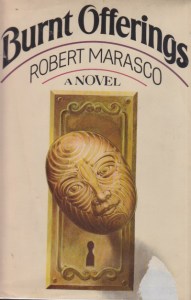
It’s all Amazon’s fault, really.  Several years ago—I can’t recall how many—they were running a horror movie DVD sale (that’s how long ago!).  I hadn’t yet watched enough movies to write a book on the subject, and most of the movies on offer I hadn’t heard of.  One of them was called Burnt Offerings.  Well, burnt offerings, by definition, come from religious settings.  The DVD was very inexpensive, and so, well.  The movie wasn’t that scary, but it was moody, which is often what I’m really after.  I did wonder, however, at the title.  In one sense it fit the plot, but in other ways it was almost as if something were missing.  A vital clue.  For one thing, the movie was completely secular, nothing I could include in Holy Horror.  

I’ve watched the movie a few times over the years.  There’s something compelling about the story, even though missing something.  A little research revealed that the movie was based on a novel by the same title by Robert Marasco.  Now, when I learn a novel was written in the 1970s, my thoughts turn to used bookstores.  Although the days of getting books there for less than a dollar seems long gone, the fun of browsing makes up for it. I don’t know how many years I looked for it in shops throughout the tri-state area.  Now with the virus, I finally broke down and ordered it from Bookfinder.

My main reason for wanting to read the novel was to find what I’d been missing.  The movie, it turns out, follows the original story very closely, for the most part.  The ending is different, however, and that makes all the difference.  (If you haven’t seen the movie or read the book, there will be spoilers here.)  The Rolfe family decides to move to an estate for the summer to get away from the noise of New York City.  There’s something odd in the house they’re renting, which they sensed even before moving in.  Marian Rolfe, the mother of the family, clearly becomes possessed by the house.  In a diabolical sense.  As her family dies off the house renews itself.  In a scene not in the movie, the regular caretaker stops in for a visit and tells Marian that she has to give her all to keep the house.  Finally, resigned to the death of her loved ones, she asks to have any remaining doubt burned out of her.  Her family will be the burnt offering.  So at last, it makes sense.  And yes, there’s a more religious theme in the book than there is in the movie.


Layers of Brick

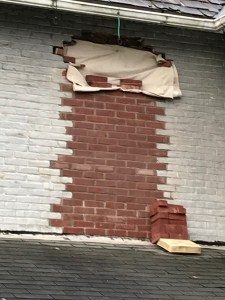
If, like me, you can’t see a neighbor’s brickwork without thinking of “A Cask of Amontillado,” then I need not explain why I watch horror films.  I know that as of late some literary scholars have challenged the idea that Edgar Allan Poe wrote horror.  There is now, and always has been, a bias against the genre.  In fact, many would point out that Rod Serling’s Twilight Zone wasn’t really horror, no matter how creepy some of the episodes were.  Some would cast Ray Bradbury into that lot as well, and others would not.  I spend a lot of time pondering this because those of us who enjoy some of what’s called horror are often cast as misfits.  And misfits have a lot in common with monsters.

The connection with religion is a palpable, yet intangible one.  It does seem that religion has its origins in fear and as it branched out it came to have different emphases.  Jesus, for example, apparently stressed love, at least according to the gospel of John.  That religion of love came, eventually, back around to fear.  Calvinism, especially, is suffused with it.  There’s a reason that it is the religion expressed in particularly effective horror.  Apparently they meet similar needs, but psychology is not an exact science, and our tastes in it differ.  Even our interpretations do so.  As the bricklayer puts down row after row of masonry, the thoughts get walled up in days where work prevents serious consideration of the deeper questions.

It’s been years since I’ve read “A Cask of Amontillado.”  The story has stayed with me, however, whether it’s horror or not.  Stories about imprisonment are like that.  The other day a police car stopped outside our house.  We live in a working-class, but descent neighborhood.  From the bits and pieces glimpses out the window revealed, there was a problem with a car that had been parked on the street for quite a while, and that didn’t belong to any of the local residents.  The natural response to seeing that car just outside was fear.  We fear criminals and we fear the police.  We fear what Covid-19 is doing to us, even to those of us who’ve managed not to contract it.  Traditional religion would tell us punishment comes from the Almighty.  These things are all related.  And across the way the bricklayer keeps up his work, row after row.


Trading Ideas

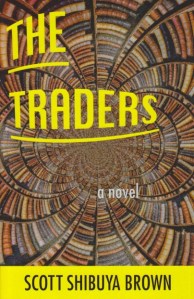
Sometimes you read a book where the author seems to have your same experiences.  I suspect that’s why many of us keep reading, looking for connection.  I just finished Scott Shibuya Brown’s The Traders and immediately began wanting more.  Anyone who’s faced teetering stacks of rejection letters from agents will appreciate the story of Cecil Po, a bookseller in Tandomon.  Like many of us who wind up in book-related industries, Po is at heart a writer.  Like most writers, he’s down on his luck.  When he discovers a deceased, truly third or fourth-rate writer who’s acquired some level of fame, a wild plot begins to hatch.  The story is so compelling that I spent much of this past week wishing for just a few more minutes to read.

One of the things the story does exceptionally well is to point out the foibles of scholars.  Self-important and self-focused, they often fail to see the obvious right in front of them.  There are some laugh out loud moments here for anyone who’s spent time in academia.  Po’s laconic commentary is no-nonsense and witty.  It also seems to contain a rebuke for the big publishing houses that effectively limit what gets read.  Anyone who’s tried to navigate publishing knows the truth of this tale.  There are those who decide which writers will get noticed and then build them up to continuing successes.  It even happens in academic publishing.  Po, talented but uneducated, and—more importantly—unconnected, has resigned himself to a life of peddling books while knowing he has written better than some of what he has read.  Brown takes the gloves off, but gently and politely.

There are tonnes of great, but undiscovered writing out there.  Even those of us in publishing (perhaps especially so) find it difficult to spend the time we wish to on reading.  There is reading and then there is reading.  If people did more of it there might well be less pandemic to go around.  And if more people read for pleasure there would be more demand for books.  It might also lead to more people writing.  The Traders is a fascinating little parable that draws you in with possibilities.  Cecil Po is like so many of us who dream big but live small.  I won’t put any spoilers here since the novel deserves to be widely read.  And it’s just possible that the reader will discover a bit of him or herself between the covers along with Po.


X-Files Redux

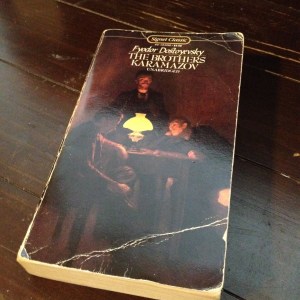
So, after writing a post about The X-Files, I finished season three, forgetting up until then that the last episode was “Talitha Cumi.”  Apart from being part of the alien mythology arc, the biblically literate recognize the title as the words Jesus said to Jairus’ daughter as he raised her from the dead.  Appropriately enough, the episode features an alien-human hybrid that is able to raise the dead and to shape-shift.  This particular episode also has an intriguing dialogue between the Smoking Man and Jeremiah Smith (the hybrid) where they discuss whether the alien agenda for people, or that of the shadowy cabal, is better.  With a theology drawn from the Grand Inquisitor chapter of The Brothers Karamazov (according to Wikipedia, and which I have no reason to doubt), they argue from different perspectives.  The Smoking Man explains that they have given people science instead of God and miracles will only confuse the issue.

While not exactly Fyodor Dostoyevsky, this scene raises some very real questions.  Are people happier not believing?  Not only that, but the cynicism of the Smoking Man matches rather precisely the modus operandi of our government some two decades later.  There’s a reason we keep coming back to the classics.  The X-Files mythology is, like the Cthulhu Mythos, woven throughout a larger tapestry whose warp and weft both seem to be religion.  It ran far longer than Sleepy Hollow ever did, and it would take considerable effort to tease all of the Bible, let alone religion, out of it.  They make the story far more believable.

This particular episode also displays the staying power of the classics.  Long, ponderous books like The Brothers Karamazov require concerted effort to read in these soundbite days of internet hegemony.  That Grand Inquisitor chapter, however, has been enormously influential.  (I recall during my most recent rereading of the novel that I hit that wonderful chapter and then realized I still had hundreds of pages to go.)  We often have trouble telling God from the Devil.  Just look at today’s political scene and try to disagree.  In the X-Files diegesis there is a shadowy, high-powered group that got to the extraterrestrials first.  They keep the secrets to themselves while the masses play out their insignificant lives that enrich those in charge.  Democracy, it seems, used to be about elected representatives seeing to the will of the people.  It perhaps assumes a greater educational base than we’ve been able to retain.  But still, with chapters like “Talitha Cumi” we see that there may be some glimmer of hope after all.


Live Long and

Neither Edgar Allan Poe nor H. P. Lovecraft lived to see fifty.  I began the task of trying to publish fiction when I was a year beyond Lovecraft’s demise.  I’ve kept up a more or less steady trickle since then, and I wonder, from my perspective of advanced age from either of their perspectives, what their stories would’ve been like had they lived to tell the tale.  Many of us grow up with grim imaginations.  Perhaps because we no longer have to flee predators (apart from the occasional bear in the neighborhood) our minds periodically revisit that unfinished business of natural terror.  As we get older, however, life begins to wear on you.  It wore pretty heavily on both Poe and Lovecraft, of course, without getting to advanced age.  But what if they had?

Lovecraft was born just five years before my grandfather.  Had he lived to my grandfather’s age, with that additional five years, we would’ve overlapped.  I probably still wouldn’t have discovered him then, however, unless one of those weird tricks of life occurred when someone messes with the space-time continuum.  I wonder what kinds of tales an older Poe or Lovecraft would’ve written.  I know this is mere speculation, but considering the impact of their respective oeuvres, it is worth wondering.  Of course, it could have been some kind of personal hidden knowledge that they wouldn’t live long that led to their performance.  I wouldn’t make bold to compare myself to either of them, but I know the pressures of limited time before the daily commute often produced some good work for me.  Knowing time is limited seems to be the key.

The traditional advice for writers is to put your protagonists on the edge of a cliff.  Then throw rocks at them.  Perhaps this is because human experience so often feels like a challenge.  Most of us have been living under extreme stress since 2016.  The coronavirus has added to that stress, and the senseless killing of African-Americans just for being people has raised the tension even more.  I would hope that, apart from a truer sense of justice, that some good writing will have emerged from all of this.  None of it will be from Poe or Lovecraft, of course, but they may have shown us the way regardless.  I am curious how they would have responded to this internet-tied world filled with showy, inept politicians and the heartless treatment of human beings in the midst of a pandemic.  It sounds like a world from which they might’ve produced some strange fiction indeed.


Insubstantial Reading

Because of the shortness of time, I recently bought an ebook so that I could get it done under deadline.  Although the coronavirus still has book delivery slowed down, things are much improved.  There was a book, however, I absolutely needed to read for my current research that is available only in ebook form.  Sighing, but emboldened by my recent experience, I began reading it electronically.  Shortly after I started my critical faculties kicked in and I began wondering whether the book was fact or fiction.  The author has an internet presence but is seldom addressed by scholars.  I found myself thinking, “if this was a real book, I’d stop right about now and examine my physical copy for clues.”  I’ve done that more than once when it comes to questionable material.  Books, you see, come with built-in indicators of their trustworthiness.

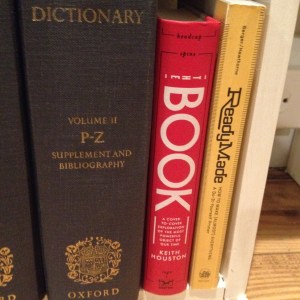
The ebook, however, gives you scant information.  For example, this one has no copyright page.  I may be a publishing geek, but a copyright page is essential for determining what kind of book you’re reading.  Then I would, if this were an actual book, close it and look at the back cover.  There in the upper left I would look for the BISAC (Book Industry Standards and Communications) code.  These are the words that classify the genre and subject of the book for you.  It is often a publishing professional, such as the book’s editor, who assigns the BISAC code, so depending on who the publisher is, you have an accurate description.  This ebook on my Kindle software has no BISAC code.  The publisher itself often tells you something about a volume, but this is a small press without much online information available.

I’m walking you through this because of our current crisis of critical thinking.  With a president unwilling to stick to facts and crying out “fake news” when empirically proven realities don’t match his liking, being able to assess our sources is essential.  Ebooks have eroded the possibilities.  I read esoteric stuff, I admit.  The authors had to have convinced a publisher (and don’t get me started on self-published books!) that their project was viable.  The book in my hands has a number of ways to assess whether it is accurate or not.  The ebook on my lap does not.  I’m working on a longer article on this topic.  Our ability to think critically includes the necessity of assessing the clues as to the nature of our reading material.  Right now I’m reading an ebook stripped of the helpful clues of the print book and fact-checking is limited to Google.  The truth may be out there, but if this were a printed book chances are it would be right in my hands.


WWW

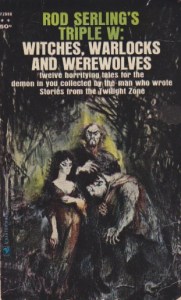
With a few exceptions I think we’ve lived beyond the time when a single name could spawn an industry.  I used to watch re-runs (itself an arcane concept) of The Twilight Zone when I was a kid.  These weird stories drew me in, and, it seems clear, not only me.  Rod Serling’s brainchild led to an industry and “twilight zone” became a household concept.  Lots of little books were written bearing Serling’s name in some way.  One of those paperbacks was Rod Serling’s Triple W: Witches, Warlocks and Werewolves.  I can’t remember where I picked it up, but it was a used book and it had Rod Serling’s name right there on the cover.  Going over my books to find unread gems, I picked up Triple W and sat down to find out what it was like.

None of the stories are by Serling himself.  He’s listed as the editor and he wrote a very nice little introduction.  The tales here reflect, as the subtitle indicates, witches, warlocks, and werewolves.  Some are old stories and some are fairly recent for a book published early in the 1960s.  Descriptive writing does tend to evoke a scene, but I’m often amazed at just how dated it can make a story seem.  What struck writers from the 1940s and ’50s as huge sums of money are likely less than we pay for our monthly internet bill.  Men all try to act tough and the ladies prepare dinner.  Stereotypes.  That’s somehow appropriate for this collection since most of the stories have to do with witches.  Serling was well aware of the tragedies of history, and these tales are told mostly for fun.  The scariest characters are the witch hunters (generally men).

Serling’s famed conscience shows in the choice of the final piece.  Not a story, not even fiction, Charles Mackay’s “Witch Trials and the Law” is an essay about the horrors of witch hunting.  It’s a rather sober piece with which to end a book of speculative fiction, but then Serling was always known for his impatience with injustice.  Also included is Nathaniel Hawthorne’s “Young Goodman Brown,” which I’ve been wanting to read for some time.  Given his shame at the Salem trials and his own ancestor’s part in them, it was mildly surprising that Hawthorne’s story seems to presuppose the reality of witches.  Of course, it condemns the respectable folk who, in reality, all participate in the ills of the society in which they find themselves.  In all, this collection made me think.  Not bad for an impulse purchase on what was probably a rainy afternoon. 


Old Seas Man

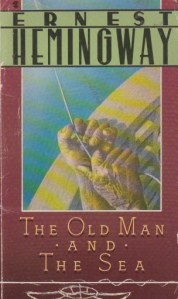
Although my fiction writing has been said to resemble his by one of those websites that tell you who you write like, I’ve never read any Ernest Hemingway before.  In the wake of Melville I had a hankering to read his The Old Man and the Sea.  I honestly had no idea what it was about or how the story went.  I’d read Coleridge’s “Rime of the Ancient Mariner,” so Hemingway’s classic was the last of the holy trinity of sea-faring literary classics to remain unread.  Not knowing what to expect, I was blown out to sea by it.  Published about a century after Moby Dick, The Old Man and the Sea visits some of the same themes but also pulls into new ports as well.

Santiago has hooked a massive fish after nearly three months with no luck.  To do so, however, he has gone out too far from land.  This watery hubris leads him to make fast to a reasonable stand-in for God.  I don’t know Hemingway’s religious outlook, but sea-faring novels already have such a large dose of Jung that it’s difficult to imagine there’s nothing divine in the massive marlin Santiago snags.  With many classics the end is known before beginning to read.  I wasn’t sure if Santiago was going to make it back to land, or indeed, if he would kill the fish.  The old man’s conversations with himself are the heart of the novel.  And one in particular turns to the religious idea of sin.

Not a religious man, Santiago bargains Hail Marys and Our Fathers for the successful catching of the fish.  Then he begins to reflect on sin.  In words similar to lyrics discussed in a recent post, Santiago declares everything a sin, even though he doesn’t believe in sin at all.  His view of life is stunning at this point, and commentary on which theologians would do well to chew.  Sin is a concept meant to impute guilt to mistakes, often made unintentionally.  What might’ve begun as a form of social control has grown into a mass neurosis for those who believe humans are capable of no good.  This is especially worth pondering if the reader considers the marlin to be God.  Try it and see what you come up with.  I know little about Hemingway, but having read his Nobel Prize-winning novel, I do feel that I have learned something worthwhile.  And I also feel the trilogy is complete.


Rainbow of Reading

Reading in a time of plague is more than just a pastime.  It’s an opportunity to learn.  I keep fervently hoping that an occupation might be made out of reading, but those I’ve tried always have many long strings attached, most of them tied to capitalism.  Early on in the social distancing phase, a group in my town began posting children’s stories on lawn signs in the park.  Each sign stands six feet from the last one, and if you linger a few minutes you can take in a children’s book, presumably for the benefit of your child.  Such signs have cropped up in a couple of the parks here in town.  I’m pleased to see the attempts at literacy education continuing.  If anything’s going to get us out of this crisis, it’s going to be reading.

The local library, again early on, began giving away books that normally make up part of the book sale.  Libraries, which have proven their worth over and over, have been doing what they can to get people through the difficult times of loneliness, and in some cases, joblessness.  Those of us who cottoned onto reading at a young age realize just how much problem-solving you can glean from reading a novel.  Instead of encouraging writers, however, the capitalistic system makes agents and publishers interested only in those writers who are deemed to have commercial value.  All the rest, who often find a core audience after their deaths, are left to obscurity since money makes the world go round, right MC?  And yet where would we be without our formative fiction.

I’ve quite often admitted that Herman Melville’s Moby Dick is my favorite novel.  I’d always assumed that it was a success but I recently learned that it too was a flop.  At first.  There was little interest in what has become the prototypical great American novel.  Its draw is in the lessons it teaches.  A bit too long to put on signs in the park, it explores what drives some people.  Indeed, for the owners of the Pequod it is money.  But there are more important things.  As the weather has been improving, it makes me glad to see the signs of summer.  The signs posted with books.  While I have no small children to take to the park, I am made happy by the efforts of those who take the initiative to show young people the way out of any crisis.  You must read your way through.


Under the Plague

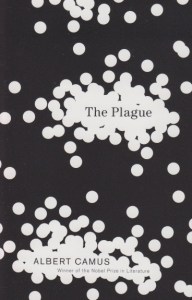
Some events transform a society.  While we keep waiting for things “to get back to normal,” many of us have already come to realize that there is no normal to which we can get back.  That’s my main impression after reading Albert Camus’ The Plague.  The story is set in 1940s Algeria where the Bubonic Plague breaks out in a single town that has to isolate itself from the rest of the world.  As the months and realizations of long duration develop, the emotions the characters go through are very much in line with what seems to be happening with Covid-19.  Indeed, that’s why the novel seems to be going through a surge of popularity right now.  I’ve always associated Camus with the great existentialist writers, but that slipped to the back of my mind while reading this poignant story.

Existentialism is all about making one’s own meaning in a meaningless universe.  This is precisely what Dr. Rieux does in Oran as his former life becomes one long ward call of service to the town.  He befriends characters who represent the best and the worst of human nature as they respond to the pressures of isolation and boredom.  Camus pointedly notes that despite the equalizing forces of death and hardship, the rich manage to make sure they have it better than the poor although they all end up in the same common grave.  There are morals to this story, and it’s clear that “leaders” in Washington have never read it.  Literature quite often teaches important lessons, but to get at them you have to read.

Rieux befriends Tarrou and it seems to me that Tarrou’s lengthy monologue on why he has volunteered to stay in Oran and help those who are suffering is the main message of the book.  Tarrou understands the lessening of suffering, the attempt to bring peace, as the main purpose of human beings.  He says at one point that it’s like becoming a saint.  Despite the ways saints are often worshipped these days, that is at the heart of their canonization.  Care for others.  Rieux points out that Tarrou doesn’t believe in God, and yet, as the story winds down it is clear that he has become a kind of savior figure.  The novel is disturbing in its simplicity and in its timeliness.  It would seem that if we’re to get anything at all out of being under the cloud of a modern plague that we need to take the view that others matter, despite what Washington says, perhaps even more than ourselves.


Wandering

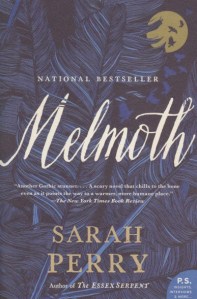
Sarah Perry seems to be a writer who refuses to be pinned down.  Some of us are careful in our fiction to make sure things progress logically, almost factually.  With Perry you’re never quite sure.  Was there a sea monster in The Essex Serpent?  I’m not sure how this played into my decision to read Melmoth.  I knew the title had to have drawn its inspiration from the gothic classic Melmoth the Wanderer, a book I’ve never read.  (The internet has, in some ways, taken the sport out of wandering used book stores, where the possibility of finding such things was once a part of their charm.)  In any case, I saw Melmoth on the front table of Buffalo Street Books in Ithaca, and you learn which bookstore front tables to trust.  It was back when bookstores were open and autumn was in the air.

The concept of the wandering Jew (which I address in Holy Horror) is one that has the power to offend.  By emphasizing the atrocity of the Holocaust, Perry parries that here while maintaining the concept.  The wandering Jew committed some ancient crime and is sentenced to roam the earth until, well, usually the end times.  Perry makes Melmoth one of the women at the empty tomb of Jesus who, when asked to confirm the truth of the event, denies what she saw.  Condemned to walk the world on bleeding feet, she finds sinners and invites them to join her.  Not only finds, but watches—she is the one who sees all your transgressions—and insists that you come to her.

Melmoth is, like the original story, a set of nesting dolls.  The frame story contains other documents that shed more and more light on this dark wanderer.  Characters must own up to their shortcomings.  Indeed, confession is a large part of the story.  Although set in modern times, the book is quite biblical, both in sensibility and in some of the plot elements.  It even has several quoted snippets from the Good Book.  This caught my attention partially because a recent article I wrote (there will be notice here when it appears) suggests that the horror genre goes back to the Bible itself.  Those uncomfortable with the darkness may not realize just how much the two have in common.  Not all the strings are tied up neatly by the end, but this novel will perhaps inspire the reader to do a bit of wandering their own. 


Nothing To Eat

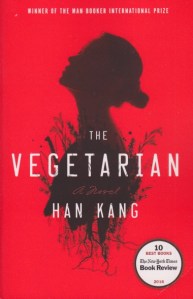
Some stories are unsettling to the point of spirituality.  That’s my impression of Han Kang’s The Vegetarian.  My wife wanted my opinion of it and when she used the adjective “Kafkaesque” I knew I had to comply.  The comparison is eerie in that Franz Kafka essentially starved to death because no way could be found to feed him with his underlying medical condition.  The Vegetarian shifts focus in its three parts, but the protagonist, Yeong-hye, is a young woman who finds her life run by other people in her family after she decides to become a vegetarian (in actual fact, a vegan).  Basing her decision on disturbing dreams she has, those in her Korean culture cannot accept vegetarianism and attempt, by various forms of coercion, to change her decision.  Throughout the account, Yeong-hye becomes silent—we’re never given her point of view—but those around her can’t accept her decision.

This is a challenging book to read, given my own personal history, but after scratching my head a bit when I finished it I came to reflect on this spiritual side of it.  My own vegetarianism was an ethical decision.  I realize that I can’t and shouldn’t impose my ethics on others, but I’ve not had much resistance from others (apart from colleagues who occasionally make reservations at eateries with no hint of the concept).  Likewise, I became a vegan a few years back based on further reflection of an ethical kind.  This is actually a spiritual practice.  I don’t often express it in those terms, but clearly it is.  In the novel when Yeong-hye’s brother-in-law tries to direct her life, he takes her to a Buddhist restaurant because he knows nowhere else to find vegetarian offerings.

Yeong-hye believes herself to be becoming a plant, and that leads to the next logical step in this progression of thinking.  Eating is, or at least can be, a spiritual exercise.  Many religions advocate fasts of various durations to derive the benefits to the soul.  Daily life is a matter of routine for many, often based around our culturally driven mandate of three meals a day.  I’m not alone at working through lunch while trying to get more done at my job.  By the final meal of the day I find myself exhausted.  It’s about more than food.  This strange little book has put me into a reverie about the ethics of eating.  I don’t know if Han Kang is a vegetarian or not, but she does understand the soul of one.


Straining Andromeda

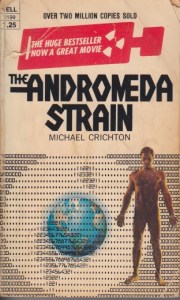
As corona-life settles into just the way things are, I pulled out my copy of Michael Crichton’s The Andromeda Strain.  I read this in high school, and, judging from the state of my copy I originally found it in the book bin at Goodwill.  I actually didn’t remember how the book ended, but some of the scenes—particularly the bizarre suicides that the virus first initiates—stayed with me.  I really felt no compunction to read it again until our daily reality was one of infection, protection, and fear.  In other words, the time was right.  I can say that I found Crichton’s confident prose a bit overblown at times, especially given the resolution of the crisis, which I will not give away here.  Some of the rest of you may want pandemic-themed reading, after all.

Something I had forgotten, and since this is near the beginning I don’t mind giving it away, is that the Andromeda Strain was brought to earth by military intentions to develop new biological weapons.  Although the death toll is nowhere near what that of COVID-19 has been, the potential lethality of the strain is what keeps the compressed five-day story tense.  That tension makes for quick reading, and it seems pretty clear that some of the ideas here have been used for other pandemic story-lines.  I’ll write about one of them later this week.  The extraterrestrial life form of Andromeda is cause for discussion in the novel, but the explanation is never clarified.  Crichton’s later novels improve on this score.

A clear point in the novel is that the government, although aware of and complicit in the experiment, lacked the foresight to successfully see it through.  Governments are only human, after all, and can function effectively only when those with superior abilities are in charge.  Looking out for oneself and exploiting others are not superior abilities.  We can see the result of this with our own, nonfictional pandemic.  Still, the novel does raise the specter of dabbling in things we don’t fully understand and can’t, in any real sense, control.  The thread of the plan being military in origin isn’t fully seen through, but it does raise the larger question of morals.  Some of us go through ethical training for our jobs.  Some of us have it often.  It’s obvious, however, that the real deficiency of governments tends to be their lack of ethics.  In this current day and age that qualifies you for the sobriquet of evangelical Christian.  And now we have our own strain to deal with.


White Whales

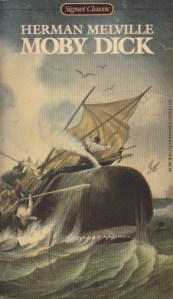
Every once in a while I return to Moby Dick.  I’m not sure why exactly Melville’s classic has such a hold on me.  Perhaps because I first read it while living in Boston.  For a land lubber like myself being so near the ocean was a kind of epiphany.  I read the novel as part of a course on wisdom literature in the Bible.  Harrell Beck, who was an influential person in my life, insisted that if wisdom themes were truly wisdom they would be found outside the Good Book.  We were assigned a list of modern novels from which to choose and I selected Moby Dick.  The thing that immediately struck me about the novel was just how biblical it is.  Ahab and Ishmael aside, the many references to Jonah and Job and incidental asides referencing scripture made this an intense reading experience.

I started reading it for the fifth or sixth time just before the pandemic became a crisis.  It is a large book and I didn’t want to rush through it.  I tried to pause and appreciate it this time around and I noticed just how remarkable it was that a man who made much of his life as a laborer, without any higher education, was so incredibly literate.  Classical references that I had to look up, and citation of sources blend together in a story that is compelling as it is unsettling.  Long explanations and descriptions are part of the tale, and the soliloquies are so philosophical that you have to sit back in a reverie after reading them.  I’ve read many novels in my life, but no others like Moby Dick.

As metaphorical stories go, the book is remarkably natural.  The descriptions of whales are as scientific in their own way as they are literary.  For an author with no scientific training this too is remarkable.  Indeed, a good part of the draw of Moby Dick is Herman Melville himself.  Although I have gathered a few degrees over the years, in my mind I am, like Melville, unlettered.  I’m sure he would’ve understood.  The fiction I write, although in a very different style, is a tip of the hat to him.  Friends used to tell me that nobody writes like that any more and that no publishers would show an interest.  The latter has proven to be true, and so much more’s the pity.  We could use more novels like Moby Dick.  And were my days not even fuller during the pandemic, I might even have a few moment to pursue my own white whales.