Wise Women

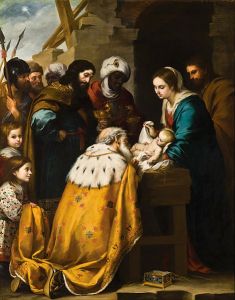
At a neighborhood holiday gathering the topic of a local living nativity came up. This year they need some wise men (don’t we all!) and some of the women mentioned that wise men should have beards. As the wearer of an old growth facial forest, I became the subject of a couple of queries—could you be a wise man? I replied that I wasn’t smart enough, but in the back of my mind I was attending the last church nativity play I’d been in. It was at the Church of the Advent, Boston’s high Episcopal establishment. I was cast as a centurion and was directed to deliver my lines woodenly. Being who I am, I did as I was told. I was invited to the cast party on Beacon Hill anyway. It was one of my few brushes with society folk in Boston.

Like many boys raised in church, I’d been cast in such plays before. One of three boys each born just one year apart, I was assigned the role of wise man along with my brothers. Far too young to grow a beard, I wore a costume made by my mother and carried a jar from a science experiment as a gift for baby Jesus. Being poor, we had no gold—or even frankincense or myrrh—lying around. In school we’d done this science project where a solution grew crystals up the inside of an ordinary coffee jar and out over the top. Stain it with food coloring and you have a gift fit for a king. So the illusion went.

The Christmas we celebrate today isn’t based too much on fact, but it is a prime occasion for plays. It’s a dramatic story, although the New Testament has to be bent and twisted to make it all fit into the comprehensive narrative of proselytizing playwrights. The king nobody recognizes being born in a barn. The creator of the universe being rejected by the very world for which he (the baby was always a boy) was responsible. The story is as timeless as Dickens’ Christmas Carol, and it’s enacted thousands of times each year in churches large and small across the country. Is there any reason that, as long as we’re straying into realms of imagination, the wise visitors shouldn’t be female? The ability to grow facial hair has little to do with any kind of intelligence. In fact, we’d be much better off right now with a woman in charge.

In Control

Those who know me know that I treat my workdays like clockwork. I leave the apartment every day, catch the same bus, and leave work at the end of the day, all according to schedule. Traffic is a variable, of course. Yesterday as I came out of the Port Authority Bus Terminal at 7:15, blunted with my reading on the bus, I noted we were a bit late for my liking. I got to work before 7:30, though, and was interrupted by a message from my brother, asking if I had made it out of the Port Authority okay. I was a bit confused—weather delays do happen, but what could have made today any different than any other Monday? It was then I learned about the bombing. It happened five minutes after I left.

Now, I’m not trying to over-dramatize this. I was above ground and the bomber was below. I didn’t even hear it go off, although there were a lot of sirens on my way to work. The only serious injury was to the bomber himself. What really got to me, when the idea had time to settle in, was how close I’d been. So were thousands of others at the time. Over the summer I went to Penn Station just after what had been assumed to be a terrorist attack. Jackets and personal effects lay scattered on the floor. People had dropped things and ran. In that case it had been an innocent tazing of an unruly passenger that had set off the panic. I’m not a fan of fear on the commute. I don’t think, however, that we should give in to the rhetoric that our government will surely use to describe all this.

Millions of people live and work in New York City. Such things as these disrupt the flow of our daily lives, but we can’t let the agenda of fear control this narrative. I felt a tinge of it when I headed back to the Port Authority at the end of the day. Police barricades were still up on 8th Avenue. Reporters with cameras were at the scene. A potential killer had been here just hours before. This is New York. Without the overlay of fear, this was simply business as normal. Any city of millions will harbor potential killers. If terror controls the narrative, it has won. If politicians use this fear to win elections, the terrorists win them too. I’m doing what we must do to defeat the fear. I’m just getting back on the bus.


Old Salt

Time has been at a premium lately, but when I have a few spare moments I like to read the Oxford Dictionaries blog. Those of us who make a living with words often find them utterly fascinating. Simon Thomas’ post, “Worth their salt: words and phrases with roots in ‘salt’” brings a number of interesting facts to light. Salt, now on the list of public enemies, is essential to our well-being in small doses. His clever post includes “salt of the earth,” a phrase biblical through-and-through. It reminded me of the fact that the Bible’s become so porous that few people can say what’s actually in it. It’s kind of a big book, and who has the kind of time needed to read it all, let alone remember what it did or didn’t say? Many phrases are attributed to Holy Writ that don’t appear within its covers, while others that do come thence are thought to originate elsewhere. Strange but true.

We may never come to an agreement on what Jesus actually said, but “salt of the earth” is a phrase attributed to him. Indeed, he may have coined the term “saltness,” but I haven’t researched that thoroughly. The idea of essences, I’m told, is outmoded. But the idea is fascinating—what is salt that has no taste? Would it work to clear our roadways in winter time? There’s a layer of salt on my car already, and it only just snowed for the first time this year. We all know what salt is, what it tastes like—but what is its essence? (If such things exist?)

Thomas notes that Roman soldiers were paid it salt. I wonder if this was behind a phrase my step-father used to use about work. Although he and I did not get along, now that he’s gone I come back to the hidden bits of wisdom he sometimes shared. He worked very long hours, and seemed happiest when he was doing so. Early in the morning he’d limp through the house and say, “Time to get back to the salt mine.” He wasn’t a literal miner, although we lived in coal country. Salt could mean food, and the salt mine was where you worked to provide food for your family. I may not have gotten along with my step-father, but he worked hard to support a family with three kids not his own. He may have been bitter about that, but today anyone who stays with a family in hard times is considered salt of the earth. And that’s biblical.


The Art of Commuting

You can tell when the holiday season settles on the city. The commute home takes longer because developers simply can’t ignore a highway and the potential it has for shipping in the lucre. Highway 22 is built up in several spots—it’s kind of like a 20-mile long roadside mall between where the bus enters it and my exit. Holiday shoppers right after work clog this artery faster than fried eggs for breakfast every day. We crawl, penitent, wanting only to reach home. You get to know the regulars on the bus. You may not know their names, but their faces and personalities become clear enough. The man sitting across the row from me was someone I couldn’t recall having seen before. Lots of people, of course, go into New York occasionally. A stranger on the bus isn’t exactly rare.

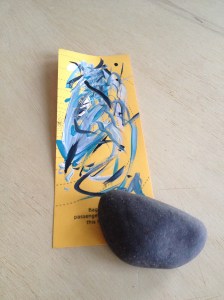
Near my stop I slip into the empty seat next to the aisle to get ready to disembark. He looks over at me and asks if he can give me a bookmark he’s made. Worse than talking to strangers is taking candy from one. He encourages me by telling me he does it to promote his work, since he writes haikus and does paintings. I accept one and learn of the website unfoldingmind.com. He then asks what I’ve been reading. If you read my posts in order, you can see my last book was The Exorcism of Anneliese Michel. There’s a reason I don’t tell my fellow passengers about my literary choices. I say it is a book about an exorcism and he takes it in stride, asking if it was an actual case.

I had my own unfolding moment then. Not only was it the case that I could mention exorcism in casual conversation, but a man considerably younger than me knew what it was. Stop and think about that: prior to the movie and novel, The Exorcist, very few modern people even knew about the rite. Strangers on a bus, both artists in their own way, I like to think, knew what this was. I look at my bookmark, some original art with a haiku on it, and think of the many interesting people that make this bus their temporary domicile. Occasionally, amid the snoring phone-movie watchers, is another passenger using the long ride home to open his or her mind. The bookmark is now amid the artifacts of my personal museum. And my words, hardly poetry, are a tribute to those who practice the arts that make us human.


Dominus Flevit

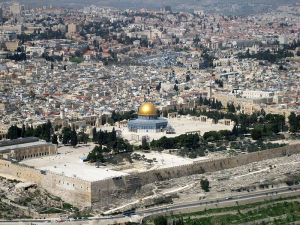
I couldn’t believe I was actually there. Ever since I was a child I’d read about this place. The city conquered by David and visited by Jesus. The city around which most of the Bible rotated. Jerusalem the golden. One of the perks of working on an archaeological dig was the opportunity for weekend travel, and here I was, amid camels and cars and churches and synagogues and mosques, in Jerusalem. No amount of reading prepares you for such an experience. Suffused with the rich mythologies of three major religions, this city is like a dream. So much had happened here. The church I was attending at the time was only the latest in a long succession that informed me that God himself had actually been killed here and had risen again. The ultimate game-changer. The once in forever event of all time had taken place right here.

Gnu Jerusalem from WikiCommons

But this was not a city at peace, despite its name. There was a bombing the first weekend I was there. Young men and women in military garb carried scary looking weapons openly in public. Even civilian bus drivers wore pistols. Jerusalem had a long history of violence, but that didn’t justify it. If God had really been here—in either Jewish, Christian, or Muslim contexts didn’t matter—how could this city be so prone to terror? In the old city old men sat around hookahs, placidly smoking. Tourists, many bearing crosses, thronged. Jerusalem, however, was also a very political place. The fragile, Christmas bulb-thin peace of the region involved the city being divided up and not being claimed by Israel alone. Even that man driving his goats through these ancient streets knew that.

Trump, to the cheers of evangelicals who want nothing so fervently as the end of the world, has said he’ll recognize Jerusalem as the capital of Israel. This political move of weaponized ignorance will almost certainly lead to war in the Middle East. Another war. An illegitimate presidency leaving a frothing sea of corpses in its wake. Negotiating in this part of the world is like haggling with that street vendor for a pair of sandals. You go back and forth on the price. You act insulted and walk away. You come back and haggle some more. It’s a delicate dance. This is no place for egomaniacs who can’t understand such subtleties. Just ask the last Caligula who wanted his statue set up as a god in this city. Jerusalem is home to too many jealous gods, and those who are self-appointed divinities will only leave the city, the world, in tears.


Spiritual Education

The water was hot. Notoriously hot. Our Junior High School had been built in the days of the prison esthetic, with heavy, cinderblock walls painted in penitent colors. And the water was famously hot. One of our gym teachers, nameless here forevermore, challenged us to be men. It takes a kind of courage mostly illegal these days to lecture a room full of naked boys, but he once came in during mandatory shower time to tell us that anyone who could hold their hand under the hot tap for a full minute would get an A in gym. Since he was an ex-Marine nobody was foolish enough to take him up on this challenge. At least not in my class. It’s difficult to be courageous when you’re unclothed.

The incident I recall, however, occurred at the opposite end of the spectrum, in art class. You may remember those days when you wove reed baskets to take home to your mom. The thing about reeds is that they’re brittle unless soaked in hot water. That was the key to working with them. Make them supple with hot water and then when they dried, they’d be remarkably sturdy, if somewhat lopsided. We had been weaving reed baskets when someone, unbeknownst to the teacher, had filled the sink with water as hot as our old school could deliver. Thinking it funny, since even in those days educational budgets were under threat, somebody dropped one of the very limited number of heavy reed-cutters into the sink, now at the very bottom of a basin of very hot water. I was not the guilty party; I don’t know who was. The drain was plugged from the bottom. Very funny, no?

At the end of class. the teacher was not amused. “No one leaves this room until that cutter is out of the water,” she flatly said. The first bell rang. She stood in front of the door. We would be late for the next period. Perhaps it is the weakness of character my religion instilled in me, but I’ve always had a great fear of not doing what I was told. It lingers to this day, that Fundamental unworthiness. This body of mere flesh is weak and prone to sinfulness. The clock was ticking. Teacher wanted the guilty party to suffer the price of their prank. I pulled up my sleeve, plunged my hand into the scalding water, pulled out the reed-cutter, slapped it on the counter, and walked out the door. We were released to class and the searing pain didn’t last long physically, but spiritually it has never gone away.


Popularity for Purchase

I only watch the Macy’s Thanksgiving Day Parade with one eye. Since my office is just two blocks from the store, it’s a little too much like work. Still, I can’t help but hear the music and announcements. Is it just me, or are most of these floats and balloons trying to sell me something? Okay, so it takes a while for the light to dawn—it is Macy’s parade, after all. This is the kickoff to the holiday shopping season. Santa Claus is the greatest shopper of them all. We are a nation that defines itself not by what it can produce, but what it can consume. Conspicuous wealth. Showing what you’ve got. I’m afraid I just don’t get it.

Those of us who grew up poor, so the thinking goes, should want to display our accomplishments like a peacock. We should want to show others that we’ve made it. That we can play the spending game just like everybody else. We’ll always have the poor with us, so why not demonstrate to them the vapidness to which they can aspire?

An old-fashioned guy, I check my email on a computer. Gmail divides my messages up into three tabs so that I can pay attention to people who actually want to contact me. The third tab is reserved for those seeking my money. Sitting in a waiting area, I decide to check my email on my phone. It says I have close to two-thousand messages. It’s that third tab. I tend to ignore it since I already know what everyone wants me to play. The messages in tab three build up to biblical proportions while I try to figure out how to handle all the other things I have to do.

Not only did I grow up poor, I was also a small guy. That meant when teams were being picked in gym class I was always among the last selected. I’m not aggressive. The indigent know their place. My religion taught me that this was about right. Seeking for one’s self instead of for others is wrong. Although I’ve been through advanced training since then, those early lessons remain with me. When those who have goods to offer discover my email address, they crowd it full, hoping that I’ll be one of many to spend the little I earn on them. Instead, I remember standing on the vacant lot while the neighborhood kids are dividing up into teams. The lines are getting small, and I’m awaiting someone to notice my potential. Of course, they’ll have to wait until I get through all of this email because, in reality, I’m obviously quite a popular guy.


Holiday Season

It was just after dark and the red and blue lights were shredding the night in Wallkill, New York. We’d driven past this mall just over an hour ago to take our daughter home after a too brief Thanksgiving break. Now there were police cars lined up along the length of the Orange Country Galleria Mall, and my wife said, “I hope it’s not a shooting.” Life in America’s that way. About two hours later we were home and yes, it had been a shooting incident. For reasons nobody knows, a man discharged a handgun into the floor at the crowded shopping center, injuring two. Police had not located the shooter, and no motive was known. The mall was evacuated and holiday shoppers feared for their lives.

Just a few months ago I was in Penn Station, New York when a similar panic ensued. Rail police had used a taser gun on a passenger who’d gotten out of hand. As we were entering the station to catch our train, scores of people were running out in a panic. It had sounded like a gunshot. Clothes and personal effects littered the floor of the station once we got inside. This is the world in which we live. A world enamored of weapons. A world where we hate and distrust the stranger. A world where our government receives support from gun lobbies and refuses to put controls on the sale and ownership of firearms. A world where a peaceful Sunday night on the busiest shopping weekend of the year ends in panic and tears.

Wallkill, New York, is not exactly a metropolitan area. Upstate, as we’ve been learning for the last several years, is pretty big. Small population centers dot an impressive landscape of Catskills, Finger Lakes, and beautifully wooded hills. The people are generally friendly, less brusk than they tend to be in New York City. It seems that where two or three are gathered together there’s a handgun in their midst, however. Trusting ourselves to be good people, we want to arm ourselves to shoot the “bad guy.” Meanwhile Congress still tries to pass legislation to reduce health care since, I guess, too many people are getting shot. It can be a real drain on the economy if the wealthy have to chip in. It’s upstate New York. We have about two hours to go before we can rest at home. Galleria Mall is in lockdown. The rest of the nation is too.


Devolving Apes

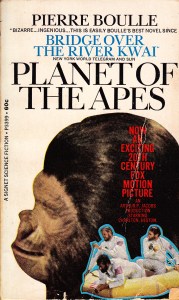
It would be difficult to overestimate the effect the movie Planet of the Apes had on me as a child. Raised a biblical literalist, evolution was, naturally enough, anathema to me. And yet here was a movie based on the idea that evolution had taken a different course. It was a transgressive film, but the screenplay had been written by Rod Serling, so well known for his trusted work on The Twilight Zone. I was utterly fascinated by it. Until the most recent iteration, I’d seen every sequel, spinoff, and reboot ever made. So important was this story line that as a child I found a copy of the book, in English, of course. Pierre Boulle told the story somewhat differently. Spying the book on my shelf after some four decades of my own evolution, I decided to read it again.

We all evolve. I noticed the improbabilities more this time through. The fact that, unlike the movie, humans wore no clothes at all must’ve scandalized my young eyes. I would’ve agreed, however, with Ulysse Mérou’s sentiments that humans were created in the image of God, not apes. In fact, there is an undercurrent of a somewhat conservative theological outlook here. Humans may experiment on animals, but when it’s reversed, it’s evil. In many ways, the cinematic version improves the story, but Boulle’s telling grows in intensity as the novel unfolds. Mérou develops a moral sense that includes the apes as well as human beings. The story, of course, is largely about prejudice and its evils. In that respect, it’s timeless.

As a child I realized that we lose something if we accept the fact of evolution. We lose that special feeling of having been intentionally created by a deity that made us God-shaped. Ironically, I also came to realize that those who rejected evolution often treated their fellow humans like animals. They held onto prejudices against other “races.” They castigated the poor for being lazy. They wish to remove healthcare from those made in the image of God. The contradictions and cruelties simply don’t comport with the Good Book they adore and ignore. Evolution, with the realities of nature impinging on our security, is far less dangerous than what biblical literalism has evolved to be. I can’t say why this book and its cinematic renditions became so deeply embedded in my young mind. But having read the book again, it’s pretty clear that the ideas have remained there, even as they have modified, with descent, over time.


Predestined?

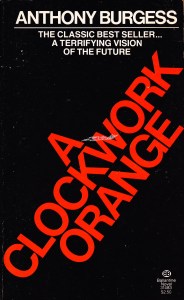
This particular doctrine struck me as evil. It violated every experience and thought I’d ever had, even raised as an unquestioning Christian as I was. Then, at Grove City College I was faced with it for the first time—predestination. If free will is an illusion, what crueler God can be conceived? I couldn’t avoid such thoughts upon re-reading Anthony Burgess’ A Clockwork Orange. A non-conforming non-conformist at the college assigned it in a science fiction class, so it has been decades since I’d read it. Now I found it perhaps more profound than before. Much has happened since my initial reading of the book, o my brothers. (And sisters.)

The framework of the story is well known. Alex and his friends are teenage punks who love ultra-violence. Alex is betrayed and imprisoned. Considered incorrigible, he’s reprogrammed to the point that he can’t even defend himself in a society that’s grown even worse during his time in jail. In the hospital after a suicide attempt, he awakes to find his old self restored, whether this is a good thing or not. The main point that’s behind this, it seems, is that without free will, repentance means nothing. In fact, in my edition of the book, an afterword by Stanley Edgar Hyman makes the point that some interpret A Clockwork Orange as a fictional defense of Christianity. Certainly the comparisons are there, from Judas through Jesus, healing, sin, and suffering. How much it actually meets that idyllic vision of God in Heaven directing the lives of individuals is, of course, an open question.

The idea that human beings are born as Hell-fodder posits a cruel and sadistic deity. Not only are the majority of human beings going to face eternal punishment for matters beyond their control, there is a divinity who planned it that way. We are all, literally, puppets in a universal morality play written by a being whose moral compass is horribly skewed. Indeed, even at Grove City some of the faculty would state that philosophically there could be no contest—free will was right. But, they would add, tapping the Bible, it’s not true because the Word of God says so. When I protested, it was declared, without irony, that even my protest had been predestined. In other words, in this clockwork universe I was clearly an Alex. Upon closer inspection, however, the truer analogy would be that we are all the victims of Alex and his droogs. But only if we have the freedom to make such an observation.


Spinning Wheels

That warm, secure feeling of being home for the holidays never goes away. Admittedly Thanksgiving takes on a different cast for those of us who are vegetarians becoming vegan, but it’s not about the food, really. It’s never been only just about the food. Thankfulness as a way of life seems to hard to obtain when your own government has turned against all the principles that once made America a wonderful nation in which to have been born, but it doesn’t mean you can’t be grateful. As a commuter, I’m especially thankful for time. Each day’s normally spent riding a bus, working, and riding again. Over the past several days I took a train to Boston for the AAR/SBL annual meeting, and then a long train ride back. Followed by a single-day drive to Ithaca and back. I’m thankful for a little time not to be on the move.

Among the many memories for which I’m grateful is a mountain road that divides Glen Kinglas and Glen Croe in Scotland. Known for its splendid view, it’s one of many places that I have had the privilege of visiting. Although sitting still, here in my chair, I recall yet another busy day of driving with friends. Poor graduate students all, we nevertheless knew the value of good company and taking little for granted. As someone who grew up poor, I had managed to move to Boston, travel to Israel and work on a dig, and now I was living in Edinburgh, working toward a doctorate in one of the world’s great universities. That afternoon, however, I was out viewing what the wider world had to offer. The name of the viewpoint on the A83—from which that world all seemed visible—was “Rest and Be Thankful.”

The name speaks volumes. New Jersey certainly isn’t Scotland. My job is not that for which I trained. I continue to live as if I were a graduate student while friends have purchased houses and furnished them nicely. Today none of that matters. I’m not on a bus, train, or plane. I’m not glued to my seat in an automobile. I’m thankful to have some time to sit and reflect. Catch up, perchance, on a little bit of sleep. Unstructured time is perhaps the rarest commodity in a capitalistic society. Today I have it in relative abundance. No turkeys have lost their lives on my account and I’m able to rest and be thankful. There’s still a long way to go, but for today I’ll enjoy family and stillness. And I am thankful.


The Pace of Progress

Scientists tell us the earth is slowing down. It’s only by a fraction of a fraction of a second, but like a top set spinning these endless revolutions can’t go on forever. Although the evidence all points in this direction, it feels like it’s speeding up. How else can I account for the apparent loss of time I’ve been sensing? Let me contextualize that. I’ve been attending the Society of Biblical Literature and American Academy of Religion annual meeting since 1991. That first meeting in Kansas City’s acid-etched in my friable consciousness with the long hours waiting for interviews that never came and no mentors to show me what to do. Those three-and-a-half days stretched on into an endless Tom Sawyer summer. I was anxious to get back to my wife in Edinburgh to and finish my dissertation. Fast forward a quarter of a century.

My days are now filled with back-to-back meetings. Normally by now I’d have had a leisurely perambulation among the bookstalls (where I spend all day) taking in the volumes the competitors publish, noting what I need to read. Instead, the time has been shortened. I have to keep a constant watch on my watch for the next appointment. Hearing about new books being born rather than tending the infants that surround me. We are a thriving population of readers here. Although it looks like a large crowd, I know that in reality we don’t make much of a dent. Boston’s big enough to absorb us and all our feverish ideas. When wakefulness arrives at my usual New York commuting time, even the nights seem to be shorter. Where has the time gone?

Most of those I meet have no idea I write books of my own. It was a process started long before the conferral of a diploma from a university far away. The earth is spinning in that direction, I’m told, so I should be in the tailwind of Edinburgh all the time. I’ve grown old with some of these colleagues. Those I’ve known since I was a young man, thinking he knew something about life, learning how little he really knew in this very city. I’m pretty sure I know even less now. The world, for example, seems to be speeding up to me. In fact I know it’s slowing down. Days are growing longer, but there is ever more yet to do. And all I want to accomplish right now is to walk around a bit and browse the books that others have written. I’m absolutely sure the earth is indeed speeding up.


Sacred Places

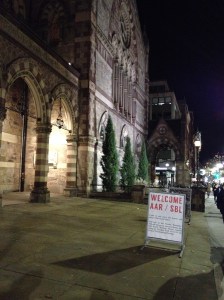
Boston Brahmins, lock up your doctrines—AAR/SBL’s come to town. Boston always has special associations for me. My first home away from home. Where I met my wife. Where I learned what you can only learn at seminary. Coming back is like coming home. Of course, I’m here to work. As I was getting ready for this trip I recalled that the conference met in Boston when I was studying for my Master’s degree at Boston University. Unlike many graduate schools these days, no overtures were made for students to attend. In fact, I didn’t know what all the in-joking among the faculty was all about. I relearned the existence of the conference as a grad student in Edinburgh a few years later. Few traveled across the Atlantic for it, at that point. In fact, none of the Edinburgh faculty who’d eventually become regulars had ever considered going. My first meeting was in Kansas City.

The meeting has grown since those days. Now regularly expecting about 10,000 scholars (can one help but think of 10,000 maniacs?) a year, the venues are limited. Atlanta, Boston, San Antonio, San Diego. Chicago and Denver once in a while. Personally, I’m glad it’s close enough for a train ride. New York City and Boston, two peas in a pod. My only regret is that I won’t be able to get out to my old stomping grounds. Some colleagues (few read this blog) contact me at the last minute asking if we can get together. My schedule’s booked from breakfast through supper each day. Those who attend as participant-observers have no idea. These are the longest working days of my entire year. Still, they’re in Boston.

I often muse about place on this blog. We’re attached to the place where we’re born—it’s our personal sacred space. In life we grow attached to other places, whether we can settle there permanently or not. I wanted to live in Boston. I did so for a year after attending seminary here, making a living doing this and that. Having a master’s degree in religion doesn’t get you far in life. In those heady days of sleeping on the floor and finding out what life was really like for the unconnected, I learned an awful lot. And when the woman I wanted to marry came back for a visit, I proposed. I’ve only ever visited Boston since. But whenever I manage to do so, even if it’s just for work, it’s like coming home.


De-programming

I’m no foodie. That’s not a trendy thing to admit, I know. I’ve never been a good consumer. I think it’s because I don’t like being programmed. One area of life where we are most open to programming is in what we eat. Raised to masticate animal flesh, we’re told that it’s healthy for us, and besides, where on earth are you going to get protein if you don’t eat animals? Without thinking too much about it, we step in line. I remember asking my mother, as a child, what part of the animal “the meat” is. I was kind of hoping, I guess, that it was some part that might be kind of painless to lop off, because I didn’t like to think of the implications otherwise. Even when the answer wasn’t satisfactory, I didn’t change my diet.

Once, when eating with a friend, my host commented that you shouldn’t be allowed to eat meat unless you were willing to kill the animal yourself. He wasn’t advocating vegetarianism—he was serving meat—but he was thinking through the process logically. I became a vegetarian, because of that logical thought process, about 18 years ago. I continued to be programmed, however. Yesterday I attended a vegan lunch. I always thought of vegans as spare, acsetical types, emaciated and gaunt. I learned that they are often people who think through the consequences of our love affair with meat. And other animal “products.” The problem is industrial farming. In a word, the commodification of animal suffering. Those who don’t work in the agri-business—to which most looming environmental disasters can be directly traced—are prevented from seeing the conditions in which their “food” is being kept. Animal cruelty on a scale that is, well, industrial. Decisions are made based on one metric—profits.

I don’t think about food a lot. It has become clear to me that my friend’s logic works. One of the things our vegan presenter pointed out is that pigs are considered the fourth most intelligent animal species. Our love of bacon has them kept in conditions where they literally lose their minds. We don’t see it, so we continue to be programmed. Go to the grocery store. The healthy foods are more expensive—“consumers” are punished for refusing to play the “no thinking” game. I don’t know much, but I do know that it’s often the things I do without thinking that ultimately lead to trouble. Capitalism rewards the greedy only. The rest of us, including our animals, pay the price. Think it through and consider the conclusions. I don’t like being programmed.


Keystones

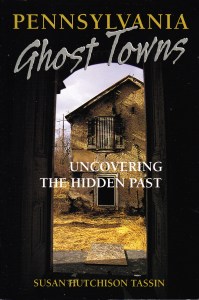
It was one of the very few parties to which I’d been invited in Edinburgh. “When a Scotsman asks you where you’re from,” one of the guests said to me, “he means where you were born.” Although we have no control or say over where we come into the world, we do feel that the place has a claim on us. Combined with my undying interest in local history, that means I like to read books about my native Pennsylvania. I was a first generation Pennsylvanian, to be sure, but to keep a nearly forgotten Scotsman happy, that’s where I’m from. Sarah Hutchison Tassin’s Pennsylvania Ghost Towns: Uncovering the Hidden Past is that familiar kind of book considered light reading, geared largely to the tourist and nostalgic past visitor or homebody crowd. Still, these kinds of quick studies often inspire the imagination. Lots of people lived here before you did.

A couple of factors stood out to me about Pennsylvania’s elder communities. One obvious feature is that a number of them began as intentional religious communities. Often breakaway sects from some major denomination, they established settlements to pursue spirituality in their own way, generally with strict rules, such as celibacy, that would spell their ultimate demise. Pennsylvania is well known for its separatist Anabaptist sects—Amish, Mennonites, and others who’ve been around for centuries and have integrated into the cultural mix of the state. I had no idea that a few ghost towns remain where some less successful spiritual seekers had broken ground. The second feature that stood out is how many communities were intentionally founded for commercial purposes. Often these were mining or lumber-processing towns. Some wealthy individual would buy a natural resource, build houses and a communal store, and permit workers to purchase goods only there. This meant individuals could never save money and never really afford to leave the mine or mill.

These are two very different conceptions of what it means to live in community. One is overly idealistic the other overly exploitative. At one end, the basic necessities of life—food, shelter, clothing—were kept from those who found themselves, like most of us, in need of a job. Or, at the other extreme, being held back from eternal life by failure to keep to the rules of a newly revealed religion. I never really thought of towns intentionally founded in these ways before. My naive view was more eclectic. But then, what do I know? I was born in a small Pennsylvania town and never thought to question why it was there. Where are you from? It’s a matter of perspective.