Science and

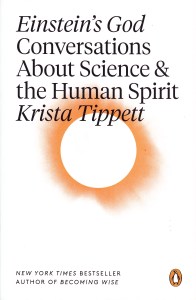
Do science and religion have to fight? It’s not evident that they do, but some on each side of this divide like to keep the conflict going. Many religious believers feel threatened by the incredible success of scientific explanations. The gods who used to explain everything are now responsible for so little that it’s easy to feel foolish for believing. It doesn’t help that the most vocal scientists have made religion their personal court jester, adding ridicule to the mix. Krista Tippett’s book of interviews with scientists, Einstein’s God: Conversations about Science and the Human Spirit, is a refreshing counter to this trend. Although it’s a few years old now, the book just landed under my tree, so I started off the new year with it.

A blend of interviews with scientists, quotes from their books, and personal observations, Einstein’s God is a fascinating and quick read. Covering topics from the wonder many scientists feel about their discoveries to medical understandings of how spirit effects healing to the ongoing debates about evolution, this book looks at the big picture. The scientists Tippett interviews, although some are atheists, don’t dismiss religion. In fact, many of them suggest religion in some form is necessary for healthy human living. As scientists they don’t dismiss science either. It’s refreshing to read about how those with scientific bona fides sometimes come to the same conclusions that those of us without the credits have surmised.

Once I began working at age 14, one of my earliest purchases was a subscription to Discover magazine. I was a charter subscriber. I was also a Fundamentalist. Not realizing that science and religion should be squabbling, I read science that could be digested by someone without professional training. Until I felt the tug of the ministry, I had intended to be a scientist. The only professional religionist interviewed in Tippett’s book is John Polkinghorne. A physicist cum priest, Polkinghorne has come to prominence among those involved in the debate between how we know what we know (the fancy term is epistemology). I wondered as I read this how it might differ from the other direction. Some of the interviewees were raised religious—Jewish and Hindu, notably—but none started out as professional religionists who went into science. That, I learned after college, is a much harder transition. Perhaps it says something about the nature of reality that to move into science as a career you must start with the undergrad prereqs if you ever hope to make the switch. Otherwise, those who start out with A’s in high school physics end up watching from the sidelines while others set the terms of the conversation.

Gaston Avenue Freeze-Out

I was not, as yesterday’s post indicated, looking forward to the renewed commute into New York City. We’ve been having a cold snap here in the Northeast, and although it’s nothing by Midwest standards, standing in it waiting for a bus isn’t the most comfortable of situations. It was cold enough that I didn’t dare take my gloves off to check the time, but my body clock told me the bus was late. The cold was creeping through all my layers and the thermometer said it was in the single digits, and breezy. I’d been a human popsicle for about a quarter of an hour when a pair of headlights pulled in the parking space nearest me. The driver got out—one of the regular commuters on my line—came over and said, “The bus is running late, won’t you sit in my car?” I was truly touched.

It’s easy to think people just don’t care. Those of us on the early morning commute know each other by sight, but not by name. We all awake far too early and put up with expensive, but unreliable bus service. We don’t talk on the bus, each of us using the time as we see fit. It feels like being alone. This offer of kindness was a welcome start to 2018. Many women would be rightfully leery of letting a man they don’t know sit in their car in the dark. Human kindness, however, is a quality that overlooks differences in times of need. She asked what line of work I was in. When I said “publishing” she replied “Ah, so that’s why you read all the time!” I was surprised she even knew that about me. Commuters touch only at the edges, like marbles in a jar.

In the Middle Eastern desert regions there’s a law of hospitality. If you find anyone lost in the wilderness, you help them. It doesn’t matter if they’re a friend, enemy, or stranger. Knowing that anyone might find themselves in such a hostile environment needing help, the tradition is to give assistance. You give water to the person in need. In these days of foreigner-bashing, I feel compelled to note that this woman is not a native-born American. Standing in the exposed cold of my shelterless bus stop I was at the mercy of the weather and human kindness. In a nation bent on expelling “the other” I could’ve had an even more uncomfortable long wait for an expensive government service for which I handsomely pay and which often doesn’t deliver. There are parables everywhere for those with eyes to see.


The Grind

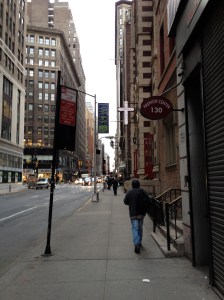
I’m headed back to New York City after a staycation of almost two weeks. Even shifting standard arising time back only an hour from 4:00 a.m. seems cruel and unusual punishment this morning. New York is a very different place to go for work than it is for play. Serious New Yorkers, of which I am not one, tend to avoid the fun places visitors go. Times Square is simply a venue from which the hike to work begins. Most of the buildings are gray and dedicated to the making of money. My thoughts go back to my one transgressive trip in over the holidays to see a show. How different New York was then! Ethereal lights, sublime music, and the magic of story. Today it will be unsmiling crowds surly to make cash flow again. The concrete underfoot today will be much harder.

When I come in with family I feel less cold. New York can be very lonely for such a crowded place. Indeed, it isn’t unusual for me to go for days with no one at the office saying a single word to me. That’s the kind of place Manhattan is. Too many humans to be humane. Unless you’re here to play. Such play is, however, costly. Magic never comes for free. The holiday lights will still be up here and there. Warm memories of the past few days will linger for a little while. Soon the steel and cement will be the only realities once again. Soft skills meet the cold razor of cash with predictable results.

It seems to me that I’m yearning for boyhood once again. Those first tentative years of learning about life are all misleading. Suddenly it dawns on you that good will is reserved for the holidays and the remainder of the year is dedicated to money and things others deem as important. The bus is approaching, but the last time I was in the city was for fun. Today I won’t even glance at the theater district as I dodge cars to get out of Times Square as quickly as possible. There will be the all-too-familiar lines at the Port Authority during rush hour this afternoon. I’ll leave work wondering how a city can possibly be so schizophrenic. Yes, I’ve been profoundly happy in New York City. I’ve also been ground down to the very nub by the exact same place. Such is the nature of a world where money reigns.


2017 in Books

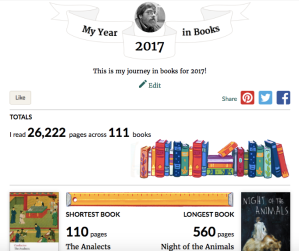
At the end of each year I think back over the books I’ve read in the past twelve months. Since I don’t blog about every single book, I use Goodreads to keep track of my numbers. I pushed my reading challenge at that site to 105 books for last year, and the meter stopped at 111. In 2018 I’m planning on reading some bigger books, so I’ll scale the numbers back a bit, I think. In any case, what were the most memorable books of 2017? It’s perhaps best to divide these up into categories since the number of books has become unwieldy. I’ve written a book about horror movies, and much of this year’s reading has been in support of that. Since my book addresses, among other things, possession movies, I’ve read several tomes on the topic. Noteworthy among them have been the three books by Felicitas D. Goodman that I read over the year. J. H. Chajes’ Between Worlds was exceptional, and Jeffrey Burton Russell’s The Devil, was likely the overall best on the topic. Also noteworthy for purposes of my book research were Catherine Spooner’s Post-Millennial Gothic and Monstrous Progeny by Lester Friedman and Allison Kavey.

For books on religion, Stephen Prothero’s Religious Literacy was an important start. Amy Johnson Frykholm’s Rapture Culture and James William Jones’ Can Science Explain Religion? addressed aspects of the topic that will continue to bear further exploration. God’s Strange Work by David L. Rowe and American Apocalypse by Matthew Avery Sutton stand out in my mind as a memorable treatments of William Miller, and of understanding American religion respectively. Chris Hedges’ American Fascists is remarkably urgent and should be read widely, especially since he has shown where current political posturing will lead if it’s not stopped cold. We will be struggling against a situation like Nazi Germany for many decades to come, and forewarned is forearmed.

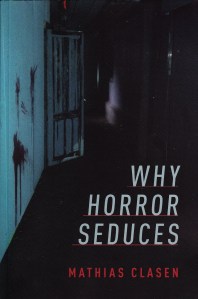
It wasn’t all doom and gloom, however. Much of the fiction I read was excellent. Bill Broun’s Night of the Animals, Auður Ava Ólafsdóttir’s Butterflies in November, Robert Repino’s D’Arc, Matt Ruff’s Lovecraft Country, Christobel Kent’s The Crooked House, and Leah Bobet’s An Inheritance of Ashes all stayed with me long after I read them. And of course, Neil Gaiman’s The Ocean at the End of the Lane. Some non-fiction read just as engagingly. The autobiographies by Carly Simon and Bruce Springsteen were deeply engrossing. The Hidden Life of Trees by Peter Wohlleneben and John Moe’s Dear Luke, We Need to Talk were great guilty pleasure reads along with Dani Shapiro’s Still Writing, W. Scott Poole’s At the Mountains of Madness, and Mathias Clasen’s Why Horror Seduces. The latter title brings us full circle. I suspect that’s appropriate for rounding out a year. Many of the other books were also quite good; I tend to rate books favorably. Read the revolution—make 2018 a memorable year with books!


Let the Memory

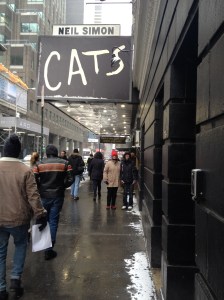
One of the rare and long-anticipated treats of being near New York City is the prospect of a live show. For practical reasons we don’t go to shows very often—years separate the occurrences—but once in a great while we manage to afford such a boon. Yesterday we attended the penultimate performance of the Cats revival on Broadway. The experience was transcendent. I’ve seen the movie version a number of times, and over the years I’ve caught a few live performances here and there. For whatever reason, this musical speaks to me. Although it doesn’t really have much of a plot—it’s more a series of vignettes—it is about redemption and being comfortable in one’s own skin. T. S. Eliot was a poet who knew spirituality intimately. Andrew Lloyd Webber, no one needs me to say, writes stirring music.

Cats, unlike many shows I’ve seen, requires athleticism as well as vocal ability. The performers are in nearly constant motion as they play out their roles, often with acrobatic flourishes. Most of the parts are for the young, while those dwelling on the experience of older characters—Gus, Grizabella, and Old Deuteronomy—tend to be recollections of youth as a commodity that slips away leaving as residue the wisdom that comes with age. It’s quite biblical in that respect. Even the old can appreciate back flips and double cartwheels and the grace of ballet. For this particular production the lighting stood out as an integral part of the story. Illumination, I might add, is a powerful metaphor.

In our family discussions afterwards, comparison with other versions dominated. Although my wife and I saw a community theater production long ago (placing us, I reluctantly suppose, in the ranks of the older characters), our main introduction was through the filmed adaptation. Again, like the Bible, we tend to think of canonical versions. This is how it should go. Because of both its running time and its demands on the players, not all vignettes are included in each production. The character who narrates the story may change. Choreography is adjusted. Each show, as is the case with live theater, is a little different. Standing in the snow on a cold, New York City December afternoon awaiting the opening of the doors, we wondered what would be changed. The original Broadway run had ended while we lived in the Midwest, so this was both our first exposure but also our fourth rendition over the decades. None, it turns out, could be called canonical. That, however, took nothing away from the inspiration of the event unfolding before our very eyes.


Reading Preferences

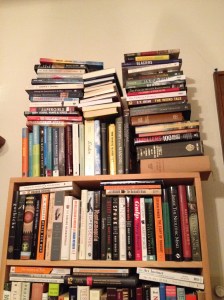
How do you decide on a favorite author? The question has been looming in my head as I’ve been reading through old novels on my shelves. It’s a question that strikes me whenever I walk into a bookstore. You see, my parents weren’t readers. As a child my literature was selected from the book table at the local Goodwill. I had no literary advice of ancestral pedigree. Teachers had assigned some books I’d liked, but nothing that really grabbed me. How was I to go about finding a favorite author? My favorite novel, hands down, was discovered in seminary. Moby-Dick is, to my way of thinking, the perfect novel. But I’ve never read anything else Melville wrote. I’d discovered Edgar Allan Poe as a child, but he was no novelist. Who suggested these books on my shelf?

Among those responsible was a young woman I knew when I was in college. She was in high school, but she’d grown up in an educated family and she was passionate about her authors. Thomas Hardy and Kurt Vonnegut, Jr. Were among her favorites. I was startled to realize that among the books I found myself reading as 2017 draws to a close were both Hardy and Vonnegut. A blast from the past. Then, of course, my wife has suggested many books to me. We still read together—a practice we started as newlyweds (today commemorates the start of that status, by the way, which occurred 29 years ago today). There’s an intimacy involved in sharing books.

For the past few years I’ve been participating in Modern Mrs. Darcy’s reading challenge. Since it involves only a dozen books it’s seldom a problem to finish it. We go to our local independent bookstore and seek advice. I encounter writers unfamiliar to me. I still struggle, however, with that favorite author question. As I lay down each book I say to myself—was that the best I’ve ever read? Maybe the point is that there is no favorite author. If I were to sit down and try to list everything I’d ever learned from the fiction I’d read, I’d never stand again. The list would be endless. The lingering longing after closing a book, feeling as if I’d just had an intimate evening with the author, requires a certain literary promiscuousness. I enjoy many authors in many different ways. More often than not, they have changed my life. I look forward to the reading challenge of 2018. No matter the disappointments of politics and human folly, I’ll have good books to read as the world wobbles onward with no particular goal in mind.


All Is Bright

As a Christmas present to myself I finished my third book yesterday. I’ll be posting details once the title is finalized. And “third” is only an approximation. I wrote another non-fiction book before this one which I decided not to send to publishers. That “fourth” book joins the six completed but unpublished novels resting on my hard-drive. Writing, for some of us, is a way of life. Not a way to make a living, mind you, but a way of life nevertheless. Literacy is a gift too often taken for granted. It’s easy to forget that the rapid scientific and technological progress that we’ve made has only come about since the invention of the now nearly defunct printing press with moveable type.

Among the first books printed was the Gutenberg Bible. This was a book of progress, as difficult to believe as that may be. You see, the Bible wasn’t always a means to enslave. It was once a tool of liberation. As I try to steer my thoughts from politicization this holy day, I can nevertheless not neglect to reflect on how Holy Writ has been weaponized. We’re warned to keep Christ in Christmas although we know the story isn’t history. Scripture becomes a blunt object of superiority and supersessionism. We sometimes forget that sacred time is a gift, no matter what anyone believes. Literature has built this world for us—some sacred, some secular. Our proper response ought to be celebration.

I now awake on Christmas morning—from long habit—at a time I would’ve thought a boon as a child. In the pre-dawn stillness of 4:00 a.m., sleeping in for me, I think about the great gift of quiet time. This is my writing time. Book three is done, and books four and five are already in the works. For those of us who write as readily as we respirate, this morning stillness is a gift. Time to compose, arrange thoughts that will only be scattered in the coming busyness of the day. The means are quite different than those employed by Johannes Gutenberg, and the results will be read by far fewer people. None of that really matters, however. Today is a holy day because it involves writing. Angels, shepherds, and wise men may come later with the stories we tell of how this day began, but remember they are stories. And no gift should be taken for granted. Not even the unbroken silence of 4:00 a.m.


Nothing Better

While it may seem that the largest challenge on a blog like this is writing all these words every day, that’s often not the case. Early on in my blogging life, I learned that images draw readers in. That may no longer be the case, but I do try to ensure that my posts have apt illustrations. Due to the fact that I can’t keep up with technology, I no longer know where these images are even stored, so when I was seeking a picture—amid thousands—that I had saved on my backup drive, I came across a series of photos taken in central Pennsylvania. These showed some road-cuts with obvious and impressive folding of geological layers characteristic of orogenous zones. Geologists only discovered the earth was ancient in the nineteenth century, and evangelicals have been disputing it ever since.

Genesis, so the spotless thinking goes, says the world was created in six days. So, by God, in six days it was created! When Darwin simply put the pieces of the puzzle together, evangelicals objected loudly. They started electing US presidents in the next century—a blink of the eye in geologic terms. They don’t dispute non-biblical dinosaurs, however. Their kids would object. The impressive sedimentary layers (or for that matter, igneous or metamorphic) were, they claim, made by God to look old. To fool us. That’s the kind of deity he is. So I got to thinking of a “to do list” for a God with nothing better to do than to oversee intricate and complicated layers of rock that make sense in geological time, but which, apparently, are only planted here to test the faith of brand-spanking new Homo sapiens.

One thing such a deity might do is take care of social injustice. Since he is a father, I suspect we ought to listen to his son, my evangelical friends. Jesus of Nazareth seemed pretty set on helping other people and everyone loving one another. This was, of course, between stints of helping make the planet look older than it actually is so that sinful scientists could trick their compatriots into going to Hell by believing false evidence. There are so many things you could do if you had the time to make such intricate traps. Why not write another book, for example? The Bible could use a good sequel. But no, it is far better to spend divine time making a world look older than it is. And if I had been able to save the time looking for that image that took over half an hour to find, a post such as this would’ve never been created at all.


Who Can You Call?

They’re scratching their heads. The media, I mean. In this distorted world of Trumpism, newspapers have rediscovered religion. Some say Trump is the altar boy of the evangelical right with people like Franklin Graham wetting himself over the president. Others say evangelicals want to change their name to distance themselves from Trump. Everybody seems to want to know who evangelicals are, but they’re afraid to ask. The weird, or perhaps expected, thing is universities decline to help. For years now they’ve been cutting positions in religion, a topic no longer relevant or of any interest. Academics aren’t always good at seeing what’s right in front of them, of course. So it is that the media’s scratching its collective head. Is he or isn’t he? What can you say about a man who’s so clearly heathen and yet a sparkling example of Christ-like compassion and values?

It’s doubtful whether any university administrator or televangelist could finger Jesus of Nazareth in a police line-up. They have no idea of who he was or what he taught. All that matters is he was God and he protects unborn babies so that he can arm them with automatic rifles when they’re of age. Oh, and he’s definitely not a woman. Or gay. Is that about it? Just in the past week major media outlets have run stories about the evangelical relationship to the commander-in-thief who’s told more lies in his first year than all other presidents combined. Who said Jesus of Nazareth was honest? He just stood for the right causes.

Having grown up evangelical, studied religion with evangelicals, and having been fired by evangelicals, I know them well. They have a mental capacity for biblicism that’s nearly incomprehensible. The Bible is so sacred that no other book should be placed atop it. It should never be set on the floor. Memorizing chapter and verse is more important than knowing what they might mean or how to live by them. This is old-school blind faith. And proudly so. Trump doesn’t know the Bible but he says he does. His actions resemble the carpenter from Nazareth’s about as much as Joseph Stalin’s. He was a good Christian, too, wasn’t he? After all, the Bible says Russia is our ally. Reagan—another evangelical—may’ve said they were our worst enemy, but one thing we know for sure about the Good Book: it never lies. For that it takes evangelicals and politicians.


Remembering Catherine

Literature has been on my mind lately. Although I’ve not read all of Charles Dickens’ oeuvre, he’s been in my consciousness what with the new movie and somewhat older book, The Man Who Invented Christmas. Those who analyze literature sometimes claim Dickens invented the modern novel. In my unprofessional opinion, however, the roots go back a bit further than Boz. Still, it’s an enviable position to hold, even if it’s just in the minds of admirers. Dickens came back to me yesterday in one of those apparently random emails from WikiTree. WikiTree is a genealogy website to which I’ve contributed from time to time. I have no famous ancestors, so WikiTree sometimes helps me borrow them. Turns out I’m 28-degrees separated from Charles Dickens.

Perhaps their algorithms are getting better, or perhaps one of their robots is reading my blog (goodness knows few actual people do!) but the connections are getting closer. I posted earlier that I’m 37-degrees separated from Bob Dylan and 43-degrees from J. R. R. Tolkien. I’m closer to Dickens than to either of these famous individuals. This is the beguiling aspect of genealogy—it shows how unexpected connections can be part of our unknown background. The maze back to Dickens is through my grandmother on the Tauberschmidt line. This is the one of the four grandparental lines for which I have the least information. Nobody in my family even knows my great-grandmother’s name. She died young and, as with women in that era, was known in census records only by her husband’s surname. I may never learn who she was.

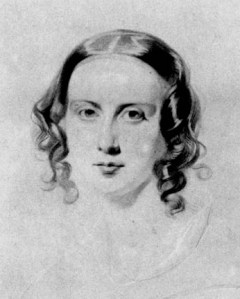
Although the reason for women changing surnames makes sense in its historical context, it is one of the great injustices of both gender equality and history. Signs are indicating that society is finally waking up on this point: women are half of the human story. As a dabbler in fiction writing, knowing that half the story is untold is a troubling phenomenon. Reading about Dickens I learned that he left the wife of his youth for a younger woman. Although such things are common, my reaction was to wonder who Catherine Thomson Hogarth might’ve become, had women had the opportunities they’re starting to have today. She was, after all, from Edinburgh. She has biographies, but not nearly as many as her feted husband. And if my math’s correct, I’m only 29-degrees separated from her. And this may well be the more important connection; the story untold.


Rookie Mistakes

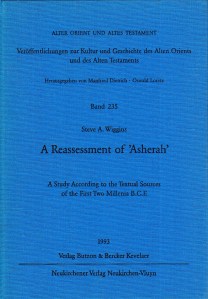
So now it’s got a stain on the cover. And it didn’t even come with a book jacket. Perhaps it’s symbolic? The year was 1993. I’d finished my doctorate at Edinburgh the year before, and, against all odds, had landed a full-time teaching position. That position was at Nashotah House, but never mind. Like all doctoral students I’d sent out my dissertation for publication. It’d been accepted by the prestigious series Alter Orient und Altes Testament, produced by the dual publisher Verlag Butzon & Bercker and Neukirchener Verlag. Most European houses print these books cloth-bound (mine in blue!), no dust jacket, straight to the library market. I was proud. I had my first copy in hand in time to show around at the American Academy of Religion and Society of Biblical Literature annual meeting. There I spied William Holladay, my Hebrew teacher, now deceased. He was sitting on the floor in a corridor, eating his lunch. I joined him and showed him my book. In his inimitable way, he snatched it (leaving a grease stain on the cover) and within seconds said, “there’s a word misspelled in your title.”

Crestfallen, I took my first copy back. I wrote to the publisher, but these things only ever receive one printing and I never heard back. How embarrassing! Your first foray into academic publishing, and you look like an idiot who can’t spel. Now, in my defense, the cover is simply what I thought was a photomechanical replication of the the title page. The world “Millennia” was spelled correctly where I’d proofed it inside. How they left out an “n” on the binding die is a mystery. I never got proofs of the cover. Besides, a book’s title is on the title page, right? Never judge a book by it’s cover! Mine has a stain on it.

The book, although on Asherah, never got much notice. It’s still routinely overlooked. One of the truly sad things, though, came from a senior scholar in the field, nameless here, who did mention my work. In his book he put a [sic] after the ailing word on the cover. That was an intentional slight. Had he looked at the title page—from which I’d been taught to take bibliographic references—he would’ve found the word spelled correctly. Many publishers do not let authors proof the binding die for their cloth-stamped covers. A senior scholar knocking down a struggling junior with an obscure three-letter word. Welcome to academia. The book did get a kind of second life when Gorgias Press reprinted it, with additional material. I still sometimes pull that first copy off the shelf, however, and wonder what can take the stain out of blue canvas. As long as someone can feel superior citing a mistake beyond a young colleague’s control, I suspect it will remain.


Endings

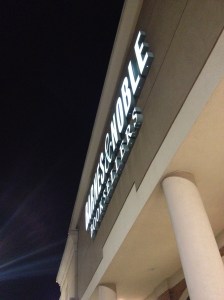
It’s hard not to feel sorry for survivors. In a hostile world, the ability to resist the entropy lapping at your toes is a feat that inspires admiration. Although independent bookstores are making a comeback, there aren’t many around. An evening spent at Barnes and Noble, if allocated well, can evoke some sympathy even for a dying giant. While my wife had an appointment next door, I spent a good while in the fiction section—really the only part of our local B&N that is well stocked. My time among books, excessive to some, is my solace. It’s not a bad vice to have. Seeing others out shopping for books also delivers a message of hope to a world disinclined to read.

In the B section I saw an edition of A Clockwork Orange. If you read my post on Anthony Burgess’s book in the last few weeks, you’ll know that the American edition has always lacked the last chapter. I wondered if maybe, just perhaps, if this edition might contain the missing ending. It has been several decades since the original embargo. I picked it up and, indeed, the last chapter was intact. I stood in the aisle and read it. Say what you will about Barnes and Noble, but nobody thinks this kind of behavior odd. Once again I was transferred back to Alex and the world of his droogs, only to discover that the ending was something like I had anticipated. If you’ve read the standard American edition you know that it ends abruptly. Writers know how to draw a story to a close. Herewith I offer a spoiler alert.

Alex, now 18, has a new band of droogs. They sound quite a bit like his previous gang. Then he notices he doesn’t feel like the old ultra-violence one night. He goes to a coffee shop where he finds Pete, his old gang-mate, now married and holding a respectable job. He realizes with a kind of horror that having a child and wife appeals to him. He’s growing up. Critics often said Burgess was a moralist with Christian sensibilities. The original ending to A Clockwork Orange might suggest that’s true. Alex may be converted, but he’s unrepentant. Indeed, as he thinks of being a father he envisions his son being just like he was, and the cycle of violence and reform spinning on and on into the future. Shortly after I closed the cover, my wife met me in the store. I was amazed at how 15 or 20 minutes immersed in reading had shifted the mental world I inhabited. New information had changed me. This is the power of books, even when they’re found in Barnes and Noble.


No Help Wanted

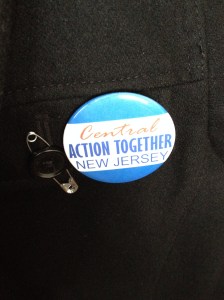
Not talking to strangers is something that takes time to grow out of. Somewhere in the back of my mind lurks that fear of when my mother told me what to do if someone tried to grab me as a child. Stranger danger, we now call it. I seldom strike up conversations with those I don’t know, but I’m glad to respond if someone speaks first. So it was that I found myself at the checkout of a Walgreens drug store answering questions about my coat. Well, not exactly my coat—I still have a protest button and a safety pin on it. The safety pin is a symbol adopted in the wake of Trump, and is just as sorely needed now as it was when Pantsuit Nation began the trend. The button is outdated, from Stand CNJ. My wife and I attended the meetings of this grassroots activism group for several months, until they started meeting on weeknights. For commuters that’s the kiss of death.

The woman at the checkout asked what Action Together (the outdated name) was. Caught off guard—I was trying to remember my PIN—I said off-handedly that it was a group for addressing social causes. “What kinds of social causes?” she asked. I couldn’t tell if she was asking because she wanted to join or to challenge. Fight or flight? I punched in my number and mentioned a couple of social justice issues that I thought might appeal, such as fair wages. An older person, she was likely a minimum wager, so I was a little surprised when she said, “If you raise our wages, prices will go up, and it’ll just get worse.” I’m no economist, but I’ve noticed throughout my life that prices go up regardless of wages. I can remember when gas was 27 cents a gallon. My first several jobs were minimum wage. I wasn’t quite sure how to answer her. Here was a woman victimized by the economy and yet she, like Winston Smith, apparently loved Big Brother.

One of the strange things about social activism is that you end up trying to help people who don’t want to help themselves. The poor have been convinced that billionaires and woman-gropers look out for their best interests, financial and moral. Even when they pass a budget that will cut off their own life support, they still believe. Those who want to help are the enemy. When the Party says jump, we know what to answer. And who is Julia anyway?


Time Killer

The internet, while it’s no longer free, still at least offers many opportunities to connect. No matter what your obscure passion, you’ll find others who share it online. In my own little shadowy corner of the web, I’m keenly aware of the time requested of others. When you stick a piece of writing in front of someone’s face, you’re demanding a real commodity of them—their time. I keep the vast majority of my posts here under 500 words. Google will now tell you how long it’ll take to read my musings, so I won’t even ask 15 minutes of your time. Others, however, don’t always get the message.

The internet has also granted those who write copiously the ability to send long messages to complete strangers. People I don’t know find my name and send me lengthy emails, perhaps supposing an editor simply chooses material at random to publish. I even get requests on LinkedIn that begin with “Seeking representation.” I’m not an agent, and I’ve had a great deal of trouble finding one to represent my own fiction. Those who know me sometimes ask why I don’t write something longer (I do—my third book is on its way), but the fact is I respect your time far too much. My thoughts about religion in modern life ask only a few moments of your time to think, I hope, about matters profound and important. Then click off to another site. Besides, this blog contains well over a million words by now, and that is plenty long.

I try to read every email from an actual human. I also read about 100 books a year, not including those I read all day long at work. My world is made of words. I do not, however, have unlimited time. Sadly, when I walk into a bookstore I often look at how thick a book is. How much of my time is an author demanding? Don’t get me wrong, there are plenty of books with a weight problem on my shelves, many of them read from cover to cover. Still, they’re asking for my trust. Trust that the time spent won’t have been wasted. The web is a great place to kill time. It’s also a place, occasionally, to pause and reflect. This blog is no super-site with myriad hits every day, but it’s a place that makes little demand of your time. And it is my sincerest hope, dear reader, that time spent here is never simply killed.


Why Horror?

Some people wonder why I like horror. Well, “like” is hardly the proper verb here, I’d rather go the passive route—why I’m compelled by horror. That fits better. But isn’t compel a transitive verb? What’s the object? It really depends on the circumstance—compelled to read, watch, or look at. Quite apart from grammatical imponderables, I keep finding myself coming back to horror and I frequently wonder why. Mathias Clasen may have answered that question for me. Why Horror Seduces is a fascinating study that considers biological and psychological explanations for why we’re compelled to watch or read or play horror, even when we find it distasteful. And it’s not just excusing bad behavior!

As fairly weak creatures that are prey as well as predators, human beings have always placed a high value on security. We’ve driven most of our predators to extinction, but we still have other people to worry about. And microbes. And things that come from space. And, after all that, we still die. These are, realistic or not, things we must face. Horror allows us to confront them and assists us in considering “what would I do if…?” Clasen delves into an evolutionary theory of horror—we’ve evolved to need it. Negative emotions are some of the most ancient, leading us to self-preservation in a hostile environment (something our own government is teaching us anew even now). Watching or reading how people cope in such settings provides us with valuable information. In other words, horror is a learning opportunity.

From that perspective, it doesn’t feel so bad to have written a book about horror movies. I’m participating in the long struggle of humankind against forces that are out to get us. As with most things evolutionary, we need not know why we do them for the whole thing to make sense. Our brains reward us for behavior that is conducive to survival—we like to eat, sleep, and reproduce. Reward centers in our heads go crazy. Then we go to the theater to see the latest, greatest horror film. What may seem counterintuitive here is that we are engaging in a similar kind of activity to other atavistic survival techniques. Watching these movies, reading these books, (and for those who do so, playing these games,) has a basic biological utility. Who knew? And once I get brave enough to crawl back out from under the bed, I may feel better about myself for admitting I like horror.