Oil Heritage

I love optical illusions. Apart from the sheer fun of ambiguity, such illusions are really all about perspective. Shifting perspective can be one of the most powerful ways of changing a person’s life. One of my more stalwart perspectives is that those who originate something deserve recognition. If that something is important, they may even deserve acclaim. And sometimes that thing may turn bad, in which case the discoverer may end up being notorious. Originality, the subject of bestsellers and media gurus, is sometimes the result of thinking differently than other people do. It can be cultivated and grown. Sometimes it’s simply fortuitous.

Every time I visit my own place of origins in western Pennsylvania, I think of the oil industry. It’s pretty hard not to around here. “Pumping jacks” still operate in some back yards, and petroleum tanks suddenly appear along beautiful rustic roads. The presence of fossil fuels isn’t as evident as it was when I was a child, for all the big refineries have closed down. Many of them have been dismantled. Still, I can’t drive by the site where a refinery fire glowed beyond the next hill from my childhood home and not wonder about it. Seeing those huge oil tanks melted and crumpled as if they’d been made of wax is an image that doesn’t get easily erased. Today, that’s all gone. Still, the oil industry itself was originally from this region. The auto industry—although increasingly electric—would’ve never started without the obvious boost that petroleum production gave transportation.
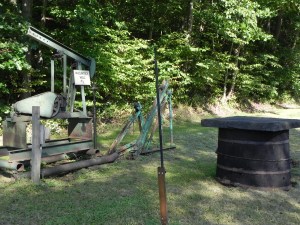
In the light, or perhaps dark, of Hurricane Harvey we’re set to see increasing gas prices. They will impact the economy in other ways, and energy giants will continue to degrade the environment in the quest for cheap and abundant crude. I’m not sure if that makes the discovery of oil in this region worthy of acclaim or notoriety. It does seem, from my perspective, that since big oil is so lucrative, a lifeline ought to exist for the struggling communities in my childhood home. Empty storefronts were rare here in my youth. Now they are almost as common as shops that remain open. I know; if people can’t move on, then maybe there’s a reason the economy is sagging. There are ghost towns in this area, and there may be more in the future. I just wonder how all this will looks from another perspective. Will it all be an illusion once electricity makes the past superfluous?
Night of the Museum

I admit to being a relative stranger to contemporary commercial television. We don’t have “triple play” at home, and since the internet provides more information and entertainment than one person can possibly handle in a lifetime, why pay extra? On a visit home, however, where internet does not yet exist, I fell to the default of watching TV. Scrolling through the cable channels available in this small town, I start to understand why we don’t pay extra for this at home. Much on offer appeals to the lowest common denominator, and although some educational programs exist, they have to put somebody in danger in some remote location in order to draw the viewers in. Then I stumbled on Mysteries at the Museum.

For those of us hopelessly enamored of the past, museums are an irresistible draw. I joined the program already in progress. It was talking about Stroudsburg, Pennsylvania, through which we’d driven to get here. A resort town in the Poconos, I always think of Stroudsburg as a traffic bottleneck, particularly on a holiday weekend. Instead the story was telling of a haunted jail in which a prisoner had to be exorcised after it was found that he could make it rain inside his cell. Then the name of the Warrens was mentioned. The Bible used in the exorcism is from their occult museum (thus the tie to the title of the program). Ed and Lorraine Warren, as my regular readers know, get mentioned here every once in a while. Real life ghost hunters, they kept a museum of the occult in their Connecticut home. I’d missed the part of the program where they revealed the provenance of the artifact. Now things started to make sense. After the commercial break, however, the story shifted to a historic pair of hiking boots.

Image credit: Creative Commons Share Alike 2.0 Generic license. Photo by Doug Kerr, Wikimedia Commons.

What was so striking about this brief segment of the show was not the implied credulousness of the investigation, but rather the certainty with which those interviewed declared this was a water demon case. Okay, so I’d just finished a seven-hour drive and I may not have been at my sharpest, but where did such certainty come from? Who were these experts telling us what had happened? I’ve read enough of the Warrens’ accounts to get a sense of how they worked, but not even the name of the priest was presented, let alone that of the demon. What we had, then, in this 15-minute segment, was a Bible and an anecdote of rain falling in a Stroudsburg jail. As I switched off the program to go to bed, I knew that I’d find the missing information on the internet. Even without triple play.


Birth of a Notion

Childhood is an impressionable time. Our phobias begin then. Children are vulnerable. (Of course our current government is intent on making us all afraid of bullies again.) This theme of childhood keeps coming up in interviews with directors of horror movies. A friend recently sent me a New York Times article by Erik Piepenburg about Annabelle: Creation. The piece includes some horror auteurs discussing what frightened them as children. We all experienced fear at a young age. For some of us it hung around awhile longer. Horror movies have, despite their low brow reputation, been reliable revenue streams from the beginning. People will pay to be scared, for a little while.

I have to confess to having fallen behind on The Conjuring diegesis. Since I’m the only one in the family who really likes to watch horror, I don’t see these movies in theaters and, well, there’s a lot to do besides watching movies these days. And finding DVDs is getting harder as well. Streaming scares me. Anyway, I missed The Conjuring 2 and the original Annabelle. I’ve read accounts of what supposedly happened in real life—Annabelle is one of the cases investigated by Ed and Lorraine Warren—and it has been written about a number of times. The Warren’s take on it was that a doll can’t actually be possessed. (Sorry Chuckie.) They suggested that it could act as a conduit that would’ve eventually allowed a demon to possess the two young women who kept the original Annabelle in their apartment. The doll showed up in The Conjuring, although it wasn’t part of the main story. The haunted doll trope is scary enough that the second knock-off in this universe focused on it.

Interviews with older horror directors reveal that they often grew up without fathers. Despite the gender profiling, for kids fathers are generally thought to represent protection. A child without a father often feels insecure. Even today when people talk of their fathers I have to remind myself that they can be a good thing. I often wonder if those of us who like horror films had childhood parental issues as a regular part of our pasts. I’m generalizing, of course. Growing up into Trump’s America has given us all plenty of things to fear in the present. Since January a number of high profile horror films have gotten notice in the press. Sometimes a real bully can cause as much fear as a possessed doll. That’s especially the case when our government wants us to submit like a bunch of frightened children. Childhood fears may, in some cases, serve us well.


Fighting Nightmares

Some things are so personal, and inexplicable, that they’re difficult to put into words. Not only that, but they often involve other people and I try not to comment on those who actually know me in person. Still, having just watched Apocalypse Now for the first time, I feel I must. One of the people I admire most was a high school teacher. Although I never really said as much to him directly, he is one of the most formative people in my life. He served, and was shot up in Vietnam as a youth. His outlook on life, one that I’ve tried to emulate especially when my petty foibles overwhelm me, is an inspiration. I’m sure that he doesn’t know it, but every time I think of Vietnam he’s always in my mind.

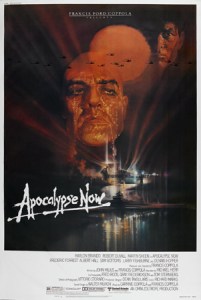
Never a fan of war movies—I’m baffled that anyone can think of war as anything other than pure barbarism—I generally can’t watch them. Apocalypse Now, however, was widely discussed when I was in high school. It was released in 1979, just four years after the war had ended. It illustrates well the fog of war, and the Doors have been seeping in my head ever since the movie faded to black. When my wife and I began renting movies—VHS, of course—we made a list of must-see titles. First, partially for alphabetic reasons, was Apocalypse Now. That it took us almost two decades to get to it says something about the nature of life. And also my fear of war movies. Still, I knew I needed to see it. I figure that unless someone is even more behind the times than me, nearly forty years is safe from spoiler alerts.

The idea, based on Joseph Conrad’s Heart of Darkness, is that Colonel Kurtz has gone insane and Captain Willard has been called in to assassinate him. As he makes his way upriver Willard finds out that Kurtz is treated like a god. He has a cult following and does appear to have lost touch with reality. In the climatic scene, Willard hacks Kurtz to death as a cow is being hacked to death outside as a sacrifice. Ending with Conrad’s original words, “the horror, the horror,” an ambiguity lingers over what a people will do once their god has been killed. In fact, language of people being gods occurs early in the film as well, bookending this concept. The truth, of course, is that there are no gods here at all. I can’t guess what Conrad would’ve thought of this adaptation of his story. I know that when I saw it my thoughts returned to one man whose impact on my life continues in ways unexpected and deeply hidden.


Surface Tension

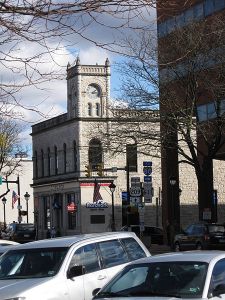
Montclair, New Jersey, is distinguished by having two bookstores. On Saturdays when my wife has to work there, I sometimes come along. Apart from the pleasant company, it isn’t every day that one can visit two bookstores. By supporting such shops, I am protesting the ignorance rampant in this nation. One, the Montclair Book Center, specializes in used books. Not always competitively priced, I nevertheless seldom leave empty-handed. It’s a healthy walk from there to Watchung Booksellers, a compact indie up by the train station. For a small store they always have an intriguing selection and I’ve never seen it empty on a Saturday. As I was walking the distance between the two, I noticed that Montclair’s downtown (and I’m not picking on Montclair, which I love) focuses on appearances. This is true of almost all shopping malls as well. Salons, clothing stores, eating places, tattoo parlors, health clubs. Places you go to help hone your image. Where are the stores catering to the mind?

Don’t get me wrong, I also have a body. I like to keep healthy too. I jog when I can, and I’m a vegetarian of nearly twenty years. Yes, there are the necessary places like drug stores and specialty shops where you can get your vacuum cleaner repaired, but few places to go explicitly to encourage mental growth. Hot, I stopped into a coffee shop for a bottle of juice. Patrons were busy at their phones and laptops. I recalled how there was a time when intellectuals hung out and conversed in coffee shops, exchanging ideas over mugs long grown cold. Even those sitting outside on the sociable, colorful chairs were busy texting, Instagramming, or tweeting away their weekends. I closed my book and walked on. I felt a vague but pressing need for intellectual engagement. I headed to the second bookstore.

On the way home one of those industrial-sized lawn-care vendors cut us off on the highway. Lawn-care is big business around here. It’s all about appearances. What has happened to the life of the mind? Allow me my curmudgeonly years—I recall walking downtown as a child and seeing the office supply store with actual paper, smoke-shops with their abundant magazines and wire spinner racks full of questionable paperbacks, and even the Christian bookstore with its tracts and Bibles. I didn’t have the benefit of living in a university town, but people I saw were talking to one another. Exchanging ideas with someone actually present. Self-consciously I look down. I’ve had these cargo pants for many years. This shirt I’m wearing I purchased in Wisconsin in another decade. Even these shoes haven’t been replaced after all these miles. This hat on my head is almost older than my college-graduate child. I can’t be bothered with my appearance right now, though, because there’s another bookstore just ahead.


An Odyssey

Once again in Ithaca, I find myself thinking of the classics. Although it’s difficult to believe these days, even rural Americans used to value a classic education. Take upstate New York. Not only is there an Ithaca, but also a Rome, Syracuse, and Homer, among other locations. This speaks of a time when the non-urbanites wanted to be considered sophisticated rather than gun-toting, bigoted rubes who actively hate higher education and all that it stands for. My maternal line of ancestors came from this region, and although they were simple farmers, they still named my grandfather Homer. And his sister was Helen. They knew the Bible, yes, but they may also have know the Iliad.

In a recent, flattering online game, Oxford Dictionaries offered a quiz to help you identify which classical hero you were. This is flattering because most of us aren’t heroes, but instead work-a-day types just trying to survive in a Republican world. I had to confess being pleased to find the result suggested I identified with Odysseus. Odysseus was king of Ithaca, you see, and considered one of the heroes more inclined to use his brain than his brawn (although he could use that too, if push came to shove). Perhaps it felt right to me since my own life feels like an odyssey. And my grandfather was Homer. I was first exposed to classical mythology in fifth grade, and I have loved it ever since. Besides, I’m more of an upstate mentality than a downtown one. The thing about an odyssey is that you’re not always in control of where you end up.

Sitting here in Ithaca I wonder how Americans came to despise the notion of classical education. The standard of living is higher in college towns like this. People treat each other well and there’s a strong sense of community spirit. On the way here yesterday we had to drive through rural New Jersey. We stopped in the decidedly non-classically named Buttzville for gas. The car in front of us had “Blue Lives Matter” and pro-Trump bumper stickers all over it. Yet the guy who limped out and made his way into the vehicle looked like he had probably benefitted from government largesse over the years. Proud of a president who brags about not reading. Who wants to bomb a country he can’t find on a map just because it’s different. I think to myself, I’m glad I’m on my odyssey to Ithaca.


Citation Anxiety

As a recovering academic, I sometimes am compelled to look when Academia.edu sends me notices. Academia, most of my academic colleagues don’t realize, is a for-profit website that advocates open access. “Open access” (or OA in the biz) is academic trash talk for making the published results of research available for free. It’s a great idea, but it often doesn’t take into account how complex publishing really is. Peer review, printing, and distribution of articles all take money and to make all research free cuts out what those who publish the research can use to fund the venture (with a cut taken out, of course, to make the whole thing worth their while). That’s the way capitalism works. (Look it up under economics.) In any case, not realizing that Academia is also a profit-making venture, lots of us put our published papers on it, making them freely available to anybody who cares.

Once in a while Academia will send its users a flattering notice: “X-hundred people have cited your papers.” Be still, my throbbing heart! Desperate for any attention, most academics (let alone us exes) are thrilled that more than 100 people have read their stuff. So I clicked their link. “309 papers mention the name ‘Steve Wiggins’ or ’S.A. Wiggins’” it cheerfully reads. I know something the robot apparently doesn’t. I’m not the only Steve Wiggins on Academia. There is a slightly older agronomist whose name I share. He’s employed in academia and has more papers than me. And “S. A. Wiggins” could be anybody. My 309 paper mentions shrinks to double digits. Not high double-digits either. Names are hardly unique identifiers. With some seven-and-a-half billion people, there’s bound to be some reduplication. I always tell the few curious to search “Steve A. Wiggins”—with the quotation marks—to find the few, true references.

Taking on the internet is a fool’s errand. This blog gets a few piddly hits a day. I often consider closing it down. Readers don’t share it enough to get any attention. It takes a lot of effort on my part since I write books (both fiction and non) in my hours not at work. So when Academia shows up in my inbox my excitement spikes, just for a moment, and I go on with my other work, which never seems to get done. And then, when I’m sure nobody else is looking, I go ahead and click on the link.


New Religious—Bang!

Religion, no matter what the skeptics say, gives us something to believe in. Even those who claim no religion believe in their non-religion. We can’t escape belief. It’s no surprise, then, that new religions constantly emerge. As people find new things—or events—meaningful, and they come together around the phenomenon or episode, a religion eventually emerges. Take the example of the Chelyabinsk meteorite. On February 15, 2013 a resounding explosion rocked Chelyabinsk. What was likely a former asteroid had headed for Russia (which they seem to prefer almost as much as Donald Trump) and became a meteoroid (the name for meteors while they’re still in outer space). Once it entered the earth’s atmosphere and became a meteor proper, it superheated and exploded in the sky—a phenomenon known as a bolide. For those of us who’ve experience them, bolides are unforgettable. Once the pieces of the exploded meteor hit the earth they became meteorites.

Image credit: NASA/ESA, public domain

Meteors are an everyday occurrence. Any time you see a shooting star—which you can do any clear night—you’ve seen one. Large, exploding meteors are rare. Shortly after the Chelyabinsk meteorite fell, according to Astro Bob, the Church of the Chelyabinsk Meteorite formed. This group did not wish for the main body of the surviving meteorite to be raised from Lake Chebarkul, where it fell. Their protests became religious as they chanted, prayed, and sang. A new, if temporary, religion was born. Astro Bob goes on to say that religions and meteorites are no strangers. Indeed, up until the Middle Ages and even a little beyond, it was believed that rocks could not fall from the sky. A meteorite, then, was a sign from either God or, well, you know who. When the impossible happens religions are quick to follow. Astro Bob’s story was written in 2013, so he doesn’t declare the fate of the Church. The meteorite was raised from the bottom of the lake in October of that year.

New Year’s Day in 1987, while I was home from seminary on break, putting a puzzle together with my brother, our house shook. A loud boom accompanied the shock wave. We ran outside to find the neighbors staring at the sky, and a few casting a wary glance toward the petroleum refinery in town. The news later that day told us a bolide had exploded nowhere very near us. We were within the shock wave, and those fortunate enough to be outside that January saw a flaming meteor in the daytime sky. I remember it well thirty years later. I already had a religion at the time (Methodism, starting to tend toward Episcopalianism) so my plate was already full. It was nevertheless a dramatic event, and when your world is literally shaken, you will naturally look for something to believe.


The Price of Worship

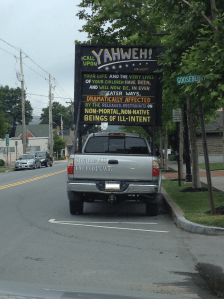
The wind resistance alone must drive the cost of gas up considerably. Of course, with Yahweh on your side you don’t need to worry about pocket change. We were driving through a sleepy town in the Poconos. A light rain was falling. We came upon a truck advocating not for the usual and expected Christ, but instead for Yahweh. Promising “dramatically affected” lives for those who do so, the implied message on this portable billboard is somewhat ominous. We are apparently being restrained by “non-mortal, non-native beings of ill-intent.” The grammar of the placard confuses things a bit since it seems to suggest that calling on Yahweh will “release restraints on” said non-mortals, and that’s hardly a good thing. I suppose they can’t reveal the nature of these entities without giving away spoilers for drawing the curious in.

This vague, supernatural world presided over by the personal name of the deity seems just a little out of place in Bible country. There’s a kind of literalism about Pennsylvania that I find strangely comforting. It is where and how I grew up. I never encountered God’s personal name—at least not with first-person familiarity—until I attended college. Even then we were encouraged to be careful with its use. The commandment about taking the divine name in vain is just a bit disconcertingly unspecific, considering that it isn’t spelled out in more detail. And who exactly are these beings of ill-intent? They’re all the more frightening for not being named. Demons, I must suppose, but I don’t recall the Good Book saying anything about their restraints being released. This is a new kind of apocalypse maybe.

The thing about the Bible is that it’s everybody’s book. Some modern translations use Yahweh rather freely, opting for the admission that translating it leads only to more questions and “Lord” is obfuscation. Still, it seems awfully familiar. The need to air one’s personal beliefs, in some quarters, is very intense. There’s a passion behind this proclamation that I can’t help but admire. People stop and stare. Some, like yours truly, will want photographs of your vehicle. I suppose that’s the point, nevertheless, not too many people like being stared at. Evangelical culture demands it, as I recall from my youth. Putting your personal beliefs out there comes with a price. Part of that may be reduced gas milage and, consequently, pocket change.


Making Excuses

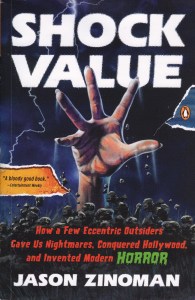
Those of us who watch horror are often asked “why?” Many of us have a difficult time answering that question. To be sure, there are those who like thrills, blood, and violence, but some of us do not. We can’t seem to help ourselves—watching those in difficult, dark places hardly seems edifying, and yet we do it anyway. After reading Jason Zinoman’s book with the supernaturally long subtitle, Shock Value: How a Few Eccentric Outsiders Gave Us Nightmares, Conquered Hollywood, and Invented Modern Horror, I may have gained a little insight in my own case. Zinoman is a film critic, so he has an automatic excuse. What I found interesting among the narratives of the directors and writers of modern horror is that these were largely men who grew up with absent fathers. Not all of them, of course—demographics are never so neat—but enough of them to start to discern a pattern. The world can be a scary place without a father.

It’s no accident that some religions use the father image to refer to God. Amid the chaos and uncertainty of life that has evolved to benefit the aggressive, the more contemplative often experience fear. Having grown up without a father, I think I might have a better idea now about why I watch what I do. As I’ve often told family and friends, I do not like being scared. Startle moments in movies bother me. I don’t like blood and gore—I’m squeamish both in real life and in the diegesis of the film I’m watching. Yet something compels me to keep coming back. Is it related to the fact that many of those who gave us the classics in the field (and yes, there are bona fide, canonical members even in this genre) know this same sense of childhood alienation that I did? The missing father is, in our culture, a source of horror.

I don’t mean to overly psychologize what Zinoman is doing here. He’s telling the untold story of the auteurs of the field. Some of them are familiar and others less so. They tended to grow up reading H. P. Lovecraft—I’m more of a Poe fan, myself, although Lovecraft still manages to deliver an existential angst that will do in a pinch—and they found ways of expressing the anxiety of being alive. Most of them are highly intelligent people. Some have even been professors. They learned to tap a deep source of fundamental fear that speaks to some of us on a level that other emotions don’t. I still can’t say why I enjoy a good horror film, but maybe now I’ll be able to do so without feeling like I need to make excuses.


News Pause

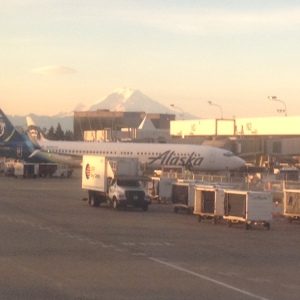
One of the benefits of “getting away from it all” is the blessed respite from news. Given the political situation these day I suppose that’s a rather risky proposition since the government is now based on presidential moods rather than any kind of policy or strategy. I worried as I got onto the plane home whether regulations might have changed when I was in the air and whether I’d be landing in the same country as the one from which I’d taken off. Maybe it was more than just time zones that we were changing. Being a child of the ‘60s I couldn’t help thinking about the Twilight Zone—getting onto a plane and then something happens. Quite a few episodes deal with that theme. Only now it’s real time. Real fear.

I have to wonder about the impact of constant news. Since November I’ve been obsessed with frequent updates—scanning headlines for any sign of hope that what began as a joke might have finally reached its punchline. Instead, the press has fallen into normalizing Trump, writing and reporting as if this is what happens in a democracy. It should be illegal to elect a dictator. It’s one of those logical conundrums, but it is a real one. Democracy shouldn’t be just those people who feel like they should getting out to vote. It should be a legal obligation. We know that if votes were counted straight up Trump could not have won the election. Since politicians like to play games we now live in the Twilight Zone of government. Every day Trump is allowed to remain in office the more credibility in government erodes. The knock-on effect will continue for years.

Since stepping off that plane I’ve been wondering what has changed over the past week. Has some basic fact of life been overturned by a presidential temper tantrum? Is what I’m doing now illegal? Has a horse been made a senator? Anything is possible. When I last paid attention it seemed we were well on our way to becoming the United States of Russia. I’m afraid to look at the headlines. The glow of getting away from it all hasn’t faded yet. It’s a hazy, dreamy reality that makes government seem like a bad dream. What would happen if they privatized air traffic control when I was in the air? The results are just to scary to contemplate. I think I need a vacation.


Berrying Perspective

Two people looking at the same thing see something different. Since we’re living with a government of distorted perspective this truth appears refreshed daily. I was reminded of this while picking huckleberries. Huckleberries, according to the local edible berry guide, are called many different things. In this part of the country you know them when you see them. And if you see them you pick them. They appeal to the frustrated hunter-gatherer left in us city-dwellers. As I was trying my best to fill my bucket, I kept thinking of those who only see nature’s bounty as a means of turning a profit. In my mind they’re meanies—those who take all the fun out of the few freedoms we have left—although I realize that it’s a matter of perspective. Consider the huckleberry.

I’m a mere seasonal visitor to these parts. Since not too many of my own species make this location their permanent domicile, that’s perfectly natural. Many of the berry pickers I’ve encountered have been seasonal guests as well. There are the more “industrial” pickers, though. In a good year huckleberries can command fifty dollars a gallon on the local market. Unless you know an unfrequented secret site, a gallon can take several hours to pick even in a promising location. Overall, you need to arrive before anyone else and get the most productive bushes so that you don’t have to wander around the mountainside in search of a more lucrative locale. Not to mention that, like most berries, they have a limited shelf life. Nature prefers sharers to hoarders.

While I’m picking I generally think of bears. Unlike my species they don’t have the grocery store option. These berries are their survival, I suppose. Nature does provide. That’s how evolution works—we form symbiotic relationships with our environment. The meanies, however, can’t see beyond the self. What nature provides must be accumulated for my own benefit and not that of others. There are never enough huckleberries to go around, the industrial mind thinks, and so I’d better control the availability and set my price. You don’t even have to like huckleberries to do it. Ironically we call this having a gift. Standing here on this isolated mountainside, bent over a bush offering nature’s abundance, I believe that I’ve found a gift. I have to remind myself, however, that this too is a matter of perspective. It is a perspective that tastes right to me.


The Unliving

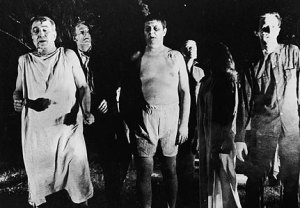
Western Pennsylvania, from which I hail, has few claims to fame. One, still largely forgotten, is that it was the birthplace of the petroleum industry. Remains of the early exploitation of the fossil fuel still lie scattered carelessly in the woods. Another claim to fame is that the region was the adopted home of George Romero and served as the setting for his groundbreaking film, Night of the Living Dead. Unintentionally, Romero created what continues to shamble on in the form of the modern zombie. Although the movie doesn’t call the living dead “zombies,” it established the trope of their endless hunger for human flesh and their rabid bite. So it was with sadness that I read of Romero’s death a couple of days ago. Although he wasn’t from Pittsburgh, he established the city as zombie central. It’s nice that he gave something back.

Zombies have, due to their protean nature, become a fixture among the monster constellations. They represent the worst of what people can be—selfish and brainless, without empathy, their own cravings being the only matters of importance to them. Sounds kind of like the Republican Party. The rest of the world calls them monsters. Night of the Living Dead shocked audiences of the late 1960s with its graphic portrayal of cannibalism and thoughtless destruction. Interestingly, the choice of a strong African American lead for the movie was, according to interviews with Romero, simply a matter of his being the best actor, not an intentional racial statement. (That too reminded me of western Pennsylvania; there were racial tensions where I grew up, but many of us befriended those who were “different” without any clue that it should matter at all.) Duane Jones carried off the role of Ben with conviction and energy. He died young but he never became a zombie.

To make an impact intention need not be present. While Romero denied for the rest of his life that the movie was “about” the Vietnam War, and that his choice of a black lead was a racial statement, both of these factors became facts about the film. Concepts, in other words, like zombies, may rise from the dead. Beyond the shock and gore, the movie made a powerful, if unintentional, statement. It helped to define Romero’s future career. A success in a difficult industry may indeed decide one’s fate. George Romero would go on to make many other monster movies. Western Pennsylvania would become a zombie haven. You never know what you might find scattered about in those forgotten woods of your childhood home.


Nature Watching

Whenever I travel in the northwest, I keep an eye open for what one colleague calls “charismatic megafauna.” You know, the big animals that are so rare to see that they develop a charming, if imaginary, persona. Not that I’ve ever seen much of it here. It’s rarity is part of the charm. My usual hope is to see a moose—something that happens every three or four years. Black bears are even rarer. Grizzly bears, which still inhabit this area, and mountain lions I’ve never seen. I know they’re there, but their agenda is not to be seen. My first full day here I was sitting outside working on an academic paper. My time off work is rare, and when I get a moment, even in the wilderness, I try hard not to waste it. I had the feeling of being watched. Not the creepy kind of feeling, but the kind where you think an animal might be keeping a wary eye on you.

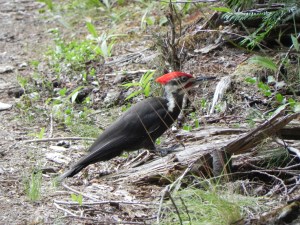
I looked over the top of my book. Several yards distant I could see a head bobbing up and down. Then I noticed a black patch on a nearby lodgepole pine. It took a few seconds for the red head to register. A mated pair of pileated woodpeckers. Not exactly huge, but they are large birds. And since they are the personality behind Woody Woodpecker, well, I guess you can call that charismatic. Charismatic enough for me to put down my Ugaritic mythology and go inside to fetch a camera. Of course they were gone by the time I’d returned. I decided to take a walk down the track in a vain hope of finding them again. Once in a while charismatic megafauna cooperate. There they were, one going after ants on the ground, the other perched above pecking wood.

Most of our large fauna we’ve driven to near extinction. Humans can’t stand not to be the biggest thing around. The megafauna remain, however, hidden though they may be. An online site for this area posted a photo of a cougar snapped last summer. I’m not sure when the last time a grizzly might’ve wandered down from Canada, but since last November I’m not sure why they’d even bother. Even the moose seem coy. Animals don’t do what we want them to do. Those that we can’t domesticate follow their own agendas and calendars we can’t hope to comprehend. As they flap away I can swear these woodpeckers are laughing at me.


Photographic Evidence

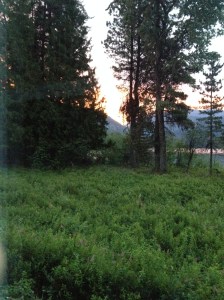
All photographs are lies. That moment preserved, formerly on celluloid but now with electrons, is gone for good as soon as the shutter is snapped. The camera doesn’t see as the eye sees. I was reminded of this during a mountain thunderstorm. I awoke early, coated with jet lag and the residue of my regular early morning schedule. It was still dark, but the reddish sunlight soon wrestled through a valley fed by a creek across the lake. The color was impressive, but my camera washed it out to a diluted Creamsicle orange. In reality the clouds were roiling overhead and lightning was streaking through a thunderhead like synapses firing violently in a massive brain. Thunder in the mountains can’t be photographed. Nor can it be forgot.

My work used to require quite a bit of travel. Before I would visit a campus I would spend some time on faculty pages, trying to put faces together with names. Impressed with how young these professors were, I’d knock on doors armed with foreknowledge of who might greet me. I wondered who these older people were when the door actually opened. It’s disconcerting to see someone age before your eyes. I would think back to the photographs online that had assured me this person would be much younger. The picture was a fossil. A moment frozen in time. The very next second after the photo capture that smiling face had changed. The best that we can hope for is a gross approximation.

Perceptions of reality, as all religions teach us, contain a healthy dose of illusion. While it contains ethereal beauty, this vision I’ve captured in my lens is only part of the picture. There is something deeper, more meaningful behind it. Photographs enhance memory. In the days before Photoshop they could be submitted as proof of an occurrence. They are a form of art. Whatever else they may be, they are also lies. Lies need not be of evil intent. Religions try to explain what some privileged individual realized was the truth. These who found a way of looking behind the photograph. The streaking lightning outside evades the slowness of my finger on the button. The thunder rolling and re-echoing through these valleys will remain in my head long after the sound waves cease to reverberate. Reality is more than it seems. Even my experience of this mountain thunderstorm is that of a single individual seeking enlightenment. Elsewhere others are up early, observing it too. What they experience may be something very different from me indeed. I have a photograph to prove it.