Sell-by Date

Labels give us the information we need to enact our prejudices immediately. Having been on the receiving end of great cruelty by “conservatives,” for example, I’m immediately cautious of anyone bearing that brand. A strange confession, perhaps, from someone who grew up in that camp. I struggle to remind myself that a label’s not a person. For example, I had a very good education at Grove City College, a conservative school. It wasn’t uniformly that way, of course. Now having a better sense of higher education politics I can see how this might happen—how a school committed to a doctrine might inadvertently challenge that view in the name of education. Quite a few things swayed me to broaden my view as a religion major at Grove City. One of those collegiate experiences was watching Cabaret.
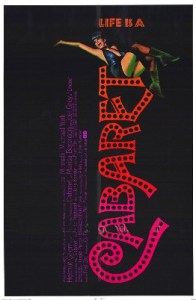
Enough time has passed that I can’t recall the exact context of the film. I suspect it was a weekend entertainment required by some humanities intro course. For a kid from the sticks, seeing a ménage à trois on the big screen made a deep impression when I’d always thought of the world in binary terms. The larger message of the film was not lost on me, however, that those who are prejudiced will always find ways of expressing their hatred, if society will let them. Last night I watched Cabaret again. As a movie it hasn’t aged a day. Society, however, seems to have regressed back to those days when a Nazi could stand and proudly sing at a social gathering and others, distressed by economic hardship, would willingly  overlook the evil that lay in plain sight in the hope of change.

Back when the film was made I suspect the Vietnam War was on the public mind. We thought we’d safely gotten beyond the fascist threat. In the scene where the boarding house residents are complaining about conspiracies between “Jewish bankers and Communists” it became clear that people fall for the same tactics time and again. Rumors, fear, and economic disappointment are a dangerous combination in a democracy. The players have changed but the fact of fascism hasn’t. We can see it being enacted plainly, as it has been every day since 11/9. Accommodation is more deadly than conservatism. As the story opens Nazis aren’t welcome at the Cabaret. By the end they predominate there. Their hateful agenda had been accommodated, normalized by the press. And who can forget the song that could well be the anthem of the current administration, “Money Makes the World Go Round”? There’s an accurate label for that, I’m sure.

Blizzard Warning

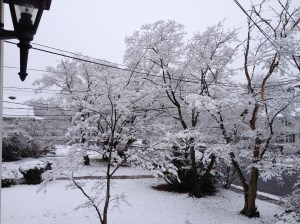
The dangers of prognostication were well known in antiquity. Most prophets, who didn’t so much tell the future as warn about probable outcomes, weren’t the most popular of people. They knew that feeling of walking into a crowded room and announcing their career had something to do with religion only to have the place fall silent. Cricket chirps. We all have our secret sins we’d rather not have some stranger judge. So it is with the weather. Something like this must’ve been in the back of my mind as I was trying to write Weathering the Psalms. I lived in Wisconsin in the days before Paul Ryan and, like said Ryan, tornados could strike at any time, unannounced. My family and I spent an anxious afternoon or two in the spider-infested basement based on the inherently uncertain predictions of how a nearby tornado might move.

Those of us in the northwest are sitting here wondering about this monster nor’easter. It’s been in the making for several days and the forecasters, unlike the prophets of old, have been hedging their bets. If this massive cold front from the midwest fails to meet up with the intense storm off the east coast we could end up with only a smattering of snow. If the two collide, well, Isaiah, Jeremiah, and Ezekiel together can’t help us. It’ll be like the book of Revelation. Only colder and with far more snow. Oh to be able to predict the future! It would certainly help when it comes to deciding whether to climb onto that bus or not. I mean a simple rainstorm can add two hours to the homeward commute without the threat of a meteorological Trump coming our way. I thought Punxsutawney Phil didn’t see his shadow.

Although predicting the future wasn’t really what prophets did, it didn’t take long before people thought that’s what they were up to. People have always wanted to have the advantage of being able to see disasters before they arrived. Wouldn’t it have been helpful to know the results of 11/9 before Thurston Howell the President was elected? We could’ve bought our Russian grammars and dictionaries before there was a run on the local Barnes and Noble. At the same time I politely dispute the saying that hindsight is 20/20. If we could see anything that clearly we would be such Untied States at the moment. Right now the glass seems to be falling and the wind’s picking up from the northeast. What does it mean? Nobody really knows.


Neologism

I like a good neologism as much as the next guy. Oxford English Dictionaries recently released a covey of new words added to the famed lexicon. Most of them, it seemed to me, had to do with dangers of technology, like “drunk text” and such fare. Still, increasing vocabulary is one of those rare joys in life that is continues to be free, so I indulge. A friend sent me a BBC story about another new word: champing. Well, my spell-check recognizes that one so maybe it’s not new. In any case, this champing is derived from two words “church” and “camping.” Some locations with medieval churches—which kind of rules out anything on these shores—are now opening them up as camping spots, thus church-camping. The article asks what it’s like to stay overnight in such a place.

Growing up in western Pennsylvania, medieval churches were hard to find, but I spent more than one night sleeping in sacred spaces. It’s an uncanny experience. In what may have been more innocent days, our United Methodist Church allowed youth group sleepovers, as long as there were counselors present. (Ever naive, I only learned later that there were ways around such obvious strictures.) On a Friday night, then, we could occasionally gather with our sleeping bags and slumber under the sanctuary. For theological reasons we couldn’t sleep in the sanctuary itself (although that couldn’t be prevented on the occasional very long sermon) but we could go in. Churches are scary at night with the lights out. We may give lip service to holy ground, but large, cavernous spaces suggest so much by absence and implication that it would take a stout soul indeed to sleep there.

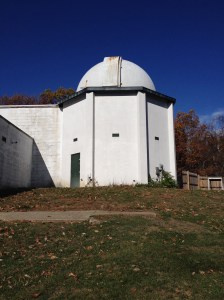
Looks okay from the outside.

Sleeping in sanctuaries in ancient times was an acceptable practice. In fact, there’s a name for doing so: incubation rituals. A person who slept in a sacred place believed any dreams had that night were a message from God. Knowing the dreams I tend to have, I do wonder. Once, at the United Methodist camp called Jumonville—famous for its large white, 60-foot, metal cross visible in three states—we counselors (still naive) had our charges sleep outdoors at the foot of the sigil on the bare top of the mountain. In the morning my champers gleefully informed me that I’d been praying in my sleep. “You kept saying ‘Amen. Amen,’” they told me. Alas, I don’t remember the dreams of that night. Perhaps when I find a medieval church on my journeys I’ll be brave enough to try an incubation ritual once again. This time I’ll take a tape recorder.


Ready, Ames,

Ames, Iowa is famous for many things. Not only is it where my wife grew up and where we were married, but it’s also the home city of Howard Bannister from What’s Up Doc? and it served as the staging ground for the crew of Twister, which includes some scenes shot in the area. Probably its greatest claim to fame, apart from the sadly defunct Do-Biz Cookies, is being the location of Iowa State University. Often I lingered near campus during family visits, wistfully hoping that someday someone in the religion department would welcome me among the faculty. My academic curse, however, is a powerful one. And that brings me (finally!) to the topic of this post—the haunted history of ISU.

Even the first president had a biblical name.

The website onlyinyourstate (we’re evolving out of the need for a spacebar) has a whimsical story about the hauntings on ISU’s main campus. The story isn’t scary at all, but it does raise that interesting specter of the ghosts of higher education. I’ve read a few of Elizabeth Tucker’s books about haunted campuses (Tucker teaches at another family school, Binghamton University) and, having spent a good deal of my life in academia, I’ve heard many tales first-hand. The very institutions that repeatedly bash our heads with facts can’t escape their own spooky pasts. Even conservative Christian Grove City College had its share of hauntings that we all knew about. You know, the Ketler ghost, and the spirit of the basketball player who broke through a glass door and bled to death right there on campus? Every campus I’ve known has had its baleful wraiths.

Sometimes I wonder if such stories aren’t a natural reaction to having the wonder excised from the world as we mature. Most of us can make it through high school somehow believing in the real possibilities that the world might offer, only to graduate from college to a 9-to-5 existence robbed of any supernatural splendor at all. Is it any wonder coeds see ghosts? Just the other day I read that a tree trimmer with a high school education in Iowa makes a much higher salary than I do with a Ph.D. working in New York City. Maybe that’s why I enjoy the movie Ghostbusters so much. When the reality of higher education and its politics and cruelty become clear escapism can be your best friend. And if you find yourself in Ames, you might want to avoid Friley, just in case.


World Stories

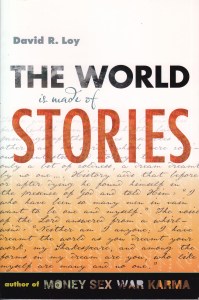
worldofstoriesAlthough I’ve not formally studied it, Buddhism has long been part of my thought process. Like Thomas Merton—and this may be the only point of comparison between us—I find little difference between the contemplative worlds of Buddhism and Christianity. Mindfulness knows no denominations. I suspect David R. Loy’s book The World Is Made of Stories would cause anxiety for some. Those not comfortable, for example, with paradox. Or those who believe that only the literal is meaningful. Separated by the vast land mass of Asia, eastern and western ways of thinking about the world—telling their stories about the world—diverged widely in antiquity. There was a kind of “rediscovery” of south and east Asian thought in the late nineteenth century western hemisphere. Since then occasional famous explorers such as the Beatles, or professional practitioners such as the Dalai Lama, have brought Buddhism’s ideas to the mainstream, but because they coexist well with Christianity there has been no cultural reason to displace them.

I found Loy’s world compelling. All is narrative. That’s the way human brains work. If you’re reading this right now, you’re following my narrative. If you’re not really paying attention, another narrative has gripped you. Science is a narrative just as religion is. It is the way we think. The internal monologue. Consciousness itself. Stories. People will follow a story quite naturally, which is one of the reasons it’s such a shame so few people read for pleasure. We can watch our stories (what is a sporting event but a narrative playing out before a fan’s eyes?) and many people do. The written story often, however, takes us deeper.

Contemplation is an endangered species. Although I found the enforced quiet days at Nashotah House (such as Ash Wednesday) to be an onerous rule, I would arrive home with little to say in any case. The world of busyness that we’ve made our business can choke the meditative spirit. Although some workplaces offer yoga sessions (themselves based on Hindu spirituality) they hardly encourage meditating at your desk. It seems the natural enemy of productivity when, in reality, it increases it immensely. Who doesn’t work better after a vacation? The business world often presents the religious life as one of indulgent non-productivity. I remember being made to feel stupid asking for one Good Friday off while working my first full time job in retail. When cash transactions grew to be too much I’d find a church on my lunch hour and just sit. Now I only find time to read Buddhist books on the bus on the way to work. Look deep enough and there’s a story in that.


Alma Mater Matter

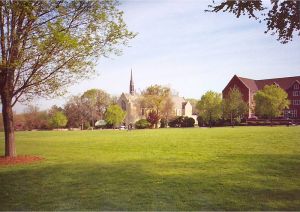
I was a teen-age religion major. Okay, that’s a bit dramatic, but I did start college at 19 and, being a first generation matriculant, had no idea about majors. No idea about colleges either. The school you choose stays with you for your life—especially if you decide to go into academia. A couple of recent events brought this home to me again. Grove City College is stridently conservative. Since I was raised Republican, it felt like a good fit at the time. It was cheap and close to home, and since my parental contribution was a total sum of zero, both of these factors counted heavily. Overlooked by many a hiring committee, it was also academically rigorous at the time. For better or worse, it’s now on my permanent record. Enough ancient history.

Recently a colleague asked me about an author, noting his undergraduate degree was from a school not unlike Grove City. I saw myself from the outside (yet again). Conservatism can be a lifestyle choice. My fellow religion-major grovers mostly went on to Gordon-Conwell Theological Seminary or other bastions of further conservative thought. Their minds were already made up. In their early twenties, no less. I headed to Boston University, at the time the most liberal of the United Methodist seminaries, by reputation. But still my record says “Grove City.” My academic writings should leave no doubt as to my scholarly outlook (most of these papers are available on Academia.edu), but there is always a shadow of suspicion over a former grover. You can’t change your alma mater, no matter what the next decision you make says about you.

Then I came across a recent writing sample from one of my Grove City professors who’s still on the faculty. This piece showed that as this faculty member was in the early eighties, so he is still today. Biblical literalism all the way down. With over three-and-a-half decades to read, that’s incredible to me. I guess I just don’t share the kind of arrogance that declares you got it right the first time and that everything you read confirms a literal Adam and Eve. And a snake and a tree. What am I to think when I see a conservative undergraduate school on someone’s academic record? I would hope that I would know to look at the next step to see what that reveals. I am a grover, but a bad grover, I guess. You have to know how to read a permanent record.

Photo credit: The enlightenment at English Wikipedia

Photo credit: The enlightenment at English Wikipedia


In Poor Taste

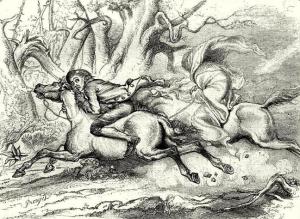
I remember seeing a television commercial once (not during the Super Bowl) where an older guy, a lawyer, complained at the camera, “It used to be that lawyers didn’t advertise.” He went on to say that he felt uncomfortable promoting himself since it was in poor taste, but since the legal profession had swung that way he was entering the game. I know how that guy felt. I grew up with the firm notion that self-promotion was in bad taste. If my career has taught me anything, it’s that unless you’re born well connected, if you don’t promote yourself nobody else will. Still, it rankles. With that hearty introduction, I would, in poor taste, point out that my latest article has been published. Those of you who keep an eye on this blog will know that I gave a paper about the Bible in Sleepy Hollow to a learned society a couple years back. That paper is now available in the Journal of Religion and Popular Culture.

ichabods_chase_crop

Doing research is difficult when you don’t have institutional support to carry it out, but doing such things as an independent scholar can be kind of liberating. I used to research, write, and get published an article a year, back in my teaching days. Nashotah House didn’t have the greatest library, but they did have interlibrary loan and, towards the end of my time there, internet access. More than that, life wasn’t measured in increments of nine-to-five. Living on campus, commuting could be measured in seconds rather than hours. Although publication didn’t bear the weight there that often pressures academics elsewhere, like that lawyer whose name I can’t remember, I wanted to be in the game. I guess I still do.

In these days of uneducated government, if you don’t do it yourself nobody’s going to do it for you. It’s what I once called “the educational imperative.” We are duty-bound, as conscious beings, to move knowledge forward. How many apocalyptic scenarios are there where, when the powers that be devolve into inanity, the monks in their cloisters have to keep knowledge alive? (The question’s rhetorical.) I’m reminded of Station Eleven by Emily St. John Mandel since there women do a good bit of keeping the culture alive when society collapses. Or, to put it another way, like Sleepy Hollow. When the forces of evil break into the world, it’s an African American woman who saves it. If your school has access to JSTOR, you’ll be able to find out more in my paper.


The Big Chill

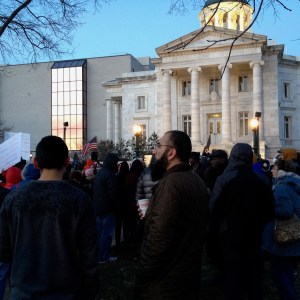
It’s cold. It may not be Alaska, or even Wisconsin, but I can’t feel my fingers and the temperature hasn’t risen above freezing all day. New Jersey doesn’t get the incredible chills we used to experience in Wisconsin, but I’ve been outside going on two hours and I really need some warmth. And it’s not just me. At least a couple hundred of us are out here and it’s not for the Super Bowl. It’s for justice. We’re rallying at the beautiful courthouse of Somerset County, in solidarity with our Muslim Americans, protesting the latest actions of our own government. Some of the people here are old enough to remember Hitler. Others are young enough that they have to be held. We are from countries all over the world. We are saying “No!” to the evil that is coming out of Washington.

img_3191

Those who voted for Trump out of a sense of fiscal conservatism were sorely misguided. This was a hostile takeover of what used to be a democracy by people who rely daily on alternative facts. Who make up massacres that never happened. Who claim that their personal billions have made them victims. Who believe that men have a God-given right to determine what women can do with their bodies. Who state that men who aren’t attracted to women or women to men are somehow deviant. Who openly mock the disabled. Who resist Black Lives Matter. Who can’t tell you one of the five pillars of Islam but can tell you that they’re all wrong. A government that’s over the people, despite the people, and against the people. Self-serving, self-enriching, and self-satisfied. A government where party has become more important than the welfare of the nation. A government that lost the popular vote by nearly three million, and those were only the ones who bothered to get out to vote. A government that lays its hand on the Bible and lies. That prays for itself, not for the good of its people.

That’s why I’m out here in the cold. I’m standing in a crowd that, like those who gather at airports, courthouses, and city streets, is saying “Enough!” The abuse of power is taking advantage of what you can “legally” claim without regard for the will of those you represent. Representative government fails when it fails to represent the people. We don’t want to be out here freezing our fingers, noses, and toes. We’d rather be comfortable and warm at home. As chilly as it may be in New Jersey tonight, it’s colder in the heart of this country and unless we the people do something, Hell itself is in real danger of freezing over.


Love Thy Enemy

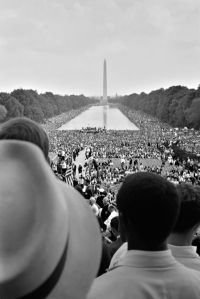
The line for the train snakes through Union Station before 6:00 a.m. Many of us, maybe all of us, were at the Women’s March on Washington. Listening to strangers speak to one another, it’s clear that this was the largest “love in” in history. Trump supporters say it was about hate—we know they rely on “alternative facts” now. Nearly every speaker at the rally emphasized love. The government gives us Orwellian doublespeak. 1984 must become required reading once again. We can’t let the fascists control the narrative. Those who control the narrative sway the crowds. The Women’s March on Washington was not hateful. This was a peaceful gathering in the name of love. I write fiction as well as non. (My fiction has even fewer readers than this blog.) The point is, I know about controlling narratives. If you let a government with a documented history of distorting the truth (at just one day old) control the narrative, friends, we are lost.

dscn6825

The March was the beginning. I saw children just old enough to march. Children so young they had to march in strollers. I saw grandmothers in wheelchairs. I saw mothers and daughters. Sons, brothers, fathers. Not one unkind word among people standing shoulder-to-shoulder for over four hours. No room to sit down. Bathrooms inaccessible. We were united. We are united. This government has already shown that it will offer post-truth rather than facts whenever possible. Do not let them control the narrative! They will be trying to silence our voices. They will, like all fascists, try to make lies our national narrative. George Washington, they will tell us, voted for Donald Trump. And those who find blindly will believe it. Those who don’t read history will have no way to assess this. They will follow any narrative with a combed-over talking head. Question everything. Question what I write. Check it out. I believe in facts.

We are embarking on a dangerous journey. These waters, however, are not uncharted. The Bismarck steamed this way. Marches have been documented around the world. Millions of eyes are watching. They are part of the narrative. Write the story. Talk to others about this. Incessantly. The truth is not arbitrary. There are groups near you that you can join. Resist. Peacefully protest. Write the narrative. Share the narrative. If we need to March every weekend, we will. If we need to take turns, so be it. This is our story. Unlike the blatant post-truth we’re already being fed, our story is non-fiction. Read it and tell everyone else to read it too. This is what democracy looks like.


Elephants and Snakes

I try to be a good son. As good as you can when living a few hundred miles from home. I call my Mom every week and when the mood’s right, we reminisce. During a recent conversation I was recollecting my first trip to Washington, DC. My grandmother, who lived with us, had been born there and wanted to see it again before she died. I don’t remember much about the trip. I would have been maybe 5 or 6, possibly 7. The Washington Monument I remember because I was terrified of heights and didn’t want to go up. The sharpest memory, however, involves the motel.

We didn’t have much money and very, very rarely stayed at motels. In fact, this is the only time I remember it happening before I went to college. It was one of those cheap places where you park right outside the door to your room. In the morning, bright and sunny as only childhood mornings can be, I remember racing around the oval, gravel drive with my brothers. We had our favorite stuffed animals with us. Mine, ironically, was an elephant. I remember that elephant well. I remember running with him under my arm and laughing and having one of the most carefree moments of my entire life. Now I think of elephants in Washington, DC and the magic is gone. We never had much money when I was growing up, but my other favorite stuffed animal was a long, black snake. It was as long as I was tall and I loved the fact that snake and my name began with the same letter. I loved him so much that his eyes came off and my mother sewed large purple buttons in their place. At that time I had no concept of how apt the symbolism might be.

400px-march_on_washington_edit

The snake and the elephant are two of the most feared creatures on land. (There is a bit of symbolism here, so please don’t be too literal.) In the biblical world the serpent can stand for good but more often it represents temptation, danger, and treachery. I loved that snake as much as I feared its real-life counterparts. And now I find myself headed to DC again. I’ll shortly be on the train to join the Women’s March, my first official protest. I don’t know that I’ll have internet access the next couple of days (I hear Washington’s a swamp) so I may not post again until the work week starts. This time I’m not taking either elephant or snake. They exist already in abundance in our nation’s capital.


Alas, Binghamton

“Store Closing” the signs veritably shout. “Everything Must Go.” It’s something I hate to see in an economically depressed town. The tragedy is redoubled when it’s an independent bookstore. While undergoing the ritual of returning our daughter to college after the holiday break, we were driving through Binghamton, appropriately enough, at twilight. In that first, lonely freshman year we’d discovered River Read books in downtown. Like many indies, it was small. Intimate even. I never walked out, however, without some treasure that I wouldn’t have found in a larger store. River Read eventually became an irregular habit based on parents’ weekends and academic breaks, and I’ve come to depend on it after a long drive across three state lines. Once again, however, the lack of concern regarding reading takes another victim.

img_2947

In the ancient world there was a poetic genre scholars now call the lament for a fallen city. I’m that way about bookstores. Amazon has proven wonderfully capable of getting things to me quickly. Obscure tomes, sometimes. Since our nearest independent is a 25-minute drive, this is often a necessity—I can spare 25 minutes only on a weekend, and then, only select ones. Ironically, just on the way to Binghamton we stopped at the Bookworm in Bernardsville, New Jersey. We try to help them survive. My mind goes back to fond occasions outside the home and how often they involve bookstores. Finding a new one. Returning to one already well loved. Even, back in the day, Borders. In a pique of nostalgia I starting searching the web pages of past favorites. Books & Company in Oconomowoc, Wisconsin. Farley’s in New Hope, Pennsylvania. Pages for All Ages in Savoy, Illinois. Ah, alas, the latter has also closed its doors forever. The store I’d visit after a long commute to Nashotah House and back, looking for something I really want to read.

The neon after dark is like an alien invader in my car. River Read is closing. The liquor stores and “gentlemen’s clubs” seem to be fine. The cars up here sure weave around on the road a lot after 9 p.m. on a Saturday. It’s not just here, I’m sure. I’m seldom out this late any more. Perhaps, even likely, this has been a long time coming. Civilization unable to support its foundation. Literacy, after all, spread the common ideals we used to share. Presidents united us and we were eager to read and every town wore its own bookstore like a badge of honor. I’ve seen the signs and I lament the fall of yet another fondly recalled city.


Samaritans, Good and Otherwise

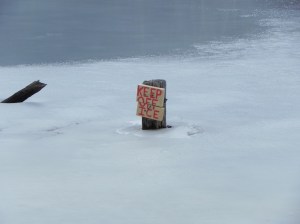
It’s the coldest day of the winter so far. I’m noticing this because I’m standing on the shoulder of the New Jersey Turnpike counting the NJ Transit buses that are flying by at highway speed. It’s been a morning of irony so far, which explains why I’m standing out here instead of sitting inside the broken down, but still warm bus right next to me. I felt the cold while waiting at quarter to six for my bus to show up. Thankfully on time. It’s very empty this morning; I’m maybe the fourth passenger. Somewhere along Route 22, miles later, the bus gives a distress cry. Ironically, the engine is hot. The temperature outside is in the single digits. Also ironically, the radio on our bus isn’t working, so the driver has to call dispatch on his smart phone. Meanwhile, the engine cools down enough for him to try it again. We’re fine until we pass exit 15 on the Turnpike.

While I try to think of others before myself, I sit near the front of the bus—the first or second row. That way when it’s time to get off I don’t have to wait for dozens of people to wake up, stretch, and slowly shamble into the aisle. (If you think that’s an exaggeration, you don’t commute by NJ Transit.) “The first shall be last,” the Good Book says, and I believe it. I lost count of how many of the company’s buses have zoomed past, but when one finally stops, I’m person number 8 off the bus. The Good Samaritan driver stops me outside his bus. “Sorry, no more seats. No more standing room.” No room in the inn. My driver urges the long line behind me to get back on the bus, where it’s warm, to wait. I was first, now I’m last. That’s why I’m standing out here in the cold. As I approach the bus I see all the first several rows are filled by those first back on the disabled bus. They will be the first to be offered a ride by the next driver along this road to Jericho.

winter

The guy behind me, now in front of me, comes to the same conclusion and waits outside too. At least we both have beards. I’m thinking of Jesus’ words about the end of the world. “Pray it won’t come in winter.” Out here, all prayers are frozen. At least thirty NJ Transit buses buzz by creating their own wind chill before another stops. I want to be first because I paid more for my ticket than those who sat further back on my bus. In fact, I could rent a small apartment in many places in the country for what I pay a year for a bus pass. I wonder if that’s what it means that the first shall be last. Or maybe my brain’s just frozen, since it’s the coldest day of the winter so far.


New Year’s Resistance

Now that 2016 is safely behind us, it’s time to start looking ahead to a year of peaceful protest and renewed social activism. When you reach a certain point in your life you’d like to think your country will represent your best interest but the crooked electoral college system with which we’re shackled has lived up to unthinking obedience to convention. Now we all will pay the price. Not all protest has to be highly visible, however. Education has a way of improving things even if done subtly. The key is not to let up. The moment we do, the evil Borg will assimilate us. I’m beginning my new year with a literary protest against ignorance. I mentioned Modern Mrs. Darcy’s reading challenge yesterday. It doesn’t have to be that one, but taking on a reading challenge—any educational imperative will do—is a way of saying that the darkness can’t last forever.

img_3022

2016 was a busy year, in spite of its many challenges. I wrote two books during the course of the year. Don’t go rushing to Amazon, because neither has been published. One likely never will be, although I have high hopes for my most recent effort. I write this not to draw attention to myself, but to suggest yet another form of social protest. Writing is a powerful tool. Long ago one of the most influential people in my life, a high school English teacher, told our creative writing club to write at least 15 minutes a day. There have been times when I’ve slipped, but by far the majority of my days since then have included spells of writing at least that long. This blog is only one outlet, in addition to the fiction and non-fiction I also write. Write your protest! Your thoughts can’t be known if you don’t share them!

Most important of all, we can’t give up hope. The end of the story hasn’t been written yet. We know that Trump lost the popular vote by an historic landslide of almost 3 million. Many, many, many, many, many people are unhappy with the results of this election. The mistake is to think that so many citizens are powerless. We’re not. Even before last year ended I committed to the peaceful march on Washington the day after the “inauguration.” We need to stand up and be counted. We need to say we’re just as American as the bullies who’ve taken over the schoolyard. And we need to continue to educate this country, no matter how reluctant it may be to pre-post-truth.


Lions and Lambs

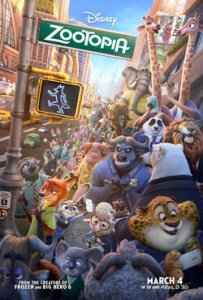
This brief break between Christmas and New Year’s Day, taking into account the vacation days expended to enjoy it, is a time filled with movies, reading, writing, and sufficient sleep. In short, it’s like a dream. I’ll get around to addressing the movies eventually, but right now one in particular is on my mind: Zootopia. Disney movies weren’t a big part of my childhood. We did watch the Wonderful World of Disney on Sunday nights, but movies were an expensive treat. I remember seeing The Jungle Book, Bedknobs and Broomsticks, and Herbie the Lovebug. When we could afford a movie, it was frequently at a drive-in where a carload was cheaper than individual seats. I missed several of the childhood western canon—I never saw Mary Poppins until I was in college. Becoming a parent in the 1990s meant becoming conversant with Disney.

zootopia

Oh, I’ve heard the conspiracy theories: Disney is “the evil empire,” part of the Bilderberg Group, the Illuminati, and any number of other collectives that want to run the world. They have access, we are told, to the young and a reach that excludes few before the age of ten. I know little of Disney’s business practices, but Zootopia suggests to me that they are telling our children the right message. The movie follows the ambitions of Judy Hopps, a bunny that want to be a police officer in Zootopia, the largest city in the animal world. Threatened and bullied because she’s a girl, and small—traditionally prey—she nevertheless overcomes the obstacles necessary to meet her dreams. Once she meets success, however, she finds herself engaging in prejudice against predators. Species profiling takes over and the white sheep (literally) take over.

The message of not assuming someone is a slave to their “biology” is a powerful one. Nick Wilde, the fox that assists Judy to her goal, becomes a victim. The only way forward for Zootopia is to recognize that profiling—gender or species—is wrong. Since the story isn’t preachy, it’s all the better. Watching unchecked prejudice surging through our political machinery today, it was difficult to believe that this movie was released all the way back in March. The prey animals are the majority, and they feel threatened and so follow the leadership that controls, deports the predators who’ve been law-abiding citizens all along. Only when we once again see shrews living peacefully next to elephants, rabbits, lions, and polar bears, do we get the sense that everything’s as it should be. I know nothing of Disney’s business practices, but with messages as important as this, I have but few worries.


The Morning After

dickens_gurney_head

Quite apart from seeing a live performance of A Christmas Carol, Charles Dickens has been on my mind a bit this Christmas season. I suppose that’s not surprising since it has been suggested that Dickens “invented” the modern Christmas, but it is really, I think, because of how the wider world seems to be spinning backwards. The poor have always been a personal concern of mine. I grew up poor and I know how much suffering it entails. My case was a rather mild poverty—we were never out on the street, and we didn’t actually go hungry. We had nothing in the way of luxuries, though, and I could see the possibilities even as I could see the sky where the boards on the roof were pulling apart. It wouldn’t have taken much for us to have been cast out in a cold Pennsylvania winter. Others have it much worse.

On my daily walks to work, I see the homeless. Some sleep in cardboard boxes, some in tents. Others are out under the stars. One morning I walked by a particularly creepy and sad sight of a person sitting, shrouded in a blanket over his or her head, on a subway vent to catch some of the ambient heat. I know that I don’t have the means to buy each one a meal. Their number has been going up, not down. And I think of Bob Cratchit, threatened and bullied by Ebenezer Scrooge. He will lose his job if he’s not in early today, the day after Christmas. Because of his change of heart, Scrooge buys his clerk a pot of “smoking bishop.” And herein lies the only possible cheer.

My wife got me started on Dickens. She also sent me a story from NPR on smoking bishop. It seems, according to the story by Anne Bramley, that British Protestants delighted in making fun of church offices by naming their tipples after titles. Churchmen (and they were men) were largely exempt from being poor and, according to historians, often supported the Poor Laws that made the fate of the poverty-stricken even worse. In a kind of perverse revenge against privilege, drinks were named after various ecclesiastical offices. There’s little that the poor can do, except to try to find the scant humor in a situation where no one has the reach of a Charles Dickens anymore. Ebenezer, unlike Bob, is a biblical name. It means “stone of help.” In these chilly days dare we hope that help may come, even from a stone?