Capital Carol

The idea of exchanging presents on a holiday emerges from the impenetrable veil of time. We don’t know when the practice began—the idea of copying the Zoroastrian wise men in Matthew is a bit of a stretch and the date of Christmas wasn’t settled until much later in time. However and whenever it started, giving gifts at this time of year has become one of the defining features of late capitalism—it’s almost as if Jesus of Nazareth was born for this. An economy that measures self-worth in terms of money is just the place to have God-incarnate celebrated by giving lavish gifts. Those of us who make no money off the holidays can’t deny that it feels good to give someone something. People like, in general, to make each other happy.

This year my wife asked for a non-material gift. We made our way to the McCarter Theater in Princeton to see their acclaimed performance of Charles Dickens’ A Christmas Carol. A gift of a memorable family time and a truly spectacular play. Seeing this story in 2016 felt especially important. Dickens was a famous advocate for the poor and was well aware of how they suffered at the hands of the wealthy. Indeed, those with too much money lose their humanity almost completely. The story is focused around Christmas, but the message is needed for every day, especially in over-long years such as this. Capitalism is a form of social evil. Anything that lowers humans to mere ciphers on a page is the very definition of sin.

christmas-carol

We all know how the story goes, but to see accomplished actors undergoing conversion is nevertheless a strangely hopeful experience. As the story makes abundantly clear, it requires so very little to make others happy. The point of having money, after all, is to use it for the good of others. Seeing one man facing his own mortality only to realize that he has isolated himself from the care of others is a powerful experience. As we move forward into the long and dark days ahead, there is a reminder here that we need to keep close to our hearts. There may be fewer presents under the tree this year, but we are all the richer for it. This is the kind of gift that we need to share with the entire world.

Lap of Luxury

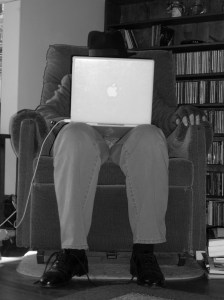
How terribly rude. I was right in the middle of a sentence when my word processor shut down. Then my computer. A system update. It’s 4:00 a.m., the time I usually upload my blog post. You have to understand that I get up at 3:30 so that I have time to write. My laptop assumes nobody is working “in the middle of the night.” I would’ve thought my fingers on its keys would’ve given it a clue. Now it tells me I’ll have access, new upgraded system installed, in 25 minutes. Doesn’t my laptop have all my personal details when it comes to shopping? You’d think it would know all my personal habits by now. I mean, this is the way I do it every day. Right now my concerns are secondary. This system update can’t wait. I wasn’t even given a choice. Power nap for Apple.

What disturbs me most is that my computer reads every word I type, yet it still thinks I’m just like everybody else. Who’s awake and writing at 4:00 a.m.? And I thought we had a rapport, my laptop and me. I was the Skipper to his Little Buddy. The Agent 86 to her 99. The Will Robinson to its Robot. I guess I had it backwards all the time. The brain on my lap doesn’t agree with the brain in my head. If I can’t get my writing done now, it won’t get done at all because at ten minutes to six I’ve got to be on that bus. New Jersey Transit doesn’t offer working overhead lights much of the time, let alone wifi. It’s now or never. My coffee’s already gone and the next thing on my daily agenda is the shower. I always come up with ideas in the shower—I need my Little Buddy waiting for me when I rush out to write them down.

newchair

Who’s sitting on whose lap? How could I have gotten something so very basic so terribly wrong? In ancient times the one sitting was superior to the one standing. When the computer’s sitting on the one sitting we know who’s really in charge. Let the one with eyes to read understand. I’m a busy man, but my Little Buddy—my Skipper—is busier. When’s the last time I read a paper map? Opened a phone book? Wrote an actual letter? I can hear those bus wheels rumbling. Excuse me, but my master is calling.


Bible Riots

One of the more embarrassing questions I get asked is “What do you do?” This has been true throughout my career (if what I do can be called that). I should clarify—I don’t mind saying “I’m a professor,” or “I’m an editor”—it’s the follow-up question that’s difficult. “What do you teach/edit?” Mentioning the Bible is a conversation-stopper. In the silence that inevitably follows you can almost hear the electronic buzzing in the interlocutor’s brain as s/he tries to come up with something nice to say while backing away. In actual fact my degrees have been more in the history of religions rather than Bible per se, but those who’ve done the hiring haven’t tended to see it that way. This is not a nostalgic post, asking to go back to yesteryear (that’s happening politically without my help), but it is a reflection of what James Wallace Harris says on BookRiot—the Bible is a good book to read.

It’s easy to get swept away in the criticism of religion, and particularly Christianity. Those who profess it, historically, have a lot to answer for. What we’ve allowed religion to do to others is inexcusable. What we sometimes miss is that the motivation is one in which all people participate—learning the truth. This is more difficult than it might seem. If someone had discovered “the truth” we’d all know by now. The fact is we’re deeply divided about what that truth is and that alone proves no one has found it. We’ll recognize it when we see it. We just haven’t seen it yet. What sometimes gets forgotten along the way is that the Bible was, and is, a great milestone of humanity’s search. As I keep having to remind myself, there’s some really good stuff in there.

IMG_2634

Harris isn’t alone in suggesting that atheists should study the Bible. Some very prominent non-believers have declared the same thing from time to time. The Good Book is densely interwoven with western culture—even secular western culture. I’m currently at work on a book that explores one thread of that complex fabric, and it’s amazing to me how much we miss when we ignore holy writ. We shouldn’t throw out the baby with the bathwater, as the old saying goes. That’s not biblical, but it does hint at the truth, I think. Or maybe it’s just that I want to be able to answer that most basic of questions without having to make excuses for what otherwise looks like a series of poor life choices.


Solstice Blues

The relief is so real that you can feel it with your fingers. Or brushing your cheek. The feeling of being done with another semester, and knowing you’ve got some time for recovery after the intensity of going flat-out for months at a time. I miss that feeling. As a guy who has often been accused of being “too intense” I tend to run pretty near the red line all the time. Pit stops are few and very far between. Once this vehicle’s in drive, there’s no stopping until the destination is reached. What do you do when there’s no clear destination? That’s what working for mere money is like. How do you know when you have enough? Just ask Mr. Trump. Too much is always too little. That’s the kind of world we live in.

Higher education, it used to be, was a place for people who believed in higher values than mere lucre. There was a time, historically, when we took transcendence seriously. The price (if you’ll pardon the analogy) that we’ve paid for letting transcendence go will become apparent. Those who believe only in what they see miss most of reality that swirls by them like a river under the ice. Yes, it still flows. Just ask the fish. There’s a wisdom outside our paltry economic efforts, if we’d only just get out to inquire of it.

Work is built around the foolish concept that you can never have enough. I have to think that our fear of a year of drought has deeply impressed itself on our psyche. Back in biblical times and up until just a couple of centuries ago people considered work to be farm work. Growing your own food. Building your own house. Knowing what to do in an emergency. If nature didn’t cooperate with that scheme what choice had you? Now, however, we labor for a concept as abstract as transcendence. When’s the last time you were paid with actual cash? What wouldn’t you pay for a little more time off? Time to stay in your pajamas all day and ponder what’s really real? Perhaps sleep until you’re not tired rather than awaking at the sound of a factory bell? The sun hasn’t risen by the time I reach my windowless office. When I step out again it’s already set. The solstice reminds me of the semester break that no longer exists. I have to believe, however, that under the ice the river’s still flowing.

dscn5944


My Stranger’s Keeper

img_3106

He was a bearded young man, maybe in his twenties. He kind of reminded me of my own youth, only cooler. I was at a stop sign on a snow-covered hill with tires honestly a little more worn than they should’ve been. Three times I tried to get some traction only to have to reverse and give it just a touch more gas. He walked by and called out “On the count of three, okay?” I shouted my thanks. It took him a couple of minutes to get me moving and as much as I wanted to stop and give him something for his efforts I knew that if I did I’d be right back where we’d started. Once I got moving, I had to keep going. I’ve driven in snow since I earned my Pennsylvania license in the snow belt of Lake Erie and I’ve helped drivers stuck in snow a time or two, but I was touched by this young man helping an older guy in a neighborhood he didn’t know get out of a jamb. That’s what I think of Americans as being like.

Seeing the utter selfishness of those “elected” officials posturing over the last few days I say to myself they didn’t grow up in the snow and cold. Nothing compels a young man with better things to do to help a frazzled older guy except for common human decency. Those who grow up with hardship know the value of their fellow human beings. We help each other because that’s what people do. Those born to wealth and power help themselves and only themselves. They need to learn the message of snow. Nature is our most natural teacher.

I don’t know his name. He didn’t have any idea that I had four hours to drive through snow, sleet, and freezing rain, but he helped me despite that. He didn’t ask for any money and I’m sure he expected nothing so coarse. I’m old enough to miss such kindheartedness and to cherish it deeply when I encounter it. Snow and hills and bald tires aren’t a winning combination, but the human capacity for goodness mixes well with any conditions. On a cold winter’s day I encountered the warmth of human concern for a guy in trouble. I need to listen to what the weather is saying more closely. More than that, I need to step out of my car more often and throw my shoulder against a stranger’s hatchback. It’s what makes us human.


Identity Crisis

It’s starting to feel like Groundhog Day. The movie, I mean. As a child I was taught never to talk to strangers, but that’s a little hard to maintain in New York City. You’re never really alone there. Standing in line for the bus, I read. The Port Authority Bus Terminal is a crowded place around rush hour and I try to spin my literary cocoon so that I can get some reading done and so that I can have a little alone time. Introverts are like that. When the guy standing in front of me is confused, however, I like to help. There are three different bus lines that get mixed at my gate, and since I do this nearly every day I usually have a pretty good idea where to stand. I pointed this young fellow in the right direction. “Thanks,” he said. After a pause he asked, “are you a teacher?” I get this a lot, actually. By everyone but deans and search committees.

The writing on the wall.

The writing on the wall.

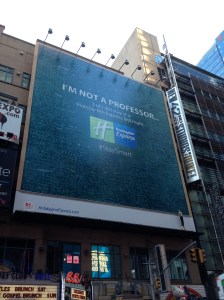
I was out for a walk in a city I’d only been to once before. Some guys were setting up for an outdoor function (the city was in the south). I was actually using my phone for geocaching, so I wasn’t paying too much attention to what was going on around me. One of the guys stopped me and said, “Excuse me—are you a professor?” Some might accuse me of cultivating the look—glasses, beard, slightly puzzled expression most of the time—but the reality is the look is simply who I am. There are those who are professors because they want to be. There are those of us who should be because we can’t help it. I read as if books were food. When somebody asks what the weather’s like, I’m wondering if this world is reality at all. Thing is, academics too are busy finding jobs for their friends to care.

“I’m sorry to disturb you,” he went on. “I mean, I’m a complete stranger.” Actually he’s not. He’s a student. I don’t know him. I’ve never had him in class, but he needed some information I had readily available. I shared it with him. No, the fact is I’m not a professor. Professors are paid (much better than editors) for dispensing what I’m glad to give away for free. A teacher, you see, teaches. The best teachers I ever had were those who continued the lifestyle outside the classroom. They were never arrogant or privileged. They simply shared. Every day, in this situation, begins to look like the one before.


Fear of the Artificial

As someone who dedicated four years—particularly long winter nights—to the cause of high school robotics, I found myself knowing quite a bit before I walked into the room. Now let me post a disclaimer here: I’m no techie. I’ve studied the humanities throughout my education and although I’ve been able to engineer a bookshelf or two, and even the occasional project with moving parts, the technical eludes me. I claim absolutely no expertise in it. So where was I going that robotics came to mind? A lecture on Artificial Intelligence. AI. You see, I’ve been a bit concerned about it for some time because I’ve seen what robots can do. A friend recently showed me some episodes of Battle Bots on YouTube (the relative who started this blog for me was doing quite well in the competition last season), and from my own experience watching hours of FIRST robotics competitions, I know enough to be afraid.

What could possibly go wrong? (DARPA photo)

What could possibly go wrong? (DARPA photo)

The lecturer assured us that we had nothing—or next to nothing—to fear. Artificial Intelligence, he assured us, is a misnomer. Machines have no will. No mind. There’s nothing they want. They do as they’re told. You write a program and feed it to your bot and your mechanical friend can do only what it’s told to do. This sounds uncomfortably like slavery to me and although I know I’m projecting, I have to wonder if robots think the same way about it too. No, the lecturer assured us, they do only the tasks assigned. They don’t think at all. Then he said something that made me shiver. That wasn’t his intent. He said something like, “We don’t even know what consciousness is, so how can we replicate it?” That was meant to be reassuring.

I took this idea and flipped it over in my head. Rotated it. Ran it through my own programming. If we don’t know what consciousness is, how can we be sure we haven’t accidentally created it? Herein lies the heart of fear. Scientists have been trying for decades to define, to explain empirically, what consciousness is. We simply don’t know. We all recognize it when we see it in other humans. We’re finally starting to recognize it in animals (long overdue). How do we know that it isn’t a function of complexity? And when does something become complex enough to qualify? I don’t know about you, but videos of swarm robots send me hiding under the bed. Not that it will do me much good. They’ll know where I’m hiding. Maybe I could use some intelligence right now. Even something artificial might help to stop me from shivering.


Holiday Season

Now that the holiday season is upon us, I stop to think about what holidays really do. “Keep Christ in Christmas” signs have popped up like winter dandelions as Trump signs consider to litter the landscape. Thanksgiving, however, gave me the opportunity to forget about all of this for a while. The culture of signs. Signs telling us we must bow down and worship. The holidays signal a season when it is okay to hibernate and forget that more powerful forces out there may wish you harm. Part of the trouble is that those who are coming sometimes can’t see beyond their own interests. Perhaps what I do for a living conflicts with the job I’m paid to do. Conscience dictates that one or the other must go. But conscience is such an old fashioned idea.

img_3092

The holidays start with Thanksgiving, but it is now the Monday after. Those in liturgical traditions of Christianity will note that we are in Advent, a season of anticipation. I do wonder what we’re anticipating. Perhaps it’s because Thanksgiving came and went in a blur of travel weariness this year. The few days when commuting wasn’t an issue were the opportunity to stay still for a while and not look at news feeds and reflect on all we’re thankful for. I started hearing Christmas carols in stores shortly after Halloween. We’re entering the season of money in a country in love with lucre. Take a close look and see what lies in that manger.

Most years the stretch of dark months of November through January are accompanied by a sense of peace. Human beings loving each other and getting along. I guess I’ve been away from the news for a few days. I know there was a Black Friday last week. I also know that money has a strange way of funneling upward, a kind of osmosis of Mammon. On my quiet strolls I wonder what we, as a country, truly value. On the highway stuck in traffic with thousands of others returning home, I try to think that in these metal shells are living, breathing, loving human beings. Many of them only trying to get ahead. We’re all in a rush since there’s so much to do before we allow ourselves another holiday. Wouldn’t life be better with more days for reflection? I’d rather not politicize the holiday. Keeping Christ in Christmas seems to be asking for one not to forget the offering plate. I’m wondering about those sleeping in the street not far from Trump Tower. I’m wondering what ever became of conscience.


Radio Nowhere

Those of us who somehow managed to be educated without the use of computers, at least nothing more advanced than a TI-30 calculator, fumble our way through the world-wide web. I’ve got this blog, a Twitter and a Facebook account, and I’m on Google + and Medium, and I really don’t know how any of these things work. One of my motivations for starting this blog was to continue the tradition of speaking to audiences that I used to have in my lectures while I taught. I was told that such a format was known as a podcast and I found a host site where I could leave my recordings for free. I could then make a link and bring them onto the podcast page of this blog. How any of that works, I have no idea.

img_2855

Recently a few would-be listeners have asked what has happened to the podcasts. Since I don’t really know where they were in the first place, I’m not sure how to send a map to them now. One of my readers, however, has kindly set up a new webpage where all 23 podcasts are available. You can find it by clicking on this link. My thanks to Ahmed Fasih for setting this up. The podcasts cover various aspects of ancient religion. Even now, every great once in a while, a world-recognized name in academia will ask me about some of these topics. When you’re an academic you have the opportunity to spend vast amounts of time focusing on a single subject. The only subject you have that privilege with outside academia is money. I do hope my friends in the academy realize just how lucky they are.

In any case, the podcasts are back. Maybe now that they’re not invisible any more, and since in coming days it may be important to remember when things were better, I may find time to add to them. Blogs—at least those that are regularly read—are locations for discussion. I’m always glad to answer questions that are posted here. During the work week my time is constrained, so you might need to wait for a weekend, but I will respond. I know religion is passé. I know people have better things to do with their time. I also know that for the vast majority of humankind religion remains a vital and integral part of their lives. Exploring it seems to make sense to me. For those who’d rather listen than read, the podcasts are once more available.


United or Untied?

Beliefs can be most problematic things. I’ve spent the better part of the last five days in one of the reddest of “Red States.” People in Texas were unfailingly friendly and kind. They seem genuinely interested in helping me although I’m pretty stereotypically a “blue stater” (the beard, the tweed, the glasses—there’s no mistaking it). They help me when I’m lost. They look out for my well-being. But I’ve been conditioned to think poorly of my neighbors. My father was a high school-educated working man from South Carolina. I grew up poor in Pennsylvania. This man taking my check ticket is amiable and solicitous. He doesn’t ask me what I believe.

Sometimes the Founding Fathers got it wrong. The Electoral College has created Red and Blue States. God created people. I want to think that those who are from elsewhere are different. Predatory. Out to get me. In reality what matters is that you and I are beside each other right now, and we’re perfectly happy to be so. We are people. I don’t know what you believe. You don’t know what I believe. It really doesn’t matter unless you believe you should harm me or I should harm you. (I don’t.) This isn’t normalizing the devastating administration constructed brick-and-mortar on hate. There are legitimate foes to face. Me? I’m on the side of the people. All the people. Female people. “Foreign” people. People who love those who are biologically similar or different or anywhere in-between. I can’t believe that our government has tried to drive such a deep wedge between us. From Camelot to Asphodel in one lifetime.

img_3087

Our deeply divided country is in need of healers, regardless of belief. From everything I’ve heard there is no health in the incoming administration. Business has long been the enemy of people—long before Adam Smith formulated its name those who have, without intervention, take advantage of those who have not. Its no coincidence that those wounded in service of their country are given purple hearts. Not red hearts. Not blue hearts. I’m here among people who wish me well, and who, although they’ve disagreed about politics in the past, have never allowed an election stereotype them so badly. We need to end the Electoral College and its unholy progeny of red and blue and swing states. Let people be people who unite against the real enemy—the one that’s trying to tear us apart. That’s something I truly believe no matter how problematic it might be.


Remember the Alamo

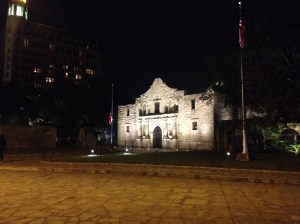
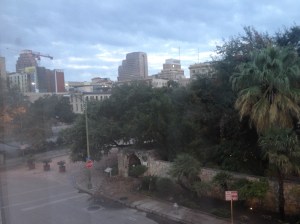
I’ve never started a fight. I’m actually a very conciliatory type, willing to be wronged in order to avoid an unnecessary confrontation. This election has made me feel a little pugilistic, however. The sheer size of Trump’s loss based on the popular vote makes me hope I’m not alone in this. I find myself in San Antonio at the moment. The American Academy of Religion and Society of Biblical Literature annual meeting, which rolls around the weekend before Thanksgiving, has been a regular aspect of my career since 1991. My hotel room overlooks the Alamo, and the implications—indeed, the irony—are not lost on me. I don’t know a great deal of Texas history, but what kid grows up without hearing about Davy Crockett, who died a few yards from where I lay down my head?

img_3034

I’ve known many Texans in my life. Many of them have been, and continue to be, perfectly reasonable people. Good and loyal friends. Lots of people like to live here. Indeed, the population of the state has swelled over the past quarter century. I’ve also encountered Texans (particularly at Nashotah House) who acted like the enemy at the Alamo wasn’t Mexico, but the other states. In the light of last week’s election I’m reminded of the words of one of the Mexican officers, after Santa Anna declare the battle a light one. Reportedly another officer quipped, “with another such victory as this, we’ll go to the devil.” Voices from the other side of the wall. Maybe it’s the lack of sleep from getting in so late, but I’m looking at the Alamo and Pink Floyd’s The Wall is going through my head. The lesson of the Alamo is that although you may lose the battle you can still win the war.

This is my second visit to San Antonio. Last time I was here, for the same conference, one of my doctoral advisors was over from Edinburgh, and we walked through the Alamo together. Today we are lamenting Brexit and Trump together. By slim margins the alt-right has learned to game the system. The problem seems to be apathy. It’s clear that we’re going to have to fight from now on just to get a little social justice around here. Strange words coming from the fingers of a lifelong pacifist, but you’d think that the work of Martin Luther King, Jr. and Susan B. Anthony might have had more lasting effects. Perhaps it truly is time to remember the Alamo.


By Their Love

One of my high school teachers—I don’t have to say who; if you attended my high school you’ll already know and if you didn’t you won’t know him anyway—wrote in my yearbook, “I hope you get what you deserve.” I wasn’t very good in this teacher’s class, but he explained to me, “I sign everyone’s yearbook the same way. If you do well, I hope you get rewarded. If you don’t do well, I still hope you’ll get what you deserve.” This teacher had a reputation for being somewhat of a philosopher, and his words have struck me as particularly appropriate for this moment. We, in the cosmic scheme of things, get what we deserve. As a nation I guess we deserve a First Lady, in an example to young women everywhere, has appeared naked on the internet. Her husband married her after two previous women and has made his views on gender perfectly clear. My conservative friends went to the polls knowing that. I hope they get what they deserve.

The problem is the rest of us are stuck with him too. I’ve lived through bitter, spiteful campaigns before. The genteel art of campaigning is thoroughly deceased. 2016, however, is the first year that I saw pure hatred as a political platform. And it wasn’t on both sides. Trump made of virtue of hating one’s neighbor and claimed the election was rigged until he won—then it was, of course, impossible that it would’ve been rigged. Former First Lady Hillary Clinton, who kept her dignity throughout, never stooped to inciting hatred of fellow Americans. It likely cost her the election. To the people now saying this is just politics and stop complaining I say we have all been victimized and we all ought to feel very ashamed. This election wasn’t about money. Or financial positions. Or foreign policy. It was about hate.

DSCN4694

Hate can only be counteracted by love. I have seen many women responding to a man who considers them mere sexual object by reaching out in kindness to strangers. Women organizing to try to make this country a more positive place. Meanwhile, I hear men I know saying at last we have a strong leader who will bring them prosperity. If money is what you care for, you have my pity. This country is about freedom, equality, and fairness. All of that was jettisoned last Tuesday. Even those saying “get over it” are doing so with a smugness that is a thin veil over intolerance. I’ve never carried on with frustration so long after an election before. That’s because never before has an election—no matter which party triumphed—been won by a platform of evil intent. My grandmother, a Teutonic matron of occasional Valkyrie disposition, used to sum it up well when we boys were getting out of hand. “Schäme dich!” she used to scold. I know a country that could use her words right now.


Throwin’ Away My Shot

In what sense can someone claim to win when they failed to get the majority vote? A crooked one, by definition. Some might say “rigged,” to use language that has mysteriously disappeared once one party “won.” The definition of crooked is “not straight; bending; curved.” We cast our votes, and depending on which imaginary lines we live within, those votes are diverted to a party of electors. That means that the person who actually wins the majority vote might not win. When it happens—not often—it always benefits the Republican Party. So it has been in my lifetime. And the “winner” never mentions that the majority voted against him. It’s always a “him.” By a recent count Hillary Clinton had over 400,000 more votes than Donald Trump. That final figure may be closer to a million. Whose votes didn’t count? Compare that conservative 400,000 to the 2,000 votes that “won” Pennsylvania. Go ahead, Trumpetters, you like numbers. Isn’t that an order of magnitude or two out of whack? Doubled? Crooked.

The point of the electoral college is that it has now become a game. Games, as we know from each time George W. Bush was elected, can be cheated. “Hanging chad” is engraved on the tombstone of democracy. Was my vote one of the 400,000 that didn’t count? Most assuredly so. If you know how to read, chances are so was yours. Gaming a system hardly seems to be the basis for the will of the people. The people have spoken and they have been, once again, ignored. W didn’t endorse Trump. I wonder what he thinks of the electoral college now. How does it feel, Mr. President, to have thrown away your shot?

506px-alexander_hamilton_portrait_by_john_trumbull_1806

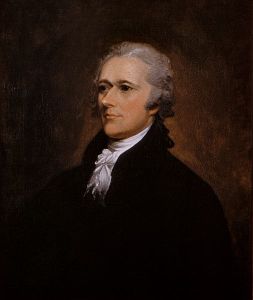
Some who claim that Republicans know what it feels like to lose need to stop and think. When has their opponent never won both the popular vote and the electoral college? It hasn’t happened in their lifetime. The electoral college may have made sense once, but it no longer does. When we try to tell young people that their vote counts, then put the candidate in office who decisively lost the popular vote, we’re really telling them “throw away your shot.” Still, Republicans are gloating even as the Democrats play by the rules (they’re nice people) and politely throw away their shots. It’s time we stood up for ourselves. When the most contentious candidates (the mind reels at where the GOP can go from Trump), not backed by any previous presidents of their own party, can win based on a technicality, we all need to stand in Weehawken and contemplate what this country has come to.


At the Crossroads

flood_album_cover

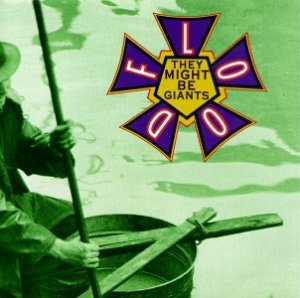
Back before there was iTunes—before Napster was even a thing—I heard a song on the radio. It was by a relatively new band, They Might Be Giants. We lived in Illinois at the time and I was being paid so poorly that we couldn’t afford luxuries like CDs. When I called the local radio station to ask them to play the song (“Birdhouse in Your Soul”) they apologized—they didn’t have the album. “We really should,” the receptionist told me. Although I was only earning a part-time salary—the fate of many a doctorate holder—and my wife was still in school, we eventually bought Flood. It quickly became one of our favorites. One of the songs that immediately struck us both was “Your Racist Friend.” It’s been going through my head lately, for some reason. “I know politics bore you, but I feel like a hypocrite talking to you and your racist friend,” the duo sings. I could quote the entire song, but let me highlight one of my favorite lines: “Can’t shake the devil’s hand and say you’re only kidding.”

I’ve been reading online that some people are saying, “Just get over it. You lost. Deal with it.” Auf Deutsch, “Komm damit klar.” After so many rounds of Kübler-Ross that Elisabeth is getting dizzy in her grave, I’ve begun to realize something. This was no ordinary loss. I’ve been alive long enough to be disappointed with election results several times. The psychological trauma from Tuesday rates somewhere between 9/11 and the Challenger explosion. To put this is perspective, when Reagan won I was depressed for a while, about as much as when the Steelers lost Super Bowl XL, and I’m not a sports fan. I’ve never spent the hours after an election glancing at the faces of others to see if they looked as damaged as I felt. “Just get over it” people?—it’s called shock. “Can’t shake the devil’s hand and say you’re only kidding.”

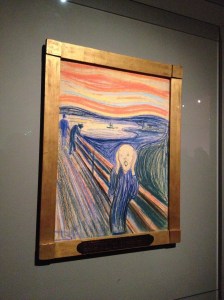
This was no ordinary election. Yes, I was born in the Kennedy administration. I was too young to understand Camelot, but I’m now old enough to read the writing on the wall. I saw our nation put a man on the moon. I felt the unending frustration of Vietnam. I watched Nixon resign after Watergate. God help us, I even survived two terms of W. I’ve never felt that we were bargaining our soul before. I was at the crossroads at midnight. I know what I saw. Can a man who has openly treated women as objects, insulted people for their race, and advocated thug violence to win lead a unified country? I don’t know. “If anything was broken I’m sure it could be mended,” the song says. Let’s hope so, but let me contemplate the ghost of democracy past. It’s my right.


Final Frontiers

img_0610

Is there such a thing as an existential illness? Answer that if you want to, but it’s rhetorical. I’ve been voting since 1980 and I’ve taken my fair share of bruises in the process, but this time my soul feels as if God has hung his “gone fishin’” sign on the pearly gates for good. I am ill. Maybe it was the ebullience that came from having eight years of progress where, although things weren’t perfect, they were sort of holding steady. I’ve always considered myself a populist. I don’t know how a billionaire can convince millions of people he’s one. To be populist you’ve got to be one of hoi polloi. Growing up poor, I took my licks then and I’m still taking them now. No, this wound goes deeper than the bone. Deeper than the viscera. It’s an existential illness.

All things considered, I don’t write too much about politics on this blog. All my adult years I’ve been an unapologetic Democrat. I confess to having grown up Republican. But I believe in the fair treatment of others. I know not everyone will or can be happy. I also know that it’s wrong to denigrate anyone because of their gender, race, orientation, or physical ability. Seems to me that our country was sort of the final frontier where you could go if you believed this kind of thing. Where can you go from the final frontier? There are no other land masses to discover. Maybe if I put on enough layers, Antarctica might not be so bad. Beyond that, where can one go to be a liberal in a world that desperately need some heart? Where money isn’t the measure of all things. Where Mom is right just as often, if not more than, Dad.

It’s a strange thing, this existential illness. Politicians are already cooing their pleasantries, as if nothing more than a slight upset occurred. It seems to me that whenever there’s an upset the popular vote disagrees with the electoral college. It also seems to me there should be a place where the wealthy aren’t considered better by virtue of their material status. I have this existential illness, but I can still dream. Is there a way forward from here? Sometimes I think I can see that horizon where all people are treated fairly and equally, and sometimes the sun seems to be rising over that horizon. Today I feel motion-sick from being jolted backwards. I’ve been disappointed before, but I don’t remember it hurting this badly. If anyone knows a good existential doctor, please pass along her name.