Flatland

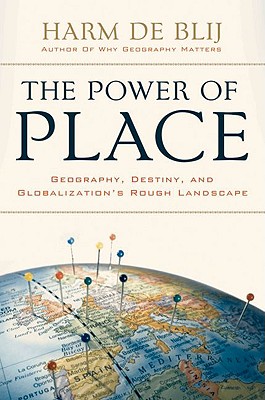
ThePowerOfPlaceThe world is flat—not.  Harm de Blij’s The Power of Place: Geography, Destiny, and Globalization’s Rough Landscape is, despite the author’s hope of improvement, a sobering read.  Geography is one of those subjects that studies show Americans consistently failing.  But de Blij begins and ends with one of my favorite themes: that place defines a person.  One of the realities with which all humans must reckon is that we have no control over where we’re born.  As de Blij demonstrates, not fatalistically, that place will determine to a great extent what life has to offer us.  Chances are that most of you reading this were born in what social geographers call “the core.”  The core is that affluent part of the globe that encompasses successful states with relatively good prospects for their citizens.  It is, numerically, the smaller part of the world’s population and it is the base of claims for the world’s flatness—that is, its apparent sameness across borders.  De Blij, who has crossed one or two of those borders, knows that there is a roughness inherent in this world, and those outside the core pay the highest price.

Among the many factors de Blij examines one—religion as an accident of birth—comes up repeatedly.  Religions quickly complicate efforts at fairness and equal distribution with various theologies of why the poor are poor and that we can justify leaving them that way.  Or worse, a religion may decide, since it alone is right, that those believing otherwise ought to be destroyed.  Internecine as well as international rancor is a commonplace of the news as religions compete for the alpha male spot on the human (actually man-made, gender distinction intended) hierarchy.  The religion you’re born into, for most of the world’s population, is the correct one.  Missionaries, by definition, disagree.  Theirs is the true correct religion and even if it doesn’t improve the lot in life of the poverty-stricken, it will at least make for a better afterlife, cold comfort though it may be.

One issue that de Blij touches upon only minimally is the sacredness of place.  Of course, that is often the ground for conflict, but in smaller ways we often feel an attachment to the place we enter the world.  Beyond visiting the relatives still near my hometown, sometimes I just want to go there and linger, pondering what this world intended for such as me.  The distress I feel when I see that the hospital where I was born has been closed down, the houses in which I grew up razed, and even my first school remodeled, touches something deep and undefinable.  It is a small part of who I am that has been erased, the silencing of the clock’s ticking.  Those rough hills were my home for the two most formative decades of my time on earth and I belong to them.  I owe them who I am.  This is the mystery of sacred geography.  The refinery fires, the childhood friendships, the Christian bookstore that propelled me in a direction I may alter but not eradicate.  It’s not rational, I know.  But like many animals, I feel the draw, and de Blij points out the many benefits and frightening realities that attend it.
Weathering Qohelet

Over the weekend I finished the initial formatting of Weathering the Psalms, my long-suffering book on the weather terminology in the Psalter. While I’ll have to give it another going over, a strange cocktail of feelings has come over me in the process. Scholars age quickly. The time between putting that last period on that last sentence and the book showing up in a few dozen hands is generally over a year. You feel outdated. Not only that, but this book was finished, for all practical purposes, a dozen years ago. In this world of endless, indeed, almost insane academic publishing, many books and even more articles have appeared that I should have read, pondered deeply, and incorporated into my work. That, however, is a luxury reserved for those society deems fit to place in colleges, universities, and seminaries. The predominant feeling, apart from relief, was a kind of melancholy, however. The book represents a world that no longer exists. Indeed, a young scholar who no longer exists.

From the day I started teaching at Nashotah House in 1992 (or even before), I knew it would be a limited-time engagement. The then dean, interviewing me, knew that I was too liberal to fit the medieval theology then current (and still current) at the school. As a teacher of the “Old Testament,” however, the damage I might do was deemed minimal. I wrote several articles on my beloved Ugaritic, but no job interviews came. Those who’d sussed the system suggested I try publishing biblical material—after all, that’s where the jobs are. (Ha!) So I began. Weathering the Psalms took several years to research and write in scholarly isolation. I began rising at 4 a.m. to find the time to do the writing. Most of the book was written between four and six in the morning. Yes, it’s rough. And tentative. A young scholar unsure of himself. Now I’m an old man even more unsure of himself. Still, there are insights in that outdated tome that I hope some will find worth their time.

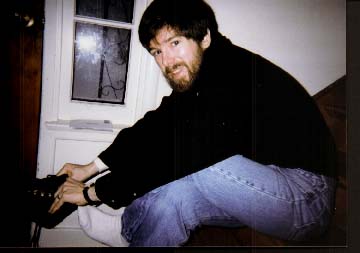
I have a photograph of myself that my daughter took at the time. I was putting on my boots to go shovel some snow. The face in the photograph is young. Optimistic, even. I was facing the weather. I’ve come to realize that all photographs are lies. They capture an instant of time that has already vanished. In my case, a livelihood. A dream that was shredded on the plains of some theologian’s ideological Somme. Winters seem to have become much harsher since then. Colleagues who’ve found jobs prosper while the rest of us fight against nightmares and that sense that all we ever tried to do was, in the end, vanity. One of the questions in the study, The Bible in American Life is, which is your favorite book of the Bible? Mine has always been Ecclesiastes. And even as I make final preparations to ship my manuscript to Wipf and Stock, I know that the preacher is right: there is nothing new under the sun.

snowman


Prehistoric Steps

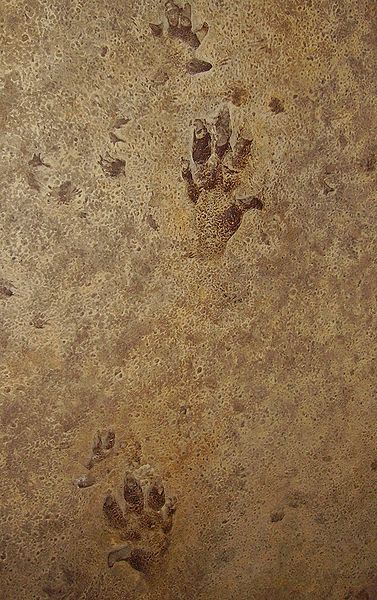
Britain has always had a share in the great events of the past (speaking strictly from a western hemisphere point of view). Not only did the ten “lost tribes” of Israel end up there (according to some, with apologies to Joseph Smith), but young Jesus traveled there with Joseph of Arimathea (according to others, with no apologies). While these stories are obviously non-historical, Britain does have an illustrious heritage that has left Stonehenge and the Cerne Abbas giant in its wake. It is thrilling to read, then, that fossilized footprints from some 850,000 years ago were recently discovered. Coastal erosion, similar to the event that revealed Skara Brae to the world, uncovered the footprints for a short time in Happisburgh, near Norfolk. About 50 footprints were discovered, according to The Independent, with a group comprised of women, men, and children. They were walking alongside a stream, apparently looking for the Pleistocene version of carry-out fish-n-chips at least 844,000 years before Adam and Eve.

The British landscape boasts an ebullient antiquity. Our years spent in the British Isles involved exploring everything from Lanyon Quoit in Cornwall to the Ring of Brodgar on Mainland, Orkney with our friends. It is a land where the past lives on into the present. No wonder some speculated that the biblical past made its way here as well. At least now we know that some very early humans did as well. Homo antecessor, the makers of the prints, visited a Britain replete with elephants, hippopotami, rhinoceri, and hyenas. It is speculated that they may have domiciled on off-shore islands to keep safe from the predators that roamed pre-Roman England. One thing we know for certain about people is that they do get around.

Chirotherium storetonense  trackway, photo credit: Ballista

Chirotherium storetonense trackway, photo credit: Ballista

Homo antecessor is an extinct species. Many of the hominids that contributed in some way to the possibility of our existence are long gone, creating endless headaches for scriptural literalists. Their lives, as The Independent speculates, may have involved being preyed upon by large predators and the constant search for food. They also liked to walk on the beach. I wonder how far they had come on the road to religious belief. Constant fear of predation must surely have played into it. We don’t know how far back the evolutionary chain religion goes, but we do know that it is a profoundly human outlook. You can’t stand beneath the towering Neolithic menhirs of the Ring of Brodgar and not feel it. Sometimes a walk along the shore is all it takes.


Holy Hollow

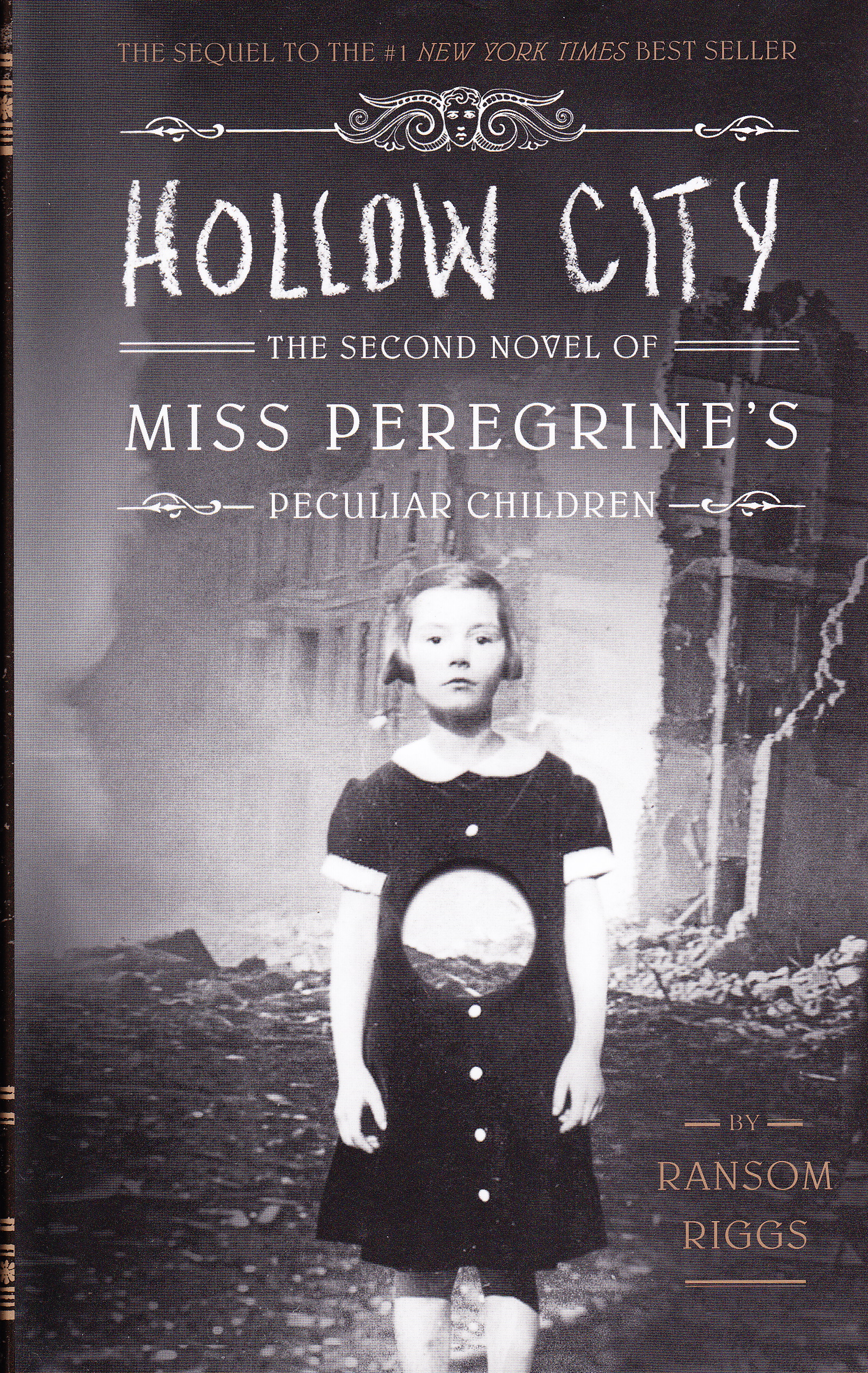
HollowCityEveryone wants to belong, to fit in. Growing up, I seldom felt I managed it. When you’re very young you don’t know enough to notice that you are more melancholy than other kids, or that you can’t afford the nice things they can. As you reach your teenage years, however, and you know that you come from the kinds of families that other parents warn their kids about (fairly poor, very religious, and just a bit peculiar). No wonder I find Ransom Riggs’ books so engaging. Yes, they’re written for young adults, but just about anything that Quirk Press publishes is worth the read. As an adult, if I’m honest with myself, I’m still waiting to feel like I fit in. The kids in Hollow City, the peculiars, know that they can never fit in. They have special, impossible talents that make them the targets of monsters called hollowgasts, or hollows, who try to gobble down as many as possible. Monsters, outsiders, and very human relationships—it’s a winning combination.

Quite apart from the spellbinding pace Riggs spins out (he’s a master of building tension), there are some quasi-religious elements in the books as well. I read Miss Peregrine’s Home for Peculiar Children a couple years back, and Hollow City develops the mythology a bit more. The real enemies are the wights—mean-spirited malcontents who rule the monsters. They learn that they can become demigods if they extract what makes a peculiar peculiar. That’s a religious concept: the essence that materialists tell us isn’t really there at all that makes us what we are. The children are self-sacrificial toward their mistresses, birdlike and godlike at the same time.

Peculiars have two souls, although most of us don’t know what to do with even one. The soul has, of course, come under great suspicion over the last century or so. There seems to be something that makes us what we are, and it isn’t just cells and DNA. Some call it consciousness, others personality. There are those with élan and others with spirit. We can’t call it “soul” because that smacks of superstition and yesteryear. So we read of children with two souls and none to spare. Even Philip Pullman had souls for his children in His Dark Materials. The soul, in both these book series, leaves a person completely dehumanized when it is excised. Of course, materialism will do that for free. Yes, I know it’s fiction—young adult fiction at that—but my money’s on Ransom here. Let’s hear it for those who have a surfeit of souls!


Med Ed

I’m not really the one who should be on oxygen in this situation. It was a routine, scheduled oral surgery for a impacted wisdom tooth. Not mine, but my wife’s. I sat in the recovery room and they wheeled her in on oxygen. When the doctor stopped in to check on her, he looked at me and said, “My God, get that man on oxygen! He’s going to pass out!” So they took the gas from my wife and laid me down instead. My wife had the magnanimity to think it was cute, but I felt embarrassed nevertheless. I couldn’t go into medicine even if I wanted to. I haven’t the stomach for it. So as I write this in the Urgent Care unit, I’m a bit light-headed. We came in for treatment of a snow-shoveling-related injury for my wife, and my mirror neurons are firing overtime. I hear them call a code red, and I think I hear the helicopter coming down and I think I might pass out. I can’t stand the pain-filled groans coming from the next room.

Compassion is one of the most overlooked of human virtues. I haven’t taken a sick day since 1987, but I’ve had companies tell me I hadn’t earned any yet. You have to earn the right to be sick. Even when I threw up on public transit two weeks ago, in one of the most embarrassing moments of half a century, I still got up at 3:30 the next morning to climb aboard again. So I’m sitting here, feeling ill, although I’m fine, and thinking about how people naturally feel for others. Only practiced cynicism can erode that. Or maybe I’m just a wimp.

It is no coincidence that most religions feature healers or healing as one of their central tenets. Life involves suffering, anticipated or not. There is something more than the physical going on here. Pain is the enemy, and I’m the one who’s well. There may be atheists in foxholes and even in hospitals, but they must be aware that the chemicals chasing one another around the neurons upstairs believe something else. Religion is a coping mechanism, perhaps something even more. So the winter takes its toll, and the snow claims another victim. All those instruments on the wall are beginning to creep me out. My mirror neurons suggest that if only those made of ice could melt with a little compassion, this world would be a more humane place. And when you get a moment, could I get a little oxygen over here?

Scare-Yous


Weathering the Psalms

Book contracts make me happy. In the case of an academic out of water, they are rare. Few people care what a PhD has to say unless s/he has a university appointment to back him or her up. Still, I wrote Weathering the Psalms while I was fully employed at Nashotah House. I carved the time out by waking at 4 a.m. to do my writing (a practice that has stayed with me ever since), and from 1995 to 2000, the bulk of the book slowly emerged. The day I was terminated at Nashotah I was working on a revision of the manuscript, a bit uncertain of what direction to go. After the trauma of that day, I couldn’t face my little project without the anxiety of association tainting the effort. It seemed to represent my failures in finding the job I knew I was meant to do. Such potent reminders soon weary even those of us who awake well before the sun.

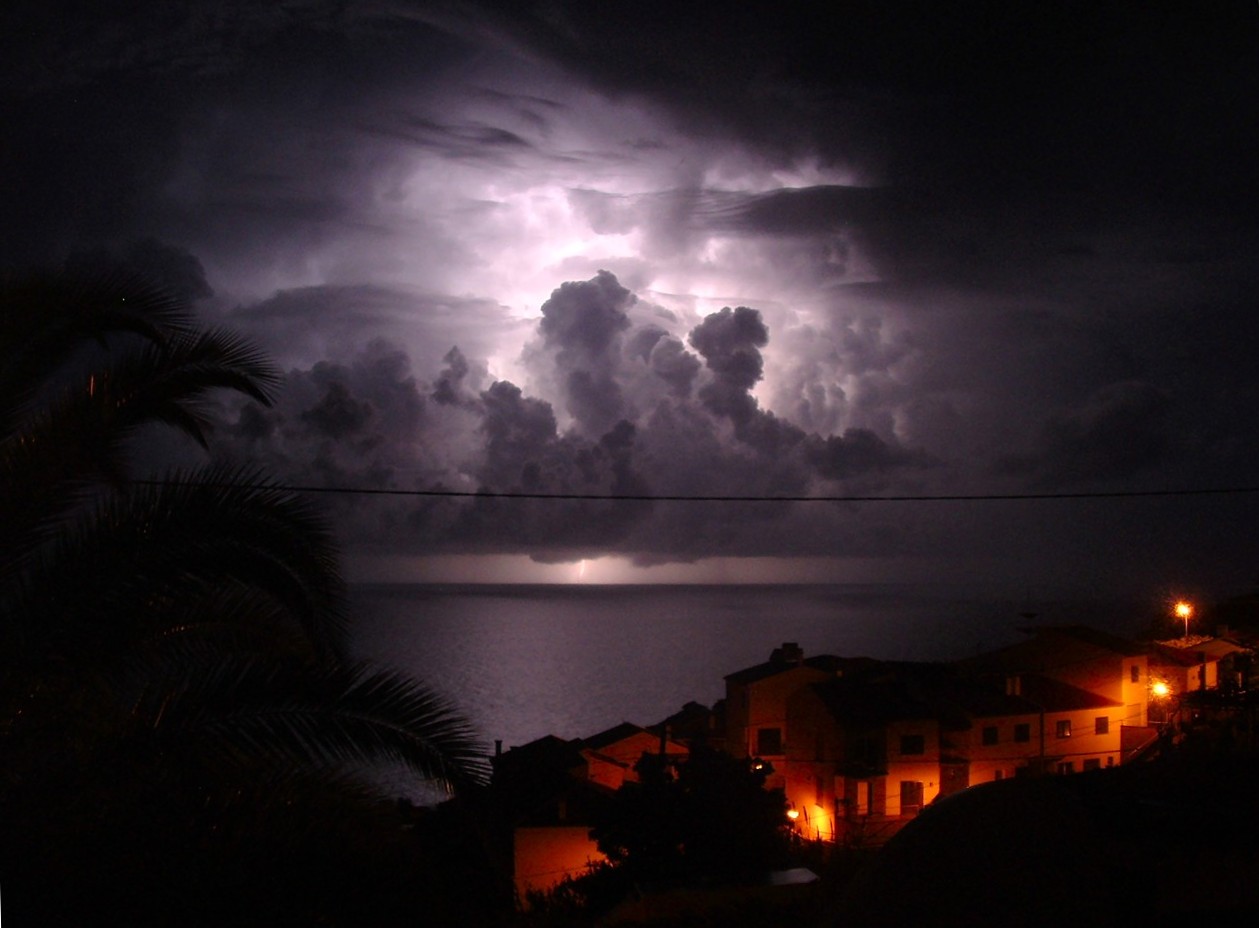
Working in isolation, I had noticed that the weather is a very common motif in the Psalms. The problem is, any attempt to fit the evidence into an overarching scheme is artificial. I undertook a survey of all the weather references in the Psalms, and explained them as scientifically as a layman could. The result was not the smoothest reading, nor was it tied together with a strong thesis, but it was important. Although I have not been in a position to keep up with the research such a project requires, I’ve not seen anything similar emerge. The weather, however, still happens. And people still blame it on the divine. In ancient times there was no natural world. What we call nature was actively directed by the divine. The weather is probably only the most obvious example. We all know the phrase “everything happens for a reason.” This encapsulates the biblical view of the weather. This winter with its series of storms has reminded me of this, forcefully.

Photo credit: Don Amaro, wiki commons

Photo credit: Don Amaro, wiki commons

Ironically, editors started to show interest in the project only after I’d abandoned hope of ever getting it published. It was the fruit of my despair. It represented several years of my academic life, but, like its creator, it was growing older. So last week when a contract landed on my desk from Wipf and Stock, a profound happiness settled in. A sense of completion. I am not in a position to update the contents, but at least one academic publishing house sees the worth in the manuscript that came from so much personal experience. A decade is a long gestation period. I suppose if I had to write the book today it would reflect much more the experience of world-weariness that comes from not ever finding the job you know you were meant to do. Nevertheless, it is a small offering to the deity of the weather, and I am glad that, come next year, others will be able to share in my struggles to make sense of that world.


A Toy Story

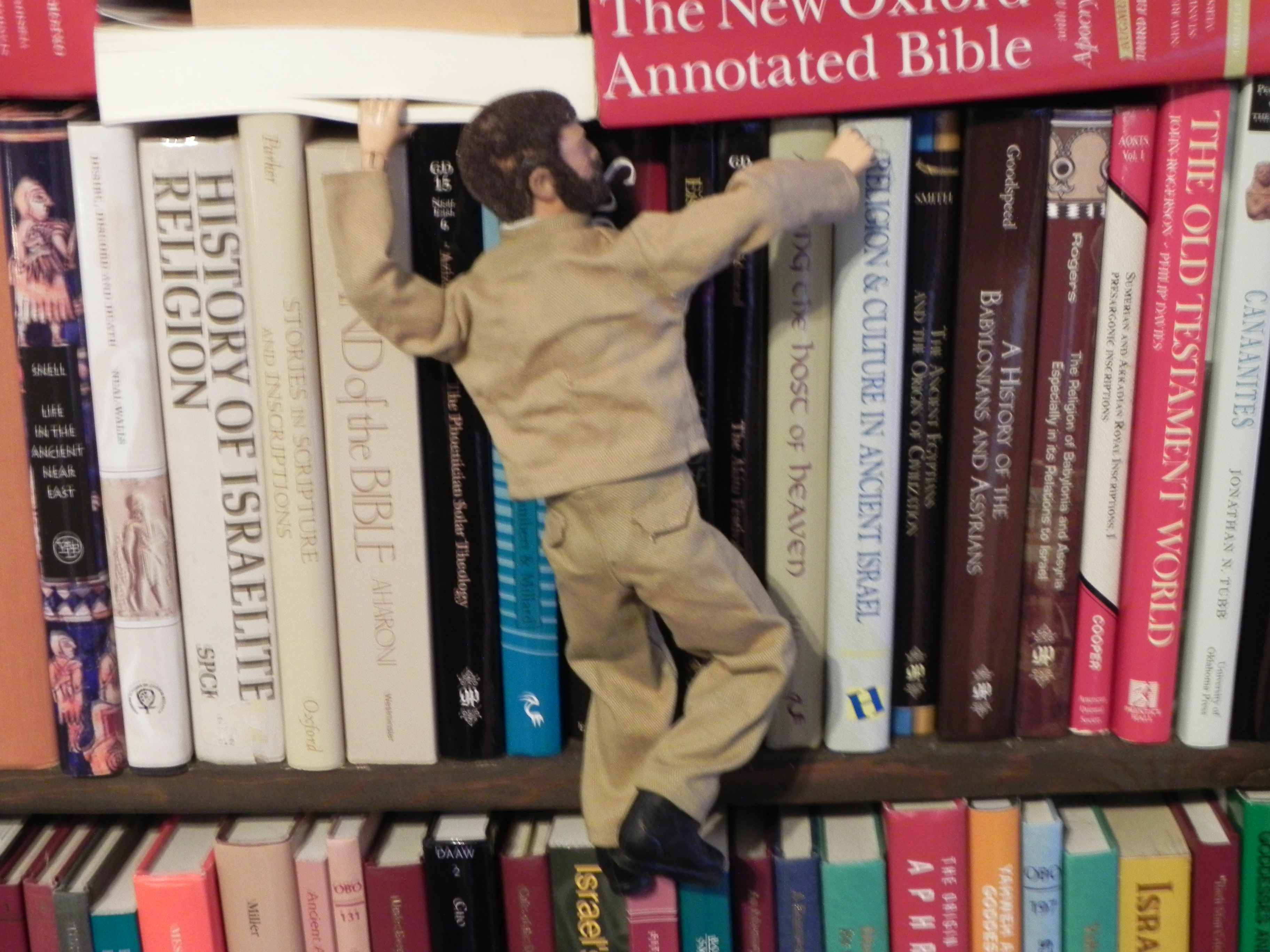
As a life-long pacifist, it might seem strange that I find myself waxing sentimental over a military-themed toy. You see, I just found out that G. I. Joe is turning fifty. For those of us who grew up in the 1960s, G. I. Joe was the acceptable “boy doll” (now, technically, “action figure”) that all the guys had. Some of us had several. We didn’t have much money, but Christmas always gave an opportunity to accessorize Joe with either the latest developments (life-like hair in a buzz cut, pull-string vocalizations, “kung-fu grip”) or the many vehicles that could be purchased separately. As the Vietnam War wore on, Joe turned his interests to science and humanitarian causes, but boys like to anthropomorphize as much as girls do, and Joe continued to get himself into many bizarre adventures. At least in our apartment he was known for fighting dinosaurs, robots, medieval knights, and even General George Custer. Joe was a fighting kind of guy. He had guns and gear and shoes that were almost impossible to remove when you wanted to change uniforms (only when Mom was out of the room). So G. I. Joe has been around for half a century now. I can’t remember childhood without him.

G. I. Joe often had near fatal encounters in our home. One of them, the talking one with life-like hair, suffered a severe war wound that left his bottom half completely dissociated from his top. I don’t think we kept the lower abdomen and legs—there was something slightly unnerving about plastic buttocks—but I did keep his top half, the talking bit. It shocked me when my Mom asked if she could take him to church. We were a “Bible believing” family since it was the days before people much talked about Fundamentalists. My mother was a Sunday School teacher. (Thus my early amazement at the magic of flannelgraphs, still primarily used for religious teaching.) We didn’t believe in evolution, and we certainly thought war was a bad thing. I did wonder, though, why Mom wanted to take a toy to church, particularly a dismembered, violent one.

Being the son of the teacher did have some perks. I knew enough to read my Bible and learn the lessons, but we were not given sneak previews for Sunday School. Seeing the trailer might make actually attending superfluous. So when Joe went to church I learned why: people are not animals. The pull-string voice box, although the sounds emerged from holes in his perforated chest, was proof. People talk, animals don’t. We didn’t evolve after all. The other kids were seemingly impressed by my evangelistic Joe. Who would’ve thought that “G. I. Joe, U.S. Army, reporting for duty” could have ever converted a lost soul? On Ebay, I see, some of these vintage talkers can fetch up to $600. Mine, I’m sure, ended up in a landfill somewhere in rural Pennsylvania where, I have no doubts, he is still preaching to the other toys about the dangers of evolution.

The ultimate adventure...

The ultimate adventure…


Not Narnia

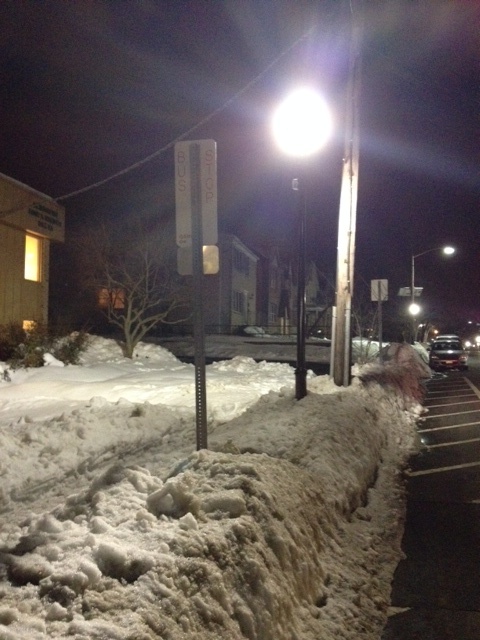
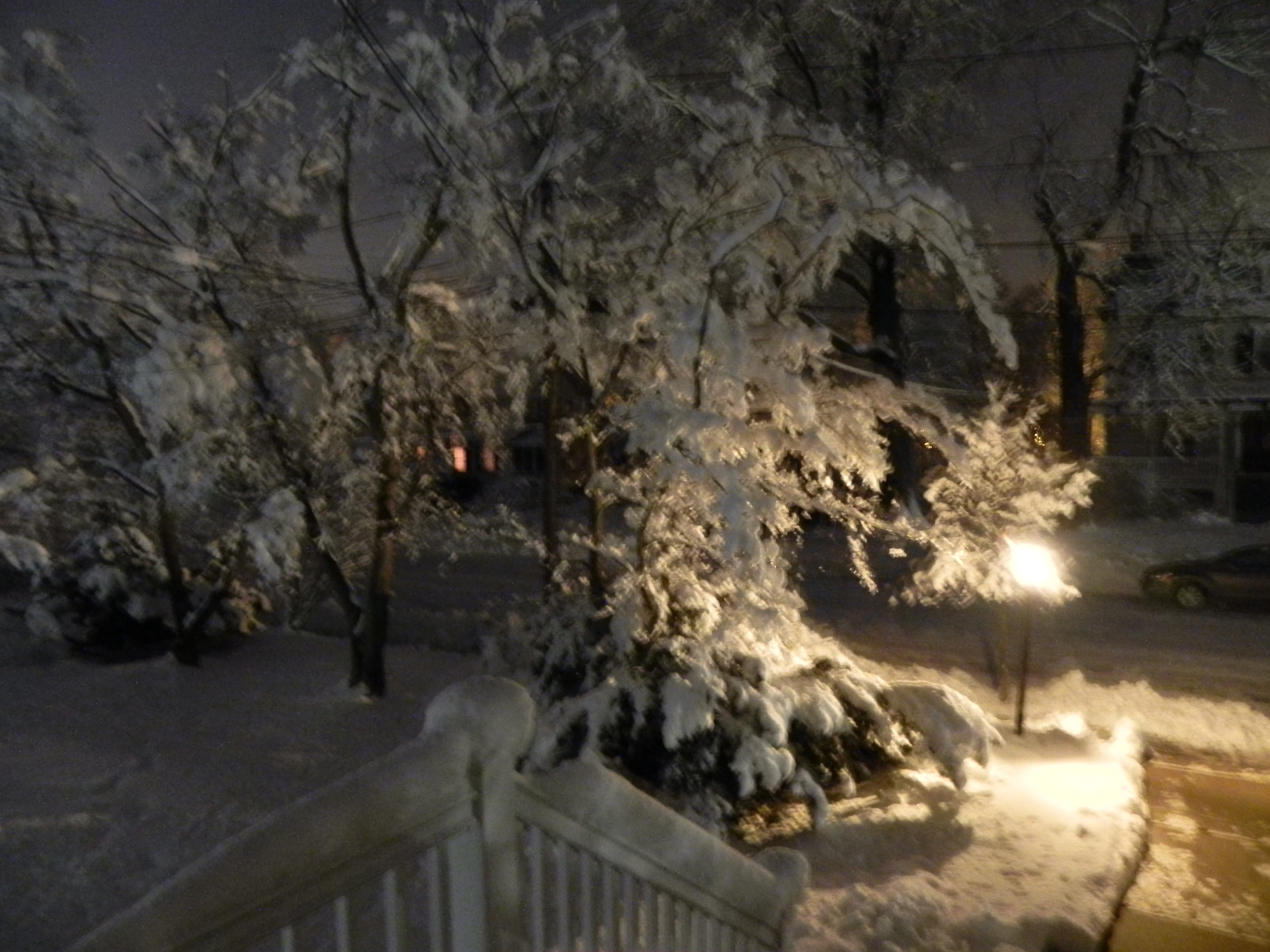
The snow fountain from a fast-moving snow-plow is a thing of beauty.  Unless you’re standing in the way.  It’s been that way this winter.  The sidewalk where I usually stand to wait for the bus is an arctic wasteland of waist-high snow piles shoved higher and higher by weary plow-drivers.  So I stand in the road, near a streetlamp in winter, but this is not Narnia.  I decided to try out New Jersey Transit’s highly anticipated “real time” bus locator—that way I know when to step out into the blowing wind to wait for the bus.  After I’d been sprayed by passing cars and the occasional snow-plow for 20 minutes, I became convinced that “real time” is just academic; it is the time that the bus would arrive, were the bus actually on time, if it ever left the garage.  Not that I blame the drivers—theirs is a thankless job that must lead to early retirement, or at least support the state mental hospitals.

Where's Mr. Tumnus?

Where’s Mr. Tumnus?

Now, I’m not the only one to be standing in the street, a hooker for capitalism, under my lamppost,  and some of the stops are completely snowed in.  When three passengers ganged up on the driver for nearly missing them because they weren’t at the stop because of all the snow, I began to feel a bit uncomfortable.  Springs can be wound too tightly, you know.  All of this is an issue because businesses don’t want to close for inclement weather.  During last week’s blizzard, I ended up taking the PATH train into New York, not knowing where it was going.  A young lady was fretting—she was going to be late for work.  An older African American gentleman comforted her.  “Don’t worry.  They don’t care if you come in late on a day like today.  They just want you to show up.”  They just want you to show up.  His words have haunted me. Businesses want you to show up because that reinforces the power of capitalism.  You don’t show and you don’t eat.  You lose healthcare.  Cobra is aptly named—you pay far more than unemployment’s pittance for monthly coverage.  Obamacare is about thirty years too late.

Every time I see the Mayor of New York justifying his decision to keep schools open when literally nine inches of well-predicted snow fall on the city—dressed in his trendy action-figure jacket, just like Christie after Hurricane Sandy—I wonder who is really being cared for.  The Mayor claims that of the over 1 million kids in the school system, a substantial proportion go to school so they can get their only hot meal of the day.  Is this the purpose of schools?  Is it not the humane duty of the largest city in the country to make sure fair opportunity is offered to those who wish to contribute?  Their parents, he adds, as an aside, have to go to work.  Why aren’t they being paid enough to feed their kids?  Oh, there is a blizzard coming, and it’s one of our own making.  As for me, it’s time to step back because I think I see another snow-plow coming.


Jesus, My Foot

A story going around the internet features pictures of Paula Osuna’s bruised second toe. According to the YouTube story, Osuna fell down the stairs then had her boyfriend rub some sacred dirt from the shrine of El Santuario de Chimayó in New Mexico over the injury. As part of the healing process, an icon of Jesus appeared on her injured toe. Now, New Mexico has a reputation for hiding some potent sites of paranormal import (at least 51 of them), but I had never heard of Chimayó before. It is apparently one of the most visited shrines in the country. Like Holy Hill, a local shrine I used to visit once in a while back in Wisconsin, the site itself is supposed to lead to healing. Healing sites sometimes hold their own irony.

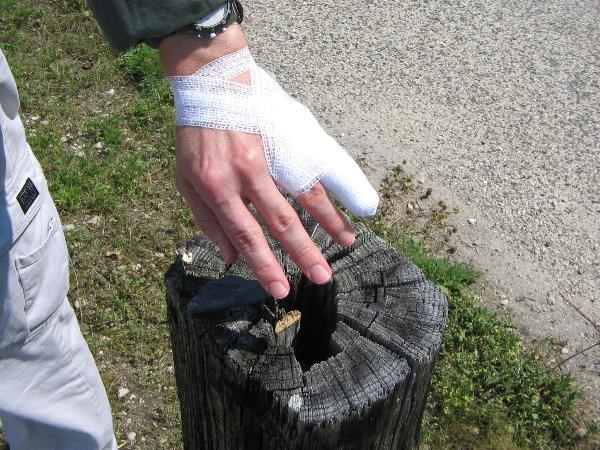
When we lived in Wisconsin, my family used to be avid geocachers. We still go out once in a while to find the little boxes hidden in the woods, but in Wisconsin there were plenty of day trips to be had with minimal traffic (unlike our current setting). One day we drove to Holy Hill National Shrine of Mary, Help of Christians, a discalced Carmelite community built atop a glacial moraine that gives spectacular views of the southeastern corner of the state. Inside there were many abandoned crutches, as I knew from previous visits, but this time we were present to find a small ammo box filled with trinkets, hidden in the wooded grounds. As our GPS narrowed us in on the coordinates, I made the typical error of watching my device rather than my feet. I slipped on a pile of rocks and my left hand slid onto a broken beer bottle, slicing open my little finger. Fortunately our geocaching bag held a small first aid kit, but no amount of gauze and holding my hand over my head could stop the bleeding. After we’d logged our find, we drove to a local emergency room where I received about ten stitches. Although the injury took place on the grounds of a healing shrine, no Jesus appeared on my shredded pinkie. Nor did miraculous healing come because of the location.

DoYouSeeWhatISee

Pareidolia is a most fascinating evolutionary development. One of the first things imprinted on a newborn person is the image of a human face. In remarkably short time the infant can register the intent of various expressions on a human face and will soon learn to mirror them. That desire to find a friendly face never leaves us. We see faces everywhere. There are entire websites dedicated to pareidolia. We like to think there is a watchful parent ensuring that we won’t stumble and fall. Life, however, is full of accidents and injuries. Some of them are even the results of visiting healing shrines. Belief is what makes the difference. Ironically, even when Osuna’s bruise lost the shape of Jesus, she still believed in the healing power of the dirt. Her story has been covered on television and is easily found on the web. It is a fame born of faith. Miracles are always there for the taking.


‘S No Day in New York

“You’re waiting for a train. A train that’ll take you far away. You know where you hope this train will take you. But you can’t know for sure.” Yet you’ve been standing on the windy platform in Newark for twenty minutes and they’ve announced the next train to New York will be an hour late.  A man you don’t know says the PATH train will take you to New York, but New York is a big city, and you only go there to work.  It must be a snow day.  Well, almost.  I work for a company that only closes when New York City Public Schools close for weather.  Today, kids, school’s open; but all is not lost—field trips are cancelled.  And so, the constellation of companies who take their cue from NYPS truck (sometimes literally) their New Jersey-based employees across or under the river, into a city where slush half a foot deep awaits them on every street corner, and that doesn’t slow those muck-flinging cabs down at all. 

With the weather we’ve been experiencing this year, I hear a lot of people saying that Mother Nature is still in charge.  Allow me to differ.  You see, I’ve been researching the weather and the Bible for years now and I’ve come to a slightly different conclusion.  In the Psalms, anyway, it is clear that God is in charge of the weather.  Given that New York is such a sinful place, I guess none of us should be surprised.  Still, I’m not sure the Bible has got this one quite right either.  After all, I’ve walked through ice-crusted snow up to my knees for a good part of my walk to the station, and I have my coat open so the cold breeze will cool me down a little bit before I have to walk into work with crazy hair and a scowl frozen on my face.  Didn’t some great theologian once say “sin boldly?”  No, it is not Mother Nature in charge.  It is not even the deity.  It is something far more powerful than God—money.  Can’t lose a red cent when there are human resources to be utilized.

I’ve never been on a Port Authority Trans-Hudson train before, and I’m not sure where this one stops.  I heard someone say 33rd Street, and that sounds encouraging, so when the train stops I follow him across the platform.  Sheep, as any shepherd knows, will follow a random person who looks confident enough.  I emerge from the dark underground, not quite sure where I am, and I just can’t find a Psalm in my heart at the moment, unless it’s an imprecatory one.  I stepped out of my front door into freezing rain three hours ago.  My trousers are wet to the knees, and I’m a little sick from facing the wrong way on the PATH train for a lengthy ride.  The cars, I notice, are shaped like Krell.  Yes, this is a forbidden planet and I don’t know where I might end up.  Excuse me, Mr. Mayor, but I think you got it wrong.  Field trips are not cancelled after all.  And I’m not sure I’m even worshipping the right god.

Deceptively peaceful

Deceptively peaceful


Engineering Meaning

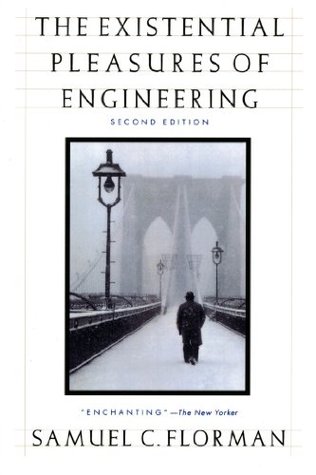
ExistentialPleasuresofEngineeringEngineers have been a part of my life in many ways. My mother’s father was an engineer. Although she did not know it, my grandmother’s grandfather was also an engineer. My wife’s father is an engineer, and grandparents on both sides of her family were either scientists or engineers. My daughter is studying engineering, and other relatives have made it their profession. In fact, had the peril of my everlasting soul not caught my early concern, I would likely have headed into the sciences myself. Not that I would have made it in the profession, but the interest is certainly there. Many years ago my wife bought me a copy of Samuel C. Florman’s The Existential Pleasures of Engineering. Unlike my claims about engineering, I can boldly declare myself an existentialist. The moment I found out what existentialism was, I knew it was my outlook. Now that I am firmly settled in a profession about as far from science and engineering as I can be, I decided to read the book.

Quite surprisingly, I found Florman turning to religion from time to time. Existentialism isn’t inherently religious, but engineering is inherently empirical. Florman notes that the New Testament, with its spiritual values over the physical, often presents serious problems to engineers, enmeshed, as they are, in this universe. That made sense, even if it surprised me a little. A few pages later, however, I was astonished that Florman praises the “Old Testament” for its more earthy viewpoint that has a great appreciation for the physical world its god has created. Perhaps there was a reason my life took this track after all. Although I’m not Jewish, I always felt an attraction to the Hebraic outlook. Maybe I should’ve been an engineer.

Toward the end of his extended essay, Florman once again turns his thoughts toward the spiritual. Noting that massive works of engineering tend to evoke the divine—the most obvious, but by no means only, example being cathedrals—we glimpse a sense of the sublimity in the greatest of human edifices, sacred or secular. The engineer still has recourse to the spirit which is, to a frustrated scientist, a cause for great hope. When I pulled a book on engineering off the shelf, I certainly did not expect to find any religion in it at all. Of course, the book was written before science and religion had become entrenched in such a shrill standoff as they seem to be today. There is balance here, and an appreciation of beauty. And when the engineer does the impossible, it is indeed a work of human divinity.


TechnoFrazzle

Hebrew can be an obstinate language. And computer software companies can be immature. In a biblically inspired pulling out of the hair and rending of mine cloak, I am trying to submit an old manuscript for publication. You see, I have been a loyal Apple user from the beginning; Moses himself was one of my original teachers. This was back in the day when the processor took up proportionately about 90 percent of the space, and the screen was about the size of, say, an iPad. Monitors were black-and-white then, kids, and you had to save everything on devices called “floppy disks.” In any case, Macs died and Macs resurrected—actually, they never really die, as an attic full of aging, but document-rich Macs attests. Operating systems evolved at a frightening rate, and the document I want to submit was originally written *gasp!* about eight years ago. The Dark Ages. Before OSX. Before Keurig individual serving machines. When fax was still used.

The publisher made a simple request: send us a Word document. The problem, you see, is that Apple no longer runs software based on Microsoft platforms (Bill and Steve, play nice!). That means instead of Word I now use Pages. That’s mostly fine, but then Hebrew can be an obstinate language. It is written backwards. The vowels are above and below the consonants. It has letters that English doesn’t and most English speakers can’t even pronounce. So geeky font-makers came to the rescue and devised clever fonts to fill the gaps. In Word. I convert my old file into Pages so I can open it on a laptop that actually connects to the internet (the laptop on which it was written never could quite manage that) and guess what? Pages can’t display the fonts. I convert them, but like stubborn infidels, they remain the same on my screen. It is like driving through a blizzard with windshield wipers that don’t work. I can’t be sure what a PC reader, using that antique software, Microsoft Word, will see on the screen. I’m not sure what I’m writing.

I remember the rejoicing in heaven the day Apple announced that you could open a PC file in Word on a Mac. My life was easier, except for the fact that I was unfortunately working at Nashotah House—but that is a different story of archaic woes, for I could slip in a floppy disc (consult your dictionary) and share it with a less-sophisticated PC user. Now Mac OSX no longer supports Microsoftware and I can’t read my own fonts. I decide to copy the file onto a flash drive and submit it unchanged. My old laptop scratches its metaphorical head at this strange device I’m inserting into it and tells me this wondrous USB-deity is beyond its capacity to fathom. My Hebrew is stuck in the past. Along with my head, which, as you’ve been given to understand, is now bereft of hair.

In the beginning was Word...

In the beginning was Word…


Retire Me This…

We’re all getting older.  My daily, grudging glimpse in the mirror reminds me that my beard wasn’t always gray, and there was a time *gasp* when no beard grew at all.  One of the realities of the brave new world we inhabit is that career stability has become a myth.  My father, in the brief time I knew him, worked as a house painter.  My stepfather worked in a sewage plant for a small town and drove a snowplow in winter to make ends meet.  These utilitarian jobs seemed never to end.  I made the mistake of going into higher education, not realizing that the risks were much higher and that I would make more money working in a sewage plant than I have ever made in my professional career, PhD in hand.  So it rankles me when I hear professors complaining about being too busy in retirement.  Retirement: what a concept.  When the guy who has custodianship of my minuscule retirement account from Nashotah House, after his gentle awaking from the defibrillator, looks at my records he always informs me, “you’re not well placed for retirement.”  Talking to my big brother we agree—our retirement plan is to die on the job.  So, when someone asks you to write another book, remember maybe it is some guy your own age who is trying not to starve.

As a society we’re aging.  Those who managed not to be fired by Fundamentalists have had a secure, tenure-ridden ride through the occupation that some of the rest of us were denied.  Busy in retirement?  Some of us will never have that privilege.  Funny thing is, it’s not funny.  I sometimes lean back in my editorial chair and realize, if this hadn’t happened to me, I would probably look at it the same way.  I would have published that second, third, and fourth book, and people would actually think my opinion mattered.  I would’ve become a resource to be tapped rather than a dancing monkey who hopes for anything shiny.  Is that another gray hair?

I don’t belittle the hard work of higher education—it’s not an easy profession. But writing books? That’s the fun part! Privilege induces blindness. How rare an opportunity it is to teach! While we as a nation devalue it, in many parts of the world those who shape future minds are revered. Yet elsewhere in the world there are those who are far worse off even than an editor—those for whom life is constant suffering and surviving another day is not reasonably assured. How easily I forget this as I neglect to balance my checkbook for fear of what I might find. We shouldn’t complain when someone asks us to give back, even in retirement. Those of us capable of writing books sometimes lack only the bona fide of a college or university position to do so. Otherwise I might hope to retire as well some day.

"Photo by Chalmers Butterfield"

“Photo by Chalmers Butterfield”


A Girl Named Cthulhu

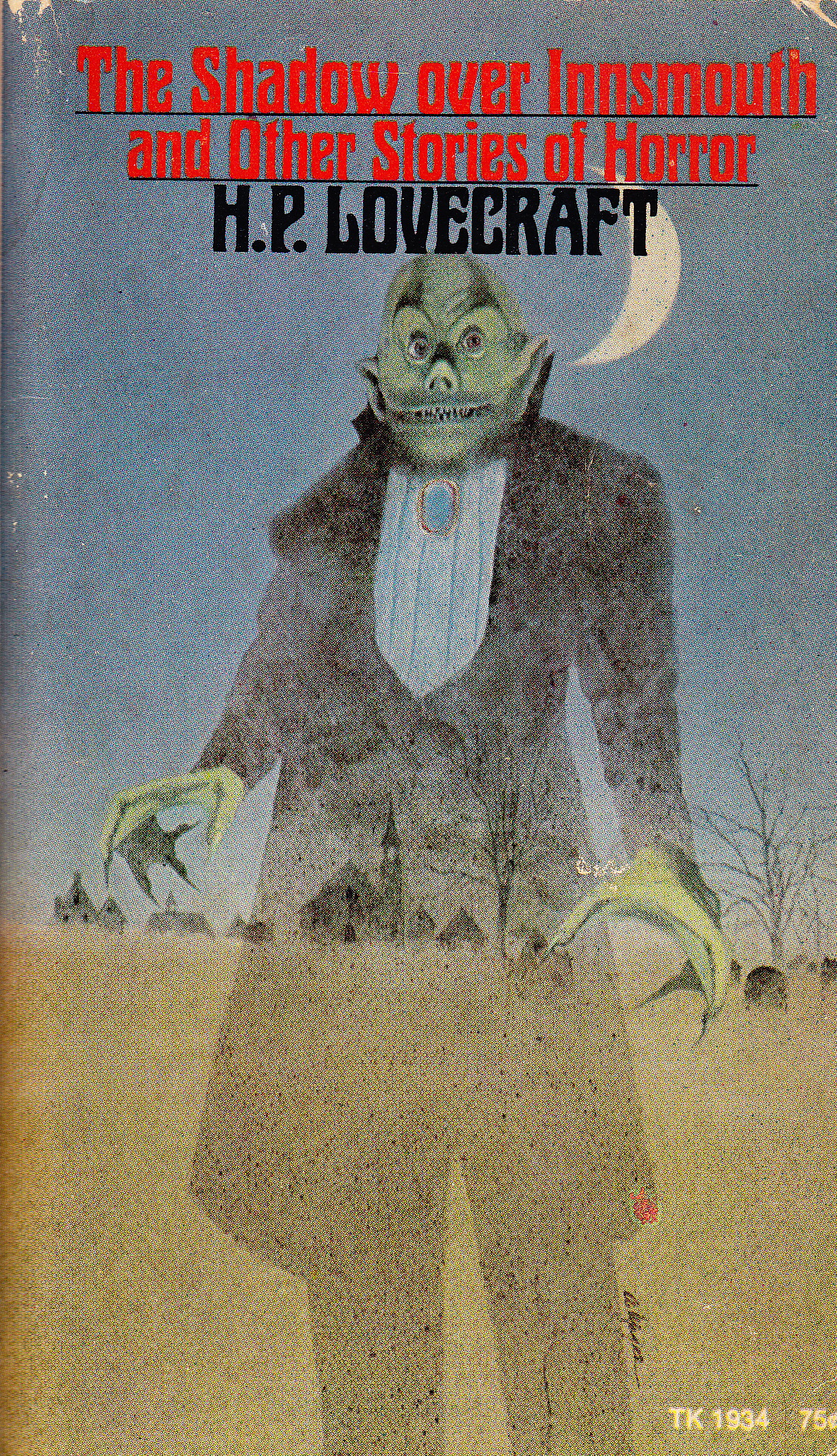
It was only a 25-word blurb in last week’s Time magazine. A Canadian couple decided to let the internet community name their daughter. As of the time of writing the third most popular suggestion was Cthulhu. WWLD? The internet has brought Lovecraft’s sleeping deity to life. Ironically this evil, belligerent, and fearsome god tends to have more fans than some of the more loving, cuddling varieties of deity around which western culture arose. Children are a parent’s ultimate investment (or should be) and the name we bestow will influence their view of life. I still recall the scandal of when I first showed my Mom a baseball card where the player was named Jesus (Spanish pronunciation, please!). I innocently asked if that was allowed since we’d been taught that although other biblical figures were fair game, the name of God was a retired number. There was only one Jesus, and this baseball card a monument to sinful arrogance.

Cthulhu

Of course, we lacked the biblical training to know that Jesus is only the Greek form of Joshua, a name of fair game to any young lad. Naming after a deity was otherwise verboten. Of course, that has all changed now. Names are up for grabs, and it is getting harder to find unique ones. H. P. Lovecraft, who died in relative obscurity, could find publication only in pulp fiction magazines—the lowbrow literature of his day. The divine fruit of his fertile imagination has now taken on the dimensions of true divinity. How many potential names are out there on the internet? Lovecraft alone gave us many gods. All the Dianas, Thors, Carmans and Dylans out there are in good company. Why not name a child after a god?

Names do effect a child’s view of life. Growing up in a biblically literate family, I often thought of the Stephen of the New Testament. The first Christian martyr, he died with a vision of heaven in his eyes, earning the meaning of his name, “crowned.” I aspired to live a selfless life, in as far as such a thing was possible in the twentieth century. It was my name—it was my destiny. There are no other “Steves” in my family, and when I was old enough to comprehend that many children bear family names, I asked my Mom whence mine had come. It turns out that I was named not after a family member or even a saint, but after a cartoon character. Touché, Cthulhu! Long may those of us with unorthodox namesakes stick together. The world is our myth.


Shipwrecked

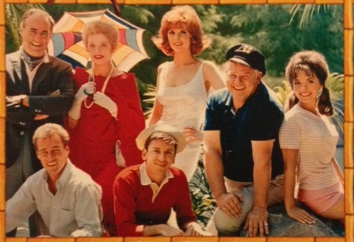
Childhood dies in pieces. There is nothing a young boy desires more than a father to show him how to negotiate life. As Mick Jagger eloquently declared, however, many of us know “you can’t always get what you want.” I did not get to know my father growing up, and so I did what any American did in the 1960s—I looked to television for solutions. Children can be terribly naive, but I had a shortlist of ideal candidates in my head. The one who unwittingly set the direction for my life was shipwrecked on a not-so-grim deserted island. Everyone loved Gilligan because he made them laugh, but the Professor, he seemed the ideal father: rational, mostly kind, and generally unflappable. My earliest career ambition, before I decided that janitor was my true calling, was to be a scientist. This was largely because of the Professor. Religion eventually interfered in my plans, but even as I attended seminary, and then graduate school, the Professor never left me. He had been a kind of father figure to me. I’m sure going to miss Russell Johnson.

TheIsland

I still feel a stab of delight when, watching old Twilight Zone episodes, “the Professor” appears. When I see Johnson in It Came From Outer Space and This Island Earth, it’s a particular island I’m thinking about. An island where, if religion came up, it was treated lightheartedly but even science, for all its clear thinking, never managed to help get the castaways rescued. This island represented my childhood. Innocent, sincere, and strangely funny. Little did I realize at the time that the science Roy Hinkley advocated would become such a fierce enemy to the religious milieu from whose baptismal waters I’d never fully emerge. It sure would’ve helped to have had a father to sort all this out.

Back before Borders (a kind of ersatz father) closed,Tina Louise came to our local to promote her new children’s book. I couldn’t believe I was standing twenty feet from a childhood icon—a movie star, nonetheless. How shocked I was to see her in The Stepford Wives where she talked about sex—that was always in the deep, deep background on the island. Pagan gods exerted real power on Gilligan’s island. As I grew up, religion held me in its powerful grip. With the Professor and the Bible in my head, I went off to become logical, intellectual, cynical. I taught Bible, students called me professor. Then my career was shipwrecked. Is it any wonder that I had that nightmare about being lost at Nashotah House again last night? Sometimes a boy just needs a father to show him the way. Thank you, Professor, for stepping in. You influenced one life in a way that I’m sure you never expected.