Dagon Cthulhu

Cthulhu has taken over the world, thanks to the internet. I wonder what H. P. Lovecraft thinks as he lies dead, but dreaming under the loam of Providence. A lifetime of struggle to gain recognition as a writer left him without much of a following, relegated to pulp magazines for low brow and Innsmouth-dwelling mentalities. Now everywhere from Davy Jones’ face in Pirates of the Caribbean to car bumpers in any parking lot, Cthulhu has awakened. My wife sent me a photo of a couple of such bumper-stickers recently: “Arkham’s Razor,” reads one, “The Simplest Explanation Tends to Be Cthulhu.” “Nyarlathotep is my co-pilot” reads another. I first discovered H. P. Lovecraft through bumper-stickers.

Lovecraft

Back in my post-graduate days in Edinburgh, I had decided to write my dissertation on Dagon. This seemed a reasonable topic as no serious, book-length treatments of this elusive, Mesopotamian deity existed. My advisors talked me out of it, however, noting that material on Dagon was so scarce that it would be extremely difficult to scrape enough together to call it a dissertation. A few years later, it turns out, an academic book on Dagon finally appeared, but the fact remains that he was, and is, a major deity who somehow mostly disappeared from the ancient records—the victim of chance finds and perhaps more aggressive gods. For my birthday one year my wife bought me a bumper-sticker with a “Jesus fish” that had the word “Dagon” inside. I posted it on my office door in Oshkosh and the department chair asked me what the tentacles were meant to represent. An web search indicated that the Dagon was not the biblical “fish god” but the Lovecraft reincarnation. I had experienced an epiphany.

Lovecraft, although an atheist, knew his Bible. I once wrote a scholarly article on the Dagon story in 1 Samuel 5 where the Philistine statue of Dagon falls down, decapitated, before the captured ark of Yahweh. This is the sole narrative involving Dagon in the Bible, and it concludes by saying only Dagon’s “fishy part” was left intact. Lovecraft took this obscure Bible story and built an entire mythos from one of its characters. Cthulhu, Dagon, Nyarlathotep, Shub-Niggurath, and their companions have risen from the deep, and encircled the world in an electronic web. The fact that kids who’ve never read Lovecraft can identify Cthulhu at a glance, attests to his power. Even Batman fans who cite Arkham without knowing that it was originally Lovecraft’s creation keep the master alive beyond the grave. Isn’t that what resurrection is really all about? Even if a writer has to be discovered through bumper-stickers.
2013 in Books

Screen Shot 2014-01-05 at 6.03.10 AM

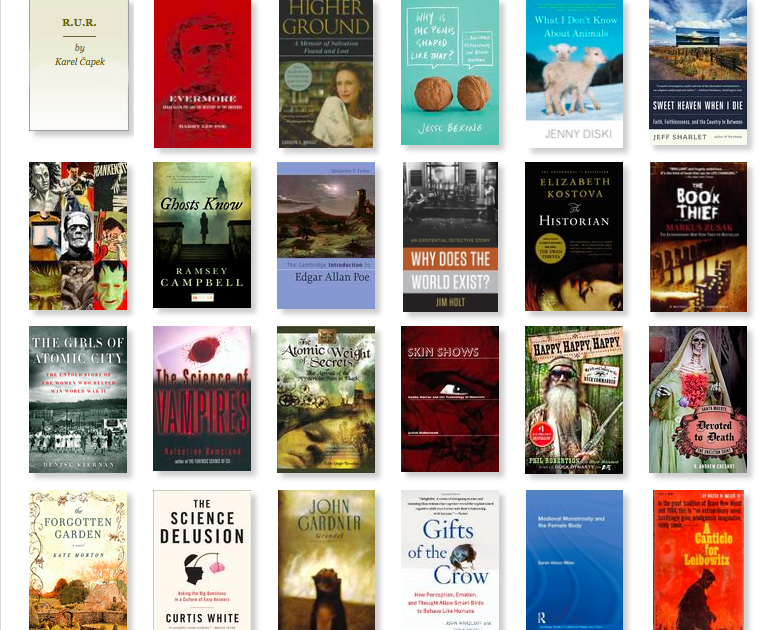
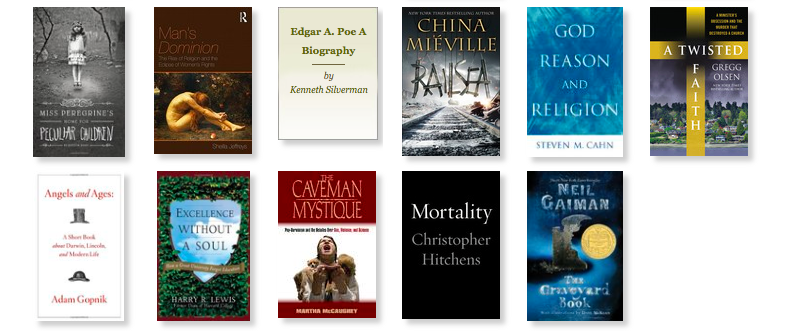
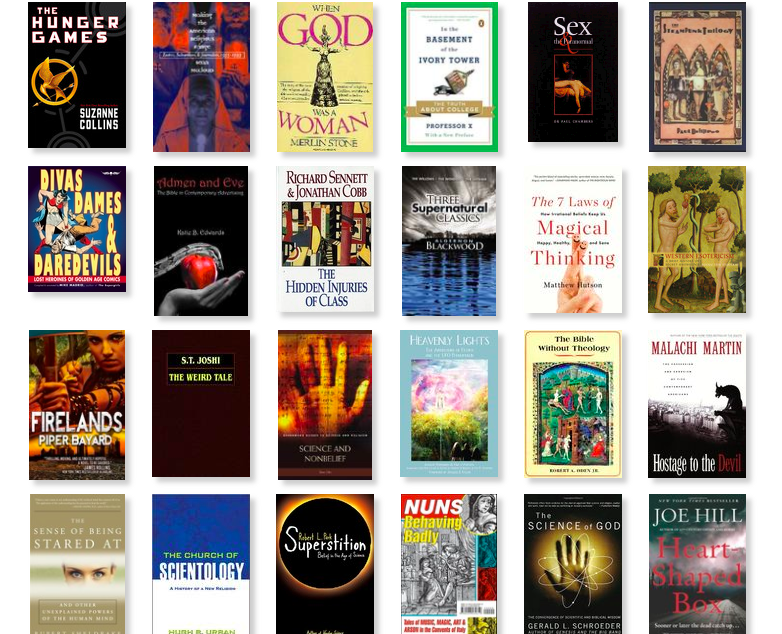
According to goodreads.com, I read 83 books in 2013. The beginning of a new year seems a good time to assess what is memorable among the reading material of the previous twelve months. I am an eclectic reader: this informed my research when I was teaching in higher education—nobody can know everything, and it doesn’t hurt to keep an eye on what fellow researchers in “unrelated” areas are doing. I always throw in a healthy dose of novels as well. Among the novels, some of the most profound were those written for younger readers (each of the books discussed here, by the way, can be found discussed in more detail by selecting the category “books” at the right on this blog). Neil Gaiman’s The Graveyard Book, Ransom Rigg’s Miss Peregrine’s Home for Peculiar Children, Suzanne Collins’ The Hunger Games, and Markus Zusak’s The Book Thief all stand out as particularly profound. They are all, as young adult books tend to be, stories about coming to terms with the adult world. The theme of death weighs heavily in all of them. In none do the children take refuge in religion.

Screen Shot 2014-01-05 at 6.02.33 AM

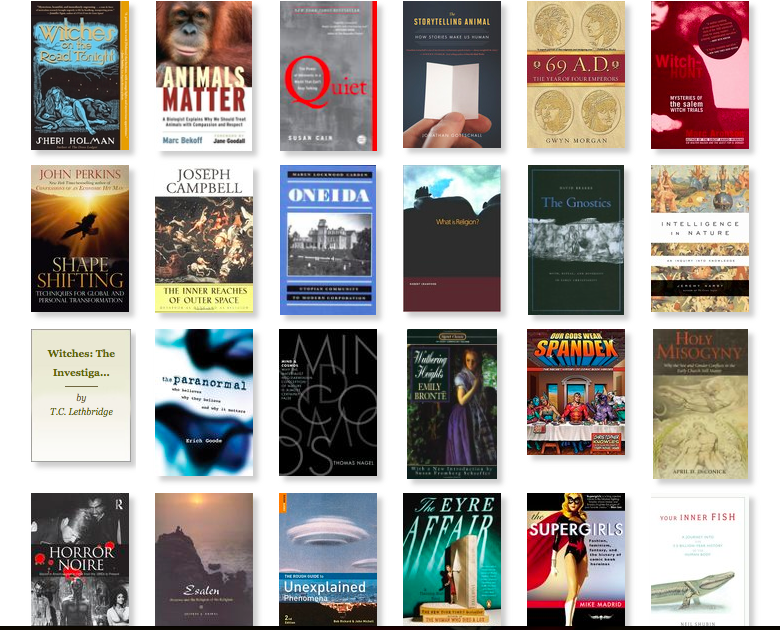
Among the non-fiction offerings, revisiting my most memorable also reveals trends, I think, in how religion might be usefully applied to an increasingly secular culture. It is no easy task to choose favorites, but I see that I read three books about comic books: Mike Madrid’s The Supergirls and Divas, Dames, and Daredevils, and Christopher Knowles’ Our Gods Wear Spandex. The work of Jeffrey Kripal started me on the quest of taking superheroes seriously as sublimated religious figures. Clearly that is the case, as has become increasingly apparent in top-grossing movies. Another set of books (Thomas Nagel’s Mind and Cosmos, John Angell and Tony Marzluff’s Gifts of the Crow, and Curtis White’s The Science Delusion) highlighted some of the deeply rooted flaws of a materialist reading of the world, whether they intended to or not. Robin Coleman’s Horror Noire, and Susan Hitchcock’s Frankenstein indicated that monsters are among the most eloquent of social critics, even when they have little to say. I would recommend any of these books without hesitation.

Screen Shot 2014-01-05 at 6.02.02 AM

Some of my reading was on specific religious traditions. Maren Cardin’s Oneida, Hugh Urban’s The Church of Scientology, Sean McCloud’s Making the American Religious Fringe, and Andrew Chestnut’s Devoted to Death each showcased either a single or several traditions that have emerged in the last century or two that have had a striking impact on America’s religious morphology. Katie Edward’s Admen and Eve is a great example of how businesses have figured out that a religiously hungry society will buy, if marketing pays attention to religion. Among the most powerful books I read were Susan Cain’s Quiet and Jonathan Gottschall’s The Storytelling Animal. Being human is, after all, the most religious of experiences. Starting with fiction, I’ll end with fiction. The novels for adults I remember most vividly are those with strong female protagonists: Sheri Holman’s Witches on the Road Tonight, Piper Bayard’s Firelands, and Elizabeth Kostova’s The Historian.

Screen Shot 2014-01-05 at 6.01.24 AM

This blog offers me a chance to give brief sketches of books that have much more to say than a few words might summarize. The fact that religious ideas and themes might be found in such a range of books underlines once again that we live in a religious milieu, whether we want to admit it or not. Read on!


Lead Serve

For never having been a Catholic, my life has been strangely tied to the Roman Catholic Church. Like many in my diminishing profession, I was raised in a religious household—in my case non-denominational Protestantism with a strong Fundamentalist streak—and have wandered a bit from my starting point. When my family moved to a small town with just two churches—United Methodist and Roman Catholic—we had no choice which to join. I learned the Methodists were just disgruntled Anglicans, and logic dictated that I would eventually join the Episcopal Church and gain a deep appreciation of Catholicism. My first professional job was teaching at an “Anglo-Catholic” Episcopal Seminary. While there I was interviewed for positions at Roman Catholic schools, and not infrequently brought to campus: the University of St. Thomas in the Twin Cities, Assumption College in Worcester, Massachusetts, Sacred Heart School of Theology just down the road in Hales Corners, Wisconsin. Most of the time I was in the list of finalists when the position would go to a Roman Catholic, “no hard feelings, right?” Long ago the Episcopal Church, ironically, got out of the higher education market.

It is with this background that I keep an eye on the Roman Catholic Church. Many friends and colleagues are Catholic and we have far more in common than I have with my Fundamentalist forebears. I frequently find myself in wonder at Pope Francis. Many church leaders have made the news over the past several decades, but few of them for such good. In an article on NBC over the weekend, the Pope called for seminary reform, noting that always toeing the line will turn priests into “little monsters.” I taught at Nashotah House for fourteen years, and I know exactly what he means. I encountered students who could quote Paul about being freed from the law and in the next breath lay down ecclesiastical law with enough force to behead a heathen. The Episcopal Church, which is small but disproportionately powerful, should take the words of the pontiff to heart.

A cold day in...

A cold day in…

Pope Francis noted that seminaries need to keep up with the times. Indeed, the laity of most religious traditions have little trouble accommodating to culture while their faith remains mired in the Middle Ages. In a world robbed of essences and meanings, it is difficult to teach future clergy that the spirit of a faith can be honored in outwardly different ways. The idea that we can just hold on ’til Jesus gets back should’ve been questioned once Islam came to be a major force a few centuries after Christianity settled in. Since that time Christianity has fractured into thousands of sects united by little more than essences. Instead of settling in for the long haul as an empire, the Pope is suggesting that the church settle in as servants. That’s a radical idea. And it is one, if I read my Bible aright, that its founder would be pleased to find in force should he ever decide to return.


Silver and Gold

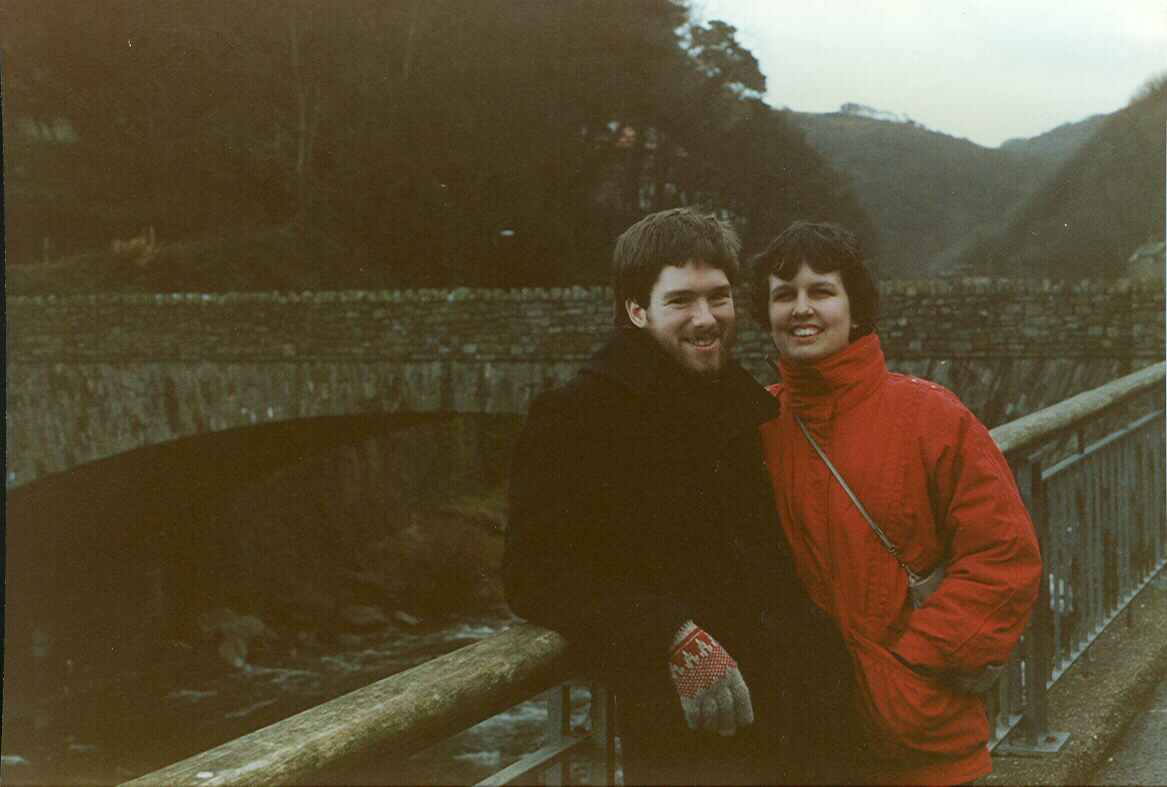
“He has also set eternity in the human heart,” old Ecclesiastes lamented at the end of the most famous passage in his book, noting that it is nevertheless impossible to conceive. We mark the passing of time in centuries. I suppose we like a good round number, but it is also a convenient frame since few of us make it much beyond the century post, so we can keep it in our eye as a reminder of how long we might have left. Life has held more fear for me than death, so I approached and passed my fiftieth birthday without much anxiety. When it comes to others, however, the caviler perspective soon fades. Centuries are important. And so are halves. And so are quarters. At twenty-five the world stretches endlessly before you. But to what have we really committed to twenty-five years? How much have we changed in that time? Today is my twenty-fifth wedding anniversary. The “silver” anniversary they call it. Although I’m not much of a Hallmark kind of guy, the fact that one woman has put up with me for a quarter century continues to amaze me, and we had made plans for a grand celebration. Then Routledge slashed my job. Fortunately, Oxford University Press came to the rescue.

Ah, but with provisional requisites. You see, I had saved a week’s worth of vacation so that I might spend my anniversary at home (or on a little trip) with my wife. Publishers do not get the week between Christmas and New Years’ off. While our academic counterparts are sleeping late and spending time with their families, we’re rising early, commuting into the City, and sending emails that won’t been seen for a few weeks at least. Business rules. Routledge took away my accumulated vacation days, carefully squirreled away during the long year, and since I’m a new hire at Oxford, I haven’t earned any vacation yet. Twenty-five years, and I can’t even give my wife a day. Silver in a world defined by gold. It’s not easy being married to me.

I began work at age 14. With a single exception I have never quit a job. I am a very hard worker and I have never had a performance review that did not say as much. Since Nashotah House set about ending my academic career, I have suffered through three dismissals, all following very positive reviews. You may be forty, forty-five, or fifty, but you are starting over again. Bottom of the pay scale, bottom of vacation days earned. Child in college and eternity in your heart, you have to watch those pennies and be to the office on time. Nobody’s stopping you from going to a nice restaurant (as long as it’s not too expensive), but the bus will drop you off about 7 p.m. and you’d better be asleep two hours after that so that you’re not groggy at work the next day. My old friend, Ecclesiastes, you are wiser than your years. And Kay, thanks for an amazing quarter century. I know of nobody else who would’ve put up with it.

A young couple's anniversary in Wales.

A young couple’s anniversary in Wales.


God Spell

I had some good news from God recently, if the Jehovah’s Witnesses are to be believed, anyway. It had been a trying week in some ways, and who wouldn’t welcome good news? Back when I was unemployed, I used to natter with the Witnesses when they came around. Like a stray that you feed one time, however, you’d better be expecting them back from time to time. I was reminded of a phone conversation I overheard (in New York City generally everything is overheard by at least someone) where a woman was saying, “I keep praying Jehovah will straighten her out.” I didn’t know who the “her” was, but I did wonder why the Witnesses keep using a name that we know is technically incorrect. “Jehovah” is actually what you get when you read the Masoretic device of using the vowels from “adonai” with the consonants for “Yahweh,” in a Germanic language. Since Jews don’t pronounce God’s name, they used this little symbol to remind the reader to use the sobriquet “lord” (adonai) instead. Some literalists lined the letters up and came up with a Teutonic-Hebraic name that was never historically used for God.

Watchtower

Well, the good news volume of the Watchtower addressed that. Sort of. Chapter 2, “Who is God?” notes “In English it [God’s name] is usually pronounced ‘Jehovah.’ But some people pronounce it ‘Yahweh.’” Historically and critically it is the other way around, but who’s counting? Orthodoxy doesn’t always make somebody a good person. In fact, most of the Witnesses I’ve met have treated me better than the majority of people in my own faith tradition. Familiarity, they say, breeds contempt. Religion often has a way of bringing out the worst in people. Since this was the good news, I decided to accentuate the positive. I turned to chapter 8 to learn “Why Does God Allow Evil and Suffering?” Theodicy is probably the largest generator of atheism that monotheism faces.

“Evil began on earth when Satan told the first lie.” Although, I wonder how you define a lie? According to Genesis 3.17, the conclusion to God’s first word to Adam was, “But of the tree of the knowledge of good and evil, thou shalt not eat of it: for in the day that thou eatest thereof thou shalt surely die.” The last part of the sentence, “surely die,” is an emphatic in Hebrew, the original language of Jehovah. But it doesn’t literally happen. Most literalists allow this infelicity to stand, or explain it away as a “spiritual death,” while the Hebrew is quite plain in its meaning. Thou shalt surely die is non-negotiable. Not exactly true, however. I’m no theologian. I’m just a reader attempting to make sense of the world I see around me. Good news is there certainly, every now and again. But that theodicy question trips me up every time. Until we can face the implications of not surely dying, I’m not sure we’ll ever find out.


Duck, Dynasty

The Fundamentalist mouth has no filter. I’m a bit surprised by the furor raised by Phil Robertson’s comments about race and sexuality. Did A&E not realize that it was dealing with a Fundamentalist family on Duck Dynasty? I’m frequently amazed at how Fundamentalism is exoticised by the media as some quaint, back-woodsy phenomenon. Do they not realize that similar views are held by several members of congress and the pre-Obama presidential incumbent? By the numbers, Fundamentalism is a powerful force, but, like our universities, the media can’t be bothered to try to understand religion until a large demographic is suddenly threatened. A&E supports equality across sexual orientations, and, as it should go without saying in the twenty-first century, races. Prejudices, however, run very deep. Perhaps it’s just not so surprising to me, having been raised in a Fundamentalist environment. There was nothing exotic about it. It was, as we understood it, simple survival.

Phil Robertson has been suspended from his own show for comments made off-air. Wealth does not necessarily make one a better person. In fact, the figures trend in the other direction all too often. If instead of just promoting books written by the stars of the anatine series, the studio executives read those books they might have foreseen something like this coming. The Fundamentalist mind, I know from experience, tends to see things as black or white. Despite the camo, gray is a loathed color. Rainbow is even worse. The Fundamentalist psyche is not encouraged to try to see things from the other’s point of view. There is only one perspective: the right one. And when asked a straightforward question, a straightforward, if misguided answer will be given. It’s the price of fame.

The Robertson family, according to CNN, has closed ranks with their founder, claiming he is a godly man. There’s no irony here, folks. Fundamentalism isn’t into irony or subtle possibilities. Religious rights and freedoms are being press-ganged to the aid of those who long to speak free. Not about ducks, or guns, or calls. But about the naturalness of white skin and heterosexual love. And the Bible as the only possible source of the truth. The media often treats Fundamentalism as if it were a game, turned on or off at a whim. In reality it is a comprehensive worldview in which the inmates are commanded to speak the truth. The filters are not on their mouths, but are in their minds. Until we can learn to take them seriously, no duck anywhere will be safe.

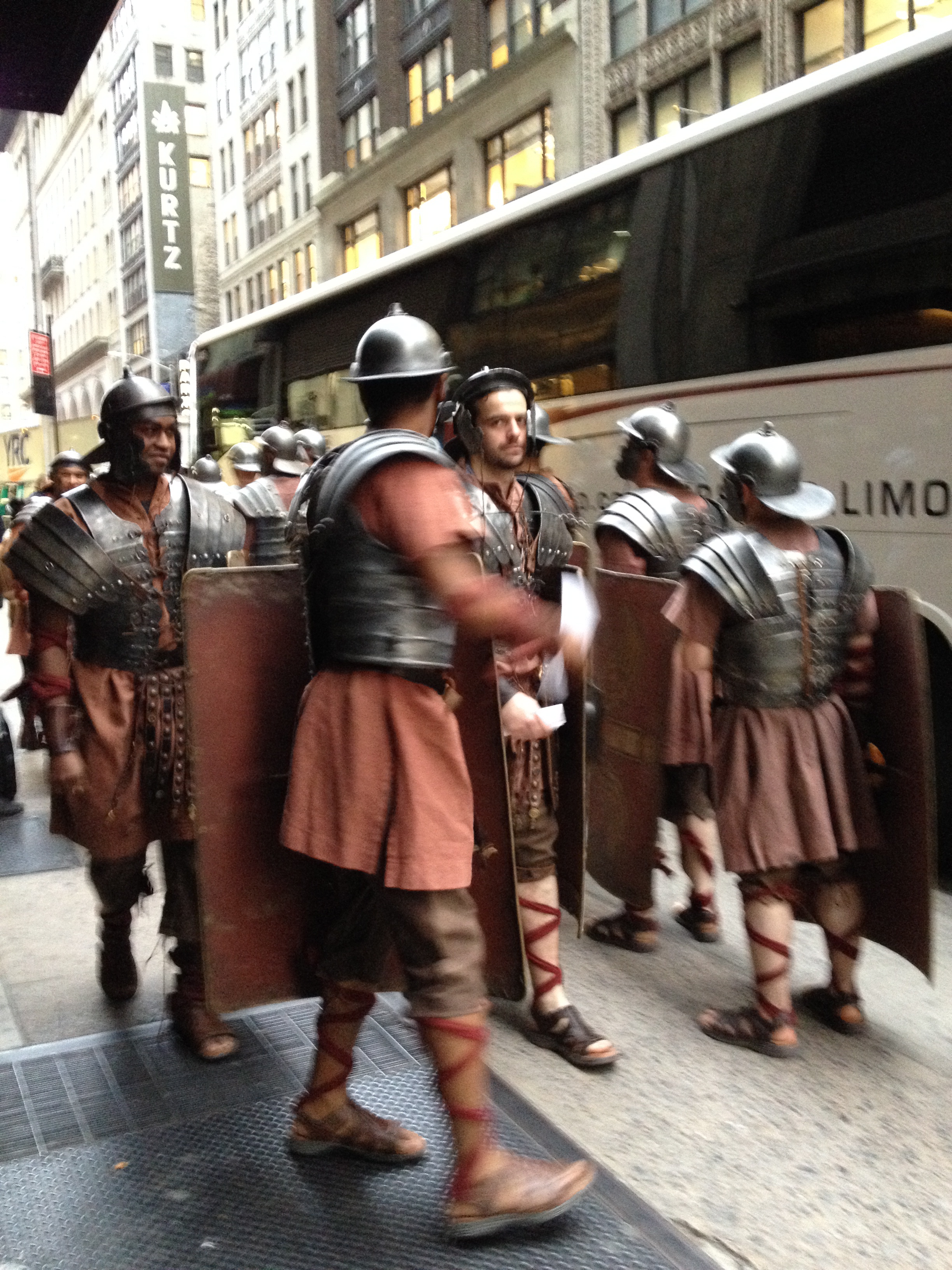
Even the Roman Empire didn't last forever...

Even the Roman Empire didn’t last forever…


Fears of a Clown

A few weeks back, over on EsoterX, I was reading about circus oddities. Perceptive as always, EsoterX notes that the carnival or circus used to be disturbing. Before being commercialized and sanitized, otherwise civilized folk crept out of town to gaze at the bizarre and troubling aspects so effectively hidden from 9 to 5. Among the most disconcerting of the carnies was the clown. Horror writers and film makers have long focused on the ambiguity of the clown—faces are our clues to the intentions of another person. A face painted is opaque and we feel as vulnerable as in the presence of the false evangelical smile that hides a spiritual deadness in hardened eyes. You are about to be victimized. It is no wonder that small children—and not a few adults—are freaked out by clowns. At times they make us laugh, but mostly they make us tremble.

ClownThose who know or read me may have a difficult time believing that I once was a clown. Not a professional one, of course—it is even more difficult to believe I’ve ever been a profession anything—but part of a campus clown ministry. Beyond simple titillation, I state this fact because, like most things in my life, I researched clowning before I became a part of it. Those books are, of course, packed away with other forgotten bits of personal marginalia but I remember bits and pieces. The origins of the clown are religious. In fact, in the most ancient of societies clowns were most often played by priests. Their early bungling, which may go back to the third millennium BCE, was perhaps a way to indicate that even the somber role of the cleric could be taken too seriously. Like modern concepts such as Mardi Gras or Carnival, that which is sacred builds such pressure that normal people become a little unhinged. We erupt into frivolity while the divine turns a blind eye. Or secretly smiles.

Clowns for Christ was a Grove City College organization that I revived in my Junior year, serving as president and acquiring a campus charter. Based on 1 Corinthians 4.10, we declared ourselves “fools for Christ,” reprising, unknowingly, an ancient pagan custom. We visited nursing homes and mental hospitals and other campus events, bringing the good news in the form of silent skits. The clown traditionally does not talk. Even today when I hear a clown in makeup speak I give him or her a glare—clowning is physical, not audible. As I left college I left behind my childish ways (at least some of them). And the years since have taught me to be afraid of clowns, as any reasonable person should be.


Eating Your Prophets

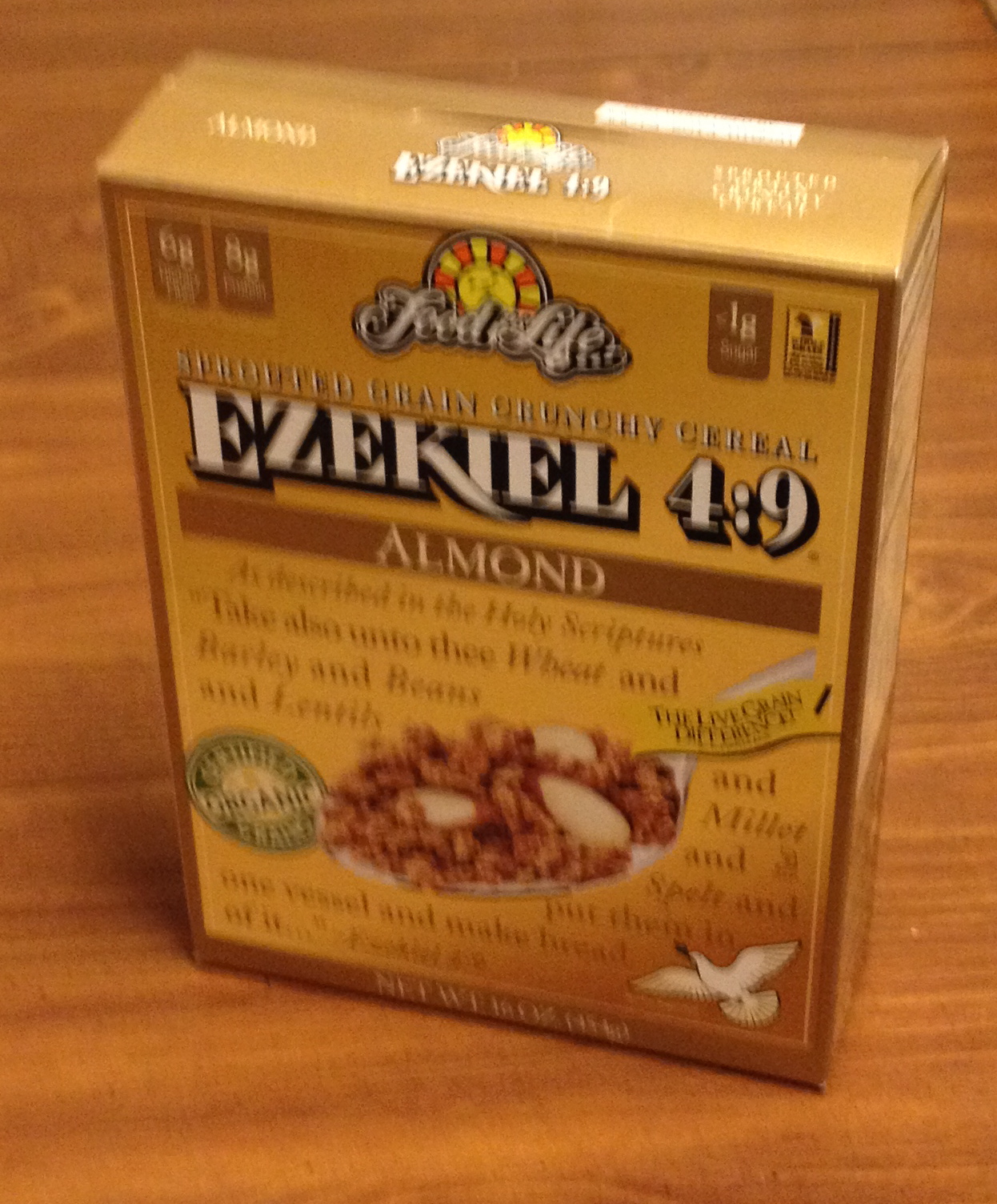
Ezekiel was an odd character, even for a prophet. He’s become a kind of patron saint to ancient astronaut theorists, and his name in fiction often denotes someone slightly off balance. In his defense, he believed that God was demanding his many strange actions. A priest in a period of exile from the “one true temple,” Ezekiel lived an existence as a captive in a foreign land and came to some radical conclusions about the nature of Israel’s god. His visions and actions were considered the original weird, even by his contemporaries. Since Ezekiel believed Babylon would conquer Jerusalem, the people there would have to go on starvation rations. In chapter 4 of his book, Yahweh tells the prophet to try to make a bread out of wheat, barley, beans, lentils, millet, and spelt. This odd mixture is to be eaten in very meager portions to symbolize the coming privation for 390 days (during which time he is to lie on his left side). His bread is to be cooked on dung.

IMG_1156

I eat breakfast around 4 a.m. My bus to the City comes before 6:00 and there are no restrooms on NJ Transit buses. Many New Yorkers eat breakfast in the office, but I’m just too Episcopalian in sensitivity for that to really be an option. I don’t like really sweet cereals, but granolas are often quite sugary unless you want to pay top dollar (and most of my dollars are bottom dollars) for some organic, European blend. Then I spied Ezekiel 4:9. Knowing full well the context of the reference should’ve given me pause, but it was two dollars less a box than some of its competition—downright exilic prices—and my curiosity was roused. What would Ezekiel eat?, I asked myself.

Most people don’t realize that so many of us eat breakfast cereals due to the efforts of our Seventh-Day Adventist friends. Adventists, in addition to being literalistically inclined, advocate healthy living. Will Keith Kellogg, a faithful Adventist, believed that eating cereal for breakfast was healthy and widely promoted the idea through the company he founded to produce cereals. Kelloggs does not produce Ezekiel 4:9. Food for Life, an organic bakery, are the purveyors of this organic breakfast. Their religious convictions, if any, aren’t evident from their website. Just about the time I’m climbing aboard the bus, I know that even as Ezekiel saw the wheel, I’m in for a moving experience. Isaiah-os or Jeremiah Flakes may be difficult to imagine, but with Ezekiel nothing really surprises. Today’s Bible lesson may be as close as the larder shelf. I just skip the cooking on dung part.


Blown Away

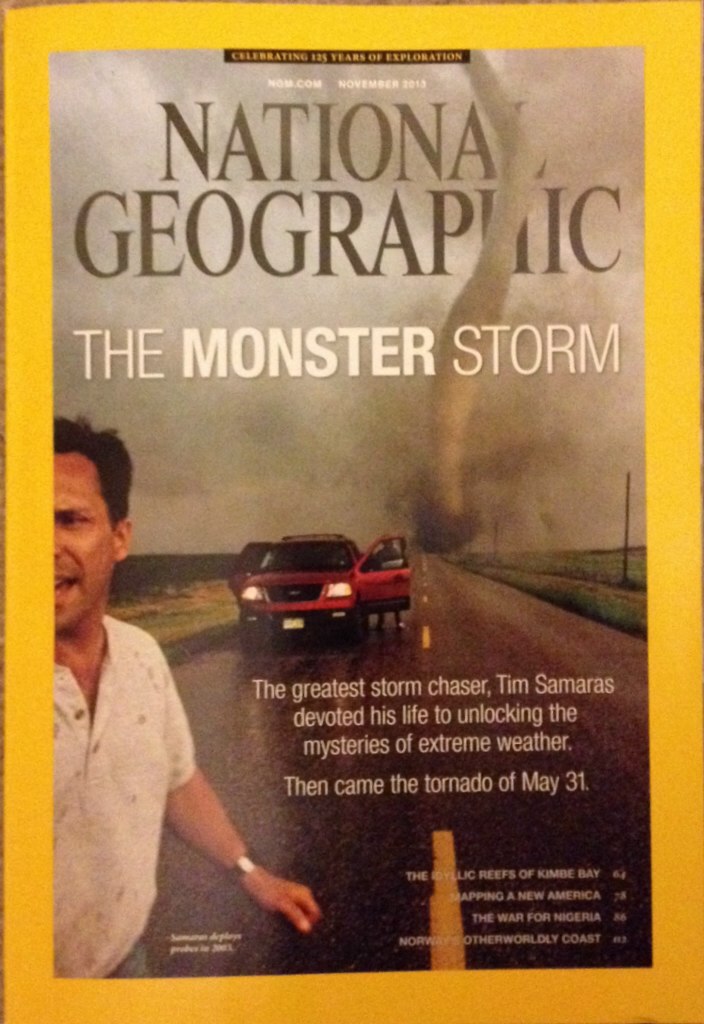
NovNationalGeoWith the weather that has dropped down over much of the US this past week, I can’t help but think of the religious implications of the weather once again. I’ve had a couple of discussions of my weather book, and perhaps it will be worth reviving; meanwhile the meteorological divine is alive and well. I recently had the chance to look through a November edition of National Geographic. We used to subscribe, but with the loss of too many jobs and the attendant moves, they became literally too heavy, and since the magazine is relentlessly prolific we finally had to donate our back issues to a loving home. In any case, this November’s issue proffers a cover story on Tim Samaras, the storm chaser who was killed by a tornado back in May. It was tornados that first led to my interest in the divine implications of the weather since the twister is often described as the symbol of an angry deity. The article on Samaras, however, took a different approach to the tornadic.

Describing the fatal May 31 tornado in El Reno, Oklahoma, Robert Draper, the article’s author, tends more toward language of the diabolical. Defining the terminal whirlwind as a “dense, moist leviathan,” Draper adopts the language of the chaos monster of antiquity. Over time leviathan came to be associated with evil (although originally it was morally neutral), even with the devil. That isn’t a biblical assessment but in a modern world swiftly becoming depleted of superlatives, leviathan has come to stand in for Satan. A few sentences later the trees are shaking “as if possessed by the devil.” Weather is often the provenance of the divine, but it can also be the tool of the devil. And since this was a fatal storm, one must be careful of blasphemy.

I have never witnessed a tornado first-hand, but I have been within a few miles of one or two. The utterly savage and random nature of the destruction translate to one of the most frightening atmospheric conditions imaginable. Reading about the growing storm, knowing that it will eventually murder the protagonist, reminds me of the stresses that led to my line of research at the very beginning. We have overcome so many of our natural predators that being completely vulnerable to the weather bestows a kind of metaphysical cast to it. We can still be frozen, washed or blown away, or overheated by the weather. It can desiccate us and begin wildfires to consume us. Its scale is immense. The origins may seem celestial, but the results infernal. Perhaps I will return to my book on the weather; it is clear that it remains one place where human power must bow before something so immense that it can only be divine or diabolical. Or both.


Some Baltimore Lessons

As someone who hovers around the edges, perhaps I’m preoccupied with perceptions. I have been attending the American Academy of Religion and Society of Biblical Literature annual meeting regularly since 1991, with a few years off for bad behavior. Usually it is held in a colorful US city that can afford to have a myriad of religion scholars show up all at the same time. I have noticed, over the years, what a conspicuous lot we are. As I drove into Baltimore, for example, I could tell who the locals were right away. They fit their environment. When I reached the medical area near one of the large hospitals, the people were wearing scrubs and white coats. I could navigate to the convention center by following the bearded, tweeded, and professionally dressed feminine to where the specialists in arcane subjects gather. We rather stand out. The funny thing is, once you get us together, we don’t always have a lot in common.

I used to teach, and as a teacher you run into this strange contradiction of roles where you are expected to keep your expertise up-to-date, to entertain students in the classroom, and to write books and articles in your spare time. I excelled at this and found my niche for a while. The beard I already had, but the look had to be acquired. Tweeds were not difficult to locate in Scotland, and so I returned to the States with the image already down. At Nashotah House, I recall many students complaining about the rules that forbade wearing a “seminarian collar.” Yes, even priests have a guild. A seminarian collar looks like a Roman collar, only it has a dark vertical stripe in the middle to warn the penitant that this is not a full-fledged priest and confessing your darkest deeds might not be a good idea. Don’t buy any wafer’s s/he’s selling. Their complaint was that to learn the role you have to dress the part. The administration at the time had rules against it. Confusing someone for a priest can have serious consequences. (Never mind that on a campus with at most 50 students everyone knew everyone else by name and habit.)

So I sit in my car at the stoplight and watch the academic parade. In this crowd there are people with god-like status in the academy, but whose names would mean nothing in even a highly educated household. The metaphorical Red Sea of scholars in the bookstalls parts at their approach. On the street corner they look lost. To the locals it is obvious that a horde had descended upon the town. Many forget to remove their name tags, announcing to the secular world that there be giants here. But they are shivering giants, as if they might’ve forgotten to pack a coat and the wind sure is chilly for this time of year. I suppose I must look like one of them myself. After all, I’m trying to turn the wrong way on a one-way street again.

Am I that obvious?

Am I that obvious?


Away as a Stranger

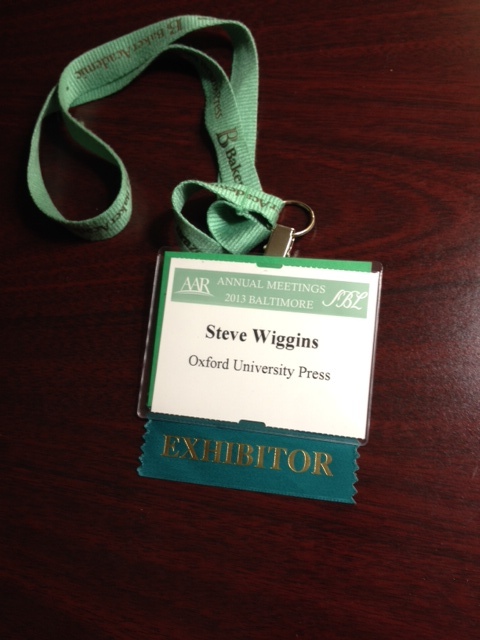
I’ll admit it. One of the things many scholars secretly enjoy about the American Academy of Religion and Society of Biblical Literature annual meeting is discount rates at fancy hotels. Unless things have changed drastically since my teaching days, professors don’t make enough to spend nights at four-star hotels as a matter of course. This year, however, Routledge pulled the rug out from under me less than a month before the conference. I had to cancel my reservation and forget the dreams of a leisurely train ride to Baltimore, a nice walk to a luxury hotel, and four days of schmoozing with the intellectuals (or at least those who are considered smart enough to write books). Then, Oxford University Press. I started work on Monday, and by Friday I was attending AAR/SBL. But with a twist. All the hotels were full—not a room in Bethlehem, I mean, Baltimore. So I had to find a run-down hotel several miles away and drive four hours to get there frazzled and decidedly unacademic. Still, map is not territory.

worldmap

Getting back to the hotel from the Convention Center, I had technology issues. You see, I didn’t have time to plan the trip out this year. I had no maps, figuring my smartphone was more intelligent than I (I don’t set a very high bar). Alas, for the GPS on my phone knows Baltimore less well than me, apparently. When the scenery turned industrial and I could see the ocean although my hotel is miles west of the city, I knew I was loss. My GPS, groping for dignity, kept instructing me to make u-turns on the interstate. Finally, I pulled off an exit and tried to use dead reckoning. Baltimore, like most cities, has problem areas. My GPS took me on a tour of them, as darkness was falling. Boarded up row houses leered at me as I took each turn the phone dictated. I noticed with alarm that the low battery indicator had come on and I was nowhere near anything that looked like a conference center, highway, hotel, or even Salvation Army. I had trusted technology, and it had let me down. Finally, with 8 percent battery power remaining, I spied my seedy hotel in the distance. I was never so relieved.

I have attended this conference since 1991 (I’ll leave the reader to do the math), and only one year did I not stay at a conference hotel. I think I remember why. People are discarded here. Entire cities left to crumble. Without a map, I witnessed territory that I’d rather not have seen. My academic friends, I know, were tipping back a glass, knowing that they had only to find the elevators to be home. Map is territory. And the terrain is untamed. We have created our urban jungles, and it will take more than a GPS to get our way through them. Tomorrow I will try again, if my trembling fingers can find the ignition, so that I can drive to where the more fortunate dwell. Some dreams are best left undreamt.


Meaningless Words

IMG_1086

I’m glad to be back in New York City. It’s a funny place. A walk down the street can be an education. When I saw this shirt the other day, I had a thought—what happens when words lose their meaning? I’ve been fascinated by the concept of “bad words” since I was a kid. Although I never uttered them, I wondered why they were considered bad. That thought gets stretched out a big longer in this instance, to wondering whether overuse destroys the power of the swear. Although most religions claim taboo words are made that way by god(s), some psychologists have suggested that the function of swearing lies precisely in its ability to shock. If so, what happens when the shock wears off? We may need to come up with new words for copulation to take the place of the f-bomb. And it’s not just naughty words that are at risk.

I saw a report a while back that made reference to “Libertarian fundamentalist Jimmy Wales.” Wales is at least the co-, if not sole, founder of Wikipedia. The libertarian label didn’t surprise me, but the fundamentalist part did. Wales is no conservative religious believer. Of all people fundamentalists are the least likely to support a wiki concept where the final version is never nailed down. It would be like reading a Bible where the words keep floating around the pages, shifting combinations, changing meanings. Of course, the concept of words even having meanings is a matter of debate. A colleague of mine used to remind me, “words don’t have meanings, they have usages.” He was technically correct. Even the f-bomb, when uttered in other languages, as sophomorically portrayed in many a movie, has an entirely different usage.

Dictionaries are filled with archaic words. I don’t recall the last time I saw eftsoons in print, or iwis, or maugre. Have they lost their meanings, or just their usages? In any case they live on in written language history. Overuse of a word leads to calls for restraint among literary types, as when the word “awesome” got out of control a few years back. The case for the f-word is somewhat different. When I walk through the streets of the city it is obvious that it is one word that is in no danger of dying out. The gerund, or more properly, adjectival form ending in -ing, is freely interspersed in blasé sentences with complete abandon. For some people it appears to fill the mental pause generally reserved for “uh” or “um.” When it ceases to shock us, it will become just another Howard Stern of the lexical world. And some tee-shirts, I expect, will be available quite cheaply then.


Oxford’s Hire

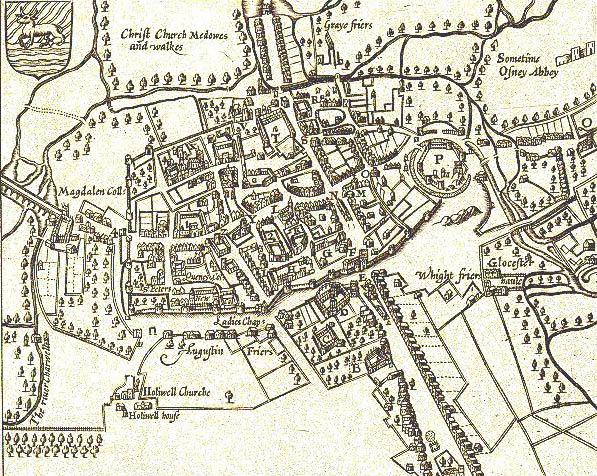
In 1478 the first book printed in Oxford heralded the eventual founding of Oxford University Press. Just two years earlier Vlad III, the Impaler, had been assassinated. In 1478 the Tribunal of the Holy Office of the Inquisition was established in Spain. Just over a century earlier, the Black Death decimated the population of Europe. Things looked a bit dark at that time. Nicolaus Copernicus, however, was five years old in 1478 and the Enlightenment was just around the corner. The printing press had been, well, hot off the press for just a couple of decades at the time. The University of Oxford had been around for nearly four centuries already, making it one of the oldest and most prestigious centers of learning in the world. Oxford University Press early on began the business of printing Bibles and shedding light on a world where things were somewhat dim. Progress often brings misery with it, but the idea that a literate public stood a better chance of improvement bore an optimism that has occasionally been realized, even in free market times. I’m very glad for Oxford University Press.

These are among my thoughts as I prepare for my first day as Associate Editor for Bibles and Biblical Studies at Oxford University Press. It is a heady sensation. Bibles were among OUP’s first printing projects. As part of an increasingly secular society in an increasingly religious world, I’m aware of the power the Bible has had and still has. Love it or hate it, it has shaped this thing we call modern culture in ways both profound and facile. The opportunity to work in this division is sobering. A little unnerving, even.

John_Speed's_map_of_Oxford,_1605.

Ironically, my career has largely been Anglo-oriented. Perhaps it is because those based in England appreciate the solidity of a degree from Edinburgh University, although this is only speculation. Nashotah House was a profoundly anglophile institution, at least once upon a time it was. The founder of Gorgias Press had studied in both Oxford and Cambridge. Routledge is a British-based publishing house. Ironically, British culture is not as prone to Bible-reading as that of the United States. My jobs, which have largely focused on the Bible, have been British-oriented. I try to add it all up but get lost in the midst of the numbers. Call it first day jitters. Twenty-five years ago at this time I was preparing to get married and to move to Scotland. Little did I suspect that a quarter-century later I would be coming back to an ancient university of the United Kingdom again.


I See Only Nothing

Once considered to be bad omens, comets are becoming a fad for those who can take their eyes off the screen for a few moments to look at the sky. Comet ISON (C/2012 S1), apart from falling trippingly from the tongue, is apparently now visible with the naked eye. I’ve been looking forward to this comet since at least January, although living just to the west of New York City complicates viewing possibilities quite a bit. You see, although I am now an urbanite, I’m really a rural rube at heart. I grew up in a town of less than 1000, and was born in a town of less than 15000. I attended college in a small town and my first teaching job was in a rural setting in Wisconsin. Apart from the fact that I’m now convinced people have very little control over their own destinies, I have preferred to live in places where I can see the night-time sky. Perhaps it was my love of science fiction as a child, but for whatever reason, space has always captured my imagination. I used to drag my brother out on frigid nights to look at the stars, and even tried to teach myself the azimuth coordinate system to document precisely where I’d seen something. I took astronomy classes in high school and in college. In middle school I did an intensive report on comets that saved my science grade that year.

Hyakutake, 1996.  My first comet.

Hyakutake, 1996. My first comet.

Comet ISON, however, has been refusing to behave as it was projected that it might. Although it could still turn into a very bright sky-show, so far it has been difficult to spot, and, at least for my location, at inconvenient hours of the day. Much to the chagrin of creationists, ISON is 4.6 billion years old, although it is just getting out for it’s first tour of the solar system. Part of the Oort cloud region, Comet ISON is probably a piece of a never-formed planet out past Neptune that decided to take its first cosmic stroll about a million years ago. It’s had a date with the sun since that time. The scientific jury’s still out as to whether ISON will go out with a blaze of glory after its close encounter with our sun and if it will come back around again to wow generations of our distant progeny (presuming we survive that long). For me it will be a matter of seeing if the clouds ever break in the east at 4 a.m. so that I can actually get a glimpse of the sky.

Hale-Bopp, 1997; a little over-exposed--one of the hazards of amateur photography with film.

Hale-Bopp, 1997; a little over-exposed–one of the hazards of amateur photography with film.

Comets were once thought to be heralds of the gods. Like other variable objects in an otherwise pretty predictable night-time sky, they can be either very bright or very dim (even invisible, for all practical purposes). When Halley’s Comet came around in 1986 I was living in Boston and couldn’t see the heavenly visitor. In 1996 Hyakutake buzzed earth, I stood in wonder in the woods of Wisconsin, photographing my first comet. A year later when Hale-Bopp blazed through the sky, I was out with my camera trying to capture it on film (a medium, I understand, that is about as old as Comet ISON). Were these visitors bad omens? One comet may have been decidedly devastating for our dinosaur friends, while some speculate that life on earth was seeded by a comet (making it a kind of secular god, I suppose). I’m only convinced that we have no control over our fate as I stand outside at 4 a.m. yet again, only to find clouds in the east and a comet in my heart.


The Problem with Apocalypses

Over on The Daily Beast, Joe McLean points out “How the Tea Party’s Apocalyptic Politics Are Destroying the Republican Party.” I say good riddance. Let me explain. It’s not that I have a problem with apocalypses. (Zombie apocalypses are especially fun.) My problem is that the mythology of one religion endangers us all. This is not some leftist-leaning rant, or at least not a leftist-leaning rant that’s uninformed. I grew up in a very conservative, apocalyptic Christianity. I was looking for the end of the world before I considered a college major. Even my (limited) choice of classes in high school were determined by a kind of eschatological laissez faire: the world’s going to end any day now, so why plan for a career? I was a true believer. In my Christian college I majored in religion. If the end is near, it pays to be ready for it. I know this doctrine inside-out. If Christ is returning any day now (can’t you hear the hoof-beats?) then we should pillage this poor old earth for all its worth. That’s what it’s here for. Do we want him coming back and saying we’re poor stewards? Besides, if we can ramp up the crisis in the Middle East far enough, Jesus will have to return. Won’t he? And these are “rational” adults thinking this way.

There was likely a naive cynicism on the part of the Republican Party when it realized that aligning itself with what was considered the religious fringe would boost their numbers. After all, the fringe surrounds the whole of the cloth. Apocalyptic Christianity is very popular because it appeals directly to the emotions. Although our society believes the study of religion is pointless, those of us who’ve persisted have noticed a few things. The religions that are really taking off are the ones that appeal to the emotions. Many Spock-like scientists intone their message of materialism only in the face of massive crowds of true believers. Who do you think is likely to win out? We have had presidents in the Oval Office who believed that triggering the apocalypse was a presidential prerogative. When society finally shook off its goofy grin and slowly pressed the electoral brakes, the Tea Party took off. Guess what? Apocalypses are all about destruction. If you invite apocalypticists to your party, the results are pretty predictable.

In the article McLean uses the word “zealot.” Rationalists might find the use of their dictionaries helpful here. Zealots do not respond to logic. Zealots are driven by emotion. Have you ever tried to argue with one? I have had years of experience teaching religion in a variety of classroom settings. Long ago I learned to lay down the sword when a zealot spoke up. Logic is not spoken here. The media, the scientific, the academic, they scratch their heads. How can any rational person believe this? The answer doesn’t require much effort to find. It might mean consulting someone who understands a bit about religion, though. Otherwise, the smart money is on stocking up on canned goods, gas masks, and a good supply of water. This could take a while.

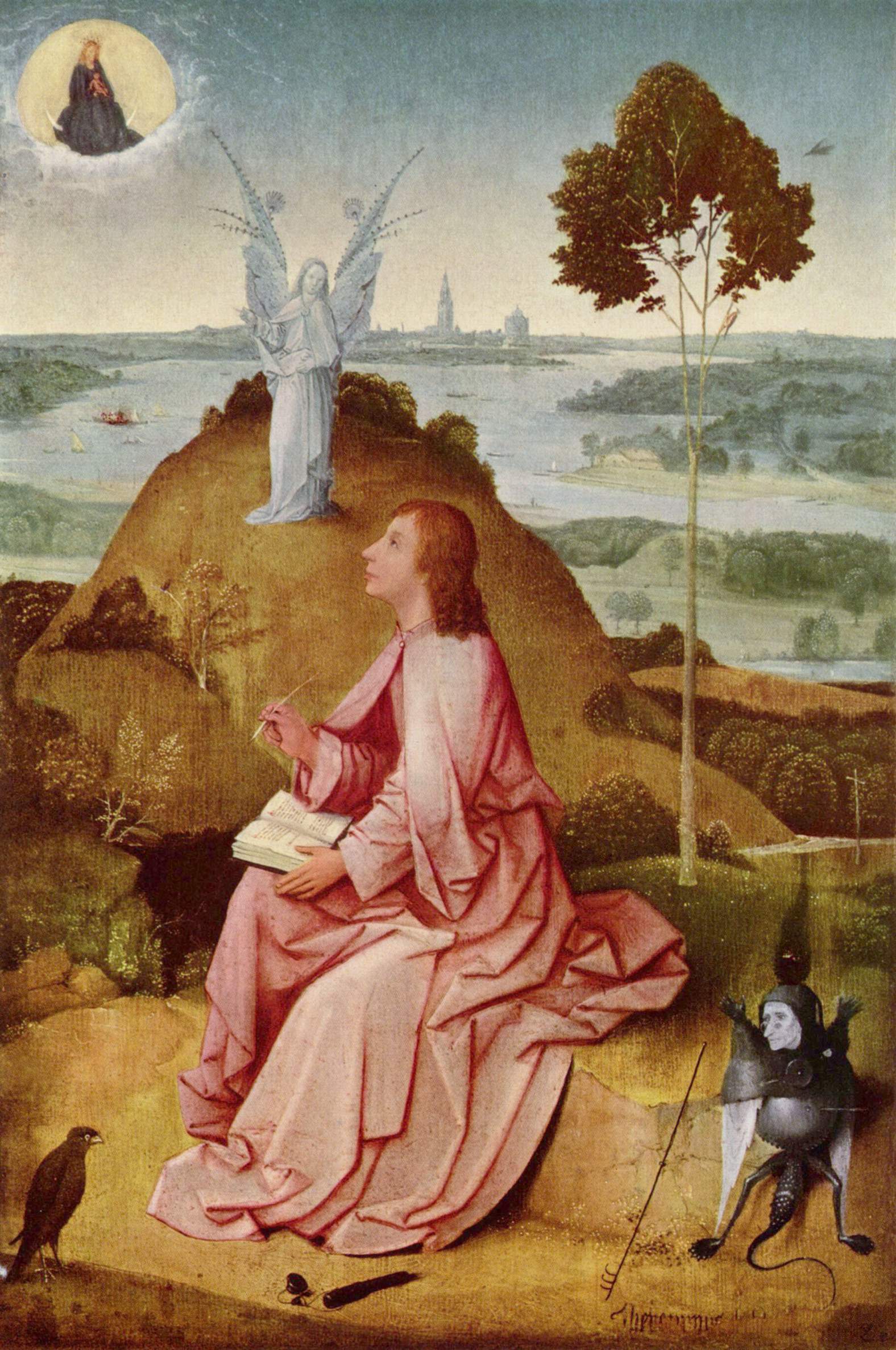
Mary in the sky with circles, or the apocalypse?

Mary in the sky with circles, or the apocalypse?