Treasure Hunting

It is raining in Midtown. On my lunch hour I’m in a deserted public square down on my knees with an umbrella over my head. My free hand is reaching under a piece of outdoor furniture feeling for something. At least this one is not located in the private regions of a metallic stag. What in the world am I doing here?

One of my sometime passions is Geocaching. Many years ago we started this as a family activity but with schedules changing and families being forced apart by work and school, I’ve taken to caching alone. For those not familiar with Geocaching, you many not be aware that in millions of places around the world tiny containers are hidden from view. There is likely one not too far from you. They are listed on different websites, but Geocaching.com is the main source. You set up a free account, get ahold of a GPS device and go looking. Some of the containers have goodies for the kids, while others are very, very small and your only reward is signing your name and logging the find online. As a family we found nearly 400 caches over the years. Since I spend my days in Manhattan I’ve been urban caching. Urban caches are very small and stealth must be used because those who don’t know about Geocaching who find the containers often take them, not realizing that they have a purpose. So that’s why I’m on my knees in the rain in the middle of New York City.

I raise Geocaching as a topic because of a recent article on NBC about Scouting. Girl and Boy Scouts often know about Geocaching. This is similar to what used to be called (probably still is) orienteering—learning how to find your way around. The NBC story, however, focuses on a different kind of finding your way around. Over the past several years, non-faith-based alternatives to the Scouts have been enjoying some measure of success. Not that Girl or Boy Scouts are explicitly Christian, but they did emerge from that social context. The article specifically cites the Spiral Scouts, a Wiccan-based group, as well as several secular, and even some overtly faith-based alternatives. Yes, it looks like many groups, regardless of religion, want to get kids used to the great outdoors.

DSCN2484

Some might fear that alternative movements signal a rend in the social fabric. I think the social fabric ought to be more like a quilt. If sewn properly, a quilt is just as functional as whole cloth, but much more interesting to look at. Girls, boys, gays, straights, Christians, Pagans, Jews, Buddhists, Muslims, Hindus—what is wrong with that? I think that after being out in the rain, I might just curl up under a quilt when I get home, and I’ll be thankful for all the diversity I see comforting me under the gray skies.
Christian Rocks

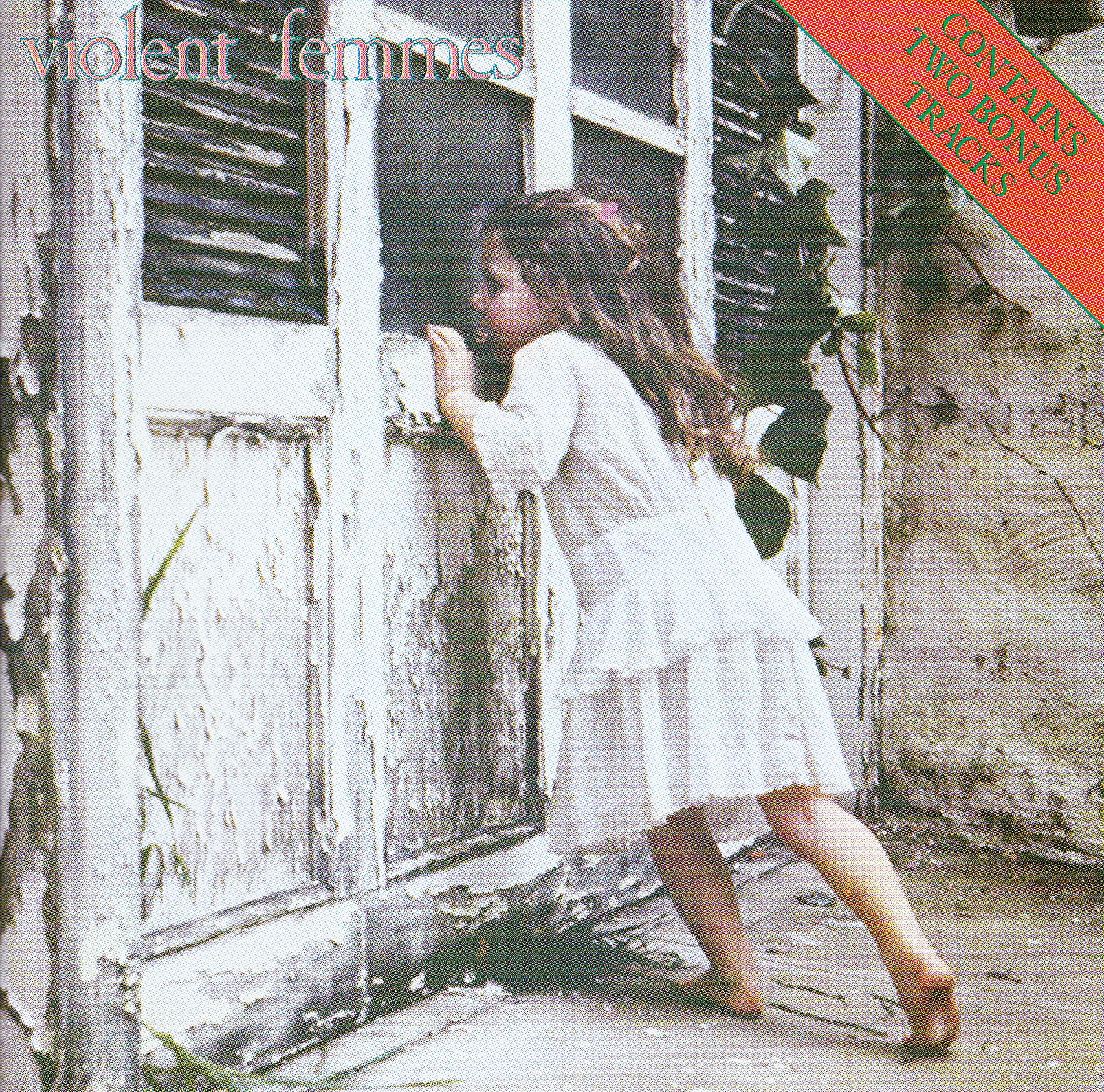
ViolFemsSitting in traffic outside the Lincoln Tunnel, I see that the Violent Femmes are coming to town. The billboard sends my mind spiraling back to college, when the Violent Femmes had released their debut album. Not that I ever listened to it (then), but in the fervently evangelical atmosphere of Grove City College, many students rooted and grubbed for any whiff of esoteric Christianity in a culture on the—pardon the genre-switch—highway to Hell. Rumors abounded that the Femmes were covert Christians, just like another up-and-coming band called U2. Not only the Femmes were violent—reaction to such Christianizing assertions was as well. I remember one of the dorm-mates in my housing group getting into a shouting match that U2 was not a Christian group and slamming his door to sulk, literally for hours. This was important stuff. We were Christians in an underground world.

Of course, some of us knew that Gordon Gano clearly betrayed the influence of Larry Norman in his voicing. And there were rumors and rumors of rumors that the Violent Femmes were coming out with a Christian album, despite the popularity of “Blister in the Sun,” the homage to masturbation that raised the group to stardom. This rumor turned out to be partially true, as Hallowed Ground took on spiritual themes, a little bit country, a little bit soul. There was some tension in the group as Gano’s lyrics began to suggest something more overtly Christian. All of this was going on long before I discovered the Femmes. At Nashotah House I taught a guest lecture on Christian themes in rock music. I researched the Violent Femmes and found that I liked their sound. They made the cut for the lecture.

In a culture as deeply steeped in the Bible as ours, it is difficult to avoid Christian imagery altogether. The Femmes were from Milwaukee (not far from Nashotah House, as the raptor flies), the heartland where beats the pulse of unadulterated religiosity. Even Iron Maiden, after all, had released the platinum album The Number of the Beast. And David Buckna points out in a recent MuseMash post, that even Ozzy Osbourne has some religious aptitude. (I always thought there was more going on in “Iron Man” than meets the ear.) This may all be chalked up to cultural Christianity—there need not be too much conviction here. Those who feel oppressed, however, huddled together in their evangelical college dorms, will always suspect that there is something more beneath the surface that makes even the “Prince of Darkness” the bearer of light.


Hidden Messages

Symbolic gestures are among the simple pleasures of life. Unobserved, and certainly unappreciated, they comfort only those who perform them most of the time. Nevertheless, sometimes I just can’t help myself. Upon being summarily released after long-term employment at a certain institution of higher education, the day I left campus for the last time, I left a note with a Shakespeare quote tacked to my office door before literally brushing the dust from my feet as I drove through the gates never to return. The quote was from Julius Caesar, a play to which my niece had taken me that summer for a Shakespeare in the Park performance:

Let me have men about me that are fat
Sleek-headed men, such as sleep a-nights.
Yond Cassius has a lean and hungry look;
He thinks too much: such men are dangerous.

I have no doubts that my symbolic gesture was overlooked and the chit summarily discarded as the detritus of a warped (i.e., liberal) mind. The act, however, had been done.

Due to a booking accident, I once found myself flying first class. Those who know me will understand just how vexing this was for me. I fly quite a bit for work, and I am a populist through and through. Airlines set apart special bits of feet-darkened carpet for premium-class passengers to tread upon. They cordon off a special “lane” for the pampered class that is a nothing more than a matter of a jump to the left and a step to the right away from where those of us who wear last year’s (or decade’s) clothes board the same vehicle headed for the same destination and to which we’ll all arrive at the same time. I don’t disparage those who like receiving drinks while on the tarmac and hot towels to freshen up, and actual food on real plates while those of us before the curtain insist that there is no wizard hiding up there after all. I’m just not one of them.

IMG_0899

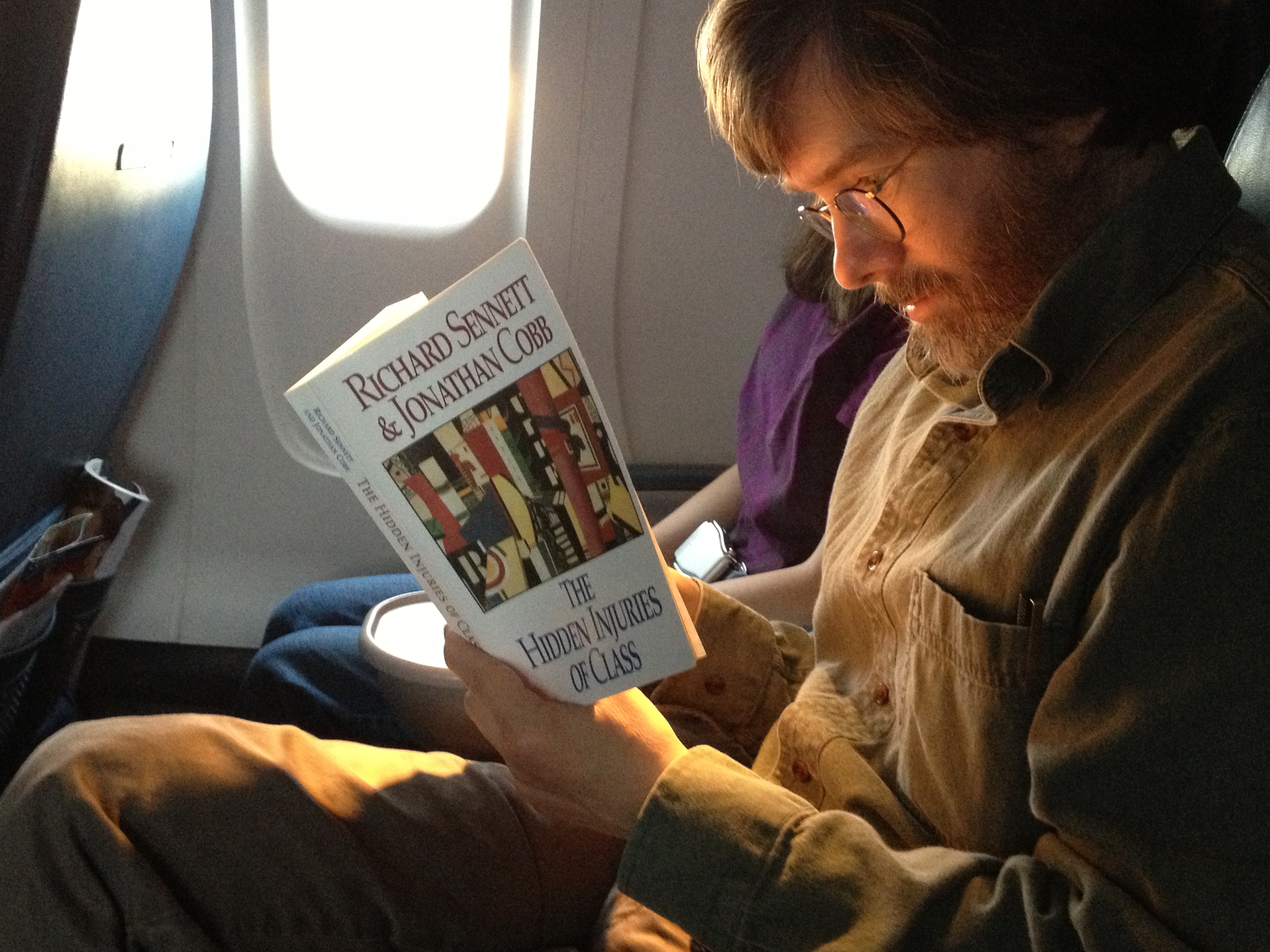
So I found myself in a leather seat with an entire cow’s worth of skin to myself. I had never been so kindly treated on a plane, with perhaps the exception of flying economy on Virgin Atlantic. I knew from the in-flight magazine that those behind me received only little pretzels and overpriced snack boxes while I was offered warm food and champagne. I pulled out my reading for the flight, The Hidden Injuries of Class by Jonathan Cobb and Richard Sennett. I’m sure nobody else noticed. But wasn’t that precisely the point?


Fly Like an Eagle

Hummingbirds, according to my bird book, have hearts that beat 1260 times a minute. That translates, if my math is to be trusted, to 21 beats per second. As the only birds capable of flying backwards, their aerial acrobatics are fascinating to watch as they hover, accelerate, and change directions like a biological UFO. During the summer they guzzle the empty calories of sugar-water that we leave for them in our feeders, so that we can lure them close enough to observe (that is, after all, how humans interact with their environment). The other day I watched a snapshot of developmental behavior. This July has been a good one for hummingbirds, with several a day visiting the local watering hole. I sometimes wonder about the flowers that are overburdened with nectar as these tiny birds hover by their communal font. At first it seemed that only one bird frequented the feeder. Then two came along, and although four feeding spouts were available, one would always chase the other away in a dogfight worthy of Baron von Richthofen. A third showed up, and when the first was busy chasing the second away, would fly over to the feeder to attempt a nip. Then a fourth. Eventually a fifth. And although there are four evenly spaced openings, only one took a drink at a time.

DSCN4076

“Bird brain” is a speciesist insult. Many birds are very intelligent and the comparison with human behavior is often apt. Protecting one’s private stash that is more than adequate for the community is worthy of comparison. Not to complicate speciesisms, but when a person prevents another from enjoying what one cannot, we call it being a dog in a manger (dogs, of course, do not eat the provender of the barnyard herbivores). A bird flying so fast that it’s a blur chases another away and cannot enjoy the high-calorie, human intoxicant we offer so that we can appreciate its incredible display. If we could fly like that, would we be so short-sighted?

God-like, we attempt to make nature in our own image. And mix metaphors like a professional editor. Not far from the shelter of the human breadline we offer, hover the larger, predatory birds. Those who fly fastest, super-charged with sugar and spite, stand a better chance of surviving. And when a luxury liner encounters an iceberg in the frigid north Atlantic, those who’ve lingered longer at the feeder are better equipped to gain quick access to the lifeboats that are sorely inadequate for the overbooked cruise. And if I were on board, would I not be like a hummingbird in the manger? My heart beats 21 times a second just to think about it.


Let It Shine

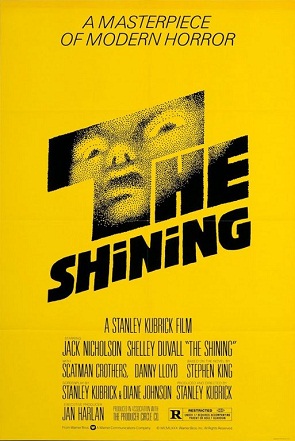
Stanley Kubrick was not the most prolific of movie makers, yet his efforts often create striking impressions. I saw 2001: A Space Odyssey at a young age, and it has remained one of my favorite films ever since. Although I’ve watched horror movies since my college years, I shied away from The Shining until about five years ago. By that point I’d seen enough clips and parodies to kind of know what to expect. Since finally viewing the original, it has become one of my most admired movies as well. Kubrick films may not be easily slotted into a genre, and The Shining is not a typical horror movie. There always seems to be something more going on in addition to the growing menace of Jack Torrance’s insanity. I’ve been hearing about Room 237 for a few months now, and I’m eager to see it. Room 237 is admittedly a movie about a movie, an exploration of how The Shining has inspired multiple interpretations of what most consider to be one of the scariest movies of all time.

The_Shining_poster

An article by Jay Kirk in the June edition of Harper’s Magazine examines this movie of a movie. Kirk is the cousin of Tim Kirk, the producer of Room 237, and offers a personal introspective of a mind under the spell of Kubrickian influence. The article, “The Shining Path: Room 237 and the Kubrick cult,” not surprisingly, keeps turning back to religion. It may be fallout from the Kirk cousins both being children of clergy, or it may be that effective horror films are, as I’ve maintained before, inherently religious. Even the meeting of the Kirk cousins takes place at Gaudi’s Sacred Family cathedral in Barcelona. It seems that there’s no way to get at The Shining without involving religion. Not that it’s a religious movie, but it may take some religion to understand it.

No doubt Stanley Kubrick was a deep man. Even those who try to interpret his movies end up adding a kind of hidden message of their own to the plethora of ideas he eloquently shot. I know nothing of Kubrick’s religious convictions, if any. Any film with the gravitas to inspire continuing hermeneutics over three decades after its release, however, will surely open itself to a kind of sanctification. The penultimate section of Kirk’s introspective focuses on Proverbs 3.5-8, a passage underlined in his grandmother’s Bible. To understand the genius behind The Shining, it seems, religion will have to be part of the discussion.


Free Freedom

A weary-looking TSA official asked me why I opted out of the full-body scanner at the airport recently. As always, I responded that it is against my religion. The haunting lyrics from a Larry Norman song waft through my head; “I was born and raised an orphan, in a land that once was free…” It used to be, when I was little, that you were innocent until proven guilty. As I stand in line at the airport, next to an eerily humming x-ray machine that is examining all my secrets, learning what I’m reading without ever having to read my blog, I watch fellow citizens step inside a sci-fi-inspired glass chamber while being bombarded with God-knows-what so that any unnatural contusions might be spotted and analyzed. They raise their hands above their heads like outlaws in the old west. We are all guilty now, until proven innocent. If you are Trayvon Martin, you pay for the assumption of guilt with your life. Don’t worry, Mr. Zimmerman, you’ll be acquitted.

IMG_0622

In my darker moments, I wonder who benefits from a government that keeps increasing amounts of data on its citizens while cutting programs to ensure their comfort and health. We have elected a police force, not officials of the people, by the people, for the people. Vigilantes can literally get away with murder, as long as the skin-tone algorithm is correct, but if you’re perverted enough to want to fly, you have nothing about which your government is not interested. Who is being protected here? Who is being kept safe? A stranger has his gloved hands on my crotch. I’m feeling a little more than vulnerable.

Protest is a sign of love in this troubled world. If I step inside that glass chamber and raise my arms, I am declaring that I am guilty. Let me prove my innocence to you. Technology has made our private lives so easy to scrutinize. I used to think the future envisioned by Jacques Ellul was just a touch paranoid. I’m now beginning to think he didn’t go far enough. This computer on my lap can be like a TSA official in my own home. My website visits may be traced and analyzed, and my self-publish words misconstrued. And if I go to the store at night, a stranger can follow and shoot me with the blessings of our legal system. Of what are we so afraid? Is it time to stand our ground yet?


The Good Magazine

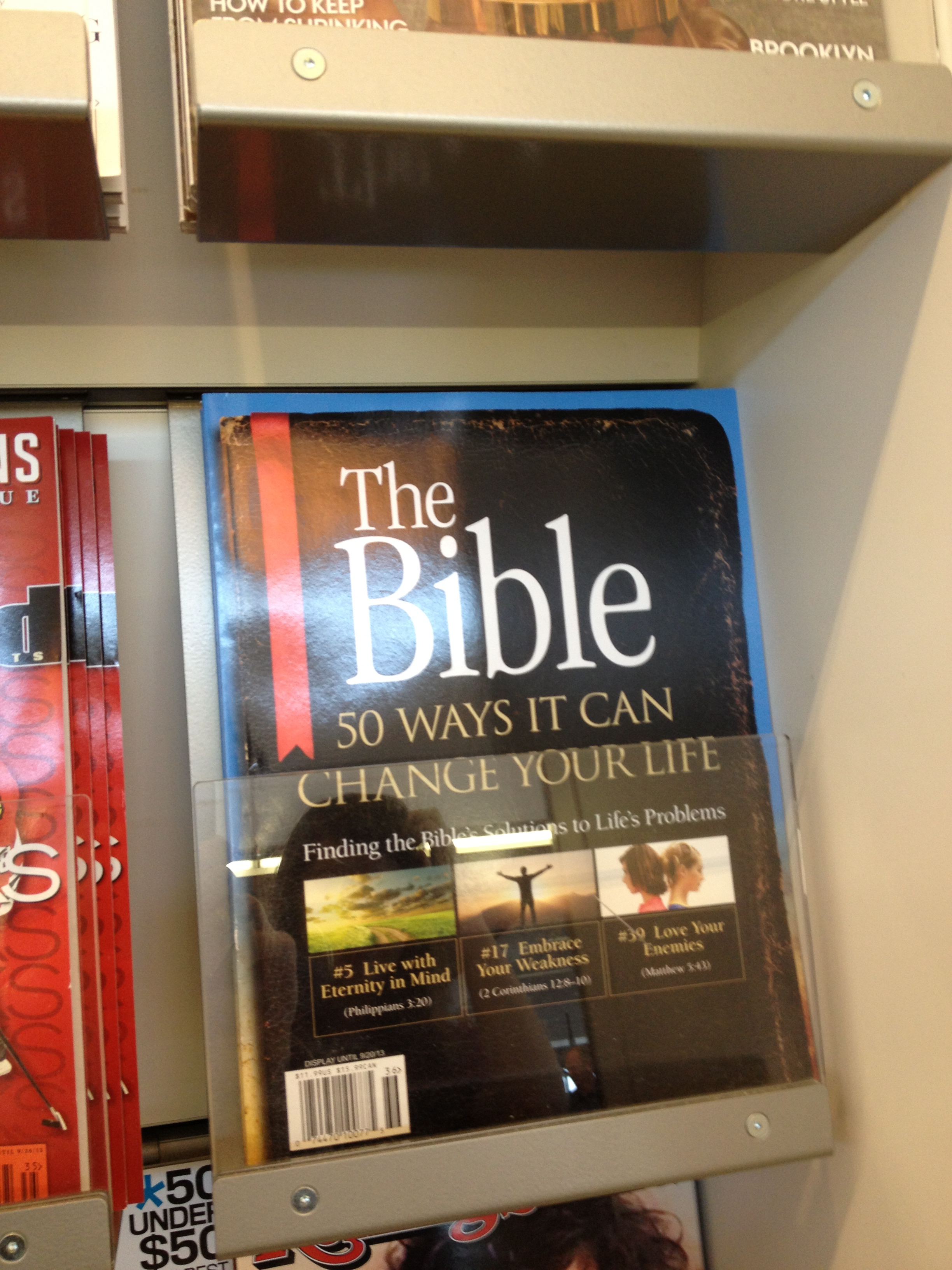
IMG_0902I saw this magazine in a store recently. The temptation to buy it was compelling, but with international trips and a child about to start college to pay for, it felt a little superfluous. Presumably what was meant by this jaunty title, “The Bible: 50 Ways it can Change Your Life,“ was that by reading and applying the Bible and its precepts respectively, your life will be transformed. The problem is that there is no expiration date. Not to be too entrepreneurial with scripture, but how long do you have to apply all this before the blessings take hold? One of the criticisms atheists frequently bring to the discussion is that in order to explain the truly difficult aspects of the universe, the faithful often resort to laying claim to the divine mystery. God works in a mysterious way. Rationality squirms with discomfort at the thought of unsolvable mysteries. In our cause-and-effect world you might expect a fairly quick turnaround with the almighty. I know the Bible has changed, indeed, shaped my life. In more than 50 ways.

Lest I be accused of being too cynical, I feel obligated to explain that I grew up utterly convinced that the Bible was literally factual. Even working around the contradictions I studiously denied, it seemed that the goal was more to make your after-life better, rather than the one here and now. Too many nasty things attended living by the word. People were dying in the Good Book, in droves. The trade-off was a better world coming. If something transformative, in the prosperity gospel sense, were going to happen, it had plenty of time to come along in my younger years. Instead, the Bible led me to a foreshortened career in teaching it and a job in which applying its principles is a sure path to getting fired. Can the Bible change your life? It sure can.

The ways listed on the cover—live with eternity in mind, embrace your weakness, and love your enemies—all fit parts of the Bible. They are all part of “the secret” that makes for best-selling self-help books. The Bible, however, isn’t a book about making your life better. Taking Holy Writ at face value, you obey because that is what is demanded of you. Commandments have no suggestion of option about them. It’s not that I take the Bible lightly; quite the opposite. Something tells me, however, that if I need a magazine to help me figure it out, I must be missing something. Instead of reading the Bible, this is reading about the Bible. The iconic book is alive and well, even in this secular society.


Weird Tales

WeirdTaleSince I first discovered H. P. Lovecraft, I believe that I have read all his published fiction. Most recently a multi-year marathon took me through the S. T. Joshi editions published by Penguin Classics. Reading those editions led to a natural curiosity about S. T. Joshi; H. P. Lovecraft is still an author struggling for respectability, although the internet has brought him great fame. The literary elite consider many genre writers as gauche, and those who read them decidedly low-brow. When I saw that Joshi had written a book entitled The Weird Tale (the genre designation preferred by Lovecraft), I decided to learn more. Joshi, I had known from his webpage, is an ardent atheist, but also a true admirer of Lovecraft’s craft. Since I’ve tried my faltering hand at fiction a time or two, generally having even less success than Providence, I wanted to see what Joshi had to say.

Few things are as inspirational as reading about writing. Those of us compelled to do it find it an endless source of fascination. What drives us to it? We don’t know. Where do the ideas come from? We can only guess. Why do we do it? We must. And so, it is clear, also felt the authors surveyed in Joshi’s fine little book. Although the names of Arthur Machen, Lord Dunsany, Algernon Blackwood, M. R. James, and Ambrose Bierce mostly just tickled some remote tendrils of synapses in my skull, this study was the first real knowledge I had of any of them. While some patterns emerge, there is a notable diversity of background to the writers of the weird. One element that Joshi doesn’t fail to notice is their religious conviction, or lack thereof. In many ways this is odd, but in others it feels perfectly natural. Many materialists count creativity as the predetermined motion of particles and energy that evolution makes inevitable. The writers, however, refuse strictly to conform.

Lovecraft was an atheist and mostly a materialist. Joshi is puzzled, however, when Lovecraft seems to call this certainty into question. I’m not. Lovecraft did not believe in God, but he invented gods. How difficult it must be for a creative mind to dabble in the divine and simply walk away at the end of the day. Lovecraft was no stranger to peculiar residues that clung to the unwary and the bizarre transformations that could occur under the aegis of misplaced belief. But like the narrator of many of his tales, at the end he too knew he’d been affected. I don’t mean anything as crass as deathbed conversion. Rather, like all those who are truly intelligent, we must admit that there are some things we just don’t know. Cthulhu may not be slumbering beneath the sea but many will not sleep easily at night with their closet doors open. To expect anything less of Lovecraft, to me, seems just too weird.


Am I Famous Yet?

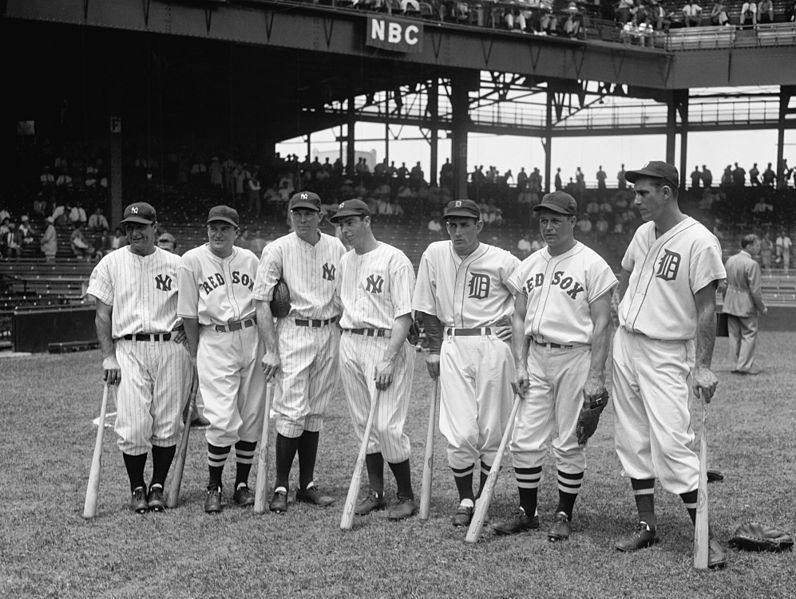
Sweat is running down my back and my chest.  The sun beating down on my head feels like a hammer of the gods.  East 42nd Street is clad with a wide, red carpet and drivers are honking in a way that assures you that they are seriously irritated.  I step out into Second Avenue when the little white person appears on the crosswalk sign; it is 93 degrees and I’m due back at work.  A motorcade stops me as three tour buses cascade by, and an NYPD officer waves mere pedestrians back to the baking pavement to wait another rotation of the lights.  Helicopters high overhead fail to stir this heavy, hot air.  Hazily I wonder if the president is in town, or royalty of some kind.  It’s clear that the plebeians are of less importance this afternoon in New York City.  Then I spy a banner-the All-Star Game.  I’m being broasted on this street corner for a bunch of baseball players, not one of whom I can name.  This is such a facile way to learn your place.

Chance often enters my thoughts.  There are those who become rich and famous because they are driven to it, but they happened to be in the right syzygy of circumstances to take advantage of that opportunity.  There are some who would say that attaining greatness is an act of God, and others who claim it is only fate, or luck.  The fact is, the only reason some people are more special than the rest of us is that they were offered an opportunity that opened a gate.  I’m not suggesting that hard work’s not involved, but hard word alone doesn’t suffice.  You need to have a leg up to get to ride in that air-conditioned luxury bus down Second Avenue while your fellow citizens, and not a few seriously sweating fans, step aside for you.

I’m sure it’s just sour grapes. Like most little boys I really enjoyed playing baseball. I never considered it a job, though. We were far too pedestrian in my neighborhood for that kind of thought. My goal was to be a janitor. It was only when I reached beyond this calling appropriate to my state that I ran into difficulties. The marionette dancing at the end of the strings of puppet-masters who had better opportunities than I. Sour grapes and hellish city streets—what wine will ferment from this alchemy? There go the All-Stars. In many parts of the world, as in my head, their names are unknown. Today, however, one of the busiest streets in Midtown Manhattan is stopped just for them. We’re all in the same oven, but some are in air-conditioned coaches while others are melting on the sidewalks. The red carpet is not for the likes of us.

1937_all_stars_crop_FINAL2


Caledonia Dreamin’

“Edinburgh is a mad god’s dream.” So penned poet Hugh MacDiarmid with sentiments that could’ve been composed by H. P. Lovecraft. My association with Edinburgh seems accidental, but there is little in my life that compares to this mad god’s dream. The Gnostics used to believe that there was nothing in divinity that precluded a kind of divine madness. Philosophers, back when they still considered god a postulate, argued about whether the deity was good or evil. If they’d come to Edinburgh, I suspect, the debate would’ve taken on a whole new cast. In his poem “Edinburgh,” MacDiarmid captures the untamed nature of a city that has never been given the accolades of Paris, London, or New York, but is just as edgy and twice as beautiful.

Dreaming gods, of course, are nothing new. Vishnu, according to some strains of Hinduism, is the god whose dream is the universe. In the Ugaritic Baal Cycle, it is a dream that reveals to the ancient god El that Baal has returned from the land of death. And, of course, Cthulhu lies dead but dreaming in the city of R’lyeh. To me, Edinburgh is a wonderful alchemy of divine dreams. I was a young man, still so very naive when I moved here. Looking back at those old photos, I see a much younger face from the past, telling the camera that yes, he’d found paradise, the very place of God’s dreaming. Our human politics, however, trump divine dreams every time. Although I never wanted to leave, I was not permitted to remain. Yes, the camera does, at times, capture the soul.

DSCN3490

I am on the train that will take me from Edinburgh, having seen it anew through my daughter’s eyes. I came here penniless some twenty-four years ago, but with a head full of dreams. Life has taught me the cost of dreams since that time, and I have had to pay with wrecked careers and uncertain futures, trusting that the god who is dreaming all this is mad indeed. Nevertheless, like the gods, I refuse to stop dreaming. As much as Hugh MacDiarmid captures the spirit of Edinburgh, as I sit here, with a wee bit of mist in my eyes, my mind is on the words of another poet, Baroness Nairne. To her I will have to leave the last words, from this south-bound train. “Fareweel, Edinburgh, where happy we hae been.”


The Importance of Being Honest

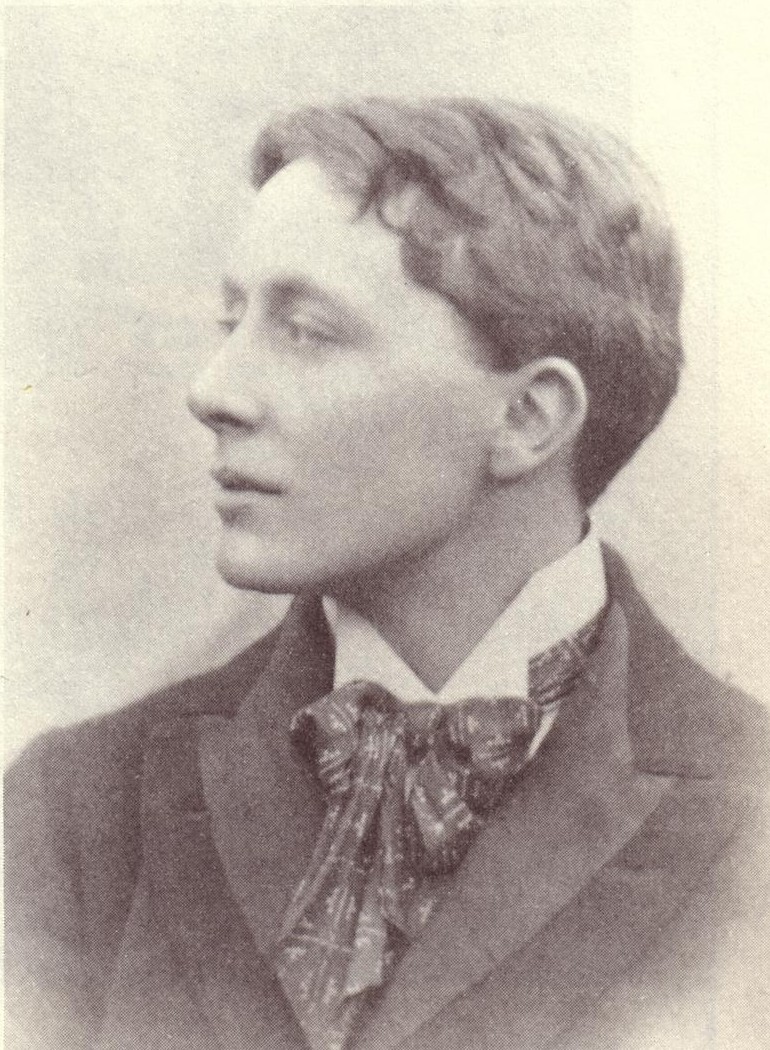
JohnGrayContinuing our quest to be a family out of sync with the modern world, we used part of our free day in Edinburgh to take the Book Lover’s Tour. Edinburgh has a long literary history that includes such writers as Sir Walter Scott, Robert Louis Stevenson, J. M. Barrie, and Sir Arthur Conan Doyle. A more recent star in that constellation is J. K. Rowling. The tour we took was led by the redoubtable Allan Foster, a geology student turned literary psychopomp. Although not associated personally with Edinburgh, Oscar Wilde had an unusual connection that made for an interesting tale. One of his male lovers, John Gray (a model for the eponymous Dorian) eventually became a Catholic priest, and lover of a wealthy Russian poet, Marc-André Raffalovich. When the Gray was assigned to St. Patrick’s in Edinburgh, Raffalovich was appalled at the state of the building and offered to finance a new church with the provision that his friend be appointed priest in charge. Thus the new building came to be and still stands on Cowgate.

Of course, nowhere is the priest or his lover, benefactor of the parish, mentioned in the church literature. Morality often parades as self-righteousness. Secret lives are not restricted to the clergy, of course. The fact is that people everywhere are human, and people are complex. So complex that we will sometimes carry on a charade to ensure religious respectability, to the point of having political candidates endorsed by clergy for issues that run counter to the very sources of their funding. Righteousness can be very costly, but self-righteousness comes cheap. Religious systems that demand standards that they can’t uphold either collapse or excel in duplicity.

When the tour was over, we walked by St. Patrick’s church. I wondered how many of the patrons knew the history of the lovely building they use for worship. Should they take a literary tour and learn the background of the church, would it make any difference? Ethics can be a matter of convenience, particularly when it is a matter of sexual propriety. Somebody else’s sexual propriety, that is. The real business of religion should be helping to improve authentic lives. Today it has often become the business of supporting the political system that bankrolls the special interests nearest to one’s heart. And reading, especially of unapproved materials, only gets in the way.


Persistence of Memory

I’ve posted before on sacred geography—the idea that a place is holy for some reason or other. That holiness is very personal, and although some locations seem to draw national, or even international, veneration, special places are intensely individualized. Edinburgh is one of those places for me. I haven’t been here for 21 years, after a stint as a post-graduate that lasted for three years and three months. Walking into Edinburgh from Waverley Station yesterday was overwhelming. Of course, it helped that the sun was shining (somewhat a rarity in these latitudes) and that my daughter was seeing it for the first time. Edinburgh is one of the truly beautiful cities of the world, but in my case, it is also invested with my personal history here. Once I called this city home.

DSCN3452

Wandering about, noticing the changes—Edinburgh has always drawn tourists during the summer—it was clear from the many languages and accents that people from all over the world were exploring the main touristed areas: the Royal Mile, Greyfriars Bobby, Princes Street Gardens-for me the experience seemed to run deeper. They will leave, I hope, with only positive memories of this mystical town, for a fair bit of medieval magic still hovers about it. For those of us who experience Edinburgh as sacred, however, there is good and bad mixed. I not only laughed here, but I cried, I worried, I was frustrated, sad, elated, depressed. I poured myself into a life here that I knew was ephemeral, temporary, destined to pass in the short hours that define one’s young adulthood. How could I have ever left? How can I ever leave again?

Away from the tourists, we wandered back to the places we used to live. How is it even possible, I wondered, staring up at the windows of our old flat, that I was ever bored there? Even the sacred, with constant exposure, becomes profane, I guess. And it requires an absence—perhaps two decades is far too long—to bring it back into focus. I am bursting open here. Some tourists are, I’m sure, busy falling in love with Edinburgh for the first time. For me, it is returning to an old friend. Twenty years of being heartlessly bounced about from job to job make the place I was born seem far less inviting than the streets and alleys that inspired Harry Potter and Waverley. This is the Nunc dimittis of my soul at this very moment. It comes to mind, Faust-like, whenever one enters paradise, knowing it will last for a few moments only.


Bonnie the Brave

As a preemptive warning to my regular readers (am I’m sure you both know who you are), I am off today for a stint in my old haunt of Scotland. Before you get out your congratulations, be advised that this trip is for work. The Society of Biblical Literature, in addition to the big meeting about which I sometimes post, holds an international meeting every year. Since my employers frequently want me out of the office, I am being sent to the fair city of St Andrews in the kingdom of Fife for a week. Although I studied across the Firth of Forth in the wondrous town of Edinburgh, I ventured to St Andrews a time or two during my postgraduate days. By that time anyone in tune with popular culture had seen Chariots of Fire, and it was almost a requirement of credibility to visit the famous beach on the North Sea where the actors iconically ran as the movie began. And as in Chariots of Fire, I’m not sure that wifi access will be readily available. Should I find access, I shall gladly update my blog with my customary observations. If I fall silent, you’ll know why.

Scotland had a tremendous draw for me as I was contemplating where to complete my studies of religion (as if one ever can). Not that I was Presbyterian, and not that I have Scottish ancestry (although Celtic is represented in the Irish stowaway on my father’s side a few generations back)—it was the antiquity that drew me. One of the mysteries, to me, of new religious movements, is how people can believe in a religion that recently began. Should there be a supernatural, I’ve always supposed, and should that supernatural be concerned that humans have the truth, why wait so late in the story to start? It was such thinking that drew me from Methodism to its estranged parent, the Episcopal Church. Among the Episcopalians are many who argue for a continuity with the Catholic tradition, separated, literally, only by a matter of divorce. And Catholics go back to Jesus himself, a member of a religion so old that even the Romans grudgingly respected it (Judaism). I guess I’m guilty of old-school bias.

Kim Traynor's Edinburgh, from Wikicommons

Kim Traynor’s Edinburgh, from Wikicommons

So it was that I came to spend some years among the Presbyterians at Edinburgh University. The Ph.D. that I earned there translated to an unfortunately brief career doing what I’m best at—teaching. My tenure at Nashotah House never offered the opportunity to travel back to Scotland, or even England with its Anglicans. And as I prepare to board a plane across the Atlantic, although strictly for work, I can’t help but to reflect on those years of intensive learning, hoping to do my Scottish alma mater proud. And returning to the States to have my career shipwrecked on the rocks of unforgiving religious dogma. It may be that once I’m back among the heather and thistles, I may cast my laptop aside and try to claim religious asylum in a past that I can only see through rose-coloured glasses.


Unspoken Reality

In that impressive cultural marvel known as Facebook, a few gems amid the overburden occasionally appear. The post of a friend brought to my awareness a site known as everyday feminism, where, last year a post about religious privilege appeared. The brief piece entitled “30+ Examples of Christian Privilege” highlights one of the persistently overlooked aspects of religious liberty. No matter how much the founders of the United States valued freedom of religion, the colonials were, at least on the part of the non-slave side of the equation, Christians. Whether Jamestown, Plymouth Rock, or Guanahani, those Europeans who first set foot ashore did so under the banner of one variety of Christianity or another. (Such a case might be made for Vineland as well.) Religious liberty meant fleeing the oppressive practice of state religion—always Christianity—that kept shifting according to the whims of frequently unstable monarchs. For all its wide variety, Christianity is cut from a bolt of the same cloth. At least in the lining.

The Christian Privilege cited on everyday feminism is the most insipid kind brushed with the widest strokes. Still, it does reveal just how thoroughly Christian even the secular can be. Christianity, as I often told my students, pervades our culture. We live it, breathe it, ingest it. Often subconsciously. America was and wasn’t founded as a Christian nation. Intentionally, according to the wishes of the founders, no. Unintentionally, according to the dictates of privileged classes, yes. The problem here is not Christianity—it is privilege. Depending on whence you read the words of Jesus, his message seems to have been one of a general equality, or at least fairness. Those same words, however, can be distorted to support the monolith of the privileges granted those who follow the “one true faith.” The privilege to own slaves, for example. Or to oppress others born into less fortunate circumstances.

Ironically, among academics, I’m told, there is a push to hire those who are authentically unprivileged. Although I must, by my accidental Caucasianness, maleness, and inherited Christianity, be classified as privileged oppressor, I did grow up in economic privation. So much so that my wife feared to take our infant daughter to the unsafe house in which I was reared (which was, fortunately, condemned and demolished before that became an issue). It still shows in my natural, placating obsequiousness to supervisors and bosses—I was raised knowing my place. Yes, sir. As a first generation college student, I still find myself confused by why I was rejected by a higher education into which I poured all my youthful energy. Yes, in such circumstances, it is difficult at times to see the privileges. They are there, however, as anyone willing to walk across town with their eyes open may see.

IMG_0714


Something to Believe

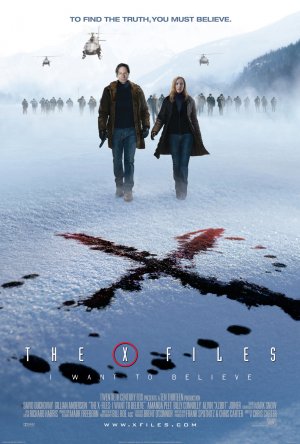
Xfilesiwanttobelieve After a rough week at work, nothing helps so much as simple escapism. Thinking back to my glory days in the classroom, I remembered the movies I used to get students thinking about how the Bible is represented in popular culture. One of those movies was The X-Files, I Want to Believe. Not that the movie was my favorite, but escapism isn’t picky—there’s one reality I want to escape, and just about any other will do. As I watched the film again last night I was struck how very much the whole movie is premised on religion. I suppose the title should’ve given that away, but since it is the slogan of Mulder’s famous poster, I’d not really given it serious thought. Scully is now a practicing doctor in a Catholic hospital, and the number of lingering scenes with stained-glass icons in the background simply can’t be ignored. She has given up chasing monsters in the dark, and come to live in a very Gnostic kind of light. Through a pedophile priest (Father Joe), the darkness finds her again. How could I have missed the centrality of a priest to the plot?

The scene I always pointed out to my students was where Father Joe goes into a seizure while quoting Proverbs 25.2, again citing Gnostic hidden ways. The Bible slips from his trembling hands and falls, closed, to the floor. Later, as Mulder is literally about to be axed to death, Scully finds him by noticing the mailbox number 25-2. A proverb was a prophecy and the Bible retains its ability to guide the believer toward salvation. Through paranormal means, of course. After all, this is the X-Files.

Faith versus science, religion versus reason; these are the underlying motifs of the entire film. Scully the skeptic is the one who believes. Mulder, the high priest of the preternatural is just waiting for her to come home. It isn’t the greatest of movies, but it is based on some classic themes. Wanting to believe, but not being able to believe—isn’t this one of the most religious tensions possible? For years now the internet has been buzzing with rumors of a third, and probably final, X-Files movie. And yes, many people are wanting to believe. And if work continues with weeks like this past one, I’ll be needing a lot more escapism as well. Yes, I want to believe.