Have a Blessed Day

“Last stop: New York Port Authority. Have a blessed day.” This secular blessing is sometimes appreciated after the harrowing commute to Manhattan, but I often wonder about its origins. Bus drivers are among the most under-appreciated of employees, I reflected on Labor Day. They are routinely blamed for matters beyond their control: accidents that snarl traffic for hours, mechanical problems, highway construction. Often I only reach the Port Authority Bus Terminal on time two days a week. I always say “thank you” to the driver while exiting, however. I’m very glad it’s not me behind the wheel.

Photo credit: Hudconja

Photo credit: Hudconja

A few months back, however, I noticed that a few of the drivers, while announcing the terminal stop, will add “Have a blessed day.” Last week I sat back further than usual, and heard an interesting exchange as I awaited my turn to exit. The driver had wished us a blessed day (whether we wanted one or not), and several of the passengers, upon disembarking, said back, “Have a blessed day.” I’m sure the driver appreciates it. As a lifelong student of religion, however, I found it fascinating. New York City is a great place to observe religious developments. “Have a blessed day” is innocuous in its lack of specificity. Who is doing the blessing here? At the behest of what intermediary? The driver has literal street cred by making it to the Port Authority unscathed. S/he has the power to bless and to curse. Those of us helpless as passengers are at their mercy. If the driver doesn’t drive, we can’t serve the god Mammon.

I always thought “Have a blessed day” was like an after-sneeze blessing. It is unusual for the sneezer to panegyrize their blesser by wishing good fortune back. Most often they are too busy blowing their noses. Here on the bus the driver might be Muslim (it is clear that some are), Christian, or Hindu. Some are likely among the most deserving of atheists. A blessing laid is a blessing played, however, and many are the passengers who are now returning the favor. We don’t know which deity is being invoked; it may be that it is simply the force that is with us. As we climb off that bus into a city that crushes a human soul as easily as a cockroach, we all could benefit from a blessed day. And I wonder on my way to work whether I’ve just witnessed a new religion being conceived.

Which Way to Eden?

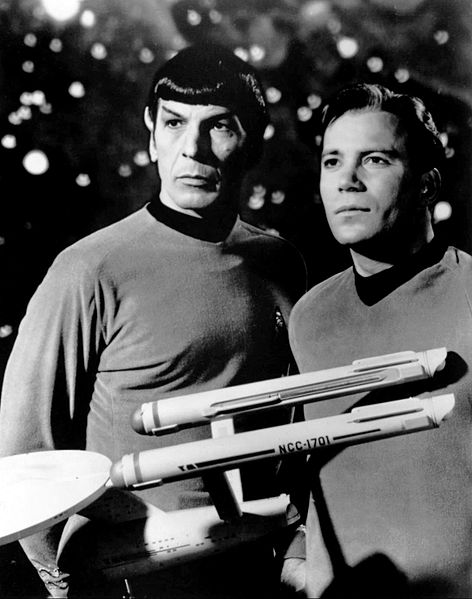
We don’t have television service, and I haven’t watched TV regularly for about two decades. Over the years, however, we’ve collected the DVDs of the shows we miss, or which we wish we’d seen so that we missed them, and use those in lean times. Feeling a bit lonesome over the weekend I downed a few Twilight Zones followed by a Star Trek chaser. On a three year mission to explore strange new worlds, my wife and I have been working our way through Star Trek, the original series. We’ve finally reached the final chapters of the final frontier. I’ve noticed as we’ve gone through the episodes just how biblically literate the series is. Even Spock quotes the Bible from time to time. Over the weekend, to keep my mind off present reality, we ended up watching “The Way to Eden.” As much as I enjoyed Star Trek as a kid, when it was still new, the overtly ’60’s-themed episodes bother me as an adult. I’m very much still a hippie at heart, but I don’t like lingo, and the alien cool cats in their weird shorts and funky hairdos chanting “Herbert! Herbert!” still really bother me. Somewhat predictably the aliens hijack the Enterprise to reach their fabled paradise.

Leonard_Nimoy_William_Shatner_Star_Trek_1968

Spoiler alert! For those of you who’ve been asleep since 1969, or have had no curiosity about the inspiration behind all those geniuses who’ve ushered in the technological revolution, I’m about to reveal some details. Eden is deadly. The landing party finds the short-pants wearing, funky guitar-strumming crooner dead under a fruit tree. “His name was Adam,” Spock laconically notes. The scene of Dr. Sevrin’s burned foot has stayed with me since childhood, and I still cringe when he leaps out of the shuttlecraft to take a bite of the poisoned fruit. It was only as an adult that I realized his name was reminiscent of Eve, indeed, a kind of blending of the words “sin” and “Eve.” In a kind of homoerotic death scene, the two male leaders end up under the tree together. Probably my overactive imagination.

Sometimes I ponder how much a biblically illiterate society misses. I frequently told my students that the Bible is foundational for our culture. Whether or not you’re aware of it, it is reinforced regularly in ways both ortho- and heterodox. Despite our very secular self-awareness, entire movies, such as The Book of Eli, can be based on the premise of biblical literacy. It is entirely possible to watch movies and television shows, and to read novels (graphic and literary) with enjoyment and not notice the allusions. The reasons they are there, however, is that despite the abuses of literalism, the Bible does have some profound things to say. It’s up there with Shakespeare and Chaucer. And even with Roddenberry and his host of staff writers. And I suspect that it still will be, in some form, in the twenty-third century.


Playing Civil

In a piece written for the Los Angeles Times, Joseph Margulies warns of the potential dangers of civil religion. I first learned about civil religion in college in the early 1980s, when the concept was still relatively young. The idea is as deceptively simple as it is accurate: when nationalism reaches its natural limits, the divine is invoked. Civic ceremonies become religious ceremonies—presidents lay hands on Bibles, whether or not they believe. Civil religion dictates that all presidents be portrayed as believers, but that is something we have to take on faith. Civil religion leads to sculptures of the Ten Commandments on courthouse lawns and the flying of United States flags in churches. The danger with this innocent-looking triumphalism is that some people take it too seriously. It is not limited to Christianity, either. Civil religion is a disguised, albeit thinly, form of nationalism.

The vast majority of people in the world hold religious beliefs without deep reflection. That is not to suggest that they don’t believe deeply, but simply that they don’t lift the edges to peer under the surface much. We are taught what to believe by religious specialists. To question them is to question the deity they represent. Since fear is easily ingrained in the human psyche, the angry god is among the most effective of weapons ever devised. We fear for our eternal peril, and it is easier to believe the clergy have the answers than to divine the truth for ourselves. Those who think profoundly about religion, outside the confines of the professional clergy, are always a suspect lot. What business do we have, poking around the beliefs of others?

Civil religion shocked me when I first learned of it. Like the majority of my peers, I had assumed that public displays of piety were to be taken literally. As I began to hang out with clergy and to see how they often transformed outside the church with a fellow “insider” beside them, I started to understand. The cynical asides whispered outside the hearing of the faithful, the double lifestyles, the on-stage personae. This may not have been civil religion, but it was not always what it seemed. Teaching in an Anglo-Catholic seminary, I saw high mass as carefully choreographed as an off-Broadway production of A Chorus Line. Civil religion relies on its partnership with the unquestioned belief of the Saturday-night and Sunday-morning crowd. It all fits easily together and runs as smoothly as a pink Cadillac. Just don’t look under the hood.

IMG_0088


Ivory Doghouse

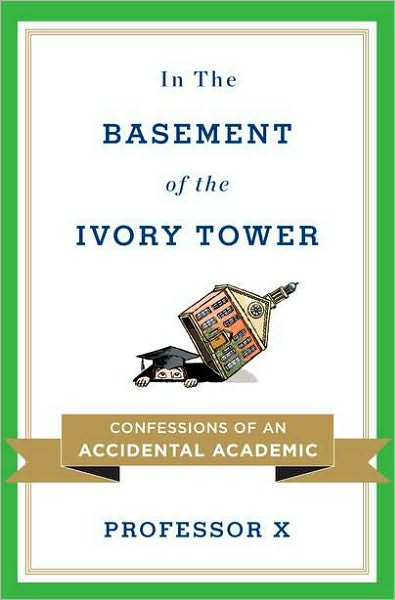
inthebasementoftheivorytowerSome months ago I wrote a post about a book I had not yet read. In the Basement of the Ivory Tower: The Truth about College, by Professor X both entertains and informs. And depresses. Written by an anonymous adjunct English instructor, the book presents much of adjunct life in gritty realism. No one sane can possibly dispute that there are problems with higher education, however, X’s experience and mine of the same phenomenon, while eerily similar, are strikingly different. X became a Professor because of the need for extra income to help pay a mortgage. Good for him—I am glad for him. Having been an adjunct myself, however, in much more trying circumstances (fear of being turned out of a rented apartment for insolvency) makes me wonder if X delved deeply enough. X was not a Ph.D. turned away from full-time teaching after having proven himself to have “the right stuff” in the collegiate classroom. He could afford, albeit barely, house payments. He had a full-time day job.

It could be the differences in our specializations that paints the contrast so starkly. I studied religion from my undergraduate days and demonstrated competence at each step of the way. Even now colleagues encourage me that a full-time teaching job might come up. Some even lament the loss of my contribution to scholarship (not many, mind you! Far more have forgotten they ever knew me). Unlike Professor X I was fired for religiously motivated reasons. Once thrown off that lifeboat, there’s no getting back on. The religious are persnickety in that way. Being fired from a seminary is a sure sign of faulty merchandise. I spent six years, in some fashion, as an adjunct instructor with the constant specter of very real loss of everything a daily threat. Everything, of course, in my case meant mostly books. That made the threatened loss even worse.

Although my experience differed considerably, Professor X is absolutely right in his portrayal of how tenured, regular faculty often treat adjuncts dismissively. At times with disdain. As if we somehow didn’t graduate from world class universities. As if we didn’t have nearly two decades of stellar teaching evaluations. As if we’d stepped in something on the way to class. If I ran the world (and heave a sigh of relief that I never will) full-time faculty would be required to recite a prayer of thanksgiving every day that they were favored with a genuine taste of the promise that crumbles into sawdust in the mouths of the adjuncts. I was a full-time associate professor with a future. Since then I’ve become, no matter how full-time my workaday job, an adjunct with an uncertain future. And if you are lucky enough to have a full-time professorship, close your eyes, bow your head, and thank whatever it is you believe in. Ivory towers, it seems, come in many colors.


Personal Dogma

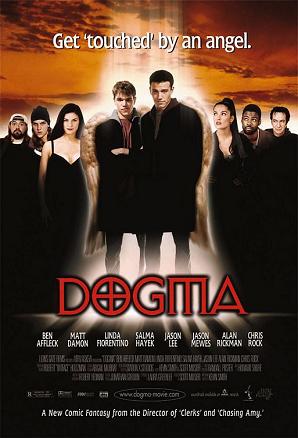
Dogma is a movie that many seminarians discover at some point in their theological education. Smart, funny, and irreverently reverent, the film follows the exploits of a couple of misled angels trying to get back into Heaven and thereby negating all of existence. It is no surprise, given Kevin Smith’s origin myth, that the film opens and closes in New Jersey, but I often ponder the strange coincidence of places in the movie to places I’ve lived since my own seminary career began (and ended, rather like the massacre scene in Red Bank before God cleaned it all up). Nashotah House, where I discovered Dogma, is in Wisconsin. Wisconsin is the state to which Bartleby and Loki, the two angels, have been banished. The means of their escape from this upper-Midwest purgatory is a church in New Jersey. Along their way the angels pass through Illinois and Pittsburgh, before crossing into the very state where God is located throughout the movie (the Garden State, of course!). After having been summarily dismissed from my seminary post in Wisconsin (not for watching Dogma, I’m assured), I too headed for New Jersey. Before that I had lived for a while in Illinois (home of Bethany) and Pittsburgh (home of Moobie). Watching Dogma is in many ways a reflection of a journey that I’ve accidentally undertaken.

YEE.tif

Another kind of dogma seems to be at work in the Eagle Mountain International Church in Newark, Texas. The Associated Press announced that 21 cases of childhood measles had broken out in the church, particularly among the homeschooled and unvaccinated. Fears of inoculating against a pre-medieval faith have led many of those who trust their own knowledge above that of the collective specializations of educators, to put their children at risk for the sake of belief. The belief, perhaps unsurprisingly, is poorly informed. One of the pastors of EMIC (!) has been encouraging vaccination as biblically sanctioned. If not for the sake of your children, for the sake of the scriptures…

Vaccination, in various forms, was developed in both Christian and pagan contexts. The earliest examples come from Asia where the plagues sent by the devil were resisted with human ingenuity. It takes a paranoid twenty-first century, first-world faith to suppose saving our children is some kind of conspiracy. “Let the one without germs,” we can almost hear them say, “throw their tissues away first.” In my Pittsburgh days, I was very much a literalist. How surprised I was to see Lady Aberlin from Mister Roger’s Neighborhood playing an angst-ridden nun, derailed by an exegesis of “The Walrus and the Carpenter” in Dogma. Although the Neighborhood is “anytown” those of us locals knew that Fred Rogers was from Pittsburgh. Lady Betty Aberlin was the niece of King Friday XIII, and only those with no conspiratorial imagination would suggest it is merely coincidence that her cousin is named Kevin. With or without dogma.


Back to the Future

When I leave work, I’m in a rush. It would seem that Third Avenue and Eighth Avenue shouldn’t be that far apart, but you can’t see from one to the other. I’m a pretty fast walker, and I’ve negotiated city crowds since my graduate student days. If you get caught at a light on one of Midtown’s avenues, you get into a cascading series of minute-long delays and you could miss your bus. Since I do this nearly every day, I know the lights are on timers, and getting through one light may make all the difference in having to wait another half-hour in the Port Authority Terminal for a missed bus. So when the woman held out her hand in front of me, I was ready to pull a dodge, but then I saw the tarot card printed on the slip of paper she held toward me. I took it at nearly a run with an acknowledging nod of thanks. New York has any number of psychic readers, and I’ve noticed that different ones advertise in different street corners in town. Unlike the competition, this psychic doesn’t announce who s/he is (I always assume “she” but the chit doesn’t say). “Clairvoyant Consultant” is the only identity, along with a street address. “Gifted European Spiritual Psychic” also occurs. I will get a five dollar discount if I go in. Tempting.

Clairvoyant

On the bus I noticed something about the colorful print of the tarot card. I’ve never in my life touched a real tarot card. I’m not really superstitious, but why take chances? The Bible can be pretty harsh about such things. This card says, “Wheel of Fortune.” The wheel, with its runic (and Hebraic) symbols, is surrounded by clouds. On each of the clouds in the four corners is—and this caught me off guard—an iconic symbol of each of the evangelists. Matthew’s winged man is in the upper left, and Luke’s winged ox in the lower left. Mark’s winged lion is in the lower right and John’s eagle claims the upper right. On the wheel itself rest a sphinx, a la Oedipus, a serpent (a la Eden?), and what appears to be a recumbent devil. Clearly clairvoyants see some value in traditional religious symbols.

New York is quite a religious city, for all its secular trappings. Not all of the religions are traditional—many, in fact, would start a literalist’s blood on its way to a low simmer. It is a city of seekers. The wheel of fortune may be a more apt symbol than I realized. The earlier bus gets caught in traffic today, and at one of the common stops I see the later bus whizzing by, and I know that it will arrive at my home stop long before I will. Of course, I had no way of foreseeing that. Each day as a commuter is another spin of that wheel of fortune. It is not a surprise New York is such a religious city. Your fate is never really in your own hands. But this flyer is, and it entitles me to five dollars off a peek into the great unknown. I think maybe I got this card about two decades too late.


Gold Digging

To relieve the mangled up snarl of sadness, fear, and loneliness where my internal organs used to be after dropping my daughter off at college, I’ve been watching television. When I can see the screen. Despite this feeling that the world is ending, I just don’t have the tolerance for much of the drivel that passes for entertainment these days. After a night of Amish Mafia on Discovery, I tuned in again for an escapist viewing of Gold Rush: South America. Those who don’t know me personally (and some of those who do) may be surprised to learn that I have panned for gold myself—not religiously or regularly, but with occasional serious hopes of solving my financial woes. Watching Todd and his group of guys setting up sluice boxes in the remote Andes and equatorial jungles has almost a pornographic attraction. The earth gives us what we need. Of course, gold’s main function in antiquity was being used in religious settings—whether making gods or decorating their priests—and that gives capitalism its drive for precious metal even today.

Photo credit: Agnico-Eagle Mines Limited

Photo credit: Agnico-Eagle Mines Limited

Mining is not so simple as it seems. You do have to research claims and find out who has the “rights” to property before you begin prospecting. There is a kind of wild-west feel to it, and claim jumping is still a crime. While watching the Gold Rush guys run into disappointment after disappointment, it still bothered me a bit how quickly the solution seemed to involve destroying the ecosystem to find the shiny rocks. Excavators had to be driven through the jungle, trees knocked over, and when the camera longingly lingers over a huge gash in the ground for an industrial gold operation, all the crew can say is what an impressive sight such a deep hole is. When they mention gaping holes, however, I feel there is something missing deep inside my own soul, and I wish they’d just stick to panning.

After many trials and tribulations, they find gold worth $50 a yard. They locate the claim holder and negotiate a deal. Todd’ll move his operation from the frozen Klondike to the sunnier climes of Guyana. As the camera pulls back, the guys gather into a little knot for a word of prayer. Yes, this crew of tough outdoorsmen bow their heads and ask the Almighty to help them find gold. If only it were so simple. The prosperity gospelers would have us believe that the divine wants us to be wealthy. If it was that easy, though, reality television shows would never last more than one season. And besides, some of us would trade every material thing we have to turn the clock back just a few hours or days to live them all over again just to fill in the great void that follows the inevitability of growing up.


Hire Education

Physicians are trained to notice symptoms before a condition becomes fatal. That’s their job and our society pays them well for it. Who wants to die? “Where your treasure is, there will your heart be also,” a very wise person once said. If we had a physician to look over the health of the nation, I would tremble at the diagnosis. A colleague just reminded me of this by pointing out Un-Hired Ed, an infographic that reveals the chart the doctors don’t want the patient to see. My daughter is starting college. Long ago, however, we gave her that talk that parents give their kids—you know the one—the beware of the lure of higher education talk. As Un-Hired Ed points out, our society has been putting on weight: universities consume far more doctoral candidates than there will ever be jobs. I speak from first-hand experience with an earned doctorate from a world-class research university and a list of solid publications, in saying that the prognosis is distressing, likely fatal. I spent nearly a decade of my “best earning years” functionally unemployed because I was “overqualified” for job after job after job. How many people don’t even rate an interview to become a meter reader for the electric company? Well, with the unending awarding of doctorates, that, like the national cholesterol level, is sure to rise.

Universities have turned greedy eyes towards the profit margins of businesses since about the 1980s—those years of “me first” that have plunged us into an economic dark age. Salaries and privileges skyrocketed and so did college enrollments. I worked at a university that was seriously considering a “Marina Management” major. To cover all the additional courses that universities must offer to “educate” the vast numbers of students, they face a financial brick wall. College presidents expect to earn a certain (unrealistic) salary, and football coaches deserve even more. Stadiums don’t come cheap, you know! So they hire adjuncts; Ph.D.s who are functionally unemployable, and pay them less than the janitors. Woo-hoo! We’ve beat the system of fair compensation and it has only cost us the livelihood of those whose professors encouraged off to grad school because they were the best and brightest in the class!

“Like lambs led to the slaughter,” as the saying goes.

Can higher education be redeemed? I have to believe so. You see, back in the Dark Ages some of the theologically literate began to congeal into clumps of readers and writers that eventually became universities. They valued learning and passing that learning on so that, like the physician, society might heal itself. And it did. Bologna, Oxford, Paris, Cambridge, St Andrews, Edinburgh—lights began to shine in the darkness. Then business models assured our great institutions that more is better, and doctorates spread like an unstoppable disease. Society’s interests had moved on. Who needs higher education when there’s something really entertaining on YouTube? Prognosis: chronic obesity. Don’t you agree, doctor?

Un-Hired Ed: The Growing Adjunct Crisis
Source: Online-PhD-Programs.org


Garden of Earthy Delights

AdmenEve I’ve self-identified as a feminist for as long as I’ve understood the word. I know that such a statement from a man must sound somewhat disingenuous, but I have never believed men are in any way superior to women. I suppose part of it may have been having men make such a poor showing in my early life, or maybe it was I simply realized people are all different from each other. Gender is just another one of those differing factors. It is always a surprise to me when I read, therefore, that feminism is no more. Some writers suggest that we are in second or third wave of feminism. I think we’re all just people, and that we should learn to treat each other that way.

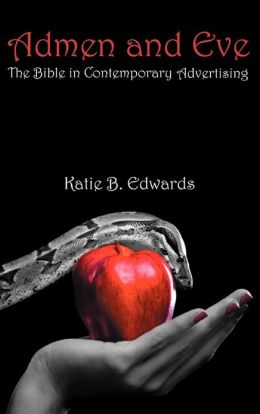
I recently read Katie B. Edwards’ Admen and Eve: The Bible in Contemporary Advertising. Edwards identifies herself with the contemporary feminism that is associated with biblical study. Reading the Bible from a woman’s perspective can’t possibly come at a cheap price. Nevertheless, Edwards focuses on the character of Eve, and specifically how she is used in post-feminist advertising. Admen who are targeting the younger demographic of women about up to thirty present Eve as a strong female, sometimes next to an insipid Adam (good-looking, but essentially brainless). Even though Eve may appear undressed, she is self-objectified, according to Edwards, and therefore is not objectified by the viewer. Along the way, Edwards also does some hermeneutical work on Genesis 2-3, and showing how the story is recast in terms of a buyer’s market.

As interesting as I found Edwards’ analysis, what stood out most strongly was the fact that advertisers have no difficulty in using a biblical character for a biblically illiterate public. Many people in the western world recognize Jesus (whether Buddy or the regular one), but of Hebrew Bible characters perhaps the only ones that readily come to mind are Eve and Adam, Noah, Moses, and David and Goliath. Some still recognize Samson. These characters, however, are almost always lifted from their contexts—they are caricatures rather than the object lessons they were originally intended to be. What Edwards demonstrates, the admen have known all along: sects sells. If you want them to buy, make the marks feel like it is a religious act. And we can almost hear the advertisers say, “Let us prey.”


Class-less Society

HiddenInjuries Dated, yet still relevant, The Hidden Injuries of Class by Richard Sennett and Jonathan Cobb brings to the limelight that which much of the world wishes to ignore. At least the affluent world. The very concept of “class” has a dangerously tilting effect on human society. That which is “valuable” is only so by common consent, and those who have more of it inevitably raise themselves above those deprived. In a world where food is scarce, bread becomes currency. The trick to any unequal society is declare an arbitrary standard of value that some may horde while others strive to attain it. We are largely content today to work for money we seldom physically see. We are employed at professions assessed by their value to the “owners” of companies who frequently misunderstand that ownership to include the lives of their employees. And that’s just the middle class!

No doubt, living standards for most people have improved in the decades since Sennett and Cobb produced their study, but the base root of the problem still projects out far enough to be tripped over repeatedly—lack of a sense of personal worth. The working poor have always striven for dignity, a sense of worth. I found much in this book that rang true for my personal circumstances. The Hidden Injuries of Class is based on interviews with workers, some of whom “changed classes,” working from blue collar to white collar positions. Validating my experience, the sense of self-worth among those who’d thus advanced did not keep pace with their class expectations. Those of us raised in the working-class world know our place. Yes, we may learn to act like those middle class, and sometimes privileged workers around us, but we know deep down that we came from humble stock. We sit at desks in offices, knowing that we belong behind a broom or holding a shovel. Not a day elapses when I don’t ponder that I’m a drone a little too deep into the hive.

Any society requires those who are willing to do the less-than-desirable jobs. It will take more than reality TV to add dignity to the personal assessment of such workers, however. Although I’m not a TV watcher, the times I view reality programs that highlight the “ordinary people” we come off looking like the unsophisticated rubes of the affluent imagination. Duck hunters may laugh all the way to the bank, but when you’re off camera a different reality, I’m sure, takes hold. We are entertained by the antics of those who don’t know how society folk behave. In my limited experience I went from janitor to academic dean of an Episcopal seminary where Archbishops of Canterbury were not rare visitors. Literal lords of the realm sat at the same dining table that now holds the peanut butter that comprises my lunch each day. I can act polished with the best of them, but I know once they leave I’ll again become the kid who grew up among junk cars and working-class prospects. And I know which is the more authentic life.


Great Caesar’s Cost

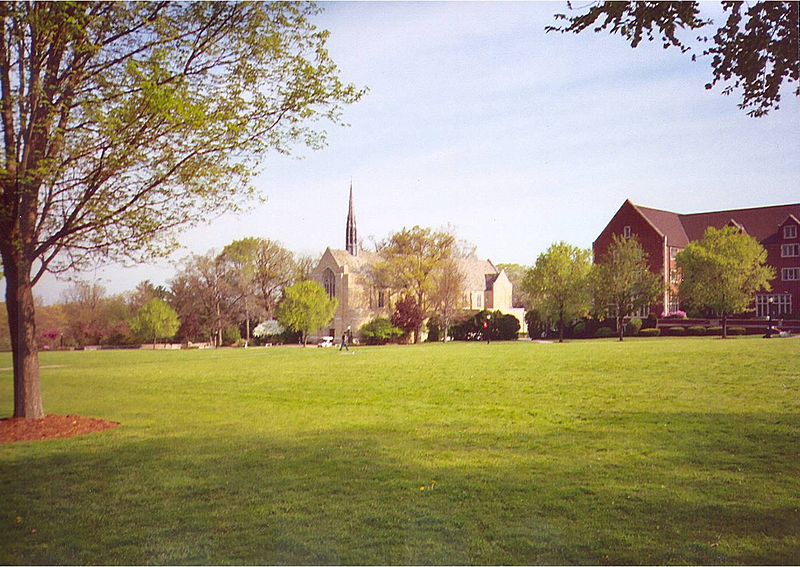
College has been on my mind quite a bit lately. Thinking back to my own experience, I chose a school, as a first-generation college student, based on what I knew at the time. It wasn’t much. I chose a school close to home, and safe. A place friendly to, in what I believed to be a world in open hostility to, “Christianity,” by which I meant the conservative, Evangelical variety. The school I settled on, Grove City College, was at the time a selective school. This was the early 1980s and the “Religious Right” was just beginning to appear on the political horizon. Grove City was a Presbyterian college, and the Reformed, although sometimes theologically conservative, have generally been a bit more socially progressive. I recall the admissions numbers being trotted out to the incoming class, about how elite we were (something I’ve always denied and find personally objectionable) at having been admitted to a selective, private enclave such as GCC (“God’s Country Club” as it was locally known). Many of the kids did come from monied families, but I was there on the basis of government subsidized (and unsubsidized, as if I knew the difference) loans.

When my daughter was considering colleges she had been warned about Grove City. One of her friends was contemplating it, but soon wisely cast her thoughts elsewhere. Nevertheless curious, I picked up the Princeton Review’s The Best 376 Colleges, a kind of Bible for the collegiate-bound, to see if my old alma mater rated a mention. Sure enough, Grove City was present. For those wishing to make it in the heartless world of business, it can be a good training ground. What caught my attention, however, was the acceptance rate. According to the 2012 edition, 74% of applicants were admitted. So much for selective! This figure swirled around my gray matter for some months as I started to sort out the implications.

Over the past few decades, Grove City College—which was always conservative—has allied itself closely with the posturing of Tea Party types. Herein lies a true dilemma for the educated bourgeois: how to be intellectually progressive and socially repressed at the same time. To accomplish this difficult trick, a non-negotiable bedrock is required, and since even the earth is spinning crazily on its axis the only true solidity in the universe is religion. Claiming that, despite the 14.5 billion years of this universe’s elapsed lifespan, only one thing never changes and that is a particular interpretation of Scripture, you can go ahead with your science and your arts. But most of all, with your business. Although black holes may exist, and textual criticism may indicate Scripture has its own gray areas after all, nothing counts much at the end of the day if you don’t have capital to back you up. Open admission policies can be interpreted in more than one way, depending on your point of view.

Photo by "the Enlightenment"

Photo by “the Enlightenment”


Hair to the Throne

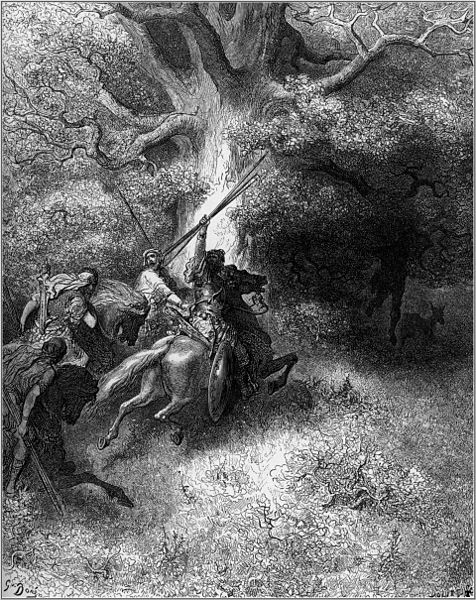
Absalom was the first of the big-hair rock stars. According to the book of 2 Samuel, his hair was so luxuriant that he had it cut once a year and it weighed two hundred shekels (about five pounds, not sterling). This little bit of foreshadowing in 2 Samuel 14 will appear again in the story of Absalom’s demise, as he is caught in a great oak tree by his untrimmed hair. I’ve always related to Absalom on the coiffure issue—I don’t like getting my hair cut. In my more self-analytical moods, I relate it to having stepped on a bee’s nest as a child and having received multiple stings on my bare legs. That horrible buzzing of bees in my ears stayed with me, and whenever the girl at SuperCuts grabs the clippers and the bee-like drone nears my ears I flinch in terror. Like Absalom I have rather an abundance of hair, and so when I’m shorn, it is easily noticeable. I don’t like people to comment on it, however. One of the most banal phrases, not to mention an utter tautology, is when someone smartly observes, “you got a haircut.” With what am I to follow this up? “Yes—I was feeling a bit too much like Absalom in the forest of Ephraim where Joab found him dangling in the tree after David followed the advice of Hushai instead of Ahithophel”?

Gustave_dore_bibel_death_of_absalom

While walking through a mall recently, I commented to a friend how all the stores seemed to be clothing and shoe stores. You never find a bookstore any more, or museum shops, or anything approaching profundity. People really mostly care about what they look like on the outside. I’m more of an interior guy. Not among those generally cast among the hunky, good-looking examples of masculinity, I’m small, bookish, and still wear clothes that I’ve owned for two decades. My hair is usually out of control as well, but not in a fashionable Einsteinian way. I am, I fear, the heir of Absalom.

Religion used to be a source of profundity. It was, once upon a time, the queen of sciences, and philosophy was her handmaid. Seeing the way that religion appears in the media today, however, I’d have to guess she’s been shopping at the mall. Those who measure religion by the cut of her hem rather than by how deep her thoughts may be, have brought her into the limelight of popular culture. She used to be all about the meaning of life and offered a reason for many of us to get out of bed in the morning. Absalom’s trouble started out when he fell in lust with his half-sister Tamar. His addiction to appearances led him to bad decisions that ultimately divided David’s kingdom and cost him his very life. And I guess that’s the price you pay for not getting a haircut on a regular basis.


Fair Country?

One of the lesser known Bruce Springsteen songs is “County Fair.” I hadn’t heard the song until I purchased The Essential Bruce Springsteen some years back when you actually had to buy a disc to get the music. Not a rock-n-roll anthem, it is a quiet, poignant song about the existential pleasures of a county fair. My daughter has been a 4-H member for six years and we’ve annually attended our county fair-the largest free fair east of the Mississippi, it is said-each of those years. In a good year 10,000 people will wander through, looking at farm animals that seem so foreign in our urban lives and which most people only recognize covered in gravy or some glaze. They see the exotic animals and pets so cute that they should be illegal. Like a fledgling college campus there are Arts and Sciences tents. Model planes, model trains, and model automobiles. To a sophisticated adult this might seem like pretty mind-numbing stuff, but I never fail to leave feeling inspired. I play “County Fair” religiously before heading out the door. Yesterday saw the close of the sixty-fifth Somerset County 4-H Fair, and despite the periodic showers, people seemed to be enjoying themselves.

Under the commercial tent stands the Gideons’ table. Each year the fair is literally littered with free Bibles. I noticed with interest that the sign, which had originally read “Free Testaments” had been redacted to “Free New Testaments.” I tried to imagine the conversations, or confrontations that led to such a change. I can’t say for certain, but I suspect Hebrew Bible professors are not among the higher demographics of fair attendees. Most of the colleagues I know would never confront a poor Gideonite about ambiguously handing out New Testaments. I did, however, experience a kind of existential downgrade here. Christians used to declare, doctrinally at least, that the “testaments” were equal. Sure, when you’re standing on the George Washington Bridge trying to decide whether or not to jump, there’s some parts of the older testament that you’d probably be better off not reading. Nevertheless, doesn’t the rule book say the two are part of a whole?

IMG_0922

Nationally, as I well know, there are fewer “Old Testament” jobs than “New Testament.” But that slick little book the Gideons hand out feels a lot more streamlined than the bulky full edition. And I also realize that walking around a relaxing event like a county fair, seeking the most innocent kinds of fun imaginable, that a Bible in your hip pocket is probably overkill. There seems to be no devil lurking here among the sheep and the goats. Feet damp from the rain, under a cloudy, August nighttime sky, sitting in the car my daughter reflects on how this is her last fair as a 4-H member. I wish there were some twinkling stars overhead to make this a storybook ending. But all I’ve got is a truncated Bible in my pocket, and it is missing my favorite part.


Where Angels Drink

Moving water is an impressive erosive force. When I have the opportunity to visit family in the western United States, we generally visit a cold, meltwater stream in the mountains where numerous circular cavities dot the resistant granite and basalt that make up the main exposed rock of the mountains. These cavities are nearly perfectly round, and can be quite deep. They are formed by pebbles and other sediment settling in natural depressions in the rock and being swirled around as the waters gush down the mountain. Over the millennia, the swirls grow into deeper holes, trapping the pebbles that will act as a natural drill, cutting away the circular depression as they are roiled around by the endless flow of water. Some of these potholes can grow quite large, but the ones I generally see have the diameter of perhaps a basketball, and are only about a cubit deep. They are young potholes.

At least that’s what I used to believe. The last time I was in the mountains, some younger members of the wider family were there. They came back from visiting the exact same creek that I had the day before, reporting that they’d seen the angels’ drinking cups. Excited in the way that only kids can be, they chattered on about the potholes and quickly moved on to other diversions. My mind, however, was fixated at the geologic phenomenon I had just seen. More precisely, I was amazed at how a religious explanation had come to account for a well understood aspect of nature. The previous day I had explained to my daughter the forces of nature that had carved these curiosities quite without angels. I had witnessed a kind of mythopoeia: the birth of a myth. The children probably did not make up this name, but I had never before heard it.

A very large pothole from Wikicommons (in Finland)

A very large pothole from Wikicommons (in Finland)

When potholes grow very large they are sometimes called the more secular giant’s cauldrons or giant’s kettles. When we see something in nature that appears to be intelligently designed, the mind naturally moves to the realm of the mythical. We don’t believe in giants any more, but angels are somewhat commonplace in the repertoire of supernatural creatures taken seriously. Surveys continually show that many Americans believe in angels, whether guardian or garden variety. Many people claim to have seen them. I can’t make that boast myself, but I now have a suspicion of where I might look to find angels. Particularly if it is a hot night in the mountains, I will, I’m sure, find them at their favorite watering holes.


Five Man Electrical Band

I grew up looking for signs. If you sincerely believe the Fundamentalist worldview, then we are all part of a great, divine dramaturgy in which we have expected roles to fulfill. The script (Holy Scripture) is a little vague on the individual details, but if you know where to look you can find signs. They may be obvious and literal or subtle and ambiguous. The faithful, however, know they must seek them out and take their chances. I grew up in a decidedly blue-collar world. In my head, though, it felt like I was meant for something more. My career ambition was to be a janitor, but my reading and the counsel I received from those who knew more than I did suggested I might have a higher calling. The concept was unfamiliar at first, but compelling. I had to be able to read the signs. I remember hearing about seminary for the first time. If I was going to be a preacher, I had to go to seminary. The summer before starting college, I sat on the dilapidated front porch of my step-father’s house and taught myself to draw the Greek alphabet. Signs were rare, but when spotted, definitive.

Seminary came to define my existence in a way that I couldn’t foresee. I started college with the idea that, all things being equal, I’d end up at seminary. Still, I was drawn to the life of a faculty member in a liberal arts setting. Eventually, I recognized it as my calling. Getting to seminary proved more difficult than I’d imagined. It wasn’t the grades—it was the expenses. I was in debt and I knew that bank barons did not forgive us ours as we forgave others theirs. In seminary, signs came to take on differing interpretations. Maybe I was correct about ministry or maybe not. Looking closely, I could see that the script had marginal notes, and that it wasn’t even the original manuscript after all. I’d learned original languages only to become more confused about the signs. When I left seminary I knew one thing for certain—I didn’t ever want to teach in one.

My first professional job, of course, was teaching in a seminary. It was not a matter of free choice as much as free economy in free-fall. In the early ’90’s recession, jobs were few and signs completely distorted. When impolitely asked to leave my seminary position after a decade and a half, I was type-cast as a bit-player. The washed-up seminary teacher. I began to see signs along the highway for seminaries trying to recruit potential clergy. This was no longer a calling, but a job option. Don’t enjoy the rat race? Why not try opting out? The pay won’t be as good, and society will come to despise the very doctrines you’ll be taught, but at least it’s a living. I still see such signs. And I’m still not sure if I’m reading correctly. And even today, I notice with appreciation when a floor is expertly stripped, cleaned, and waxed.

IMG_0723