Blessing Nature

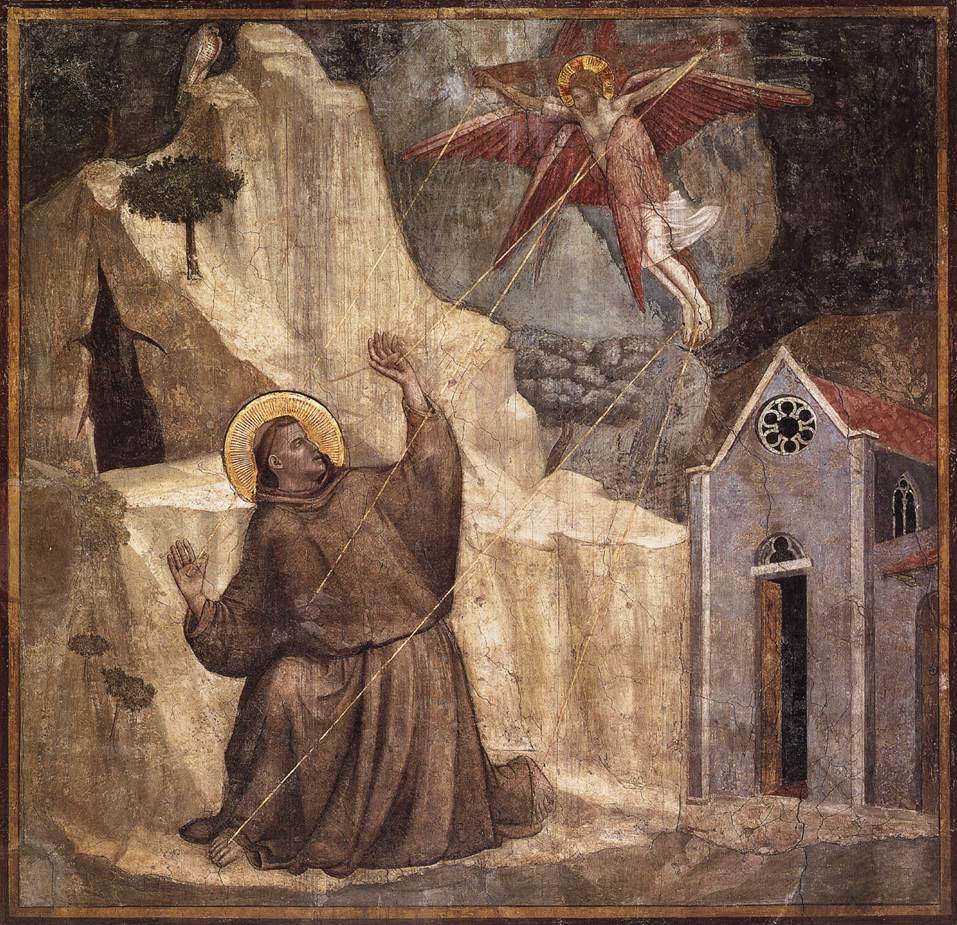
Today is the traditional Feast of St. Francis of Assisi. Yesterday the local Episcopal Church celebrated this feast with the somewhat Anglophile practice of the blessing of the animals. This is not generally an event to which my family pays particular attention – although we are animal lovers the only pets we have are hermit crabs and the spiders and bugs that naturally make their home along with us. Yesterday also happened to be a beautiful day for the local street fair and my brother and his family joined mine for the event. His family includes a dog and we noticed a sign advertising the local blessing of the animals. As my brother noted that his dog might better do with an exorcism, we decided to pick up a free blessing while the offer was good.

Normally animal services are held outdoors. This in itself is a commentary on the true equality of species. Many people feel it sacrilegious to bring animals into churches. Biologically speaking, however, that would exclude us all. Perhaps for allergies or the price of carpet cleaning it may be more expedient to bless the critters outside. After all, animals do fend for themselves out-of-doors, right? As we sat in an informal circle, the priest emerged from his office with his own dog at his side. A makeshift card-table altar had a simple wooden cross atop it to sanctify the area. As soon as they reached the center of our circle, the priest’s dog squatted to defecate on the lawn. It was a lighthearted moment, but it also spawned some reflection.

When it comes to religious settings and ceremonies, many normal behaviors and actions are considered inappropriate. This invisible divide reflects the time-honored division between the sacred and the profane. There is no tangible way to distinguish between the two; sacredness is a matter of cultural taste. Absolutes for sacred and profane simply do not exist. A priest’s dog following the dictates of nature is about as sacred an example of life as experienced by all creatures on this earth as any other. Expelling of waste is one of the characteristics of life as we know it. While some may find dog droppings offensive in sacred settings, I have a feeling St. Francis would simply have laughed.
Your dog did what?
Just Druid

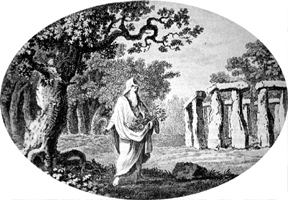
Suggestively between the autumnal equinox and fall’s cross-quarter day, yesterday British authorities announced that Druidism is now an official religion. Such an announcement, naturally, does not endorse or censure the belief system but only affects its legal status. That status relates to taxes, the handmaid of the One True God, Money. Tax-exempt, Druids are now free to worship nature free of charge.

In the recent resurgence of interest in paganism, the Druids have attracted a considerable New Age following. There is, however, no doubt that Druidism is an ancient religion predating the Christian conquest of Europe. The origins of the Druids are lost in obscurity, but they are one of any number of ancient nature cults that have become fashionable in a post-Christian society. What does it matter if a society recognizes a belief structure as a religion or not? (Apart for tax liabilities, of course!) One of the issues at stake is the perennial question of who determines what is a religion and what is not. In a society where religion is defined purely by belief, the doors are cast wide, if not blown completely off their hinges, when a group declares itself a religion. Who is the final arbiter? Today the world resoundingly answers “Mammon.” When you pass that collection plate, or basket, or gourd, does the government take its cut or not?

Religions will always struggle to convince the many that they each possess the one, true faith. Some will do it through magic, others through nature, and others through divine revelation. All will be subject to the scrutiny of government fleshpots greedy for a share whenever money changes hands. Druids have lurked in the shadows for thousands of years. By publicly receiving the blessing of tax-exempt status, they are free once more to disappear into the mists and attract the envy of more imperially minded religions.

A Druid attempting tax evasion?


Ask Your Local Agnostic

A study released by the Pew Foundation reveals something many may find surprising: the best informed citizens on religion tend to be those who do not believe. There are obviously exceptions to this trend, but for those of us who teach religion it certainly rings true. Over nearly the past two decades, I have repeatedly encountered students brimming with religious zeal, but who know very little about what they’re so excited about. The emotional charge is real enough, but few Americans know in any detail what their religion actually teaches. Some of us didn’t need the Pew report to tell us this – we have known this all along.

One of the flip assumptions that must fall by the wayside here is that non-believers don’t know what they’re missing. In fact, it seems, many of them consciously reject what they are brought up believing. This also fails to surprise those who spend much time with religious studies. Religions are developed in defined culturally and chronologically bound circumstances. The longer it takes the parousia to occur, the more human knowledge mitigates against it. In a pre-scientific first century many ideas held a currency that no longer bears weight in theological commerce. Those who study it closely realize this.

As political parties gear up for midterm elections and various contenders are sending out their feelers for the highest office (secular, in this country), they know something the electorate does not. Religion, poorly understood, is perhaps the greatest motivator known to the politically ambitious. People believe – and feel it strongly – but what exactly it is they believe, they are not sure. Anyone who has read the Bible soberly, on its own terms, without ecclesiastical lenses firmly in place, walks away with more questions than answers. Religious belief relies on answers, often at the expense of knowledge. So it is that the Pew Forum on Religion and Public Life has discovered something that those of us who daily live with religion had already surmised from the evidence right before our eyes.


Dark Side of Religion

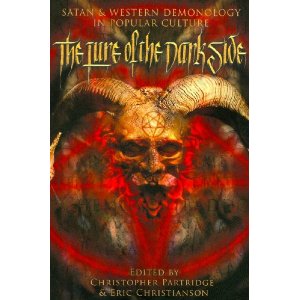
Back in August I received a book to review for Relegere, the new online journal for Studies in Religion and Reception. The volume I received was The Lure of the Dark Side: Satan and Western Demonology in Popular Culture, edited by Christopher Partridge and Eric Christianson. I found this assignment to be a felicitous one for many reasons: the book was very interesting, the topic is intriguing, the authors are scholars who take popular culture to be worth serious study, and it exposes the roots of many perceptions of Satan and the demonic in western society today. While I cannot present the whole review here – I would encourage interested readers to explore the appropriate issue of Relegere when it is published – I would feel remiss if I didn’t at least mention a few of the highlights here.

Scary cover

First of all, the book is a collection of essays that cover the media of music, film, and literature. Many of my students like to point out the propensity of death metal bands for choosing ancient Near Eastern gods and themes for their band names and songs. The first two essays in this book explore black metal and its self-proclaimed Satanic intent. What is interesting here is that what many black metal bands declare as their “religion” does not, in fact, fit with mainline Satanism at all. This aspect of the book is worth reading just to see how religious ideas, both unholy and holy, easily become distorted when transformed into an artistic medium. By far my favorite essays, however, were those that analyzed horror films according to religious themes and concepts. It was refreshing to see serious scholars discussing vampires without flinching, noting how they are part of the same fabric from which religion is cut.

One of the recurrent criticisms of academic writing is that it generally reaches only academic audiences. Certainly at the prices common at academic presses the average layperson would need to be exceptionally motivated to pay out the cost to read what are admittedly generally dry and technical books. Equinox has fortunately released an affordable paperback version of this volume, making the price less of an issue. The content is, for the most part, readily accessible to the general reader. The cover is a tad lurid; when I took it along to the DMV to renew my driver’s license I felt a bit self-conscious in the waiting room. Beyond that, this was a rare academic book that should find a wide readership. For me, the bibliographies and filmographies demonstrated my own deficiencies in keeping up with popular culture. I would recommend it for those with a sturdy constitution who want to know the correct way to dispatch a vampire in the twenty-first century.


From Bragg to Phelps

Religious freedom is proving to be a two-way street. The news is rife with stories of religious groups pushing the limits beyond their right to state an opinion into arguably unconstitutional behaviors. At Fort Bragg, the Army is sponsoring Rock the Fort, a Christian rock concert promoted by the Billy Graham Evangelical Association. Although Christian bands are spiritually minded, they do not perform for free, raising the question whether military (government) money is being spent to promote a particular religion, a particular strain of Evangelical Christianity. In offering this concert, is the government endorsing this one religion? Statements that other religions are free to send their rock groups to Army bases rings hollow when, with rare exceptions, such groups simply do not exist.

Meanwhile, Time magazine brings the curious Westboro Baptist Church of Topeka, Kansas back to the headlines now that Supreme Court has been called in to argue whether their outspoken condemnation of the military is constitutional. Fred Phelps, the founder of the church, has led divine hate campaigns across the country. It is his protests at the funerals of soldiers killed in action that has forced the question of whether his group has the right to condemn indiscriminately. The question of good taste need not even be asked.

What these Evangelical groups are pointing out is that God apparently suffers from schizophrenia. Simultaneously the great general upstairs loves soldiers and wishes to convert them and also hates them and condemns them to hell. The jury, it seems, should be the taxpayers. We are the ones footing the bill for Christian concerts and paying the not-insubstantial salaries for Supreme Court justices to argue about the legality of religious hatemongering. In these days when many feel that Islam is a threat (as Christian clergy threaten to burn the Quran), it might be worth asking where the real threat to religious freedom comes from. Religious zealots often make excellent soldiers, no matter what the religion.

These guys love God, but is the feeling mutual?


Alternate Realities

Shutter Island and Inception share more than just Leonardo DiCaprio. Both films blend the conscious and subconscious worlds in such a way as to question what reality is. To many this issue is answered by what some philosophers label “naïve realism;” the world that our senses perceive is the world as it really exists. During a guest lecture this past week, a student repeated raised the question of how we know what we know. More than simply an attempt to get the teacher off the subject, this seemed to be a legitimate existential angst. Religious studies has a way of doing this to people.

Even physicists of the twenty-first century are increasingly forced to what looks more like science fiction than apparent reality to explain our world. The quantum world is a surreal environment and as scientists close in on a theory of everything, those of us who live in the macro world wonder where reality begins and fantasy ends. Perhaps the concept of reality itself is flawed. We live with many ineluctable truths; we function biologically, live, grow, and die. Beyond that we have no way of knowing, but we believe. And during that lifespan we experience both conscious and subconscious input. The closer we look at reality the more it appears to fracture.

Perhaps that is why movies such as Shutter Island and Inception have been so popular. Scorsese and Nolan have widely differing styles, but both are relegated to a world where apparent reality doesn’t seem to be enough. Only so much of life fits in a laboratory. The vast majority of it is simply experienced, whether wakefully or while asleep. Each at the time feels like real reality. Inception seconds the question raised by Shutter Island: what is reality, and, perhaps more importantly, what will we choose to do with it?


The Very Blustery Day

What is it with car service and religion? After a long drive to and from Montclair yesterday to teach my mythology classes, I realized the poor car was due for an oil change. I try to be religious about auto service since the gods of mechanics seem to have bypassed me when handing out their gifts. I am pretty good at taking things apart, but when it comes to reconstructing them, well, they seem to work in new and interesting ways when I’m done. I don’t trust too much auto repair to myself. At the same time, Jiffy Lube is not my favorite hangout. I always take a book along, but the waiting area always has a television going and stale coffee perking, and other people chatting. It is sometimes hard to concentrate. A Friday afternoon seemed like a good time to go since weekend warriors would not be spending their first free hours at the Lube.

I had a choice of seats. I sat behind a Plexiglass divider from the television, figuring it might muffle the sound a bit, and began trying to focus on my work. The TV was on ABC, an early news show was running. I hadn’t been reading ten minutes when I heard the Bible mentioned on the news. I scrunched forward to peer around the windshield wipers suspended from the rack on the other side of the Plexiglass. An official looking authority named Carl Druze of the National Center for Atmospheric Research was explaining to an unseen journalist how he’d discovered the miracle of the Exodus! The government scientist explained, with a fancy graphic illustration, how if the wind blew all night the Red Sea would part into a marshy bit of mostly dry land for up to four hours, giving the Israelites an opportunity to walk right out of Egypt. The woman tending the register was so curious about my bent-over posture that she came around to see what the story was about. When she saw, she gave me a doubtful smile. The story concluded by mentioning that Carl Druze is a devout Christian, but that had nothing to do with his research.

Scientists have long tried to explain mythological episodes. Over the years I have read many implausible conjectures of “perfect storm” conditions that could lead to a dried sea bed, a series of horrific plagues, a world-wide flood, or even the earth itself holding still on its axis for 24 hours. While clever, these scientific fictions miss the point. The Bible is presenting miracles as unaccountable acts of God. No formulas or figures can explain them. I was bemused since four hours would hardly be time enough for the (at least) three million Israelites cited by Exodus to have made it across marshy swampland with their considerable material goods. The fact remains that no archaeological evidence for the exodus exists, claims of chariot-wheel shaped coral in the Red Sea notwithstanding. If the Bible had been intending to be literal here, it would have been the end of Egypt since the army was completely wiped out. And this was on the eve of the invasion of the Sea Peoples. There is a reason I let automotive experts work on my car. It is always interesting when scientists tinker with the Bible, but I’m glad that such tinkering doesn’t involve a half-ton of metal that is capable of racing down the highway at speeds the fleeing Israelites would have been overjoyed to have achieved on the road out of Egypt.

Dive low, sweet chariot


Bleached Angels

A friend recently asked why, in the canons of western art, angels suddenly made the shift from colorful to predominately white. What was behind this loss of color? The history of angel imagery is complex and a great deal of the complication derives from a generally iconoclastic sensibility in late Israelite religion. Images were frowned upon, so we do not get “Hebrew angels” recorded for us. The current-day perception of angels seems to go back to Mesopotamian Apkallu figures and Egyptian deities. In both ancient cultures various deities and demi-gods were portrayed as winged humans. The Egyptian figures, at least, were colorful. In the world of the Hebrew Bible angels are nowhere cited as having wings and they were likely imagined as being pretty much the same as humans in form. Many biblical characters mistake angels for people.

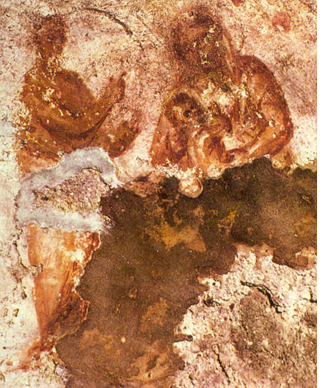
In Greek portrayals, Nike, goddess of victory, is a winged character. Eros, the god of love, also bears wings (and unlike Nike, he is generally bare all over.) In some vase paintings the Harpies are winged women. Since Greek pottery painting was generally monochromatic, we don’t have much color to go on. The earliest Christian angel portrayal comes from the Priscilla Catacomb in Rome. This angel is monochrome and wingless. The more familiar, and lavishly colored angels are Byzantine creations. Since my opinions on art history are not to be trusted, it is advisable not to make too much of this, but Byzantine art made flamboyant use of saturated hues to bring glory to God. This is part of the tradition behind Orthodox icon writing, and angels were simply following suit.

In the Middle Ages in Europe, angels were widely used to represent good and evil. It would stand to reason (if not to art-historical standards) that “good angels” would show their goodness by donning white apparel while “evil angels” would take on darker garb. This also fits with the growing tendency to represent Satan as dark red or black in color during this time period. As angels symbolized goodness, they became bleached of their former, Byzantine color. Symbolic value outweighed aesthetic sensibilities. Today angels retain their ancient legacy of Mesopotamia, Egypt, and Greece. Wings fit the view of angels as messengers, although ancient ideas of their colors depended more on the artistic conventions of the culture than any attempt to be true-to-life.

The earliest Christian angel (left)


Shopping for Truth

Friends often tell me that I should start a new religion. After all, modern day religious practice is generally a matter of “shopping around” until you find a brand you like. Lifetimes go into shaping religious sensibilities and outlooks, and when we see something we like, we choose that as our spiritual refuge. I was reminded of this once again by a story in Friday’s New Jersey Star-Ledger about a girl who’s been suspended from school for following her religion. Her North Carolina school has a dress code forbidding certain body piercings, but the girl belongs to the Church of Body Modification. The girl’s mother makes a valid point (in the words of the Associated Press article by Tom Breen): “school officials are setting themselves up as judges of what constitutes a ‘real’ religion.”

Religion may be defined in many different ways. Today many people consider religion a belief system that requires a strong faith commitment; belief is primary in such a definition. On the other hand, today’s world still includes many people who are born into a religion that is essentially a system of rituals or practices rather than a belief structure. It could be argued that such people do their rituals and practices precisely because they believe them, but often belief is not even discussed. It is simply a matter of who they are.

If religion entails solely a belief system, then any number of philosophies and outlooks might be defined as religious. Governments would need to be liberal with their tax-exempt status coupon books, since should I declare that my predilection for things Ugaritic to be a religion, who could reasonably protest? With a couple of like-minded adherents, we would have created a new religion (or a very old religion, depending on how you look at it).

Religious freedom defines the United States. For all its faults and foibles, this nation has allowed freedom of conscience to be the yardstick by which we are measured. If the girl’s religion insists on a nose-ring, who is local government to dispute this? If we could learn to define what a religion is, perhaps we would be much further along the path of ensuring true religious liberty.

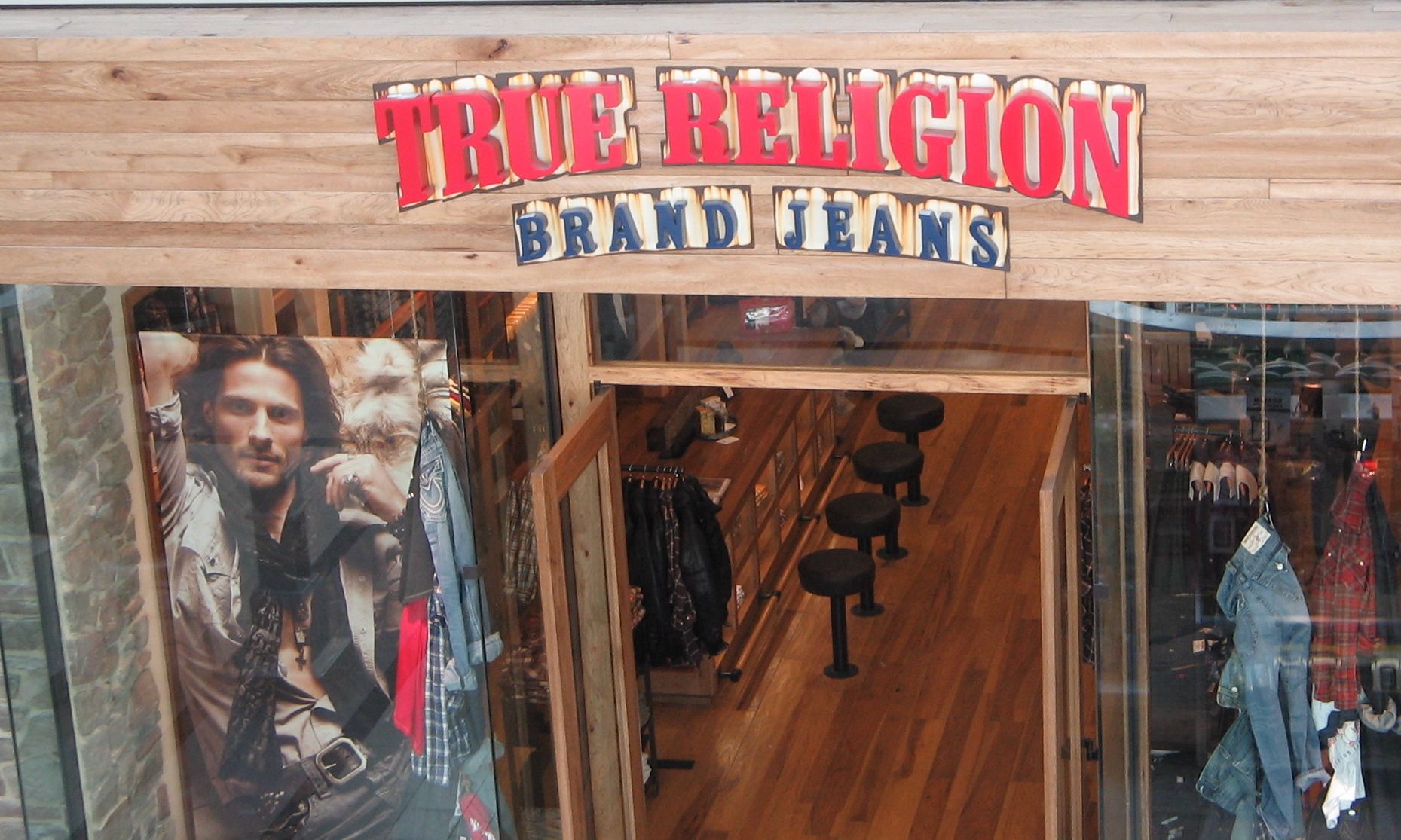
Finding true religion in the shopping mall of life


Ends and Beginnings

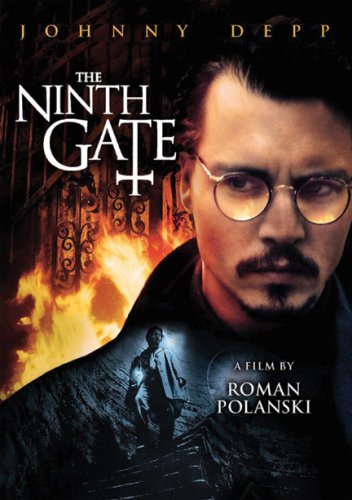
The Ninth Gate, a Roman Polanski film from a bygone decade, portrays a world the director doesn’t believe in. Typical of “devil movies,” the story involves a personified evil that not only seeks world domination, but who also writes books. I’ve been working on a book review for Relegere, the new online journal of Studies in Religion and Reception. In part the book addresses how the devil is portrayed in movies, although this particular film is not cited. Perhaps it is difficult to take seriously a film where the screenwriter is not a believer.

As a young teen I listened with horror as friends described The Omen, a movie that I never saw until just last year. The premise of the movie, that the Antichrist has already been born and is now walking the earth, ready to usher in Hal Lindsey-esque last days, is frightening to those who find a biblical basis for the idea. When finally watching the film the scariest part was viewing the extras. David Seltzer, author of both the book and screenplay, eerily tells the interviewer that he believes the Antichrist to be here now. His acceptance of mythology is admirable, but it is the problematic acquiescence to a modern reconstruction of disparate ancient views that is troubling. Like many late-twentieth century westerners, Seltzer has been influenced by attempts to construct a coherent account of the apocalypse from tattered bits of ancient traditions that never belonged together.

If education included a serious, critical look at how religious ideas developed, the world might be spared this sad predilection for seeking its own end. Apocalyptic ideas thrive in cultures of persecution, such as those very real torments of Jews under Antiochus and Christians under Nero. Their hopes for a brave new world of righteous rule, borrowing freely from Zoroastrian traditions of a new age, offered scraps of expectation of a better tomorrow to those dying today. When nineteenth-century evangelists saw the advances of industrialization and Darwin’s rational explanations of human origins, they felt the need to reconstruct the biblical demise of the world. Modern day apocalypticism, so evident in the Y2K, 9/11, and 2012 scares, is often ready to accept uncritically a supposed future already scripted by a sadly misunderstood Bible. If the world ends it will be our own doing, and maybe Roman Polanski will have to rethink whether or not a devil can actually write a book.


Noah in Time

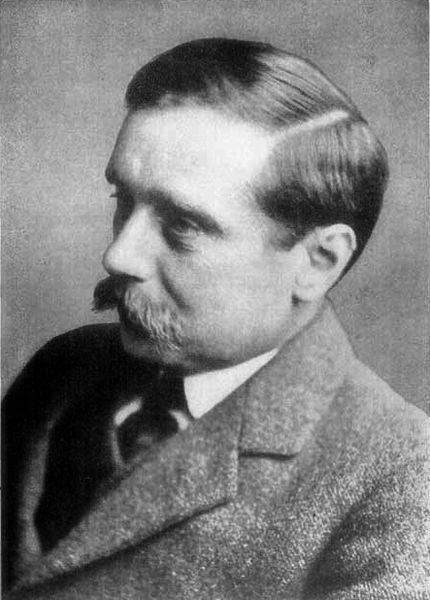
When the silence was first broken at Gorgias Press, one of my colleagues suggested that I read The Time Traveler’s Wife by Audrey Niffenegger. The title suggested to me some kind of point-of-view rewriting of H. G. Wells’ classic The Time Machine, a novel that had a large influence on my young, science-fiction inclined mind. For some reason I wanted to keep this place sacred to the memory of Wells and I dismissed the suggestion with polite demurral. Since that time Niffenegger has been constructing quite a reputation as a novelist, and because I enjoy the implications of time-travel and I like to keep current – fashionably late, of course – I finally took the time to read the book.

I wasn’t sure what to expect; it is a sensitive love story, wrenching in parts, but the mysteries of time travel are left to a genetic defect and not some technological invention. In the course of wending in and out of past and present lives, the main characters, Clare and Henry, carry on a dialogue that includes the dynamic of a protagonist raised Catholic. Once, while discussing the bizarre nature of time traveling, Henry suggests that Noah is a fairy tale to which Clare replies, “Noah is in the Bible. He’s not a fairy tale.” This statement reaffirms that, for many people, Noah is the obvious touchstone of the Bible and modern society. A versatile figure, enigmatic and only sketchily drawn in the Bible, Noah reappears regularly in the popular media. Just this summer I noted how Justin Cronin’s The Passage also cites Noah as a schematic for much of the plot that bears the story. A few weeks ago I mentioned how the remake of The Day the Earth Stood Still viewed Klaatu’s ship as an ark. Noah from outer space.

Noah is a foundational figure for our society. This should not be surprising since the flood myth is among the most ancient of stories that humanity has relegated to religious literature. The Sumerians and Babylonians told the story long before Genesis was composed. In its own way, the Noah story is an example of time-travel. A tale whose origins are lost in the pre-literate stages of humanity, it becomes history with the uncritical acceptance of the Bible, only to become a defining myth of twenty-first century literature. The world of the twenty-first century often feels like a fragile environment ripe for a catastrophic flood. Consciously or not, we are still looking for our Noah.

Another kind of Noah


Sinful Moonsters

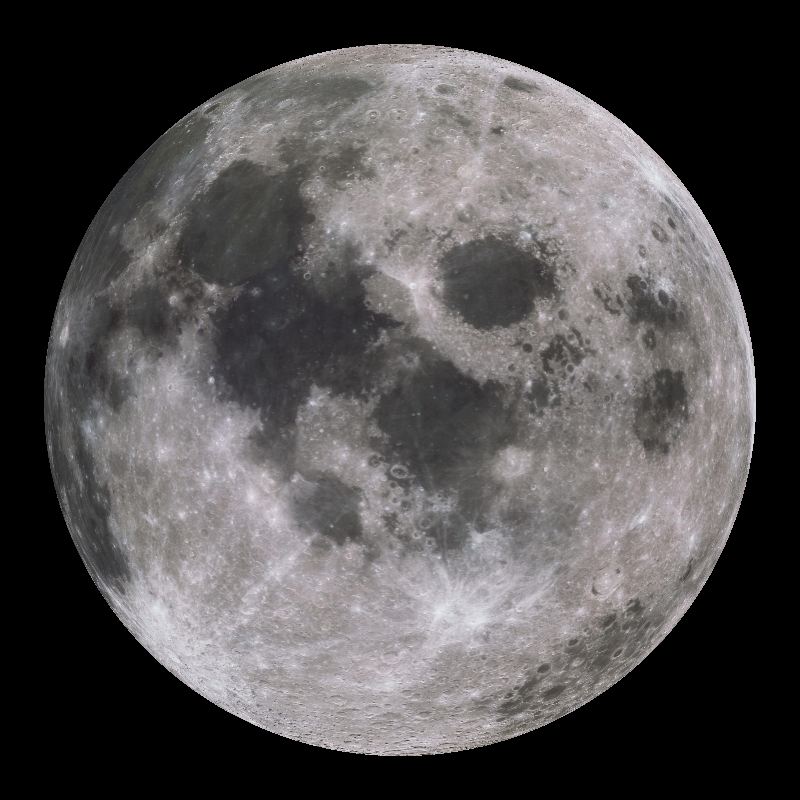
Wednesday night a student asked me about the moon god Sin. The name “Sin” has nothing etymologically in common with the usual English word for wrongdoing; they are simply homonyms. Nevertheless, when students first encounter this odd juxtaposition they often think that there must be something to it. This particular student pointed out that many activities classified as sinful take place at night, under the moon. Could they be connected? Linguistically, no; but it did get me thinking about the idea of the moon’s baleful influence on various creatures of the night.

Serious academic works seldom take vampires, werewolves and witches, some of the moon’s most infamously unholy acolytes, to be worthy of valuable research time. Meanwhile Stephanie Meyer and company are laughing all the way to the blood bank. Popular culture gives credence to the children of the night that the academic world ignores. I tried to do a little research on the moon and its mythology only to find that most moon books deal either with serious attempts at astronomy or serious attempts at astrology, neither of which I was seeking. I wanted to know when the moon had slipped from being the gentle god/goddess of the night into its role as the overseer of evil.

Evidence was scant, but it seems that in the Middle Ages, maybe influenced by late Roman ideas, scholars began to recognize the moon’s potential as a dismal influence. The moon has long been popular in folklore as a source of lunacy and luck. Lovers crave the moonlight, but so do teenage vampires and raging werewolves. This is, apparently, a concept of no great ancient pedigree. In any case, the moon here has nothing to do with sin.


I’ll Take Coffee, Thank You

Yesterday’s victory of Christine O’Donnell in Delaware’s senate primaries seems to have shocked a lot of people. Have these people not been paying attention? Did they sleep through Beckpalooza? Have they failed to see that Sarah Palin’s lackluster life story has become a best-seller? Are Americans in denial that we are facing a major Religious Right comeback? The problem, yes, problem, is that Americans are not taught to think about religion for themselves. Raised with the idea that their political and religious leaders have some special channel open to the divine, they are sheep led to the, well, you know…

Society pays for its sins. One of the most fatal of the deadly sins is the refusal to take ownership of religious education. Unreflective religion in the hands of politicians is a fully armed atomic warhead. Many Americans like to think this is only a problem in nations with Islamic infrastructures, nations unduly influenced by shahs, ayatollahs and imams. Nations influenced by Tea Parties, Neo-Cons and biblical amateurs are much safer, much more friendly.

Problem is, the Bible’s a mixed bag. Some of the loftiest spiritual sentiments nestle down uncritically next to calls for genocide and harsh repression. As long as it is the magic finger from above that’s written it, that’s good enough for tea-tipplers. There are few opportunities to call Americans together for a religious town meeting. We’re all too busy off doing it our own individual way. In such a climate, isn’t it best to let those without any formal religious training tell us what the Bible says we should do? Do you want one lump with that, or two?

O'Donnell takes Castle to school


Athtar in Wonderland

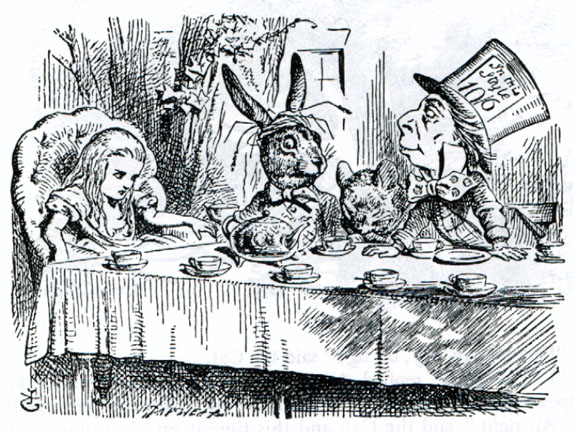
Last night I finally got around to seeing Alice in Wonderland, the Tim Burton version. As a child I don’t recall having seen the overly optimistic Disney original, and I only read Lewis Carroll’s two-part, disturbing original after I had finished my undergraduate degree. When I first discovered Wonderland I was in one of my periodic phases of questioning reality and Carroll’s provocative prose and ingenious lyric ability only made the inquiry more complex. Strangely, it felt as if I had rediscovered a missing piece of my own childhood.

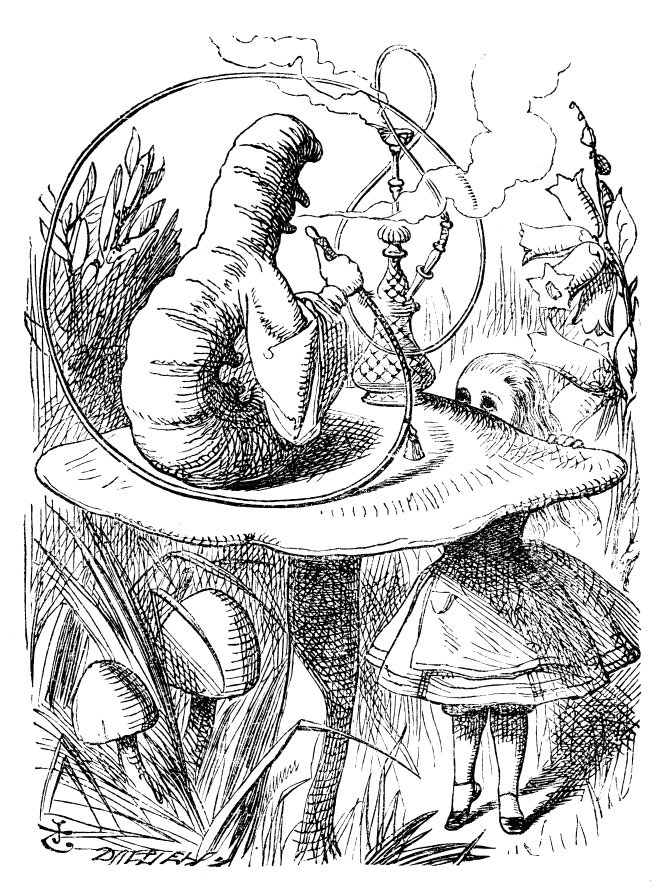
Burton’s versions of childhood stories would likely have been my preferred fare had they been available when I was young. Eerie without the overt horror of an R rating, the vision is one of a world where uncertainty reigns supreme. Then came the hookah-smoking caterpillar. It has been a few years since I’ve read the book, but I don’t recall the larval character as having a name. Linda Woolverton, the screenwriter, presumably gave him the name Absalom. Supposing this to be nothing more than the reassignment of a fated biblical name associated with failed attempts at kingship, I simply let the reference pass. Until the chrysalis scene. There he was, Absalom hanging from a plant, just like David’s son swayed from a tree according to 2 Samuel. This mysterious scene in the battle of Ephraim Forest had captured my attention before when I wrote an article on Absalom, eventually published in the Journal of Northwest Semitic Languages.

Noticing the strange phrase that Absalom was suspended between heaven and earth, I suspected that this might be a reflex of the ancient morning star (Venus) myth. The story of Athtar, the god who would be king but who must decline the throne, is a brief tale preserved in the Ugaritic Baal Cycle. As I watched the sage caterpillar giving wise advice to a confused Alice, the name Absalom took on new significance for me. I have no way of knowing if the reference was intentional or not, but in a culture deeply suffused by the Bible it would appear to be a logical guess. And if I was correct in my article, I was seeing a cinematographic reference to Athtar as a blue caterpillar last night. Wonderland indeed.

Curiouser and curiouser


Mere Typography

Juxtapositions are important. The way that words are laid out on a page can say as much as the words themselves, as any poet knows. In the light of the ongoing media frenzy over Rev. Terry Jones’ misguided attempt to set everything right with the world – through fire – and a natural attempt to keep related stories together, the New Jersey Star-Ledger ran two stories on page three yesterday that display the deep ambivalence many Americans feel about Islamic culture. At the top of the page the headline reads, “In Florida pastor’s eyes, burning of Quran is an act of war against evil.” At the bottom of the same page runs an article headlined, “Iran: Stoning sentence for adultery under review.” Two or more faces of Islamophobia on the same page.

As remarks made on my previous post on the subject attest, many westerners simply do not understand Islam. This is perhaps to be blamed on the all-too-prevalent attitude that “history is boring.” Have people been asleep for the past thirteen centuries? Islam is much closer in time to the origin of Christianity than it is to us. With concerns of supersessionism and the covert desire to capitalize on one’s religion, Christianity has been content to ignore Islam as long as those in charge have been able to maintain capitalist quo. When forced to face the fact that two major monotheistic religions have designs on the same world, some members of each camp are only too ready to declare those in the other “evil.” An attempt to understand other religions would go a long way toward ending the carnage.

Perhaps the phobia should more properly be labeled religious xenophobia. We dislike those different from us. Rare is the person who, when confronted with a contrarian, will attempt to understand rather than destroy. Students may readily qualify for higher education degrees without ever having to face the question of how to handle different religious outlooks. We would rather pretend that they are not there. The ambivalence shown towards the issues of Islam in the Star-Ledger could just as easily be turned on Christianity, or even Judaism, Hinduism, Buddhism, or Sikhism. Religions are conflicted because people are conflicted. Instead of recriminating, we should all take a long, serious pause in front of a mirror before we start accusing other religions of being evil.

Who said what now?