Literary Hunter-Gatherers

Perhaps the clearest place my hunter-gatherer roots show is in my tendency to collect. In principle, in Manhattan, I leave coins on the pavement for those less fortunate than myself. This past week on the way to work, I walked past a scattering of pennies on the sidewalk. It physically ached to leave the shiny coins there—one of my recurring dreams is to find a bunch of coins that will lead to the end of my constant fear of want. News of ancient hordes found excite me inordinately. As a child I collected odd things if they came in numbers: stamps and coins and baseball cards go without saying, but also fossils, bottle caps, little HO scale military figurines, even pockets full of punched metal slugs that had obviously fallen from a truck leaving the steel mill just across the river in blessed abundance. My mother asked, not unreasonably, “what do you plan to do with those?” My brothers and I had no answers, but we had found something in profusion. The hunter-gatherer urge was to collect.
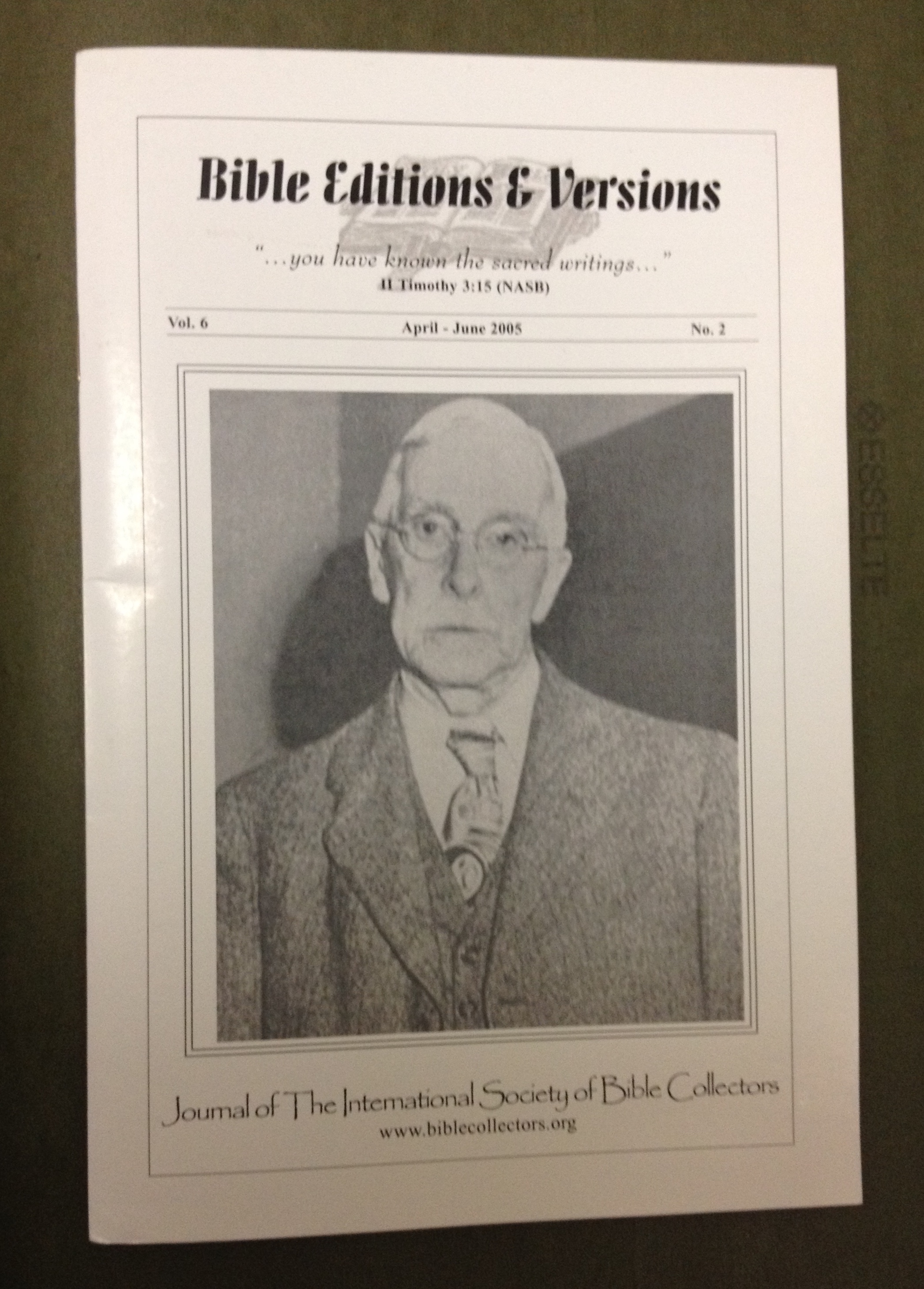
IMG_1642In my teenage years my collecting focused on books. It has remained there ever since. Even in times of penury when I’ve visited the used book store with intent to sell, I’ve always skulked out with more guilt than cash. The Judas Iscariot of the publication world. While sorting through some old files at work, I found a magazine called Bible Editions and Versions. Now, Bibles are books, and I have a fair collection of them, and have even read most of them cover-to-cover. I never knew, however, that Bible collecting was a recognized avocation. And one with a society and magazine. Looking closer, I found the address: www.biblecollectors.org, online home of the International Society of Bible Collectors. Yes, they have a website and the magazine still exists. Porn for sacred writ aficionados. The society has been around since I was two, but it took me half a century to find it.

The Bible is a totem. One colleague describes it as an iconic book. The more secular elements of society simply dismiss it until the loss of the senate makes them scratch their heads and say, “there are people who still take this stuff seriously?” While the numbers may have fallen off a bit, Bibles remain big business. Large print editions may be selling better these days, but the species is hardly endangered. In a world where so much seems uncertain, there is a natural appeal to a book that hasn’t really changed too much for a couple thousand years. Oh, and which claims to have God as its author. As I walk by that pile of pennies on the sidewalk, an almost magnetic force slows me down. I really want to stop and pick them up. I walk on knowing that in a box in my attic I have some real collectors items, in certain segments of society. For the ISBC I might be considered already a wealthy man.
Windmills of My Mind

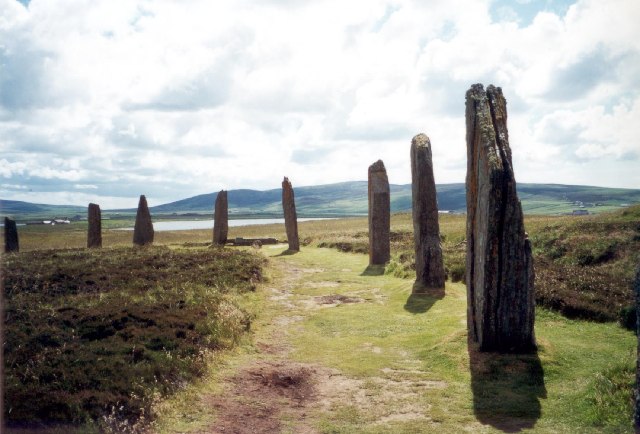
Stonehenge may be the best known stone circle in the world, but it is by no means the only one. Not too many miles from its more famous cousin lies Avebury, a village that is built on the site of an ancient stone circle and henge. Far to the north, in the Orkney Islands the impressive Ring of Brodgar stands sentinel over Stromness on Mainland. My students were sometimes surprised to learn that the Middle East also has its ancient stone circles. Some speculate that the town of Gilgal in the Hebrew Bible derived its name from such a circle. In the 1920s a series of large stone circles were discovered in what is now the kingdom of Jordan, and these circles are back in the news as archaeologists try to decipher the purpose of these huge rings. Unlike their European relatives, the Jordanian circles are only a few feet high, but they are about 400 meters in diameter. Eleven are known. Clearly not high enough to pen animals, the circles remain a mystery even today.

Ring of Brodgar, Photo credit: Alex Cameron, WikiMedia Commons

Ring of Brodgar, Photo credit: Alex Cameron, WikiMedia Commons

Most ancient circles have uncertain functions. We don’t really know what they were for, but considering the tremendous amount of labor involved at such sites as Stonehenge and Avebury, clearly they were considered extremely important. Likely religious. Circles, of course, are an embodiment of mystery—they have no beginning or ending. Even pi, a necessary figure in circular calculations, seems to be an infinitely non-repeating decimal value. Adding to the questions of the Jordanian circles is the lack of a decisive date. They seem to be a couple of millennia old at least, perhaps significantly older.

Like the lines on the plains of Nazca in Peru, the significance of the circles can only be fully appreciated from the air. People have long left drawings for the gods, it seems. Circles, however, suggest a kind of utility as well as just a pleasing shape. One of the problems of archaeology, however, is that it can’t always tell us why people built unconventional structures. Archaeologists are sometimes left guessing just as much as the rest of us. The stone circles of antiquity are, in their way, humbling feats for us to ponder. If they were religious features of the landscape, their construction in an the neolithic period points to a significance beyond the level of the great medieval cathedrals of Europe. It seems no wonder, then, that religion has been with us ever since, despite its frequently announced demise. What are the Jordanian circles? Religion often steps in to explain what reason cannot. Given what we know, this guess may be the best solution.


Let It Be

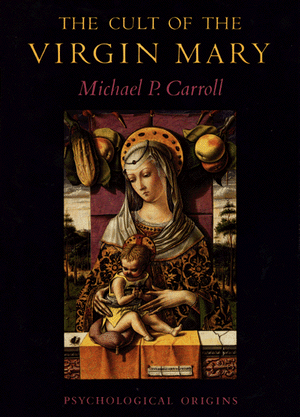
CultOfTheVirginMaryWhy do people pray to Mary? The question is a complex one and answers range from a desire to find some feminine compassion in an angry masculine god to the distinctly Freudian. Michael P. Carroll, in The Cult of the Virgin Mary: Psychological Origins, falls into the latter category. Yes, the book was written in the 1980s, but even then Oedipal complexes and penis envy were deeply suspect. Still, at various points along the way Carroll had me scratching my head and muttering “there may be something to this.” For a few pages, anyway. The problem begins much further back than Mary. To start with, we can’t all agree on what religion is. From there we move to the stage where ancient religions had as many goddesses as gods—even the divine don’t like to be lonely. The heads of most pantheons were male, which likely matched most earthly political systems. Powerful females still existed, at least in mythical realms. Monotheism effectively put an end to that, but before too terribly long, Mary emerged and eventually became almost a goddess.

Indeed, early on in his book Carroll discusses how Mary differs from the goddesses of antiquity, drawing parallels with only Cybele. Mary is the virgin mother completely dissociated from sexuality. Deeper study would reveal some mistakes in Carroll’s reasoning—there were virgin mother goddesses, such as Anat, who might in some ways fill in the gaps. Indeed, arguing for the uniqueness of Mary is kind of a goddesses-of-the-gaps theology. The more we learn the less unique any deity becomes. Still, looking to the psyche to explain Mary is a logical step. Tracing Marian devotion to the ineffective-father family, where a machoism hides a longing for the protective mother, Carroll offers us a Freudian feast of options here. Still, in the light of developments in psychology over the past quarter century, his premise is a bit dated.

We simply don’t know why Mary became such a strong devotional interest in a religion with a masculine Trinity. It would seem that women might be the motive force behind it. Given that half of Christendom was displaced, by default, from the male savior, why would Mary not emerge as the mother all people crave and whom, women know, often soften the harsh decrees of martial law? Delving into the apparitions of Mary from Our Lady of Guadalupe to Fatima and Medjugorje, Carroll finds illusions and hallucinations based on strong females behind each one. Rational inquiry into the deeply spiritual. This, however, remains the proximate cause only. What is really seen can’t be known, except to the seer. And it seems that seers tend to find, amid a religion with an omnipotent man at the top, that it is the mother who appears in times of need. Unless, of course, it is a matter of healthcare where, as government shows, father knows best.


Guy Fawkes

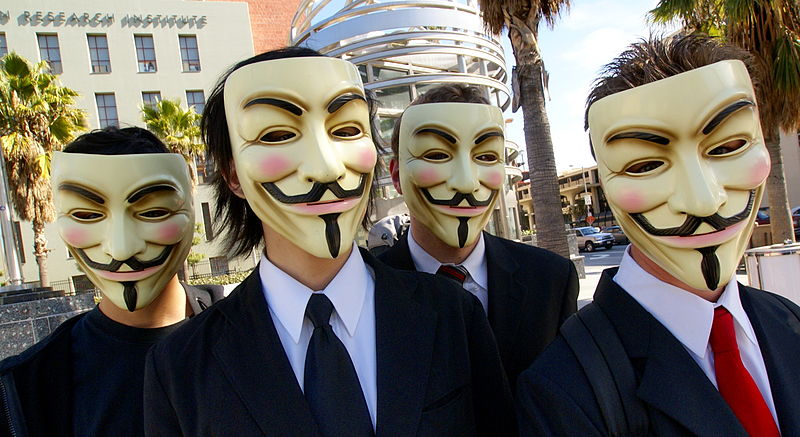
“Remember, remember the fifth of November,” so begins the poem that haunts my every autumn with V for Vendetta. As a colonial, I never really peered too deeply into the Gunpowder Plot. We were all told that Guy Fawkes was the bad guy and that he got his in the end. Recently I delved a bit deeper and learned that this was a religious conflict. Part of a conspiracy to restore a Catholic monarch to the throne of England, Fawkes was captured as he guarded the actual gunpowder of said plot, and the rest, as they say, evolved into V. The iconic Guy Fawkes mask, sometimes sported by members of Occupy Wall Street and other protest movements, has moved away from its Catholic roots and on into the realm of wider social justice. We know that blowing up our enemies is not a viable solution (we too remember, remember the eleventh of September), but the metaphorical destruction of oppressive systems may be the only way to vindicate the demands of social justice.

Dystopias have been heavily on my mind lately. Looking across the socio-political landscape I see many concerned people with no power to displace the impacted one-percenters. Politicians court money, and sociological studies show that young people don’t bother to vote and have no interest in entering politics because it is so widely known that it is a corrupt and inefficient system. While laws are easily enacted to protect extreme wealth, social security finds itself on the block as seniors are increasing in poverty almost as fast as they are increasing in numbers. In my own life I have experienced being cut off from retirement plans because I wasn’t “vested,” which I translate as “saving money for those at the top.” Still, we blithely press on, wondering if V really exists at all. We don’t need to seek out dystopias. They will discover us.

November is that graying period between the colorful burst of vindictive playfulness that is Halloween to the long night of the solstice. During this time we will vote in vain and await a better future that never seems to come. We, like V, have been an experiment of the state over the freedoms of the individual. The market, we’re told, has recovered. The average citizen has not. Every year as the evenings grow longer and the winds begin to howl, I come back to V for Vendetta and hope against hope that corruption will meet the fate of Guy Fawkes. Ironically, few turn to religious organizations any more in the never-ending search for social justice. The trenches in which many denominations have chosen to die are those of sexuality and male dominance. Meanwhile, women and men both are aging, and the very structures we put in place to ensure they could rest after lives of hard work are being eroded. Behind every mask, it seems, hides the face of a politician.

Photo credit: Vincent Diamante, Wikimedia Commons

Photo credit: Vincent Diamante, Wikimedia Commons


Horrorshow

Halloween may be over, and more’s the pity. Still, Halloween is simply the entry point to longer nights and opportunities to revisit what scares us in the dark. I have to admit to feeling a twinge of justification at reading Richard Corliss’s article “Never Watch Alone: Hollywood’s newest horror films remind us why fear loves company,” in this week’s Time magazine. One sentence in his piece on culture made me smile: “Horror movies are a rite of passage audiences never outgrow.” Okay, sure, the demographics may catapult me into the more geriatric of viewers, but I generally take my medicine neat. I do watch horror movies alone at night. And I never hit “pause.” To be honest, I have no idea why I do it. I do not like being scared, and I certainly don’t enjoy slashers. I am, however, seeking something profound.

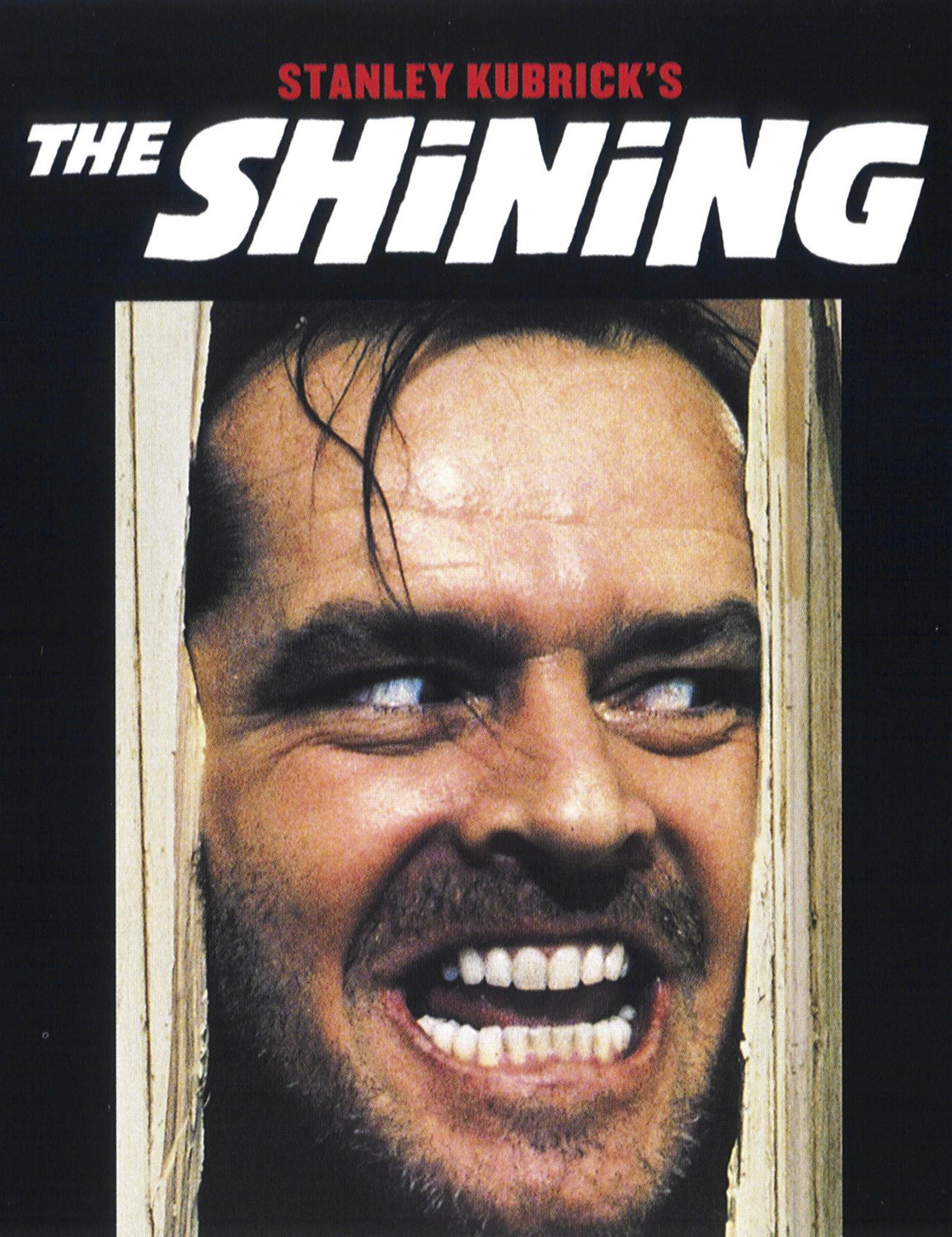
the-shiningOver the weekend my wife volunteered to watch The Shining all the way through with me. I’ve seen the movie five or six times, and I can’t seem to tire of it. The use of blood is sparing, and the pacing is positively Kubrickian, but it never fails to leave me contemplative. Don’t we all fear the madman that lurks inside? There may be ghosts in The Shining, but it is one of the least supernatural of thrillers. The monster is the protector, and nothing quite equals that disconnect for night chills. Corliss highlights the prequel to The Conjuring in his article, a movie called Annabelle. It is now on my must-see list, although dolls need not be haunted or possessed to be scary. Like Jack Torrence, they inhabit the uncanny valley of that which is close enough to human to be frightening. According to the pundits on the web, there is a real Annabelle doll collected by Ed and Lorraine Warren as a possessed toy. Debriefing with my wife after The Shining demonstrated the point Corliss was making, however. It helps to talk it out.

We spend much of our lives, I contend, trying to avoid those things that frighten us. Horror films do us a psychological service by bringing them to the surface, like desensitizing a child to spiders or snakes (at least the harmless kind). As we watch we learn what it is to be human. Religion, like horror films, is often a response to fear. Despite all our science, the world does not operate according to logic. The inexplicable happens. The horror movie allows us to explore the “what if” that science disallows. Once upon a time we went to church and held onto a crucifix. Today’s vampire is unfazed by our religious baubles. Exorcisms don’t always work—at least not completely. And the longer nights may be because the northern hemisphere is tilting away from the sun. Or maybe, just maybe, it is something more.


Medusa on the Rocks

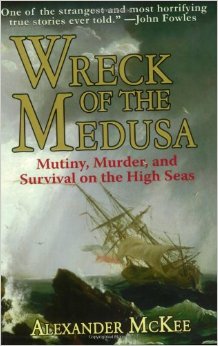
WreckOfTheMedusaShipwrecks possess a compelling resonance that is difficult to explain. I have seldom been on boats, but from my youngest days I’ve been drawn to the coast. While a student in Boston I made weekend trips to Gloucester to be near the place where ships go out to sea, sitting by the quote from Psalm 107 at the base of the famous fisherman statue. Moby Dick has passed under my eyes many times. While at Nashotah House I was frequently tormented with nightmares of sinking ships. Titanic was a huge movie late in those years, and even before watching it, I dreamed of going unceasingly down. In a used bookstore, Alexander McKee’s Wreck of the Medusa recently caught my attention. Although I’d never heard of the Medusa, the name suggested classic themes, and the shipwreck, I knew, would entail suffering and loss and human drama. I knew I had to take it home with me.

The true story of the wreck is tragic in just about every conceivable context. The year was 1816 and aristocracy was still openly practiced. The Medusa, bound for Africa from France, ran aground and, in echoes of what would happen (at least in some instances) a century in the future, the insufficient number of lifeboats were claimed by the wealthy and powerful. The most tragic aspect, however, was the matter of the raft. The masts were felled and a poorly designed raft was hastily constructed (the Medusa was grounded, not sinking). The greatest number of people were herded onto this raft where the water came up to nearly their waists, as the six boats towed the makeshift craft toward shore. At the instigation of the about-to-be-installed governor of Senegal, those towing the raft dropped the line and rowed themselves to safety. The raft, with no means of propulsion, was left adrift where 135 people of the 150 on board slowly died over the next two weeks. The governor and his party made it safely to their destination.

To me, this election week, it seems that I’ve just read a potent parable. We have public officials in place who, like those safely in the boats, cry out “we abandon them” before the masses of those who expect and deserve their protection. Power, it is said, corrupts, and as we witness the constant increase of political power over the sea of humanity taught that their religion favors the party able to quote the Bible the loudest, we sometimes forget that sinking ships may leave very long memories. In another week we will reach the commemoration of the sinking of the Edmund Fitzgerald. The Essex, the Medusa, and countless other tragically doomed ships may easily slip our minds now being propelled at full speed toward the spending frenzy of Christmas. Meanwhile, I urge us all to take a few November moments to consider where this ship is heading, and if there is yet time to change her course.


Allhallowtide

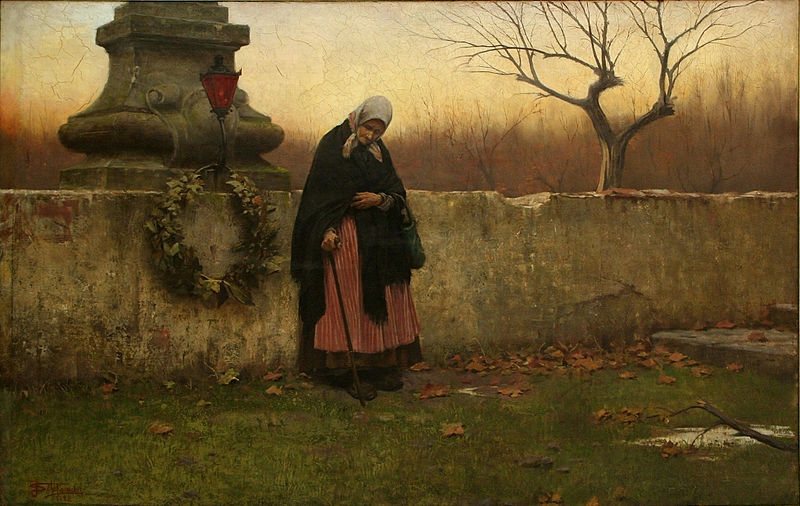
Allhallowtide is a triduum. No, I’m not writing in tongues. Ecclesiastical language can often be foreign to the secular world, and the fact that it’s All Souls’ Day for some has me thinking about feasts that come in threes. I first heard the word “triduum” at Nashotah House. There, of course, the great spring coalition of Maundy Thursday, Good Friday, and Easter made the holy triduum of required marathon chapel attendance. It was not unusual to spend a dozen hours in chapel during that stretch. Always considered less important, but perhaps far more human, was the autumnal triduum of Allhallowtide: All Hallow’s Eve (Halloween), All Hallows (All Saints, or Hallowmas), and All Souls’ Day. In Mexican tradition the three days make up the Day of the Dead. For people who live close to the economic edge of perpetual poverty, that makes perfectly good sense. Even for the liturgically literate, however, parsing the triduum of Allhallowtide takes some effort. We all know Halloween, and the title All Saints is self-explanatory. All Souls’ might require some thought.

All Souls’ commemorates the “faithful departed.” We can’t all be saints. (Well, in some traditions all Christians get to use the title, but alas, in the more Catholic world, no.) What about those who’ve died believing, but not earning a place among Ralph Vaughn Williams’ masterpiece? The ordinary, like us? All Souls’ is our day. Since the macabre is considered puerile, what with its possibilities of ghosties, and ghoulies, and one-eyed beasties, the church has continued to give a polite nod to Halloween (at Nashotah it used to be done up in great style) but doesn’t take it seriously. More evangelical denominations say it’s demonic, but in actuality, historically, it is the opposing triduum to that of the spring. Liturgical life holds an incipient balance for those who don’t take things too literally. Understanding our mythologies covers a multitude of sins.

Perhaps this chilly, rainy Allhallowtide in the northeast has me far from the hot and dry Day of the Dead, but I admire the Mexican acknowledgement that something should be done about those who’ve died never knowing affluence. Somewhere just to the north lies one of the most successful (until recent years) economies in the world. Social fragmentation, violence, and drugs (which draw big money from that self-same northern economy) bring many of our fellow North Americans to their knees at the feet of Santa Muerte. The light is fading fast at this time of year, and the wind is ripping the desiccated leaves from their skeletal branches, preparing us for the long chill that is to come. While work prevents too much investment in the liturgical year, I look with a peculiar longing over this triduum, and this soul, in any case, is grateful for a weekend to contemplate it all.

Jakub_Schikaneder_-_All_Souls'_Day


Fear and Dissembling

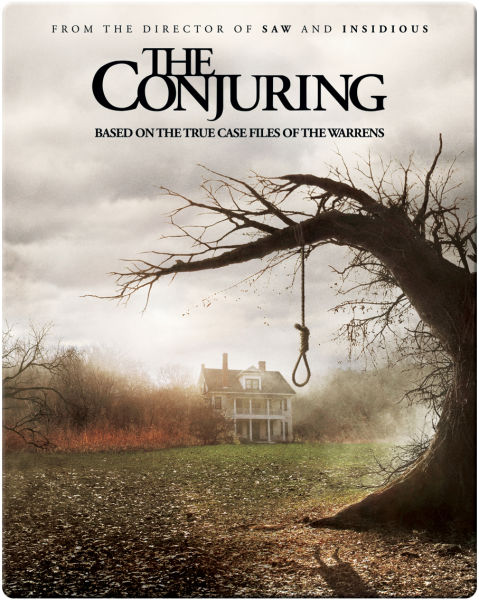
The ConjuringLast year, when The Conjuring was released, it quickly became one of the (if not the) top earning horror films of all time at the box office. Based on a “true case” of Ed and Lorraine Warren—real life paranormal investigators—the film is a demonic possession movie that ties in the Warren’s most notorious case of a haunted (or possessed) doll, with a haunting of the Perron family of Rhode Island. (The Warrens were also known as the investigators behind the Lutz family in the case of the “Amityville Horror,” showing their pedigree in the field.) Given that Halloween has been in the air, I decided to give it a viewing. As with most horror movies, the events have to be dramatized in order to fit cinematographic expectations. Apparently the Warrens did believe the Perron house was possessed by a witch. In the film this became somewhat personal as the dialogue tied her in with Mary Eastey, who was hanged as a witch at Salem (and who was a great-great (and a few more greats) aunt of my wife). Bringing this cheap shot into the film immediately made the remainder of it seem like fiction of a baser sort.

Witches may be standard Halloween fare, but when innocent women executed for the religious imagination are brought into it, justice demands separating fact from fiction. Writers of all sorts have toyed with the idea of real witches in Salem—it was a trope H. P. Lovecraft explored freely—but there is no pretense of misappropriation here. Lovecraft did not believe in witchcraft and made no attempt to present those tragically murdered as what the religious imagination made them out to be. The Conjuring could have done better here. It reminds me of Mr. Ullman having to drop the line about the Overlook Hotel being built on an Indian burial ground. Was that really necessary? (Well, Room 237 has those who suggest it is, in all fairness.) The actual past of oppressed peoples is scary enough without putting it behind horror entertainment.

A doctoral student in sociology interviewed me while I was at Boston University. She’d put an ad in the paper (there was no public internet those days) for students who watched horror movies. I was a bit surprised when I realized that I did. I had avoided the demonic ones, but I had been in the theatre the opening week of A Nightmare on Elm Street (on a date, no less) and things had grown from there. I recall my answer to her question of why I thought I did it: it is better to feel scared than to feel nothing at all. Thinking over the oppressed groups that have lived in fear, in reality, I have been reassessing that statement. What do you really know when you’re a student? As I’ve watched horror movies over the years, I have come to realize that the fantasy world they represent is an escape from a reality which, if viewed directly, may be far more scary than conjured ghosts.


Transformations

WerewolfsGuideToLifeHalloween, when you think about it, is an odd holiday. I know many who claim it as their favorite although you get no presents and not even a day off work. I suspect that part of the mystique comes in the form of Halloween representing autumn in miniature. The slow death of summer as the chill of winter settles in. The trees, vibrant in their dramatic death throes, are beautiful and melancholy at the same time. The long hours of darkness leave plenty of opportunities to see ghosts. Rich Duncan and Bob Powers’ book, The Werewolf’s Guide to Life: A Manual for the Newly Bitten, is appropriate for the season. This lighthearted parody of self-help books nicely illustrates how monsters often come into contact with religion. As a secular handbook, the Guide nevertheless addresses itself to the religious questions of life: should a werewolf go to confession? How do you deal with guilt? Do werewolves go to heaven? Monsters often force us to face the questions we just can’t answer.

The werewolf, of course, is the manifestation of a person gone feral. While people don’t actually physically change into animals, evolution has left us with a deep kinship to our fellow creatures. At times when work, or school, or relationships become trying, we are tempted to let the beast loose. One size doesn’t fit all, despite the many attempts of society to keep the vast majority of people in the same plight. Halloween is a cathartic holiday that permits us to be someone else and, perchance, to howl at the moon. Not exactly like Carnival, Halloween thrives on false appearances. We wear costumes. The trees and sunlight that apparently die are really only cycling through an annual death and resurrection.

Halloween can’t touch Christmas for a holiday that commemorates new beginnings, but in many ways Halloween is the more visceral of the two. In Manhattan, although Halloween decorations show up early in October, the holiday is lost in the city. The werewolves pretty much keep to themselves. As Christmas, with its lucre, becomes the next obvious holiday (in stores Halloween decorations already give way to those of Christmas at the start of October now) the city transforms. Despite its multi-ethnic and multi-religious makeup, Christmas trees will begin to appear, some impressively large, and the greens will remind everyone that it is time to spend. You’ll get days off work and the days will be painfully brief. Light will slowly return to the skies and the cycle will begin all over. Some will watch this all with wolf-like eyes, however, awaiting the next season of monsters and myths, knowing they are what make us truly human.


The Wars of the Worlds

Just as it is appropriate for news sources to carry religious stories without ridicule in weekend editions, October is the month when strange things might be reported with a degree of seriousness. I have often noted in the past that “paranormal” (think X-Files) phenomena are closely related to religion. Since our ruling paradigm is one of belittling the intellects of those willing to consider evidence beyond the accepted, news stories featuring the unexplained do so with a generous helping of scorn. I was amazed, then, when my wife sent me a story on the BBC News Magazine from the World Service Sport section. (Which is near enough to paranormal, as sports fail to interest me in the least bit.) A story by Richard Padula is entitled “The day UFOs stopped play.” Near this date in 1954 in Florence, Italy, a soccer game stopped as UFOs appeared above the stadium. Former World Cup players stared upward instead of at the ball. The event was documented and never explained. I kept waiting for the jowl-waggling punchline. It never came. Here was a news story from a reputable source taking something strange at face value.

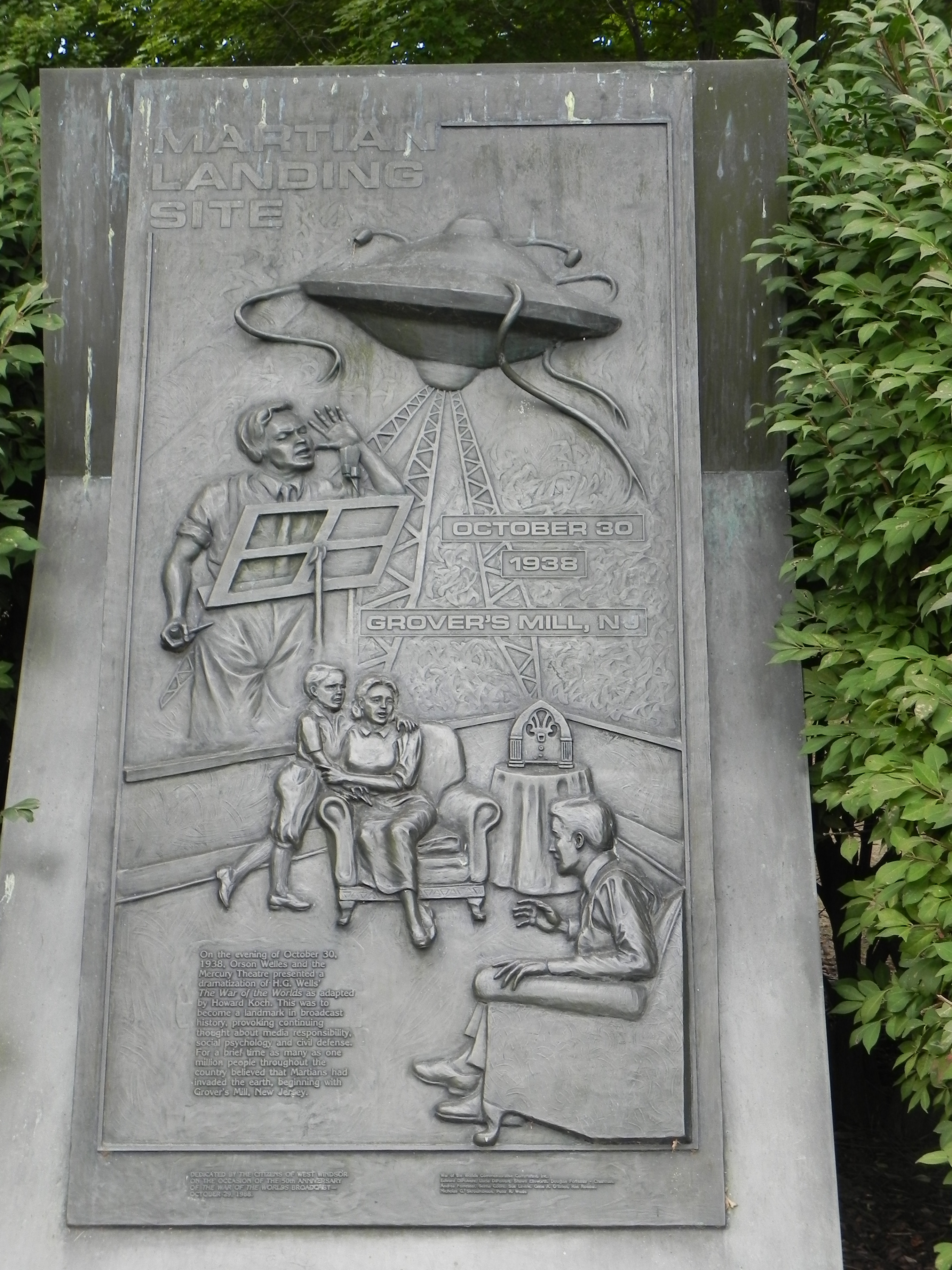
Paranormal activities and religious experiences are in the same category when it comes to a materialistic universe. They can’t exist and so the superior mind must laugh them off, stating they are an illusion, hallucination, or hoax. They still happen, nonetheless. Some world governments are beginning to announce to their citizens that they recognize unexplained arial phenomena exist and—truly astounding for government rulers—they have no explanation. Something weird is going on. It was on Halloween Eve in 1938 that Grover’s Mill, New Jersey, was invaded, according to an Orson Welles radio play. Since the inexplicable panic that came following that broadcast, extraterrestrial visitors have been laughed off the serious news page into the comic section. News stories have never taken it seriously since.

DSCN4237

A sports writer, casting about for an interesting story, might well focus on an event of such Fortean dimensions. Some highly respected people present at that game were interviewed with utter seriousness and traces of physical evidence were even gathered. A substance whimsically called “angel hair” was found all over the city, and despite the chemical signature, was declared to be the webs of a massive spider invasion (who needs aliens to be scared?) by many scientists who didn’t witness it. Laugh and the world laughs with you. The BBC doesn’t seem to be laughing in this story. Tomorrow is Halloween, when many improbable things seem possible, if only for a short time. Weather balloons, swamp gas, and Venus notwithstanding, sometimes people of normal intellect turn their eyes to the sky and wonder.


Non-Fiction Steampunk

TheVictorianInternetThe histories of Tom Standage approach familiar things from unfamiliar angles. Being interested in Steampunk, and a daily user of the internet who has trouble recalling what life was like before then, I found The Victorian Internet fascinating. Subtitled The Remarkable Story of the Telegraph and the Nineteenth Century’s On-line Pioneers, the story of the wiring of the world did resonate in any almost eerie way to the early days of the world-wide web. Despite my disclaimer, I do recall those days clearly when the only way someone could get in touch with you immediately was the telephone, and you had to be at home for it to work. Prior to the telegraph, news traveled even slower and you could go months without hearing from those closest to you, if they happened to be away. Samuel F. B. Morse knew that first-hand, as Standage tells it. His wife died while he was out of town, and although he rushed back right away upon hearing, she had been buried before he reached her. Such was life when news arrived only by letter. Morse was among those who invented the telegraph, a device that made the world realize that yes, it was possible to send information to distant places almost instantly. It soon become a wired world.

Standage is also more circumspect than some writers who declare, with breathless awe, that some new device will cure the world’s ills. Showing how the telegraph generated much the same hyperbole as the internet (that peace would reign now that people could communicate instantly, that technology had brought a miraculous rapprochement, etc.) he notes that people remained people. Wars continued—intensified, in fact, into World War One where technology was devoted to destruction. People had always been able to kill each other. Now they could do it faster, and in more hideous ways. Still, there’s no denying that once the idea of instant communication caught on that we would continue to develop it rapidly. You never need be away from a network that covers much of the developed world and you can talk on your phone from deep under the Hudson River to the top of the Empire State Building. You can order a pizza from anywhere.

Ironically, Morse dedicated part of his earnings to endow a lectureship concerning how science related to the Bible. It was clear that technology had achieved the impossible (okay, well, the improbable) and yet, Victorian society still relied on the truths contained in Scripture. The telegraph, which began with the words, “What hath God wrought,” ended with the attempt to figure out how the Bible fit into all this. Just because humans had crossed the great barriers of oceans with electric cables didn’t mean the Almighty was out of a job. Even today God can be found on the internet. Along with many other choices of distraction and business. God is not so much dead as commodified. The difference between Morse’s day and ours was that then they knew that the Bible impacted daily life. It continues to do so today, but we’ve become too sophisticated to give it much of a nod. We might be well served, however, to look back once in a while as well as to look forward. We might be surprised at how little things have changed.


Devil’s Food

One figure among the standard repertoire of Halloween characters has never appeared on my list of favorite monsters. I suppose it may be because as a child I fervently believed there was a devil that he never made my A-list. Satan was real, according to my church, in some almost biological, corporeal form. Even as a youngster I knew vampires, werewolves, Frankenstein’s monster, and the rest, really didn’t exist (even after I hid under my covers all night once, after putting my head down on a bat that had flown into my bedroom). The devil was, however, biblical. And I never felt tempted to dress up with red horns and pointy tail, carrying a plastic pitchfork. Halloween was always among my favorite holidays, but it was for pretend monsters and ghosts (which might perhaps be real, but which were not diabolical, according to my childhood economy of the spiritual world). The consequences of devil imitation seemed eternal, and even today, in the rational light of the twenty-first century, I can still be given pause even though I know the concept is a Zoroastrian one that morphed into early Christianity’s need for a kind of anti-Christ.

IMG_0276 copy

There are many who still believe in a real devil. Some branches of Christianity (and Islam) teach that a literal devil lurks about in our world. In western culture he is a figure instantly recognizable, although there are differences of opinion in his anti-iconography. Last weekend I visited a fine little restaurant in a New Jersey town that has a reputation for being haunted (the town, not the restaurant). It was a seat-yourself day and the table my wife and I ended up selecting had shellacked cards on top as part of the decoration. There in front of me was the devil. I pondered this. The cards, all captioned in Spanish, had mundane subjects: an umbrella, a musician, plants, a spider (okay, so that last one’s a little scary too), but only one supernatural figure. Perhaps the entire deck, had I seen it, might have had more. No doubt, for a world that postulates a good God, a devil covers, well, a host of evils.

The word “devil” is somewhat loosely applied these days. New Jersey has its own cryptid called the Jersey Devil, which has led to iconic names for sports teams and perhaps a public official or two. But even in the aftermath of 9/11 there were those who seriously postulated seeing the face of the devil in the tumbling debris of the twin towers. For a character of the religious imagination, the devil has managed to impress deeply on the human psyche. I know in my rational mind that I should simply dismiss all of this and get on with the business of enjoying the monsters that will show up at my door later this week. Nevertheless, when the waiter comes out with our food, I look down at the table and decide to pass on the hot sauce for today, just in case.


How God Became Male

GodsDoodleWhat is gender? Okay, we all know about the mechanics of the thing, but gender is more than just sex. Indeed, it is a psycho-social construct that is difficult to pin down. Sexual reproduction is very common in nature, but we don’t really speak of gender among our fellow animals. Perhaps the decisive factor, in the human realm, is religion. Clearly religion is not the only element, but I often wonder if gender-based commandments didn’t lead many cultures into their current arrangements. The thought occurred to me as I read Tom Hickman’s God’s Doodle: The Life and Times of the Penis. As I informed students in my classes, religion has always shown an interest in sexuality, particularly on providing limitations for it. A recent issue of Christian Century has a cover story about marriage, noting that the widespread prohibitions about homosexual matrimony come from a religion that forbids it. When your stakes are eternal, many people won’t argue.

But I wonder if it goes deeper than that. Gender roles have traditionally been regulated by societies, often on the basis of their religious outlook. Meanwhile, biology, as Hickman reminds his readers, is somewhat more ambiguous. The line between the genders is somewhat of a line in the sand, easily erased. Humans come in a continuum of orientations and biological equipage. Those who don’t match the defined parameters have difficult questions to ponder with a male deity who could think of only two genders. What is a male without a female? Can a male deity exist without a goddess? What, otherwise, is the purpose of a deity’s gender? Wouldn’t a inter-sexual creator may more sense?

Male social behavior has often drawn its entitlement from a bad theology. When feminists first began to raise questions, the orthodox were quick to point out that Jesus was clearly male. As Hickman notes, however, representing him naked on the cross (as crucifixions were historically done) is still rare. Sounds like an effort at keeping the status quo tipped in the favor of one gender that doesn’t want to admit that it slowly morphs into another. We all begin life female, as biologists now understand. Some retain their original gender while males evolve into something different. And with that evolution they tend to make many unsubstantiated claims about the right to make decisions for the other half of the human race. Gender is a lot more complex than many religions would have us believe. Until we learn to treat all people as people, we will still have to ask, and will never adequately answer, how God became male.


Keeping Time

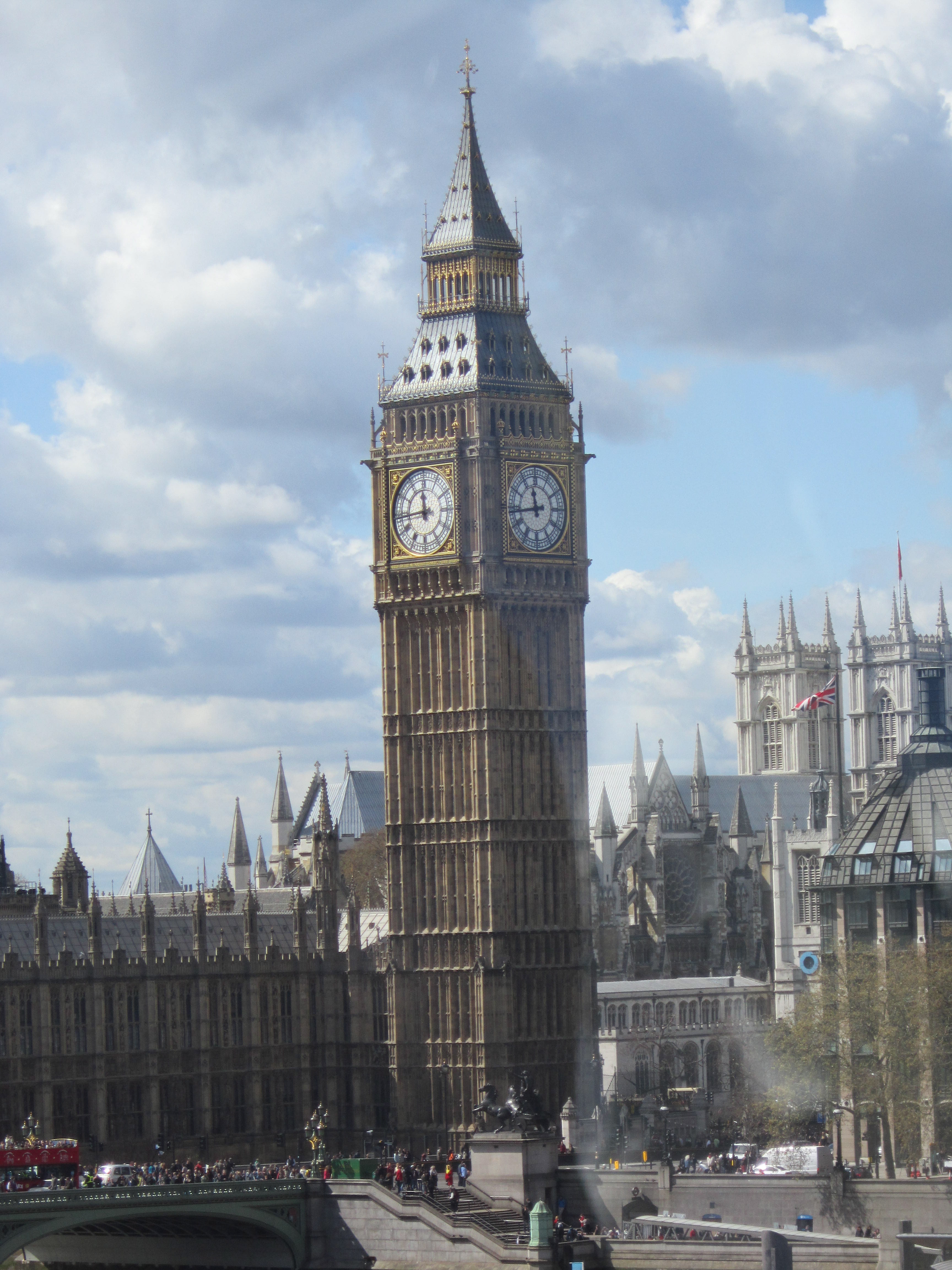
Did you remember to set your clock back? Depending on where you are (and this presumes there are any people reading this at all) it might have been a mistake. When I worked with Routledge, we had weekly trans-Atlantic meetings via conference calls. I remember the general confusion of what time it was where, and how that effected meeting times. The UK sets its clocks back at a different time then many states do this side of the ocean. As much as it is nice to have an extra hour of sleep (next weekend for most Americans, this morning for the British Isles) it really never seems worth the disruption on the other end of “standard time.” In the spring it will take several weeks to adjust to disrupted sleep patterns after long winter naps—for those who are able to sleep in, in any case. I’ve long thought it is time to do away with this practice: if daylight savings time is a good idea, why don’t we just keep it that way all year around? Greenwich Mean Time, however, could never admit to being wrong.

IMG_0320

I was always told daylight savings time was because of concerns for children walking to school in the dark. An article in The Guardian, however, gives the real reason. It was war. During the First World War (which impacted so many aspects of life that we’re still sorting them all out), Germany implemented daylight savings time to conserve fuel to support the war effort. Squeezing a few more minutes of daylight from a slumbering public meant more resources for the engines of destruction. Other nations soon followed and when we turn our clocks ahead in the spring and yawn wicked yawns all day at work and stumble about for lack of sleep, we wonder if that extra hour’s snooze in the fall was really worth it. Because of my commute, I rise early. If everyone awoke around 4 a.m., daylight savings time would quickly become moot. It does nothing to help. I already catch the bus in the dark and arrive home after dark, as I will until well into spring. It is a holiday with no meaning.

Religions have been, historically, the clock keepers of humanity. Our hours were regulated for prayer, our weeks divided up for a day of worship or rest, our years punctured by holy days. All of this was done for the sake of religion. In our secular world, there would be no reason beyond the recognition that people are more productive when they can rest to give them one day off in a week. Seven days corresponds to no natural division of time, unless you consider a quarter of the moon’s phases for 28-day months to be significant. Religions have been our time-keepers. Daylight savings time, however, was the child of war. This week our UK colleagues will be well rested and content. Next weekend the US will join them. But the second horseman of the apocalypse has sanctioned this unholy day, and when the spring rolls around, he will exact his toll. We’d better rest up in the meanwhile, and I, for one, say let’s banish the horseman all together.


The Fate of Goddesses

The goddesses Asherah and Astarte are sometimes confused, even by experts. Astarte, also known as Ashtart, Ashtarte, Athtart, and Astaroth, among other names, is the lesser attested of the two among the Ugaritic texts. Indeed, to read some accounts of the latter goddess, she becomes dangerously close to being labelled generic, the sort of all-purpose female deity embodying love and war, and sometimes horses. In the Bible Astarte lived on to become the bad-girl of Canaanite goddesses. Her corrupting ways were a conscious danger to the orthodox (as much as that is read back into the texts). She became, over time, literally demonized. It seems that originally she, like most goddesses, had a soft spot for humans. Since she wasn’t the one true (male) God, however, she had to be made evil. It is an unfortunate pattern as old as monotheism. One of my original interests in studying Asherah (not Astarte) was precisely that—the obviously benevolent divine female seems to have been chucked wholesale when the divine masculine walked into the room. Why? Well, many explanations and excuses have been given, but whatever the ultimate cause, Astarte lingered on.

IMG_1620

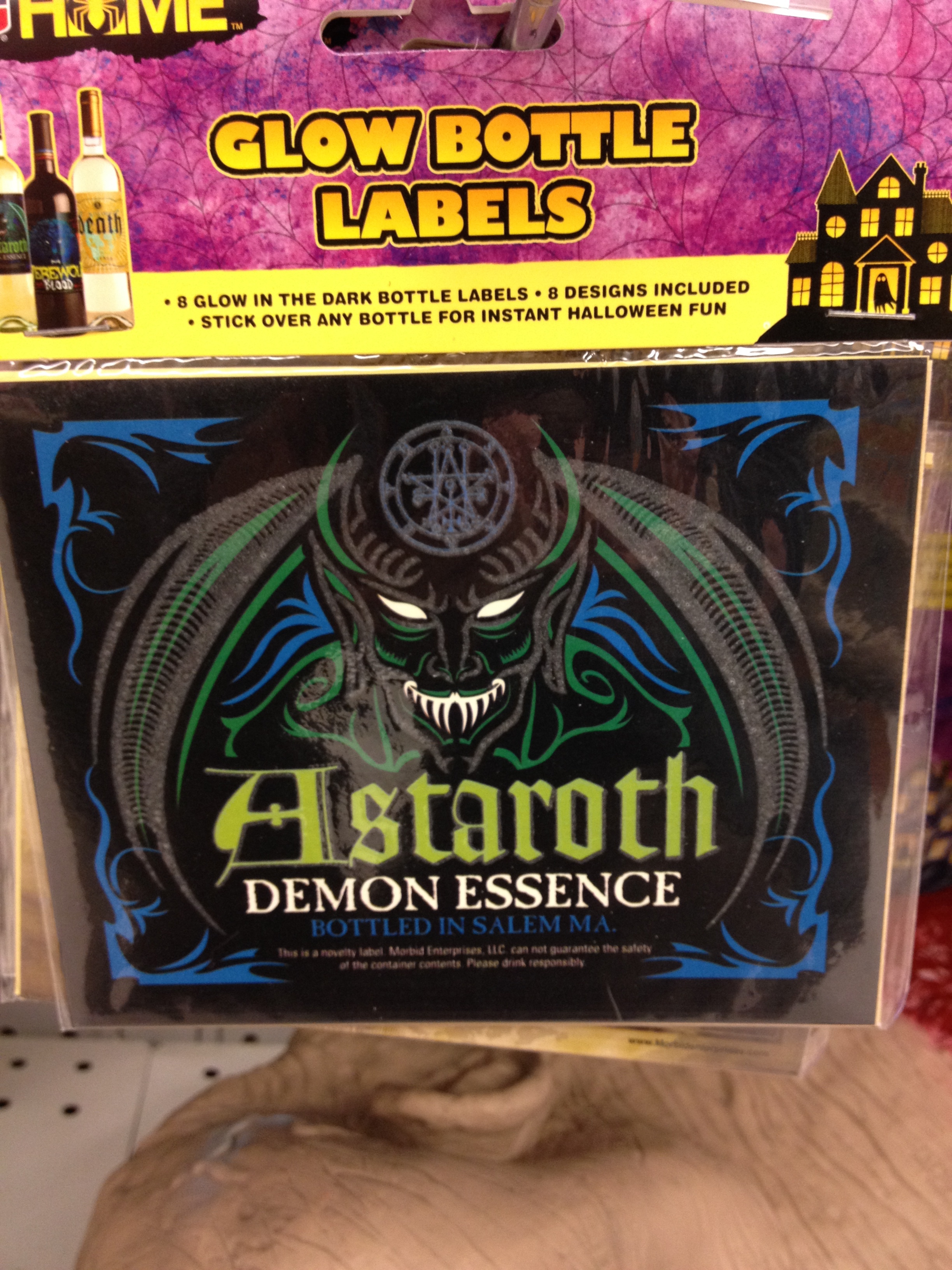
In a local pharmacy the other day, I was looking over the Halloween tchotchkes. Amid the usual assortment of pumpkins, skeletons, and ghosts, I found bottle labels reading “Ashtaroth Demon Essence.” Although I’ve spent a good deal of my life cloistered in academia, I was not surprised by this. I know that in popular culture the goddesses of antiquity live on as supernatural powers, sometimes good, sometimes evil. Astarte, once depicted as the friend to at least some of the humans devoted to her, is now commonly a demonic force. The image on the bottle label, however, was most unflattering. I know, this is just kid’s stuff. Still, as I stood there among last-minute costume seekers and distracted parents, I knew that I was witnessing the influence of ancient religions in an unexpected way. Did any of the goddesses survive as a force for good? How could they when the only god was male?

We know very little about ancient Astarte beyond the fact that she took away some of the luster of the omnipotent (as now conceived) deity of the Bible. A jealous God, as Holy Writ readily admits, visiting iniquity down to the third and fourth generation. (That might explain a lot.) Prior to monotheism benevolence and malevolence could arise from goddesses as well as gods. Compassion, it was believed, was largely a feminine trait. Monotheism decided for the jealous male instead. We won’t find a bottle label for the Almighty, although the accouterment of the arch-enemy are everywhere evident this time of year. And speaking of the diabolical, the Ashtaroth Demon Essence, I noted, was available at a steep discount.